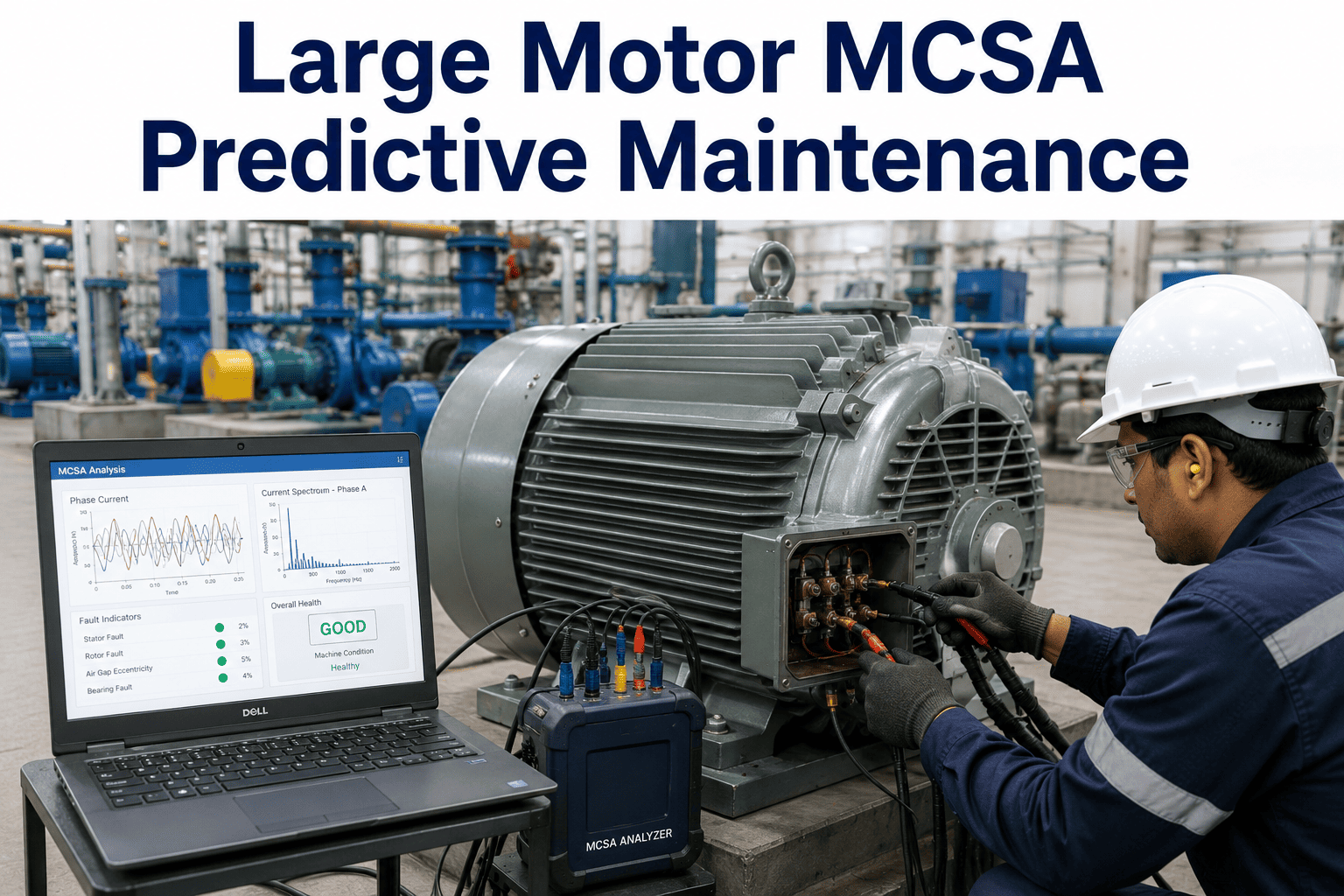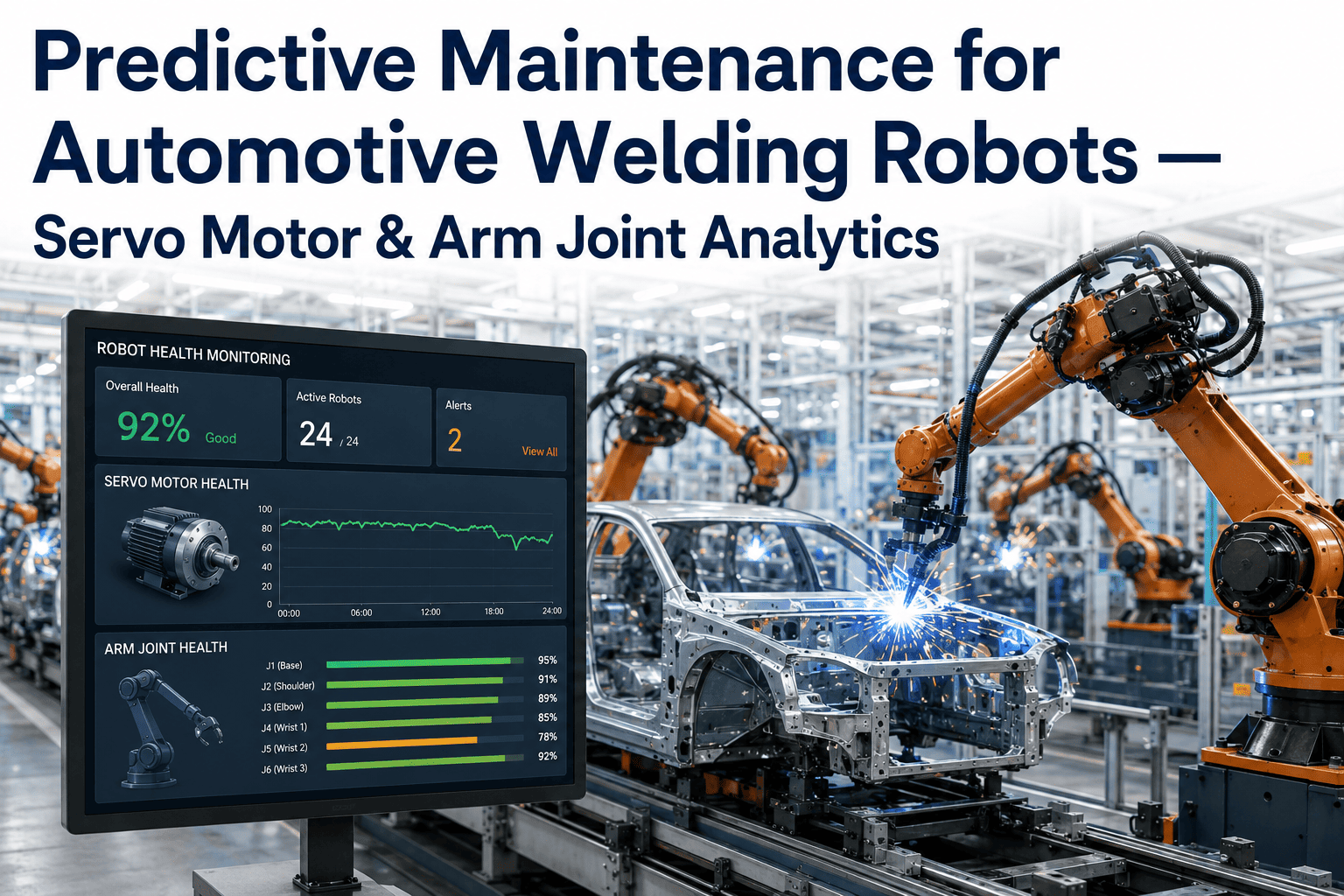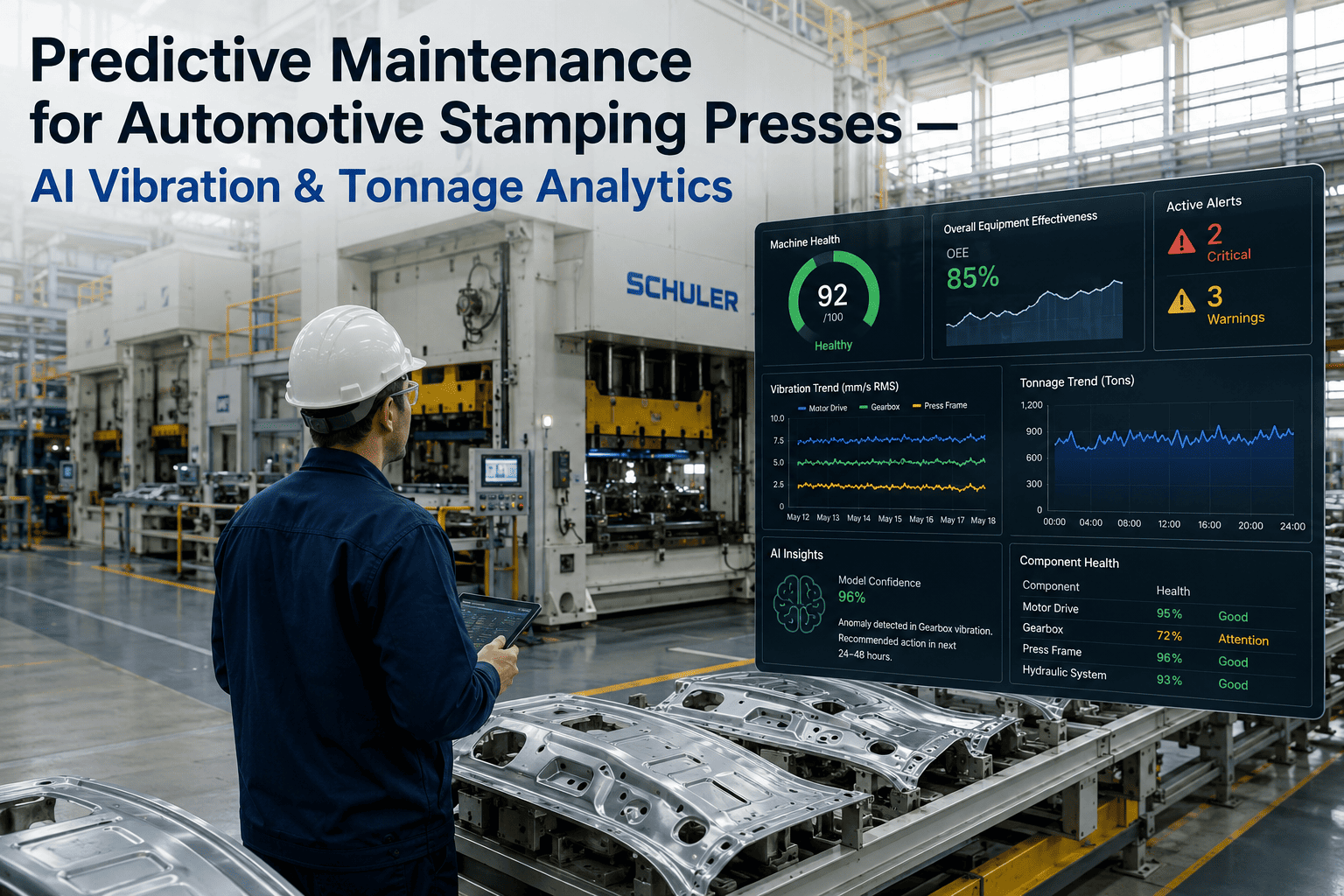
Electric motors and the variable frequency drives that control them run quietly in the background of nearly every automotive production line, powering conveyors, pumps, spindles, and press feeds, right up until one fails without warning and takes a line down for hours. Roughly 82 percent of motor failures in industrial plants are only discovered after the motor has already stopped, which turns a routine bearing or insulation problem into an unplanned production stop that can cost tens of thousands of dollars in a single incident. Motor current signature analysis offers a way to see these failures coming days or weeks in advance, without stopping the motor or attaching a single new sensor, simply by reading the current the motor already draws.
Detect Motor and VFD Failures Weeks Before They Stop Your Line
AI-powered current signature analysis reads the electrical signature every motor already produces to catch rotor, bearing, and insulation faults long before catastrophic failure.
Why Motors Fail Without Warning on Most Plant Floors
Electric motors and drives are treated as background infrastructure on most automotive production lines, monitored only by the operator noticing an unusual sound or smell, or by a scheduled preventive maintenance check that happens on a calendar interval regardless of actual motor condition. Neither approach catches the gradual degradation that precedes most motor failures, a cracked rotor bar develops over weeks, bearing wear progresses over months, and winding insulation breaks down slowly as heat and vibration accumulate stress cycle after cycle. By the time any of these show an audible or visible symptom, the fault has often progressed close to the point of catastrophic failure.
Motor current signature analysis works differently, treating every motor's current draw as a continuous data stream that carries information about its mechanical and electrical health. When a fault develops, whether a broken rotor bar, a degrading bearing, or an eccentric air gap, it introduces specific sideband frequencies into the current spectrum that a Fast Fourier Transform analysis can isolate and track over time, revealing a developing problem while the motor is still running normally in every other respect.
iFactory continuously analyzes current signatures across every monitored motor and VFD, flagging developing faults weeks before they cause a line stop.
Four Fault Types Current Signature Analysis Detects
Broken Rotor Bars
Cracked or broken rotor bars produce characteristic sideband frequencies around the line frequency that grow in amplitude as the fault progresses, detectable well before torque ripple becomes noticeable.
Bearing Degradation
Worn bearings introduce load irregularities that show up as specific frequency components tied to bearing geometry and rotor speed, often the earliest reliable indicator of impending mechanical failure.
Air-Gap Eccentricity
Misalignment or wear that shifts the rotor off-center within the stator bore alters the magnetic field pattern in a way that produces measurable, trackable current signature changes.
Winding Insulation Breakdown
Degrading insulation changes the electrical characteristics of the winding gradually, producing trend shifts in current harmonics that precede a hard electrical failure by weeks in most cases.
Comparing Motor Monitoring Approaches
| Approach | Requires Sensors | Detects Faults Before Failure | Production Impact |
|---|---|---|---|
| Run to failure | None | No | High, unplanned stops |
| Scheduled preventive maintenance | None | Partial, calendar-based | Moderate, unnecessary interventions |
| Vibration monitoring | Accelerometers required | Yes | Low, but hardware-dependent |
| Current signature analysis | None additional needed | Yes, weeks in advance | Lowest, non-intrusive |
Why This Matters More on an Automotive Line Than Almost Anywhere Else
Automotive production is built around synchronized takt time across dozens of connected stations, which means a single failed conveyor motor or press feed drive does not just stop one station, it can back up or starve every station downstream and upstream of it within minutes. The cost of that stoppage compounds quickly, since idle labor, missed shipment commitments, and potential late delivery penalties to an OEM customer all stack on top of the direct repair cost of the motor itself. Facilities that adopt current signature analysis alongside broader condition-based maintenance programs report substantial reductions in unplanned motor failures and lower overall motor maintenance costs within the first year of deployment, because maintenance teams shift from constantly reacting to failures toward planning replacements during scheduled downtime.
This shift also changes how maintenance teams spend their time. Facilities relying heavily on reactive maintenance often report that the majority of the maintenance team's working hours go toward emergency repairs rather than planned improvement work, leaving little capacity for the root-cause investigation that would actually reduce the failure rate over time. Predictive visibility breaks that cycle by converting emergency repairs into scheduled tasks.
Stop losing production time to motors that fail without warning. See your own motor fleet's current signatures analyzed live.
Frequently Asked Questions
Do we need to install new sensors to start current signature analysis?
In most cases, no. Current signature analysis is performed from readings taken at the motor control center or VFD, without any contact with the motor itself, which means it can often be deployed using current transducers already present in the drive or switchgear rather than requiring new sensors on every individual motor. Our support team can review your existing motor control center setup to confirm what data is already accessible.
How far in advance can a developing fault actually be detected?
Lead time varies by fault type and motor size, but many rotor bar and bearing faults show detectable current signature changes weeks before they would progress to a hard failure, giving maintenance teams enough time to schedule a replacement during planned downtime rather than reacting to an emergency stop. Faster-developing faults such as sudden mechanical damage from an external event provide less warning, which is why current signature analysis works best as one part of a broader condition monitoring strategy rather than a single point solution.
Does this work on both fixed-speed motors and VFD-driven motors?
Yes, though the analysis approach differs slightly between the two, since VFD-driven motors introduce switching frequency components into the current spectrum that need to be filtered out or accounted for before fault-related sidebands can be isolated cleanly. Modern analysis platforms handle this distinction automatically, applying the appropriate signal processing based on whether a motor is running direct-on-line or through a variable frequency drive.
How many motors can realistically be monitored in an initial pilot?
Most plants start with the ten to twenty highest-criticality motors on the floor, meaning those where a failure would cause the most significant production disruption, rather than attempting to instrument every motor at once. This focused approach validates the accuracy and value of the analysis quickly while keeping the initial scope manageable, and expanding to additional motors afterward is typically straightforward once the initial results are proven.
What kind of maintenance cost reduction is typical after adoption?
Facilities that pair current signature analysis with a structured condition-based maintenance program commonly report significant reductions in unplanned motor failures and lower overall motor maintenance spend within the first twelve months, largely because reactive emergency repairs get converted into scheduled replacements. Book a demo to review your current motor failure history and get a realistic estimate for your specific fleet.
See what your motors are already telling you through their current signature. Book a demo with your own motor fleet data.