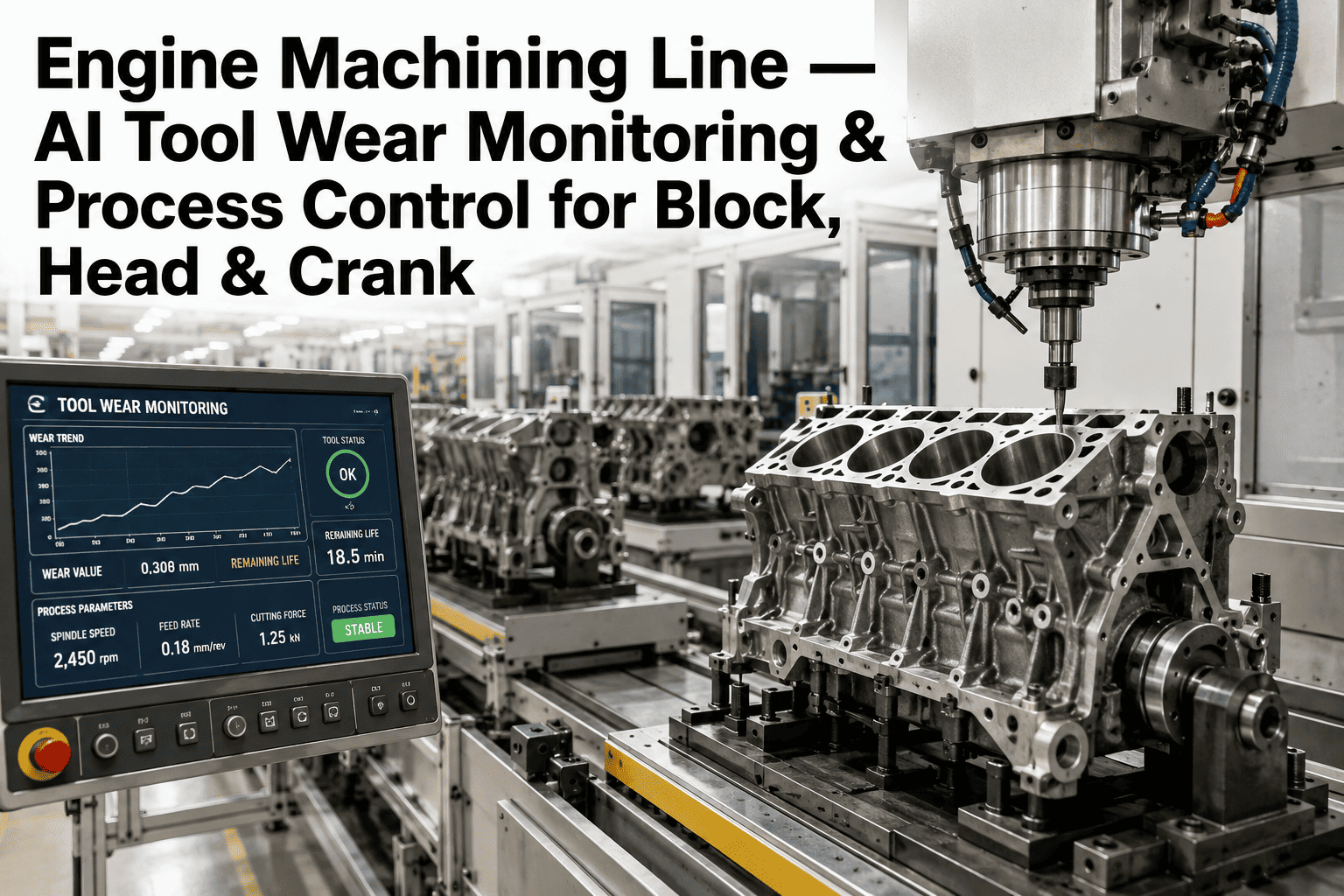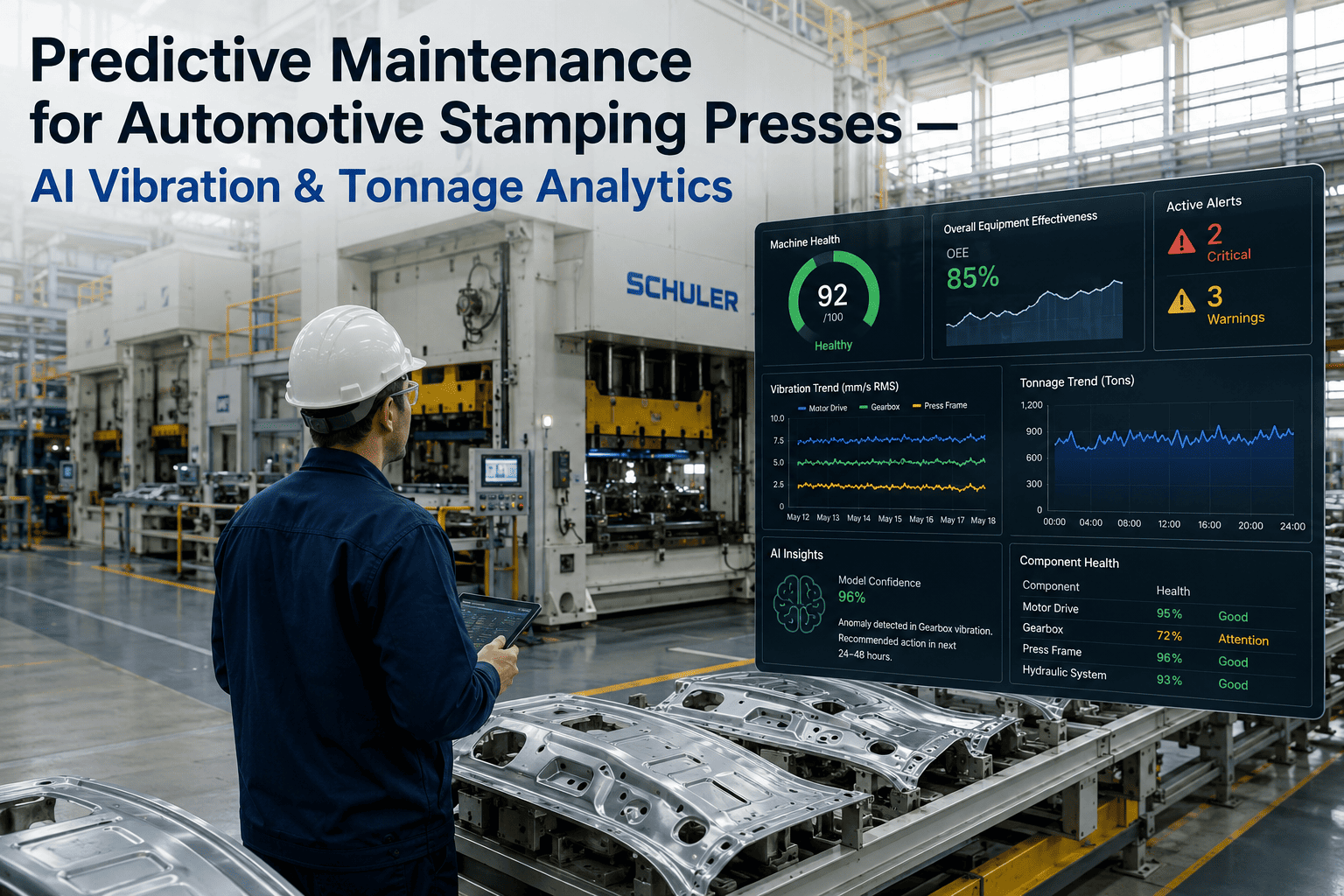
Every CNC machinist knows the tradeoff instinctively: change a cutting tool too early and you throw away useful tool life across thousands of parts a year, change it too late and you risk a scrapped part, a damaged spindle, or a snapped tool mid-cut that stops the machine entirely. Most automotive machining centers still resolve this tradeoff with a fixed tool-change interval based on average wear, which means every tool is either replaced with life left on the table or occasionally pushed past its safe working point. Maintenance managers looking for a more precise answer usually start with Book a Demo of what real spindle and cutting-force analytics reveal about actual tool condition.
Replace Tools by Actual Wear, Not by Average Guesswork
ifactoryApp analyzes spindle vibration, cutting force, and surface finish data continuously, telling you exactly when a tool needs changing instead of relying on a fixed interval.
Why Fixed Tool-Change Intervals Are Expensive in Both Directions
A fixed tool-change interval is built around an average wear rate calculated across many production runs, tool batches, and material lots. Averages, by definition, are wrong for almost every individual tool. Material hardness variation between batches, differences in coolant flow between machines, and even small variations in fixture alignment all shift how fast a specific tool actually wears, yet the change interval treats every tool as if it were experiencing identical conditions.
The cost of that mismatch shows up on both sides of the average. Tools changed too early represent pure waste, discarding tool life and increasing consumable spend without any corresponding benefit. Tools that run past their actual safe wear point create the more expensive failure mode: degraded surface finish that causes scrap or rework, increased risk of tool breakage that can damage the spindle itself, and in the worst cases, a snapped tool mid-cut that stops the machine and requires emergency intervention. Both failure directions are avoidable once the interval decision is based on the tool's actual measured condition instead of a schedule.
What a Tool's Actual Wear Signal Looks Like Over Its Life
Tool wear does not progress linearly. It moves through distinct phases, and the signal data from cutting force and vibration reflects each phase clearly once it is being measured continuously rather than inferred from a calendar.
Initial rapid wear as the cutting edge conforms, stabilizing within the first few parts.
Gradual, predictable wear across the majority of the tool's productive life, ideal for stable production.
Wear rate increases noticeably, the window where a fixed interval most often either wastes life or runs too long.
Surface finish degradation and breakage risk rise sharply, this is where AI-flagged replacement is targeted precisely.
How ifactoryApp Reads Tool Condition From Machine Data
Spindle load and cutting force signatures are compared against the tool's own historical baseline to detect the transition from steady wear into the accelerated phase.
High-frequency vibration data reveals chatter and edge degradation patterns well before they become visible in the finished part's surface quality.
In-process or post-process surface finish measurements are correlated back to tool condition, continuously refining the model's confidence in its wear-phase prediction.
Each tool gets its own predicted remaining life based on its actual measured wear trajectory, not the fleet-wide average interval every other tool shares.
See Your Own Spindle Data Analyzed Live
Bring recent CNC spindle and cutting data. ifactoryApp's team will show what wear-phase signals were present before your last scrapped part or unexpected tool break.
Fixed Interval vs. Condition-Based Tool Change
| Factor | Fixed Interval Schedule | AI Condition-Based Change |
|---|---|---|
| Basis for change decision | Average historical wear rate | Actual measured tool condition |
| Tool life utilization | Often changed early, life wasted | Used to near-full safe life |
| Scrap risk from late change | Present when wear exceeds average | Minimized by phase detection |
| Response to material variation | None, interval stays fixed | Adjusts automatically per batch |
What Maintenance Managers Track After Deployment
Average usable tool life extension
Scrap parts caused by worn tooling
Unplanned tool breakage events
Annual cutting tool consumable spend
CNC Tool Wear Prediction — Maintenance Manager Questions
What data do our CNC machines need to already be capturing for this to work?
Most modern CNC controllers already capture spindle load and current data that can serve as a starting baseline. Adding vibration sensors at the spindle housing significantly improves prediction accuracy for chatter and edge degradation detection, and our support team will assess your specific machines during onboarding to recommend the right instrumentation level.
Will this work across different tool types and materials in our shop?
Yes, the wear model is built per tool type and material combination rather than applying one universal wear curve. A carbide end mill cutting aluminum and a coated insert cutting hardened steel will each be modeled against their own historical wear signature, since their failure characteristics are fundamentally different.
How accurate is the prediction compared to our current fixed interval?
Accuracy improves over time as the model accumulates wear data specific to your machines, materials, and tooling. Most shops see prediction confidence reach production-reliable levels within the first several hundred tool cycles per tool type, after which the system reliably outperforms a fixed interval in both directions, catching late-wear risk while extending average usable tool life.
Does this require us to change our current CNC programming or G-code?
No, tool wear monitoring reads signal data from the machine and controller without requiring changes to your existing programs or machining strategy. The alerting layer sits alongside your current production process rather than modifying how parts are actually cut.
How long does it take to see a reduction in scrap from worn tooling?
Most shops catch their first genuine late-wear save within the first few weeks of monitoring, since the accelerated wear phase produces a clear signal once the model has even a modest baseline. Consistent, measurable scrap reduction across the full tool inventory typically shows up over one production quarter as coverage expands across more tool and material combinations.
Stop Changing Tools on a Schedule That Guesses
Talk to ifactoryApp about monitoring actual tool condition across your CNC machining centers instead of relying on a fixed interval built for the average tool.