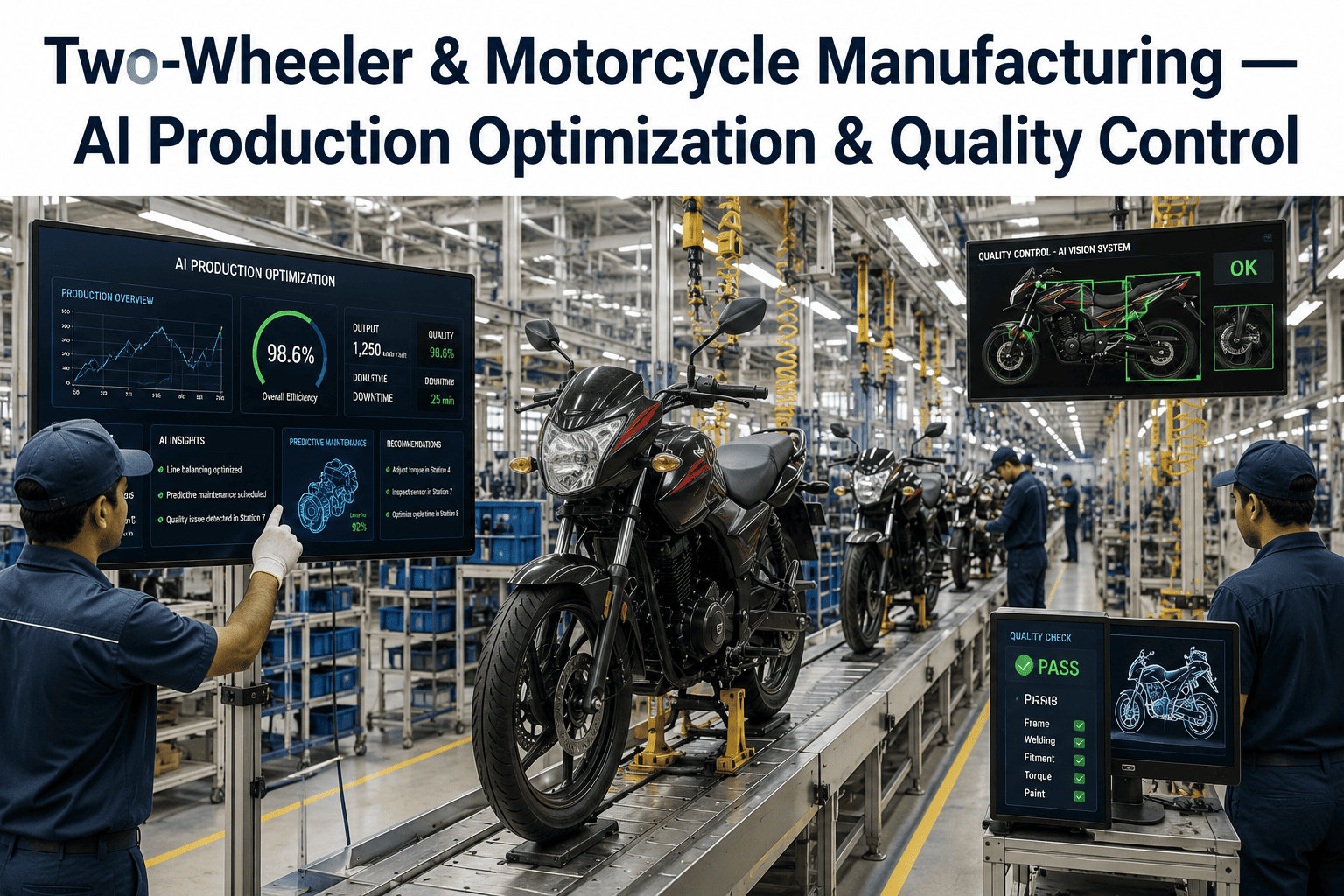
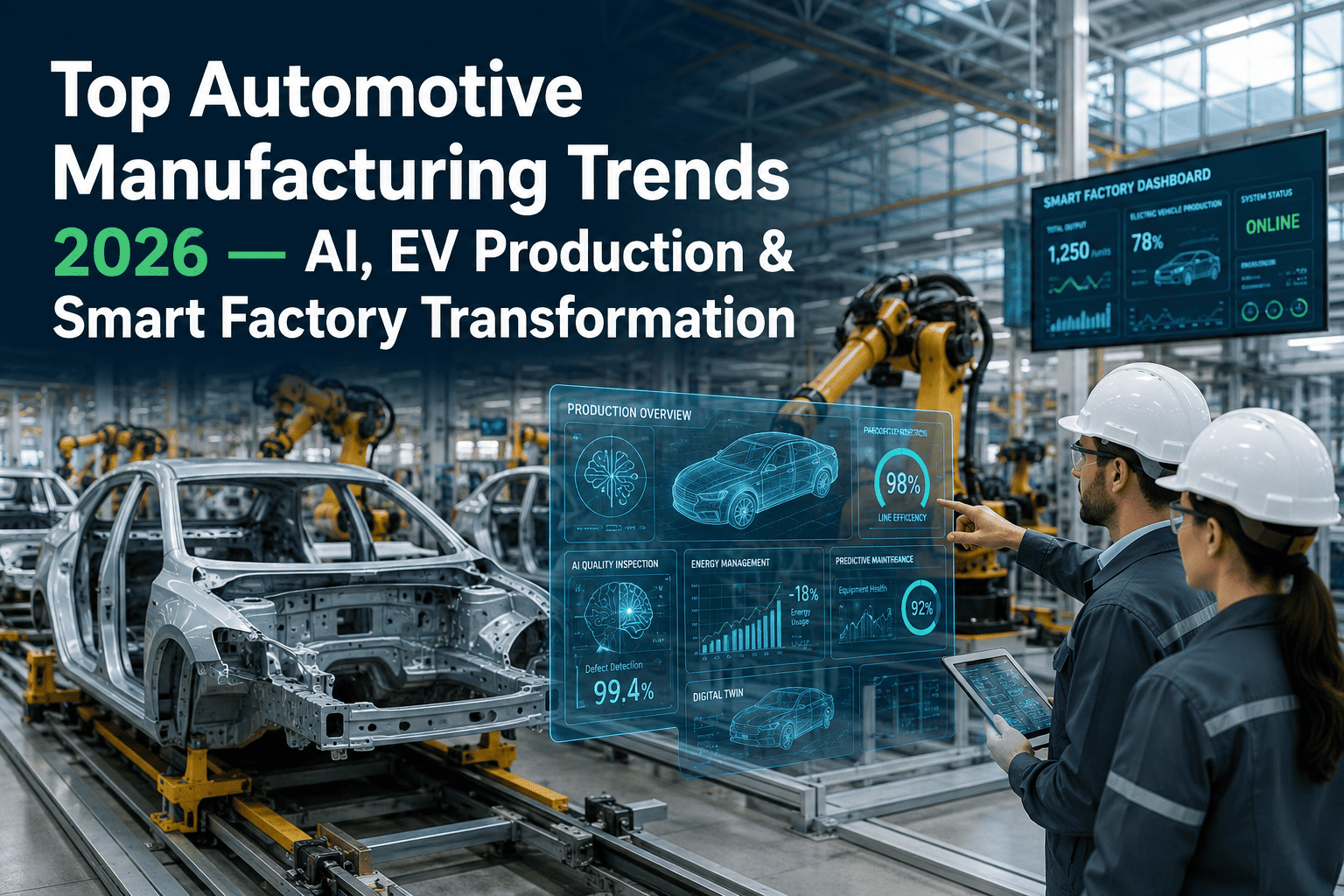
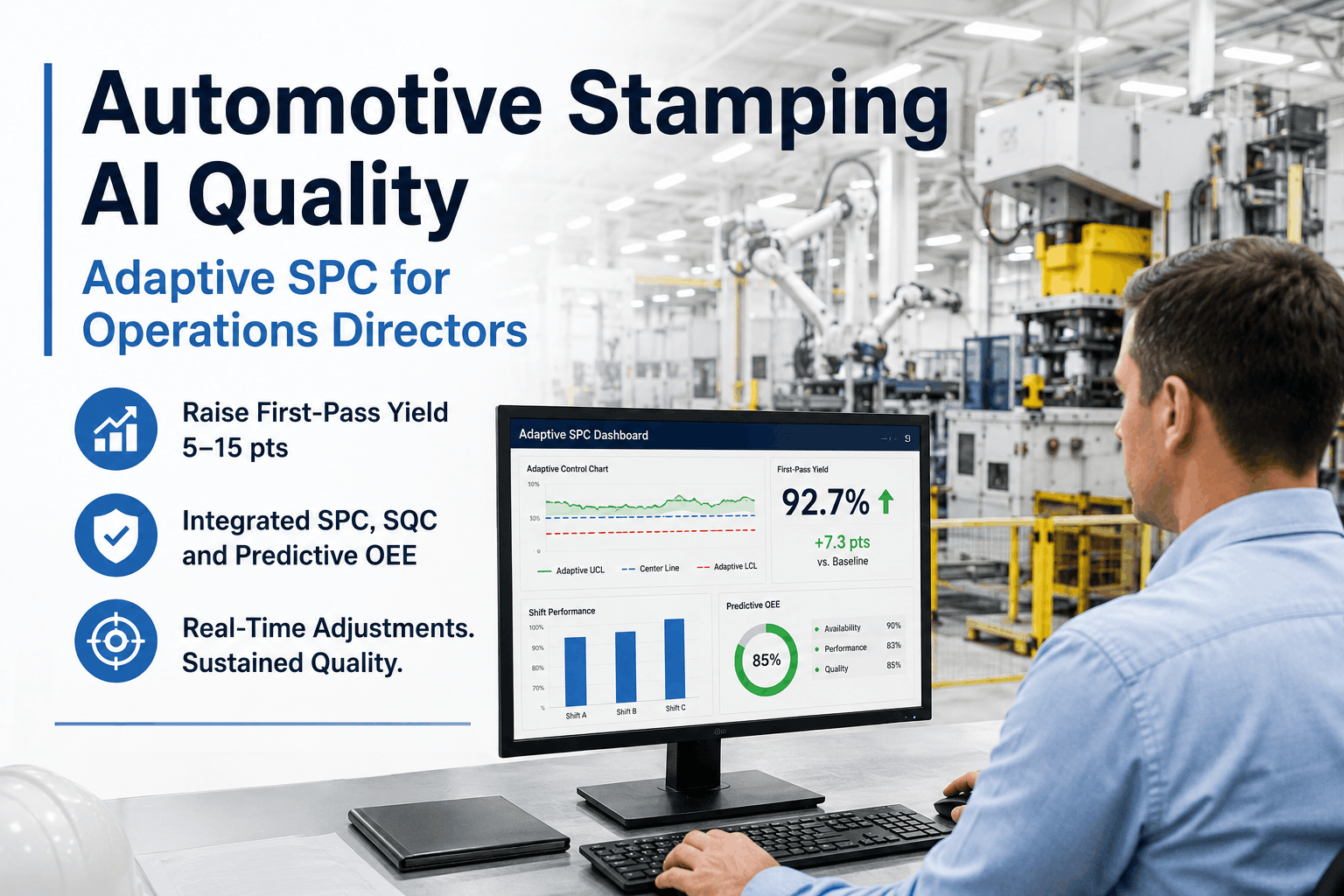
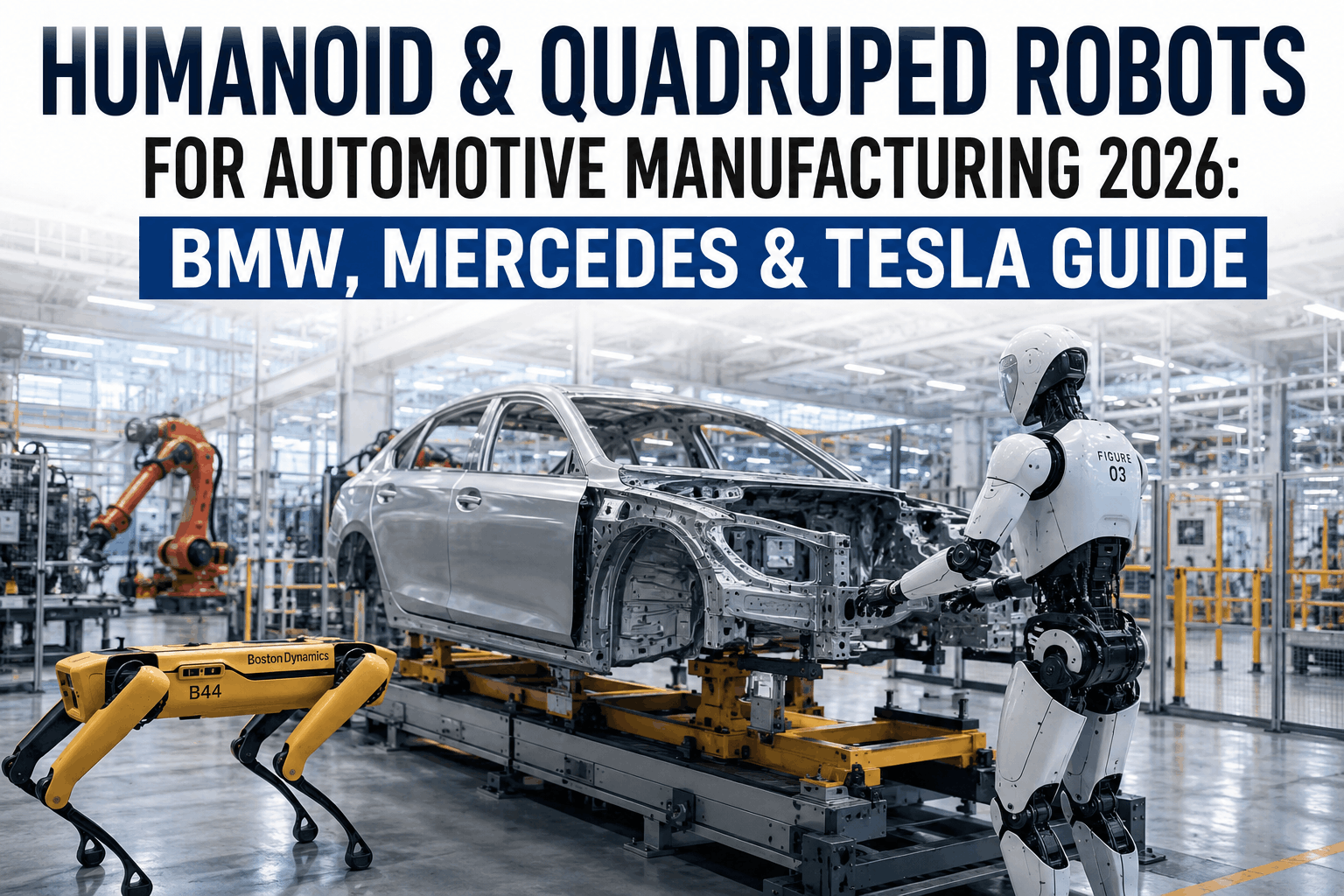
On most automotive assembly lines, the plant runs the way it ran last quarter, and the quarter before that. Sensors report status, dashboards turn green or red, and when something breaks, an operator radios a supervisor who dispatches a technician to diagnose a problem that started drifting hours earlier. Every one of those steps is a human reacting to something a machine already noticed but couldn't act on. A growing number of automotive plants are closing that gap between sensing and acting, and it's changing what a plant director's morning actually looks like. iFactory's closed-loop AI platform is built specifically to help plant directors make that shift without betting the whole operation on it at once.
Toward the Self-Optimizing Automotive Plant
Automotive assembly plants typically operate at 65-75% overall equipment effectiveness, quietly losing six or seven figures a month to unplanned stops, bottleneck drift, and quality slips. Adaptive AI closes the loop between sensing, prediction, and action, moving a plant from reporting on problems to correcting them.
The plant already has the data. It just can't act on it fast enough
Most automotive plants passed the sensing milestone years ago. Line PLCs, vibration sensors, torque monitors, and vision systems are already generating a steady stream of readings every second of every shift. What's missing isn't data, it's the layer that turns that data into a decision and executes it before a supervisor even opens a dashboard. A robot's cycle time can drift from 60 seconds to 63 seconds over weeks, quietly starving the downstream station, and nobody notices until the shift report shows the plant fell short of target again.
That gap between what the plant knows and what the plant does is exactly what closed-loop AI targets. Instead of a dashboard that tells a human something is wrong, the system senses the drift, predicts the consequence, and adjusts the parameter, schedules the maintenance work order, or rebalances the line, often before a human would have caught it on a walk-through.
The scale of the opportunity is easy to underestimate from a single line's perspective. A typical automotive assembly plant runs 200 to 500 pieces of equipment across welding, stamping, paint, and final assembly, each generating its own stream of readings around the clock. Multiply a few seconds of undetected drift across that many assets over a full production cycle, and the gap between designed capacity and actual output stops looking like a rounding error and starts looking like the single largest lever a plant director has left to pull.
The drift that precedes failure looks different on every asset
Closed-loop AI only works if the sensing layer is tuned to what actually fails on an automotive line, and that varies enormously by equipment type. A plant director doesn't need to understand the underlying signal processing, but knowing which signals matter for which asset class makes it much easier to evaluate a vendor's claims and to prioritize which stations get instrumented first, rather than accepting a generic sensor package that wasn't built with automotive failure modes in mind.
It's worth noting that a single sensor type rarely tells the whole story on its own. A robot gearbox showing slightly elevated vibration but stable torque is a very different situation than one showing both signals trending together, and the models that perform best in production combine multiple signal streams per asset rather than triggering an alert off any single threshold crossing. That's also why a generic, one-size-fits-all sensor package tends to disappoint: a system tuned specifically to how welding robots, presses, and conveyors actually fail in an automotive environment catches problems weeks earlier than one built for general industrial equipment.
Robots & Gearboxes
Torque and vibration signatures on welding robot gearboxes typically show measurable drift weeks before a hard failure, giving planners a real maintenance window instead of an unplanned stop.
Conveyors & Skillets
Drive current and chain tension on skillet and conveyor systems reveal wear patterns long before a jam takes down the spine of the assembly line.
Presses & Stamping
Brake response time and lubrication pressure on stamping presses are leading indicators that a fault is forming, well ahead of the die damage a sudden failure would cause.
Motors & Drives
Motor current signature analysis on large drive motors catches winding and bearing degradation early, before the motor itself becomes the bottleneck.
CNC & Machining
Spindle power draw and vibration flag tool wear before a dull or chipped tool starts scrapping parts or damaging the spindle itself.
Paint Shop HVAC
Fan and air-handler performance data predicts filter and airflow issues before they show up as finish defects across an entire paint batch.
Five levels separate a reactive plant from a self-optimizing one
Autonomy in manufacturing isn't a switch, it's a climb, and most automotive plants today sit somewhere in the middle of it. Knowing exactly which step your plant occupies is the first useful diagnostic a plant director can run, because it tells you which investment actually moves the needle next rather than which one looks impressive in a boardroom deck.
Skipping a rung rarely works out the way vendors promise. A plant that jumps from manual dashboards straight to autonomous execution without passing through an advisory phase typically discovers, the hard way, that the model needed more plant-specific tuning than a generic deployment provided. The climb exists for a reason: each level builds the data history and operator trust the next level depends on.
Reactive
Equipment runs until it fails. Maintenance responds after the line has already stopped, and root cause is reconstructed after the fact from whatever logs exist.
Visible
Sensors are installed and dashboards exist. Data is collected but response is still manual, and the gap between a reading and a decision is measured in hours or shifts.
Advisory
AI monitors continuously and recommends action, flagging failures days ahead and drafting the work order. A human still reviews and approves before anything changes.
Autonomous-Assisted
AI agents execute routine decisions directly, rebalancing loads or adjusting set points, while plant leaders oversee exceptions and set the boundaries the system operates within.
Self-Optimizing
The plant manages production, maintenance, energy, and quality end to end against goals a human defines. This is where a small number of leading plants operate today.
Most automotive plants sit at Level 2 or 3: the data exists, but the response is still manual. Book a demo and we'll map exactly which level your plant is on and what the next step actually costs.
This isn't a distant trend anymore, it's already showing up in the numbers
The pace of adoption caught even close industry observers off guard. Surveys of manufacturers running agentic AI programs show adoption roughly quadrupling in a single year, moving from a small pilot minority to nearly a quarter of manufacturers running some form of autonomous decision-making on the floor. That kind of jump usually signals a technology has crossed from experimental to expected, which changes the calculus for any plant director who was planning to wait another budget cycle before starting.
The plants further along report results that are hard to ignore from a purely operational standpoint: double-digit reductions in maintenance spend paired with meaningful uptime gains, achieved with the same headcount and the same floor space they already had. None of that required a green-field plant or a multi-year rebuild, it required connecting the assets that were already generating data and giving a system the authority to act on it within clearly defined limits.
For an automotive plant specifically, the stakes are higher than in most other manufacturing sectors because the cost of a single line stoppage is so much larger. A stamping line down for an hour can starve every downstream station in the body shop, and the ripple effect of a single unplanned stop can cost more than a month of a smaller plant's entire maintenance budget. That asymmetry is exactly why automotive has become one of the sectors where closed-loop AI investment is accelerating fastest, and where the plants that move first are building a lead that compounds every quarter they operate at higher OEE than their peers.
Four layers that turn raw signals into plant action
A self-optimizing plant isn't one piece of software, it's a loop that never stops running. Data flows in from the floor, gets interpreted, produces a decision, and that decision changes something physical on the line, which in turn generates new data. The loop only earns the name "closed" when the fourth step happens automatically, without waiting for a human to press approve.
Sense
Vibration, torque, current, and vision data streams from robots, conveyors, presses, and motors in real time.
Predict
Models trained on plant-specific failure history forecast equipment issues and throughput risk 7-14 days out.
Decide
The system weighs the prediction against production priorities and selects the corrective action with the least disruption.
Act & Learn
A work order, parameter change, or schedule adjustment executes automatically, and the outcome feeds back into the model.
Reactive plant vs. self-optimizing plant, side by side
Today's Reactive Plant
Closed-Loop Plant
Three places closed-loop AI pays for itself first
Downtime Avoided
Line stoppage costs at automotive plants commonly run between $150 and $500 a minute depending on the line, and a single major failure prevented can cover the cost of an entire deployment on its own.
Bottlenecks Removed
Cycle time drift, workstation imbalance, and material supply delays quietly cap throughput well below the plant's designed maximum, and closing that gap adds saleable capacity without new equipment.
Maintenance Rebalanced
Shifting from calendar-based to condition-based maintenance cuts unnecessary work while catching the failures a fixed schedule would have missed entirely.
A plant director's path doesn't start with full autonomy
Jumping straight from a Level 2 plant to a fully self-optimizing Level 5 operation is not how any plant has actually made this transition, and vendors who pitch it that way are selling a slide, not a rollout. The plants making real progress move one layer of the loop at a time, proving reliability at each step before handing the system more authority to act without approval.
This matters just as much for organizational buy-in as it does for technical risk. A maintenance team that watches a system correctly predict three failures in a row develops genuine trust in its recommendations, and that trust is what eventually lets the same team feel comfortable handing over routine decisions without reviewing every single one. Skip that trust-building phase and the same technically sound system will get quietly ignored or overridden on the floor, no matter how accurate its models are on paper.
Connect & Baseline
Instrument the highest-value assets and establish a true OEE baseline across availability, performance, and quality.
Predict & Advise
Deploy models that flag failures and bottlenecks days ahead, with a human still approving every recommended action.
Delegate Routine Decisions
Let the system execute low-risk, high-frequency adjustments autonomously while escalating anything outside defined limits.
Expand the Loop
Extend autonomous decision-making across energy, quality, and scheduling once the maintenance loop has proven itself.
Autonomy without guardrails is not the goal
A plant director's real objection to autonomous systems is rarely technical, it's about accountability. If a system adjusts a press's cycle parameters at 2 a.m. and something goes wrong, someone has to be able to explain exactly why that decision was made. The plants succeeding with this approach treat explainability as a requirement, not a nice-to-have, building systems that log the data behind every autonomous action in a form an engineer can review the next morning.
That logging discipline pays off well beyond the occasional incident review. Over time, a full history of what the system predicted, what it decided, and what actually happened becomes one of the most valuable datasets a plant possesses, because it lets engineering teams continuously validate whether the models are still accurate as equipment ages, product mix shifts, or new lines come online. Plants that treat this history as a byproduct rather than an asset tend to lose confidence in their systems the moment conditions change and nobody can explain why accuracy dipped.
Boundaries matter just as much as explainability. Every autonomous action should operate inside limits a plant director sets explicitly, whether that's a maximum parameter shift, a required buffer before a maintenance action affects the schedule, or a hard rule that certain safety-critical systems always route to a human regardless of confidence score. Analysts have flagged that a large share of agentic AI projects across industries stall out not from bad models but from skipping this governance step entirely.
The three mistakes that derail most autonomy programs
Plant directors rarely fail at this because the technology doesn't work. They fail because the rollout skips a step that felt optional at the time and turns out not to be. Watching for these three patterns early saves months of rework later.
Instrumenting everything at once
Trying to wire the entire plant simultaneously spreads the integration budget too thin and delays the first real win by months.
Skipping the advisory phase
Handing a system autonomous authority before operators trust its recommendations invites resistance the moment it makes one visible mistake.
No baseline before starting
Without a documented OEE baseline, it becomes impossible to prove the program's value to finance six months in.
Treating it as an IT project
Programs led entirely from IT without floor-level ownership tend to produce dashboards nobody on the line actually uses.
Common questions before committing to a rollout
What this looks like in practice at a typical assembly plant
Consider a composite that mirrors what plant directors commonly find once they actually measure the gap: a mid-size assembly facility running around 400 vehicles a day, operating near 72 percent OEE, made up of roughly 78 percent availability, 92 percent performance, and 96 percent quality. That plant is experiencing several unplanned stops per shift averaging well over an hour of cumulative downtime a day, and the monthly cost of that downtime alone routinely runs into the hundreds of thousands of dollars before scrap and rework are even added to the total.
The first phase of a closed-loop rollout at a plant like this typically targets the availability component, since unplanned stops are usually the single largest and most visible drag on OEE. Instrumenting the highest-failure assets and moving from calendar-based to condition-based maintenance commonly recovers several points of availability within the first two quarters, without touching performance or quality at all.
As the program matures into the advisory and autonomous-assisted phases, performance and quality gains start compounding on top of the availability gains. A plant that closes even half the gap between 72 percent and a realistic 85 to 87 percent OEE target is typically looking at dozens of additional vehicles of saleable capacity every day, which at automotive margins adds up to a multi-million dollar annual swing without a single new piece of production equipment on the floor. That's the arithmetic that tends to move this conversation from an IT budget line to a plant director's top capital priority.
Find out which level your plant is really on
iFactory helps automotive plant directors map their current autonomy level, prioritize the next investment, and build the closed loop one phase at a time.