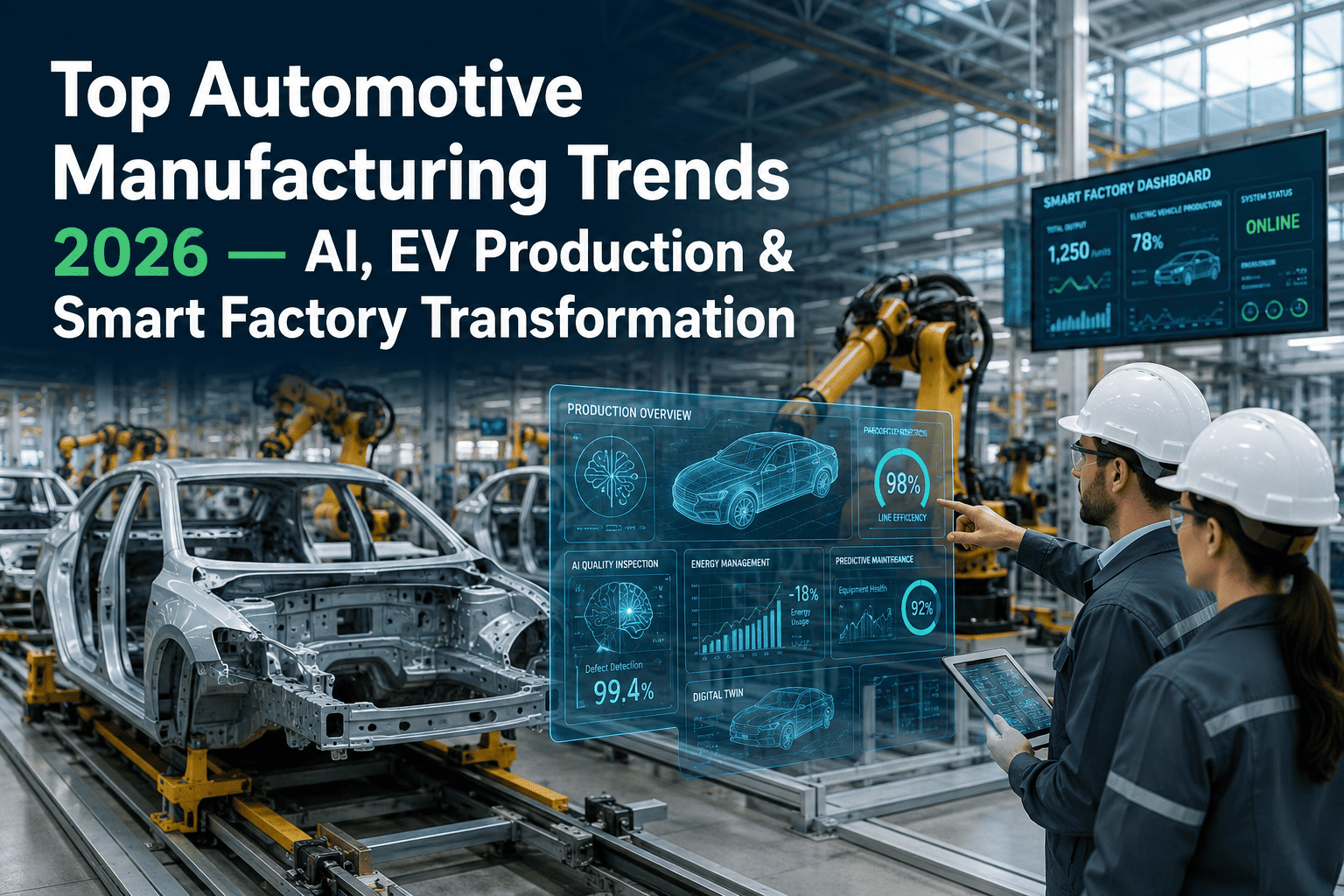
The automotive manufacturing industry is undergoing its most significant transformation in decades. In 2026, AI-powered production lines, advanced robotics, digital twins, and sustainable supply chains are no longer future concepts—they're operational realities reshaping how vehicles are built. From EV manufacturing expansion to Industry 4.0 smart factories, these 10 trends are defining competitive advantage for automotive manufacturers worldwide. Here's what every plant manager and operations leader needs to know.
The 10 Trends Reshaping Automotive Manufacturing
AI-Powered Production Optimization
High ImpactArtificial intelligence is transforming every aspect of automotive production. From real-time scheduling adjustments to predictive quality control, AI systems now manage complex production variables that humans simply cannot process fast enough. Plants using AI-powered optimization report 25-40% improvements in overall equipment effectiveness (OEE).
Advanced Robotics & Collaborative Robots
High ImpactThe robotics landscape in automotive plants has evolved beyond traditional caged industrial robots. Collaborative robots (cobots) now work alongside human operators, handling repetitive tasks while humans focus on complex assembly requiring judgment and dexterity. Vision-guided robots adapt to variations in real-time, reducing the need for rigid fixturing.
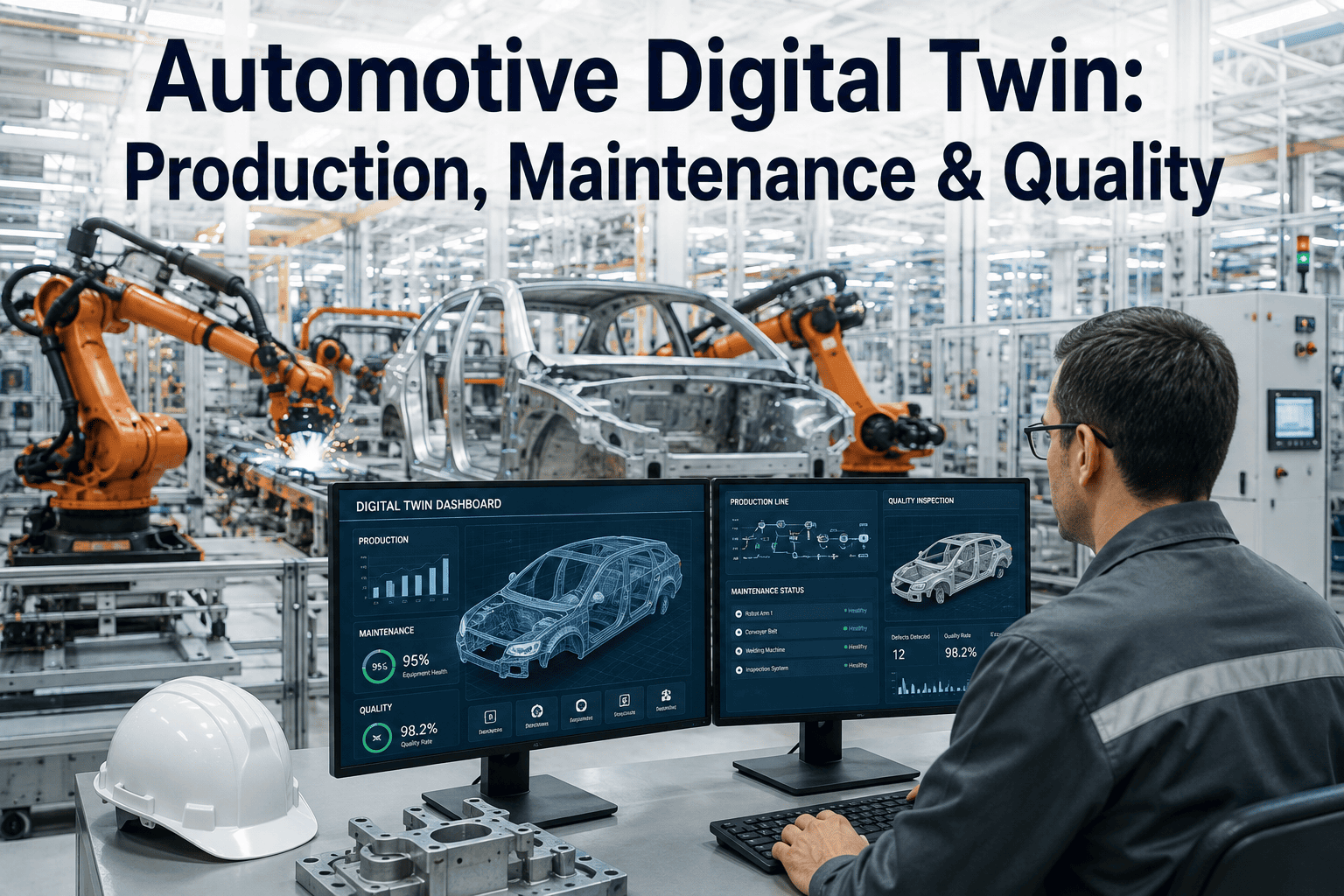
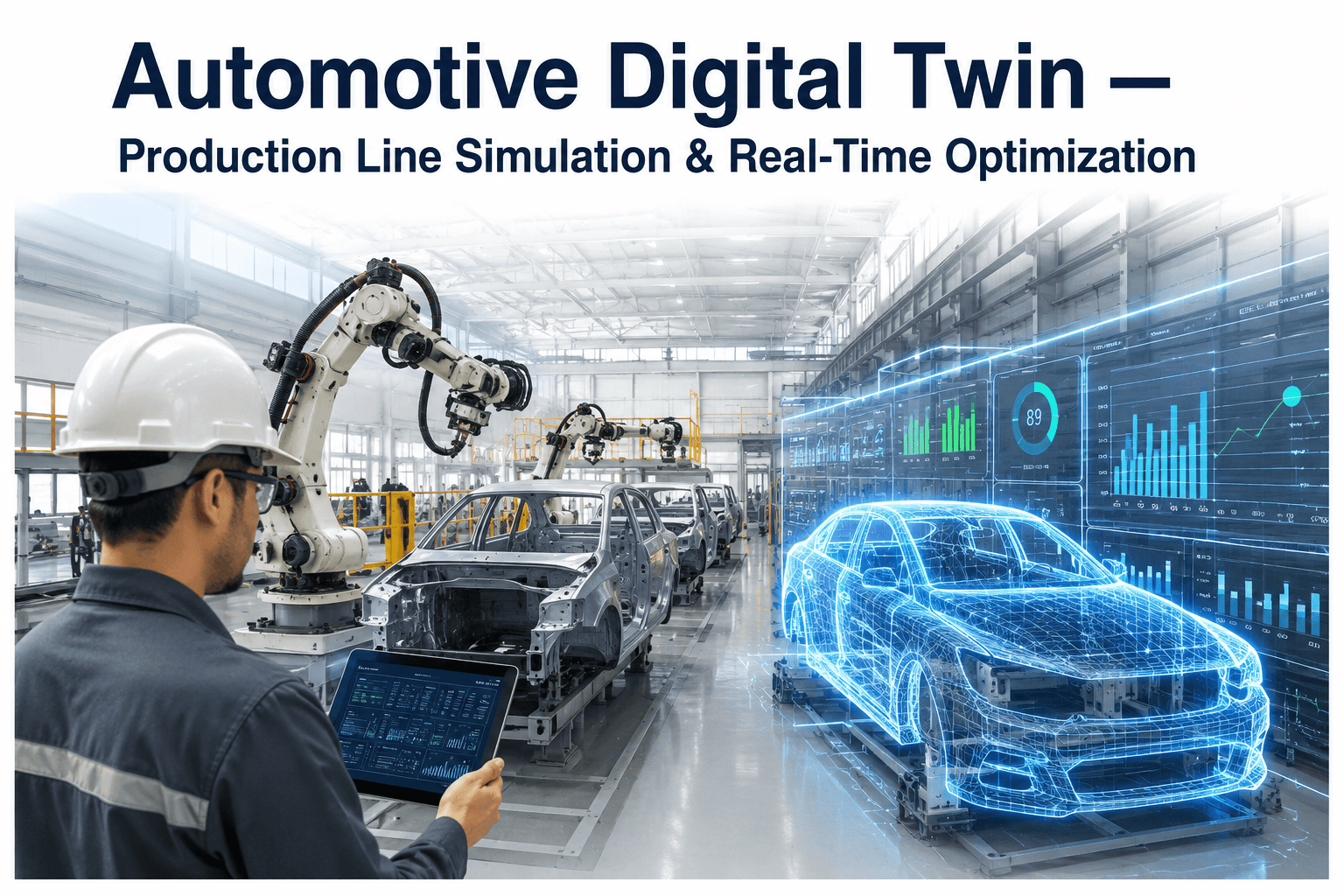
Digital Twin Technology
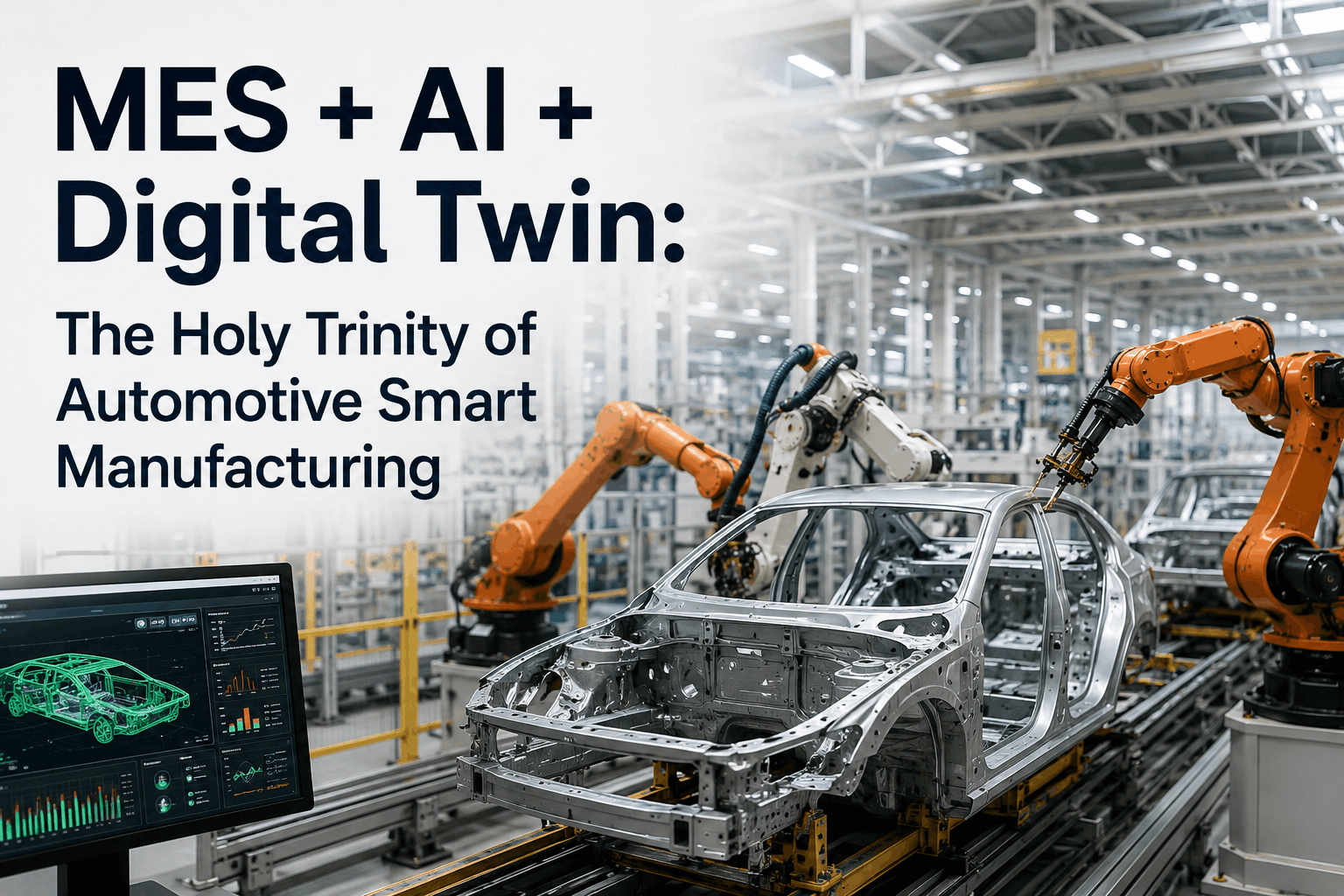
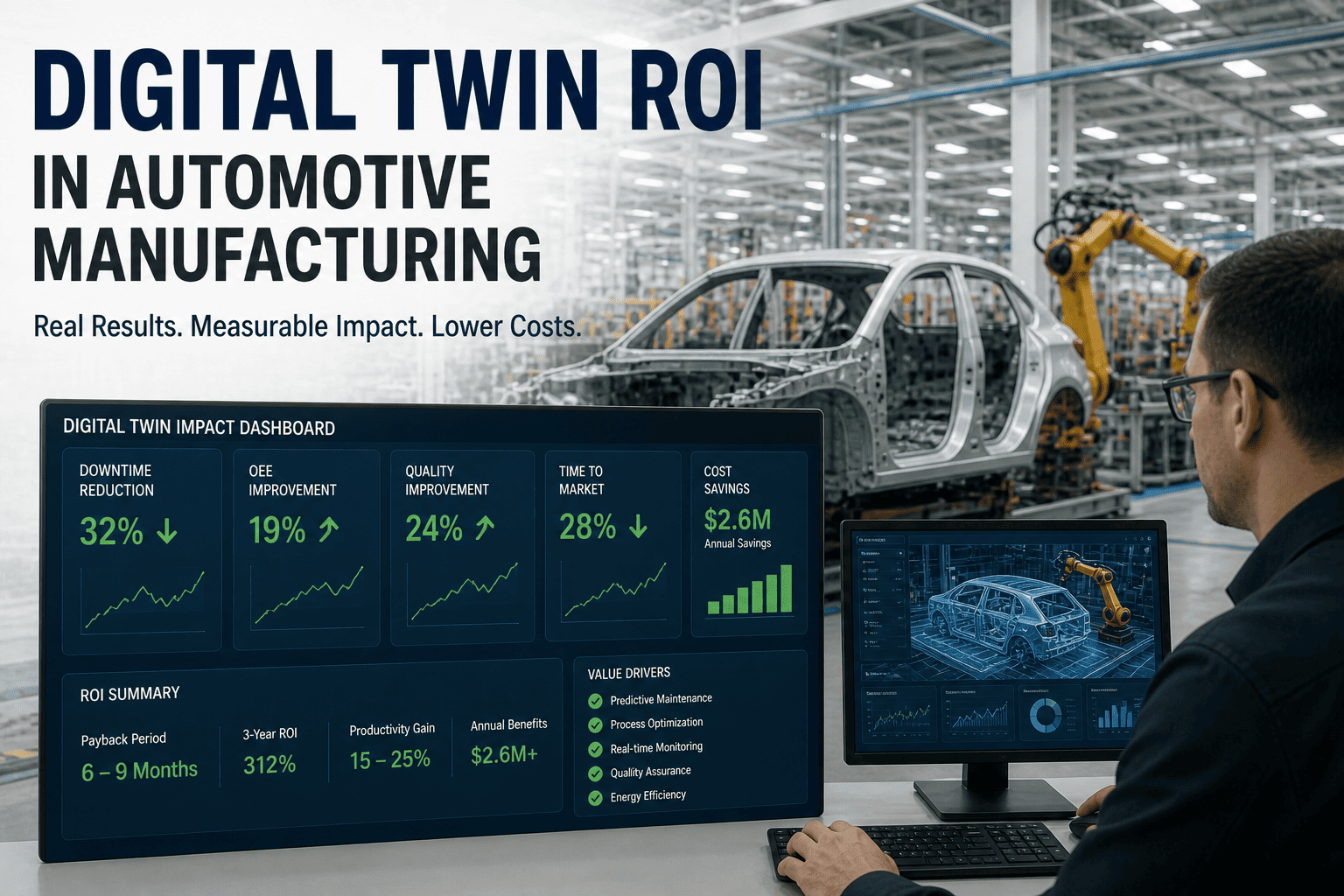
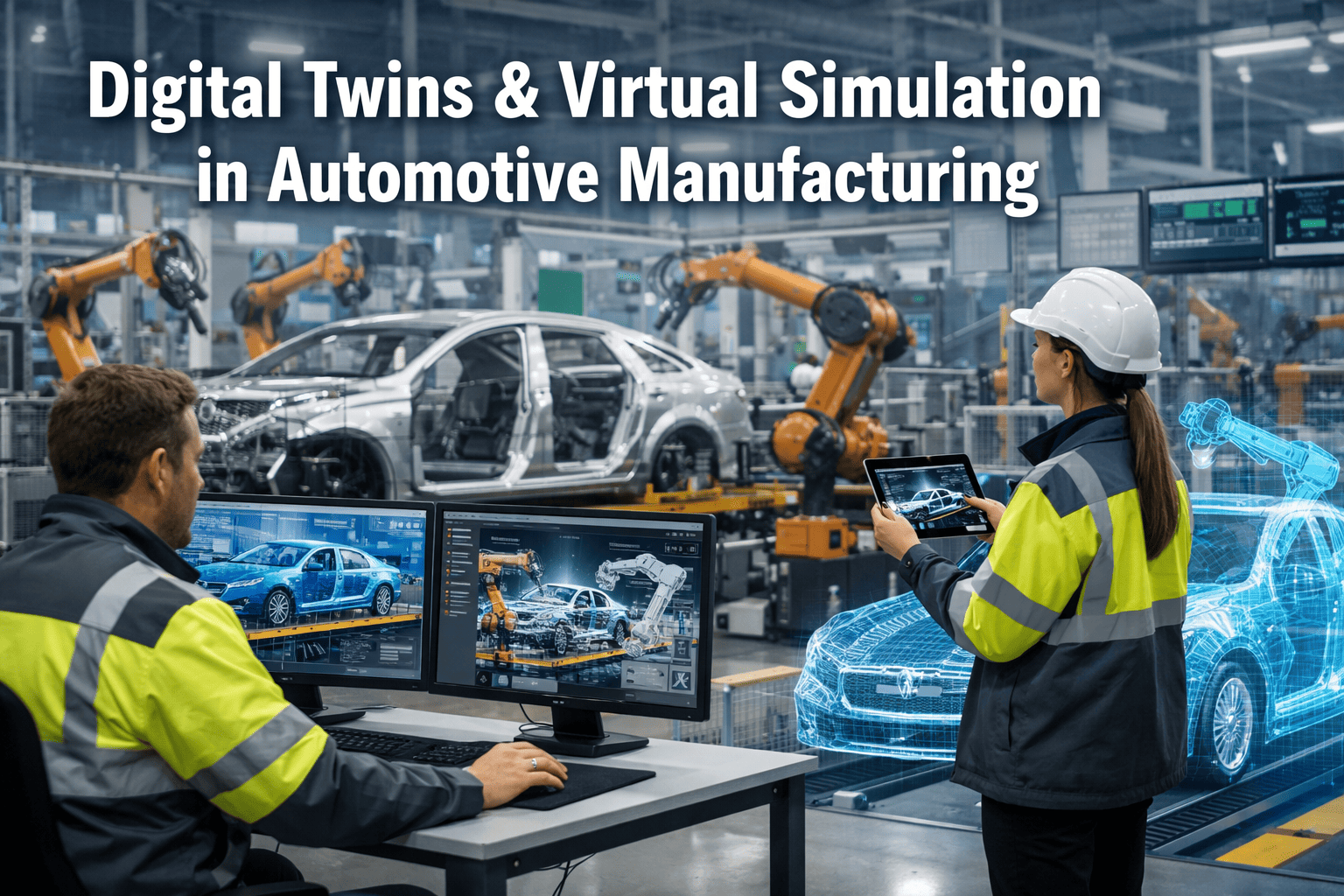
GrowingDigital twins have become essential for automotive manufacturers. These virtual replicas of production lines enable engineers to simulate process changes, test new configurations, and optimize workflows without disrupting actual production. Leading OEMs use digital twins to reduce new model launch times by 30% and improve first-time quality significantly.
EV Manufacturing Expansion
CriticalElectric vehicle production is reshaping plant layouts and processes worldwide. Battery assembly lines, high-voltage safety protocols, new welding techniques for aluminum-intensive bodies, and reconfigured paint shops are now standard requirements. Plants that haven't begun EV transition face existential competitive pressure as consumer demand accelerates.
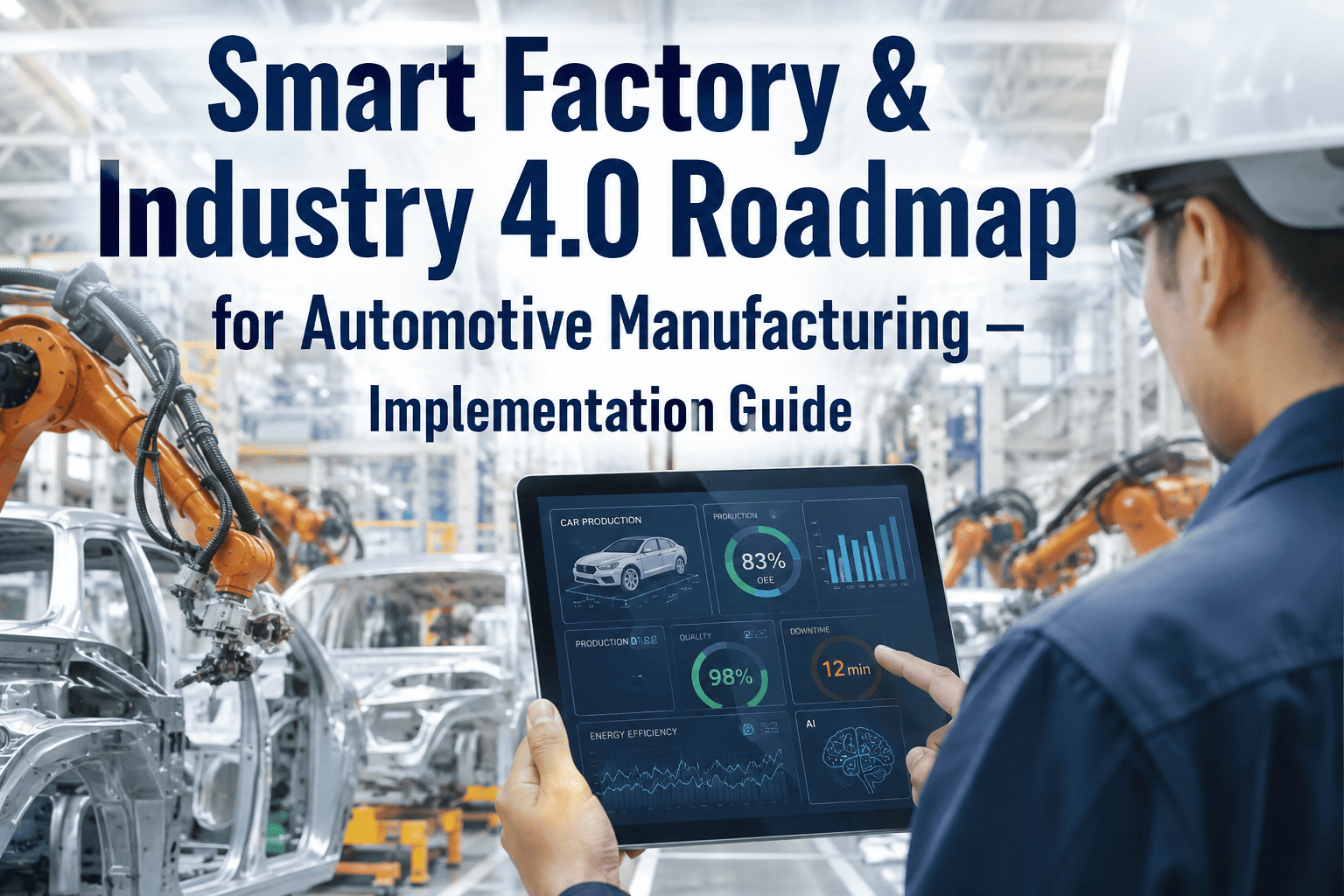
Smart Factory Implementation
High ImpactIndustry 4.0 smart factories connect every machine, sensor, and system into an integrated digital ecosystem. Real-time visibility across the entire production process enables rapid response to issues, optimized resource allocation, and data-driven continuous improvement. The gap between smart factory leaders and laggards is widening rapidly.
Want to see how leading automotive plants implement these trends? Book a demo of iFactory's automotive manufacturing solutions.
Sustainable Supply Chains
GrowingSustainability has moved from corporate PR to operational imperative. Automotive manufacturers are decarbonizing supply chains, implementing circular economy principles, and tracking Scope 3 emissions across suppliers. Consumers and regulators increasingly demand transparency, making sustainable operations a competitive differentiator.
Predictive Maintenance at Scale
High ImpactPredictive maintenance has matured from pilot programs to plant-wide deployment. IoT sensors on critical equipment feed AI systems that predict failures weeks in advance, enabling planned interventions that minimize production disruption. Plants report 50% reductions in unplanned downtime and 30% lower maintenance costs.
Additive Manufacturing Integration
Emerging3D printing has moved beyond prototyping into production applications. Automotive plants now use additive manufacturing for tooling, fixtures, spare parts, and increasingly for end-use components. This reduces lead times for custom parts from weeks to hours and enables mass customization at scale.
Connected Quality Control
GrowingQuality control has transformed from end-of-line inspection to continuous in-process monitoring. Vision systems, sensors, and AI detect defects in real-time, enabling immediate correction rather, than scrapping finished products. Quality data flows directly into CMMS systems, linking defects to maintenance needs.
Workforce Upskilling & Digital Training
CriticalThe skills gap is automotive manufacturing's biggest challenge. Plants are investing heavily in upskilling programs, VR/AR training systems, and digital learning platforms. Workers need new competencies in data analysis, robotics operation, and digital systems—traditional mechanical skills alone are no longer sufficient.
Need help prioritizing which trends to implement first? Talk to our automotive manufacturing experts for a personalized assessment.
Trend Adoption Timeline: What to Implement When
Not all trends require immediate action. This timeline helps prioritize investments based on competitive impact and implementation complexity.
Start Your Manufacturing Transformation
iFactory helps automotive plants implement these trends with predictive maintenance, asset tracking, work order automation, and production analytics.
Expert Perspective
"2026 marks the inflection point where automotive manufacturing leaders and laggards diverge permanently. Plants that have embraced AI, predictive maintenance, and smart factory technologies are seeing 30-40% productivity advantages that traditional facilities simply cannot match. The investment window for catching up is closingmanufacturers who delay digital transformation another 12-18 months may find the gap insurmountable."
Conclusion
Automotive manufacturing in 2026 bears little resemblance to the industry of just five years ago. AI-powered optimization, advanced robotics, digital twins, EV production, and smart factory technologies have moved from pilot programs to production realities. The plants leading this transformation are achieving productivity gains, quality improvements, and cost reductions that create insurmountable competitive advantages. For operations leaders and plant managers, the question is no longer whether to adopt these trends—it's how quickly they can implement them before falling too far behind. The good news: proven solutions exist for every trend on this list. The path forward is clear for those ready to act.
Schedule your iFactory demo to see how we help automotive plants implement these trends, or connect with our specialists to discuss your specific manufacturing challenges.
Transform Your Manufacturing Operations
Join leading automotive plants using iFactory to implement predictive maintenance, asset tracking, and production optimization.