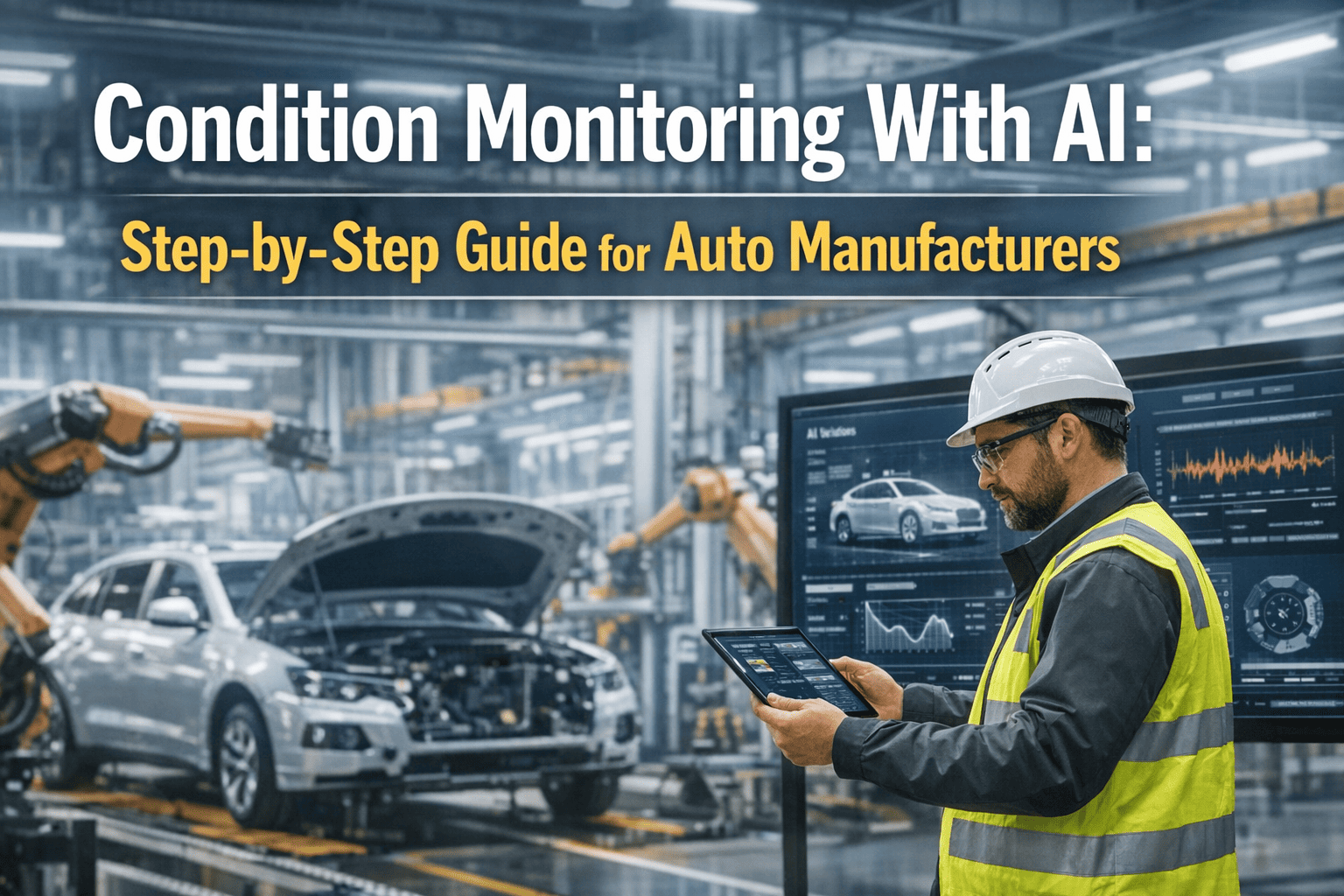
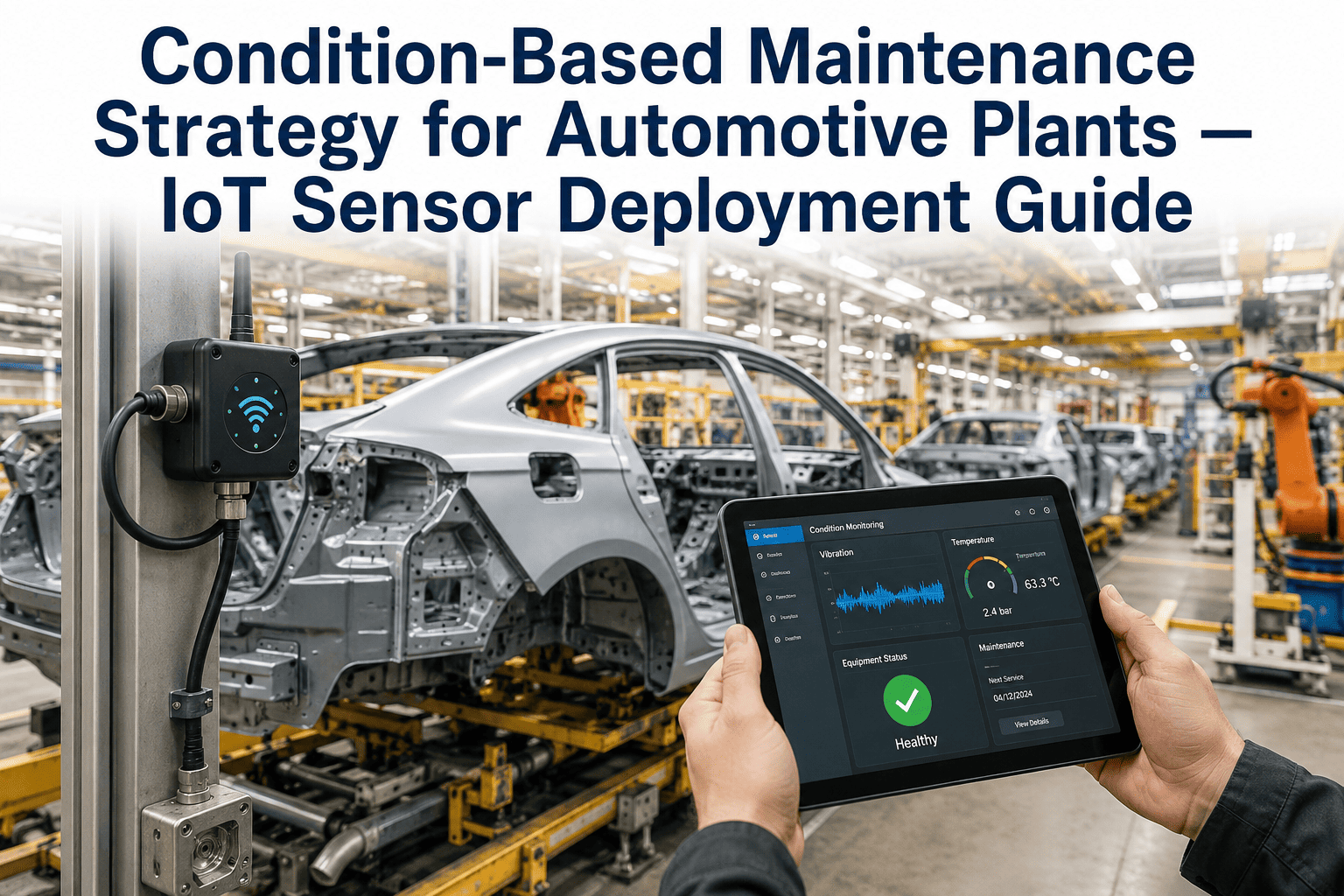
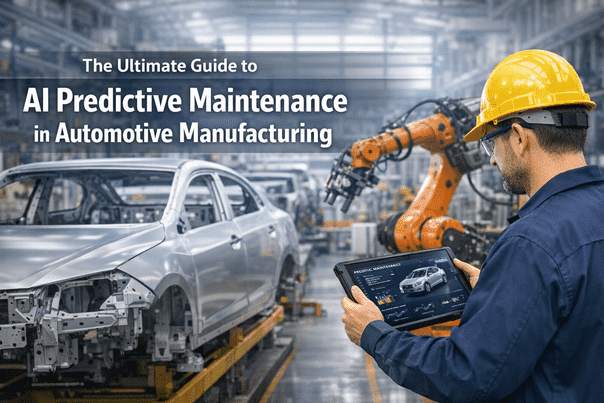
An automotive assembly line losing $22,000 per hour because a stamping press bearing seized without warning represents every plant manager's worst case scenario. Traditional time-based maintenance schedules replace bearings at arbitrary intervals, wasting parts on healthy equipment while missing degrading components that fail between inspections. iFactory's AI condition monitoring analyzes vibration, temperature, acoustic, and current signatures in real time, detecting bearing faults 14-21 days before failure with 94% accuracy. The system generates automated work orders with failure mode classification, spare parts allocation, and maintenance scheduling that prevents unplanned downtime while eliminating unnecessary preventive maintenance waste across stamping, welding, painting, and final assembly operations. Book a demo to see AI condition monitoring for automotive plants.
Quick Answer
iFactory uses machine learning algorithms trained on 14 sensor types to detect equipment degradation patterns in automotive manufacturing environments. The platform monitors stamping presses, robotic welders, paint booth conveyors, assembly line robots, and HVAC systems continuously, identifying anomalies that indicate bearing wear, motor winding deterioration, hydraulic system degradation, and structural fatigue. Average deployment results: 40% reduction in unplanned downtime, 28% decrease in maintenance costs, 14-21 day advance warning on critical failures.
How AI Transforms Sensor Data Into Actionable Maintenance Predictions
The pipeline below shows how iFactory processes continuous sensor streams from automotive production equipment into classified failure predictions with remaining useful life estimates and prioritized maintenance work orders.
1
Multi-Sensor Data Collection
Vibration accelerometers, infrared temperature sensors, acoustic microphones, current transformers, and pressure transducers stream data at 10-50 kHz sampling rates. Edge devices buffer and compress data locally before cloud transmission.
Stamping press line: 24 vibration sensors, 12 temperature points, 8 current monitors, 6 acoustic sensors capturing 2.4 GB data per shift
2
Feature Extraction & Signal Processing
AI applies FFT, wavelet transforms, envelope analysis, and time-domain statistics to extract 180+ features per sensor. Identifies frequency components associated with specific failure modes like bearing inner race defects, gear tooth wear, and motor rotor bar cracks.
Peak Frequency: 4,800 HzRMS Velocity: 12.4 mm/sEnvelope Spectrum: BPFO MatchTrend: +18% over 7 days
3
Anomaly Detection & Failure Mode Classification
Machine learning models compare current signatures against baseline healthy operation and 47 known degradation patterns. Classifies detected anomalies into specific failure modes with confidence scores and severity ratings.
Failure Mode: Bearing Outer Race SpallConfidence: 91%Severity: HighEquipment: Stamping Press 3A
4
Remaining Useful Life Calculation
AI forecasts time-to-failure from degradation velocity, equipment criticality, operating conditions, and historical failure progression data. Accounts for production schedule variations and environmental factors affecting degradation rates.
RUL Forecast: 16 daysNext Downtime Window: 19 daysRecommended Action: Schedule Bearing Replacement
5
Automated Work Order & Parts Procurement
System creates maintenance work order with failure mode details, spare parts list, labor hour estimate, and suggested scheduling window. Integrates with SAP MM, Oracle EBS, or standalone CMMS platforms for procurement and execution tracking.
Work order WO-AUTO-5728 created. Bearing SKF 6312 ordered. Maintenance scheduled for weekend shutdown window. Estimated repair time: 4 hours. Parts arrival: 3 days.
AI Predictive Maintenance
Prevent Unplanned Downtime With 14-21 Day Advance Failure Warnings
iFactory's machine learning models detect bearing degradation, motor faults, hydraulic failures, and structural issues weeks before catastrophic failure, allowing scheduled repairs during planned downtime windows.
Equipment Types Monitored in Automotive Manufacturing
iFactory's AI analyzes condition data from critical production assets across body shop, paint shop, and final assembly operations. Each equipment category has specific failure modes, sensor configurations, and prediction models optimized for automotive manufacturing environments. Talk to an expert about your equipment monitoring needs.
Stamping Presses & Transfer Lines
Monitors press bed vibration, ram alignment, die wear, hydraulic pressure fluctuations, and servo drive current signatures. Detects bearing failures, crankshaft misalignment, clutch degradation, and structural fatigue. Typical failure warnings: 18-24 days in advance. Sensors per press: 8-12 vibration, 4-6 temperature, 2-4 pressure.
Robotic Welders & Spot Welding Guns
Tracks servo motor encoder feedback, gearbox vibration, transformer current draw, electrode tip wear, and cooling system temperature. Identifies motor bearing degradation, gearbox tooth pitting, transformer insulation breakdown, and pneumatic actuator seal wear. Warning window: 12-18 days. Critical for body shop uptime where single robot failure stops entire line.
Paint Booth Conveyors & HVAC Systems
Monitors conveyor drive motor current, chain tension variation, air handling unit fan vibration, paint pump cavitation signatures, and filter differential pressure. Detects bearing failures, chain elongation, fan blade imbalance, pump seal leaks, and filter clogging patterns. Prevents contamination incidents that scrap high-value painted bodies.
Assembly Line Robots & Automated Guided Vehicles
Analyzes servo amplifier power consumption, brake wear indicators, gearbox temperature trends, and AGV drive wheel vibration. Predicts brake failure, gearbox degradation, servo motor overheating, and battery degradation. Final assembly robots handle precise torque operations where failures cause quality defects requiring rework or scrap.
CNC Machining Centers & Boring Equipment
Tracks spindle bearing condition through vibration envelope analysis, cutting force variation from servo load cells, tool wear from acoustic emission sensors, and coolant pump health. Detects spindle bearing spalling, ball screw wear, tool holder taper degradation, and hydraulic system contamination before dimensional tolerances drift out of specification.
Compressors & Pneumatic Distribution Systems
Monitors compressor discharge temperature, intercooler pressure drop, motor current draw patterns, valve seat leakage signatures, and lubrication oil quality indicators. Identifies bearing wear, valve failures, intercooler fouling, and oil contamination. Compressed air failures cascade across entire plant affecting welding, material handling, and assembly operations.
Regional Automotive Manufacturing Standards & Compliance
iFactory ensures AI condition monitoring deployments align with automotive industry standards and regulatory requirements for equipment safety, data security, and environmental protection across US, UAE, Canadian, UK, and European manufacturing operations.
| Region |
Automotive Standards |
Data Security Requirements |
Safety Compliance |
iFactory Implementation |
| United States |
IATF 16949, ISO 9001, AIAG Core Tools |
NIST Cybersecurity Framework, SOC 2 Type II |
OSHA 1910.212, Lockout/Tagout |
Full IATF compliance + SOC 2 |
| UAE |
IATF 16949, QMS Requirements |
UAE Data Protection Law, ISO 27001 |
OSHAD SF, Safety Management |
ISO 27001 certified + OSHAD aligned |
| Canada |
IATF 16949, CSA Standards |
PIPEDA, Provincial Privacy Laws |
CSA Z432 Machine Safety, WHMIS |
PIPEDA compliant + CSA aligned |
| United Kingdom |
IATF 16949, BS Standards |
UK GDPR, Data Protection Act 2018 |
PUWER, Machinery Directive |
UK GDPR + PUWER compliant |
| Europe (EU) |
IATF 16949, VDA Standards (Germany) |
GDPR, NIS2 Directive |
Machinery Directive 2006/42/EC |
GDPR + Machinery Directive certified |
| Germany |
VDA 6.3, IATF 16949, Industry 4.0 |
GDPR, BSI IT-Grundschutz |
BetrSichV, DGUV Safety Regulations |
VDA 6.3 aligned + BSI compliant |
iFactory maintains ISO 27001 information security certification, SOC 2 Type II audit compliance, and encrypts all sensor data in transit (TLS 1.3) and at rest (AES-256) meeting automotive tier-1 supplier cybersecurity requirements.
Platform Capability Comparison for Automotive Predictive Maintenance
Traditional CMMS platforms schedule time-based preventive maintenance without condition awareness. Industrial IoT vendors collect sensor data but lack automotive-specific failure mode libraries and production-synchronized maintenance scheduling. iFactory delivers integrated AI analytics with automotive equipment models, OEM failure pattern recognition, and production schedule optimization. Book a comparison demo.
| Capability |
iFactory |
IBM Maximo |
SAP PM |
Fiix CMMS |
QAD Redzone |
| AI & Predictive Analytics |
| Real-time anomaly detection from sensors |
47 failure mode patterns |
Via Maximo Health add-on |
Via Predictive Maintenance module |
Manual condition entry only |
OEE focus, limited PdM |
| Remaining useful life forecasting |
ML-based, 14-21 day accuracy |
Statistical models only |
Time-based estimation |
Not available |
Not available |
| Automotive-specific failure libraries |
Press, robot, welder models |
Generic industrial only |
Generic industrial only |
Not available |
Production focus only |
| Integration & Automation |
| Auto work order creation from predictions |
With RUL, parts, scheduling |
Manual review required |
Manual review required |
Manual creation only |
Not available |
| Production schedule synchronization |
Downtime window optimization |
Not available |
Via PP/DS integration |
Not available |
Production dashboard only |
| Spare parts RUL-driven procurement |
Auto reorder on RUL threshold |
Inventory integration available |
Via MM module |
Manual reorder only |
Not available |
| Deployment & Scalability |
| Edge computing for low-latency analysis |
Local inference + cloud training |
Cloud-only processing |
Cloud-only processing |
Not applicable |
Limited edge capability |
| Multi-plant centralized monitoring |
Global dashboard + local alerts |
Enterprise architecture |
Multi-plant support |
Single-plant focus |
Multi-site capable |
Based on publicly available product documentation as of Q1 2025. Verify current capabilities with each vendor before procurement decisions.
Automotive Predictive Maintenance
Replace Calendar-Based PM With Condition-Based Intelligence
iFactory eliminates unnecessary preventive maintenance tasks on healthy equipment while preventing catastrophic failures through early detection and RUL-optimized scheduling.
28%
Maintenance Cost Reduction
21 days
Average Failure Warning
Implementation Roadmap for Automotive Plants
iFactory follows a structured deployment methodology for automotive manufacturing facilities, ensuring minimal production disruption while establishing baseline equipment models and validating prediction accuracy before full-scale rollout across body shop, paint shop, and final assembly operations.
Phase 1
Asset Criticality Assessment & Pilot Equipment Selection
Identify high-downtime-cost equipment across production areas. Select 5-10 critical assets for pilot deployment representing different equipment types (presses, robots, conveyors). Map existing CMMS failure history and maintenance schedules. Define success metrics including downtime reduction targets and prediction accuracy thresholds.
Timeline: 2-3 weeks
Phase 2
Sensor Installation & Baseline Data Collection
Install vibration accelerometers, temperature sensors, current monitors, and acoustic sensors on pilot equipment during scheduled maintenance windows. Configure edge computing devices for local data processing. Collect 30-60 days baseline data during normal operation to establish healthy equipment signatures and environmental noise profiles.
Timeline: 4-6 weeks
Phase 3
AI Model Training & Validation
Train machine learning models on baseline data combined with historical failure records from CMMS. Inject synthetic fault signatures to validate detection accuracy. Tune alarm thresholds to minimize false positives while maintaining high true positive rates. Validate RUL forecasts against known equipment degradation curves from OEM specifications.
Timeline: 3-4 weeks
Phase 4
CMMS Integration & Work Order Automation
Connect iFactory to SAP PM, IBM Maximo, or other CMMS platforms via REST API. Configure automatic work order creation rules based on failure severity and RUL thresholds. Map AI-detected failure modes to CMMS failure code taxonomy. Establish spare parts procurement triggers linked to RUL forecasts for long-lead-time components.
Timeline: 2-3 weeks
Phase 5
Production Team Training & Pilot Monitoring
Train maintenance technicians, reliability engineers, and production supervisors on alert interpretation and response protocols. Monitor pilot equipment for 90 days with parallel operation of existing PM schedules. Document all predictions, maintenance actions, and actual failures to calculate prediction accuracy, false alarm rates, and cost avoidance metrics.
Timeline: 12 weeks
Phase 6
Full-Scale Rollout & Continuous Improvement
Expand sensor coverage to remaining critical equipment based on pilot results and ROI validation. Transition from time-based PM to condition-based maintenance scheduling. Implement monthly model retraining cycles incorporating new failure data. Establish quarterly business reviews tracking downtime reduction, maintenance cost savings, and prediction performance against KPIs.
Timeline: Ongoing operations
Measured Outcomes From Deployed Automotive Plants
40%
Reduction in Unplanned Downtime Events
28%
Decrease in Overall Maintenance Costs
94%
Failure Prediction Accuracy Rate
18 days
Average Advance Warning on Critical Failures
62%
Reduction in Emergency Maintenance Callouts
$2.8M
Annual Downtime Cost Avoidance (Mid-size Plant)
From the Field
We were replacing stamping press bearings every 6 months on a fixed schedule, regardless of actual condition. Some bearings failed at 4 months, others ran fine for 9 months. iFactory's condition monitoring gave us 19-day advance warnings on actual failures and extended bearing life by 40% by eliminating premature replacements. The ROI was immediate. First prevented failure saved more than the annual platform cost, and we're now monitoring 120 critical assets across three assembly plants with the same reliability engineering headcount we had before.
Director of Manufacturing Engineering
Tier-1 Automotive Supplier, 340,000 Units Annual Production, Southeastern USA
Value Delivered to Automotive Manufacturing Operations
Prevent Production Line Stoppages From Cascade Failures
Single equipment failure in automotive assembly lines stops entire production flow, costing $15,000-$25,000 per hour in lost throughput plus restart ramp-up losses. iFactory's early warnings enable repairs during scheduled downtime windows, preventing cascade shutdowns and maintaining takt time continuity across body shop, paint shop, and final assembly sequences.
Eliminate Unnecessary Preventive Maintenance Waste
Calendar-based PM schedules replace components on arbitrary time intervals, wasting parts, labor, and production uptime on equipment still operating in healthy condition. Condition-based scheduling extends component life by 30-45% while maintaining reliability, reducing spare parts inventory carrying costs and freeing maintenance capacity for value-adding work instead of wasteful routine replacements.
Optimize Spare Parts Inventory With RUL Forecasts
Long-lead-time critical spare parts require expensive safety stock to prevent extended downtime during emergency failures. RUL-driven procurement triggers order parts 3-4 weeks before predicted failure, matching delivery timing to actual need. Reduces critical spare inventory carrying costs by 35-50% while eliminating expedite fees and emergency shipping charges on rush orders.
Achieve IATF 16949 Predictive Maintenance Evidence
Automotive quality management systems require documented preventive maintenance effectiveness and equipment reliability improvement. iFactory provides audit-ready records of failure predictions, maintenance actions, and equipment health trending that demonstrate proactive control of special characteristics and continuous improvement in equipment availability supporting zero-defect manufacturing objectives.
Frequently Asked Questions
QCan iFactory integrate with our existing SAP PM or IBM Maximo CMMS platform?
iFactory connects via standard REST APIs to SAP PM, IBM Maximo, Oracle EBS, and other enterprise CMMS platforms. Work orders are created automatically with failure mode details, RUL data, and spare parts requirements.
Book a technical integration review.
QHow long does it take to achieve reliable failure predictions after sensor installation?
AI models require 30-60 days of baseline healthy operation data for initial training. Prediction accuracy reaches 85%+ within first 90 days and improves to 94%+ after 6 months as models learn plant-specific operating patterns and failure progressions.
QWhat is the typical false alarm rate and how do you minimize nuisance alerts?
Target false positive rate is below 8% after model tuning. System applies multi-sensor fusion, trend confirmation windows, and adaptive thresholds that account for normal production variations to distinguish true degradation from operational transients.
Discuss alarm management in a demo.
QDoes condition monitoring require continuous internet connectivity or can it operate during network outages?
Edge computing devices run AI inference locally without cloud connectivity. Alerts display on local dashboards and queue for CMMS delivery during network outages. Cloud connectivity is only required for model retraining and multi-plant centralized reporting.
Continue Reading
Transform Reactive Maintenance Into Predictive Intelligence
iFactory's AI condition monitoring delivers 14-21 day advance warnings on equipment failures, eliminates 40% of unplanned downtime, and reduces maintenance costs by 28% through RUL-optimized component replacement and spare parts procurement across automotive manufacturing operations.
47 Failure Mode Patterns
14-21 Day RUL Forecasts
Auto Work Order Creation
SAP / Maximo Integration
IATF 16949 Compliant