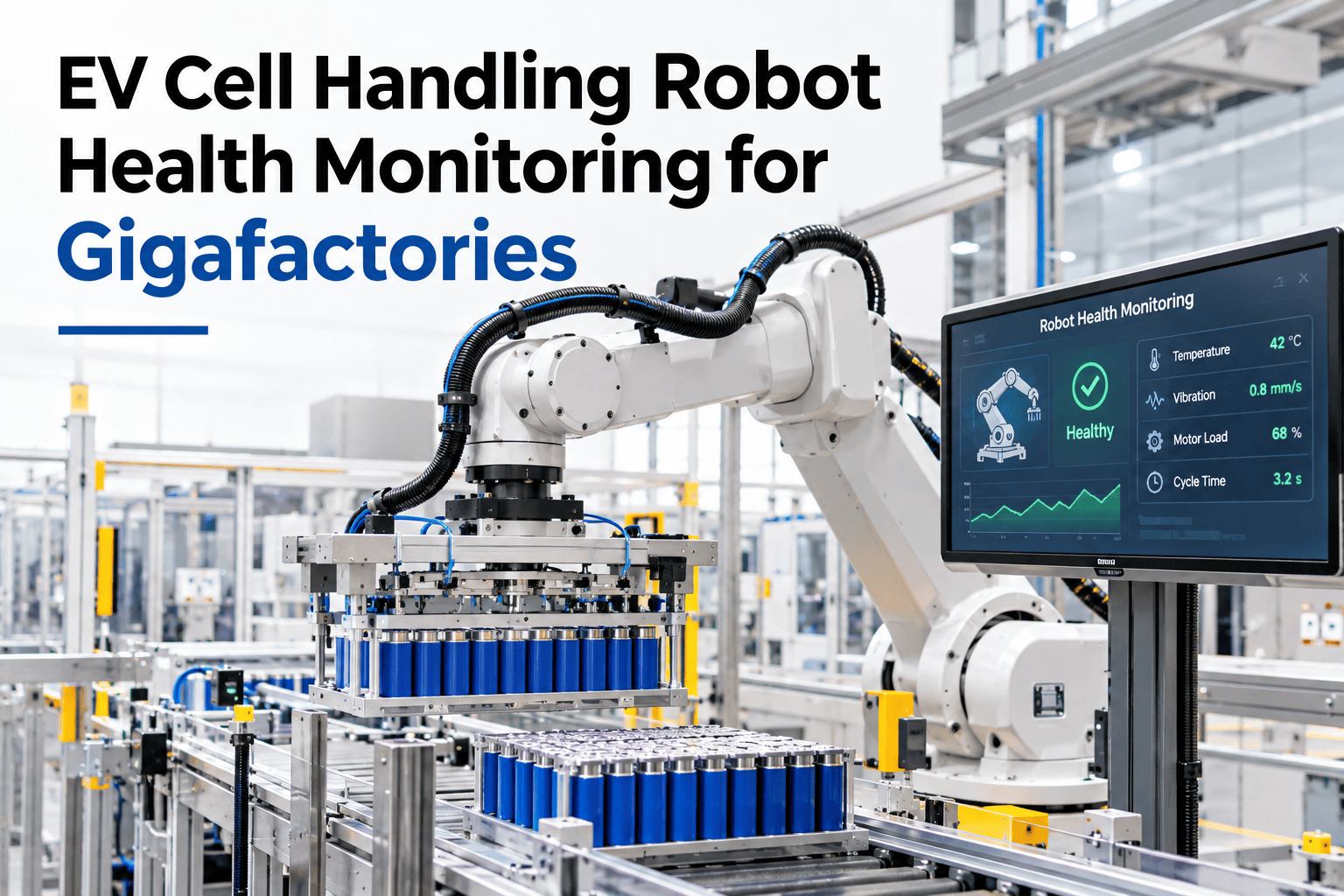
Battery cells are both expensive and fragile, which makes the robots that pick and place them one of the few places in a gigafactory where a small equipment problem can turn directly into scrapped high-value material. A gripper that has worn slightly, or a robot whose positioning has drifted by a few millimeters, can mishandle a cell long before the robot itself throws any fault code. Gigafactory teams who want their own cell-handling equipment monitored for this specific risk can review a gripper and positioning health check with iFactory AI.
A Few Millimeters of Drift Is All It Takes to Damage a Cell
iFactory AI tracks gripper wear, positioning drift and pick-place cycle consistency on cell-handling robots, catching degradation before it damages sensitive cells.
Why Cell Handling Carries More Risk Per Failure Than Most Equipment
A conveyor failure typically stops production until it is fixed. A cell-handling failure can mishandle and damage the specific cell it was holding at that moment, which makes the cost of a missed degradation signal immediate and material, not just a downtime delay.
How Degradation Shows Up Before a Fault Code Does
Check Your Cell-Handling Robots for Early Drift Signals
Share recent gripper and positioning data and a short session will show whether any robots are trending toward risk.
A Composite Scenario: The Drift That Was Caught Before It Cost a Cell
A gigafactory's cell-handling robot had been operating without any fault codes, giving no indication of a developing problem through its own diagnostics. Tracking positioning accuracy against its established baseline showed a gradual drift accumulating over several weeks, well within what the robot's own fault thresholds would tolerate but clearly trending toward a risk of cell misplacement. Scheduling a recalibration based on that trend, rather than waiting for a fault or an actual mishandled cell, avoided what would likely have become a costly incident — a catch iFactory AI's team can help build into your own cell-handling monitoring.
Why Trend-Based Monitoring Beats Fault-Code-Based Monitoring Here
A robot's built-in fault codes are typically designed to catch failures severe enough to stop the robot outright, which is a much higher bar than the subtle drift that can still damage a sensitive, expensive cell. Trend-based monitoring that tracks gradual deviation from baseline catches the problem at a stage well before it would ever trigger a fault, which matters specifically because the cost of a single damaged cell can exceed the cost of the maintenance that would have prevented it many times over.
Frequently Asked Questions
Catch Gripper Wear and Drift Before a Cell Gets Damaged
iFactory AI tracks gripper wear, positioning drift and cycle consistency against a trusted baseline. Book a walkthrough with your own robot data.