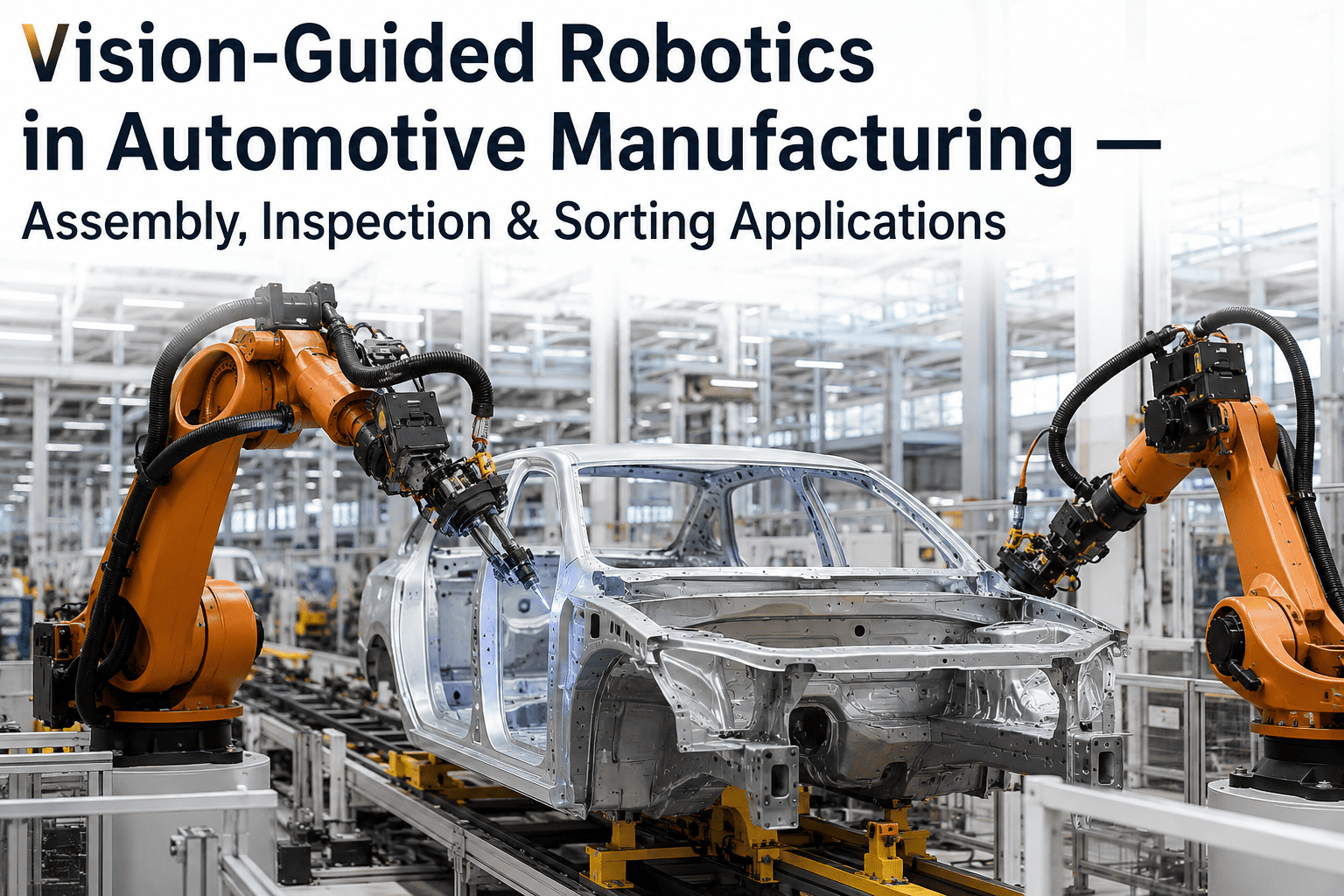
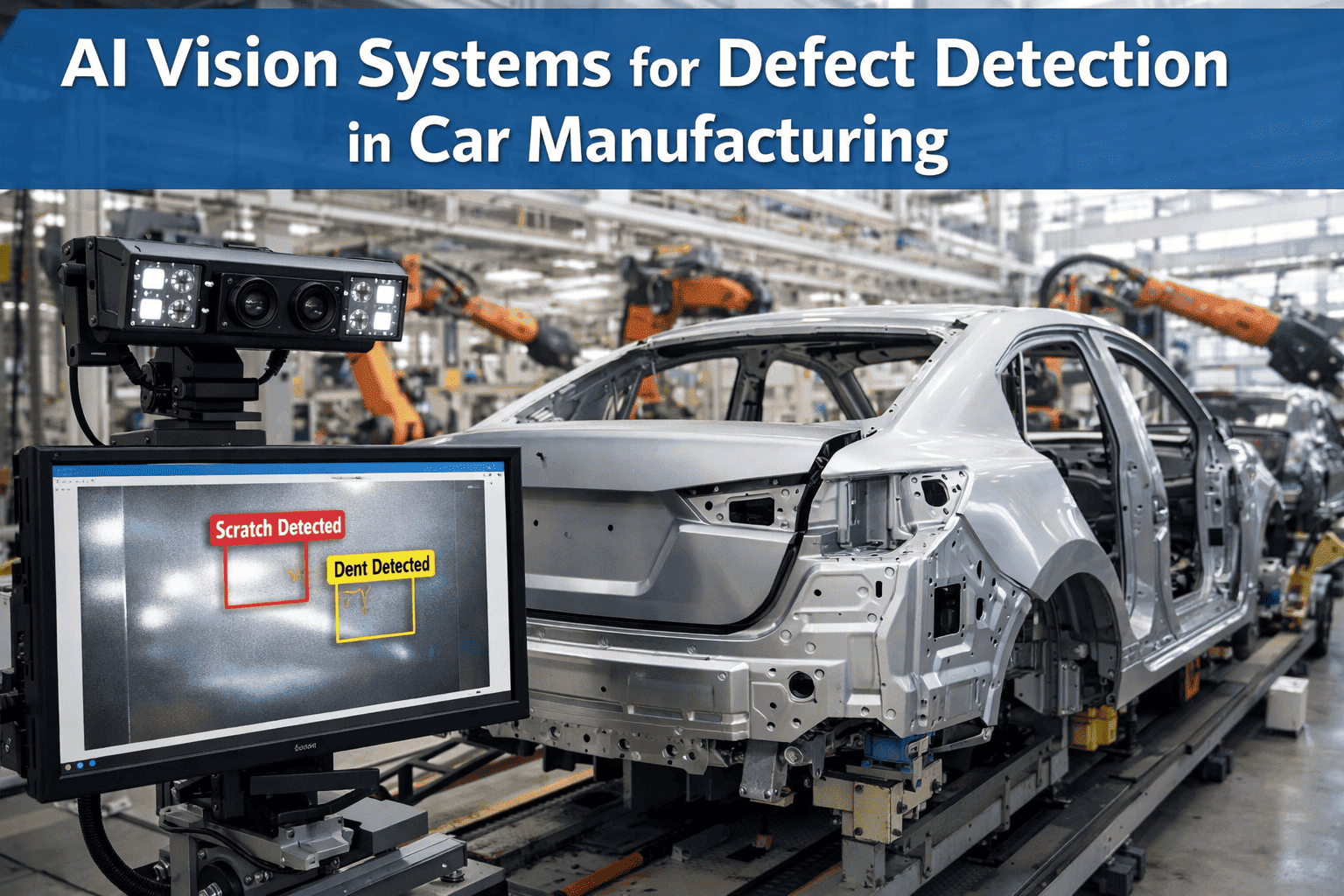
Automotive assembly plants lose 8-14% of production line efficiency annually to manual component picking operations — not from robotic system failures, but from human operators spending 18-32 seconds per part retrieving randomly oriented components from bulk bins, creating cycle time bottlenecks that cascade through stamping press feeds, subassembly stations, and final assembly workflows where 60-90 second takt times leave zero margin for picking delays. By the time manual picking inefficiency compounds into missed production targets or overtime labor costs, the damage is done: throughput losses averaging $420K monthly per assembly line, quality escapes from mis-picked parts reaching downstream stations, and skilled labor allocated to repetitive picking tasks instead of value-added operations. iFactory's AI-driven robotic bin picking platform changes this entirely — deploying 3D vision systems and deep learning models that identify component orientation in under 200 milliseconds, guide robotic arms to execute picks with 98.7% first-attempt success rate, and integrate directly with your existing MES, PLC, and assembly line control systems to achieve 4-6 second average pick-and-place cycles matching automotive production speeds. Book a Demo to see how iFactory deploys AI bin picking across your assembly lines within 8 weeks.
4.2sec
Average pick-and-place cycle time vs 18-32 second manual picking baseline
$6.8M
Annual labor cost savings per assembly plant through robotic picking automation
98.7%
First-attempt pick success rate eliminating rework and downstream quality issues
8wks
Full deployment timeline from vision system install to live production bin picking
Every Second of Manual Picking Delays Production. AI Vision Eliminates the Bottleneck.
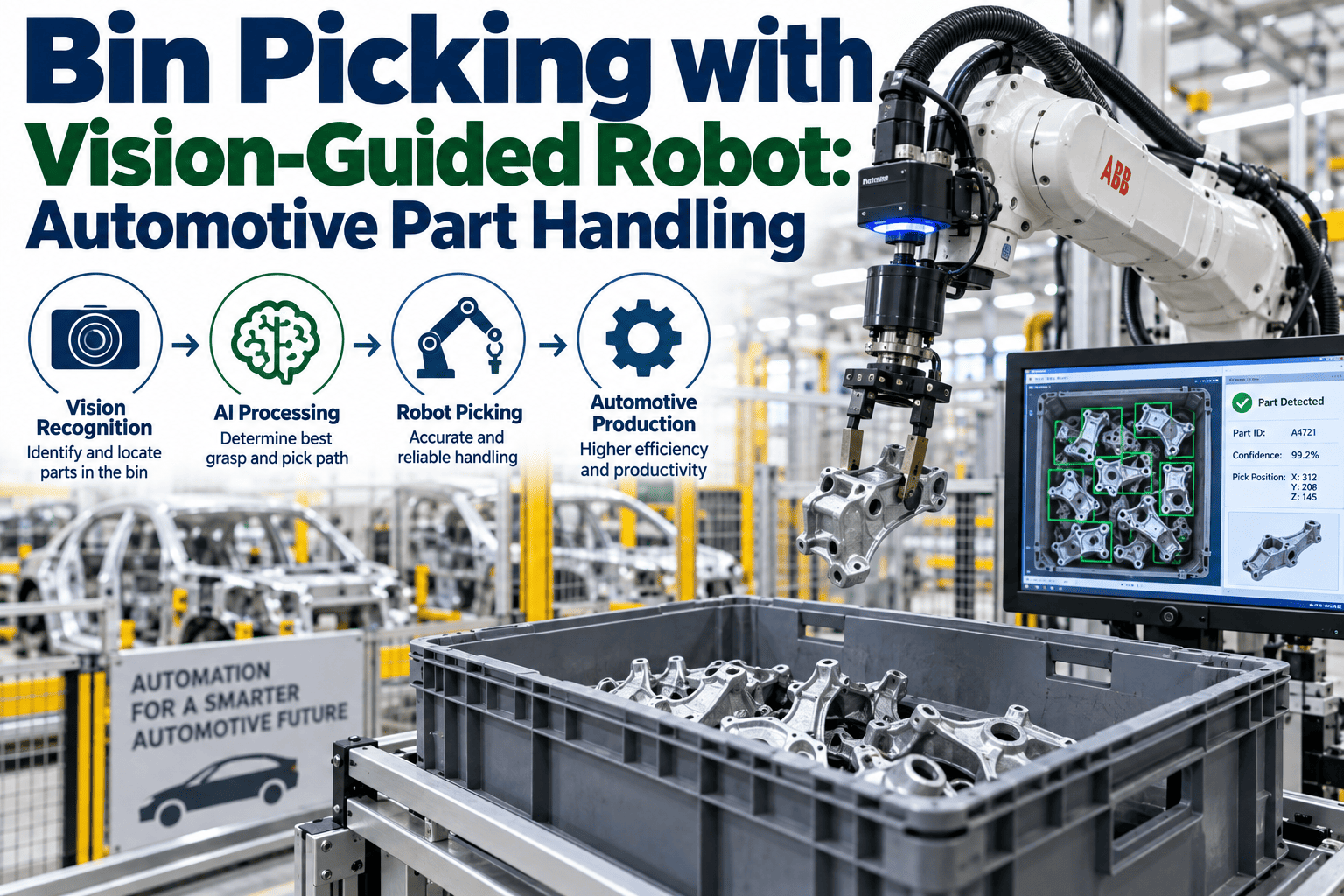
iFactory's AI bin picking platform combines 3D vision cameras, convolutional neural networks for pose estimation, and motion planning algorithms that adapt to component variations — identifying part orientation in cluttered bins within 200ms, calculating collision-free grasp paths in under 300ms, and commanding robotic arms through ABB, FANUC, KUKA, or Universal Robots controllers to execute picks matching assembly line takt time requirements.
How iFactory AI Solves Automotive Robotic Bin Picking
Traditional robotic picking relies on fixed part orientation in structured feeders, pre-sorted component trays, or human operators pre-positioning parts for robot grasping — all of which require upstream material handling labor, restrict component size and geometry flexibility, and introduce picking delays that prevent robots from matching manual operator speed on randomly oriented parts. iFactory replaces this with AI vision-guided picking trained on automotive component datasets — recognizing part geometry in any orientation, adapting grasp strategies to cluttered bin environments, and executing picks at speeds matching assembly line cycle time requirements without pre-positioning or specialized feeders. See live demo of AI bin picking identifying and retrieving randomly oriented brake calipers from bulk bins in under 5 seconds.
01
AI Vision & 3D Pose Estimation
Deep learning convolutional neural networks trained on 50,000+ automotive component images recognize part geometry in cluttered bins achieving 98.7% detection accuracy. 3D structured light cameras capture point cloud data identifying component orientation, surface features, and grasp candidate locations in under 200ms. Vision system processes 12 frames per second adapting to bin refill operations and lighting variations without recalibration.
02
Grasp Planning & Collision Avoidance
AI evaluates 20-40 potential grasp points per detected component scoring each by stability, collision risk, and approach path feasibility. Motion planning algorithms generate collision-free trajectories avoiding bin edges, neighboring parts, and robot self-collision in under 300ms. Adaptive gripper control adjusts force based on component weight, material properties, and surface finish preventing damage to painted or plated automotive parts.
03
Multi-SKU Component Recognition
Vision models trained on 200+ automotive component types recognize brake calipers, suspension arms, engine mounts, transmission housings, and electrical connectors without pre-programming or fixture changes. Transfer learning adapts to new component SKUs within 2-3 hours using 50-100 training images. Single robotic cell handles 8-15 different part types enabling mixed-model assembly line operations without manual bin changeovers.
04
PLC & MES Integration
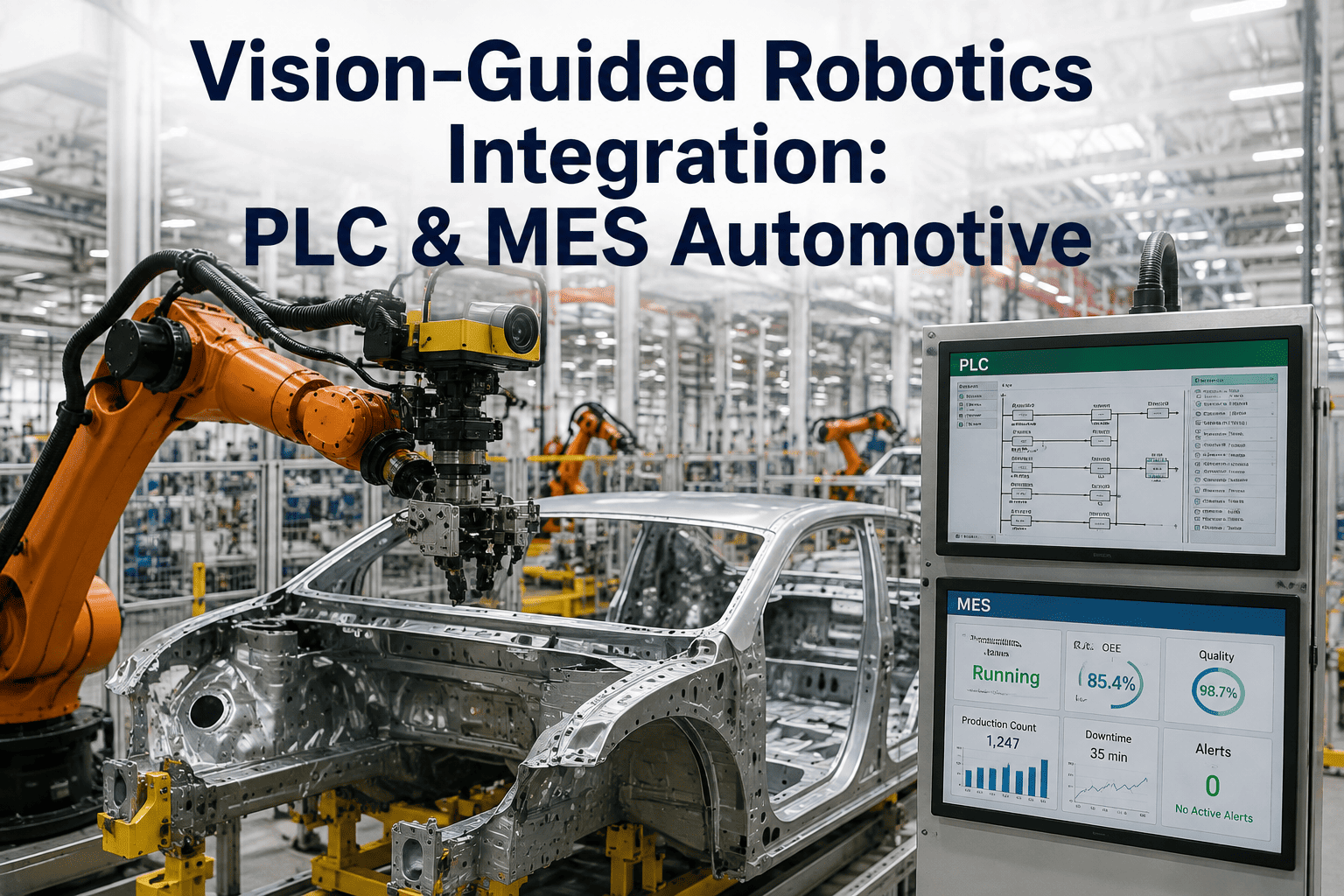
Bin picking robots integrate with Siemens S7, Allen-Bradley ControlLogix, Mitsubishi MELSEC PLCs via EtherNet/IP and Profinet protocols. MES connectivity to SAP MES, Dassault DELMIA, Siemens Opcenter via OPC-UA provides real-time part tracking, quality traceability, and production scheduling synchronization. Pick completion signals trigger downstream assembly station readiness without manual coordination eliminating line stoppage delays.
05
Real-Time OEE Tracking
AI monitors robotic picking performance calculating availability (uptime percentage), performance (actual vs target cycle time), and quality (successful pick rate) updated every 60 seconds. Dashboard displays per-robot OEE with drill-down to component-level pick success rates, grasp failure modes, and vision detection accuracy trends. Predictive analytics identify degrading gripper performance or vision calibration drift before pick rate impacts production throughput.
06
Continuous Learning & Optimization
Failed pick attempts auto-capture images and robot trajectories for model retraining. Weekly model updates improve grasp success rates from 96% baseline to 98.7%+ within 3 months of production deployment. Bin refill patterns, component surface variations, and lighting condition changes automatically trigger adaptive recalibration maintaining consistent performance across shifts without manual intervention or vision system adjustment.
How iFactory Is Different from Traditional Robotic Vision Vendors
Most robotic vision vendors deliver rule-based systems requiring pre-programmed CAD models, controlled lighting conditions, and structured part presentation that automotive assembly environments cannot guarantee during high-volume production with component supplier variations and bin refill operations. iFactory is built differently — from deep learning architecture through deployment methodology, specifically designed for automotive manufacturing where component geometry varies between suppliers, bin conditions change throughout production shifts, and pick cycle times must match 60-90 second assembly line takt requirements. Compare iFactory's AI vision approach against your current manual picking or structured feeder performance directly.
| Capability |
Traditional Vision Systems |
iFactory AI Platform |
| Part Recognition Flexibility |
Requires CAD models and pre-programming per component variant. Cannot handle supplier geometry variations or surface finish changes without system reprogramming. |
Deep learning recognizes components from training images adapting to geometry variations, surface finishes, and lighting changes without reprogramming. New SKU training completes in 2-3 hours. |
| Pick Success Rate |
76-84% first-attempt success on randomly oriented parts in cluttered bins. High retry rates slow cycle time and reduce throughput. |
98.7% first-attempt pick success through AI grasp planning and collision avoidance. Retry rate under 2% maintains consistent cycle time. |
| Cycle Time Performance |
8-12 second average pick-and-place including retries. Too slow for automotive assembly line takt time requirements of 60-90 seconds. |
4.2 second average pick-and-place cycle matching automotive production speeds. Enables multi-pick operations within single takt time. |
| Lighting Robustness |
Requires controlled lighting environments. Performance degrades during shift changes, seasonal sunlight variations, or facility lighting failures. |
AI trained on diverse lighting conditions maintains 98%+ detection accuracy across day/night shifts and ambient lighting variations. No recalibration required. |
| Multi-Component Handling |
Single robot cell handles 1-3 component types. Part changeovers require vision reprogramming and fixture modification taking 2-4 hours per SKU. |
Single cell handles 8-15 component types simultaneously. Mixed-model production without changeovers or reprogramming. Transfer learning adapts to new parts in under 3 hours. |
| System Integration |
Standalone vision controllers requiring custom middleware for PLC/MES connectivity. Integration timelines of 6-12 months for automotive production environments. |
Native PLC integration via EtherNet/IP and Profinet. MES connectivity via OPC-UA. Integration complete in under 2 weeks with existing assembly line control systems. |
| Deployment Timeline |
12-18 months from project kickoff to production deployment. CAD model programming, lighting optimization, grasp testing required per component type. |
8-week fixed deployment program. Vision training weeks 2-3. Pilot picks week 4. Full production deployment by week 8. |
iFactory AI Implementation Roadmap for Robotic Bin Picking
iFactory follows a fixed 6-stage deployment methodology designed specifically for automotive bin picking — delivering pilot pick demonstrations in week 4 on production components and full assembly line integration by week 8. No CAD modeling. No fixture design cycles.
01
Component Assessment
SKU identification, bin geometry analysis, robot placement design
02
Vision Training
Image capture, neural network training, grasp point annotation
03
Robot Integration
Motion planning calibration, gripper setup, safety validation
04
Pilot Validation
Live picking on production bins with quality team verification
05
Line Integration
PLC connectivity, MES synchronization, takt time optimization
06
Full Production
Assembly line robotic picking live, continuous learning active
8-Week Deployment and ROI Timeline
Every iFactory engagement follows a structured 8-week program with defined deliverables per week — and measurable ROI indicators beginning from week 4 pilot picking demonstrations on production components. Request the full 8-week deployment scope document tailored to your component types and assembly lines.
Weeks 1-2
Infrastructure Setup
Component SKU assessment identifying highest-volume parts for robotic picking automation priority
3D vision cameras and lighting installed at bin picking stations with robot workspace calibration
Training image capture covering 50-100 component orientations per SKU type across lighting conditions
Weeks 3-4
AI Training & Pilot
Deep learning models trained on component images achieving 96%+ detection baseline accuracy
Grasp planning algorithms calibrated with collision avoidance and force control parameters per component type
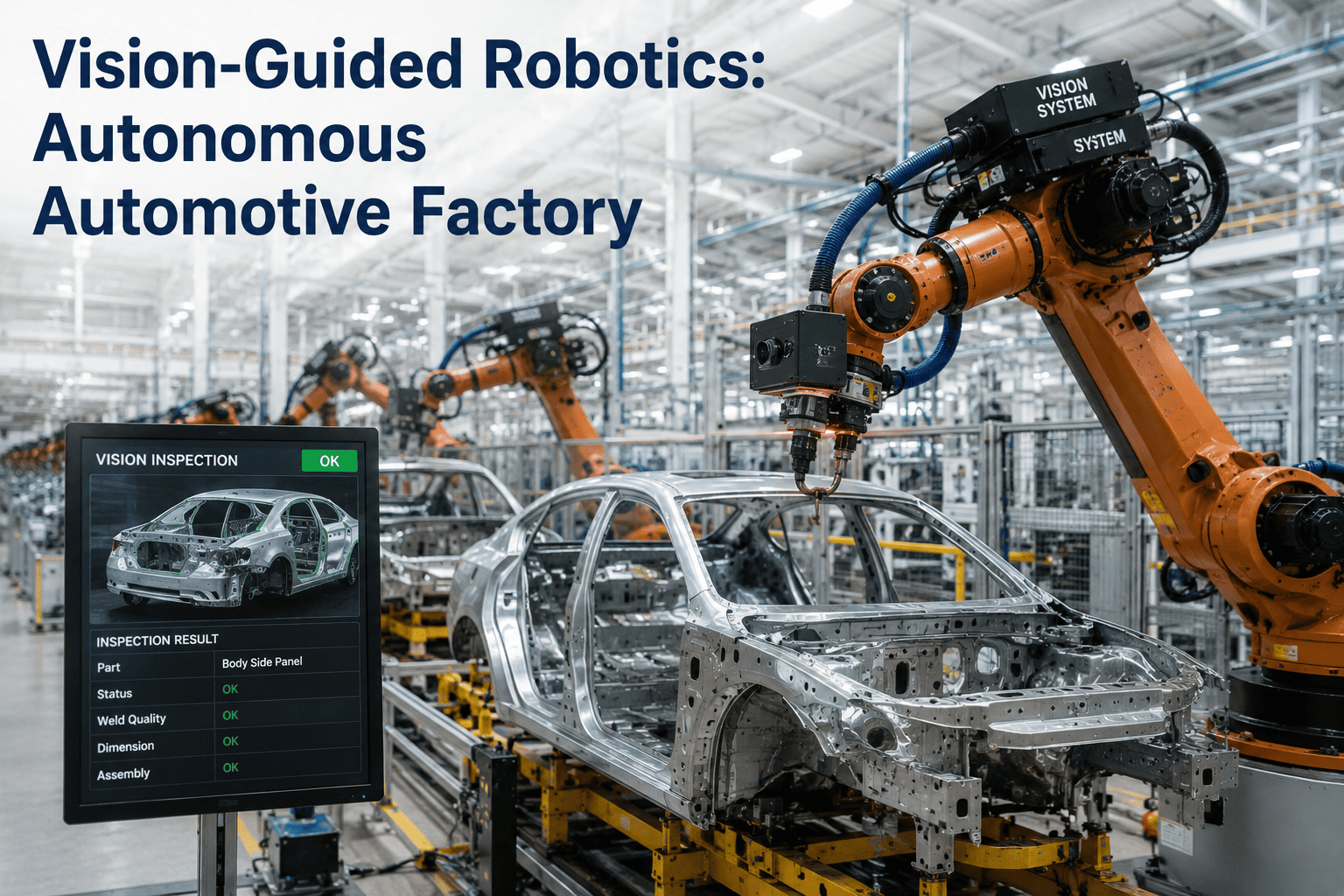
Pilot picks demonstrated on production bins with quality team validation — ROI evidence begins here
Weeks 5-6
Integration & Optimization
PLC connectivity established via EtherNet/IP with assembly line control logic integration
Cycle time optimization achieving 4-6 second pick-and-place target matching assembly takt requirements
MES integration activated for real-time part tracking and production scheduling synchronization
Weeks 7-8
Full Production Go-Live
Full assembly line robotic picking live — all component types, continuous operation matching takt time
Continuous learning system activated improving pick success rate through automated model retraining
ROI baseline report delivered — labor savings, throughput improvement, quality escape reduction
ROI IN 6 WEEKS: MEASURABLE RESULTS FROM WEEK 4
Automotive plants completing the 8-week program report an average of $580,000 in labor cost savings within the first 6 weeks of full production robotic picking — with pick success rates of 97%+ and cycle times under 5 seconds validated by week 4 pilot demonstrations on production components.
$580K
Avg. labor savings in first 6 weeks
97%
Pick success rate by week 4 pilot
4.8sec
Average cycle time achieved
Full AI Bin Picking. Live in 8 Weeks. ROI Evidence in Week 4.
iFactory's fixed-scope deployment program means no CAD modeling delays, no fixture design cycles, and no months of vision programming before you see robotic picking results.
Use Cases and KPI Results from Live Automotive Deployments
These outcomes are drawn from iFactory robotic bin picking deployments at operating automotive assembly plants across three component handling applications. Each use case reflects 6-month post-deployment performance data. Request the full case study report for the component types most relevant to your assembly operations.
A Tier 1 automotive OEM producing 1,200 vehicles per day was allocating 6 operators to manually pick brake calipers from bulk bins feeding 4 subassembly stations, each spending 22-28 seconds per pick including bin searching, part orientation verification, and placement on assembly fixtures. Manual picking variability created takt time bottlenecks causing 8-12 line stoppages per shift when operators fell behind station cycle requirements. iFactory deployed AI bin picking with FANUC robots and 3D vision achieving 4.1 second average pick-and-place cycles with 98.4% first-attempt success. Within 6 weeks of go-live, robotic picking eliminated all manual operator positions while increasing station throughput by 18% through consistent cycle time performance.
6
Manual operator positions eliminated per shift through robotic automation
$2.1M
Annual labor cost savings including benefits and turnover replacement costs
18%
Throughput improvement from consistent 4.1sec cycle vs 22-28sec manual baseline
A stamping facility producing suspension components was experiencing 4-6 quality escapes per week where manual operators mis-picked left/right suspension arms from mixed bins causing downstream assembly errors detected only during final vehicle audit. Part geometry similarity between left and right variants created 3-5% picking error rate under production pace pressure. iFactory deployed AI vision trained on suspension arm orientation differences achieving 99.2% left/right classification accuracy. Edge case detection flagged ambiguous orientations for operator verification rather than proceeding with uncertain picks. Mis-pick rate dropped to zero in the 6-month pilot period eliminating $340K in rework and scrap costs.
Zero
Left/right suspension arm mis-picks in 6 months vs 4-6 weekly baseline
$340K
Rework and scrap cost eliminated through AI part orientation classification
99.2%
Left/right classification accuracy preventing downstream assembly errors
A mixed-model assembly line producing 8 vehicle variants required operators to kit 15-22 different component types per vehicle based on build sequence, spending 140-180 seconds per vehicle kit assembly from multiple bulk bins. Manual kitting errors reached 2.1% creating line stoppages when wrong parts reached assembly stations. iFactory deployed single robotic cell with AI vision handling 18 component types simultaneously, receiving MES build sequence data and auto-kitting correct parts in 48-52 seconds per vehicle set. Kitting error rate dropped to 0.2% through AI SKU verification while labor requirement reduced from 4 operators to 1 robot tender per shift.
65%
Cycle time reduction from 140-180sec manual to 48-52sec robotic kitting
90%
Kitting error reduction from 2.1% manual to 0.2% AI-verified robotic picking
$1.8M
Annual savings combining labor reduction and error elimination across 3 assembly lines
Results Like These Are Standard for Automotive Plants. Not Exceptional.
Every iFactory deployment is scoped to your specific component geometries, bin configurations, and assembly line takt times — so you get results calibrated to your operations, not a generic robotic vision benchmark.
What Automotive Manufacturing Teams Say About iFactory
The following testimonials are from plant managers and automation engineers at automotive assembly facilities currently running iFactory's AI robotic bin picking platform.
We deployed robotic picking on brake calipers in 7 weeks. The AI handled part orientation variations our previous vision system completely failed on. Pick success rate hit 98% in week 4 and we eliminated 6 manual operator positions by week 6. Labor payback was under 11 months.
Manufacturing Engineering Manager
OEM Assembly Plant, USA
Left and right suspension arm mis-picks dropped to zero after iFactory deployment. The AI caught orientation differences human operators missed under production pressure. That classification accuracy alone prevented $85K in rework costs in the first quarter. Quality impact exceeded labor savings.
Plant Quality Manager
Tier 1 Supplier Facility, Germany
Integration with our Siemens PLC and SAP MES took 9 days. The robot receives build sequence from MES and auto-kits the correct parts without operator intervention. Our mixed-model line flexibility improved because changeovers happen in software not through manual bin swapping.
Automation Engineering Lead
Automotive Components Plant, Japan
We trained the AI on 18 different component types in three weeks. Single robot cell replaced 4 manual kitting operators. Cycle time dropped 65% while error rate went from 2% to under 0.3%. Production throughput increase paid for the system in 8 months.
Operations Manager
Mixed-Model Assembly Facility, South Korea
Frequently Asked Questions
Which robot brands does iFactory AI vision integrate with for bin picking?
iFactory integrates with ABB IRB series, FANUC M-10/M-20 series, KUKA KR AGILUS, Universal Robots UR series, Yaskawa Motoman, and Staubli TX2 robots via native controller communication. Vision system sends pick coordinates and grasp orientations through robot-specific protocols. Gripper integration supports pneumatic, servo-electric, and vacuum end-effectors. Robot brand recommendations confirmed during Week 1 assessment based on payload, reach, and cycle time requirements.
Book a demo to evaluate robot options.
How many component SKUs can a single AI vision system handle without reprogramming?
iFactory vision systems handle 8-15 different component types simultaneously using multi-class object detection models. New SKU addition requires 50-100 training images and 2-3 hours transfer learning fine-tuning — no CAD modeling or vision programming required. Mixed-model assembly lines benefit from single robot cell handling entire component variety enabling flexible production without manual bin changeovers or feeder adjustments. Multi-SKU capability confirmed during Week 1 component assessment.
What pick success rate should we expect in production and how quickly is it achieved?
Baseline AI models achieve 96-97% first-attempt pick success at Week 4 pilot demonstrations. Success rate improves to 98-99% within 3 months through continuous learning from failed pick image capture and weekly model retraining. Automotive components with clear grasp features achieve higher success rates than parts with uniform geometry or reflective surfaces. Pick success validation occurs during Week 4 pilot phase with production components and actual bin conditions before full deployment commitment.
How does iFactory handle component surface variations like paint, plating, or oil residue?
AI training datasets include components across all surface finish states encountered in production — bare metal, painted, plated, oiled, dusty. Vision models learn geometry features independent of surface appearance using 3D structured light depth data combined with RGB color information. Surface variations within normal production tolerance do not impact detection accuracy. Extreme contamination or damage outside training data triggers operator alert rather than proceeding with uncertain picks. Surface robustness validated during Week 3-4 training phase using actual production components.
Which PLC and MES systems does iFactory integrate with for assembly line coordination?
iFactory integrates with Siemens S7-1200/1500, Allen-Bradley ControlLogix and CompactLogix, Mitsubishi iQ-R series, Omron NJ/NX series PLCs via EtherNet/IP, Profinet, and Modbus TCP protocols. MES connectivity supports SAP MES, Dassault DELMIA, Siemens Opcenter, Rockwell FactoryTalk via OPC-UA. Real-time build sequence data enables mixed-model component kitting synchronized with assembly line vehicle order. Integration scope confirmed during Week 1 assessment and completed by Week 5-6 deployment phase.
Request assessment for your control systems.
Can the AI system adapt to new component suppliers or geometry changes without retraining?
Minor geometry variations within component tolerance specifications do not require retraining — AI models generalize across normal supplier variation. Significant design changes, new component introductions, or different manufacturing processes require incremental training using 30-50 new images and 1-2 hours model fine-tuning via transfer learning. Training happens offline without production disruption. Updated models deploy via network without robot downtime. Supplier change adaptation typically completes within 4-6 hours from image capture to production deployment.
Region-Wise Automotive Manufacturing Challenges and iFactory Solutions
Automotive plants face different labor availability, automation maturity, and production volume pressures across global regions. iFactory robotic bin picking adapts to regional requirements while delivering consistent pick performance.
| Region |
Key Challenges |
Compliance Requirements |
How iFactory Solves |
| United States |
Skilled labor shortage in automotive manufacturing, wage inflation driving automation ROI, reshoring production increasing domestic capacity utilization, mixed-model flexibility requirements |
OSHA workplace safety for robot collaborative zones, IATF 16949 quality systems, EPA environmental compliance, UL/CSA safety certifications for industrial robots |
Robotic picking eliminates hard-to-fill manual operator positions, fast ROI through labor cost avoidance, multi-SKU capability supports mixed-model production, collaborative robot safety features meet OSHA requirements, IATF 16949 traceability through MES integration |
| Europe |
High labor costs driving automation adoption, Industry 4.0 digital transformation mandates, strict ergonomic regulations limiting manual handling, multi-country production requiring flexible systems |
CE marking machinery directive, ISO 10218 robot safety, ISO/TS 16949 automotive quality, GDPR data handling, ergonomic workplace regulations |
Labor cost reduction through robotic automation, vision data processed locally addressing GDPR compliance, ergonomic benefits eliminating repetitive strain injuries, flexible multi-SKU handling supports pan-European production strategies, CE certified robot integration |
| Canada |
Seasonal workforce availability fluctuations, cross-border supply chain dependencies with US automotive OEMs, automation adoption in Tier 1/2 supplier base, bilingual operation requirements |
CSA robot safety standards, IATF 16949 supplier quality, provincial workplace safety regulations, environmental certifications |
Robotic picking provides consistent capacity regardless of seasonal labor availability, integration with US OEM MES systems for supply chain coordination, multilingual operator interfaces supporting bilingual workforce, automated quality documentation for IATF compliance |
| Middle East (UAE Focus) |
Rapid automotive assembly expansion in free zones, expat workforce turnover creating knowledge loss, extreme temperature impacts on manual labor productivity, technology adoption in emerging manufacturing hubs |
UAE Industrial Safety regulations, free zone manufacturing licenses, ISO quality certifications, export market quality requirements |
Robotic systems immune to extreme facility temperatures, automation eliminates dependency on expat workforce turnover, rapid deployment supporting free zone expansion timelines, continuous learning preserves operational knowledge, automated compliance documentation for export certifications |
| Asia Pacific |
High-volume production demanding maximum throughput, diverse component supplier base requiring flexibility, automation maturity varying across countries, price sensitivity on capital equipment |
National safety standards (GB China, KS Korea, JIS Japan), automotive quality certifications, environmental permits, product export specifications |
Fast cycle time optimization for high-volume production, multi-supplier component handling through AI flexibility, rapid deployment and training reducing capital equipment downtime, competitive total cost of ownership through labor savings and quality improvement |
iFactory vs Automotive Automation Competitors
Compare iFactory's AI robotic bin picking platform against traditional automation vendors and generic CMMS platforms.
| Platform |
AI Vision Capability |
Pick Success Rate |
Multi-SKU Flexibility |
Automotive Specialization |
Deployment Timeline |
| iFactory |
Deep learning 3D pose estimation trained on 50K+ automotive component images. Adapts to geometry variations, lighting changes, surface finishes without reprogramming |
98.7% first-attempt success on randomly oriented parts in cluttered bins. Continuous learning improves to 99%+ within 3 months |
8-15 component types per robot cell. New SKU training in 2-3 hours using 50-100 images. Mixed-model production without changeovers |
Purpose-built for automotive: brake calipers, suspension arms, engine mounts, transmission housings, electrical connectors pre-trained |
8 weeks from kickoff to production. Vision training weeks 2-3. Pilot picks week 4. Full assembly line integration week 8 |
| QAD Redzone |
No robotic vision capability. Production monitoring and downtime tracking platform only |
Not applicable. No bin picking functionality |
Not applicable. Software platform without robotic integration |
Generic manufacturing monitoring. No automotive component handling specialization |
Not applicable to robotic picking deployment |
| IBM Maximo |
No vision or robotic capability. Enterprise asset management and CMMS platform |
Not applicable. No automated picking functionality |
Not applicable. Maintenance management focus |
Generic industrial asset management. No automotive assembly specialization |
Not applicable to robotic automation |
| Traditional Integrators |
Rule-based vision requiring CAD models per component. Cannot handle supplier variations or lighting changes without reprogramming |
76-84% success on random orientation. High retry rates slow cycle time and reduce throughput |
1-3 component types per cell. Changeovers require vision reprogramming and fixture modification taking 2-4 hours per SKU |
Custom integration per project. No pre-trained automotive component models. Long programming cycles per part type |
12-18 months from project kickoff to production. CAD modeling, programming, testing required per component |
| SAP EAM |
No robotic vision capability. ERP maintenance management module |
Not applicable. No picking automation functionality |
Not applicable. Business process management focus |
Generic ERP platform. No automotive assembly automation |
Not applicable to robotic deployment |
Stop Losing $6.8M to Manual Picking. Deploy AI Robotics in 8 Weeks.
iFactory gives automotive plants AI vision-guided bin picking, 98.7% pick success rates, multi-SKU flexibility, and native PLC/MES integration — fully deployed across assembly lines in 8 weeks, with ROI evidence starting in week 4.
4.2 second pick-and-place cycle matching automotive takt time requirements
98.7% first-attempt success eliminating retries and quality escapes
8-15 component types per cell without changeover or reprogramming
Native PLC and MES integration in under 2 weeks