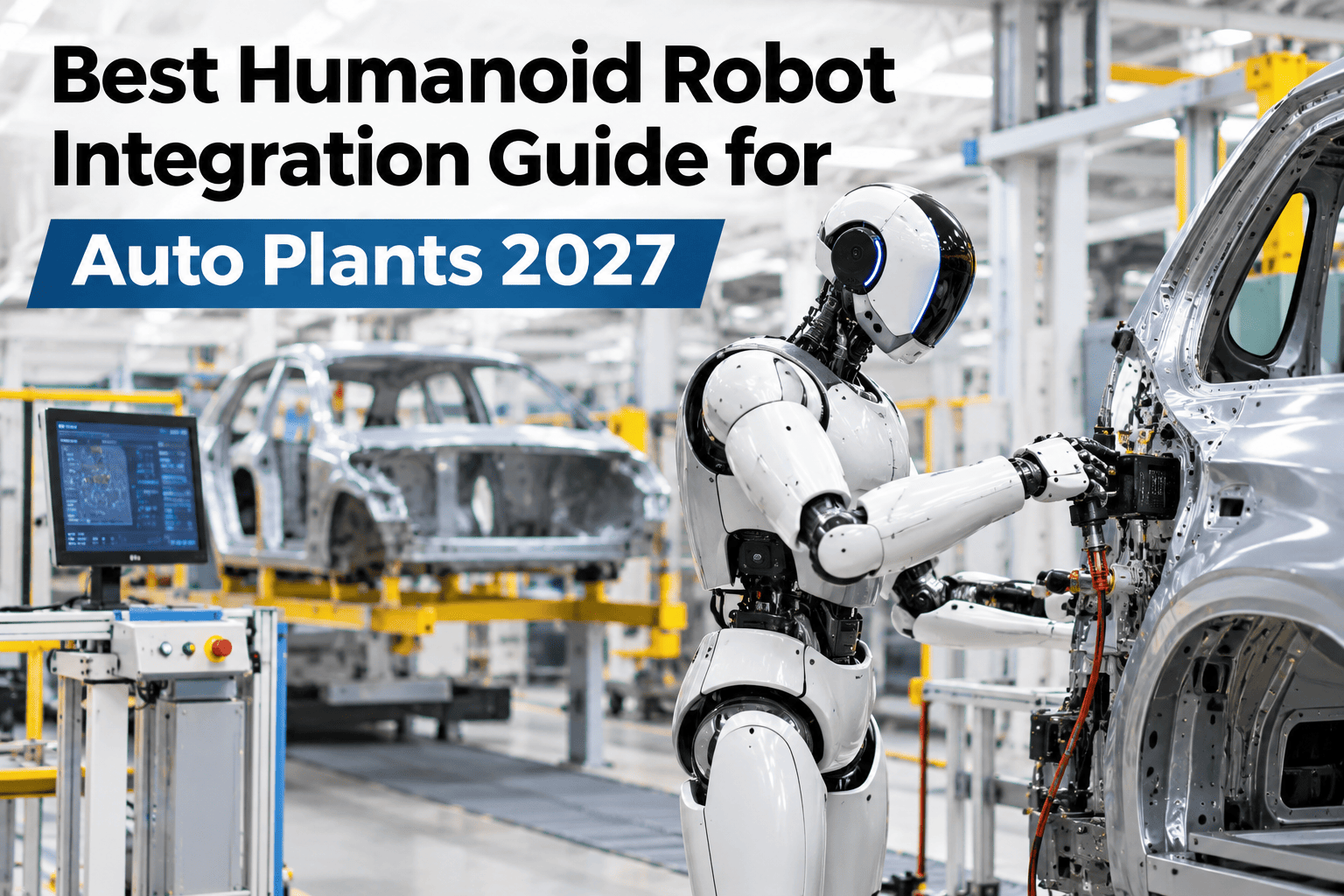
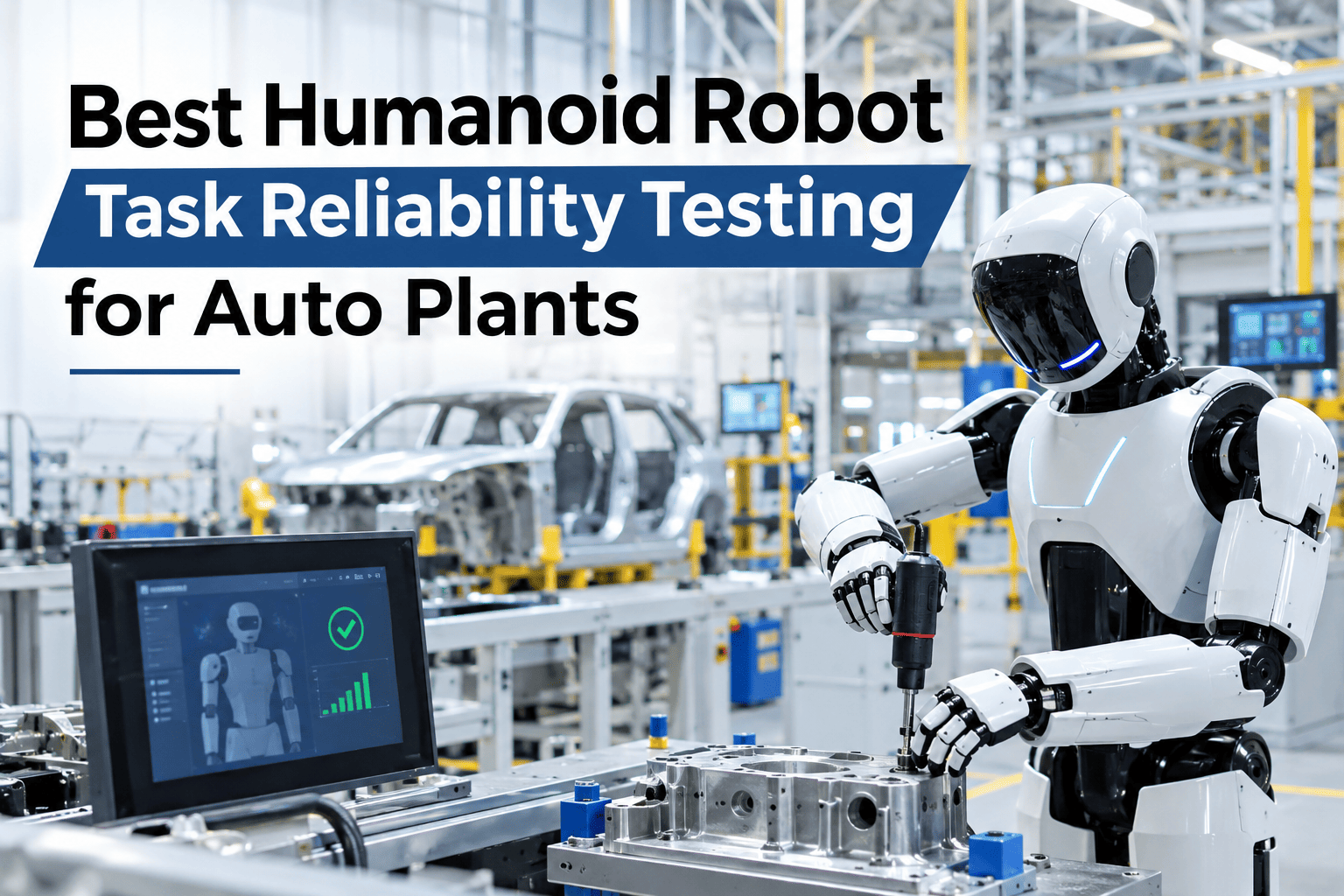
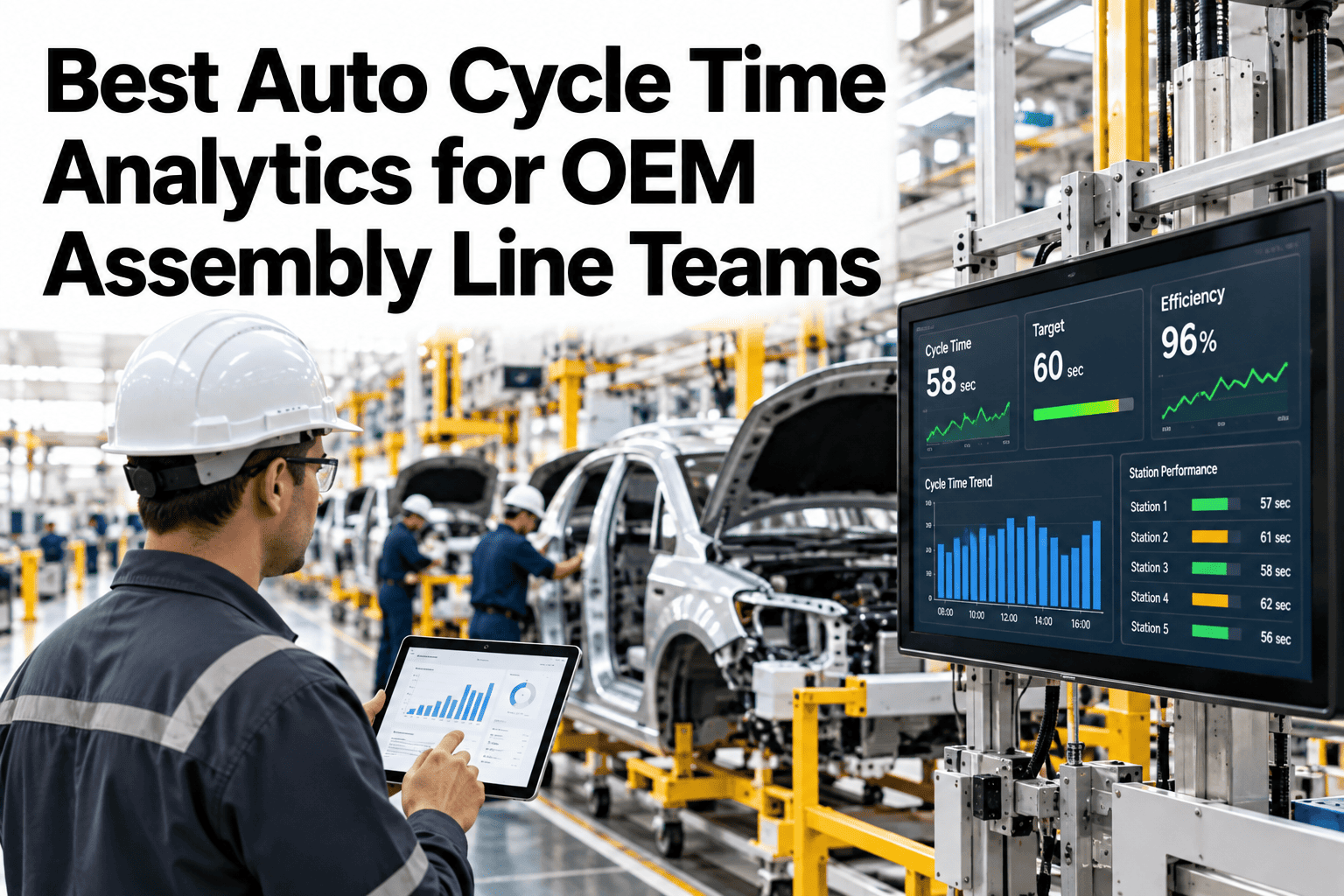
A humanoid robot demo on a trade show floor and a humanoid robot holding cycle time on a real assembly line for a full shift are two very different claims, and 2027 is the year a growing number of auto plants are testing that gap for themselves. The decision that matters is not whether the robot can do a task once, but whether it can do it reliably, safely alongside people, and in sync with the rest of the line's timing. Auto OEM teams evaluating this for their own floor can review a humanoid integration plan against a specific task with iFactory AI.
Auto Plants · Humanoid Robot Integration, 2027
A Humanoid That Works in a Demo Still Has to Prove Itself on Your Line
iFactory AI evaluates worker safety, task reliability, cycle-time consistency and line interop before any humanoid deployment moves past a pilot.
Four Questions to Answer Before Any Humanoid Pilot
Is the task well-defined?
A repetitive, clearly bounded task is a far better first fit than an ambiguous or highly variable one.
Can it hold cycle time consistently?
A robot that is fast on average but inconsistent run to run disrupts line timing more than it helps.
Does it interoperate with the line?
Signals and handoffs with conveyors, fixtures and other stations need to be designed, not assumed.
Is worker safety designed in from the start?
Collaborative zones and force limits are a design decision, not a retrofit after deployment.
A Readiness Ladder for Humanoid Deployment
Level 1 — Controlled demoSingle task, isolated cell, no line timing pressure
Level 2 — Pilot on a real stationLive line, measured cycle time, close supervision
Level 3 — Unsupervised single taskConsistent performance without constant oversight
Level 4 — Multi-task, mixed-model lineHandles task and variant switching reliably
Most auto plants evaluating humanoids in 2027 are realistically working toward Level 2 or early Level 3, not Level 4 — and that is a reasonable, deliberate pace rather than a shortfall.
Find the Right Task to Start a Pilot On
Walk through your line's task list against readiness criteria to find a genuinely good first fit, rather than guessing.
What Line Interop Actually Requires
| Interop need | Why it matters |
|---|
| Shared timing signal | The robot's cycle needs to align with the station's actual takt time |
| Handoff confirmation | Upstream and downstream stations need confirmation a task completed correctly |
| Fault escalation | A stall needs to alert a person quickly, not just stop silently |
| Variant awareness | Mixed-model lines need the robot to know which build it is handling |
A Composite Scenario: The Pilot That Looked Good Until It Didn't
A plant piloted a humanoid on a single fastening task and reported strong early results, with the robot matching human cycle time in isolated testing. Once it ran on the actual line alongside real takt-time pressure and the normal variation of upstream parts arriving slightly early or late, cycle-time consistency dropped noticeably, revealing a gap between controlled testing and real-line conditions. Addressing the handoff timing with the upstream station, rather than the robot's task performance itself, closed most of the gap — a distinction iFactory AI's team can help diagnose during your own pilot.
Frequently Asked Questions
What makes a task a good first fit for a humanoid pilot?
A repetitive, well-bounded task with limited variation and forgiving timing tolerance is a far better starting point than a complex or highly variable job.
Review your task list with our team to find a genuinely good fit.
How do we evaluate cycle-time consistency, not just average speed?
Tracking the spread of cycle times across many repetitions, not just the average, reveals whether a robot is genuinely reliable or just fast on good runs and slow on bad ones.
Ask support how to measure this during your pilot.
What does line interop mean in practice for a humanoid robot?
It means the robot's task timing, handoff confirmations and fault signals are actually connected to the rest of the line's systems, not running as an isolated station nobody else's equipment knows about.
Discuss interop requirements for your specific line.
Is it realistic to expect a humanoid to handle multiple tasks soon?
Most plants are realistically working toward reliable single-task performance before attempting multi-task or mixed-model flexibility, and that staged approach is appropriate rather than a limitation to apologize for.
Our team can set realistic milestones for your pilot.
How does worker safety get designed in rather than added later?
Collaborative zone boundaries, force limiting and escalation procedures need to be part of the initial station layout and task design, not adjustments made after an incident during deployment.
Review safety design for your pilot before it starts.
Test a Humanoid Fit Before Committing to a Full Deployment
iFactory AI helps you find the right first task, measure real cycle-time consistency, and design line interop and safety from the start. Book a walkthrough.