Bringing a new EV model from concept to road-ready used to take years of physical prototyping, grueling test campaigns, and expensive late-stage re-engineering. That timeline is collapsing — not because automakers are cutting corners, but because AI is doing in hours what engineers once needed months to validate. From virtual crash simulation to predictive battery aging, AI is fundamentally rewriting the speed limit of EV development. Book a demo to see how iFactory accelerates your EV development cycle.
AI in EV Manufacturing
How AI Accelerates EV Model Development and Testing Cycles
From 5-year programs to 2-year sprints — AI is compressing every stage of EV development without compromising safety or quality.
54%
reduction in physical prototype iterations with AI-driven simulation
2x
faster time-to-production for AI-optimized EV programs
$1.4B
average development cost savings identified through virtual testing
The Old Way Was Costing the Industry Billions
Traditional EV development ran on a linear, stage-gate process: design freeze, physical prototype build, test campaign, failure analysis, redesign, repeat. Each loop cost 6–18 months and millions in tooling, components, and engineering hours. The brutal math: a single EV platform took 5–7 years and $4–6 billion to bring to market. In an industry now racing to launch new models annually, that pace is simply no longer viable.
Average EV Program Duration
Traditional: 5–7 years
With AI: 2–3 years
Physical Prototype Builds
Traditional: 12–20 builds
With AI: 4–6 builds
Battery Validation Timeline
Traditional: 18–24 months
With AI: 4–6 months
Where AI Is Changing the Game
AI doesn't replace engineers — it gives them superhuman leverage at every stage of the development cycle. Here are the five highest-impact areas where AI is delivering measurable acceleration:
01
Virtual Prototyping & Simulation
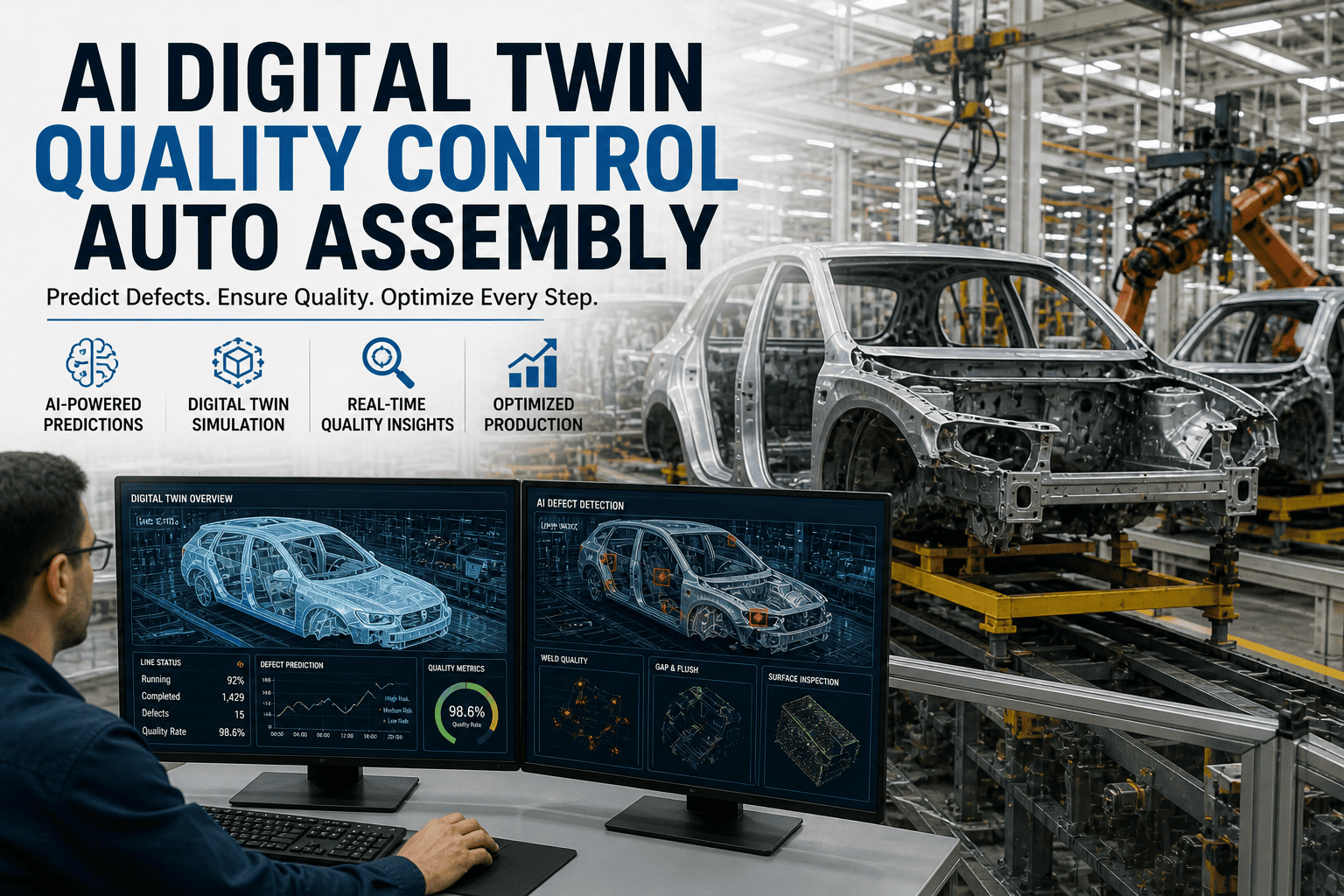
AI-powered digital twins simulate aerodynamics, thermal management, structural integrity, and crash behavior in parallel — before a single physical part is made. What once required 3 physical builds to validate can now be iterated virtually in days. Engineers run thousands of design permutations simultaneously, arriving at the optimal configuration faster and with greater confidence.
Up to 70% fewer physical prototypes
02
Predictive Battery Aging & Chemistry Optimization
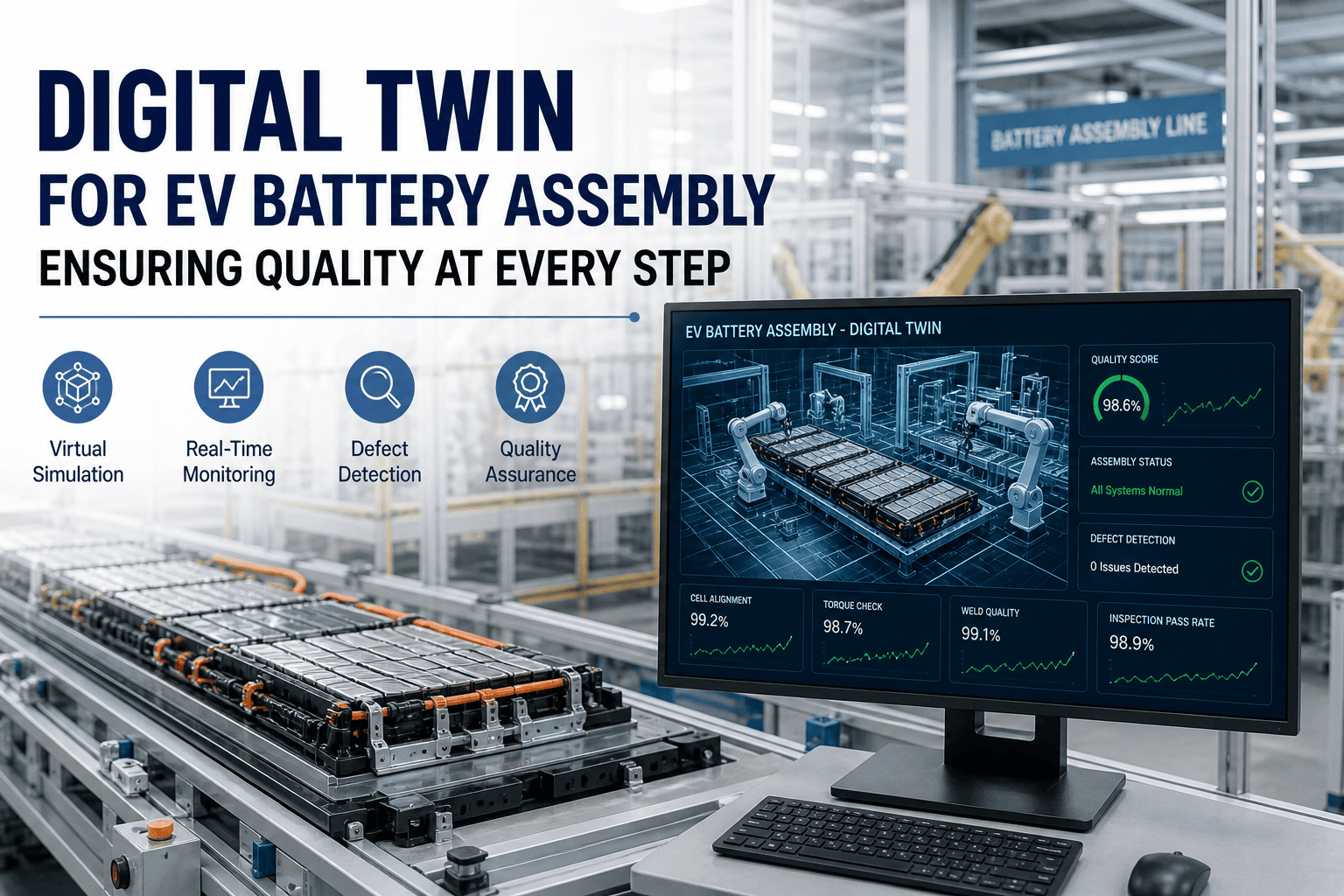
Battery validation is the longest single gate in EV development. AI models trained on electrochemical simulation and early-cycle data can predict 10-year battery degradation curves from weeks of test data — collapsing the validation window from 2 years to months. Chemistry optimization that once required years of physical cycling can be explored in silico first.
18-month validation compressed to under 6 months
03
Generative Design for Lightweighting
AI generative design algorithms explore millions of structural geometries to find configurations that meet stiffness, crash, and NVH targets at minimum weight — a task impossible for human engineers operating on traditional timelines. Components optimized this way often achieve 20–35% weight reduction versus conventionally designed parts, directly improving range and efficiency.
20–35% component weight reduction
04
Automated Software Validation & HIL Testing
Modern EVs run on 100M+ lines of software code. AI-powered test automation generates, executes, and analyzes software test cases at a scale impossible for manual testing — covering edge cases that human testers would never reach. Hardware-in-the-loop (HIL) testing augmented with AI fault injection identifies software-hardware integration issues weeks earlier in the program.
10x test coverage vs manual validation
05
Supply Chain Risk Simulation
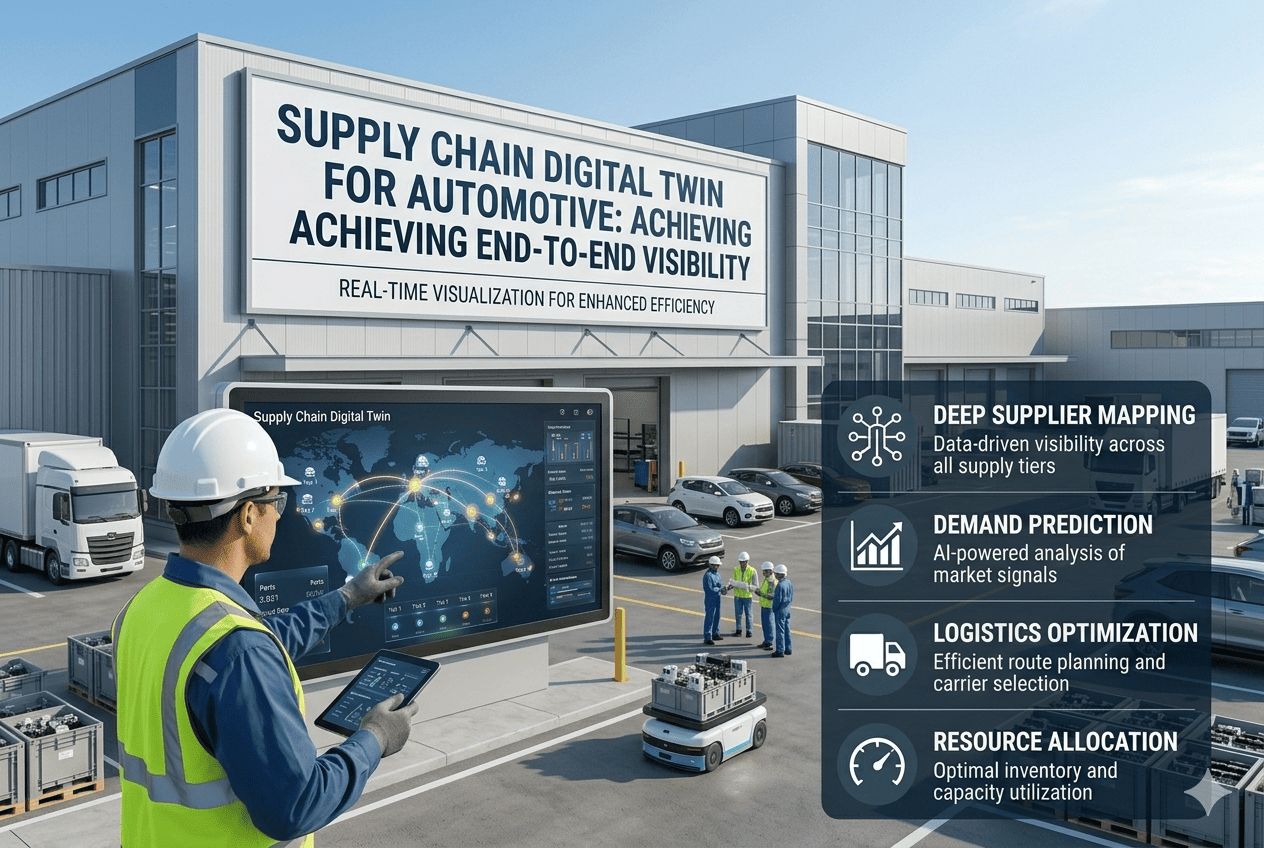
AI models simulate supply chain scenarios months before production launch — identifying which component sourcing decisions create critical-path risks, where buffer inventory strategies are under-sized, and how supplier lead time variability cascades into launch delay probability. Risk that previously surfaced in Week 1 of production is now resolved in the planning room.
Launch delays cut by 60–70%
The Development Cycle: Before vs. After AI
Without AI
Year 1–2Concept design, initial CAD, early physical mules
Year 2–3First prototype builds, test failures discovered
Year 3–4Redesign loops, battery validation campaigns
Year 4–5Software validation, regulatory testing
Year 5–7Production launch, startup delays, ramp losses
Total: 5–7 years
VS
With AI
Month 1–6AI generative design, virtual simulation, digital twin build
Month 6–12Targeted physical validation (fewer, better-scoped builds)
Month 12–18AI battery aging prediction, software auto-validation
Month 18–24Regulatory testing, supply chain simulation, launch prep
Month 24–30Production launch with validated ramp plan
Total: 2–3 years
Real Competitive Pressure — Right Now
The urgency isn't theoretical. Chinese EV manufacturers are already launching new models on 18–24 month cycles, enabled by aggressive AI adoption in design and validation. Legacy OEMs operating on 5-year programs are structurally disadvantaged — unable to respond to market shifts or technology changes fast enough to stay competitive. The AI development gap is becoming a market share gap.
"The manufacturers who close the AI development cycle gap in the next 24 months will define EV market leadership for the rest of the decade."
— IDTechEx, EV Manufacturing Technology Report 2025
How iFactory Powers AI-Accelerated EV Development
01
EV Program Digital Twin
Virtualize your entire development program — design, test, supply chain — in a simulation environment that lets engineering teams identify failures before physical builds begin.
02
Battery Lifecycle Prediction
Predict degradation curves and validate chemistry decisions from early-cycle data, replacing years-long physical aging programs with AI-driven forecasts accurate to within 9%.
03
Production Ramp Simulation
Simulate production launch scenarios across 100+ variables — equipment reliability, supplier delivery variance, operator readiness — before committing to a launch date.
04
Supply Chain Risk Intelligence
Model 200+ supplier lead time profiles and stress-test your launch readiness against realistic supply disruption scenarios — months before production begins.
Start Accelerating
Compress Your EV Development Timeline with AI
iFactory helps EV manufacturers cut program duration, reduce prototype iterations, and launch with confidence. See exactly how on your next program.
EV Digital Twin
Battery AI Prediction
Ramp Simulation
Supply Chain Risk
Launch Readiness