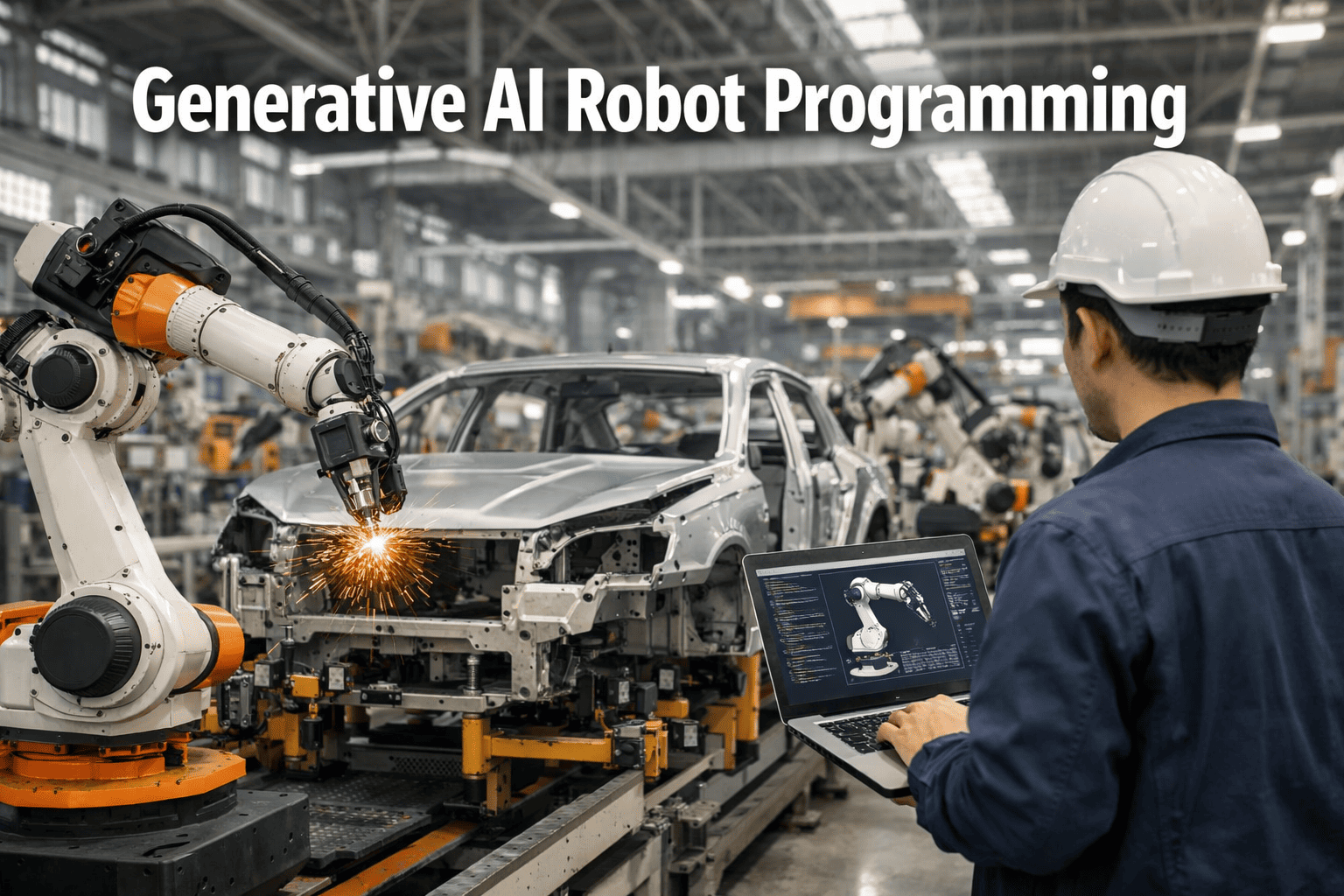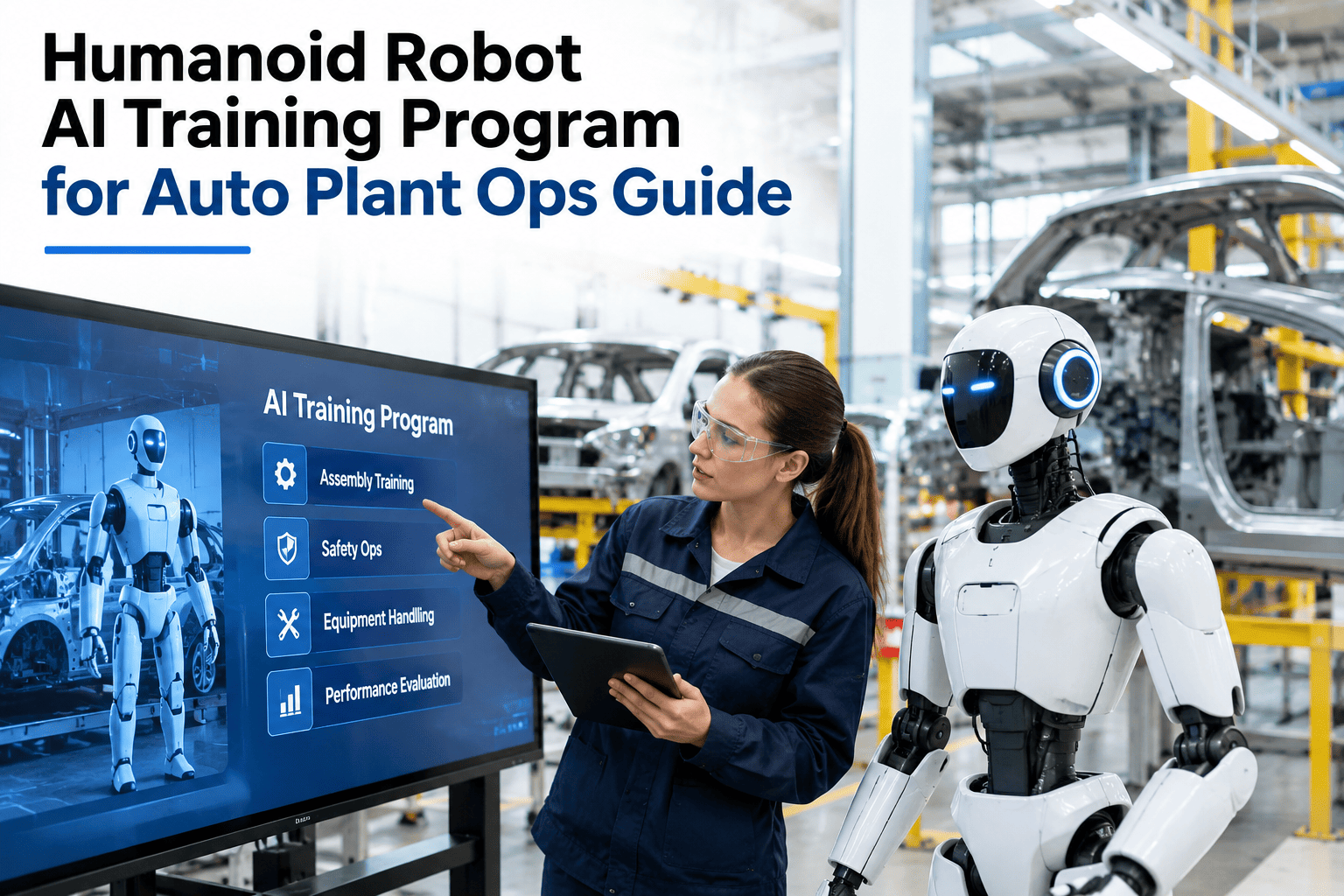
A humanoid robot does not arrive on the floor already knowing your plant's specific task — it has to be trained on it, and how that training happens determines whether the robot performs reliably after deployment or needs constant babysitting. Demonstration learning, sim-to-real transfer and a continuous refinement loop are the three stages that turn a general-purpose humanoid into one that handles your specific task consistently. Auto plant ops teams scoping their own training program can review a training workflow against a specific task with iFactory AI.
A Humanoid Doesn't Arrive Knowing Your Task — Training Is the Whole Program
iFactory AI structures humanoid training around demonstration learning, sim-to-real transfer and continuous refinement, so performance keeps improving after deployment, not just during setup.
Three Stages That Take a Humanoid From General to Task-Ready
Each stage builds on the one before it, and skipping a stage — moving straight from demonstration to live deployment without a simulation stage, for example — tends to produce a robot that performs well in testing but struggles with the variation real production throws at it.
What Each Stage Actually Requires
| Stage | What it needs | Common mistake |
|---|---|---|
| Demonstration | Multiple clean examples from an experienced operator | Using only one demonstration, missing task variation |
| Sim-to-real | A simulation environment close to real conditions | Testing only in ideal conditions, not edge cases |
| Refinement | Ongoing performance monitoring and correction data | Treating deployment as the finish line, not an ongoing process |
Scope a Training Program for Your Specific Task
Walk through your target task to see what a realistic demonstration-to-deployment training timeline looks like.
Why Continuous Refinement Matters More Than Initial Training Quality
A robot's initial training, however thorough, cannot anticipate every variation real production will present — a slightly different part orientation, a worn fixture, a material batch that behaves differently. Continuous refinement is what closes that gap over time, using live performance data to adjust the model rather than treating the initial training as a one-time event.
A Composite Scenario: The Task That Improved for Months After Deployment
A plant deployed a humanoid on a fastening task after thorough demonstration and simulation training, with solid but not perfect initial performance on the live line. Rather than treating that initial performance as final, the team tracked task completion quality continuously and fed correction data back into refinement, which steadily improved consistency over the following months as the model encountered and adapted to real production variation the simulation stage had not fully captured. Performance several months in was noticeably better than at initial deployment — a trajectory iFactory AI's team can help design into your own training program from the start.
Frequently Asked Questions
Build a Training Program That Keeps Improving After Deployment
iFactory AI structures humanoid training around demonstration, simulation and continuous refinement. Book a walkthrough for your specific task.