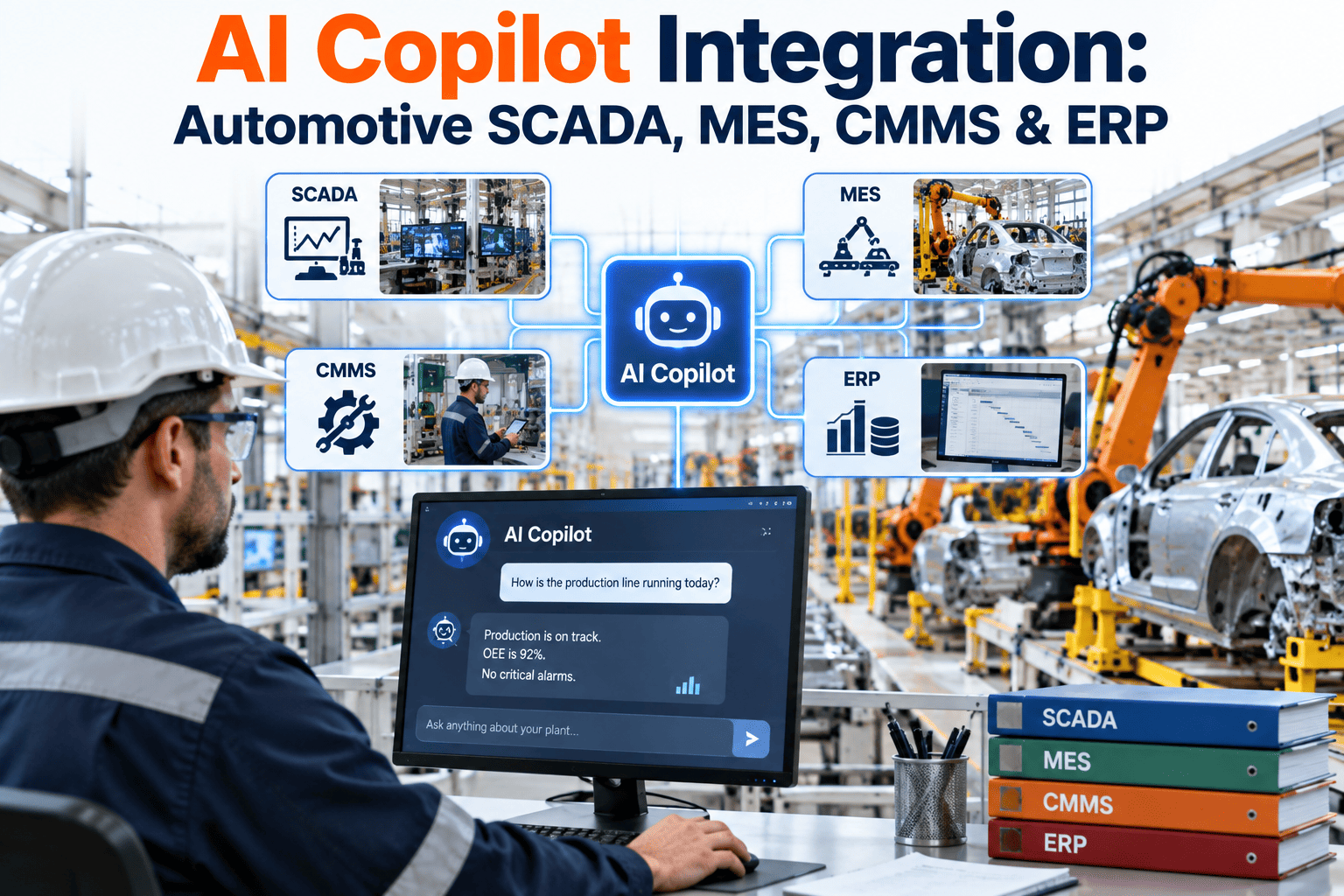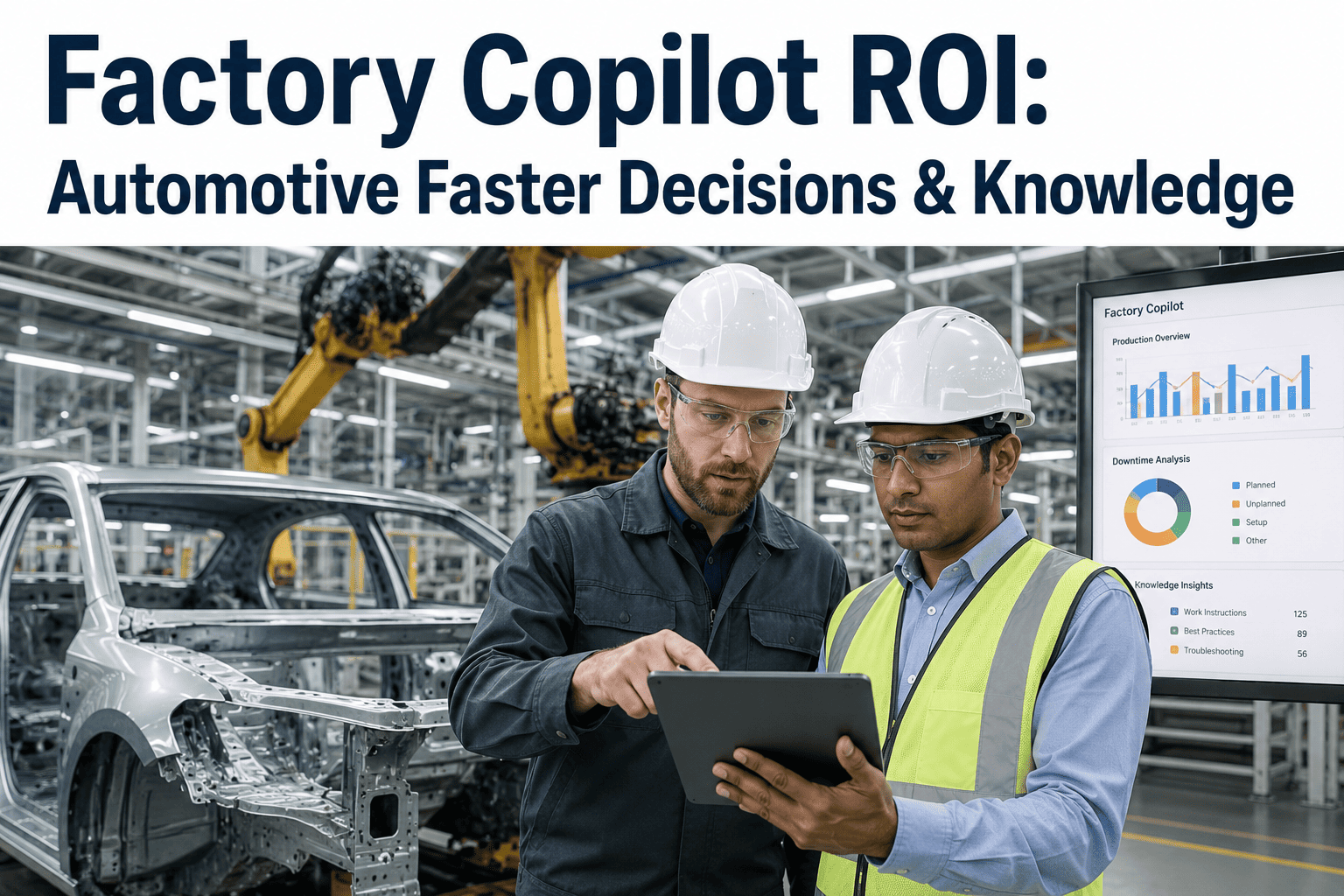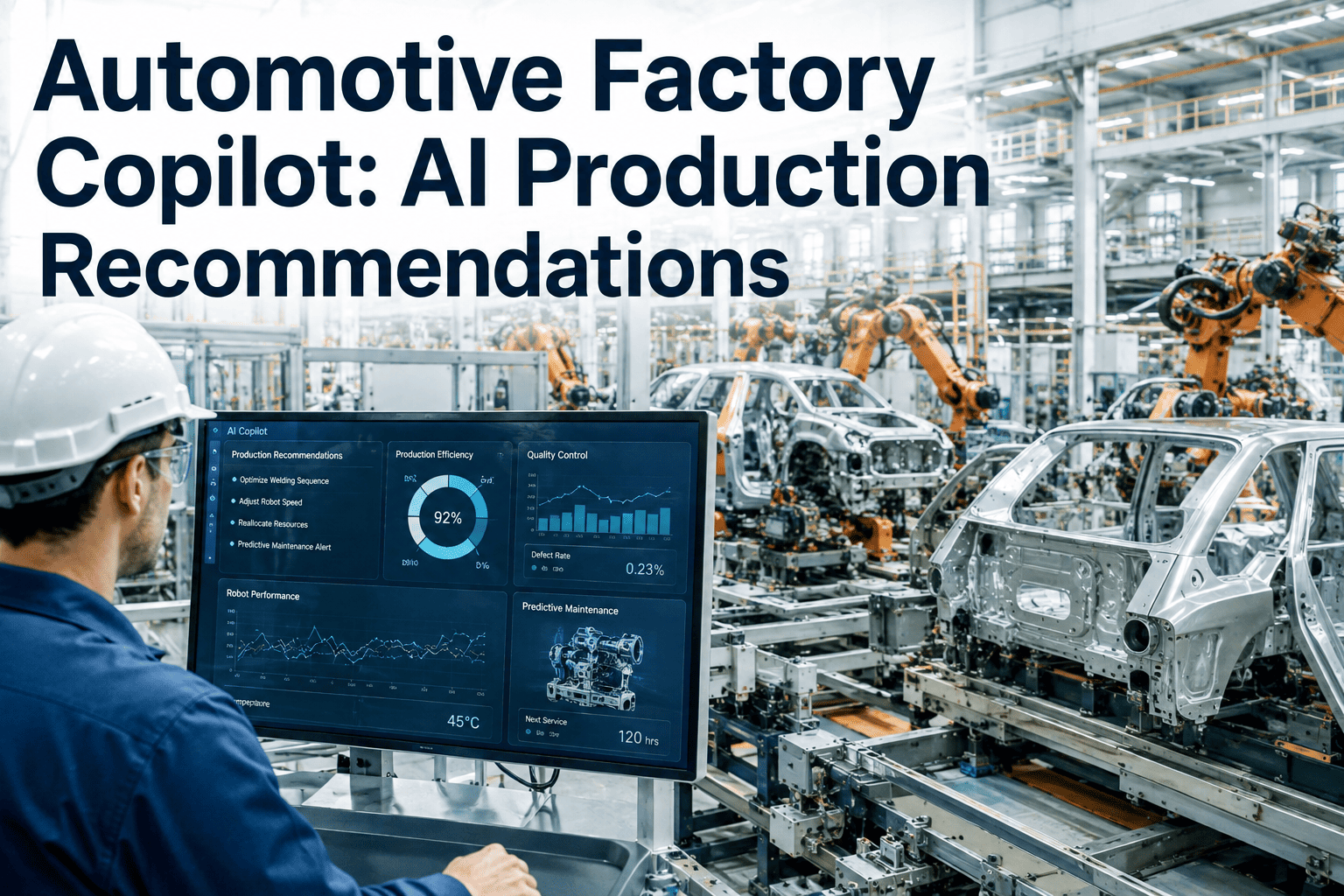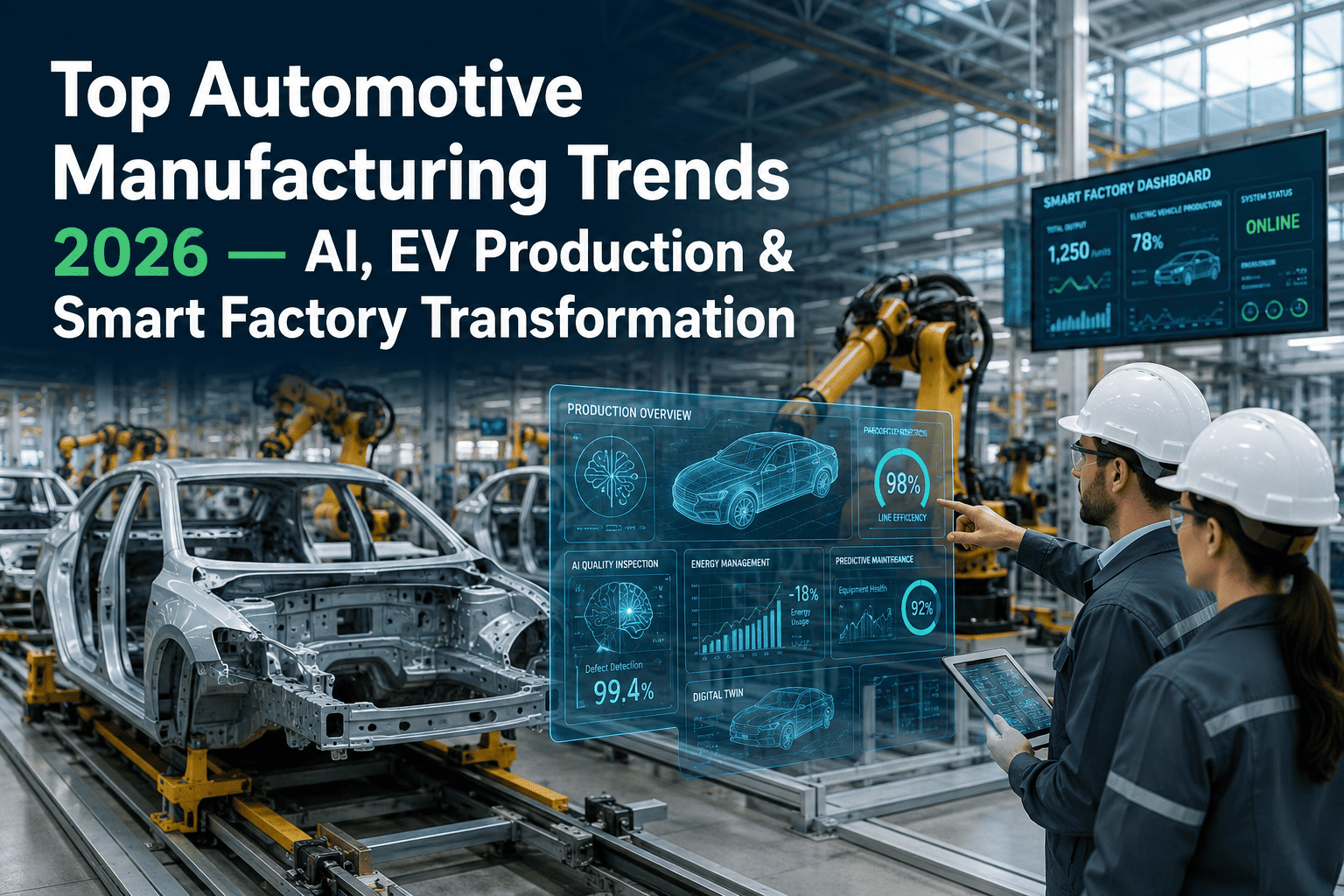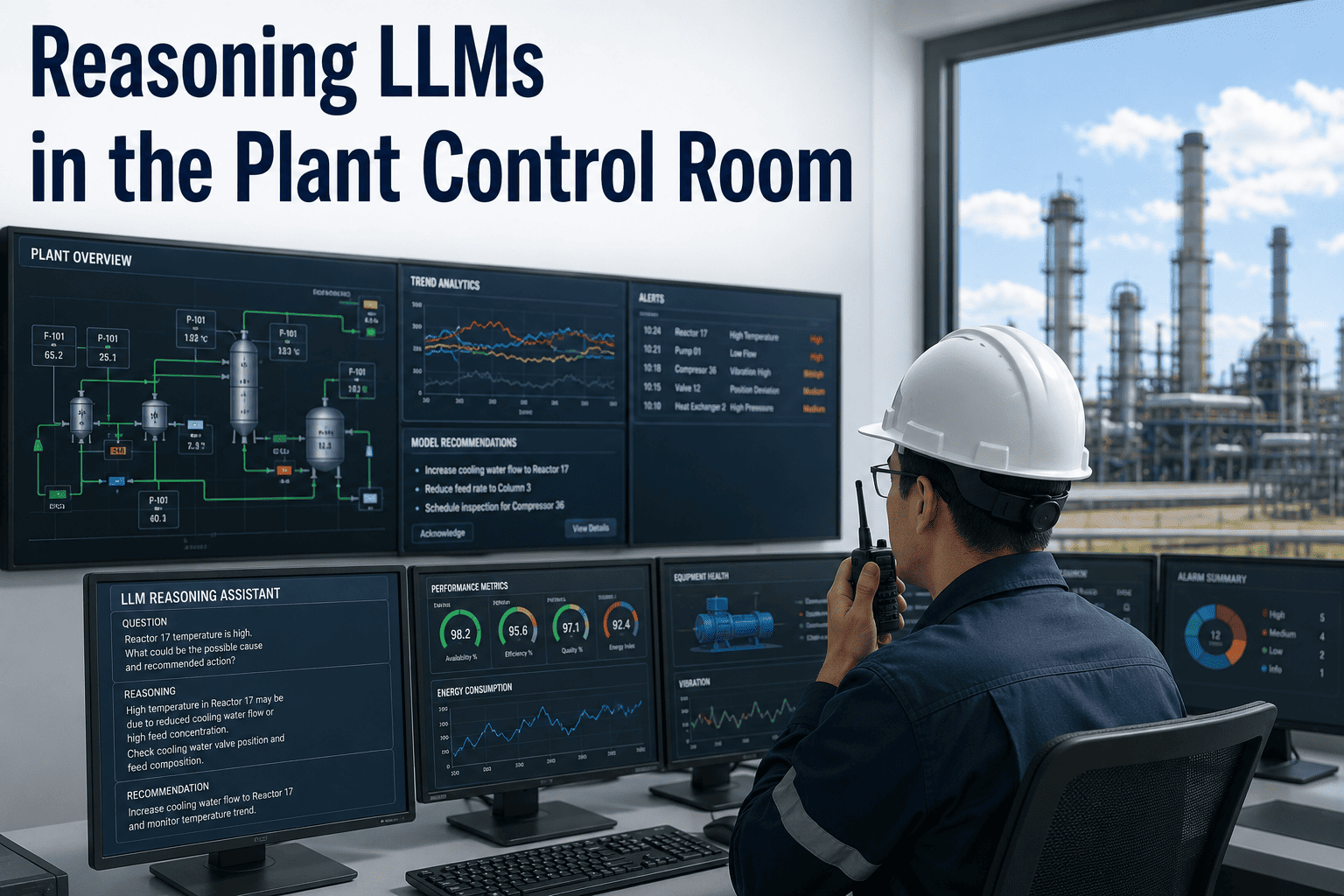
In the high-stakes environment of an automotive plant control room, every second counts. Operators are inundated with alerts from hundreds of sensors, each potentially signaling a critical deviation that could halt production. Traditional rule-based systems often generate false positives, overwhelming teams and desensitizing them to real threats. Enter reasoning large language models (LLMs)—a new class of AI that doesn't just flag anomalies but explains them in natural language, prioritizes them by business impact, and recommends precise corrective actions. These LLMs are trained on vast datasets of plant history, equipment manuals, and operational best practices, enabling them to reason through complex scenarios like a seasoned engineer. For automotive manufacturers facing razor-thin margins and relentless quality demands, deploying a reasoning LLM as a control room copilot is no longer a futuristic concept—it's a competitive necessity. Book a Demo to see how iFactory's reasoning LLM can revolutionize your plant operations.
Transform Your Control Room with AI-Powered Reasoning
Empower your operators with instant, actionable insights. Reduce alert fatigue and downtime by 40%.
Why Automotive Control Rooms Need Reasoning LLMs
Automotive production lines operate at breakneck speeds with thousands of interdependent processes. A single unexpected stop can cost tens of thousands of dollars per minute. Traditional control room software relies on static thresholds and predefined rules, which cannot adapt to new failure modes or subtle degradation patterns. Reasoning LLMs overcome these limitations by dynamically analyzing real-time data streams, cross-referencing historical incidents, and generating context-aware explanations. They reduce the cognitive load on operators by surfacing only the most critical alerts, each accompanied by a clear rationale and suggested next steps. This shift from reactive to proactive management is crucial for achieving zero-downtime production in smart factories.
Real-Time Alert Triage
Reasoning LLMs automatically classify each alert by severity, urgency, and affected subsystem. Operators see a prioritized list with natural language summaries, eliminating the need to manually sift through raw data. This cuts response time by 60%.
Root Cause Analysis
Instead of just flagging a temperature spike, the LLM explains that it likely stems from a cooling pump bearing failure based on vibration patterns and recent maintenance logs. This deep reasoning accelerates troubleshooting.
Prescriptive Recommendations
Beyond diagnosis, the LLM suggests specific actions—adjust parameters, schedule a part replacement, or reroute workflow—with confidence scores and expected outcomes. Operators can execute commands directly from the chat interface.
Continuous Learning
Every operator decision and outcome is fed back into the model, refining its reasoning over time. The LLM adapts to unique plant conditions, improving accuracy and relevance with each shift.
How Reasoning LLMs Differ from Traditional Chatbots
Standard LLMs generate plausible-sounding text but lack true reasoning capabilities. They might suggest turning off a machine when the correct action is to increase lubrication. Reasoning LLMs, however, incorporate structured knowledge graphs, physics-based models, and causal inference engines. They don't just predict the next word; they simulate possible outcomes and choose the most logical response. For example, when faced with a pressure drop in a hydraulic system, a reasoning LLM will evaluate multiple hypotheses—leak, pump cavitation, valve malfunction—and rank them by probability using real-time sensor fusion. This level of analytical depth is essential for mission-critical environments where mistakes are costly.
Furthermore, reasoning LLMs maintain coherent state across conversations. They remember past interactions, understand context, and ask clarifying questions when data is ambiguous. This conversational continuity makes them true copilots rather than one-shot query tools. Operators can explore 'what-if' scenarios, simulate the impact of a decision, and receive detailed justifications for every recommendation. The result is a collaborative decision-making process that combines human intuition with machine precision.
Data Ingestion
Real-time streams from PLCs, SCADA, IoT sensors, and MES are normalized and fed into the LLM's context window. Historical data and maintenance logs are indexed for retrieval.
Alert Generation & Classification
Anomalies are detected using statistical and ML models. The LLM classifies each alert using a multi-dimensional taxonomy (severity, subsystem, failure mode).
Reasoning & Explanation
The LLM applies causal reasoning to link alerts to likely root causes. It generates a plain-English explanation with supporting evidence from sensor data and historical records.
Recommendation & Action
Prescriptive steps are presented with confidence intervals. Operators can approve, modify, or reject actions. The LLM learns from each interaction to improve future recommendations.
Feedback Loop
Outcomes are logged and analyzed. The model is fine-tuned periodically using reinforcement learning from human feedback (RLHF) to align with plant-specific goals.
Architecture of an On-Prem Reasoning LLM for Automotive Plants
Data sovereignty and latency are paramount in automotive manufacturing. A cloud-only solution is often unacceptable due to connectivity constraints or corporate security policies. iFactory's reasoning LLM is designed for on-premises deployment, running on edge servers within the plant network. The architecture comprises a lightweight LLM (e.g., 7B-13B parameters) optimized for inference speed, a vector database for semantic search of manuals and logs, and a rule-based guardrail system to ensure safety. The entire stack is containerized and orchestrated via Kubernetes, allowing seamless scaling across multiple production lines.
The LLM communicates with existing control systems through standard protocols like OPC UA and MQTT. It subscribes to alert topics, processes them in real-time, and publishes explanations back to the operator dashboard. A dedicated API layer allows integration with third-party analytics tools. Security is enforced via TLS encryption, role-based access control, and audit logging. The system can operate fully offline, with periodic model updates delivered via encrypted USB drives or air-gapped networks.
Comparison: Traditional Control Room vs. Reasoning LLM Copilot
| Aspect | Traditional System | Reasoning LLM Copilot |
|---|---|---|
| Alert Handling | Static thresholds, high false positive rate | Dynamic context-aware triage, low false positives |
| Root Cause Analysis | Manual, time-consuming, relies on tribal knowledge | Automated causal reasoning, evidence-based |
| Recommendation Quality | Generic, often outdated | Prescriptive, tailored to current plant state |
| Operator Training | Months of on-the-job learning | Instant guidance, reduces ramp-up time by 70% |
| Adaptability | Requires manual rule updates | Continuous learning from operator feedback |
Case Study: Automotive Tier 1 Supplier Reduces Unplanned Downtime by 45%
A leading automotive Tier 1 supplier with five plants in North America implemented iFactory's reasoning LLM as a control room copilot. Previously, operators managed an average of 200 alerts per shift, with 80% being false positives. The LLM reduced alert volume to 40 high-confidence alerts per shift, each with a clear explanation and recommended action. Within three months, unplanned downtime dropped by 45%, saving the company $2.3M annually. Operator satisfaction scores rose from 3.2 to 4.8 out of 5, as teams felt more confident and less overwhelmed. The system paid for itself within six months.
Key to success was the LLM's ability to reason about complex interdependencies. For instance, when a robotic welding arm began drawing abnormal current, the LLM correlated this with a recent change in wire feed speed and a slight temperature rise in the cooling unit. It recommended checking the contact tip and adjusting the wire tension—a diagnosis that would have taken an experienced technician 30 minutes. The operator executed the fix in under five minutes, preventing a potential three-hour line stoppage.
Ready to Empower Your Control Room Operators?
See how iFactory's reasoning LLM can cut downtime by 40% and boost operator efficiency. Schedule your personalized demo today.
Implementation Roadmap for Automotive Plants
Deploying a reasoning LLM in a live production environment requires careful planning. iFactory follows a phased approach to minimize risk and maximize value. Phase 1 involves a two-week discovery and data assessment, where we audit existing data sources, alert volumes, and operator workflows. Phase 2 is a pilot deployment on a single production line or cell, running the LLM in shadow mode (recommendations only, no actions). This allows us to validate accuracy and gather operator feedback without affecting operations. Phase 3 expands the pilot to additional lines and enables read-only actions (e.g., parameter adjustments with manual approval). Finally, Phase 4 achieves full autonomy with closed-loop control for low-risk adjustments, always under human supervision.
Throughout the process, we provide comprehensive training for control room leads and IT teams. Our support team is available 24/7 during the pilot phase. The entire deployment typically takes 8-12 weeks, with ROI realized within the first quarter of full operation. Contact our support team for a detailed implementation timeline tailored to your plant.
Phase 1: Discovery
Data audit, stakeholder interviews, and KPI definition. We identify top failure modes and operator pain points.
Phase 2: Shadow Mode
LLM runs alongside existing systems. No actions taken, but recommendations are logged for accuracy assessment.
Phase 3: Assisted Mode
Operators can execute LLM-recommended actions with manual approval. Feedback loop is established.
Phase 4: Full Autonomy
LLM handles routine adjustments autonomously. Human oversight remains for critical decisions.
Security, Compliance, and Data Governance
Automotive manufacturers operate under strict regulatory frameworks like IATF 16949 and ISO 27001. Any AI system must comply with data privacy, traceability, and auditability requirements. iFactory's reasoning LLM is designed with these standards in mind. All data processing occurs on-premises, ensuring that sensitive production data never leaves the plant network. Model inference is logged in an immutable audit trail, providing full transparency for every recommendation. Role-based access control ensures that only authorized operators can view or act on certain alerts. Regular model validation against golden datasets ensures consistent performance. We also provide a 'human-in-the-loop' override mechanism for any automated action.
Furthermore, the LLM is trained on anonymized historical data, with personally identifiable information (PII) stripped. We offer model explainability reports that detail the reasoning chain for any decision, satisfying compliance audits. Our architecture supports integration with existing identity providers (e.g., LDAP, Active Directory) for seamless user management. Discuss your compliance requirements with our team to ensure a smooth deployment.
Frequently Asked Questions
What is a reasoning LLM and how is it different from a standard LLM?
A reasoning LLM is a specialized large language model that incorporates causal inference, structured knowledge, and multi-step logic to generate explanations and recommendations. Unlike standard LLMs that predict the next word based on patterns, reasoning LLMs simulate possible outcomes, evaluate evidence, and provide justifiable conclusions. For example, a standard LLM might say 'Check the pump' when a pressure drop occurs, while a reasoning LLM will explain that the pressure drop likely results from a cavitation condition due to low fluid level, supported by vibration and temperature data. This depth of analysis is critical for industrial applications where incorrect advice can lead to costly mistakes. Book a Demo to see the difference in action.
How does iFactory's reasoning LLM integrate with existing control systems?
Our LLM connects to your plant's existing infrastructure via standard industrial protocols such as OPC UA, MQTT, Modbus, and REST APIs. It subscribes to alert topics from SCADA or PLC systems, processes the data in real-time, and publishes explanations back to your operator dashboard, HMI, or a dedicated chat interface. We provide a lightweight middleware agent that handles protocol translation and data normalization. The integration typically takes less than two weeks and does not require changes to your existing control logic. Our team provides full support during the integration phase. Contact support for technical specifications.
Can the reasoning LLM operate offline or in air-gapped environments?
Yes, iFactory's reasoning LLM is designed for on-premises deployment and can operate fully offline. The entire model, vector database, and inference engine run on your local servers or edge devices. No internet connection is required for day-to-day operations. Model updates can be delivered via encrypted USB drives or through a secure, one-way data diode for air-gapped networks. This architecture ensures that your sensitive production data never leaves the plant, meeting the strictest security and compliance requirements. Learn more about our offline capabilities.
How long does it take to see ROI after deploying the LLM copilot?
Most automotive plants see a positive ROI within the first quarter of full operation. The initial pilot phase (shadow mode) typically lasts 4-6 weeks, during which we validate accuracy and gather feedback. Once the system is in assisted or autonomous mode, operators begin to see immediate reductions in alert fatigue and response times. Based on our deployments, average unplanned downtime decreases by 40-50% within three months, translating to significant cost savings. The exact timeline depends on plant complexity and data quality, but we guarantee measurable improvements within 90 days. Book a Demo to discuss your specific ROI expectations.
What kind of training and support does iFactory provide for operators?
We provide comprehensive training for all stakeholders, including control room operators, maintenance leads, and IT administrators. The training includes hands-on sessions with the LLM interface, scenario-based exercises, and best practices for providing feedback to improve the model. We also offer a detailed user manual and access to our 24/7 support team during the pilot phase. For ongoing support, we provide quarterly model updates and performance reviews. Our goal is to make the transition as smooth as possible, ensuring your team feels confident and empowered from day one. Contact our support team for more details.
Transform Your Control Room with iFactory's Reasoning LLM
Join industry leaders who are already reducing downtime and empowering their operators. Schedule your demo today and take the first step toward a smarter, more efficient plant.