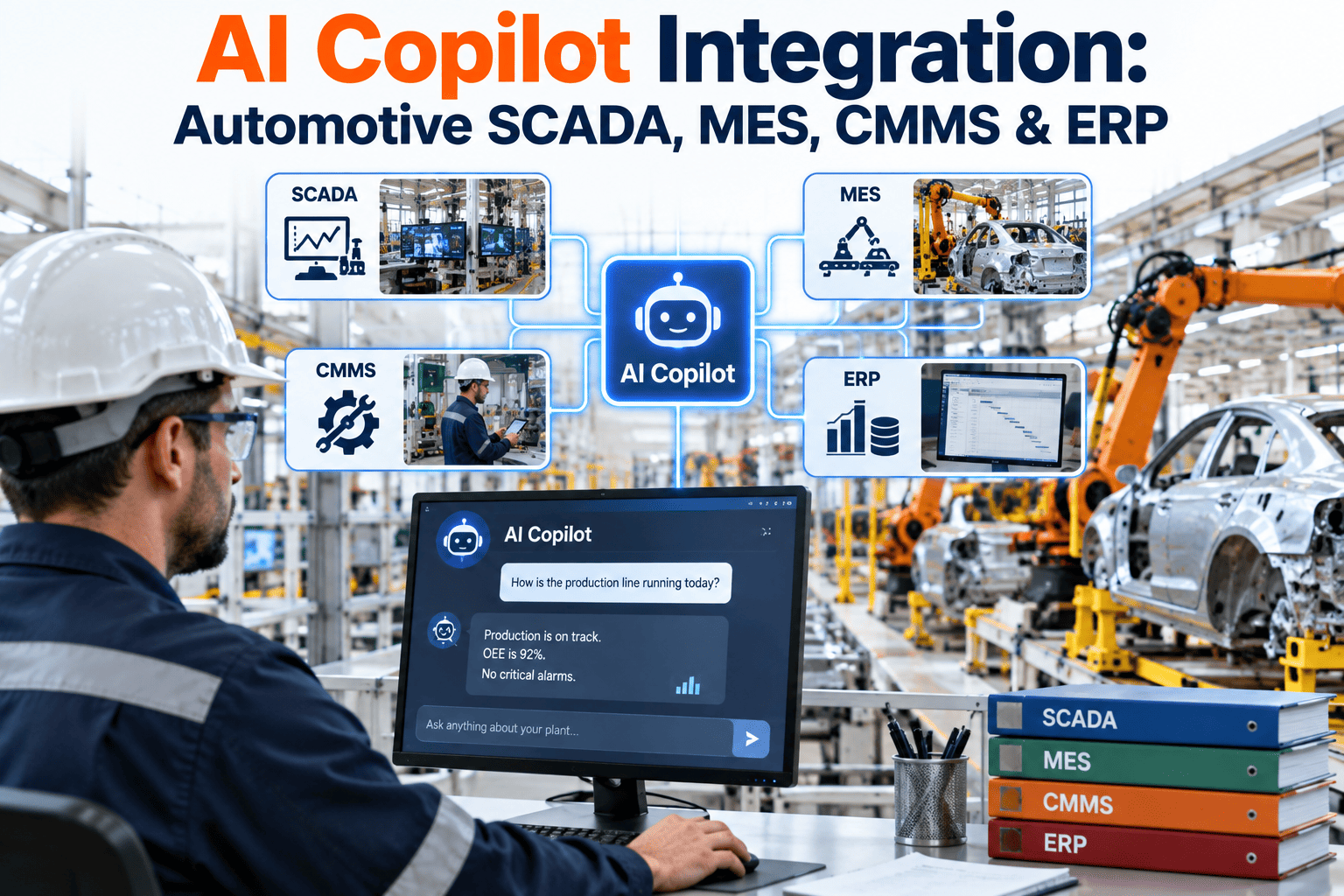
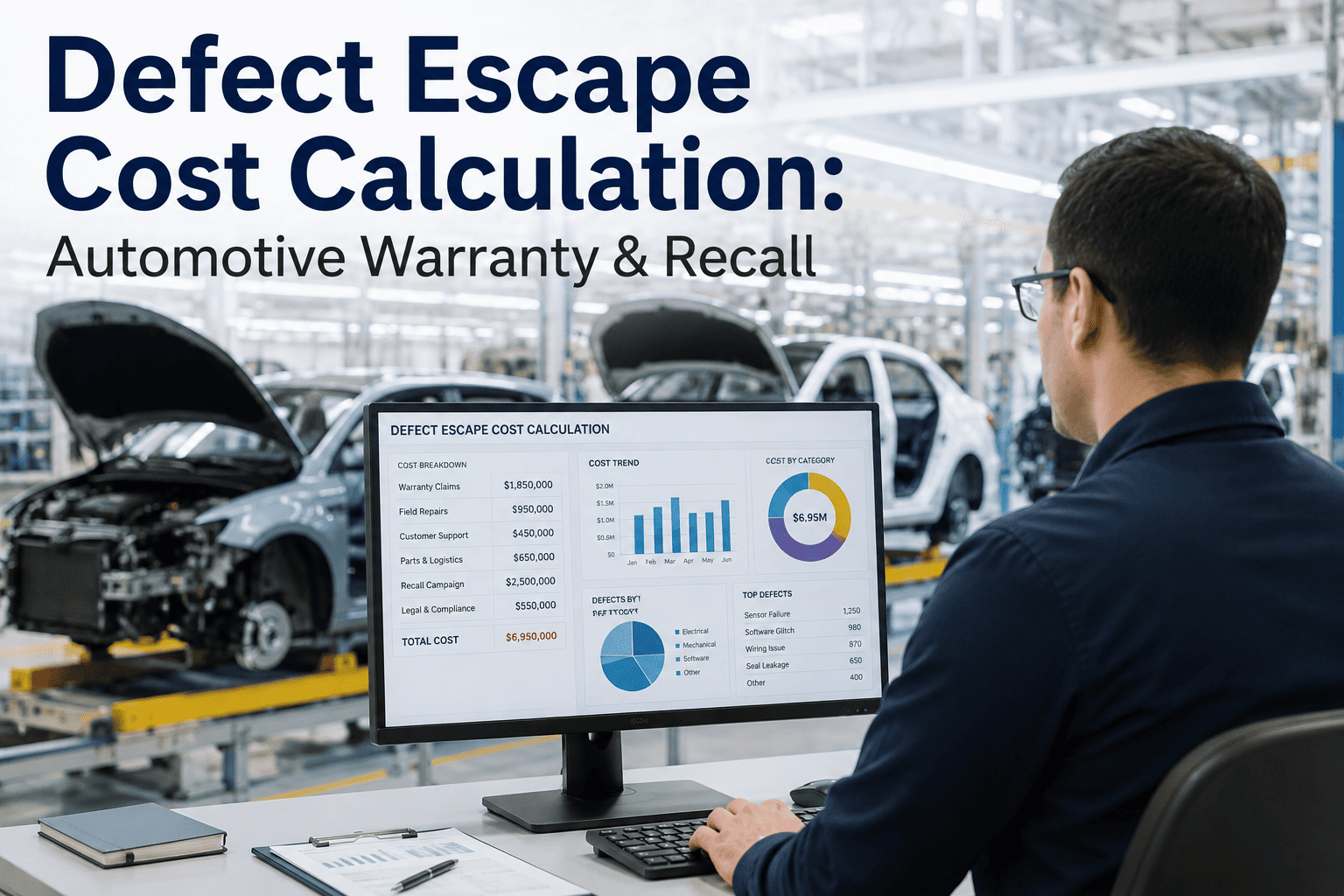
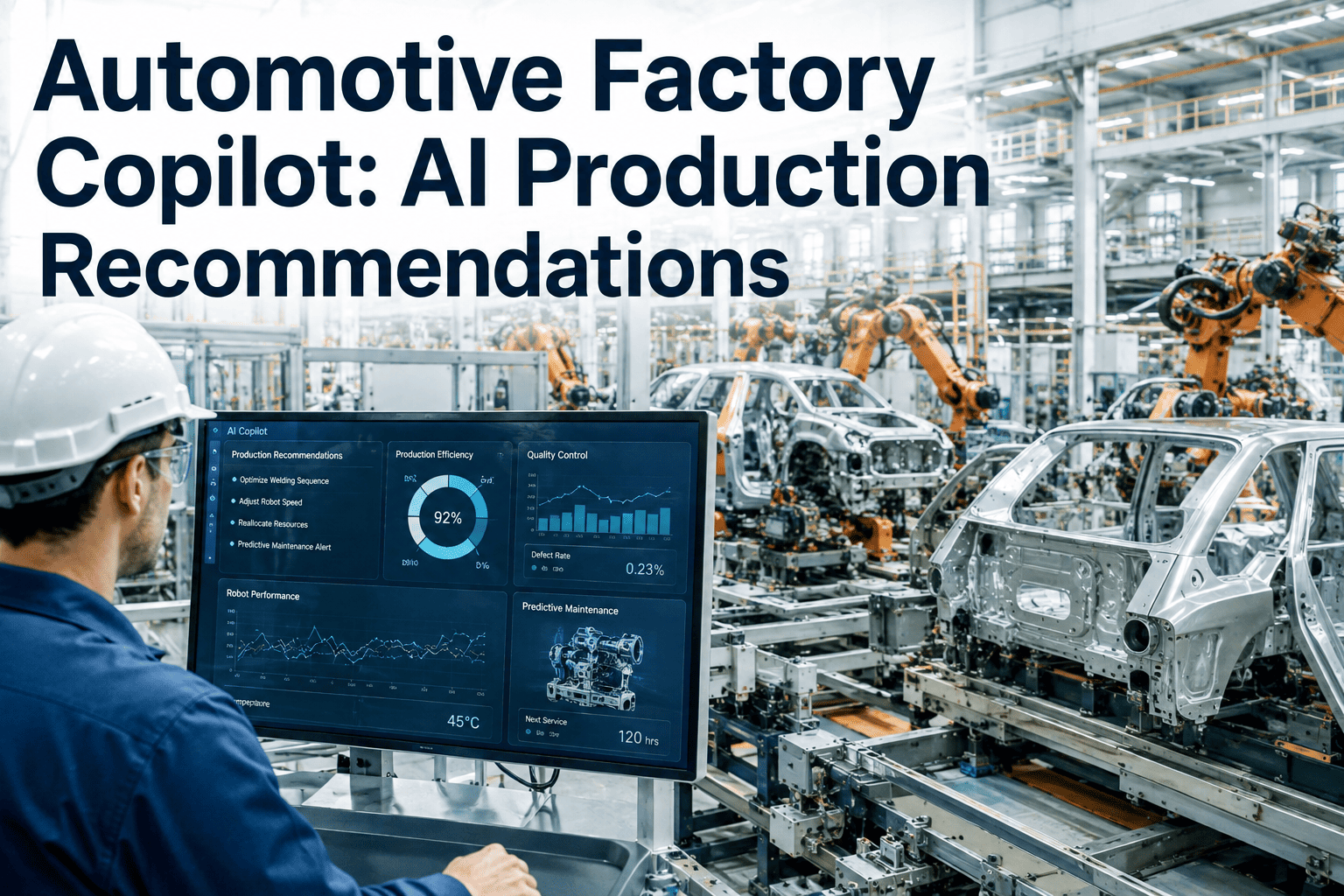
When a plant manager asks for the business case behind a factory copilot, the honest answer usually starts with time, not headline savings, because the real cost of not having one shows up in dozens of small delays that never get logged as a single line item. An engineer spends twenty minutes hunting for a setup sheet a retired colleague used to know by heart, a supervisor waits on a callback instead of getting an answer at the machine, a night shift makes a judgment call nobody reviews until the morning meeting. None of those moments look expensive individually, and that is exactly why they are so hard to build a case around without measuring them, which is why you can book a demo and walk through how the ROI is actually calculated against your own plant.
FACTORY COPILOT ROI · DECISION SPEED · KNOWLEDGE RETENTION
The Business Case for a Copilot Is Built From Minutes, Not Headlines
iFactory's factory copilot ROI framework quantifies faster decision-making, retained institutional knowledge, and reduced error rate as concrete, measurable inputs rather than a vague productivity promise, so an investment case can be built on your plant's own numbers.
WHY ROI IS HARD TO ARGUE WITHOUT DATA
Three Costs That Never Show Up on Their Own Line Item
Automotive plants track scrap cost, downtime cost, and labor cost with real precision, because those numbers have dedicated fields in the ERP and someone is accountable for them monthly. The cost of a delayed decision, a question an engineer had to escalate three levels up, or a piece of shift-specific knowledge that walked out the door with a retiring technician has no dedicated field anywhere, which means it silently compounds every day without ever forcing anyone to confront the total.
WITHOUT A COPILOT
Engineers search multiple systems and ask around for an answer that exists somewhere in a document
Institutional knowledge lives in a handful of senior people's heads and leaves when they do
New hires take months to reach the judgment level of an experienced operator
Shift handovers rely on whatever the outgoing operator remembers to mention
WITH A FACTORY COPILOT
A single query surfaces the relevant procedure, setup sheet, or prior resolution in seconds
Institutional knowledge is captured continuously and stays searchable regardless of turnover
New hires reach competent judgment faster with the copilot as a always-available reference
Shift handovers include a structured, searchable record instead of a verbal summary alone
HOW TO QUANTIFY DECISION SPEED
Three Inputs That Build a Defensible ROI Number
A copilot ROI case does not need to be speculative if it is built from inputs a plant already has some visibility into, even if nobody has assembled them into a single calculation before. The three inputs that matter most are how often people are searching for information rather than acting on it, how much an average delayed decision actually costs in downtime or scrap risk, and how much of the plant's institutional knowledge is currently concentrated in a small number of people nearing retirement or transfer.
01
Search and Escalation Time
Estimate hours per week engineers and supervisors spend locating information rather than using it, across the whole team.
02
Cost of a Delayed Decision
Tie a rough dollar figure to a typical delayed call, using downtime rate or scrap cost as the anchor.
03
Knowledge Concentration Risk
Count how many critical processes depend on fewer than three people who could retire or transfer soon.
Build Your Own Copilot ROI Case
iFactory can walk through the ROI framework using rough estimates from your own plant so the business case reflects your numbers, not an industry average. Book a demo to get started.
WHERE ERROR REDUCTION FITS IN
Fewer Judgment Calls Made Without Full Context
A meaningful share of avoidable errors in a plant trace back not to a lack of skill but to a decision made without the full picture, because the person making the call did not have time to check every relevant setup sheet, prior incident, or spec before acting. A copilot reduces that gap by surfacing the relevant context automatically at the moment a decision needs to be made, rather than requiring the person to already know where to look.
→
Setup errors drop when the correct parameters for a specific part number are surfaced automatically instead of relying on memory.
→
Repeat quality issues decline when prior root-cause resolutions are searchable instead of being re-diagnosed from scratch.
→
Escalation loops shorten when a first-line supervisor can query an answer instead of waiting on a callback from engineering.
→
Onboarding mistakes reduce as new hires get consistent, always-available guidance instead of whatever a mentor has time to explain.
WITHOUT VS WITH A MEASURED ROI FRAMEWORK
What Changes When the Business Case Is Grounded in Numbers
Most copilot pitches are made on productivity intuition alone, which makes them easy to postpone indefinitely. A grounded ROI framework changes the conversation from whether a copilot sounds useful to what it is specifically worth in your plant.
| Factor |
Intuition-Based Pitch |
iFactory ROI Framework |
| Basis for the Case |
General productivity claims |
Specific search time, decision cost, and risk inputs |
| Knowledge Risk |
Rarely quantified until someone retires |
Counted and tracked as a defined risk metric |
| Approval Path |
Hard to defend against competing capital requests |
Backed by a number tied to your own operating data |
| Tracking After Go-Live |
No clear way to confirm the value materialized |
Same inputs re-measured post-deployment to confirm the case |
WHO BUILDS THIS CASE
Roles That Need a Defensible Number to Move Forward
A copilot investment usually needs sign-off from more than one stakeholder, and each one is evaluating a different piece of the same case.
Plant Managers
Need a number that stacks up fairly against other capital and technology requests.
Continuous Improvement Leads
Want to tie the case to existing loss and downtime tracking already in place.
Engineering Managers
Are focused on how much escalation time a copilot would actually remove from their team.
Workforce Development Leads
Care most about the knowledge retention risk as experienced staff near retirement.
FREQUENTLY ASKED QUESTIONS
Questions Finance and Operations Ask Before Approving
How do you actually put a dollar figure on faster decision-making?
The estimate starts from how much time engineers and supervisors currently spend searching for information versus acting on it, multiplied by a loaded labor rate, then cross-checked against how often a delayed decision has historically contributed to downtime or scrap in your plant's own records. It is deliberately conservative rather than aspirational.
Book a demo to walk through the calculation with your own estimates.
Is knowledge retention really quantifiable, or is it just a soft benefit?
It becomes quantifiable once you count how many critical processes depend on a small number of specific people and estimate the cost of a slow ramp-up or a preventable error if that person is unavailable, whether from retirement, transfer, or simply being on vacation during a critical run. That risk has a real cost even if it has not materialized yet.
Contact our support team to discuss how this risk is scored for your plant.
How long does it typically take to see the projected ROI materialize?
Search and escalation time improvements are usually visible within the first month of adoption since they depend on usage rather than a long ramp-up, while error reduction and knowledge retention benefits build gradually as more institutional knowledge is captured and referenced over time.
Book a demo to discuss a realistic timeline for your team.
Do we need to change how our documentation is structured before starting?
Existing procedures, setup sheets, and prior resolution records can generally be connected as they are, without a major reformatting project, and the copilot's usefulness improves incrementally as more sources are added rather than requiring everything to be perfectly organized on day one.
Contact our support team to review what your current documentation would need.
How do we track whether the projected ROI actually happened after go-live?
The same inputs used to build the original case, search time, decision cost, and error rate, are re-measured after deployment so the projected case can be checked against real usage data rather than assumed to have worked.
Book a demo to see how post-deployment tracking is set up.
Turn the Copilot Pitch Into a Number Finance Can Approve
iFactory's ROI framework grounds the factory copilot business case in your own search time, decision cost, and knowledge risk data. Book a demo and build the case together.