A quality director doesn't get capital approved by describing how good a weld inspection AI system looks on a demo screen. They get it approved by walking into a budget review with three numbers finance can check against the plant's own records: what defect escapes currently cost, what a recall exposure actually looks like on paper, and what the inspection labor line item is running today. Weld inspection AI earns its capital allocation the same way any other manufacturing investment does — on a payback period built from the plant's own defect and warranty data, not a vendor's case study. iFactory builds that model from your own line data, not an industry average.
A Weld That Escapes Inspection Doesn't Cost the Part. It Costs the Recall.
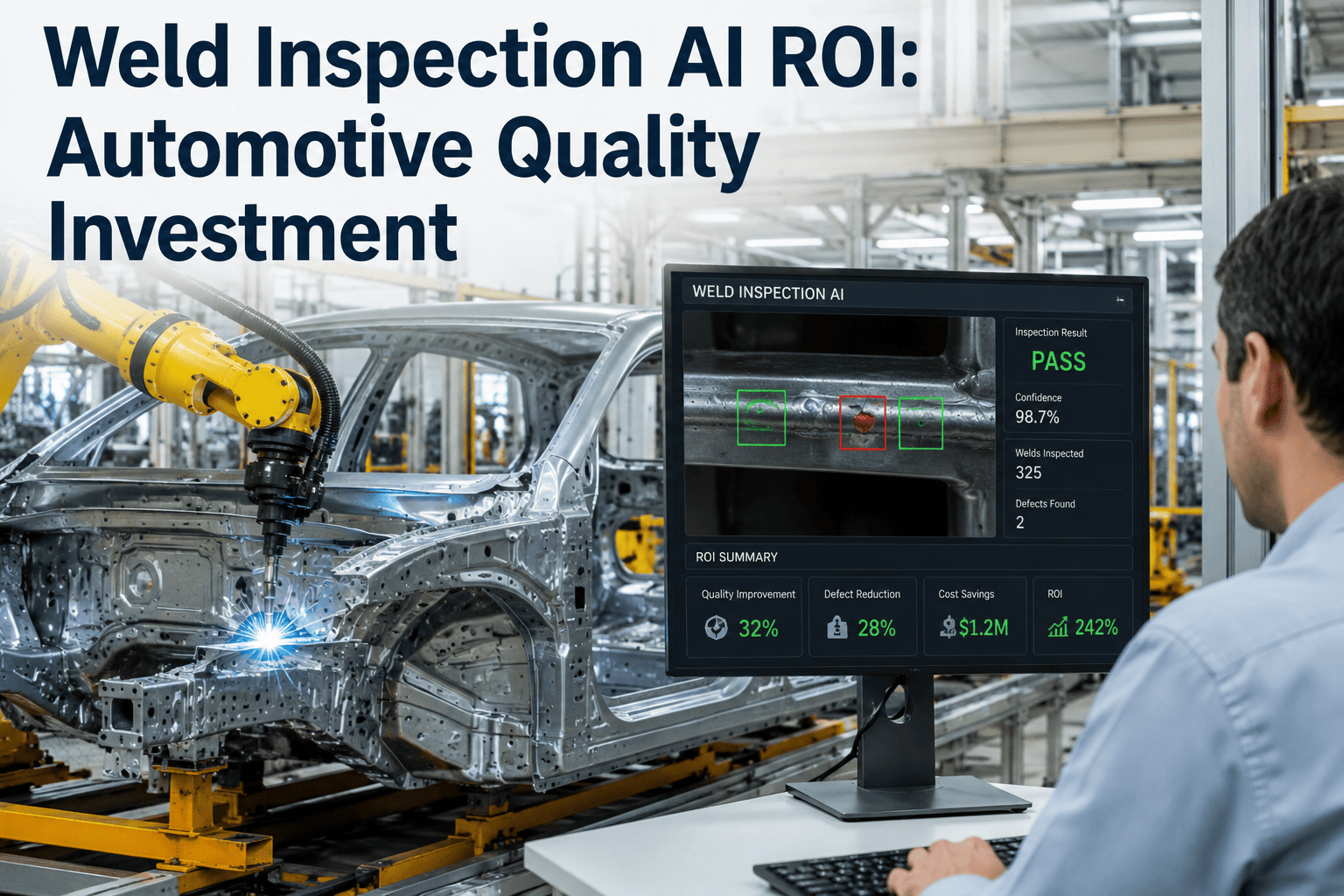
Weld inspection AI ROI comes down to three measurable levers: defect escapes prevented before they reach a customer, recall exposure reduced, and inspection labor redirected from manual sampling to higher-value work.
Why Manual Weld Sampling Leaves the Real Cost Invisible
Most body shops don't inspect every weld — they can't, at line speeds running dozens of vehicles per hour with hundreds of weld points per body. What actually happens is statistical sampling: a percentage of welds get checked, the rest pass on the assumption that a consistent process produces consistent results. That assumption breaks down exactly when it matters most, since the welds most likely to fail are the ones affected by a drifting robotic welder or an inconsistent fixture — conditions sampling is structurally poor at catching before a batch of defective welds has already moved downstream.
This is why so many weld quality problems get discovered the hard way — not through the inspection process designed to catch them, but through a field failure pattern that eventually gets traced back to a production window nobody flagged in real time. By the time a warranty claims cluster or a customer complaint pattern points to a specific date range, the vehicles in question have long since shipped, and the corrective action is reactive rather than preventive. Full-coverage inspection closes exactly that gap, converting invisible risk into a documented, immediate signal.
Sampling Coverage Gap
Manual inspection typically covers a small single-digit-to-low-double-digit percentage of total weld points, leaving the large majority of welds on every body unverified.
Fatigue-Driven Miss Rate
Human inspectors miss a meaningfully higher share of defects by the end of a shift than at the start, a documented pattern across manual visual inspection regardless of operator skill or training.
Delayed Detection
A weld defect caught downstream, after paint or final assembly, requires far more rework than one caught at the weld station itself, and some defects by that point can no longer be economically reworked at all.
The ROI Formula for a Weld Inspection Business Case
Stripped of vendor language, weld inspection AI ROI is the same comparison any capital request needs: total quantified benefit against total program cost, expressed as a percentage return and a payback period finance can independently verify.
The reason this category of investment tends to clear capital review faster than many other quality initiatives is that the underlying economics are unusually well documented across the automotive industry specifically. Body-in-white and weld defect exposure carries an outsized share of OEM supply contract quality mandates precisely because the cost curve from caught-early to caught-late is so steep, which means a plant building this case isn't relying on a novel argument — it's applying a well-established industry pattern to its own specific numbers.
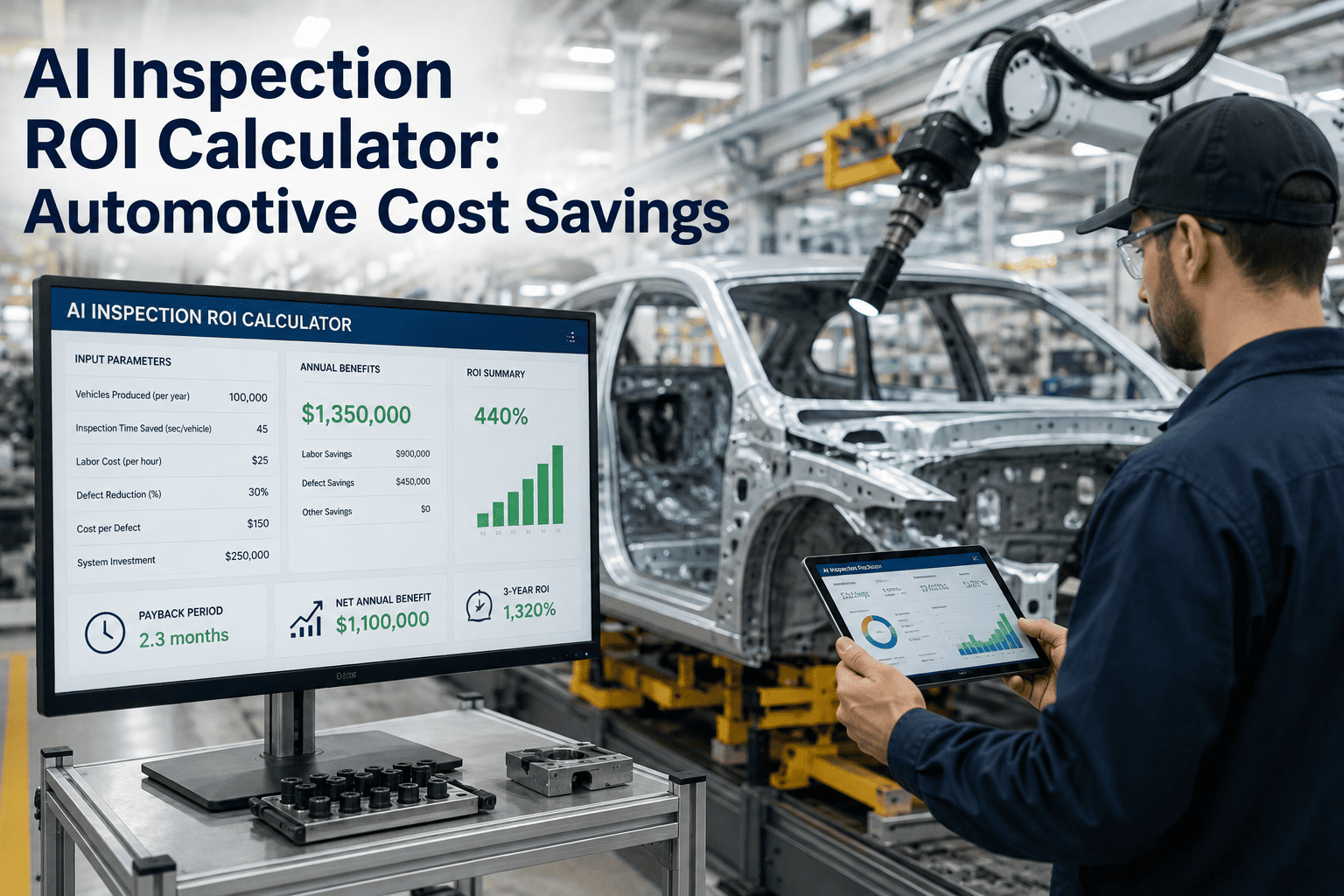
ROI (%) = (Escape Prevention Savings + Recall Risk Reduction + Labor Redeployment Value − Program Cost) ÷ Program Cost × 100
The first two terms carry the most weight in a weld-specific business case, because a structural weld failure sits at the higher-severity end of automotive defect risk — closer to a safety recall than a cosmetic warranty claim — which is exactly why weld and dimensional defect exposure shows up so heavily weighted in OEM supply contract quality mandates.
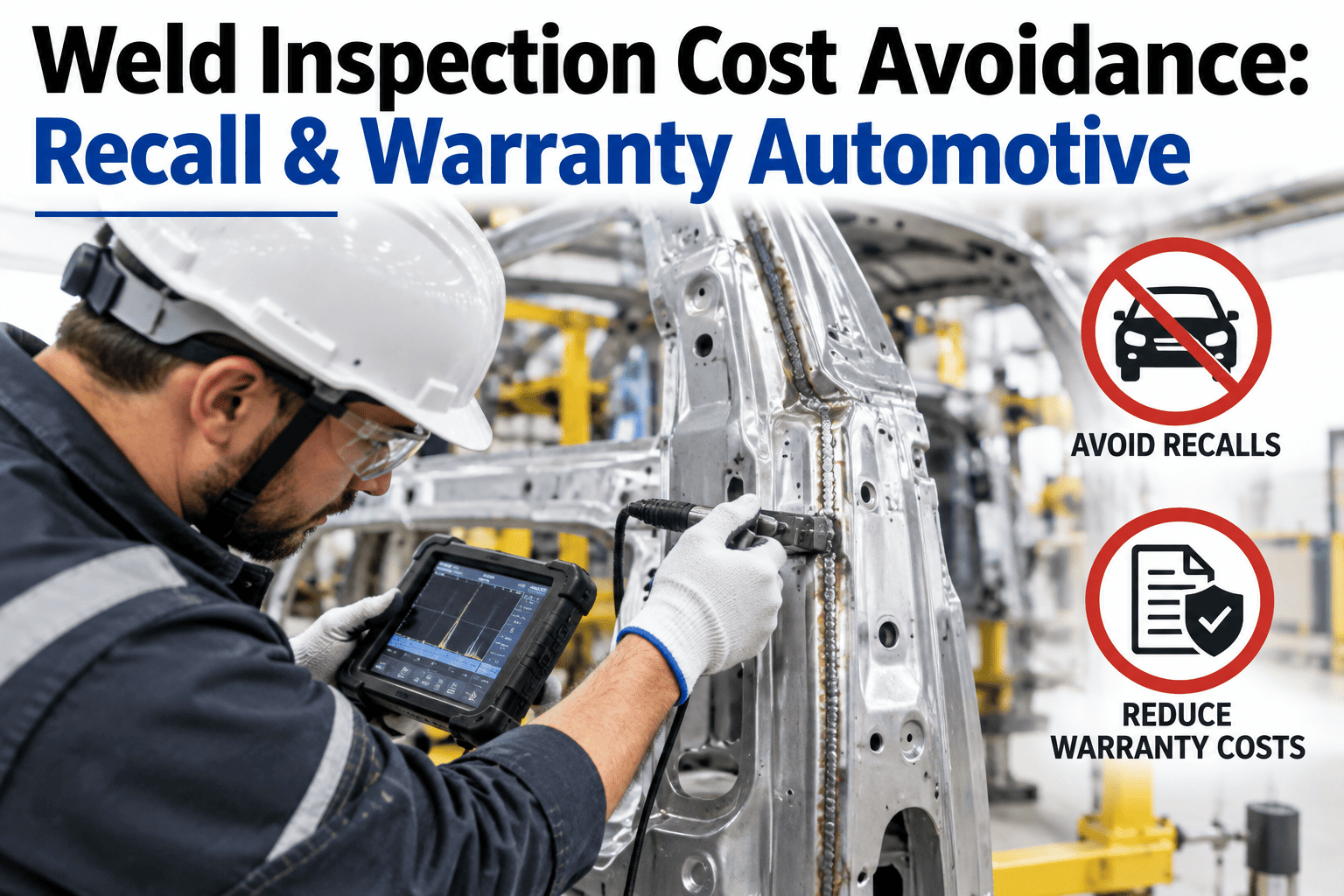
A Weld Defect That Escapes Sampling Doesn't Stay a Small Problem
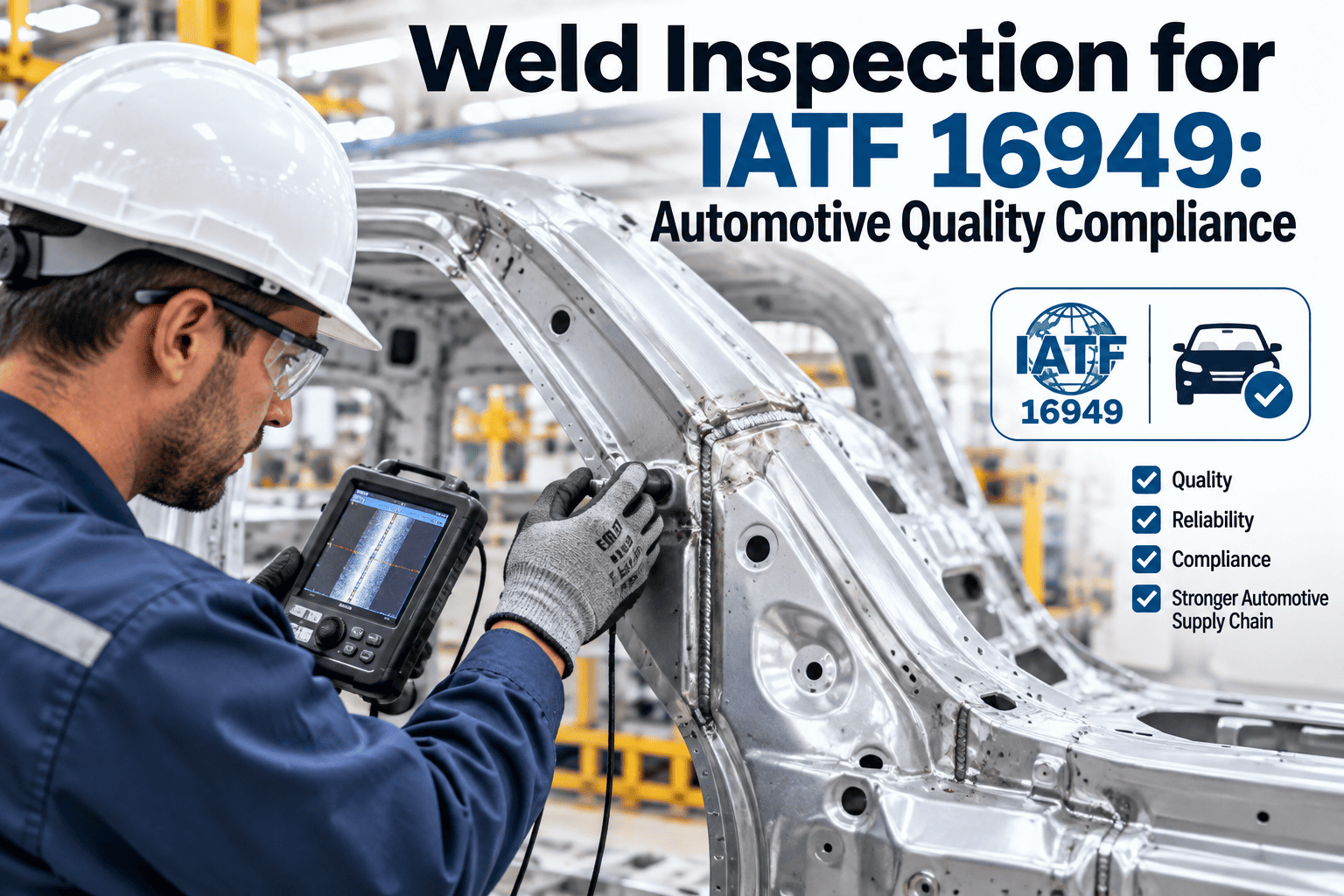
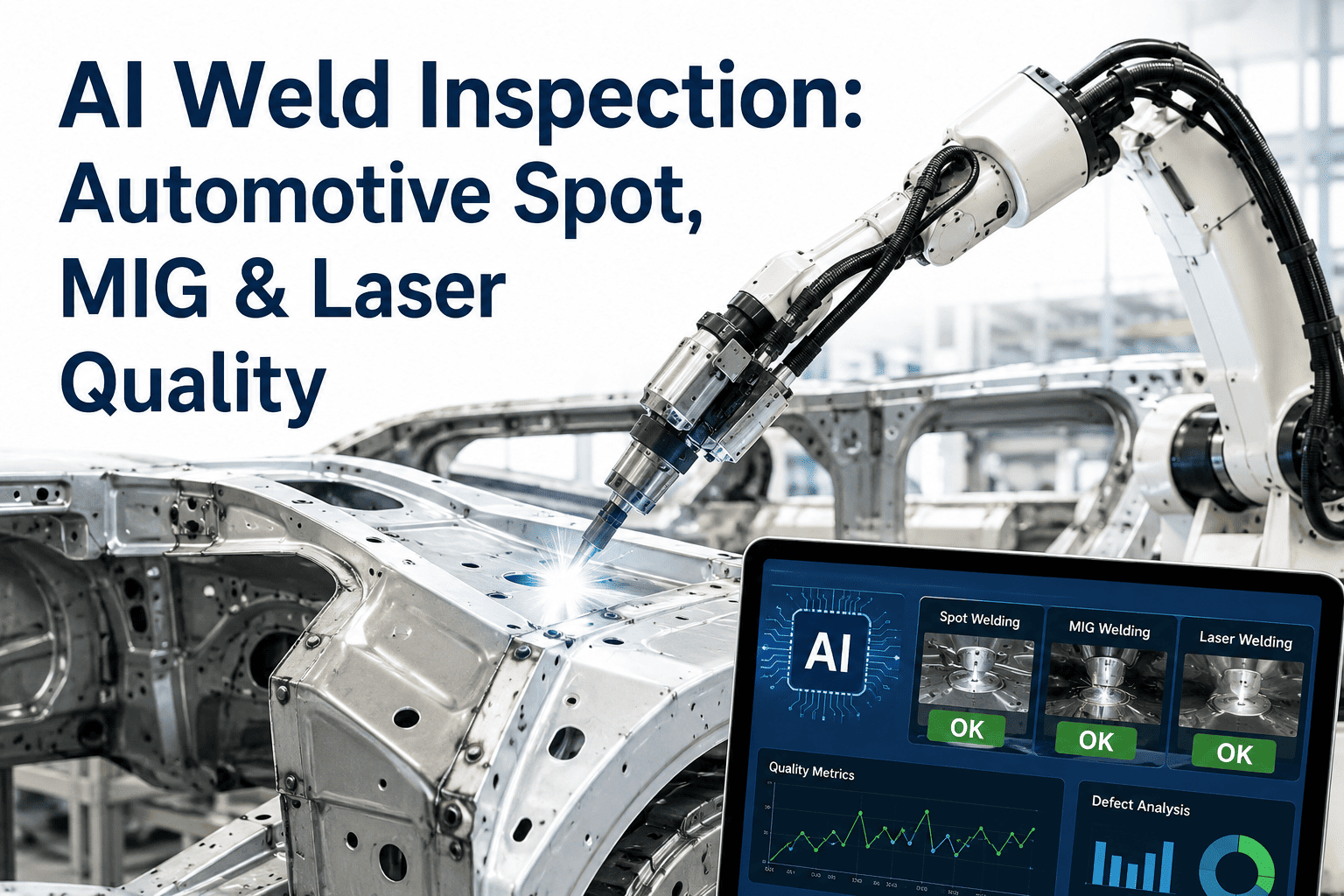
iFactory inspects 100% of welds at line speed, catching porosity, cracks, and lack of fusion before they ever leave the weld station.
Pricing Defect Escapes: The Cost Multiplies at Every Downstream Stage
A defective weld caught at the weld station costs the price of a rework pass. The same defect caught at end-of-line costs more. Caught after the vehicle reaches a customer, the cost jumps again — and if it triggers a safety-related recall, the jump is by an order of magnitude rather than a small multiple.
Caught at the Weld Station
Immediate rework or reweld at the point of fabrication, at roughly the baseline cost of getting the weld right the first time.
Caught at End-of-Line
Rework after paint and partial assembly runs three to five times the cost of catching the same defect at the weld station, since surrounding work has to be disassembled or reworked around it.
Caught as a Warranty Claim
A weld-related failure surfacing after a vehicle reaches a customer triggers a warranty claim typically running into four figures per incident once labor, parts, and dealer administration are included.
Caught as a Recall
A structural weld defect significant enough to trigger a safety recall carries direct costs commonly running into the hundreds of thousands to millions per event, before counting OEM contract and reputational damage.
A Worked Example: Body Shop Weld Station on a Mid-Volume Line
Here's a simplified but realistic model based on a body shop running a mid-volume line producing roughly 60 vehicles per hour, using figures consistent with published automotive weld inspection deployment benchmarks.
| Input | Before AI Inspection | After AI Inspection |
|---|---|---|
| Weld Inspection Coverage | Sampling, single-digit to low-double-digit percent | 100% of welds, every shift |
| Defect Escape Rate | Roughly 2-3% of total welds | Approaching 0.2% |
| Warranty Claim Cost per Incident | $850-$1,200 | Sharply reduced volume |
| Inspection Labor Allocation | Mostly manual visual sampling | Redeployed to exception review and process improvement |
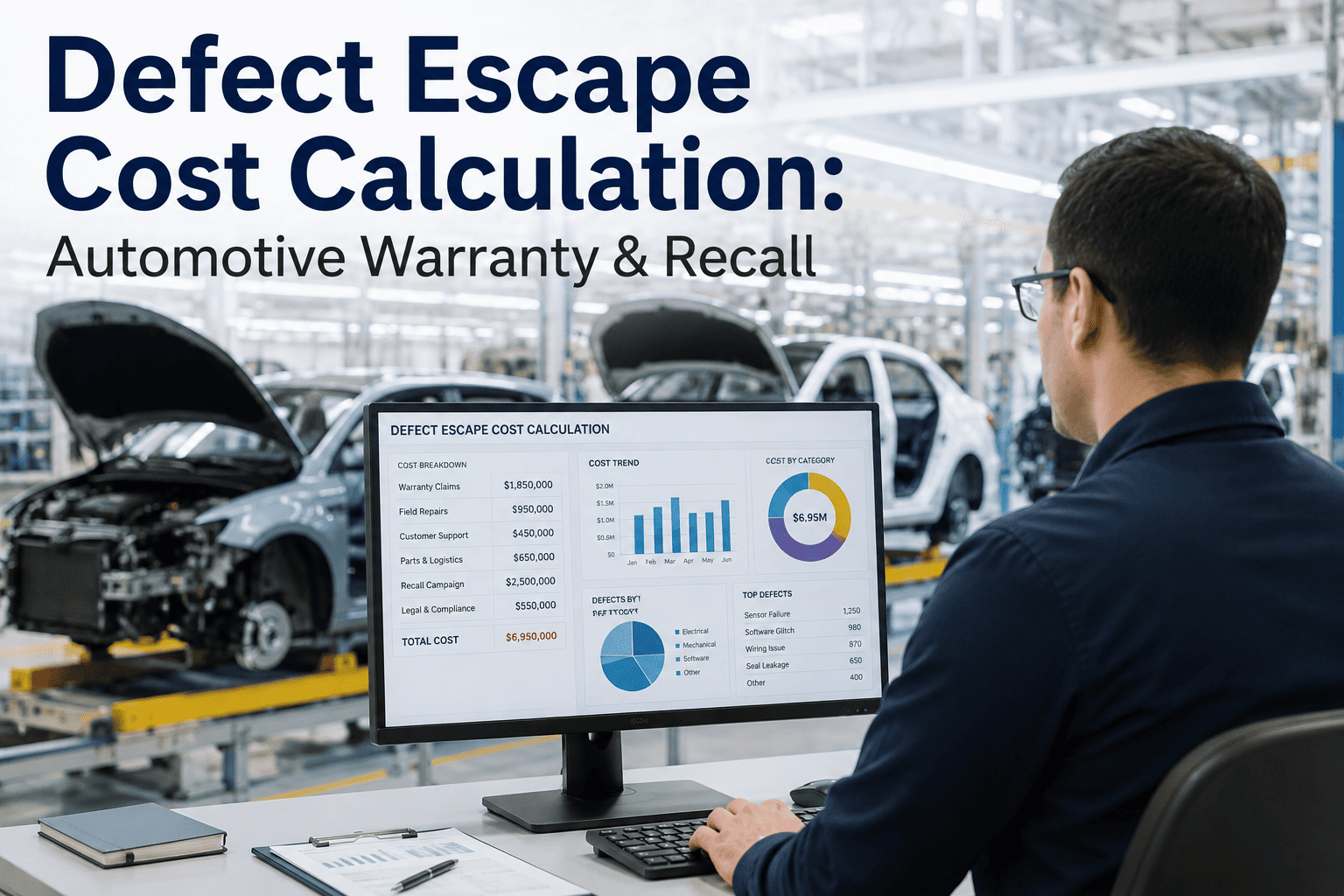
Reducing a 2.5% escape rate to 0.2% across a body shop producing several hundred thousand weld points a year, at a conservative average remediation cost blended across rework and warranty exposure, recovers a savings figure that in documented cases has run into seven figures annually per line — well above the typical capital and platform cost of the inspection system itself.
Recall Risk: The Line Item Most Business Cases Underweight
Recall exposure gets treated as a tail risk in a lot of ROI models — real, but too unpredictable to price into a base case. That treatment undersells the category. Weld and dimensional defects are specifically among the higher-frequency root causes behind structural and safety-related automotive recalls, and a documented pattern of escaped weld defects is a measurable risk indicator, not a hypothetical one.
What makes this category worth pricing rather than waving off is that automotive recall costs aren't abstract industry statistics — they're a matter of public record for any manufacturer that's experienced one, and internal quality teams typically already have a rough sense of what a prior recall or near-miss cost the organization in direct remediation alone, before counting the OEM contract and reputational consequences that rarely show up on a single line item.
The majority of welds on every body pass without direct verification
A drifting welder or fixture issue can produce defective welds across an extended run before sampling happens to catch it
Recall risk is carried silently until a field failure pattern eventually surfaces it
Every weld verified at production speed, with full traceability back to the specific station and shift
A process drift shows up as an immediate defect pattern rather than an undetected run
Recall risk tied to undetected weld defects is functionally closed rather than managed statistically
Pricing this category conservatively still matters — few plants should model a full recall as a certainty avoided — but even a modest, probability-weighted reduction in recall exposure, applied against the documented cost of an average automotive recall event, is large enough on its own to materially strengthen a weld inspection business case.
Recall Risk From an Undetected Weld Defect Is a Number Finance Can Price
iFactory's traceability records give every weld a documented pass at the station and shift level, closing the sampling gap that leaves recall exposure unmeasured.
Labor Redeployment: Inspectors Don't Disappear, Their Work Changes
A common objection to AI weld inspection is that it eliminates inspection jobs. In practice, most deployments redeploy inspection staff rather than reduce headcount — shifting hours away from repetitive manual sampling toward exception review, root cause investigation on flagged defects, and process improvement work that a sampling-based program never had the bandwidth for in the first place.
This distinction matters for how the business case gets framed internally, not just for accuracy's sake. A capital request that reads as a headcount reduction proposal often faces more internal friction and slower approval than one framed as a productivity and quality-capability upgrade for the existing team — and in most real deployments, the productivity framing is also the more accurate one, since the volume of defect data an AI system generates creates meaningfully more root-cause investigation work than a sampling program ever produced.
Exception Review
Inspectors review AI-flagged borderline cases rather than checking every weld manually, spending their attention where judgment actually adds value.
Root Cause Investigation
Traceability data ties defect patterns back to specific welders, fixtures, or shifts, giving quality teams the evidence to fix a process issue instead of just catching its symptoms.
Supplier and OEM Scorecards
Objective inspection data strengthens supplier development conversations and OEM quality reporting, work that manual sampling data was often too sparse to support convincingly.
Pricing the Investment Side of a Weld Inspection Deployment
A credible weld inspection business case prices the investment with the same specificity as the savings, rather than presenting one blended number a finance team has to take on faith. A typical deployment on an existing body shop line spans camera and sensor hardware at each weld station, an on-premise AI processing appliance, integration with existing PLC and MES systems, and the implementation labor required to train the model on the plant's specific weld types and defect history.
| Cost Component | Timing | What It Covers |
|---|---|---|
| Camera & Sensor Hardware | One-time, Year 1 | Per-station vision hardware at each weld inspection point |
| AI Processing Appliance | One-time, Year 1 | On-premise inference hardware running the defect detection model |
| MES/PLC Integration | One-time, Year 1 | Connecting inspection results to existing production and quality systems |
| Model Training & Validation | One-time, Year 1 | Training on plant-specific weld types and shadow-running against manual inspection |
Many deployments integrate directly with cameras and infrastructure already installed for other purposes, which meaningfully reduces the hardware portion of the first-year cost compared to a fully greenfield installation — a detail worth confirming during initial scoping, since it can shift the payback period calculation substantially in the plant's favor.
A Composite Scenario: The Robotic Welder Drift That Never Became a Recall
A composite Tier-1 automotive supplier producing structural body components for two OEM programs had been running manual weld sampling at roughly 8% coverage across its main welding cell. Eighteen months after installing AI weld inspection across the cell, the system flagged a gradual increase in porosity defects concentrated on one specific robotic welder position, with severity trending upward over a two-week window rather than appearing as a single anomaly.
Investigation traced the pattern to a wire feed mechanism beginning to wear on that welder, a fault that produces exactly the kind of intermittent, gradually worsening defect signature that sampling-based inspection is least equipped to catch early. The affected welder was pulled for maintenance before any defective parts shipped to either OEM program, and the supplier's quality team used the flagged defect data to document the root cause for its own internal corrective action record — evidence that would have been unavailable under the prior sampling-only inspection approach.
Assumptions That Weaken a Weld Inspection Business Case
Recall risk is too unpredictable to include in a financial model, so the case should rest on rework savings alone.
A conservative, probability-weighted estimate of recall exposure reduction, sourced from the plant's own defect history and documented industry recall cost data, is defensible and meaningfully strengthens the case rather than weakening it with speculation.
100% weld inspection mainly matters for catching catastrophic failures, not everyday quality variation.
The same full-coverage data that catches a rare catastrophic defect also surfaces gradual process drift on individual welders weeks before it would otherwise become visible, which is where most of the ongoing rework savings actually come from.
Labor savings from AI inspection mean headcount reduction, which complicates the internal approval process.
Most deployments redeploy inspection staff toward exception review and root cause work rather than reducing headcount, which is both the more common outcome and the easier case to present internally.
A Checklist Before the Weld Inspection Case Goes to Finance
Defect escape cost includes rework, warranty, and a conservative recall factor
A model that only counts immediate rework cost leaves out the categories most likely to justify the investment on their own.
The current sampling coverage rate is documented, not estimated
Pulling the actual current inspection coverage percentage from quality records makes the "before" baseline verifiable rather than assumed.
Labor redeployment is framed as a productivity shift, not a headcount cut
Presenting the labor savings category accurately avoids an internal objection that isn't actually supported by how most deployments play out.
The investment side lists hardware, software, and integration separately
A single blended cost figure is harder for finance to verify than a broken-out list they can check line by line.
Frequently Asked Questions
What defect escape rate is realistic to expect after deploying AI weld inspection?
Documented automotive deployments commonly bring escape rates down from a low single-digit percentage under manual sampling to roughly 0.2%, though the exact figure depends on the specific defect types, weld process, and starting baseline at a given plant. Visit support to review what's realistic for a specific weld process.
How should recall risk reduction be priced in a business case without overstating it?
A probability-weighted approach — estimating the likelihood of a recall event tied to undetected weld defects and multiplying by a documented average recall cost — produces a conservative, defensible figure rather than assuming a full recall is either certain or being avoided with certainty.
Does 100% weld inspection slow down production line speed?
AI vision inspection systems built for automotive line speeds operate at production pace, typically inspecting each weld point in well under a second, so full coverage is achieved without introducing a bottleneck at the weld station. Book a demo to see inspection running at actual line speed.
How long does a typical weld inspection AI deployment take to show payback?
Documented case studies commonly show payback within roughly four to twelve months, with the faster end of that range typical for plants carrying higher existing defect escape rates or elevated recall exposure before deployment.
What happens to existing weld inspectors once AI inspection is deployed?
Most deployments redeploy inspectors toward exception review, root cause investigation on flagged defects, and supplier quality work rather than reducing headcount, since the traceability data AI inspection generates creates more of that higher-value work than existed before. Contact support to see how inspection roles typically shift after deployment.
Build a Weld Inspection Case Finance Can Verify Line by Line
iFactory inspects 100% of welds at production speed, giving you the escape rate, traceability, and labor data to build an ROI model from your own line, not an industry average.