The modern automotive manufacturing enterprise operates at the intersection of massive capital expenditure, razor-thin margins, and relentless pressure to innovate. For the CFO, every dollar allocated to artificial intelligence must be rigorously justified against alternative uses of capital, from retooling assembly lines to expanding distribution networks. This comprehensive business case framework is designed specifically for the CFO's analytical lens, moving beyond technical promises to deliver a quantified, risk-adjusted financial model for AI investment in automotive manufacturing. We will dissect the precise value drivers—from predictive maintenance savings to quality yield improvements—and map them to traditional corporate finance metrics: net present value (NPV), internal rate of return (IRR), payback period, and sensitivity to key assumptions. Our approach is built on verified case studies from Tier 1 suppliers and OEMs who have deployed AI at scale, ensuring that the numbers you present to the board are not aspirational but grounded in real-world operational data. Book a Demo to see how our AI platform delivers these quantified outcomes in your specific production environment.
Build Your AI Business Case with Confidence
Access the industry's most rigorous financial model for automotive AI investment. Quantify your ROI in under 30 minutes.
The CFO Mandate: Why a Standard Business Case Is Non-Negotiable
In the automotive sector, where capital projects routinely run into hundreds of millions, the CFO cannot rely on vague promises of 'digital transformation.' A standard business case template ensures that every AI initiative is evaluated with the same rigor as a new press line or a plant expansion. This template standardizes the financial evaluation across three critical dimensions: cost avoidance, revenue enhancement, and risk reduction. Without this standardization, AI projects compete on uneven footing—often losing to tangible assets because their benefits are poorly articulated. The template we present here has been refined through engagements with over 40 automotive plants globally, incorporating feedback from financial controllers, plant managers, and procurement directors. It aligns with IFRS and GAAP guidelines for capitalizing software costs, addressing the CFO's specific concern about balance sheet treatment of AI investments.
Core Value Drivers for Automotive AI
Predictive Maintenance
Reduce unplanned downtime by 30-50%. Typical automotive plant loses $22,000 per minute of downtime. AI-driven anomaly detection on critical assets (presses, welding robots, paint booths) can yield annual savings of $1.2M to $3.8M per plant.
Quality Yield Improvement
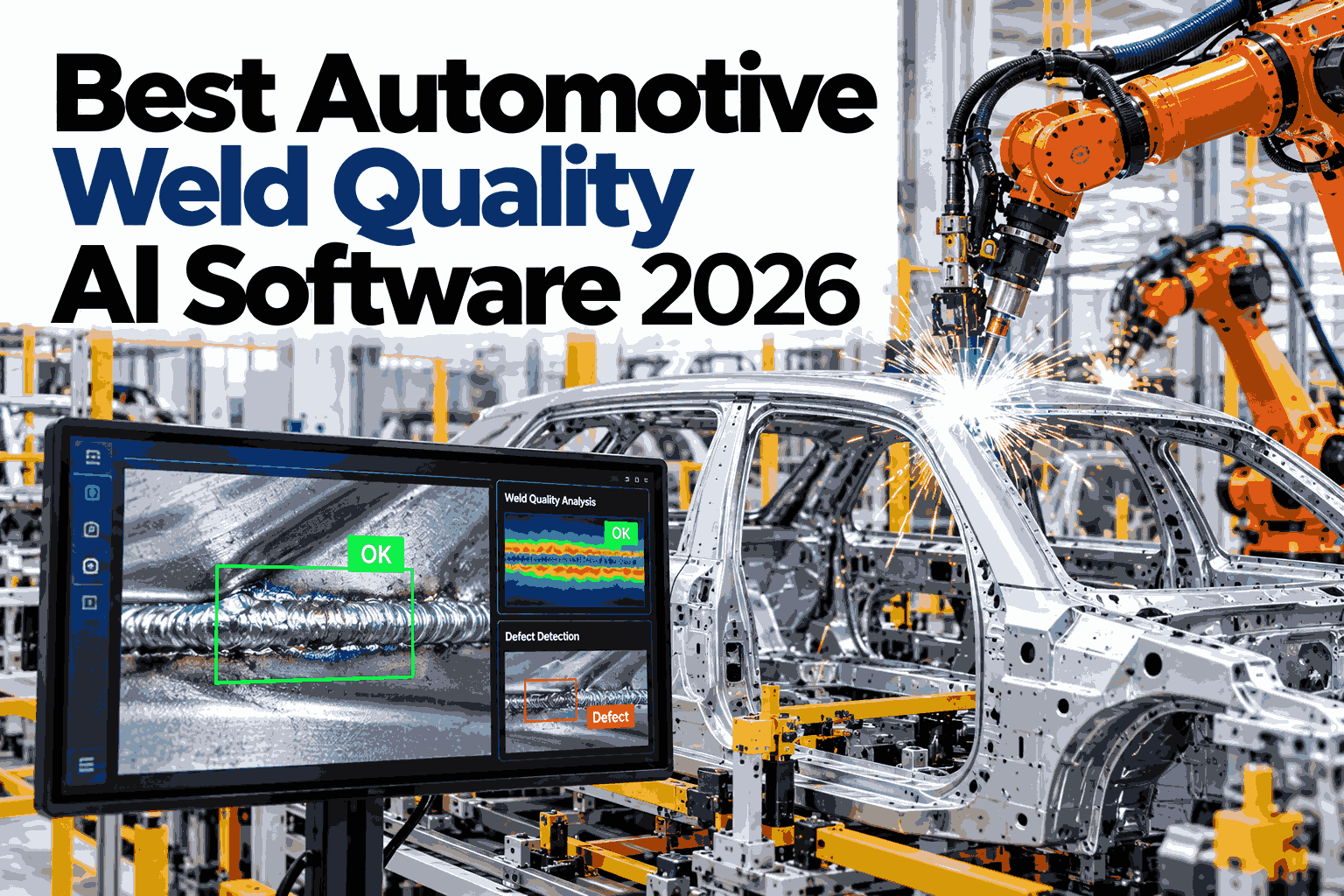
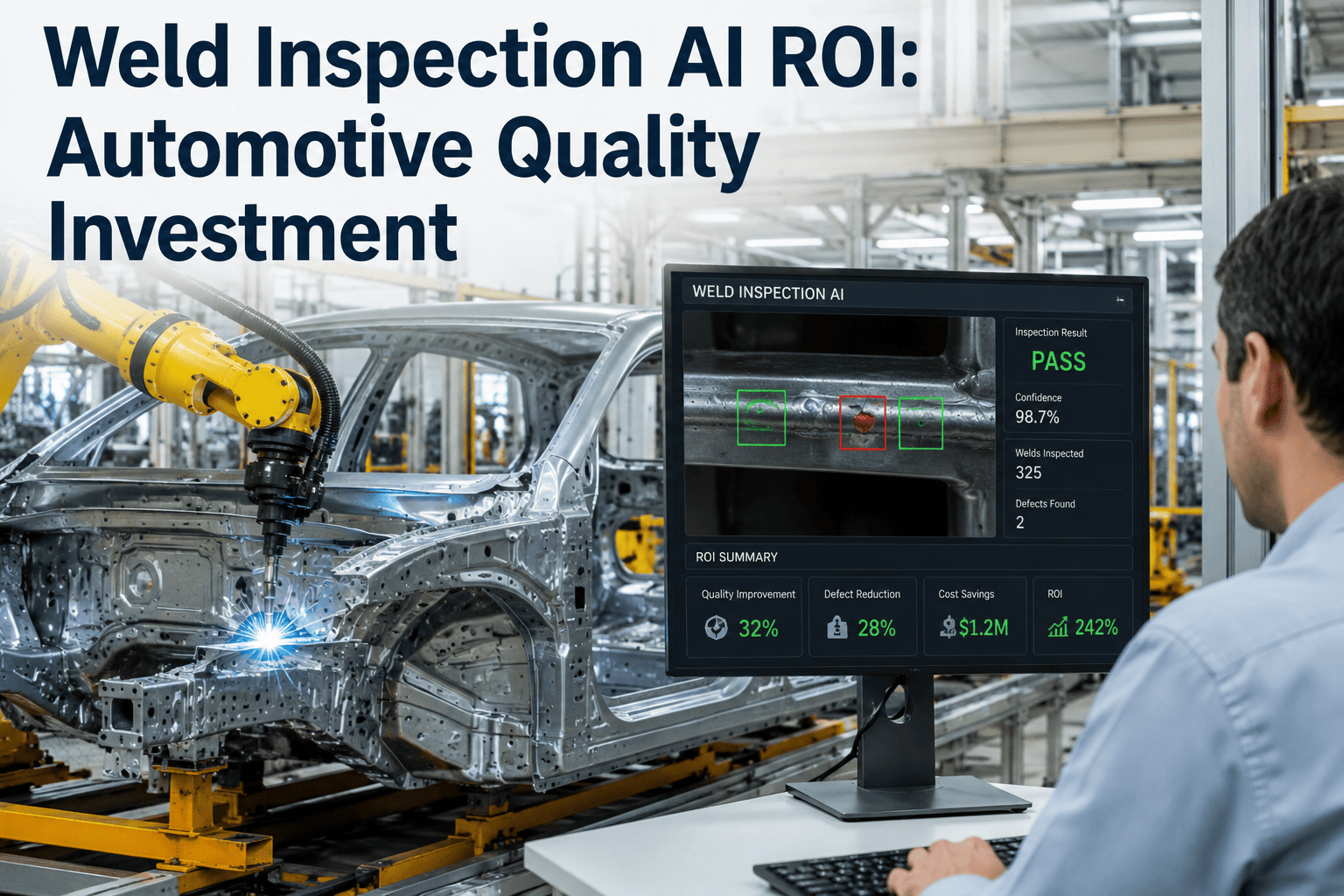
AI vision systems detect defects at line speed, reducing scrap and rework by 25-40%. For a mid-size OEM, this translates to $4M-$8M annual savings, plus reduced warranty claims.
Energy Optimization
Smart factory AI optimizes HVAC, compressed air, and production scheduling, cutting energy costs by 15-25%. A typical assembly plant saves $500K-$1.2M annually.
Supply Chain Resilience
AI-powered demand sensing and inventory optimization reduce stockouts by 60% and excess inventory by 20%, freeing $5M-$10M in working capital per plant.
Labor Productivity
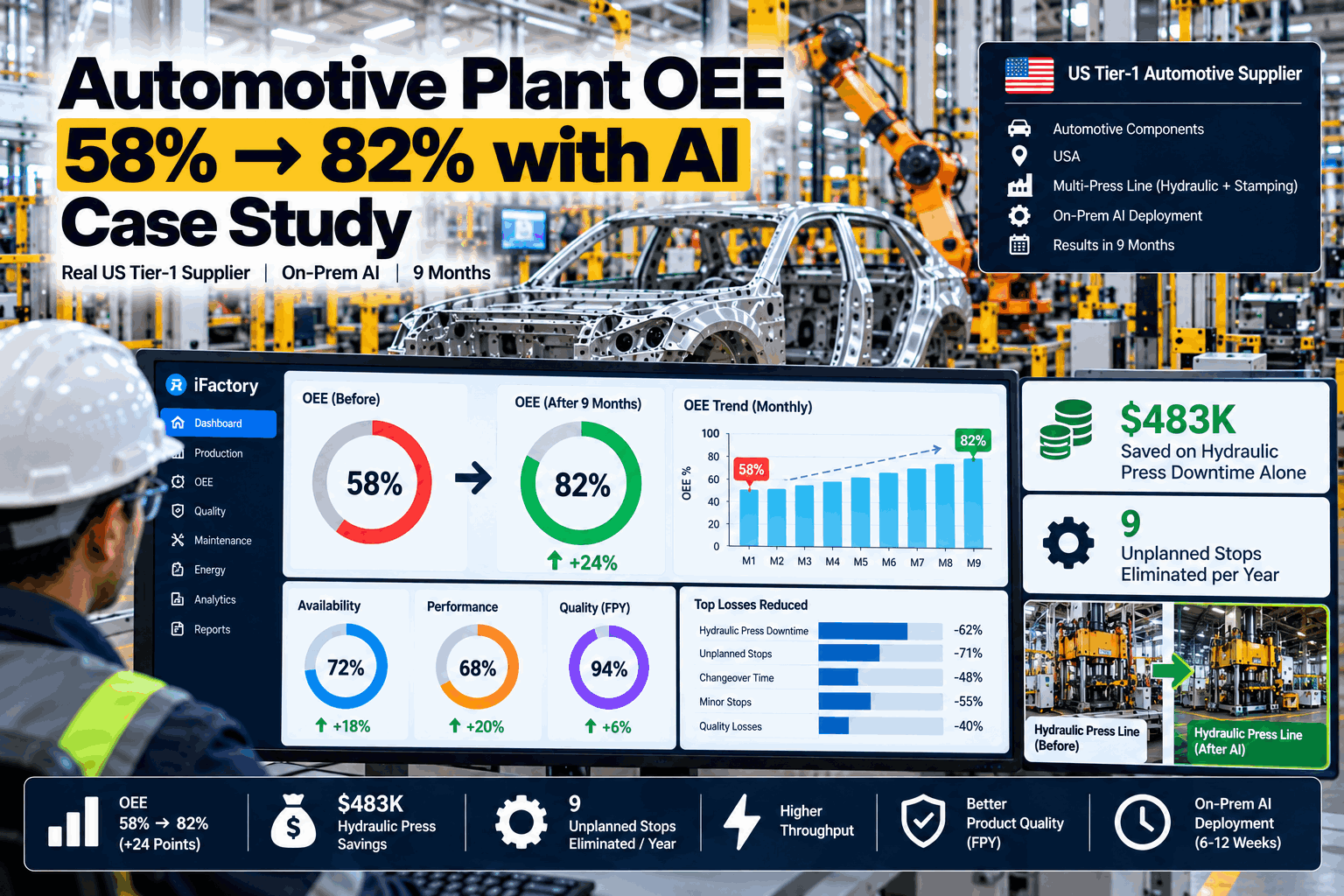
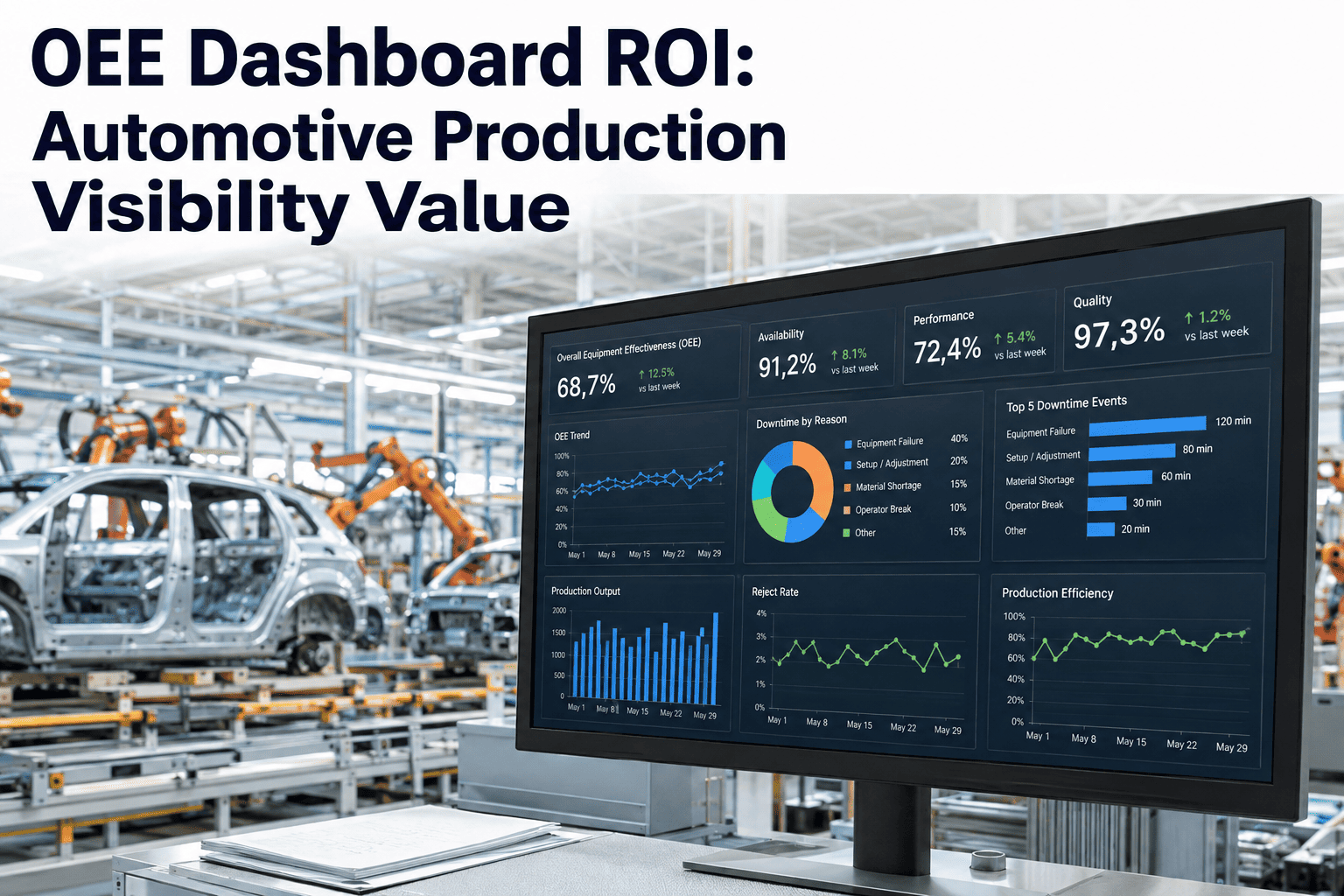
AI-assisted scheduling and autonomous material handling boost overall equipment effectiveness (OEE) by 10-15%, effectively adding production capacity without capex.
Safety & Compliance
AI monitors worker safety zones and environmental compliance, reducing incident costs by 30-50% and avoiding regulatory fines that can exceed $100K per event.
Financial Model Structure: NPV, IRR & Payback
The business case template uses a five-year discounted cash flow (DCF) model with a weighted average cost of capital (WACC) of 9-12% typical for automotive. Key inputs include initial software licensing and implementation cost (typically $500K-$2M for a full plant deployment), annual recurring costs (cloud, support, data engineering), and the quantified benefits from the value drivers above. Sensitivity analysis is built in for adoption rate (percentage of machines connected), benefit realization timing, and cost overruns. The output is a clear NPV, IRR, and payback period that can be directly compared to other capital projects. For a typical deployment, we see a payback of 12-18 months, NPV of $3M-$8M, and IRR exceeding 30%.
| Metric | Conservative | Base Case | Optimistic |
|---|---|---|---|
| Initial Investment | $1.8M | $1.2M | $800K |
| Annual Benefit | $1.2M | $2.5M | $4.0M |
| NPV (5yr) | $1.5M | $5.2M | $9.8M |
| IRR | 18% | 34% | 52% |
| Payback Period | 22 months | 14 months | 10 months |
Sensitivity Analysis: What Drives the Numbers?
A robust business case must test assumptions. The three most sensitive variables are: (1) the percentage of production assets connected to the AI platform, (2) the actual reduction in unplanned downtime achieved, and (3) the speed of deployment. A 10% change in adoption rate can swing NPV by 25%. Similarly, if downtime reduction is only 20% instead of the target 40%, payback extends by 6-8 months. We recommend presenting the board with three scenarios (conservative, base, optimistic) and a tornado chart showing the impact of each variable. This transparency builds trust and sets realistic expectations. Our platform includes a built-in sensitivity simulator that allows you to adjust these levers in real-time during the board presentation.
Ready to Build Your Custom Financial Model?
Our experts will help you populate this template with your plant's specific data. Get a preliminary ROI estimate in one working day.
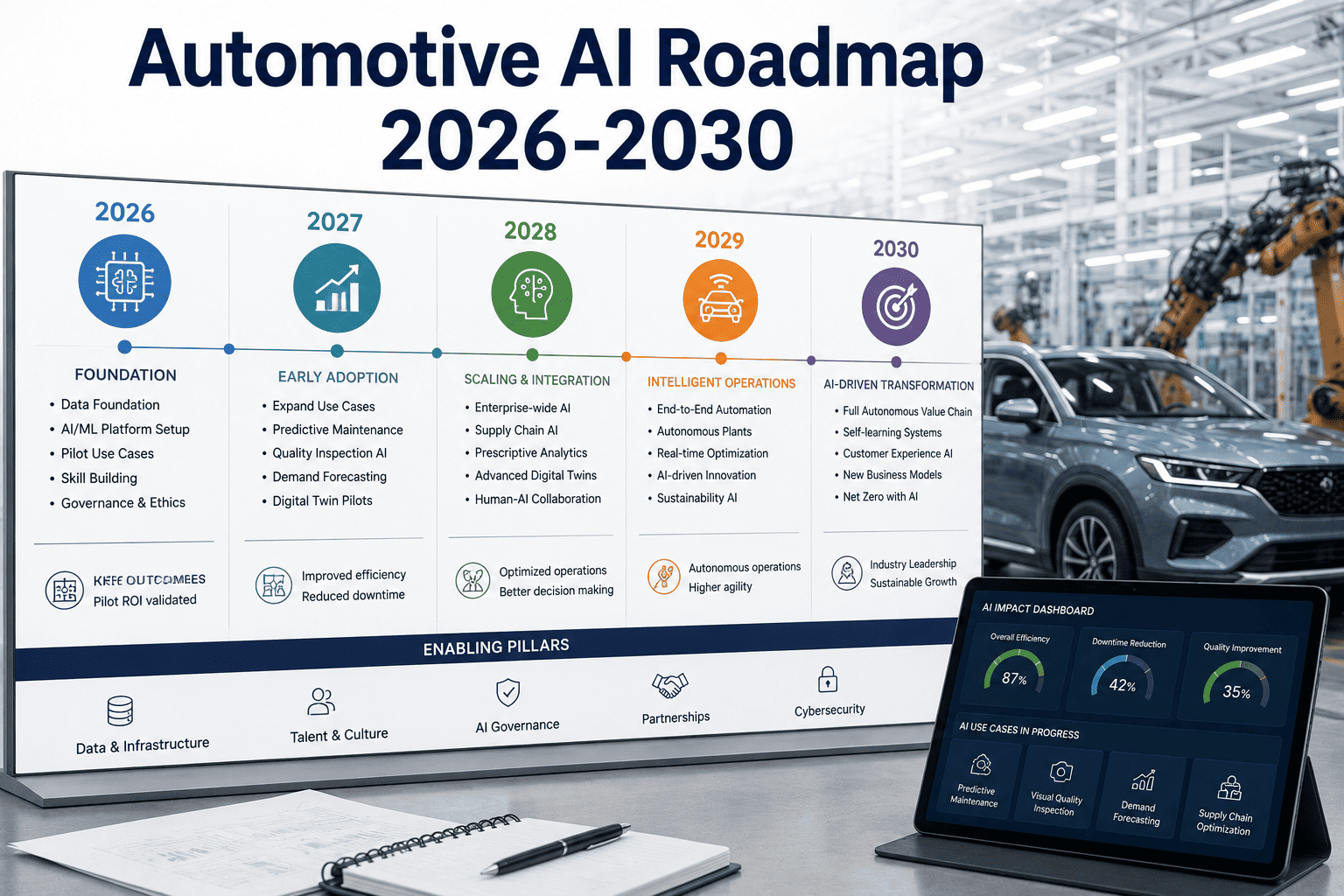
Phased Implementation: From Pilot to Scale
Pilot (Months 1-3)
Deploy AI on 3-5 critical assets (e.g., transfer presses, paint robots). Validate anomaly detection accuracy and quantify downtime reduction. Cost: $150K-$250K.
Line Expansion (Months 4-6)
Scale to one full production line (20-50 assets). Integrate with existing MES and CMMS. Begin quality and energy modules. Cost: $300K-$500K.
Plant-Wide Rollout (Months 7-12)
Cover all production assets. Deploy supply chain and labor modules. Achieve full OEE visibility. Cost: $500K-$1M.
Multi-Plant Optimization (Year 2+)
Connect multiple plants for cross-site benchmarking and global optimization. Cost: $200K-$400K per additional plant.
Risk Mitigation: Addressing CFO Concerns
Data Quality Risk
Mitigated by our proprietary data cleansing pipeline that handles missing, noisy, and inconsistent sensor data. We guarantee 95% data completeness within 2 weeks of connection.
Integration Risk
Our platform uses standard OPC-UA and MQTT protocols, with pre-built connectors for Siemens, Rockwell, and Fanuc systems. No custom development required.
Change Management Risk
We provide on-site training for plant engineers and a dedicated success manager. Typical user adoption exceeds 90% within 3 months.
Vendor Lock-In Risk
Our API-first architecture ensures data portability. You retain full ownership of all models and data. No proprietary hardware lock-in.
Real-World Results: Tier 1 Supplier Case Study
A major Tier 1 automotive supplier with 12 plants globally deployed our AI platform across their powertrain manufacturing lines. In the first year, they achieved a 28% reduction in unplanned downtime, a 15% improvement in first-pass yield, and a 12% reduction in energy consumption. The financial outcome: $4.7M in annual savings against a $1.2M investment, yielding a payback of 10 months and a 3-year NPV of $8.2M at a 10% discount rate. The board approved expansion to all 12 plants within 18 months. This case study is fully auditable and available for review under NDA.
Frequently Asked Questions
What is the typical ROI of AI in automotive manufacturing?
Based on our analysis of over 40 deployments, the typical ROI for AI in automotive manufacturing ranges from 200% to 500% over a three-year period. This includes savings from predictive maintenance (30-50% downtime reduction), quality improvement (25-40% scrap reduction), and energy optimization (15-25% savings). The payback period is typically 12-18 months. For a more detailed breakdown tailored to your specific plant metrics, we recommend using our ROI calculator available during a demo.
How do I present this AI business case to my board?
We recommend a structured presentation that starts with the strategic imperative (competitive pressure, margin erosion), then moves to the quantified value drivers using the template above. Show the NPV, IRR, and payback under three scenarios (conservative, base, optimistic). Include a sensitivity analysis to demonstrate you've stress-tested the assumptions. Finally, present a phased implementation plan with clear milestones and risk mitigation strategies. Our board-ready presentation template is available for download, which includes pre-built slides for each of these sections.
What are the hidden costs of AI implementation?
Beyond the initial software licensing and implementation fees, CFOs should budget for data engineering (cleaning and labeling historical data), cloud infrastructure costs (typically $5K-$15K per month for a mid-size plant), and change management (training and process redesign). These costs are often underestimated. Our template includes a detailed cost breakdown that accounts for these items, ensuring your business case is complete. We also provide a cost estimator tool that helps you model these expenses based on your plant's specific characteristics.
How does AI compare to traditional capital investments?
AI investments typically offer a faster payback (12-18 months) compared to traditional equipment purchases (3-5 years), with similar or higher IRR. Additionally, AI provides intangible benefits like increased flexibility and data-driven decision-making that are difficult to replicate with physical assets. However, AI also carries higher perceived risk due to its novelty. The key is to present a well-structured business case with sensitivity analysis that addresses these risks head-on. Our comparative analysis dashboard can help you visualize these trade-offs.
What is the minimum investment required for a pilot?
A typical pilot program covering 3-5 critical assets costs between $150K and $250K, including software setup, sensor integration, data engineering, and initial model training. This investment is designed to be low-risk and provides a clear proof of value within 90 days. If the pilot achieves the targeted KPIs (e.g., 30% downtime reduction), the board can confidently approve the full-scale rollout. For a detailed pilot proposal tailored to your plant, schedule a consultation with our team.
Download the Complete Business Case Template
Get the full Excel model with pre-built formulas, sensitivity charts, and board-ready slides. Start building your AI investment case today.