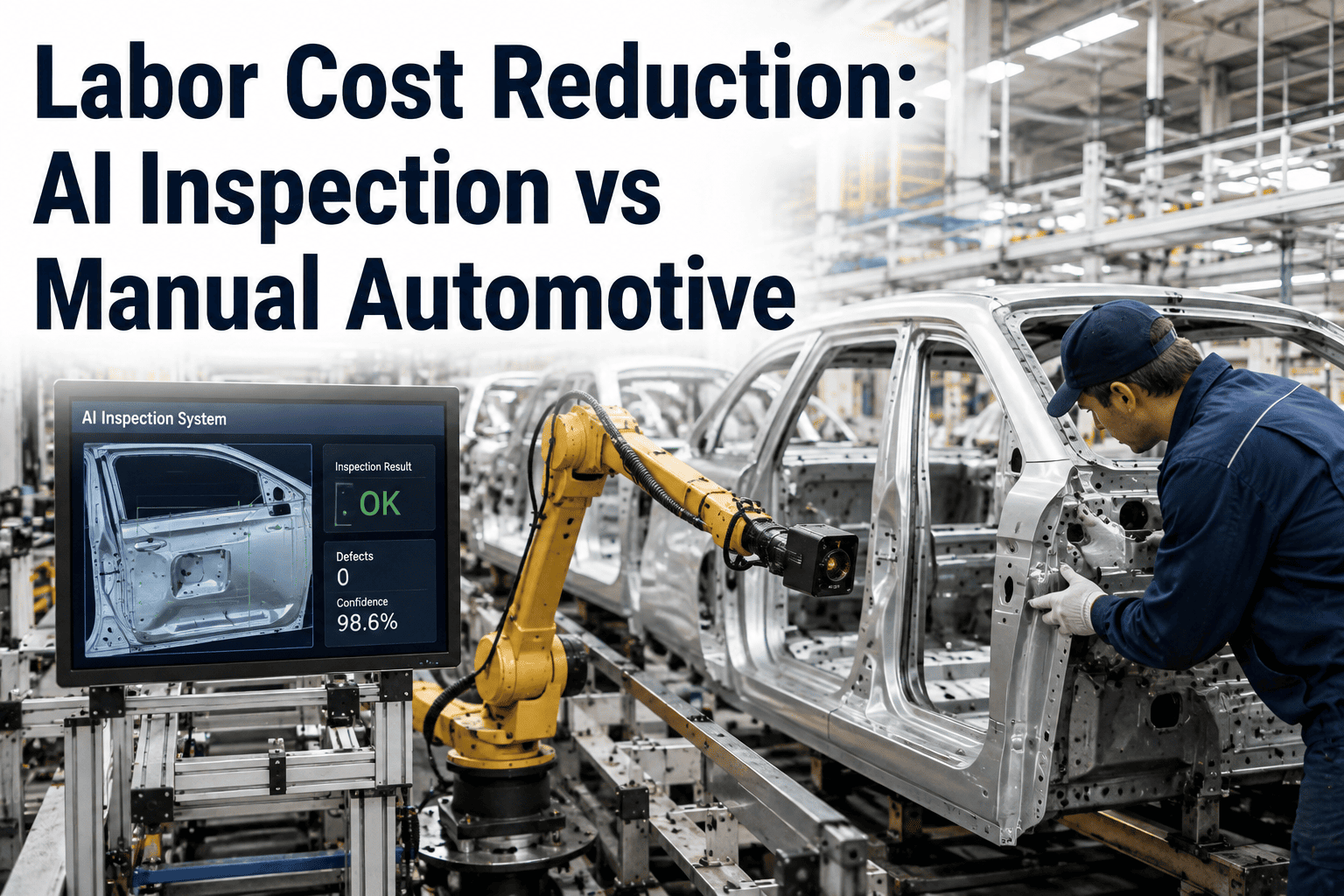
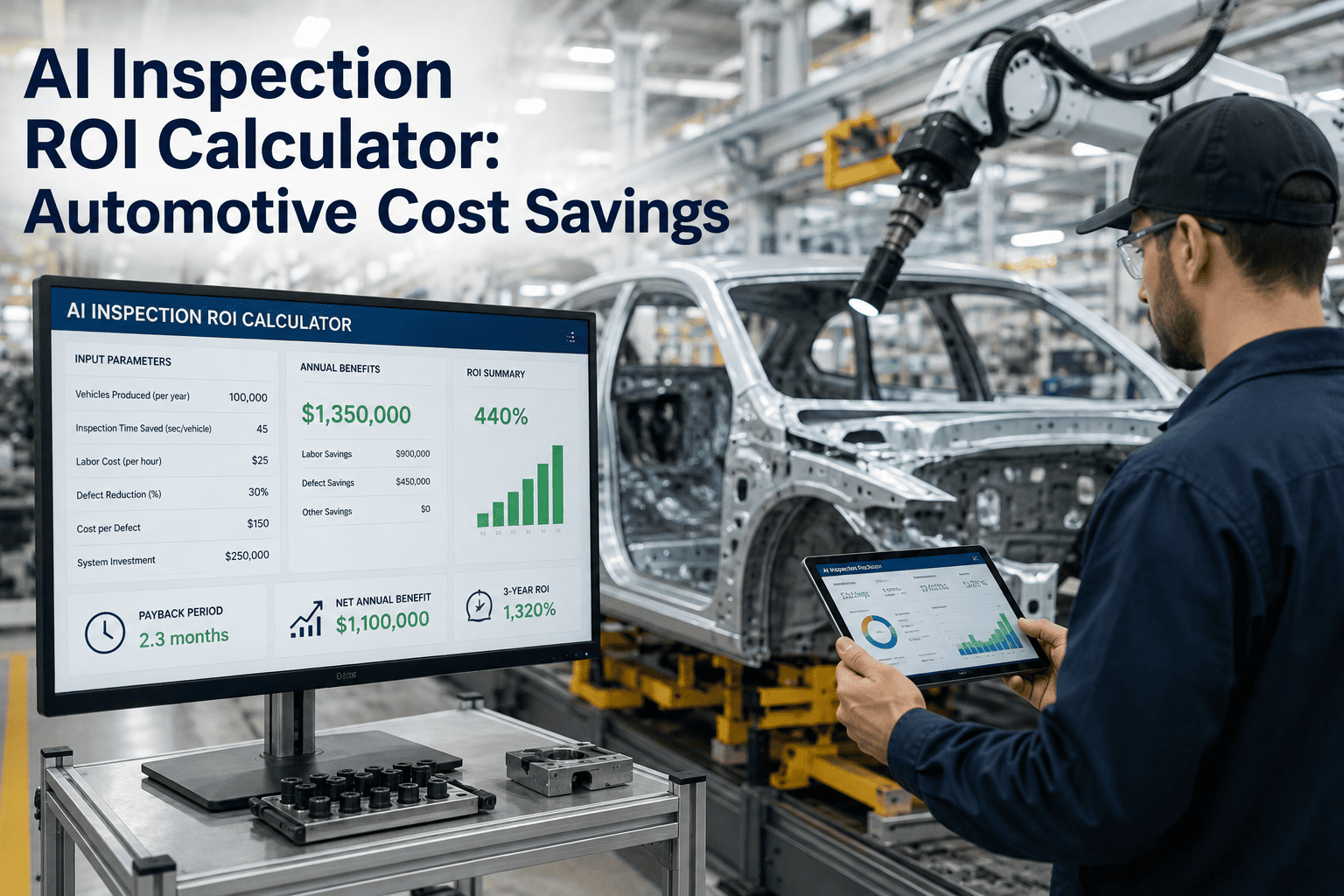
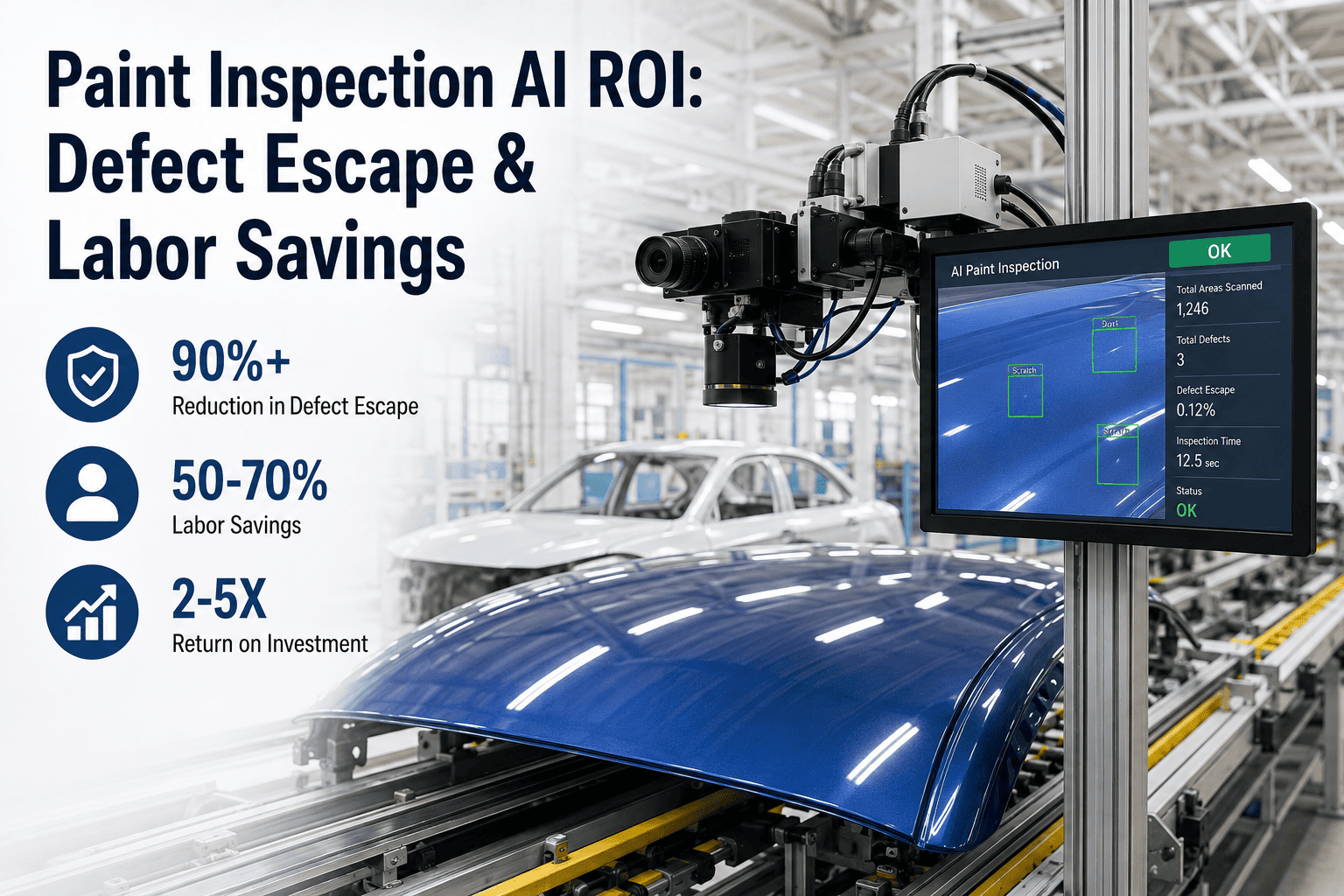
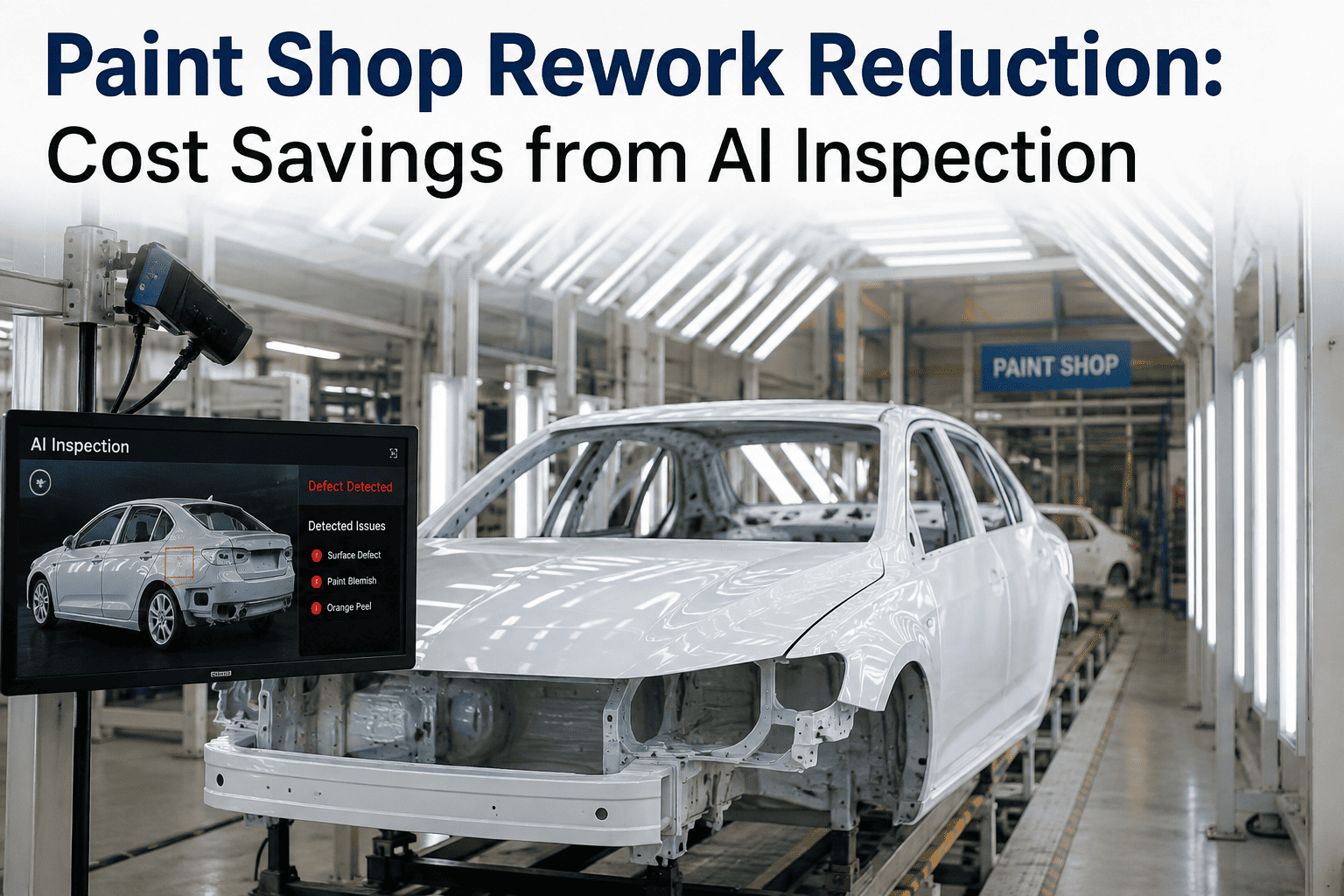
A finance review of an AI inspection proposal almost always lands on the same question: what happens to the inspection labor line item, and is this actually a cost reduction or just a shift in where the cost sits. It is a fair question, because inspector headcount is one of the most visible line items tied to any manual quality process, and vague promises of "efficiency gains" do not survive a real budget conversation. This piece breaks down how AI and manual inspection labor costs actually compare in an automotive plant, and where reduced headcount tends to get redeployed rather than simply eliminated. You can book a demo to run this comparison against your own inspection staffing numbers.
AI INSPECTION ROI · LABOR ECONOMICS
What AI Inspection Actually Changes About Your Labor Line
Not every inspection role disappears, but the total labor cost structure shifts meaningfully once AI takes over the repetitive visual checks a manual inspector currently handles.
WHERE MANUAL INSPECTION COST ACTUALLY SITS
It Is Not Just the Hourly Wage
The visible cost of manual inspection is inspector wages, but the full cost structure includes training time, shift coverage for absences, fatigue-related error rates that increase across a shift, and the indirect cost of inconsistent judgment between different inspectors checking the same defect type differently.
3-4
Inspectors typically needed per line across shifts to maintain continuous manual coverage
Fatigue Curve
Manual detection accuracy commonly declines measurably in the final hours of a shift
Variable
Detection consistency between individual inspectors checking the same defect type
SIDE BY SIDE
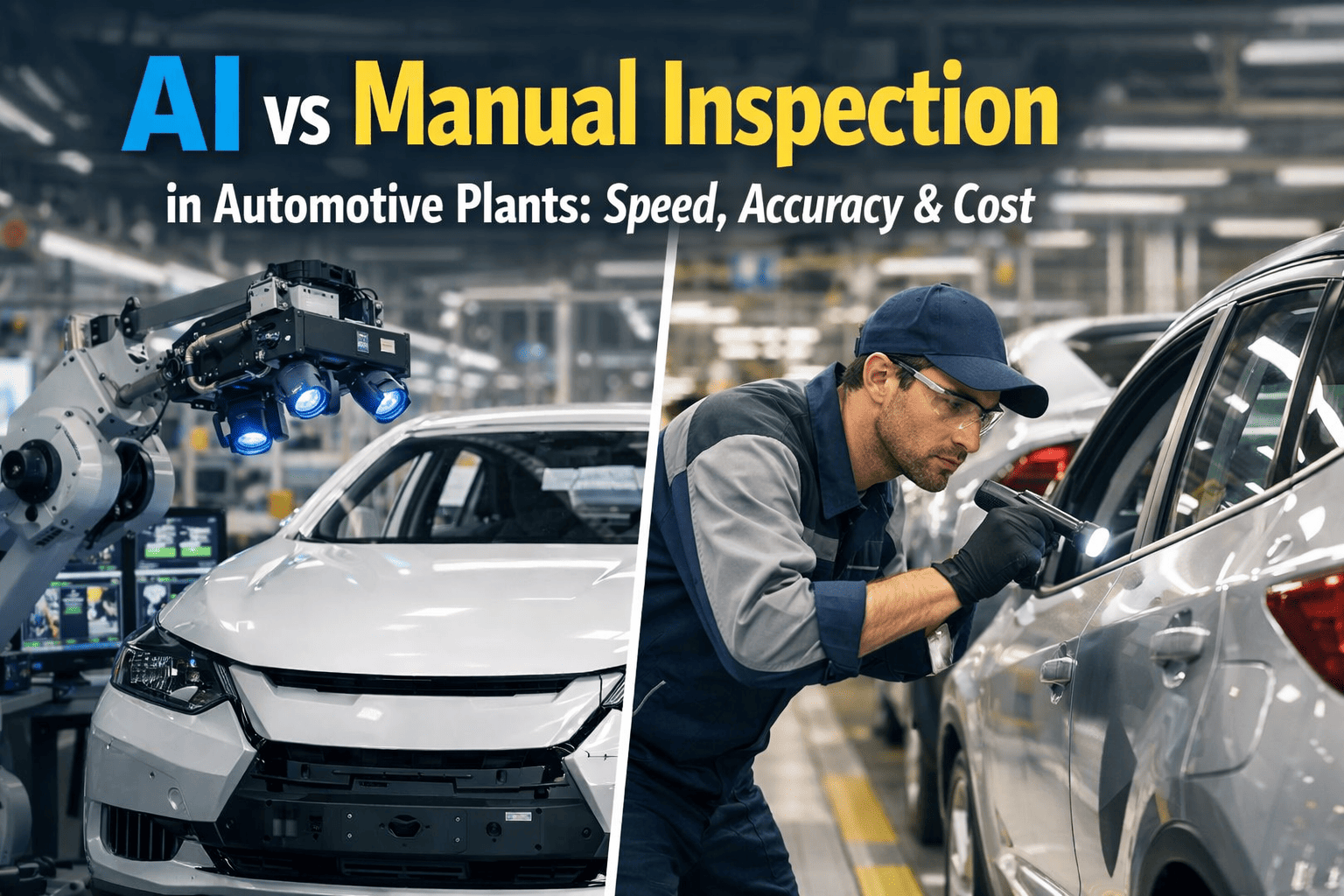
AI Inspection and Manual Inspection, Compared Directly
Placed next to each other, the cost and consistency differences between the two approaches become concrete rather than theoretical.
Manual Inspection
Multiple inspectors needed for continuous multi-shift coverage
Detection accuracy varies by fatigue level and individual inspector
Training required for every new inspector, repeated with turnover
Absence coverage requires backup staffing or line slowdown
AI Inspection
Consistent coverage across all shifts without additional headcount
Detection consistency does not degrade with time or fatigue
Model tuning replaces repeated individual inspector training
No coverage gap from staff absence or turnover
See This Comparison Against Your Own Staffing Model
Bring your current inspection headcount and shift structure. We will map out what changes, and what stays the same, for your specific line.
WHERE INSPECTORS ACTUALLY GO
Redeployment Is More Common Than Elimination
In most plants that adopt AI inspection, experienced inspectors are not simply let go, their floor knowledge and defect judgment are valuable in roles that AI cannot fill on its own, particularly around exception handling and process improvement.
Exception Review
Reviewing the smaller set of ambiguous cases the AI system flags rather than checking every single part.
Model Feedback and Tuning
Providing the defect judgment that helps refine and retrain inspection models as new defect types appear.
Root Cause Investigation
Applying floor experience to investigate why a defect pattern is occurring rather than only catching it.
Process Improvement Projects
Redirecting experienced staff toward upstream process changes that reduce defect rates at the source.
THE FULL PICTURE
Total Labor Cost, Not Just Headcount
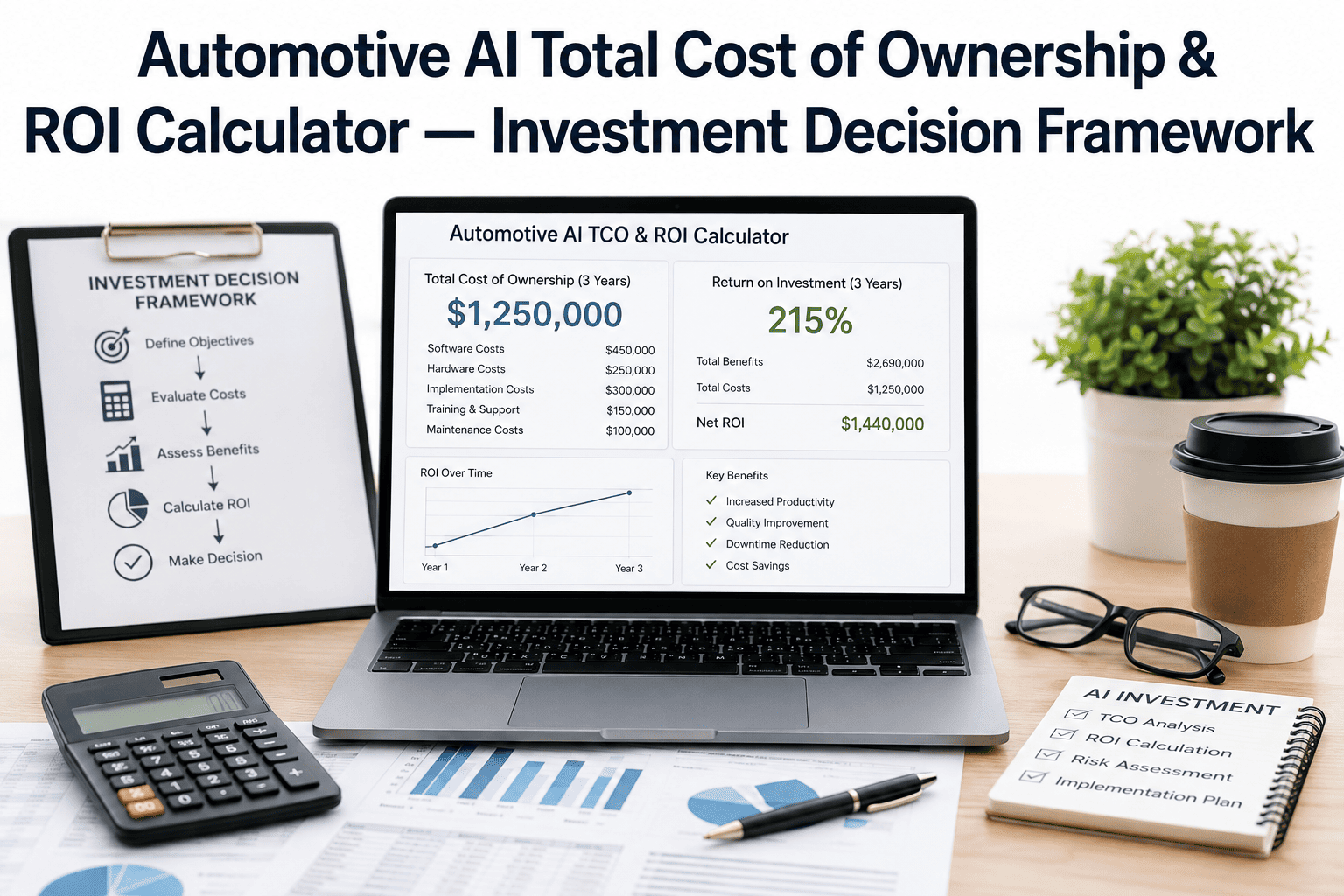
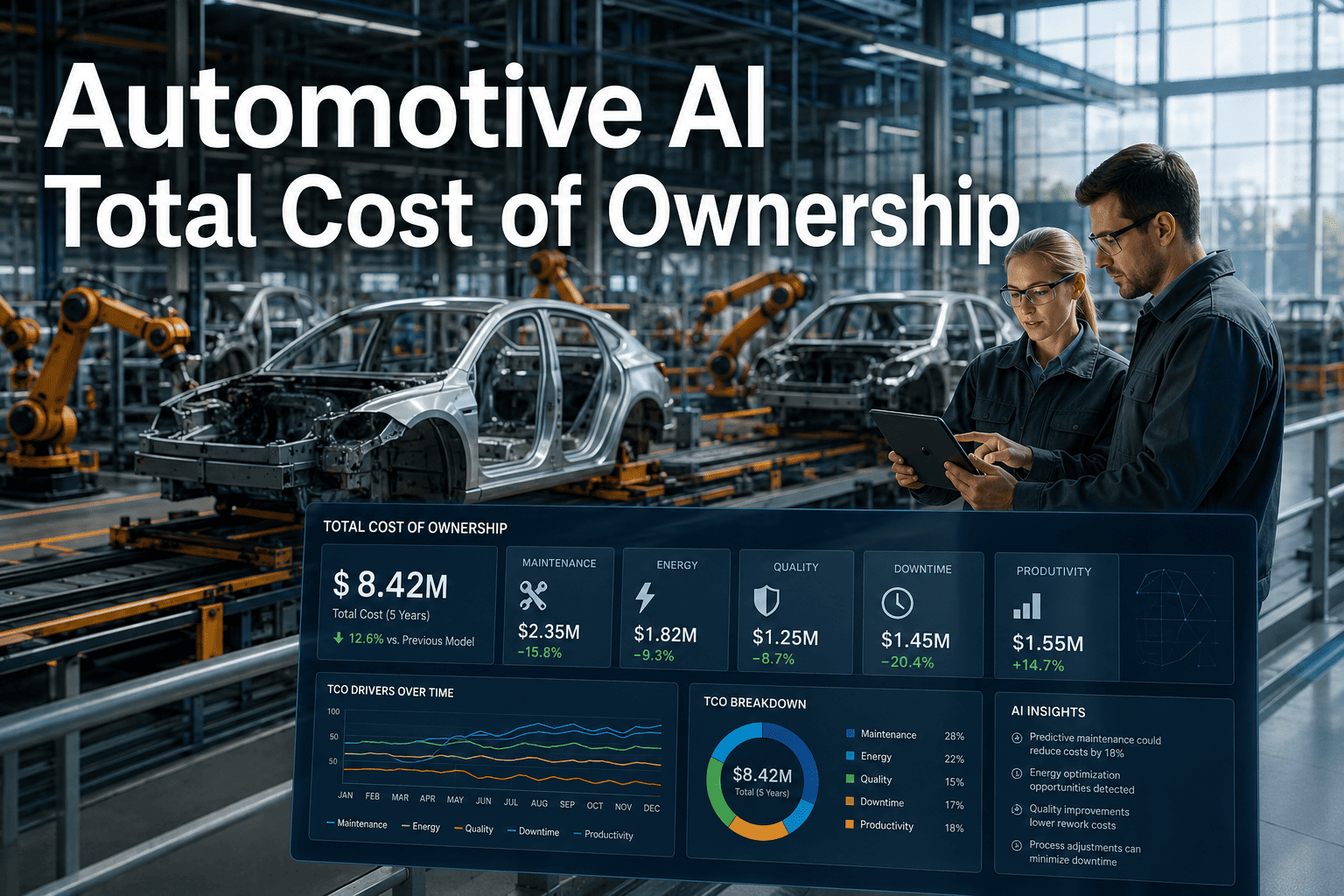
A credible labor comparison accounts for more than the number of people on the line, since training, error-related rework, and coverage costs all contribute to the true total.
FREQUENTLY ASKED QUESTIONS
What Plant and HR Leaders Ask Before This Conversation
Does adopting AI inspection always mean reducing our inspection headcount?
Not always immediately, many plants start by redeploying inspectors to exception review and process improvement roles rather than reducing headcount outright, then adjust staffing over time as confidence in the system grows and volumes are reassessed. The labor savings case is usually built on avoided future hiring and reduced overtime as much as on immediate reduction.
Book a demo to discuss a staffing transition plan that fits your workforce.
How do we calculate the real total labor cost of our current manual inspection process?
Start with direct wages across all shifts, then add training cost per hire, estimated rework cost tied to missed defects, and any overtime or backup staffing used to cover absences, since these indirect costs are often larger than plant teams initially expect once itemized. Most plants are surprised by how much of the total sits outside the base wage figure.
Contact our support team to build this calculation with your own staffing data.
What happens to inspection quality during the transition period while the AI system is still being tuned?
Most rollouts run the AI system alongside existing manual inspection for a defined validation period, so quality coverage does not drop during transition, and inspectors remain in place until the system's detection accuracy is confirmed against real production data. Removing manual coverage before validation is complete is not a recommended approach.
Book a demo to see a typical transition timeline.
Can experienced inspectors actually transition into the model feedback and tuning roles you mention?
Yes, this transition typically does not require a technical or data science background, since the value experienced inspectors bring is defect judgment and floor knowledge, which is exactly the input needed to review flagged exceptions and help refine detection thresholds over time. The tooling is generally designed to be usable by quality staff, not just data teams.
Contact our support team to see what this role transition looks like in practice.
How long does it typically take to see labor cost savings after AI inspection is implemented?
Direct labor savings from reduced backup staffing and overtime often appear within the first few months post-implementation, while the fuller total cost picture, including reduced rework and training costs, typically takes closer to a full budget cycle to become clear in the numbers. Building the comparison against a full year of prior data gives the most reliable before-and-after view.
Book a demo to set up a realistic before-and-after comparison for your plant.
Build Your Own Labor Cost Comparison
iFactory helps quantify current inspection labor cost against AI-driven inspection, including realistic redeployment paths for your existing team. Book a demo to get started.