Most automotive plants generate hundreds of incident and near-miss reports a year, and the overwhelming majority get filed, closed, and never looked at again as a set. Individually each report looks like an isolated event: a pinch point here, a slip near a coolant leak there. Looked at together across twelve months and multiple lines, the same three or four root causes tend to show up again and again wearing different disguises. iFactory analyzes incident history across the full plant so EHS teams can see the systemic pattern a single root cause analysis will always miss, and you can book a demo to see your own incident log analyzed this way.
SAFETY ANALYTICS FOR AUTOMOTIVE PLANTS
Every Root Cause Analysis Is Correct on Its Own — and Still Misses the Pattern
iFactory connects incident and near-miss reports across lines, shifts, and years so EHS teams can see the systemic risks that individual investigations, filed one at a time, are structurally unable to catch.
RECORDABLE INCIDENTS
What gets formally investigated
FIRST AID CASES
Usually logged, rarely analyzed as a set
NEAR MISSES & UNSAFE CONDITIONS
The largest layer, and the one with the earliest warning signal
WHY SINGLE-REPORT RCA FALLS SHORT
The Structural Blind Spot in Investigating One Incident at a Time
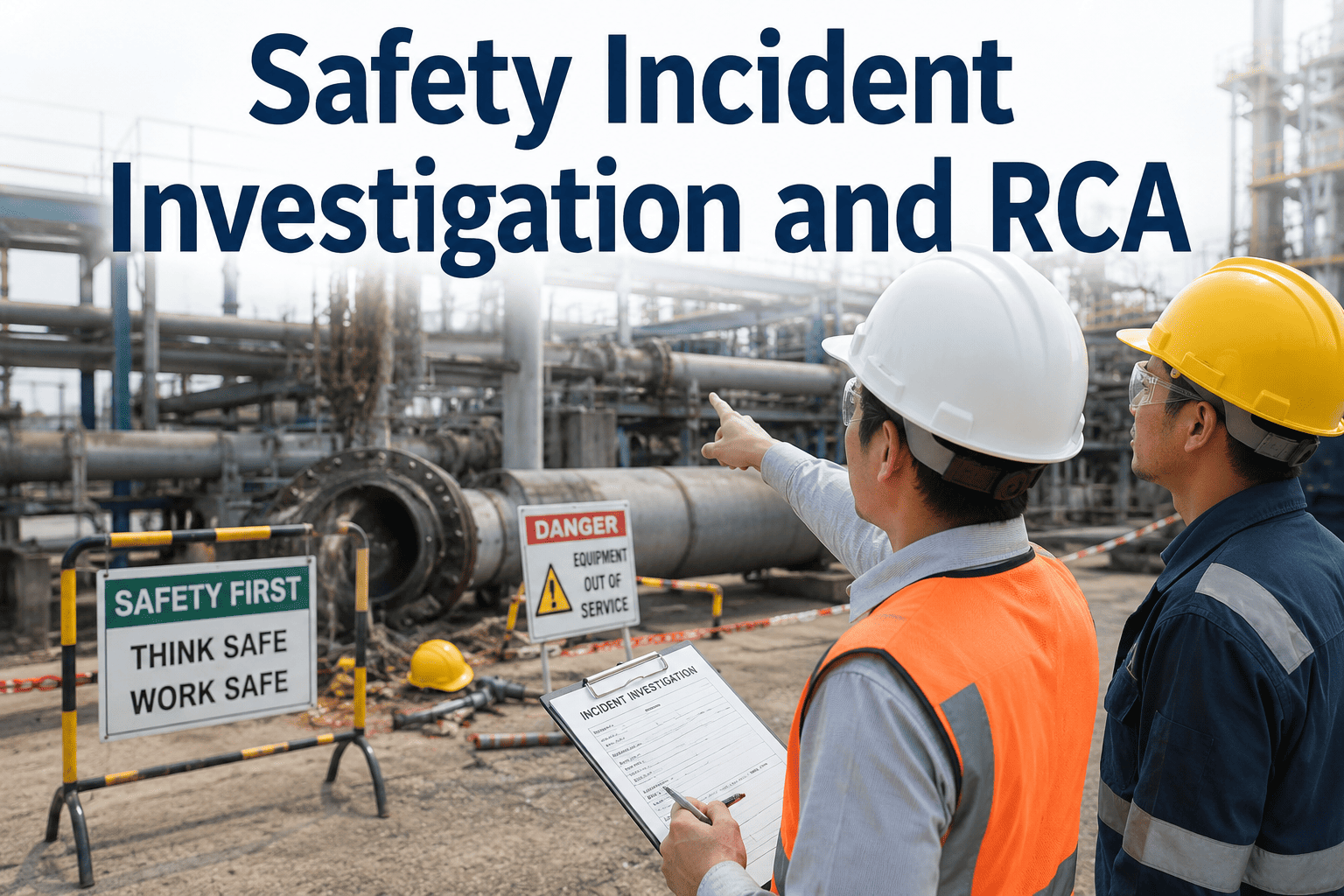
A root cause analysis done well answers why one specific event happened. It is not designed to answer whether the same underlying condition has already caused three other events on different lines that were each closed with a different immediate cause listed.
67%
Of repeat incident types are logged under different immediate-cause categories, hiding the pattern from standard reporting
3-4
Root causes typically account for the majority of recordable incidents across a full plant over a 12-month period
9 Months
Average time a systemic hazard persists before a pattern is noticed without cross-incident analysis
5x
Near misses typically outnumber recordable incidents, representing the richest and most underused data source
INVESTIGATION WORKFLOW
How an AI-Assisted Investigation Runs From Report to Corrective Action
The workflow below does not replace the investigator. It structures the investigation so pattern-matching against historical incidents happens automatically instead of depending on one person's memory of similar past events.
STEP 1
Incident Logged With Structured Fields
Location, task, equipment, shift, and immediate cause are captured in structured fields rather than free text alone, making the record searchable later.
STEP 2
Automatic Pattern Match Against History
The new report is compared against the full incident history for similar location, task, or equipment combinations, surfacing related past events instantly.
STEP 3
Investigator Reviews Suggested Links
The EHS investigator confirms or dismisses suggested connections, keeping human judgment in control of the final root cause determination.
STEP 4
Systemic Root Cause Flagged if Confirmed
When three or more related incidents share an underlying cause, the case is escalated from individual RCA to a systemic corrective action review.
STEP 5
Corrective Action Tracked to Closure
Corrective actions are tracked against the systemic cause across every affected line, not just the single line where the report originated.
A Closed Incident Report Is Not the Same as a Solved Problem
iFactory connects incident, near-miss, and first-aid history across your entire plant so EHS teams catch systemic risks before they become the fourth recordable incident this year. Book a demo to see your incident log analyzed for hidden patterns.
RCA METHOD COMPARISON
Choosing the Right Root Cause Method for the Type of Incident
Not every incident needs the same depth of investigation. The table below matches common RCA methods to the incident types where they are most effective.
| Method | Best Suited For | Typical Duration | Output |
|---|
| 5 Whys | Straightforward, single-cause incidents | Under 1 hour | Simple causal chain |
| Fishbone Diagram | Incidents with multiple contributing factors | 1 to 2 hours | Categorized cause map |
| Fault Tree Analysis | Complex equipment failure incidents | Half day or more | Logic-based failure pathway |
| Cross-Incident Pattern Analysis | Recurring incident types across lines or shifts | Ongoing, automated | Systemic root cause with plant-wide scope |
LEADING VS LAGGING
Why Near Misses Deserve the Same Analytical Rigor as Recordable Incidents
Lagging indicators tell you what already went wrong. Leading indicators, when actually analyzed rather than just logged, tell you what is about to.
LAGGING INDICATORS
Recordable and lost-time incidents, measured after harm has already occurred
Useful for compliance reporting and year-over-year benchmarking
By definition arrive too late to prevent the event they describe
LEADING INDICATORS
Near misses, unsafe conditions, and first-aid cases that precede a recordable event
Analyzed as a pattern, these predict where the next incident is statistically likely
Require active analysis to be useful, since raw counts alone say little
PROGRAM READINESS
Safety Analytics Readiness Checklist for EHS Teams
Confirm these fundamentals are in place before expecting cross-incident pattern analysis to surface reliable systemic findings.
Incident, near-miss, and first-aid reports captured in structured, searchable fields
At least 12 months of historical incident data available for pattern baselining
Location, task, and equipment tagged consistently across all reporting forms
Corrective action tracking linked to specific incident records, not tracked separately
EHS team has a defined escalation path for confirmed systemic findings
Near-miss reporting culture actively encouraged rather than discouraged by metrics
FREQUENTLY ASKED QUESTIONS
Questions EHS Teams Ask About Cross-Incident Safety Analytics
Does this replace our existing incident reporting and investigation process?
No, iFactory sits on top of your existing incident reporting workflow and investigation process rather than replacing either one. Individual investigators still conduct root cause analysis on each incident using whatever method your program already uses, and the analytics layer adds cross-incident pattern detection as an additional input to that process.
Contact support to review compatibility with your current EHS reporting system.
How many incidents do we need in our history for pattern analysis to be reliable?
Meaningful pattern detection typically needs at least 12 months of structured incident and near-miss data, since seasonal patterns and less frequent incident types need that window to appear more than once. Plants with a smaller incident history can still benefit from real-time matching against whatever data exists, with pattern confidence improving as more reports accumulate.
Book a demo to see what pattern analysis looks like with your current data volume.
Will flagging a systemic pattern create liability exposure if we do not act on it fast enough?
A documented systemic finding with a tracked corrective action timeline is generally viewed favorably in regulatory and legal review compared to no documentation at all, since it demonstrates the plant identified and actively managed the risk. The exposure risk comes from an undocumented pattern that surfaces only after a serious incident, which is precisely the scenario cross-incident analysis is designed to prevent.
Contact support to discuss documentation practices for systemic findings.
Can this analyze near-miss reports even if our near-miss reporting rate is currently low?
Yes, though the value of pattern analysis scales with reporting volume, so plants with low near-miss reporting rates often see the biggest improvement by first addressing reporting culture alongside the analytics rollout. A common approach is to use early pattern findings from recordable incidents to demonstrate value, which in turn builds the case for encouraging more near-miss reporting from the floor.
Book a demo to discuss reporting culture alongside analytics rollout.
Does the system work across multiple plants or only within a single site?
iFactory can analyze patterns both within a single site and across multiple plants in the same organization, which is particularly valuable for identifying equipment or process-related hazards that exist wherever the same machine model or task is performed. Multi-site analysis often surfaces systemic findings that a single-site EHS team would never see, since the repeat pattern is spread across facilities.
Contact support to discuss multi-site deployment for your organization.
Stop Investigating the Same Root Cause Under a New Incident Number
iFactory gives EHS teams a plant-wide view of incident patterns so systemic hazards get caught and corrected before the next recordable event. Book a demo to see your incident history analyzed for hidden patterns.