A technician doing a manual under-vehicle check has roughly forty-five seconds to look up into a shadowed, oil-streaked underside and judge whether an exhaust hanger is cracked, a brake line is chafed, or a suspension bushing has started to tear, all from an awkward angle with a flashlight in one hand. Most of the time that's enough. The times it isn't are exactly the defects that turn into a warranty claim, a recall, or worse, a failure after the vehicle has already left the plant. The underbody is the one section of a finished vehicle that never gets the same lighting, angle, or repeatable scrutiny as the painted surfaces above it, which is precisely why automated scanning built specifically for this zone closes a gap manual inspection was never structurally able to close, book a demo to see it running on your own line.
The Underbody Is the Hardest Place on a Vehicle to Inspect — and the Easiest to Automate
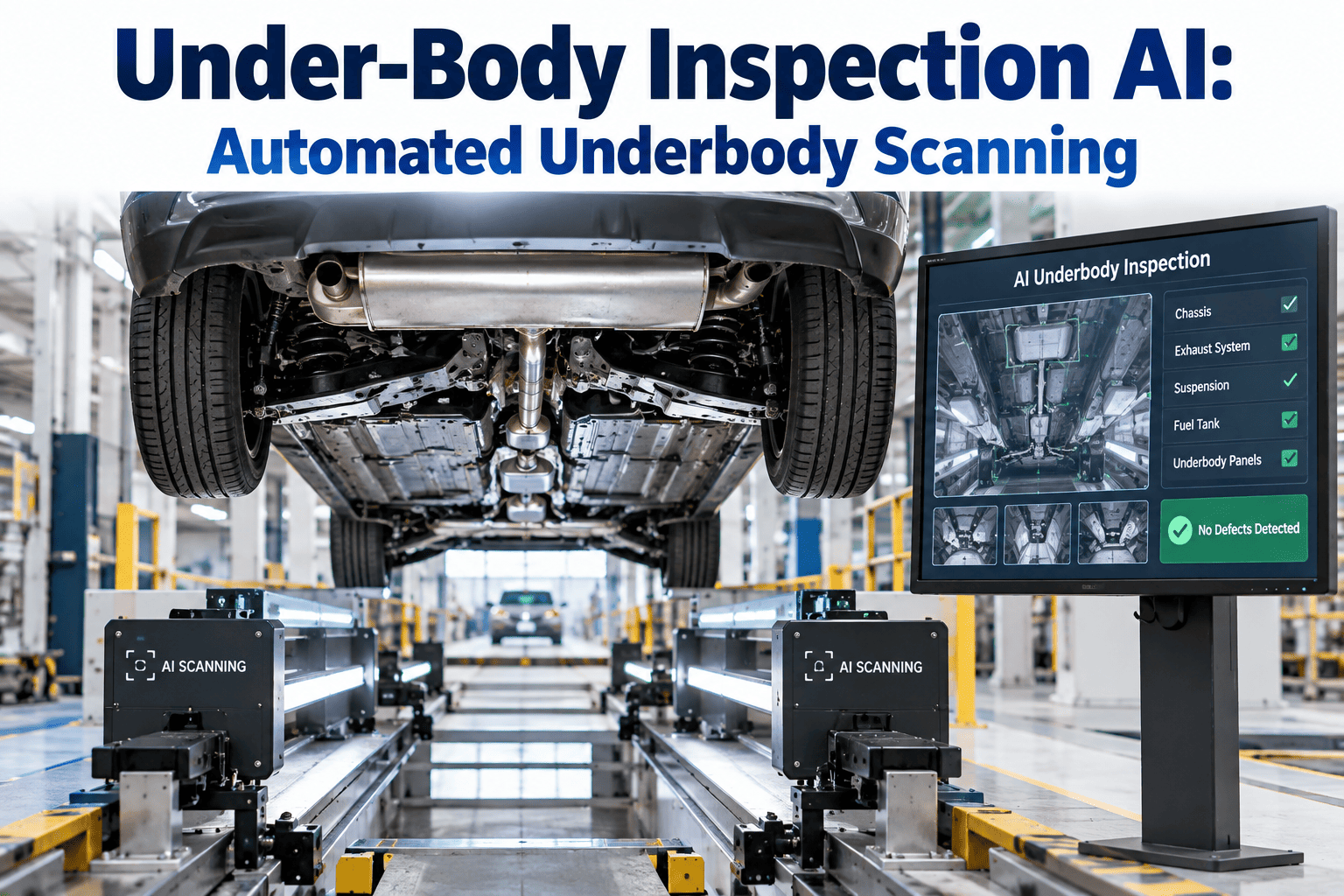
iFactory's under-body inspection AI scans exhaust systems, brake lines, and suspension components at line speed, catching the hidden defects a rushed visual check under poor lighting is most likely to miss.
Manual Underbody Checks Fight Physics Before They Fight Defects
Every other final inspection station on a line benefits from controlled lighting, a comfortable viewing angle, and enough time to look carefully. The underbody station typically has none of the three, which means the inspection quality problem here starts well before anyone even looks for a defect.
None of these conditions are a reflection of inspector skill or effort. They are the physical constraints of looking up at a moving target from underneath, in a pit, under time pressure, which is a fundamentally different task than examining a painted door panel at eye level in bright light.
The Three Systems Where Hidden Underbody Defects Cost the Most
Not every underbody component carries the same downstream risk. Exhaust, brake lines, and suspension are prioritised because a missed defect in any of the three has a direct path to a safety issue, a warranty claim, or a comeback vehicle.
These three systems share a common thread beyond safety relevance, each one is physically difficult to see completely from a single fixed angle, which is exactly the constraint a multi-camera scanning array is built to remove.
See underbody scanning catch what a pit check would miss
iFactory runs a live comparison against your current underbody inspection process, using footage from your own line and vehicle platform.
A Drive-Over or Lift-Mounted Array Built for the Angle No Human Gets
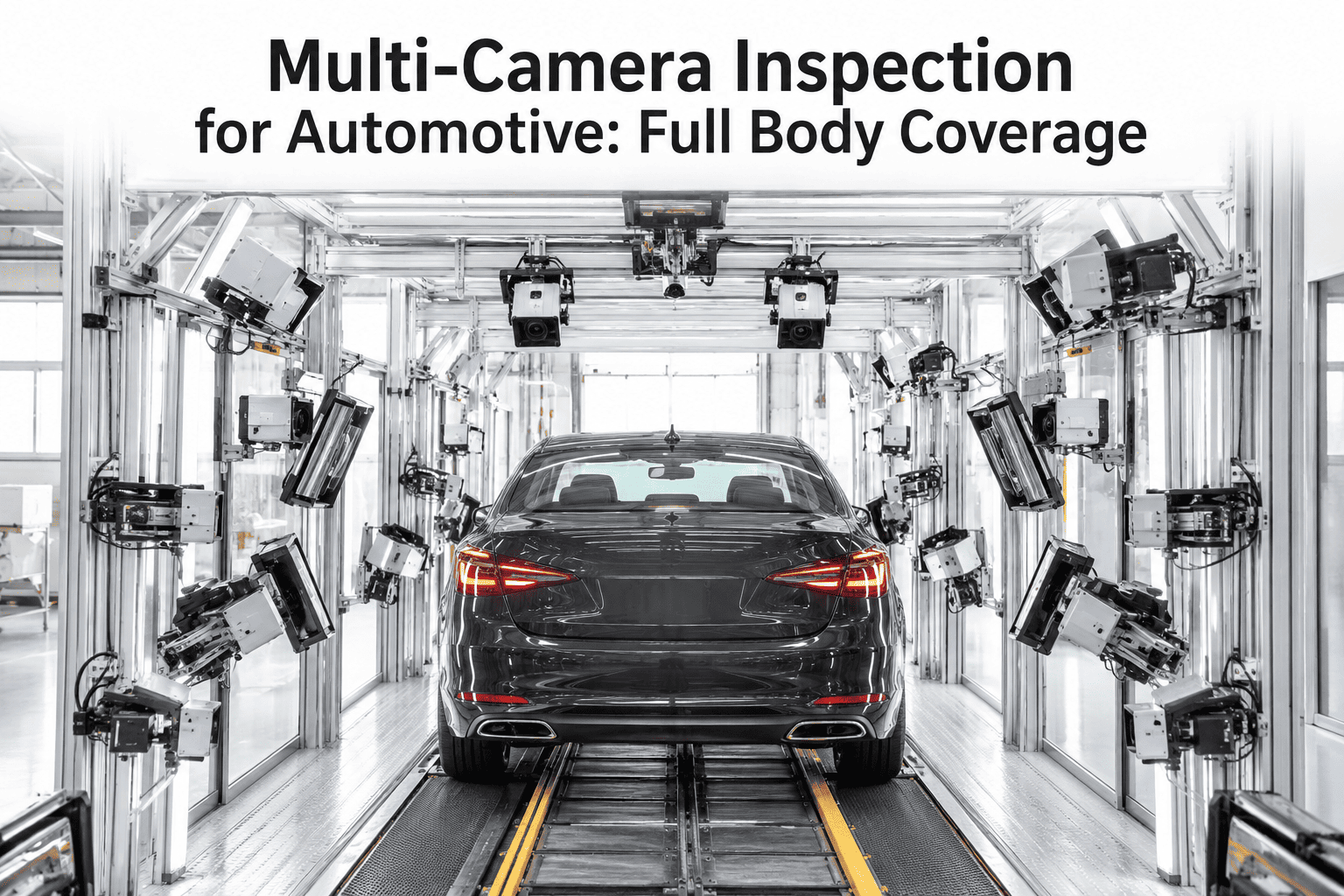
Underbody scanning is a hardware and vision problem as much as an AI problem, since the cameras have to physically capture angles a person standing or lying beneath a vehicle rarely achieves consistently.
Each zone is covered by multiple angled cameras rather than a single overhead unit, since a component that is fully visible from one angle is frequently half-obscured from another. The stitched image set gives the model a complete view no single human vantage point could replicate in the available cycle time.
Where the Real Difference Shows Up in Practice
The comparison that matters is not accuracy in isolation, it is accuracy under the specific conditions this station actually operates in, shift after shift, vehicle after vehicle.
| Inspection Factor | Manual Pit or Lift Check | Automated Underbody Scan |
|---|---|---|
| Lighting Consistency | Varies by station, shift, and pit condition | Fixed, calibrated lighting identical every vehicle |
| Coverage Per Vehicle | Partial, limited by time and viewing angle | Full multi-angle capture of every targeted zone |
| Fatigue Effect | Attention and thoroughness decline across a shift | Identical scrutiny on vehicle one and vehicle one thousand |
| Defect Record | Pass or fail note, rarely a retained image | Timestamped image evidence tied to VIN for every scan |
| Cycle Time Impact | Constrained by available inspector time per vehicle | Captured during normal line movement, no added dwell |
The image evidence row deserves particular attention, since it changes what happens after a defect is found, not just whether it is found. A stored image tied to a specific VIN turns a disputed warranty claim into a documented, verifiable record instead of a conflicting memory of what a pit inspector may or may not have checked.
What Happens Between a Detection and a Corrected Vehicle
Catching a defect is only the first half of the value. What the system does with that detection in the following minutes is what actually prevents a defective vehicle from reaching the next station or, worse, a customer.
That closing verification step is frequently the piece missing from manual processes entirely. A corrected defect that never gets re-checked under the same conditions that caught it in the first place is a correction taken on trust rather than confirmed.
How iFactory Deploys Underbody Scanning on a Live Line
Installation is scoped around your existing final inspection station layout, whether that is a pit, a lift, or a drive-over conveyor, rather than requiring a redesigned station.
What Automotive Plants Ask About Underbody Inspection AI
Give Every Underbody the Same Scrutiny, Every Vehicle, Every Shift
iFactory's underbody scanning array captures exhaust, brake line, and suspension defects at line speed, with a verified image record tied to every VIN.