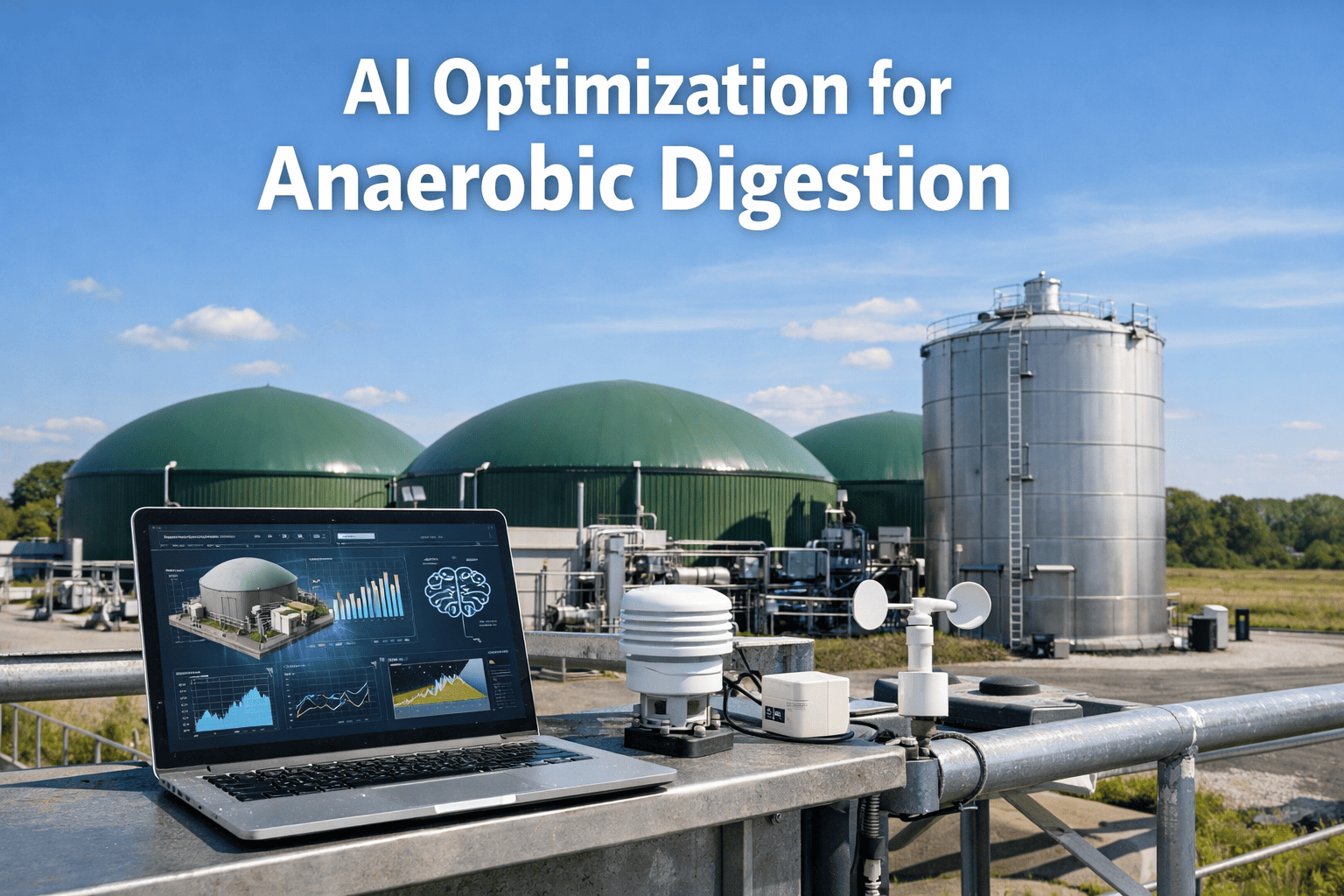
The optimization gap in underground gas storage operations is not a technology problem and it is not a geology problem. It is a data visibility problem. A storage field operator managing 40 injection-withdrawal wells across a depleted reservoir formation in the Gulf Coast region is looking at yesterday's SCADA pressure reads this morning, building tomorrow's injection schedule from a static reservoir model calibrated at commissioning, and running compressor maintenance on an interval schedule that has nothing to do with actual machine condition. AI changes all five of those decision loops simultaneously: reservoir pressure modeling, injection rate optimization, compressor predictive maintenance, 72-hour demand forecasting, and FERC/PHMSA compliance monitoring. iFactory's industrial AI platform delivers all five on the plant network — integrated with existing SCADA historians without replacing any operational technology. Book a Demo to see the platform configured for your underground storage operation.
01
Reservoir AI
24–72hr pressure forecast
+12–18% fill efficiency
02
Compressor PdM
2–6 week fault warning
30–45% downtime cut
03
Demand Forecast
±2–4% accuracy at 72hr
60–75% penalty cut
04
Digital Twin
Reservoir + surface + pipeline
Scenario-on-demand
05
Compliance AI
FERC Order 809 · PHMSA
80–85% time reduction
12–18%
injection fill cycle improvement with AI reservoir pressure optimization
30–45%
reduction in unplanned compressor downtime during withdrawal season
6–10 mo
typical AI deployment payback at a 20+ Bcf working-gas-capacity storage field
Why Underground Gas Storage Has a Persistent Optimization Gap
Underground natural gas storage sits at the most operationally complex intersection in the midstream supply chain. Operators must simultaneously balance reservoir deliverability against pipeline nominations, compressor capacity against injection targets, and regulatory base-gas requirements against commercial working-gas commitments — all under weather-driven demand swings that compress decision windows to hours. The optimization gap is not conceptual. It shows up in five measurable cost categories that compound across every injection and withdrawal cycle.
01
Suboptimal Injection Scheduling — 8–14% Capacity Left Unused
Without real-time reservoir simulation, operators set injection rates conservatively to avoid wellbore liquids loading or over-pressurization. This leaves 8–14% of available injection capacity unutilized during summer fill cycles — directly reducing working gas inventory going into peak winter withdrawal season. At a 20 Bcf field, 12% underperformance means 2.4 Bcf of missed inventory with direct commercial impact.
02
Unplanned Compressor Outages — $50K–$300K Per Event
Reciprocating and centrifugal compressors at storage fields run under variable load profiles poorly suited to fixed-interval maintenance schedules. Unplanned outages during high-demand withdrawal periods carry penalty costs of $50,000–$300,000 per day in lost deliverability and emergency capacity purchases. Most storage field compressor failures are preceded by 2–6 weeks of detectable sensor signatures that conventional SCADA alarm thresholds do not catch.
03
Inaccurate Demand Forecasts — ±12–18% Error at 72 Hours
Most storage operators use regional weather-correlation models calibrated on historical normal weather that fail during polar vortex events, unseasonable warm periods, or sudden industrial load spikes. Forecast error at the 72-hour horizon typically runs ±12–18%, generating under-nomination penalties or costly spot market purchases. At a mid-size facility, nomination imbalance penalties run $80,000–$250,000 per year — a direct cost addressable by AI forecasting.
04
Manual Compliance Tracking — 15–20 Hours Per Week
FERC Order 809, PHMSA integrity management rules, and state public utility commission requirements mandate continuous pressure monitoring, base-gas inventory verification, and incident reporting within defined time windows. These functions are largely manual at most facilities — consuming 15–20 hours of environmental and compliance staff time per week with full audit exposure when data entry errors occur.
The 5 AI Applications Transforming Underground Storage — How Each One Works
The following five application areas represent the highest-ROI deployments of AI in underground gas storage, organized as an expandable reference covering data sources, model approach, operational output, and performance impact. Each reflects a specific data-to-decision gap that iFactory's platform closes — running on the plant network via the iFactory NVIDIA appliance, integrated with existing SCADA infrastructure without rip-and-replace of any operational technology.
Want to evaluate which AI applications deliver the fastest ROI at your specific facility? Book a Demo — we’ll model the ROI case against your working gas capacity, compressor fleet, and current nomination exposure.
01
Real-Time Reservoir Pressure Modeling and Injection Optimization
24–72hr forecast · Continuous sensor update
+12–18% fill
+
1.1
How it works · Core AI
AI models trained on well pressure history, gas composition, formation temperature, and injection volume data predict reservoir behavior 24–72 hours ahead and recommend injection rates that maximize working gas inventory without risking wellbore integrity or permit pressure limits. Unlike static reservoir simulation, iFactory’s models update continuously as new sensor data arrives — adapting the injection schedule to actual formation response rather than a geological model calibrated at commissioning.
1.2
Data sources required
Wellhead pressure and temperature sensors (existing SCADA), gas composition analyzer output, injection flow meters, formation temperature logs, and permit pressure limit parameters. Most depleted reservoir fields built after 2000 have all required data in existing historians. iFactory connects via OPC-UA — no new sensors required at most facilities.
1.3
Performance impact · Measurable
Operators using AI-driven injection scheduling at depleted reservoir fields report 12–18% improvement in fill-cycle efficiency and consistent peak inventory levels going into withdrawal season. At a 20 Bcf field, 15% better fill efficiency adds 3 Bcf to peak inventory — with direct commercial value at current Henry Hub prices.
02
Compressor and Wellhead Equipment Predictive Maintenance
2–6 week fault detection · Condition-based
30–45% downtime cut
+
2.1
How it works · Core AI
iFactory ingests vibration, temperature, suction and discharge pressure, lube oil condition, and motor current draw from every compressor unit and wellhead control valve. ML models trained on historical failure patterns identify developing faults 2–6 weeks before failure and generate maintenance work orders in iFactory’s CMMS module — replacing emergency response with planned, budgeted maintenance events scheduled during low-demand periods.
2.2
Sensor requirements
Vibration (accelerometer on bearing housing), temperature (bearing and winding), suction and discharge pressure, lube oil pressure, and motor current draw. Most reciprocating and centrifugal compressors at storage facilities built after 2005 have these sensors installed as part of the original OEM monitoring system. At older facilities, a targeted sensor upgrade for high-priority units is typically a 2–4 week project at $8,000–$25,000 per unit.
2.3
Performance impact · Measurable
Storage fields using iFactory’s compressor predictive maintenance module report 30–45% reduction in unplanned compressor outages during withdrawal season, and 18–22% reduction in total maintenance spend through condition-based scheduling that eliminates unnecessary preventive work on equipment performing within normal parameters. One prevented unplanned outage during a January withdrawal peak typically returns $150,000–$500,000 in avoided penalties and spot capacity purchases.
03
AI Demand Forecasting for Withdrawal Scheduling and Nominations
±2–4% accuracy at 72hr
60–75% penalty reduction
+
3.1
How it works · Core AI
iFactory’s AI demand forecasting model incorporates real-time weather ensemble data, power grid dispatch signals, industrial load indicators, and pipeline flow data — producing non-linear forecasts that adapt to emerging conditions rather than extrapolating historical averages. The model updates continuously as new data arrives, with 72-hour rolling accuracy of ±2–4% versus ±12–18% for conventional weather-correlation regression.
3.2
Why conventional forecasting fails
Traditional weather-correlation models are linear and backward-looking — calibrated on historical normal weather that breaks down during polar vortex events, unseasonable warm periods, power generation dispatch shifts, or sudden industrial demand spikes. These are precisely the conditions when forecast accuracy matters most, because they are the conditions that drive maximum withdrawal demand and maximum nomination penalty exposure.
3.3
Performance impact · Measurable
Reducing demand forecast error from ±15% to ±3% at the 72-hour horizon cuts nomination imbalance penalties by 60–75% at a mid-size storage field — saving $50,000–$190,000 per year. More accurate demand forecasts also improve withdrawal scheduling efficiency, increasing withdrawal rate utilization from a typical 72–82% of rated capacity to 88–96%.
04
Digital Twin Integration for Scenario Planning and Risk Assessment
Reservoir + surface + pipeline model
Scenario-on-demand
+
4.1
How it works · Core AI
iFactory’s Digital Twin AI module creates an integrated model combining the reservoir model, surface facilities model, and pipeline interconnect — updated continuously from operational data. Operators run withdrawal scenarios before executing them: “What happens to reservoir pressure at maximum withdrawal rate for 14 consecutive days?” becomes a simulatable question with a quantified answer rather than an engineering judgment call.
4.2
Key use cases
Commercial planning: simulate peak withdrawal commitment scenarios before FERC-regulated capacity nominations. Regulatory planning: verify that maximum injection scenarios stay within permit pressure limits across all wells simultaneously. Emergency response: pre-compute maximum safe withdrawal rates under worst-case compressor availability scenarios. Each scenario runs against the current-state digital twin, not a model calibrated years ago at commissioning.
4.3
Formation-type considerations · Formation-specific
Depleted reservoir: multi-well interference modeling for injection sequence optimization. Salt cavern: cavern pressure-volume AI to prevent roof instability — critical for high-deliverability peak-shaving operations. Aquifer: water influx monitoring and prediction, where geological uncertainty is highest and AI provides the greatest differentiation over static models.
05
Automated FERC/PHMSA Compliance Monitoring and Reporting
FERC Order 809 · PHMSA integrity management
80–85% time reduction
+
5.1
How it works · Core AI
iFactory’s EHS Management module monitors real-time operating data against FERC Order 809 and PHMSA integrity management requirements, generates automated alerts when parameters approach permit limits, and creates the documentation required for FERC annual reports, PHMSA incident reports within required 60-minute, 24-hour, and 30-day windows, and state public utility commission filings — with full audit trail documentation.
5.2
Compliance categories covered
Continuous pressure monitoring against permit operating limits across all wells. Base-gas inventory verification and certification. Wellbore integrity incident detection and PHMSA-compliant reporting within required windows. Maximum allowable operating pressure (MAOP) verification. Leak detection monitoring integration. State PUC pressure test documentation and annual report generation.
5.3
Performance impact · Measurable
Replacing the manual compliance tracking process that consumes 15–20 hours of staff time per week reduces that burden to under 4 hours with automated monitoring and report generation — an 80–85% time reduction. More importantly, automated real-time monitoring eliminates the audit exposure created by manual data entry gaps and the compliance violations that result from human review latency during high-activity operating periods.
Ready to evaluate which of these five AI applications delivers the fastest payback at your storage field? Book a Demo — we’ll build a site-specific ROI model against your working gas capacity, compressor fleet, and current nomination imbalance exposure.
AI Performance Benchmarks by Underground Storage Formation Type
AI optimization priorities differ meaningfully across the three formation types used for underground gas storage. Understanding where AI delivers the most differentiated value at your specific formation type is the starting point for a deployment plan that targets fast ROI rather than maximizing platform feature coverage.
~80% of U.S. Capacity
Depleted Reservoir Fields
The most common storage formation. Long production history provides the richest data baseline for AI model training. AI priorities: reservoir pressure modeling for injection rate optimization, multi-well interference analysis for injection sequence, and wellbore liquids loading detection for individual wells. AI reservoir modeling produces the greatest fill efficiency improvement on depleted fields because formation response history is deepest.
Top AI application: Reservoir pressure AI — +12–18% injection fill efficiency
~10% of U.S. Capacity
Salt Cavern Facilities
High-deliverability, high-cycle facilities used for peak shaving and power generation support. Commercial value depends entirely on the ability to deliver at the right moment — not just the right volume. AI priorities: cavern pressure-volume management to prevent roof instability, brine handling optimization, and demand forecasting for peak-demand dispatch timing. Forecast accuracy directly determines whether the commercial value of the facility is captured.
Top AI application: Demand forecasting — captures peak commercial dispatch value
~10% of U.S. Capacity
Aquifer Storage Fields
The least predictable formation type with the highest geological uncertainty. AI provides the greatest differentiation over static models precisely because the baseline of geological certainty is lowest. AI priorities: water influx monitoring and prediction (aquifer water movement can severely constrain injection rates), pressure maintenance above bubble point to prevent gas dissolution back into solution, and anomaly detection for formation behavior deviating from geological model predictions.
Top AI application: Water influx AI — highest value where geological certainty is lowest
All Formation Types
Compressor Fleet Optimization
Compressor predictive maintenance delivers high ROI regardless of formation type because the cost structure is identical across all storage configurations: variable load profiles that accelerate wear beyond fixed-interval maintenance predictions, and unplanned withdrawal-season outages with $50,000–$300,000 penalty exposure per event. Compressor PdM is typically Phase 1 of iFactory deployment at any storage field because payback is fastest and most certain.
Payback: One prevented withdrawal-season outage = full deployment cost recovered
AI vs. Conventional Operations — Underground Storage Performance Comparison
The table below compares AI-driven optimization against conventional SCADA-and-spreadsheet operations at underground gas storage facilities across eight critical performance dimensions. Values reflect reported results from midstream operators using AI-driven storage management versus published industry benchmarks for conventional operations.
| Performance Metric |
Conventional Operations |
AI-Driven Operations |
Improvement |
| Injection fill efficiency |
68–78% of theoretical max |
82–92% of theoretical max |
+12–18% |
| 72-hr demand forecast accuracy |
±12–18% error |
±2–4% error |
3–5x improvement |
| Unplanned compressor outages |
4–8 events per withdrawal season |
1–3 events per withdrawal season |
30–45% reduction |
| Compressor maintenance cost |
Fixed-interval, 100% of schedule |
Condition-based, 60–75% of schedule |
18–22% cost reduction |
| Nomination imbalance penalties |
$80K–$250K per year |
$20K–$60K per year |
60–75% reduction |
| Compliance documentation hours |
15–20 hrs/week manual |
Under 4 hrs/week automated |
80–85% time reduction |
| Withdrawal rate utilization |
72–82% of rated capacity |
88–96% of rated capacity |
+10–16% |
| Peak inventory target attainment |
Misses target 30–45% of seasons |
Meets or exceeds 85–90% of seasons |
2x target attainment rate |
Common Underground Storage AI Deployment Mistakes
Four deployment mistakes account for the majority of avoidable delays and ROI shortfalls in underground storage AI projects. Each is recognizable in retrospect but common during initial deployment planning.
01
Deploying All Five Applications Simultaneously
Attempting to deploy reservoir AI, compressor PdM, demand forecasting, digital twin, and compliance automation in a single phase creates integration complexity that delays ROI for all five. Best practice: deploy compressor predictive maintenance in Phase 1 (fastest payback, most certain ROI), reservoir AI in Phase 2, demand forecasting in Phase 3, digital twin and compliance automation in Phase 4. This approach delivers measurable ROI within the first 90 days rather than waiting 12–18 months for full platform deployment.
02
Assuming SCADA Data Is Sufficient Without Historian Integration
SCADA screens show current state. AI models require historical time-series data for pattern recognition. Operators who attempt to deploy AI using only current SCADA reads — without connecting to the site historian (OSIsoft PI, GE iFIX, Ignition, Honeywell Experion) — get alert-based monitoring rather than predictive intelligence. The distinction matters: alerts tell you a problem exists when a threshold is crossed; AI tells you a problem is developing 2–6 weeks before any threshold is approached.
03
Expecting Immediate Production-Grade Prediction Accuracy
AI models for storage field compressors and reservoir behavior require 6–12 months of operation on the specific facility to eliminate false positives, tune threshold parameters, and build maintenance team confidence. Operators who evaluate AI effectiveness at 30 days — before the model has accumulated a full injection-withdrawal cycle of operating data — often underestimate long-term value. iFactory recommends starting with one equipment type and one failure mode, proving value, then expanding fleet-wide.
04
Treating AI as a Replacement for Operational Expertise
AI systems at storage fields produce recommendations and alerts — they do not replace the engineering judgment of experienced operators who understand formation behavior, regulatory constraints, and commercial commitments. The highest-value AI deployments treat the platform as an augmentation layer that surfaces patterns the operator would not have seen otherwise, then defers to experienced judgment for decisions that require contextual knowledge about a specific formation or commercial arrangement.
Expert Review — What Storage Operations Professionals Say About AI Optimization
“I have worked underground gas storage operations for twenty-two years — depleted reservoir fields in the Gulf Coast and salt cavern facilities in the mid-continent — and the question I get most often from operators considering AI is some version of: ‘We already have SCADA. What does AI add that SCADA doesn’t already do?’ The answer is pattern recognition at a scale and speed that human operators and static alarm systems cannot replicate. SCADA tells you what is happening right now. AI tells you what is going to happen in the next 72 hours — and it tells you why. At one salt cavern facility where we implemented AI-driven compressor monitoring, the system identified a developing valve seat erosion pattern on a withdrawal compressor in late October — six weeks before our scheduled maintenance window, and well before any alarm threshold would have been triggered. The vibration signature was there in the data, but it was buried in the noise of normal operating variability at that load point. No operator looking at a SCADA trend screen would have seen it. The AI model recognized the signature because it had been trained on hundreds of similar pre-failure patterns. We pulled that unit for inspection two weeks before our withdrawal season peak and confirmed a valve seat that was 60 percent eroded. Had it failed during a January cold snap at maximum withdrawal rate, we were looking at three to five days of reduced deliverability and a penalty exposure in the range of $400,000 to $700,000. That one catch paid for the entire AI deployment program at that facility. AI does not require new data. It requires new ways of reading the data you already have.”
— Director of Storage Operations, U.S. Midstream Natural Gas · 22 Years Underground Storage · Licensed Professional Engineer (PE), Petroleum Engineering · INGAA Foundation Storage Integrity Working Group
2–6 wk
advance fault detection that SCADA thresholds miss entirely
$400K–$700K
penalty exposure avoided by one caught compressor fault
Full ROI
deployment cost recovered from a single prevented withdrawal-season outage
Deploy iFactory AI for Underground Gas Storage Optimization
AI-powered platform connecting reservoir pressure data, compressor telemetry, demand forecasting, and compliance monitoring into one unified intelligence layer — with digital twin scenario planning, FERC/PHMSA automation, and predictive maintenance for every critical asset in your storage operation. SCADA-integrated. No rip-and-replace. Deployable in 4–8 weeks.
Frequently Asked Questions
Does iFactory require replacing existing SCADA or DCS systems at the storage facility?
No. iFactory integrates with existing SCADA historians and control systems via standard OPC-UA, Modbus, and REST API protocols — reading data from existing infrastructure without replacing or modifying any control logic. The iFactory NVIDIA appliance runs on the plant network alongside current operational technology. Most deployments connect to existing OSIsoft PI, GE iFIX, Honeywell Experion, or Ignition historians within the first two weeks of implementation. Your operational technology stays in place; iFactory adds the AI intelligence layer on top of it.
How does AI demand forecasting improve on the weather-correlation models most storage operators already use?
Traditional weather-correlation models are linear and backward-looking — calibrated on historical relationships that break down during polar vortex events, industrial load changes, or power generation dispatch shifts. These are exactly the conditions when forecast accuracy matters most. iFactory’s AI forecasting model incorporates real-time weather ensemble data, power grid dispatch signals, industrial load indicators, and pipeline flow data — producing non-linear forecasts that adapt to emerging conditions. The difference in 72-hour forecast accuracy is typically ±2–4% for AI versus ±12–18% for conventional regression, which translates directly into 60–75% reduction in nomination imbalance penalties.
Book a Demo to see a forecast accuracy comparison built on your historical nomination data.
What sensor data is required for compressor predictive maintenance, and is it available at most storage facilities?
iFactory’s compressor predictive maintenance models require vibration (accelerometer on bearing housing), temperature (bearing and winding), suction and discharge pressure, lube oil pressure, and motor current draw data. Most reciprocating and centrifugal compressors at storage facilities built after 2005 have these sensors installed as part of the original OEM monitoring system — the data simply needs to be routed to the iFactory historian via OPC-UA connection. At older facilities with limited instrumentation, a targeted sensor upgrade for high-priority compressor units is typically a 2–4 week project with hardware costs of $8,000–$25,000 per unit, which is recovered by avoiding a single unplanned outage.
Can iFactory generate the FERC and PHMSA compliance reports required for underground storage facility operation?
Yes. iFactory’s EHS Management module monitors real-time operating data against FERC Order 809 and PHMSA integrity management requirements, generates automated alerts when parameters approach permit limits, and creates the documentation required for FERC annual reports, PHMSA incident reports within required 60-minute, 24-hour, and 30-day reporting windows, and state public utility commission filings. The module reduces compliance staff burden from 15–20 hours per week to under 4 hours, with full audit trail documentation that eliminates the compliance exposure created by manual data entry gaps.
Book a Demo to see the compliance monitoring module configured for your facility’s permit conditions.
What is the typical ROI timeline for deploying iFactory AI at an underground gas storage facility?
The typical payback period for iFactory deployment at a storage field with 20+ Bcf working gas capacity is 6–10 months. ROI is driven by three value streams: compressor downtime avoidance (one prevented unplanned outage during withdrawal season typically returns $150,000–$500,000 in avoided penalties and spot purchase costs); injection efficiency improvement (12–18% better fill-cycle performance adds 1.5–3.5 Bcf to peak inventory at a 20 Bcf field, with direct commercial value at current gas prices); and nomination penalty reduction (60–75% cut saves $50,000–$190,000 per year at a mid-size facility). iFactory’s implementation team builds a site-specific ROI model during the demo process.
Book a Demo to see a calculation built around your facility’s working gas capacity, compressor fleet, and current nomination exposure.