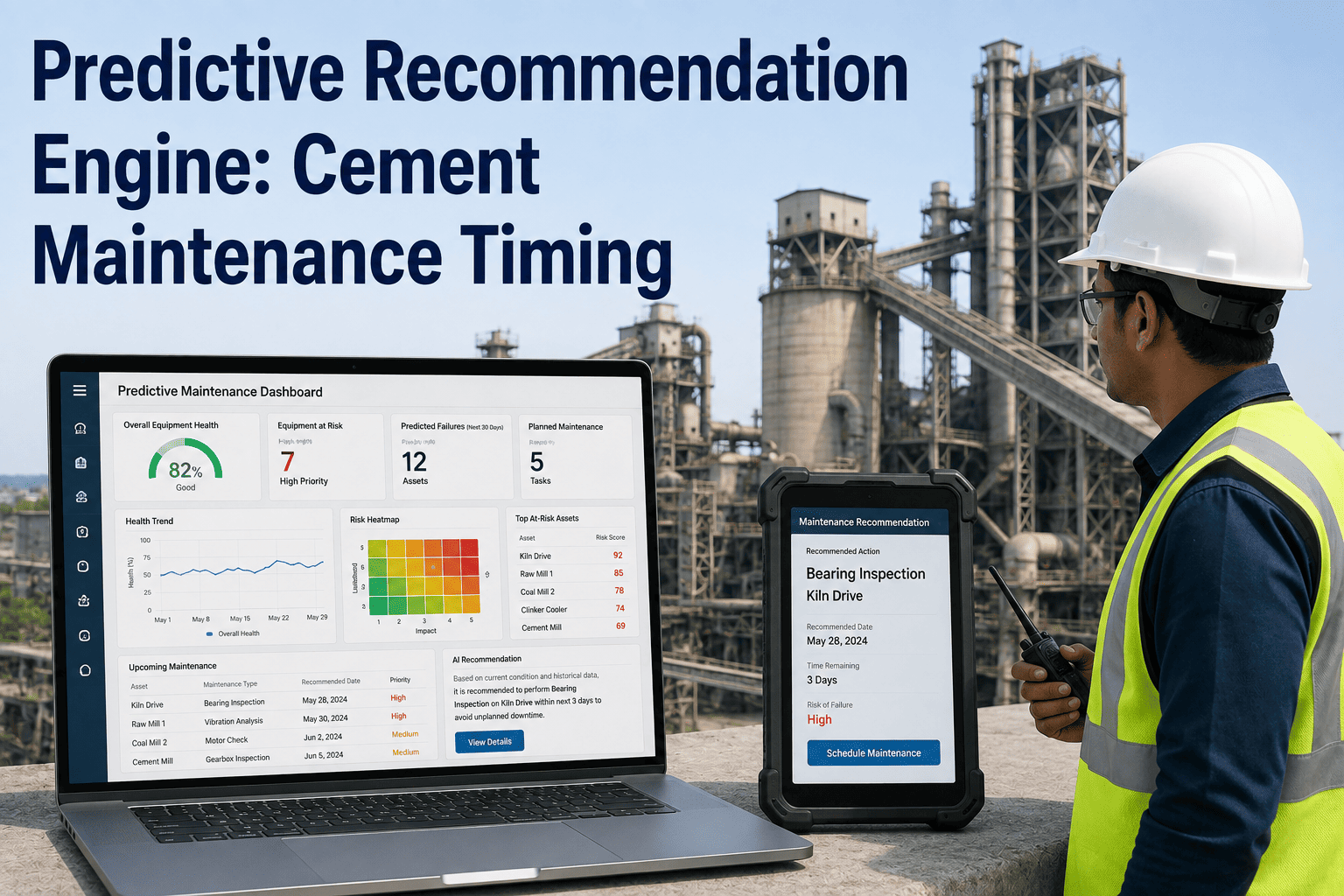
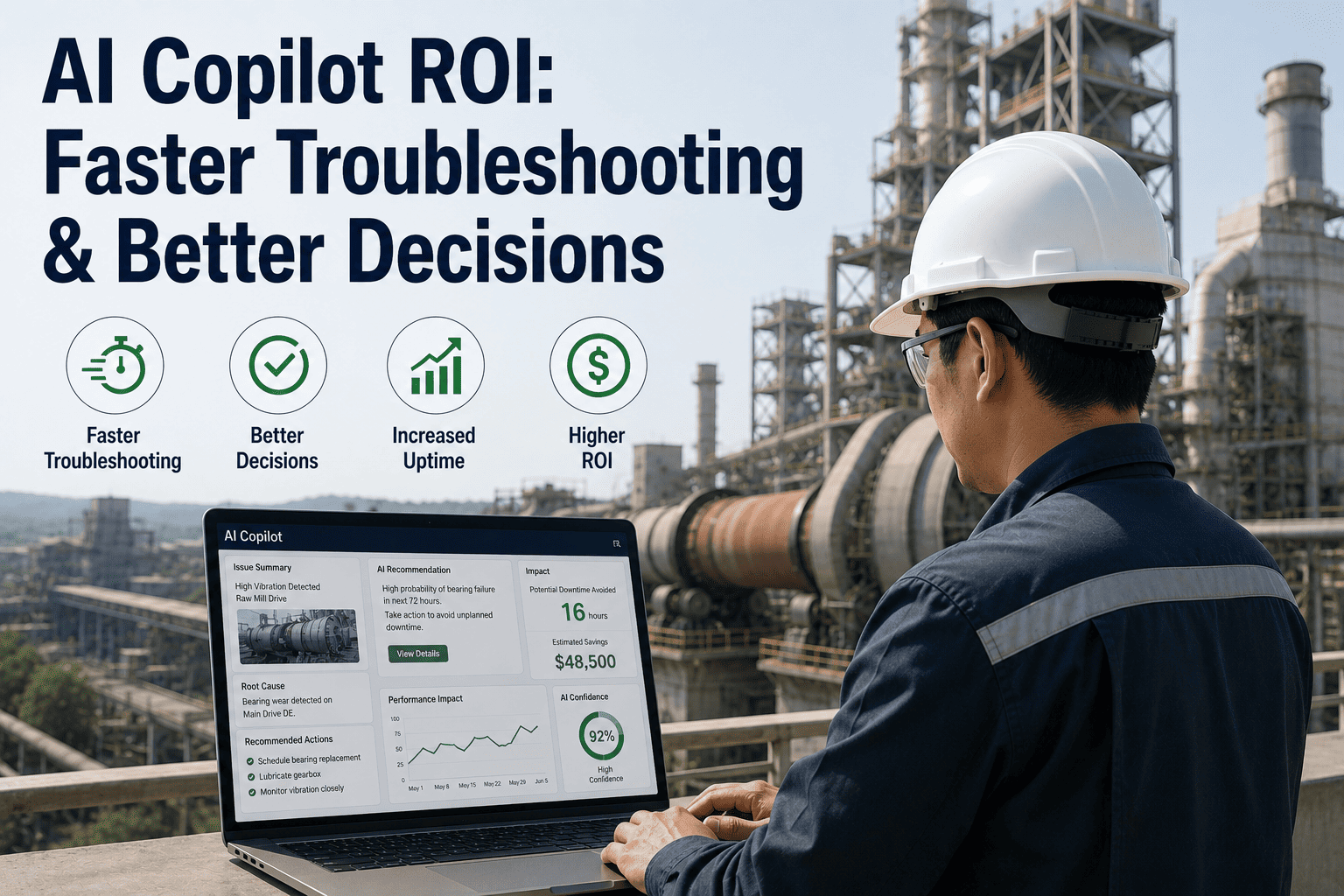
A vibration alarm fires on a raw mill motor at two in the morning, and the technician on call has three options: guess, wake up someone senior, or spend the next hour digging through manuals and old work orders trying to figure out whether this is the same bearing issue from six months ago. None of those options are good, and all three are still how most cement plants handle equipment decisions today. An AI copilot changes that math by sitting inside the operations and maintenance workflow itself, reading the same sensor data, work order history, and process context a senior engineer would, and turning it into a specific, explainable recommendation before the technician even reaches for the phone. Book a demo to see it respond to a real equipment scenario from your own plant.
Cement Plant AI Copilot · Ops & Maintenance
The AI Copilot That Sits Beside Every Operations and Maintenance Decision on the Floor
iFactory's copilot reads live process data, equipment history, and quality records together, then answers plain-language questions and surfaces specific, explainable recommendations — so troubleshooting a mill fault or judging a kiln anomaly doesn't depend on whoever happens to be on shift.
Why This Matters Right Now
The Pressure Cement Maintenance Teams Are Actually Under
65%
of industrial organizations plan to adopt AI-powered maintenance tools within the next year, according to a 2025 industry maintenance survey
Retiring
senior technicians are taking decades of undocumented troubleshooting knowledge with them, leaving newer hires without the pattern recognition to fall back on
Rising
repair costs and tighter margins mean a wrong or delayed maintenance call is more expensive today than it was even two years ago
The pattern across manufacturing right now isn't that plants lack data — it's that the people making the call under time pressure rarely have the full picture of that data in front of them when the decision actually needs to be made.
What the Copilot Actually Does
Four Things an AI Copilot Should Handle Without Being Asked Twice
Diagnose
Equipment Fault Diagnostics
Correlates vibration, temperature, and current draw against known failure signatures and the asset's own maintenance history to narrow down a likely cause instead of leaving the technician to start from a blank page.
Recommend
Intelligent Action Recommendations
Suggests a specific next step — inspect, adjust, schedule a shutdown, or monitor and reassess in four hours — ranked by how similar situations were actually resolved in the plant's own past records.
Explain
Plain-Language Reasoning
Answers "why do you think that" with the specific readings and precedent behind the recommendation, so a technician can sanity-check the logic instead of blindly trusting or dismissing it.
Document
Automatic Work Order Drafting
Drafts the work order with the relevant asset, symptoms, and recommended action already filled in, cutting the paperwork step down to a review and approve instead of a from-scratch write-up.
A Fault, Start to Finish
What a Copilot-Guided Response Looks Like on the Floor
1
2:14 AM
A vibration threshold alert fires on the raw mill motor bearing, and the on-call technician opens the copilot instead of the manual first.
2
2:15 AM
The technician asks "what's going on with the raw mill motor" and the copilot pulls current vibration, temperature, and load data alongside the last three work orders on that asset.
3
2:16 AM
It responds that the signature closely matches a bearing wear pattern seen five months earlier, cites the specific readings that support that read, and recommends an inspection within the next shift rather than an immediate shutdown.
4
2:18 AM
The technician asks a follow-up — "what happened last time we let this run" — and gets the outcome from that prior incident, which confirms the lower-urgency path is reasonable this time too.
5
2:20 AM
A draft work order for the next-shift inspection is already sitting ready for approval, and the technician goes back to bed six minutes after the alert first fired, instead of forty.
The Difference It Makes
Reactive Troubleshooting vs. Copilot-Guided Decisions
| What Matters | Reactive Troubleshooting | AI Copilot-Guided |
| Source of judgment |
Whoever is on shift and their personal experience |
The plant's full history, available to anyone on shift |
| Time to a first decision |
Often 30 to 60 minutes, including escalation calls |
Typically under five minutes |
| Escalation load on senior staff |
High — most ambiguous calls get phoned in |
Lower — routine and familiar patterns get resolved directly |
| Paper trail |
Written up after the fact, if at all |
Drafted automatically as part of the response |
| Consistency across shifts |
Varies by who is on duty |
Same reasoning process applied every time |
The point isn't to remove judgment from the process — it's to make sure every judgment call starts from the same complete picture, instead of whatever a single technician happens to remember at two in the morning.
Bring a Real Fault to the Demo
Watch the Copilot Diagnose an Actual Equipment Issue From Your Plant
iFactory's team will run the copilot against a recent fault or anomaly from your own maintenance history, so you can judge the diagnosis and recommendation against what your team already knows actually happened.
How It Stays Trustworthy
The Guardrails That Keep a Copilot's Recommendations Usable
Every Recommendation Is Traceable
Each suggestion links back to the specific sensor readings, work orders, or precedent it was built from, so a technician can check the reasoning rather than take it on faith.
The Copilot Advises, People Decide
Final action — shut down, inspect, monitor — stays with the technician and maintenance manager, with the copilot positioned as informed input, not an automated command.
Unclear Situations Get Flagged, Not Guessed
When the data doesn't clearly match a known pattern, the copilot says so and escalates rather than forcing a confident-sounding answer out of thin evidence.
Every Outcome Feeds Back In
Whatever actually happened after a recommendation gets logged against that incident, so the copilot's precedent library keeps getting more accurate rather than staying frozen at day one.
The mistake I see plants make with copilot rollouts is treating it as a chatbot bolted onto existing systems, when the real value only shows up once it's actually wired into the work order system and the historian, reading the same context a senior maintenance planner would. A copilot that can only answer generic questions doesn't earn trust from a maintenance team. One that can say "this matches what we saw on unit four last March, and here's how that turned out" earns trust fast, because it's speaking the plant's own history back to the people who lived through it.
Devesh Aaronson-Pillai
Reliability Engineering Lead · 12 years in cement and heavy process maintenance programs
What Changes on the Floor
The Practical Shift a Copilot Creates in Day-to-Day Decisions
Minutes, Not Hours
A first, reasoned decision is available within minutes of an alert, instead of waiting on an escalation call
Fewer 3 AM Calls
Senior staff get escalated to for genuinely ambiguous cases, not every routine judgment call
Knowledge That Stays
Troubleshooting patterns from experienced staff remain accessible after they retire or move on
None of this replaces the judgment of an experienced maintenance team — it makes that judgment available to everyone on every shift, instead of only to whoever happens to have twenty years on the floor.
Common Questions
AI Copilot for Cement Operations — Frequently Asked
Will the copilot ever tell a technician to ignore a real problem?
The copilot is built to escalate rather than downplay when a reading falls outside familiar patterns, since the cost of a missed real fault is far higher than the cost of an unnecessary inspection. Recommendations are always shown with the reasoning and precedent behind them, so a technician can override the suggestion at any point based on what they're seeing directly. If you want to pressure-test this against a genuinely ambiguous case from your own history,
book a demo and bring it.
Does this replace our maintenance planners or senior technicians?
No — the copilot is designed to extend what senior staff already know to everyone else on the team, not to replace the judgment those roles provide. Senior technicians typically end up spending less time on routine escalations and more time on the genuinely complex cases the copilot correctly flags as needing their expertise, which most teams find is a better use of that experience, not a threat to it.
How does the copilot learn our plant's specific equipment history?
It's connected directly to your existing work order system, process historian, and maintenance logs, building its precedent library from your plant's own incidents rather than a generic industry dataset. The more history it has access to, the sharper its pattern matching gets, which is why most plants see the recommendations improve noticeably within the first few months of real use.
Our support team can walk through what your current systems would need for that connection.
What happens when the copilot doesn't have enough data to be confident?
It says so directly rather than manufacturing a confident-sounding answer from thin evidence, and routes the situation toward escalation or manual investigation instead. This is a deliberate design choice, since a maintenance team that gets burned once by an overconfident wrong answer will stop trusting the tool entirely, which defeats the purpose of building it in the first place.
Can operators use it for process decisions, not just maintenance faults?
Yes — the same underlying context, spanning process data, quality records, and equipment history, supports operational questions like unusual energy consumption or a quality trend just as readily as an equipment fault, since both draw on the same connected data. Most plants find operations and maintenance questions blend together naturally on the floor anyway, so a single copilot covering both avoids forcing people to remember which tool handles which type of question.
Put a Copilot Behind Every Decision
Give Your Operations and Maintenance Teams a Faster Path to the Right Call
iFactory's AI copilot connects your process data, equipment history, and work order system into one plain-language assistant, so the next fault, anomaly, or judgment call gets answered with the plant's own history behind it — not a guess made under pressure at two in the morning.