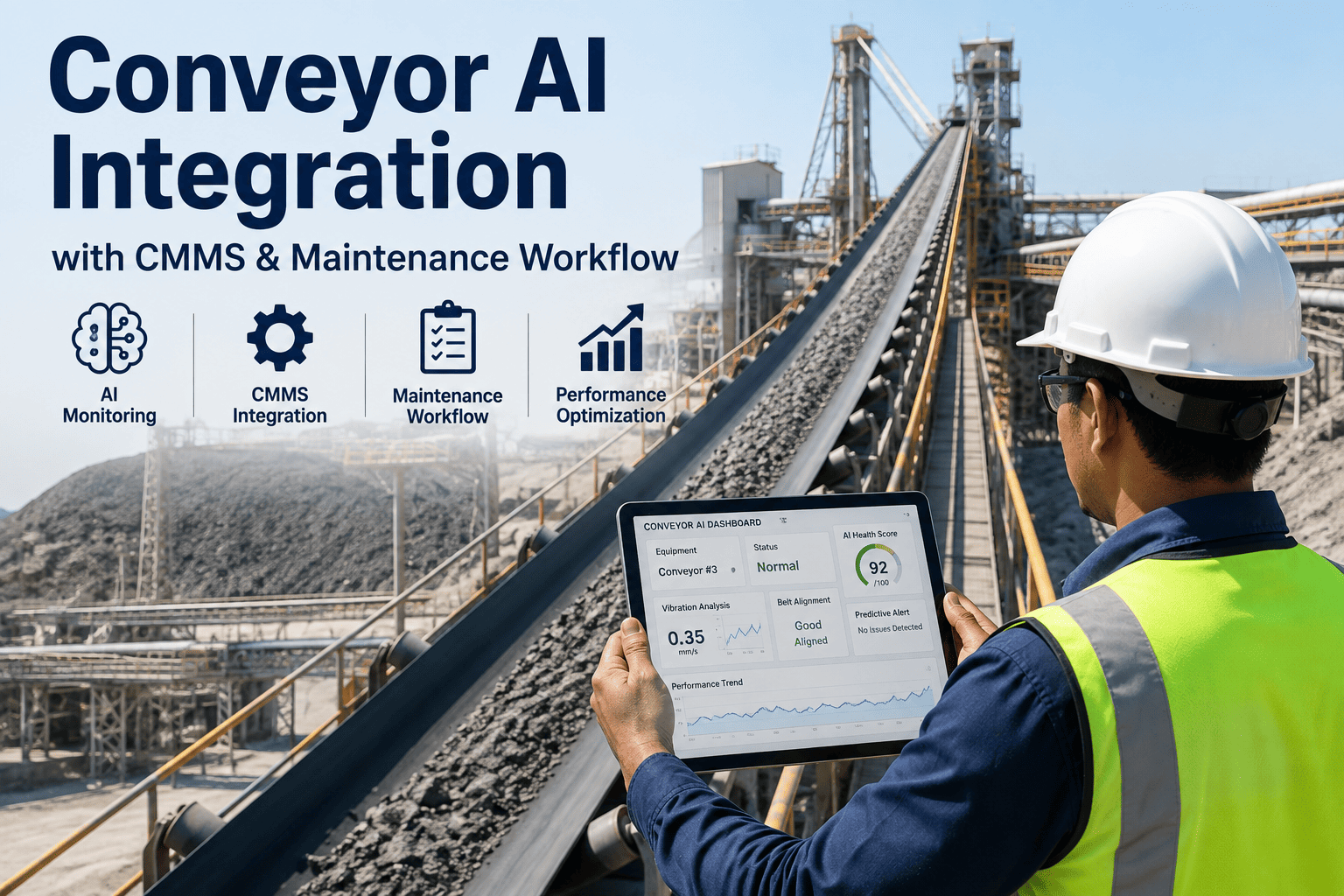
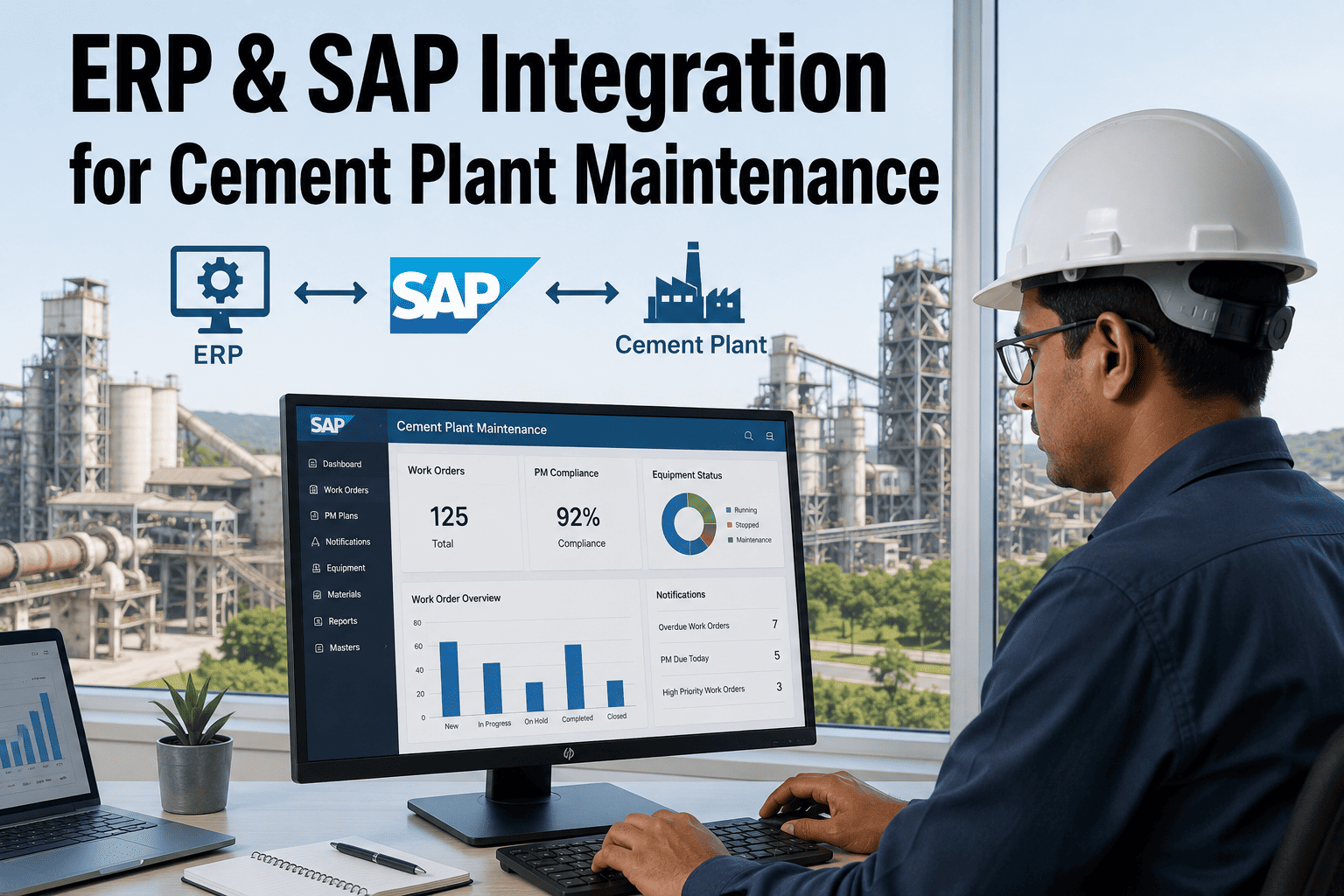
Ask a plant manager why free lime spiked on Tuesday afternoon and you'll usually get three different answers depending on who you ask — the control room points to a raw mix shift, maintenance points to a recent bearing repair, and the lab just confirms the number was out of spec. Each of them is holding one piece of a single story, because SCADA, CMMS, ERP, and LIMS were never built to talk to each other. An AI copilot that reads across all four systems at once is what finally lets someone ask the whole question and get the whole answer. Book a free integration assessment to see what a connected copilot could answer on your plant.
Quick Answer
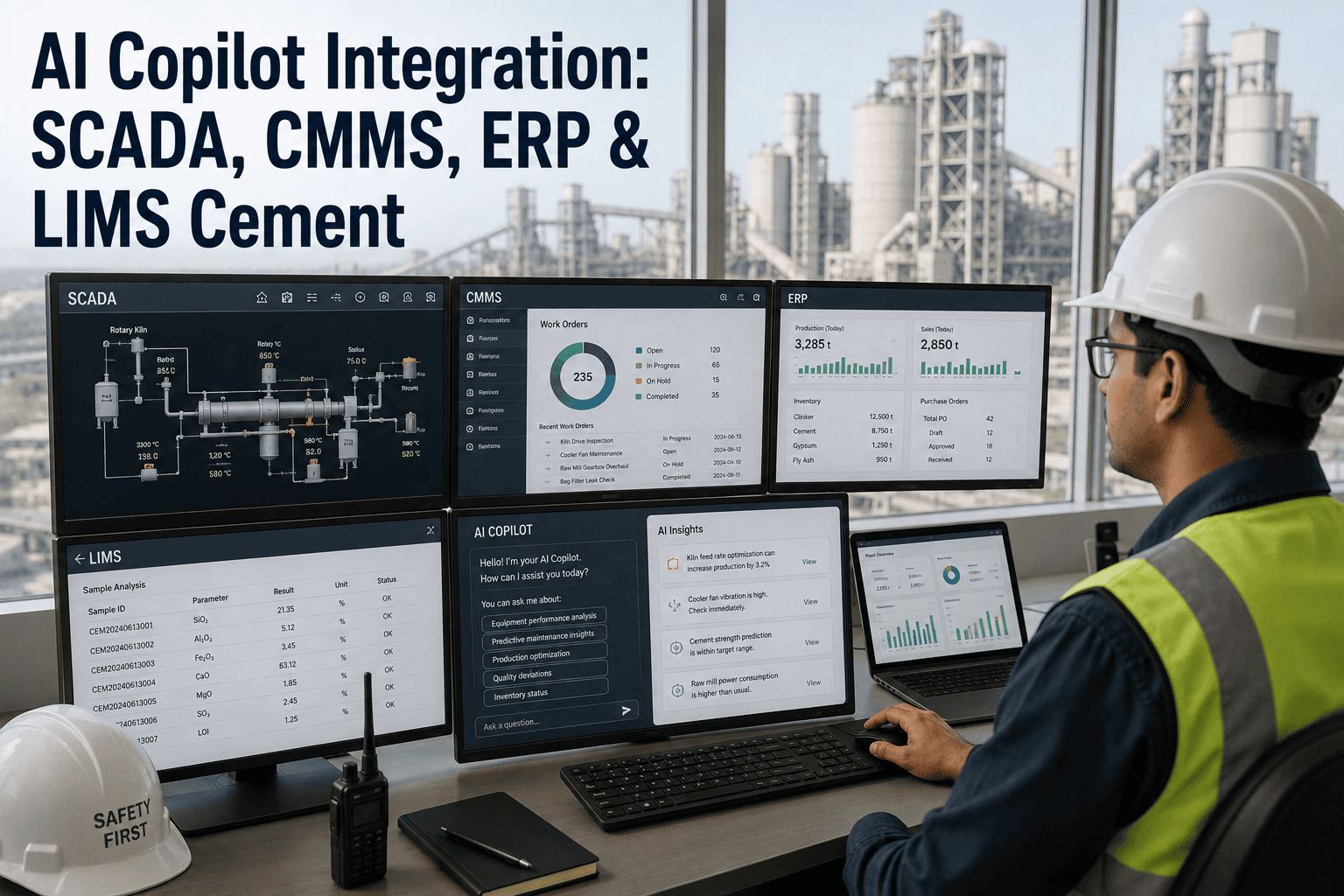
An AI copilot for a cement plant becomes genuinely useful only when it can read across four systems at once: SCADA for real-time process data, CMMS for maintenance and equipment history, ERP for cost and inventory data, and LIMS for lab quality results. Integrated this way, the copilot can answer questions no single system can, like connecting a free lime excursion to both a raw mix change logged in the mill and a bearing repair logged in maintenance, on the same day the lab flagged the result.
One Question, Four Systems, One Answer
iFactory's AI copilot reads SCADA, CMMS, ERP, and LIMS together, so a question about quality, cost, or downtime gets answered with the full picture instead of one system's slice of it.
The Four Systems Behind a Working Copilot
Each of these systems already exists at most cement plants, running independently, holding a different slice of the same operation. A copilot's value comes entirely from how well it connects them, not from replacing any one of them.
SCADAReal-time process data: kiln temperature, feed rate, fan speed, pressure
CMMSMaintenance history: work orders, repairs, equipment condition logs
ERPBusiness data: production cost, inventory levels, procurement, fuel spend
LIMSQuality data: free lime, fineness, chemistry, lab test results
AI Copilot
Reads all four sources together and answers questions no single system can answer alone
What Each System Feeds the Copilot
| System |
What It Contributes |
Example Question It Alone Can't Fully Answer |
| SCADA |
Live and historical process trends across the kiln, mill, and cooler |
Whether a temperature swing was caused by feed rate, equipment condition, or fuel quality |
| CMMS |
Work order history, repair timing, and equipment condition notes |
Whether a repair actually correlates with a downstream process or quality change |
| ERP |
Cost per ton, fuel spend, spare parts inventory, procurement lead times |
Whether a cost spike traces back to a specific operational event rather than a price change |
| LIMS |
Free lime, fineness, chemical composition, and other lab quality results |
Whether an out-of-spec result has a process or maintenance root cause behind it |
Why Siloed Systems Keep Costing Plants Time
None of these four systems is broken on its own. The problem is what happens at the boundary between them, where the real answers usually live.
Root Cause Investigations Take Hours, Not Minutes
Tracing a quality excursion back to its cause means pulling SCADA trends, checking CMMS work orders, and reviewing LIMS results separately, often by different people who then have to compare notes manually.
Cost Conversations Happen Without Operational Context
ERP shows a cost per ton spike clearly, but without SCADA and CMMS context alongside it, finance teams are often left guessing whether the cause was operational, mechanical, or simply a fuel price change.
Maintenance and Quality Rarely Get Compared Directly
A bearing repair and a free lime spike happening the same week rarely get cross-checked against each other unless someone happens to notice the coincidence and goes looking for it.
Institutional Memory Lives in People, Not Systems
Experienced staff often carry the mental model that connects these systems in their heads, and that connection walks out the door whenever they retire or move on.
Stop Cross-Referencing Four Systems by Hand
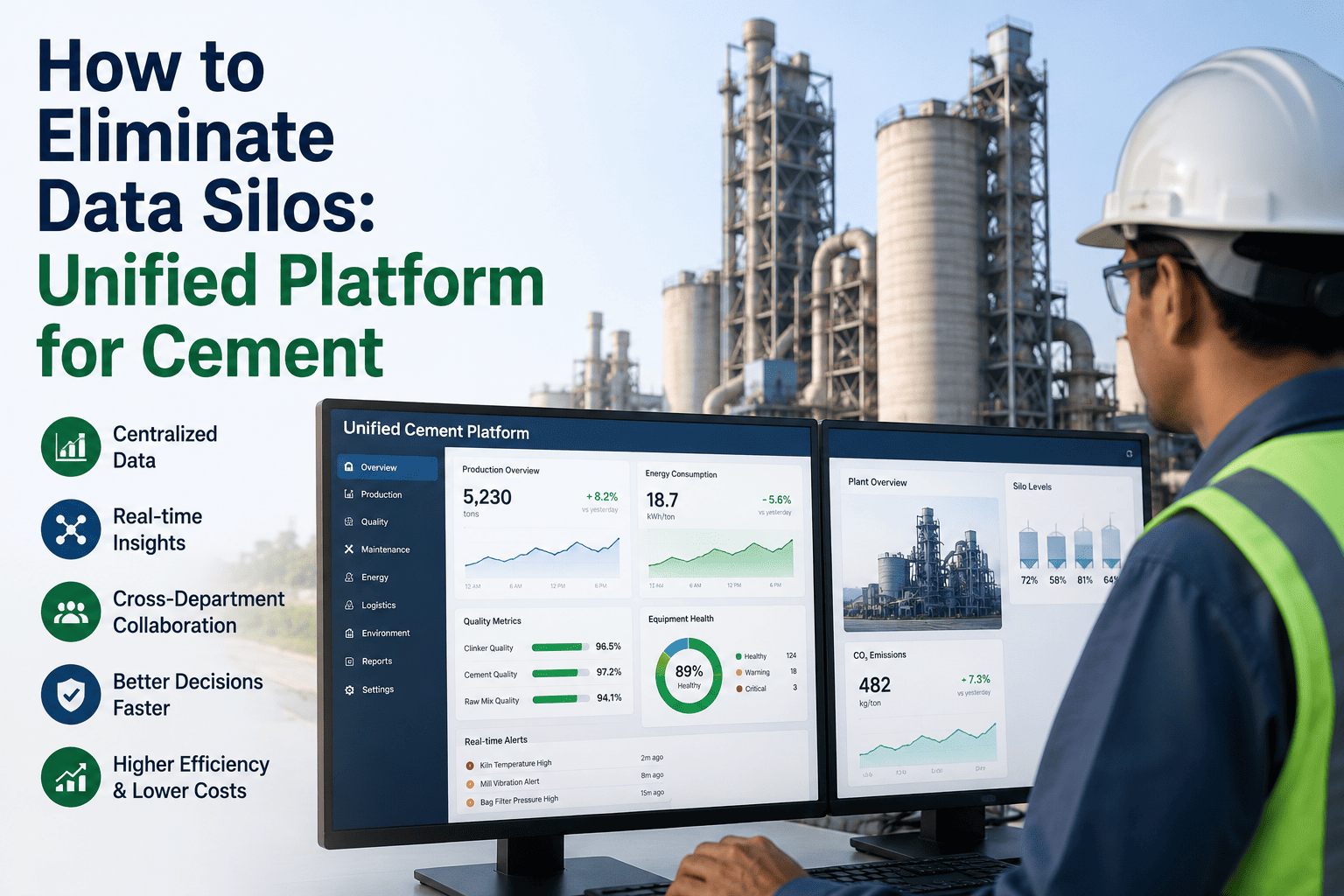
iFactory's copilot connects to your SCADA, CMMS, ERP, and LIMS so a single question pulls the full picture instead of a partial one from whichever system someone happened to check first.
What Cross-System Questions Actually Look Like
The clearest way to see the value of integration is through the kinds of questions it makes possible, ones that would otherwise take a multi-person, multi-system investigation to answer.
"Why did free lime spike on Line 2 Tuesday afternoon?"
Pulls SCADA feed rate and burning zone trends, cross-references a CMMS work order logged that morning on a kiln drive component, and confirms the timing against the LIMS result, connecting the excursion to a specific maintenance event instead of leaving it as an unexplained anomaly.
"What's driving our cost per ton up this month?"
Combines ERP fuel and spare parts spend with SCADA production volume and CMMS unplanned downtime hours, separating a genuine operational cost increase from a simple fuel price change that ERP data alone wouldn't distinguish.
"Which equipment issues have repeatedly preceded quality excursions?"
Scans CMMS repair history against LIMS quality results over a rolling period, surfacing recurring equipment-to-quality patterns that would otherwise require someone to manually notice the coincidence across months of separate records.
"Do we have the spare parts on hand for the maintenance this SCADA trend suggests is coming?"
Checks a developing SCADA vibration or temperature trend against CMMS-recommended intervention thresholds and ERP inventory levels, flagging a parts shortfall before it becomes a delay once the repair is actually needed.
How Integration Actually Gets Built
| System |
Typical Integration Method |
What's Usually Already in Place |
| SCADA |
OPC UA or historian API connection to existing tag data |
Most DCS and historian platforms already expose this without new hardware |
| CMMS |
REST API or database connector to work order and asset records |
Platforms like SAP PM, Maximo, or similar CMMS tools generally support this out of the box |
| ERP |
API connection to cost center, inventory, and procurement modules |
Read access is usually sufficient, avoiding any need to modify core ERP workflows |
| LIMS |
Database or file-based connector to lab result records |
Many LIMS platforms already export structured results that map cleanly to a connector |
What a Connected Copilot Changes in Practice
Before
A cement plant spent nearly two days investigating a recurring free lime problem, with the process engineer pulling SCADA trends, a maintenance planner separately checking CMMS records, and the lab manager reviewing LIMS history, before anyone connected the pattern to a specific feeder calibration drift.
After
The same investigation, run as a single copilot query pulling SCADA, CMMS, and LIMS data together, surfaced the feeder calibration correlation in under ten minutes, letting the team schedule a targeted recalibration instead of continuing to chase the problem through separate departmental reviews.
Getting Started: A Practical Rollout Path
1
Confirm read access to each of the four systemsMost integrations only need read-level API or database access, which limits both the technical lift and the internal approval process needed to get started.
2
Start with one high-value cross-system questionRather than integrating everything at once, plants often get faster buy-in by proving the copilot's value on a single recurring investigation, like quality-to-maintenance correlation, first.
3
Expand to cost and inventory questions once trust is establishedOnce operators and engineers trust the copilot's process and quality answers, extending it into ERP-driven cost and inventory questions tends to face less internal resistance.
4
Put the copilot in front of the people asking the questions dailyControl room operators, maintenance planners, and process engineers are the ones who benefit most directly, so adoption tends to follow from getting it into their daily workflow rather than treating it as a management reporting tool.
Frequently Asked Questions
QDoes the copilot require replacing our existing SCADA, CMMS, ERP, or LIMS platforms?
No, the copilot is designed to sit alongside your existing systems and read from them rather than replace any of them. Most integrations use read-only API or database connections into the platforms already running on site, which means the plant keeps its current SCADA, CMMS, ERP, and LIMS vendors and workflows exactly as they are while gaining a layer that reads across all four together.
Book a demo to see how it connects to your specific platforms.
QWhich of the four systems should a plant integrate first if it can't do all of them at once?
SCADA and LIMS integration tends to deliver the fastest visible value since process-to-quality questions are among the most common daily investigations at a cement plant. CMMS typically follows once that connection is proven, since maintenance correlation is the next most frequently asked cross-system question, with ERP often added last as cost and inventory questions build on the operational context established by the first three.
QHow does the copilot handle systems with inconsistent or messy historical data?
Data quality varies significantly across these four systems in most plants, and the copilot is built to work with what's actually there rather than requiring a full data cleanup first. It flags gaps or inconsistencies when they affect the confidence of an answer, and data quality naturally improves over time as more cross-system questions get asked and gaps become visible to the teams responsible for each source system.
Talk to an expert about what your current data quality would support on day one.
QWho typically ends up using the copilot day to day?
Process engineers and control room operators tend to be the heaviest users for process and quality investigations, while maintenance planners rely on it for equipment-to-quality correlation and plant managers use it most for cost and performance reviews that would otherwise require pulling reports from multiple departments. The tool tends to spread through a plant organically once one team demonstrates a time savings the others notice.
QHow long does a four-system integration typically take to stand up?
Timeline depends heavily on how accessible each system's data already is, but plants with modern SCADA historians, a standard CMMS platform, and structured LIMS exports typically see the first cross-system question answerable within a few weeks, with the full four-system integration maturing over the following months as connectors are tuned and data quality gaps get addressed.
Give Your Team One Place to Ask the Whole Question
iFactory's AI copilot connects SCADA, CMMS, ERP, and LIMS so process, maintenance, cost, and quality questions all get answered together, not one siloed system at a time.