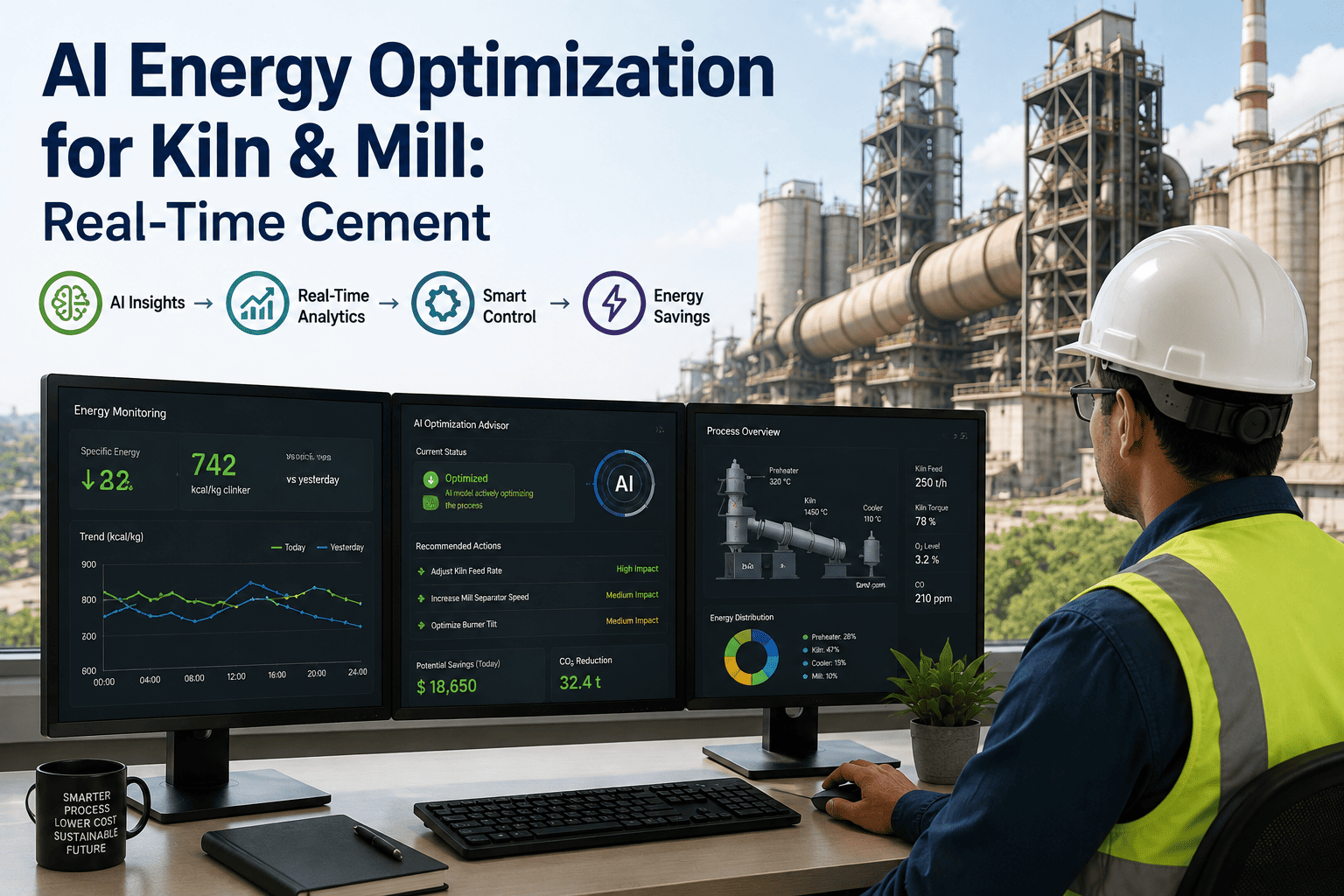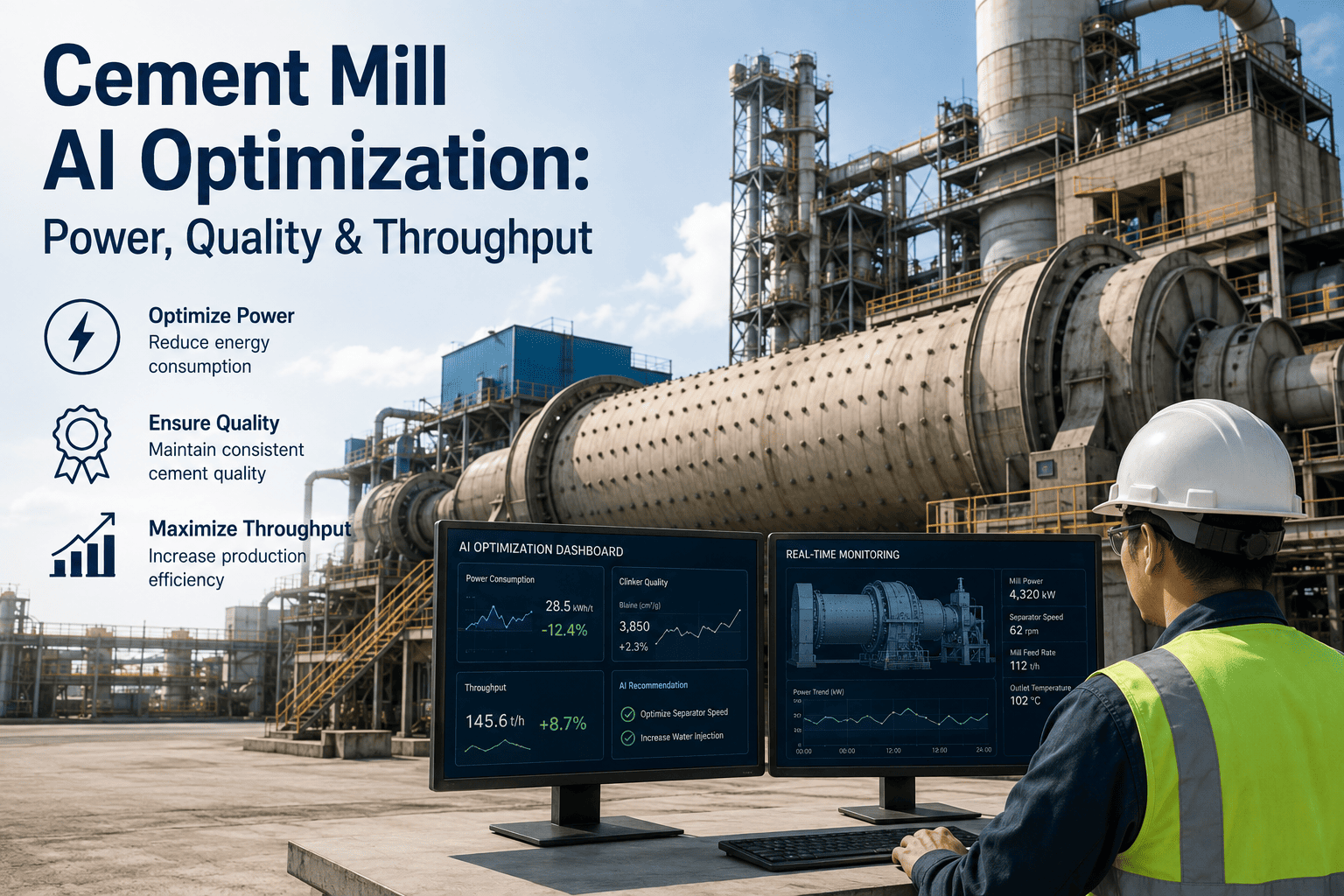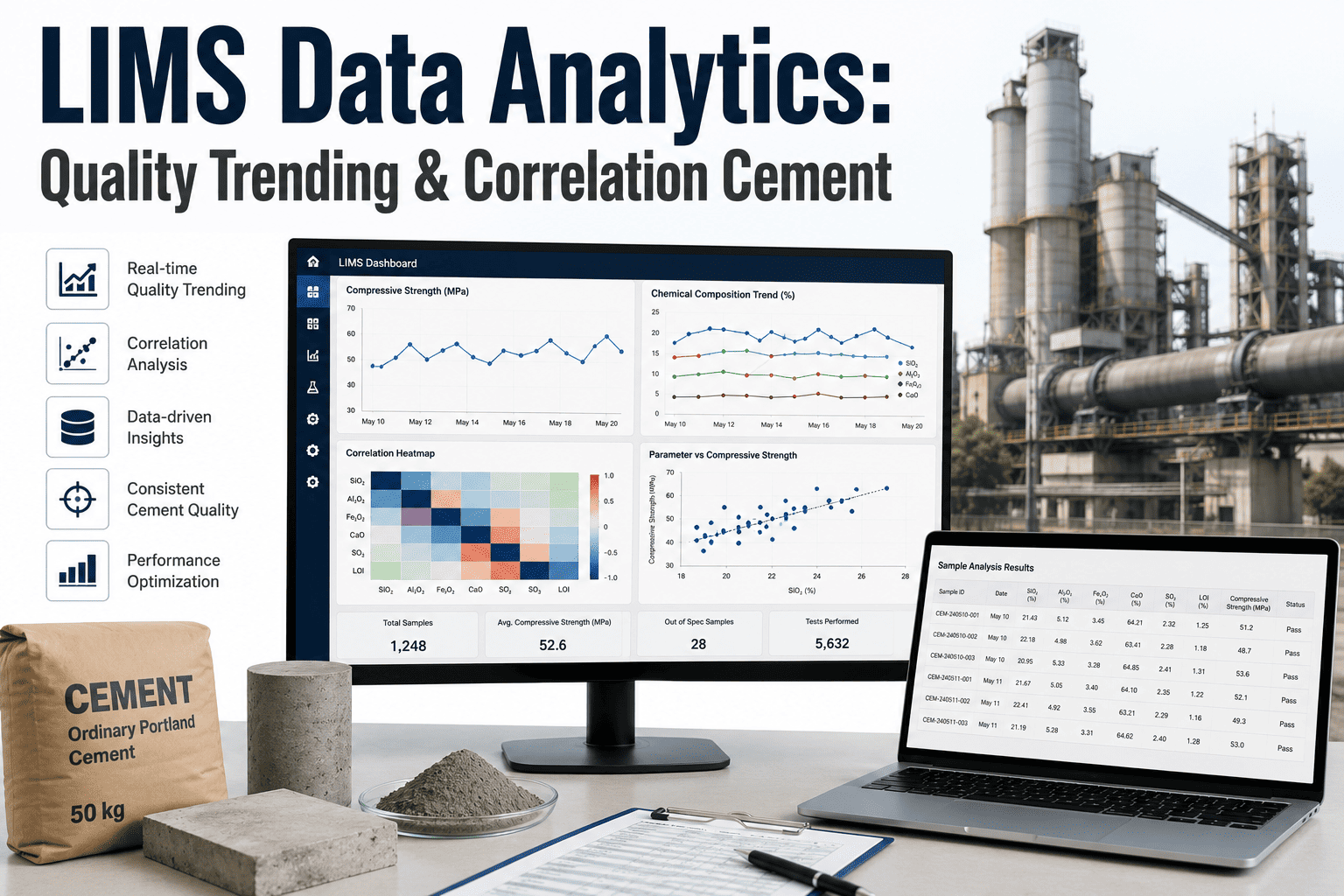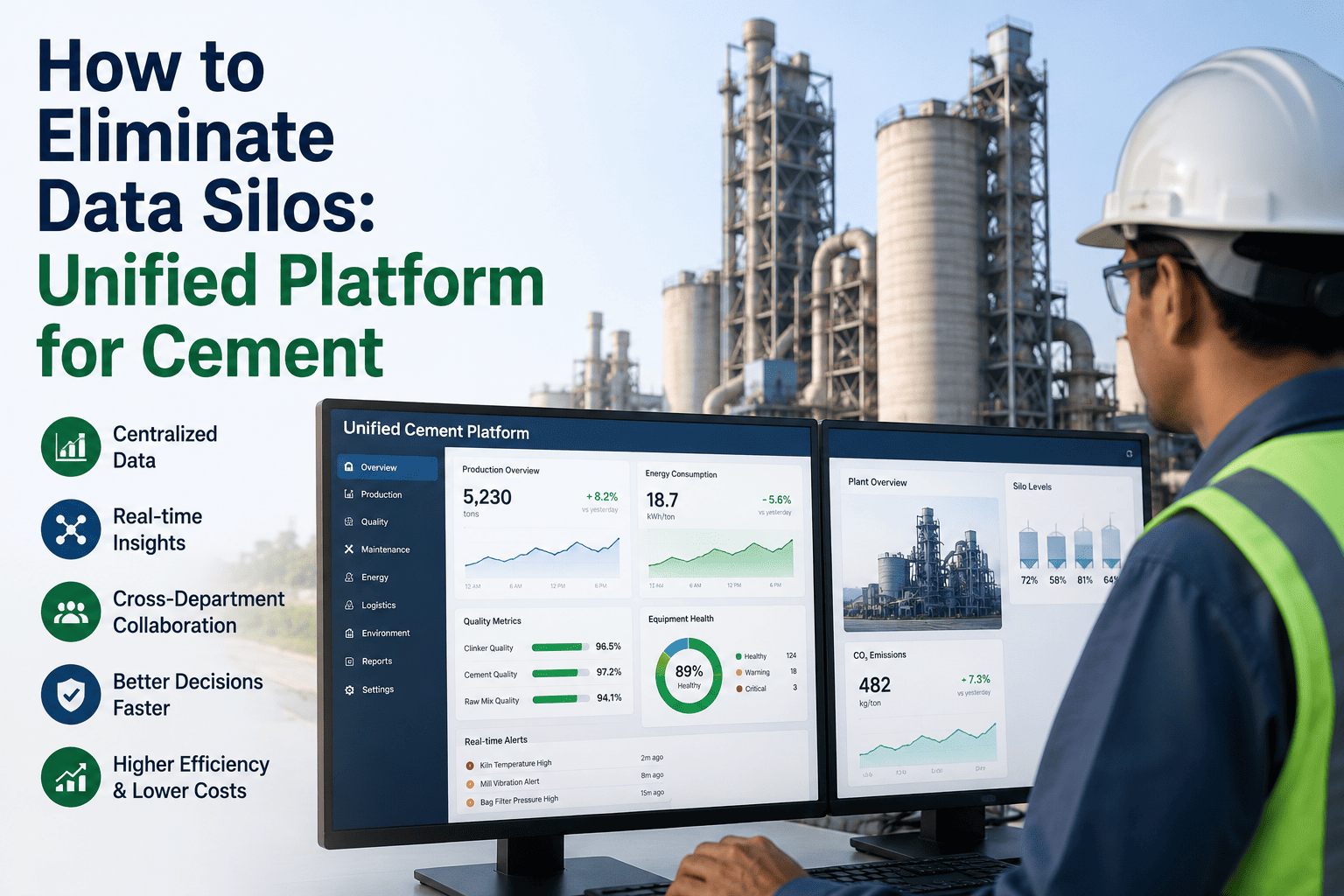
Walk into most cement plants and you will find five separate systems, each holding a piece of the truth: kiln control has the burning zone data, the mill optimization tool has grinding efficiency, the quality lab has fineness and free lime, the CMMS has work order history, and ERP has the cost numbers tying it all together. None of them read each other's data, so every cross-system question still gets answered by someone exporting a spreadsheet and manually lining up timestamps. Here is how to eliminate data silos with a unified platform built for cement plants.
Five Systems. Zero Connections. One Fix.
Kiln control, mill optimization, quality lab, CMMS, and ERP each hold part of the picture. A unified data platform is what finally lets them talk.
What Each System Knows, And What It Never Sees
A silo is not a bad system, it is a good system with no visibility outside its own walls. Here is what each one holds and where it goes blind.
| System | What It Holds | What It's Blind To |
|---|---|---|
| Kiln Control (DCS/PLC) | Burning zone temperature, fuel rate, oxygen levels | Downstream fineness and free lime results |
| Mill Optimization | Grinding efficiency, separator speed, feed rate | Bearing condition and upcoming maintenance work |
| Quality Lab (LIMS) | Fineness, free lime, C3S, setting time results | The process condition that caused a deviation |
| CMMS | Work orders, parts history, technician schedules | Whether equipment is under abnormal process stress |
| ERP | Cost centers, procurement, inventory value | Which specific failure or deviation drove the spend |
What Disconnected Systems Actually Cost A Plant
Silos rarely show up as a single line item, they show up as slow decisions, duplicated work, and root causes that are never traced back to their true source.
4-8 Hours Per Investigation
The typical time an engineer spends manually pulling and lining up data from separate systems to investigate a single quality deviation or unplanned stop.
15-25% Duplicate Spend
Approximate share of maintenance and quality investigation effort that duplicates work already done in another system nobody checked first.
$500K+ Annually
Typical combined cost of delayed root cause findings, redundant manual reconciliation, and missed early-warning signals across a mid-size cement plant.
Four Signs You're Already Paying The Silo Tax
Most plants do not realize how much a silo problem is costing until someone tallies the hours spent working around it every week.
Investigations Start With A Spreadsheet
If the first step of any root cause investigation is exporting data from three or four separate systems, the silo is already setting the pace of every decision.
The Same Question Gets Asked Twice
Operations and quality teams independently investigating the same deviation from different systems is a clear sign nobody has a shared view of the plant.
Maintenance Finds Out Last
When a process change that stresses equipment reaches the maintenance team only after a failure, the CMMS is operating with no upstream context at all.
Month-End Cost Reports Hold Surprises
If ERP cost reports regularly surface spend nobody can trace back to a specific cause, the connection between operations and finance data simply does not exist yet.
Six Steps To Eliminate Data Silos
Plants that succeed treat this as a sequenced project, not a single integration sprint. Each step below builds on the one before it.
Map Every System And Owner
List each system holding plant data, who owns it, and what format the data lives in before attempting a single connection.
Build One Asset Taxonomy
Agree on a single naming convention for kilns, mills, and equipment IDs so the same asset is recognized identically across every connected system.
Build The Integration Layer
Connect kiln control, mill optimization, LIMS, CMMS, and ERP into one data environment without forcing any system to be replaced.
Validate Data Quality
Check timestamps, units, and tag mapping across every source before trusting any cross-system finding the platform produces.
Layer In Correlation And AI
Once the data is clean and connected, apply models that trace quality deviations, equipment risk, and cost together automatically.
Retire The Manual Reconciliation
Stop the spreadsheet exports once the platform is producing trusted findings faster and more consistently than the manual process did.
See Your Five Systems Connected In One Session
Bring your kiln control, mill optimization, LIMS, CMMS, and ERP access and watch iFactory build the first cross-system view live, before you commit to a full rollout.
What Changes Once The Silos Are Gone
The comparison below reflects what plants report shifting once cross-system reconciliation stops being a manual task.
| Task | Manual Reconciliation | Unified Platform |
|---|---|---|
| Root cause investigation | Hours of manual data pulling | Minutes, automatically correlated |
| Quality-process link | Rarely traced back at all | Every deviation tied to its cause |
| Maintenance prioritization | Fixed calendar, no process context | Ranked by live equipment and process risk |
| Cost attribution | Reconciled at month-end in ERP | Tied to the specific failure in real time |
What A Unified Data Platform Actually Enables
The value shows up in the specific cross-system questions that finally get answered without a manual export.
Kiln-Quality Correlation
See exactly which burning zone conditions preceded a free lime or C3S deviation instead of guessing from a lab result hours later.
Mill-Maintenance Correlation
Catch grinding efficiency drops caused by bearing wear before they show up as a fineness problem in the lab.
ERP Cost Visibility
Trace unplanned spend directly to the equipment failure or quality event that caused it, not to a generic cost center.
Cross-Plant Benchmarking
Compare kiln, mill, and maintenance performance across multiple plants using one consistent data model instead of five local spreadsheets.
Common Mistakes When Eliminating Silos
Most failed integration projects fail for the same handful of avoidable reasons.
Connecting Everything At Once
Trying to integrate all five systems simultaneously multiplies the risk of every step failing together instead of proving value early.
Skipping The Taxonomy Step
Connecting systems before agreeing on one asset naming convention means the data links but never actually matches correctly.
No Single Project Owner
Splitting ownership across IT, operations, and quality teams with no single accountable person is the most common reason rollouts stall.
Treating It As A One-Time Project
New sensors, systems, and lines get added constantly, so the integration layer needs ongoing ownership, not a one-time setup.
From Five Spreadsheets To One Answer
A composite scenario built from patterns common across cement plants before and after connecting their core systems.
Before: The Silo Version
A fineness deviation showed up in the lab on a Tuesday morning. The quality engineer spent most of the day pulling kiln control trends, mill optimization logs, and CMMS records separately, manually lining up timestamps to guess at a cause. By Wednesday afternoon, the root cause was still unconfirmed and two more batches had shipped with the same undetected issue.
After: The Connected Version
The same deviation triggered an automatic correlation against kiln burning zone data and mill bearing trends within minutes, surfacing a bearing-related grinding efficiency drop as the likely cause. The maintenance team had a prioritized work order before the next batch was even produced, and the deviation did not repeat.
What To Line Up First
A short checklist for teams preparing to begin a data silo elimination project.
List Every System
Document kiln control, mill optimization, LIMS, CMMS, and ERP access before scoping the first connection.
Pick The First Two Systems
Choose the pair whose disconnect causes the most recurring pain to prove value before expanding further.
Name One Owner
Assign a single accountable person across IT, operations, and quality before the project begins.
Confirm Data Access
Verify each system can actually be read externally without triggering a separate IT approval project.
Data Silo Elimination — Questions Answered
What plant and IT leaders ask most often when scoping a unified data platform project.
Q: Do we need to replace our kiln control, LIMS, or CMMS to eliminate silos?
No, eliminating a silo means connecting the data those systems already produce, not replacing the systems themselves. A unified platform reads from kiln control, mill optimization, LIMS, CMMS, and ERP as they already exist and builds a shared data model on top, so operators keep working in the interfaces they already know. Our support team can review your current system list before scoping anything.
Q: Which two systems should we connect first?
Most cement plants get the fastest proof of value by connecting kiln control and the quality lab first, since burning zone conditions so directly explain fineness and free lime deviations that otherwise take hours to trace manually. Mill optimization and CMMS typically follow once that first connection is trusted by the operations and quality teams. Book a session to map the right starting pair for your plant.
Q: How long does a silo elimination project usually take?
A focused first connection between two systems, such as kiln control and the quality lab, typically shows a working correlated finding within the initial pilot window rather than after a lengthy full deployment. The full six-step sequence across all five systems takes longer and depends heavily on how accessible each system's data already is, but a phased approach means value shows up early rather than only at the very end.
Q: Isn't this basically the same as buying a historian?
A historian stores time-series data from process systems, but it typically does not reach into LIMS, CMMS, or ERP, and it rarely applies correlation or prediction across those sources. A unified data platform builds on top of or alongside a historian, adding the asset taxonomy, cross-system correlation, and AI layer that a historian alone was never designed to provide.
Q: What happens when a new sensor or system gets added later?
A well-built integration layer is designed to extend, so a new sensor, a new mill, or an additional plant line gets added to the existing asset taxonomy rather than requiring a separate integration project from scratch. This is why assigning a single ongoing owner in the earlier steps matters, since silo elimination works best as a maintained capability rather than a one-time setup.
Stop Reconciling Five Systems By Hand
Every hour spent manually lining up kiln control, mill, lab, CMMS, and ERP data is an hour a root cause sits untraced. Let iFactory connect what you already have into one platform and show you the first correlated finding live.