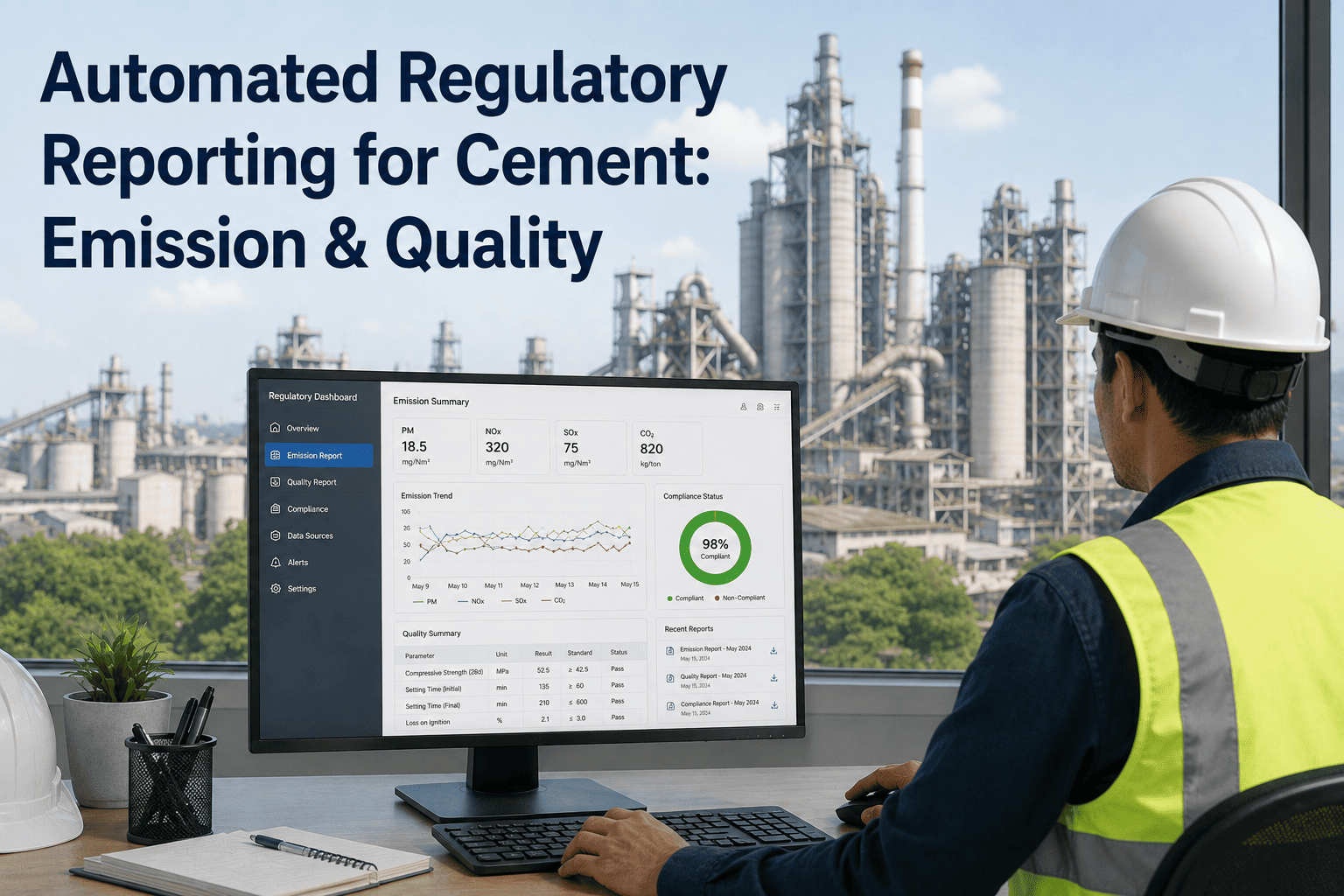
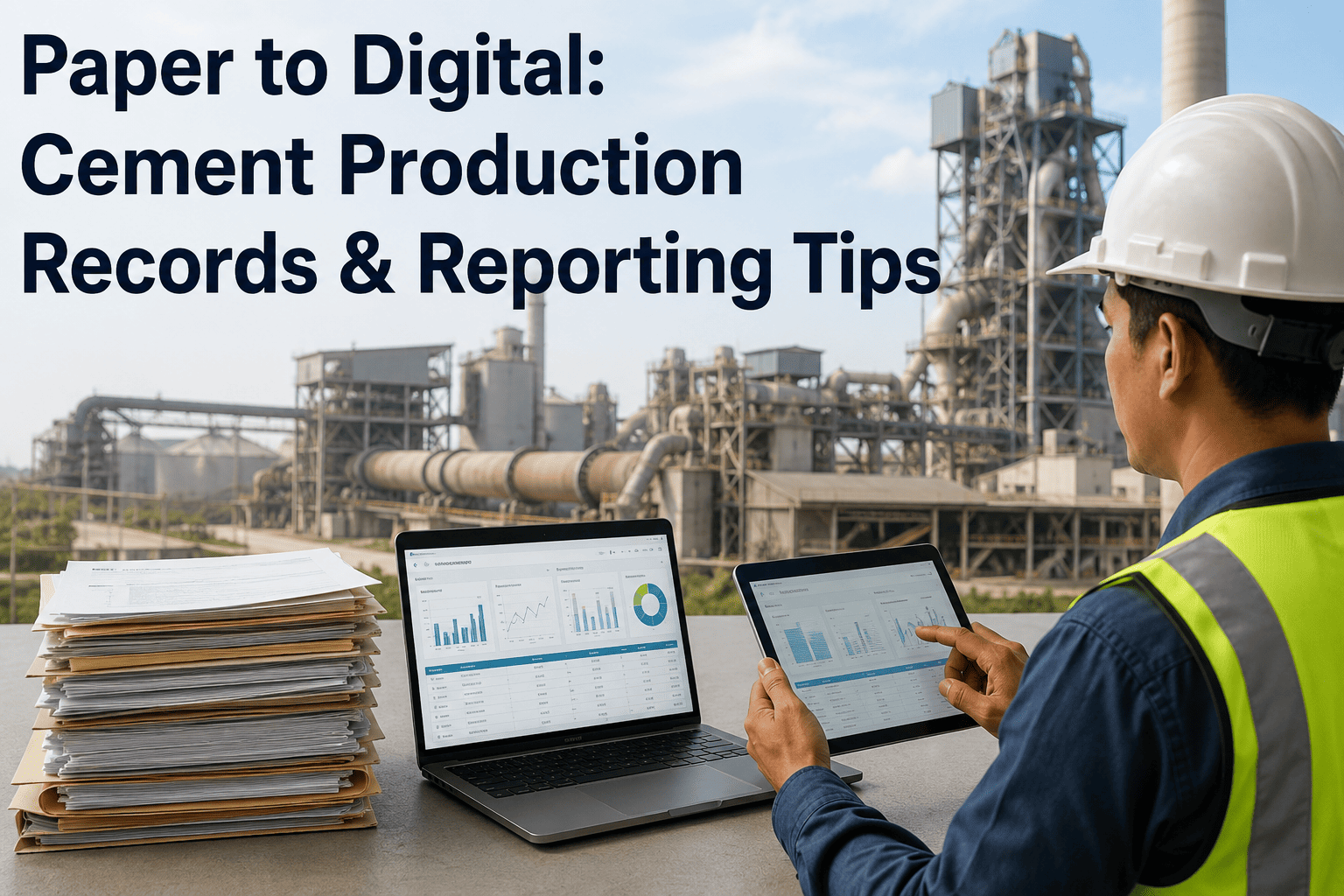
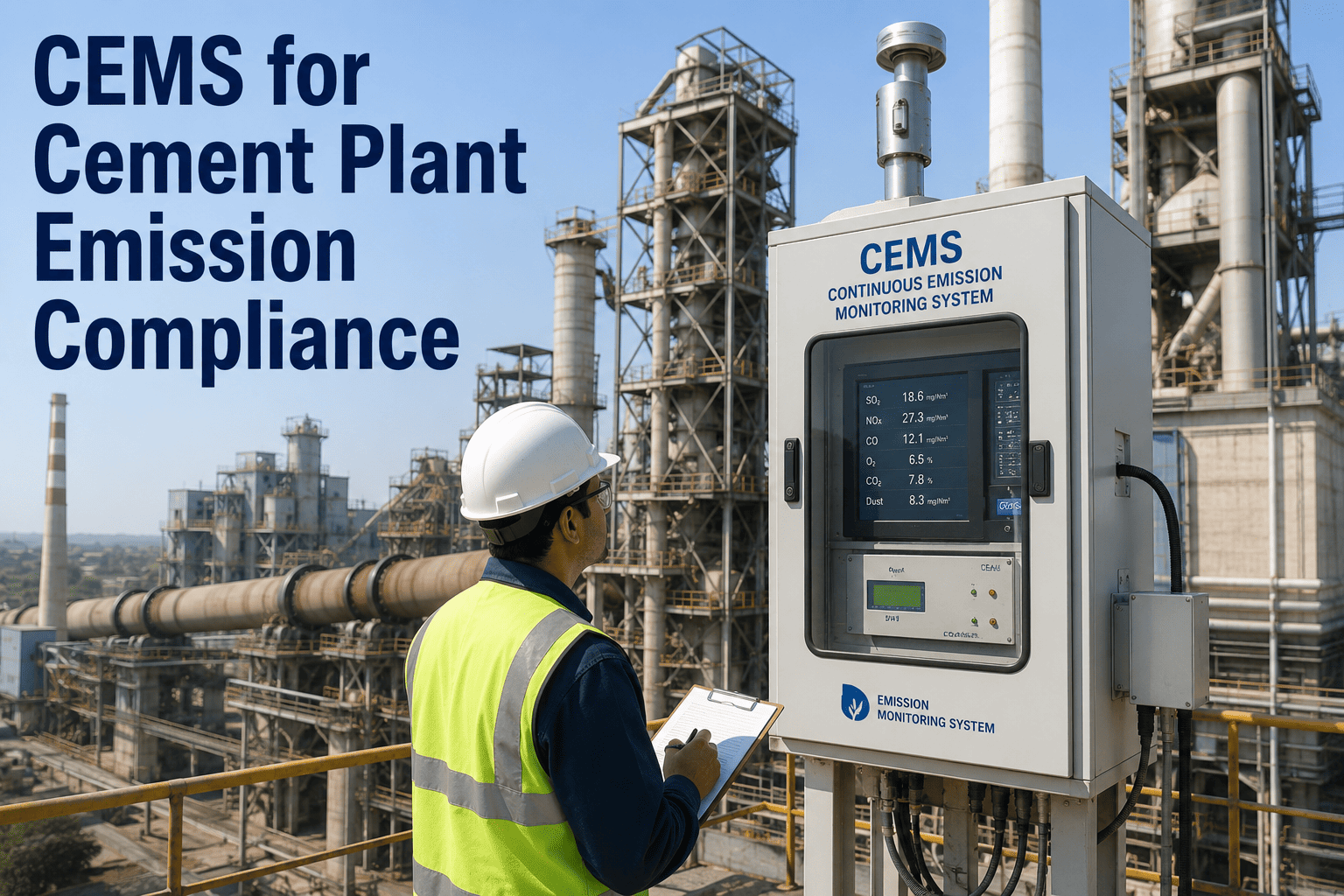
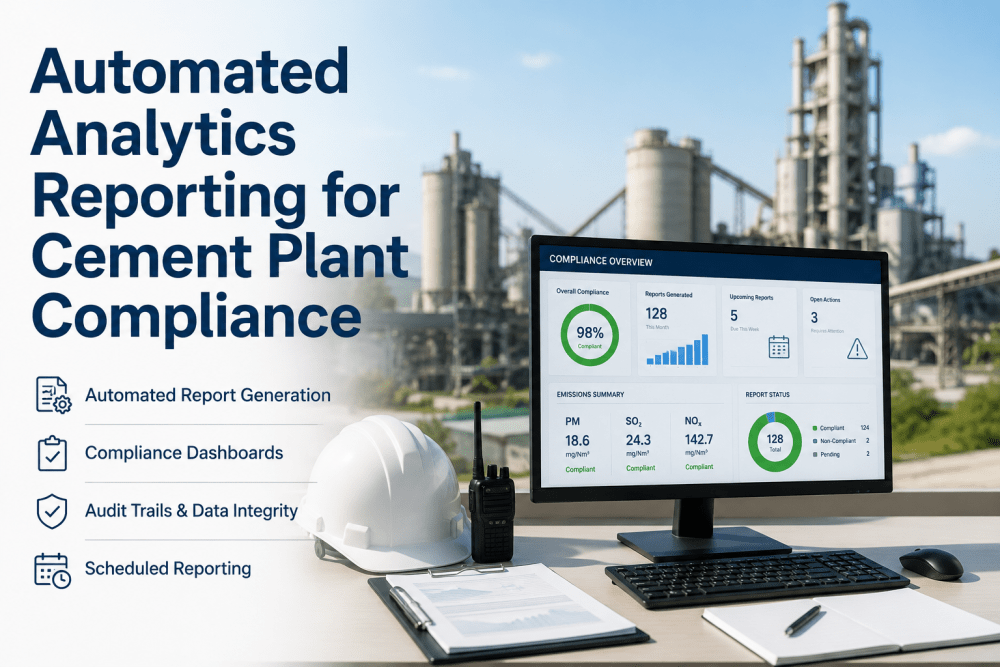
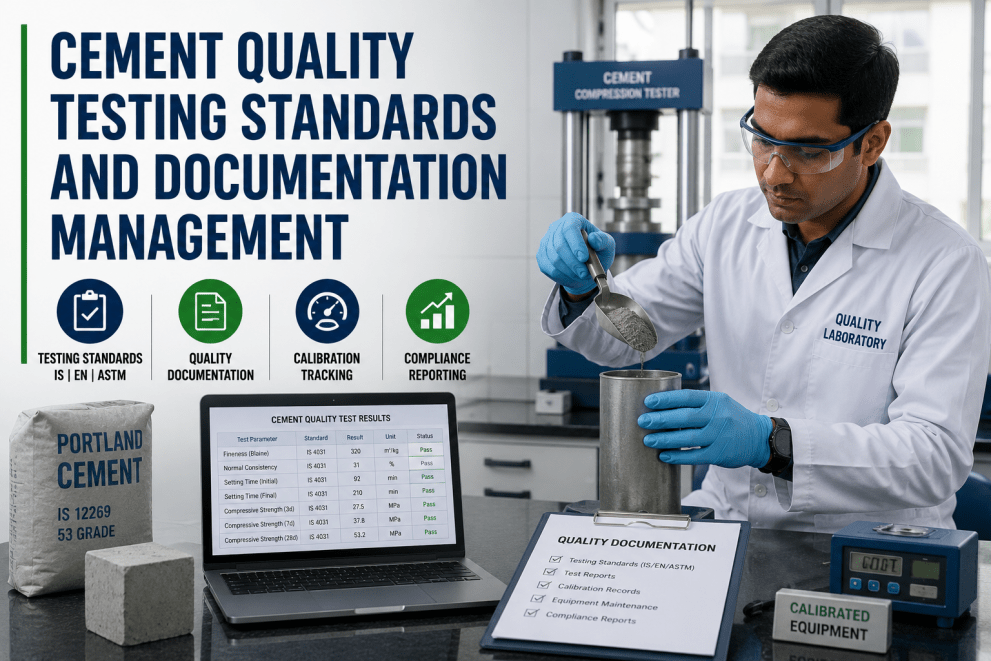
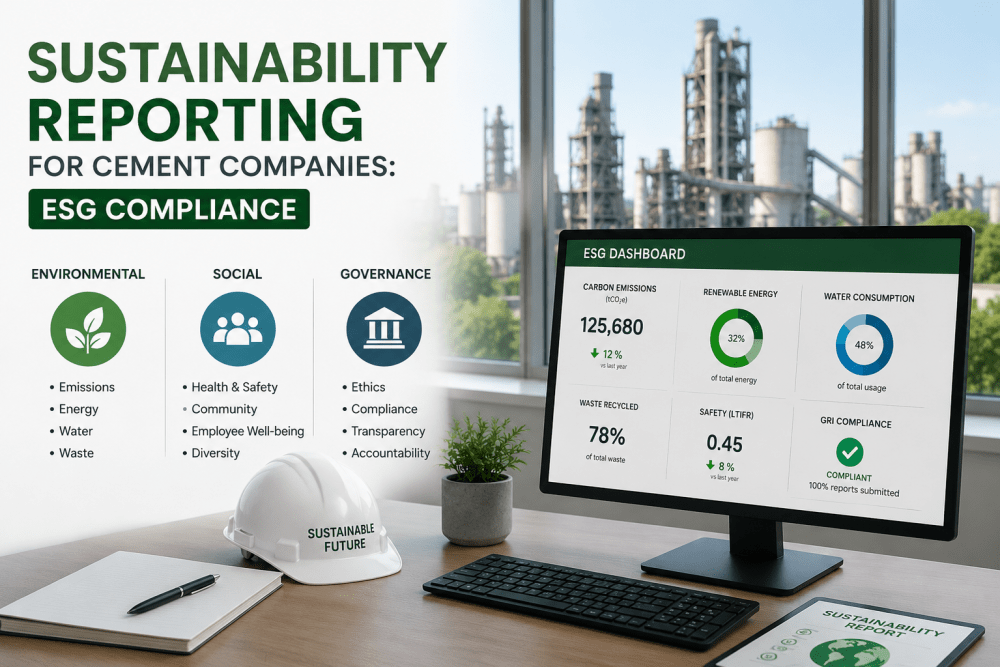
For a cement plant running kilns, mills, and quality labs across multiple shifts, keeping regulatory paperwork current is its own full-time job. Emissions data lives in the CEMS system, quality certificates live in the lab LIMS, and production and shipment records live in the ERP — and every EPA filing, state emission inventory update, or ASTM quality certificate means pulling numbers from all three by hand. When a deadline slips or a value gets mistyped in transcription, the exposure is real: fines, held shipments, or a compliance officer scrambling the week before an audit. iFactory's automated reporting layer pulls from the same systems those manual reports already depend on and turns the data into submission-ready output on its own schedule — book a demo to see it run against your actual reporting calendar.
Compliance Automation · Cement Emission & Quality Reporting
Automated Regulatory Reporting for Cement Plants: From CEMS and Lab Data to Submission-Ready Filings
Emission compliance and quality compliance are usually run as two separate scrambles by two different teams pulling from the same disconnected systems. iFactory connects CEMS, LIMS, and ERP data into one reporting layer that builds the report, flags the gaps, and tracks the deadline — for both sides of the compliance calendar.
3
Source systems synced into one report
70%
Less time spent compiling each filing
Days
Not weeks, to prep a submission
The Underlying Problem
Why Cement Compliance Reporting Eats More Time Than It Should
01
Data Scattered Across Three Systems
Continuous emissions data sits in the CEMS historian, quality results sit in the lab LIMS, and shipment and production volumes sit in the ERP. None of them were built to talk to each other, so someone has to manually bridge the gap every single reporting period.
02
Manual Transcription Risk
Copying a PM emission rate from a CEMS printout into a spreadsheet, then into an agency form, gives three separate chances to transpose a digit, mix up units, or carry over a stale number from last quarter's template.
03
Deadlines Tracked by Memory
Semiannual Title V deviation reports, annual NESHAP performance tests, quarterly SIP updates, and per-shipment quality certificates all run on different clocks — usually tracked in someone's calendar reminders rather than a system that actually enforces them.
04
Thin Audit Trail
When an auditor asks where a reported number came from, the honest answer is often a chain of emails and spreadsheet versions rather than a single traceable record linking the filed value back to its source reading.
Two Compliance Tracks, One Plant
The Emission and Quality Reporting Obligations Cement Plants Carry Together
Most cement plants treat emissions compliance and quality compliance as two unrelated departments' problems — one owned by environmental, the other by the lab. In practice, both run on the same underlying discipline: capture the right reading, at the right frequency, in the right format, on time. Here's the reporting landscape most permitted cement facilities are working against.
| Requirement | Applies To | Typical Frequency |
|---|
| NESHAP Subpart LLL (PM, HCl, Hg) | Kiln and clinker cooler stacks at major sources | Continuous monitoring, annual performance test |
| Title V Operating Permit | Major stationary sources | Semiannual deviation report, annual compliance certification |
| PSD / New Source Review | New or modified emission units | As triggered by project |
| State SIP Emission Inventory | All permitted emission sources | Annual |
| ASTM C150 / C595 Mill Certificate | Every cement shipment | Per shipment or batch |
| AASHTO M85 | Cement sold into DOT-funded projects | Per delivery |
How It Actually Works
From Kiln Sensor to Filed Report
1
Continuous Emission and Process Data Captured
CEMS readings for PM, NOx, SO2, CO, and opacity, along with kiln process parameters, are logged continuously at the source rather than pulled manually at report time.
2
Lab Quality Results Logged
Fineness, compressive strength, setting time, and chemical composition results are captured in the LIMS as each batch is tested, tied to the specific production lot and shipment.
3
Production and Shipment Records Pulled
Clinker and cement production volumes, fuel throughput, and shipment quantities come from the ERP or MES, matched to the same reporting period as the emission and quality data.
4
Values Cross-Checked Automatically
The reporting engine checks incoming values against expected ranges, prior-period trends, and permit limits, flagging anything that looks like a sensor gap, unit mismatch, or outlier before it reaches a filed document.
5
Report Packaged for Submission
The compiled data is formatted into the required layout — an EPA CDX filing, a state portal submission, or a customer-facing mill certificate — ready for a final review instead of a first draft.
See It Against Your Own Filings
Run Your Next Title V or Mill Certificate Through the Platform
Bring an actual upcoming filing to the call and we'll map exactly which fields pull automatically from your CEMS, LIMS, and ERP, and which ones would still need manual input on day one.
What Changes
Manual Compilation vs. Automated Reporting
| Dimension | Manual Process | Automated Process |
|---|
| Data gathering | Pulled by hand from three or more systems | Synced automatically each reporting period |
| Error checking | Reviewed after the report is drafted, if at all | Flagged before the report is generated |
| Deadline tracking | Calendar reminders and tribal knowledge | Schedule tied directly to permit conditions |
| Audit trail | Scattered emails and spreadsheet versions | Single traceable record per reported value |
| Report formatting | Rebuilt by hand for each agency or customer format | Templated automatically to the required layout |
What Gets Automated
The Filings This Actually Touches
Environmental
Title V Semiannual Deviation Report
Deviations from permit limits are flagged as they occur rather than discovered during the six-month compilation, giving compliance staff time to document cause and corrective action properly.
Environmental
NESHAP Performance Test Summary
Stack test results and supporting continuous monitoring data are compiled into the summary format expected by the reviewing agency, with source data linked for easy verification.
Quality
Mill Certificate (ASTM C150 / AASHTO M85)
Each shipment's chemical and physical test results are pulled from the LIMS and formatted into the certificate customers and DOT projects require, without a lab tech reformatting spreadsheets by hand.
Environmental
State Emission Inventory Filing
Annual throughput and emission totals are aggregated from the same production and CEMS data already flowing through the platform, instead of being recalculated from scratch each year.
Where Rollouts Go Wrong
Common Mistakes When Automating Compliance Reporting
Treating Emission and Quality Reporting Separately
They're run by different teams, but they pull from overlapping production data. Automating one without the other leaves half the manual compilation problem untouched.
Reconciling Data the Week Before a Deadline
Automation works best when data gaps get caught continuously, not when someone finally opens the historian three days before a filing is due.
No Single Owner for Report Accuracy
Automated reports still need a named reviewer who signs off before submission — the system catches gaps, it doesn't replace accountability for the final filing.
Skipping a Dry-Run Before Go-Live
Running the automated version alongside the manual one for a full reporting cycle catches format mismatches and mapping errors before they show up in a real submission.
A Composite Scenario
Two-Person Compliance Team, Quarterly Filing Season
Before
Each quarter, one environmental coordinator and one quality manager independently pulled CEMS exports, LIMS results, and ERP production numbers into separate spreadsheets, cross-checked them by hand, and reformatted the totals into the agency and customer templates. The process ran roughly two full weeks and once slipped past a Title V submission window, triggering a follow-up inquiry from the state agency.
After
CEMS, LIMS, and ERP data now feed the reporting engine continuously. Deviations and quality outliers surface as they happen instead of at compilation time, and both the Title V report and the mill certificates are generated from the same underlying, already-verified dataset. The quarterly filing window dropped from two weeks to under three days of review time.
Before You Start
Getting Ready to Automate Your Reporting
List every recurring filing across both environmental and quality teams, with its actual frequency and data sources
Confirm which systems — CEMS, LIMS, ERP, MES — hold the source data for each filing and how each is currently accessed
Identify who currently owns sign-off on each report and keep that accountability in the automated workflow
Plan a parallel-run period where the automated report is generated alongside the manual one before switching over
Common Questions
Automated Cement Regulatory Reporting — FAQ
Does this replace our environmental and quality staff?
No. The platform removes the manual compilation work — pulling numbers from three systems, cross-checking them, and reformatting them into a filing — but a qualified person still reviews and signs every report before it's submitted. What changes is how much of that person's time goes into copying data versus actually reviewing it.
Talk to our team about how the review step is typically structured.
Can it handle both emission reports and quality certificates in one system?
Yes, and that's the main advantage over point solutions built for only one side. Emission data from CEMS and quality data from the LIMS both flow through the same integration layer, which means a single platform tracks both compliance calendars instead of two separate systems that don't talk to each other.
What happens if our CEMS or LIMS goes down during a reporting period?
Data gaps are flagged the moment they're detected rather than discovered during report compilation, giving staff time to document the outage and apply the correct substitute-data procedure required by the permit, instead of scrambling to explain a missing value after the fact.
How long does integration with our existing systems take?
It depends on how many source systems and report types are in scope, but most plants start with their highest-volume filing — often the mill certificate process — and expand from there rather than integrating everything at once.
Book a demo to scope a timeline against your specific systems.
Is the source data for a filed report auditable later?
Yes. Every value that lands in a submitted report is linked back to its source reading, timestamp, and system of origin, so when an auditor asks where a number came from, the answer is a traceable record rather than a reconstructed email thread.
Stop Compiling Reports by Hand
Connect Your Emission and Quality Data to One Reporting Layer
iFactory pulls from the CEMS, LIMS, and ERP systems already running your plant and turns that data into submission-ready filings — for the agency reports and the customer certificates alike.