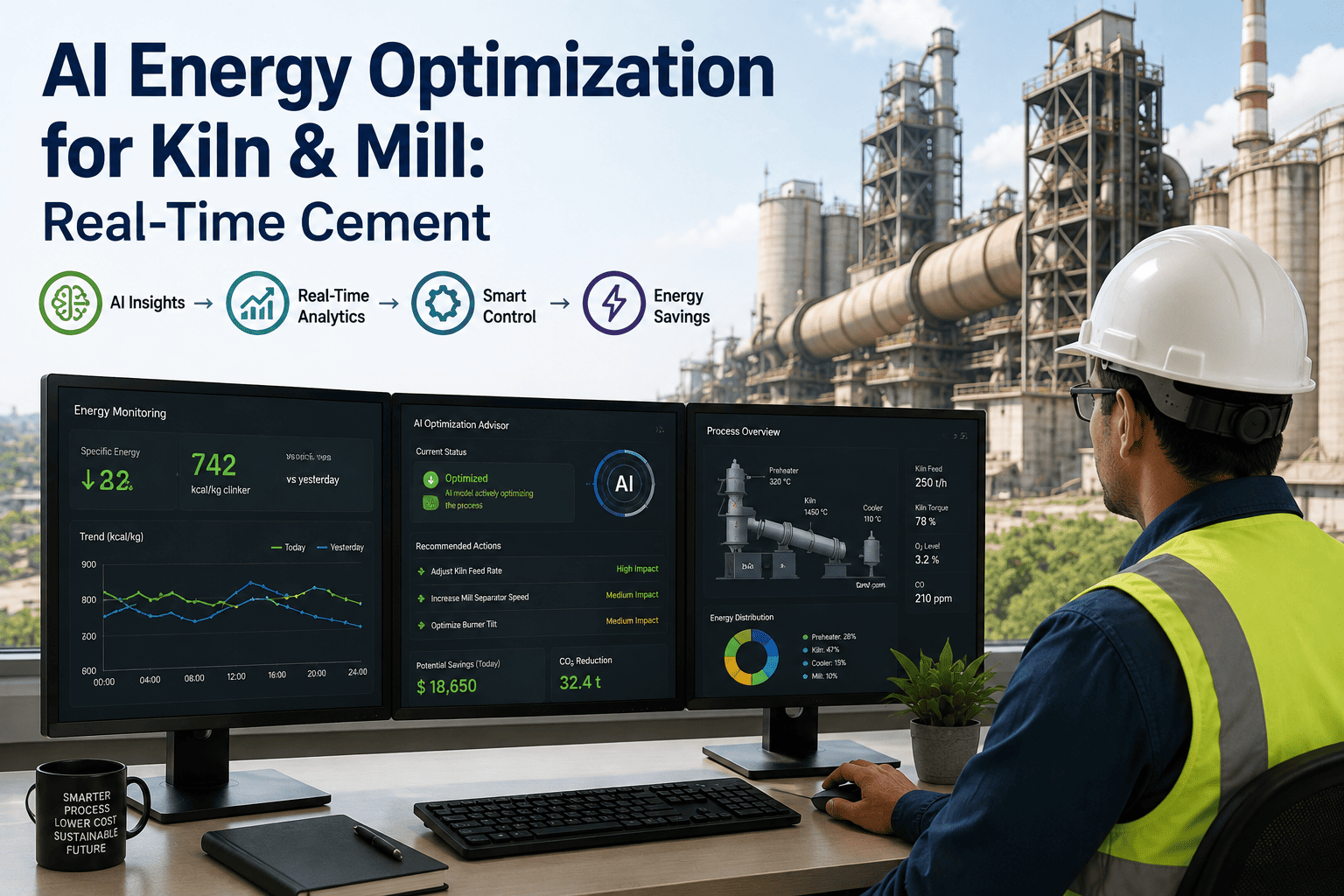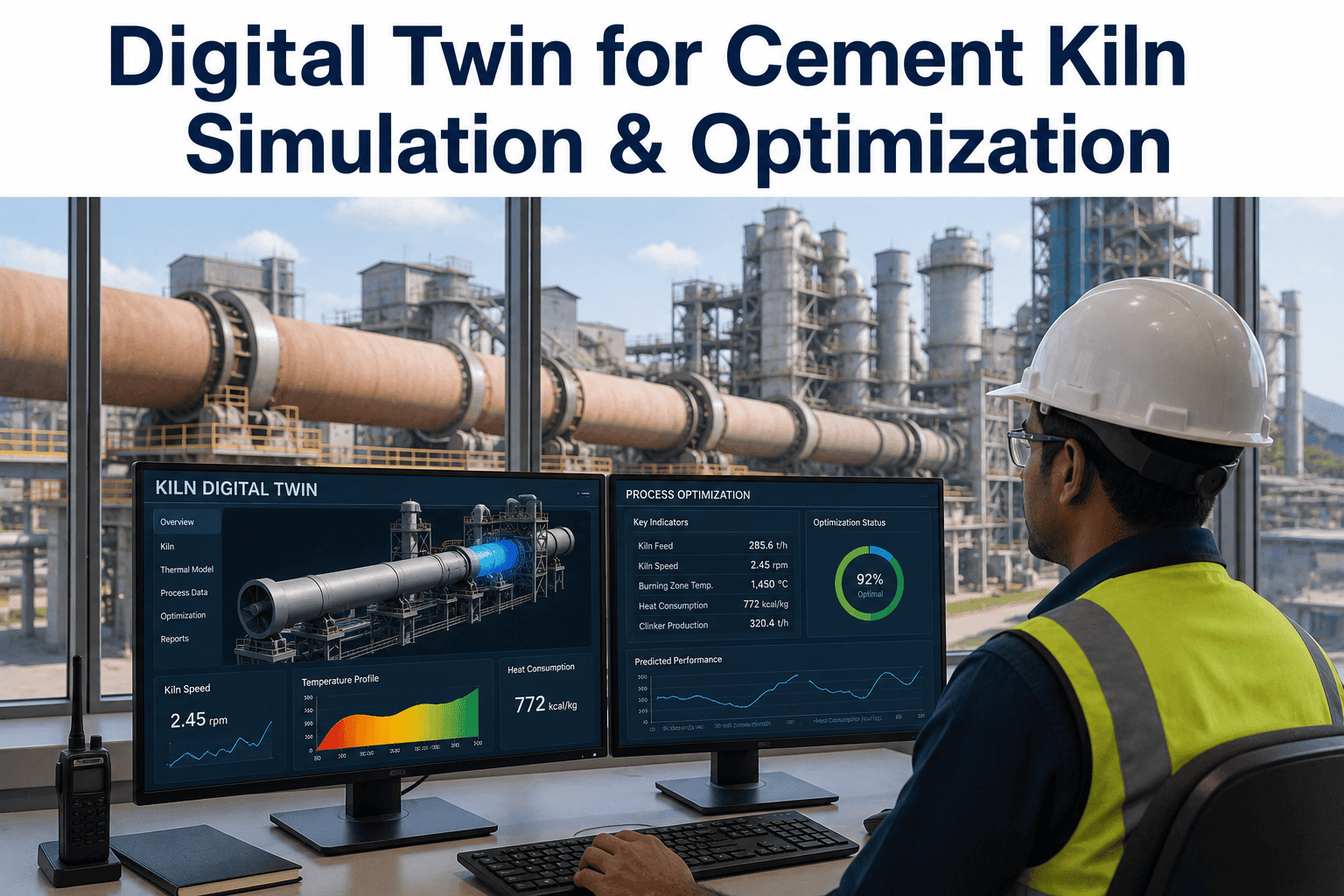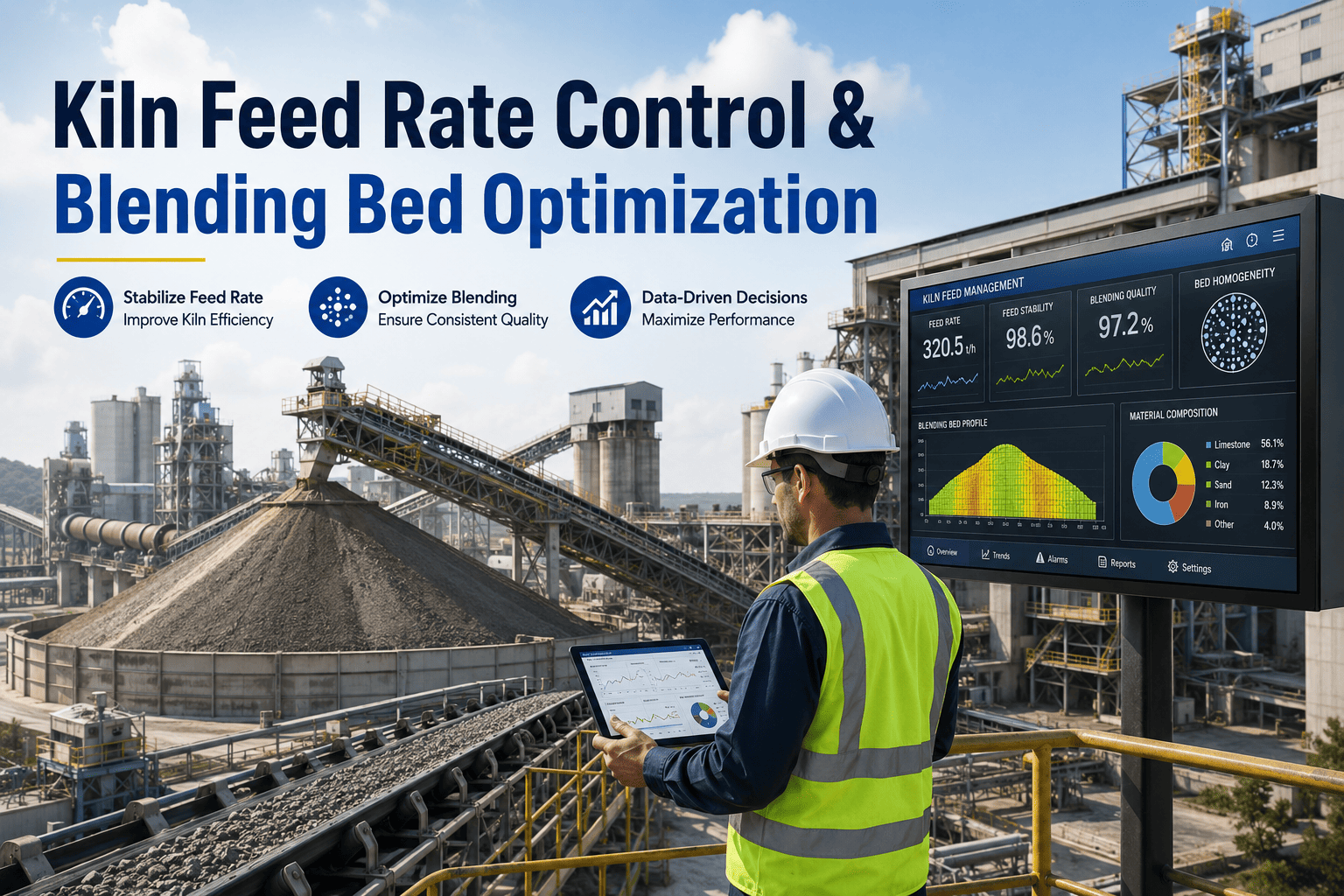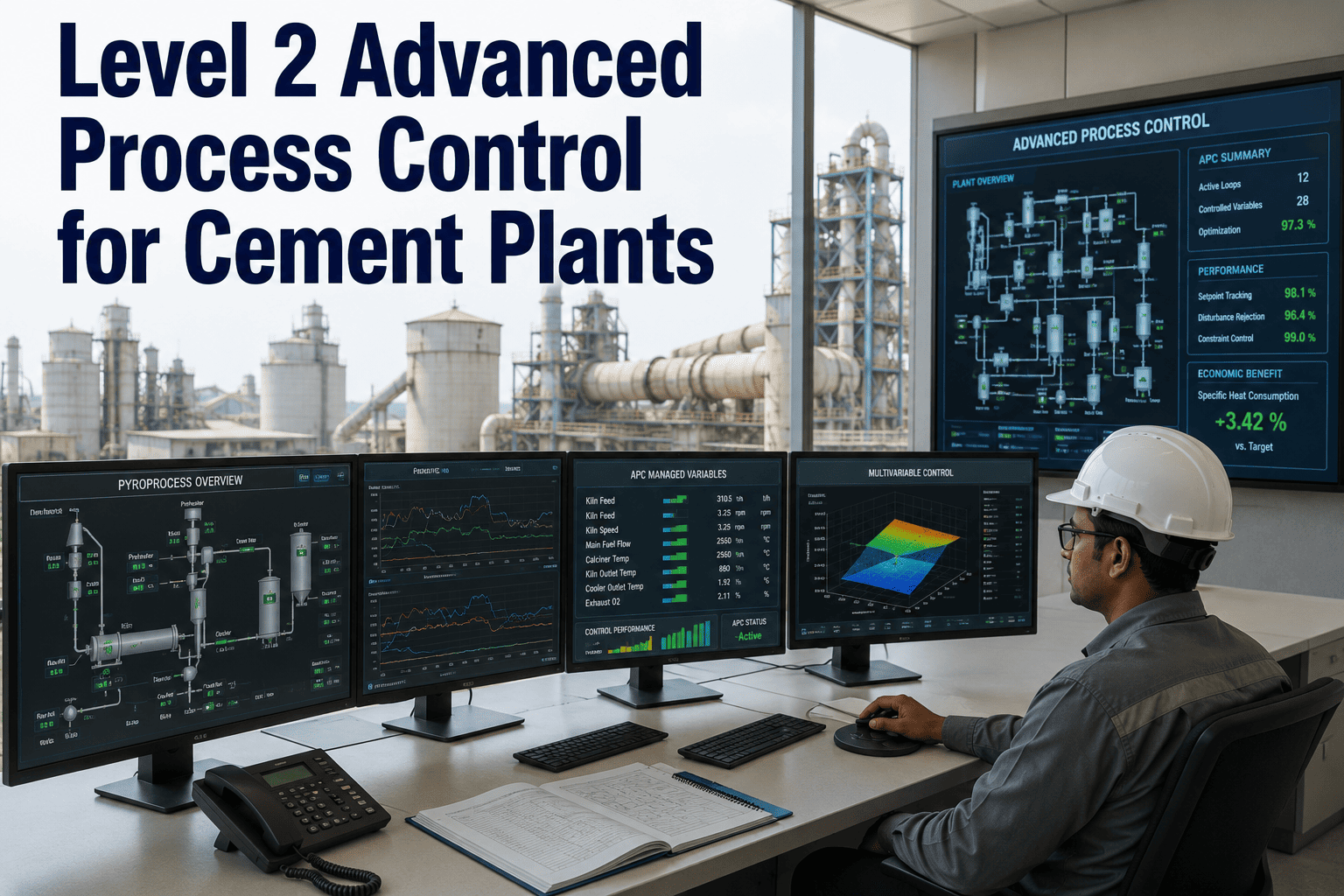
Most cement plants already have Level 1 control locked down: PID loops holding individual setpoints, interlocks preventing unsafe conditions, a DCS screen showing every temperature and flow in real time. What that layer cannot do is anticipate a kiln burning zone that is about to drift out of spec because raw meal chemistry shifted three stages back in the preheater, or coordinate a mill and separator so grinding fineness stays consistent as feed rate changes. That coordination and prediction layer is Level 2, and plants that never build it end up relying on the same handful of experienced operators to hold the process steady through judgment alone. You can book a demo to see how iFactory connects Level 2 control performance data to your maintenance and reliability workflow.
Give Your Kiln and Mills a Control Layer That Predicts, Not Just Reacts
Level 2 advanced process control layers model predictive control, fuzzy logic, and expert systems on top of your existing DCS, holding kiln and mill operations closer to optimum without replacing the infrastructure you already have.
Where Level 2 Sits Between Your Instrumentation and Your Operators
Understanding what Level 2 actually adds requires seeing it in the context of the full control stack, from field instrumentation up through the decisions your operators and process engineers make every shift.
The Cement Kiln Is One of the Most Difficult Processes to Control Well
Rotary kilns combine long time constants, significant transport delay between where a control action is taken and where its effect is measurable, and constantly shifting raw material and fuel characteristics, especially as plants increase the use of alternative fuels with inconsistent heating value. A conventional PID loop, tuned for a single variable in isolation, cannot account for the fact that burning zone temperature, kiln torque, and back-end oxygen levels are all interacting simultaneously with a delay measured in minutes rather than seconds. This is precisely the kind of multivariable, delay-heavy, nonlinear problem that model predictive control and fuzzy logic systems were designed to handle, using a process model to anticipate the effect of a control move before it fully propagates through the system.
Model Predictive Control, Fuzzy Logic, and Expert Systems Compared
Level 2 is not a single technology. Most plant implementations combine two or more of the approaches below, each suited to a different part of the control problem.
| Technology | Strength | Typical Application |
|---|---|---|
| Model Predictive Control | Handles multivariable, constraint-bound optimization using a receding-horizon approach that continuously re-solves as new data arrives | Burning zone temperature control, mill and separator coordination, multivariable kiln stability |
| Fuzzy Logic Control | Encodes operator experience and heuristic judgment into rules that handle process uncertainty without requiring a precise mathematical model | Kiln stabilization during raw material or fuel quality shifts, situations where a full process model is hard to derive |
| Expert Systems | Applies documented plant-specific rules and decision logic consistently, reducing dependence on any single operator's judgment | Automated startup and shutdown sequencing, operator guidance, consistent response to recurring process disturbances |
What Level 2 Control Typically Delivers Once It Is Tuned and Trusted
The value of Level 2 control shows up in three places at once: energy efficiency, quality consistency, and the amount of manual intervention operators have to perform to hold the process steady.
Machine Learning Complements Level 2, It Does Not Replace It
A newer layer of remote, cloud-based machine learning models is increasingly used alongside traditional Level 2 systems, but the two operate on very different time horizons and should not be confused with one another. The local Level 2 system, typically built on fuzzy logic and model predictive control, provides the second-by-second stability the kiln needs and reacts on the timescale of seconds to minutes. Remote machine learning models work on a longer horizon, often fifteen minutes to hourly, adjusting the setpoints and priorities that the local system then executes. The relationship runs both ways: the machine learning layer recommends better targets based on longer-term pattern recognition, while the local high-level control system supplies the clean, structured operating data that makes those recommendations trustworthy in the first place.
How a Level 2 Project Typically Moves From Assessment to Live Operation
Level 2 implementations are staged deliberately, since putting an untested control layer directly in charge of a live kiln is not a risk any plant should take.
Process Assessment and Modeling
Historical process data is analyzed to build the process model that will drive predictive control, and existing Level 1 loops are audited to confirm they are tuned well enough to serve as a foundation.
Controller Configuration
Model predictive control, fuzzy logic rules, or expert system logic are configured against plant-specific constraints, targets, and known disturbance patterns identified during the assessment phase.
Advisory Mode Validation
The controller runs in advisory mode, recommending moves to operators without directly actuating final control elements, allowing the team to build confidence in the system's recommendations before handing over control.
Closed-Loop Cutover
Control is handed to the system incrementally, often starting with a single loop or variable before expanding to full multivariable operation, with operators retaining override authority at every stage.
Where Level 2 Projects Commonly Underperform Their Business Case
Advanced process control has a long track record of delivering real energy and quality benefits, but a meaningful share of implementations fall short of their projected value, and the reasons tend to repeat across plants.
Poor Underlying Level 1 Tuning
An advanced controller built on top of poorly tuned PID loops inherits that instability rather than fixing it. Level 1 loop health should be verified and corrected before Level 2 configuration begins, not treated as a parallel workstream.
Model Drift Left Unaddressed
Process models built during initial commissioning gradually lose accuracy as equipment wears, raw material sources shift, or fuel mix changes. Without periodic re-identification, controller performance degrades slowly enough that nobody notices until benefits have quietly eroded.
Operators Reverting to Manual
If operators do not trust the controller's recommendations, whether from a rocky advisory-mode period or insufficient training, they quietly take loops back to manual control, and the plant pays for a system it is not actually using.
No Owner After Commissioning
APC systems that ship without a designated internal owner responsible for monitoring performance and requesting re-tuning tend to degrade in the same way any unmaintained system does, regardless of how well it performed at initial cutover.
What to Track After Cutover to Confirm the Investment Is Holding
A successful commissioning is the start of the value case, not the end of it. The metrics below are what separates a Level 2 system that continues delivering value from one that quietly reverts to Level 1 performance over time.
Framing a Level 2 Investment for Plant and Corporate Approval
The strongest Level 2 business cases quantify three separate value streams rather than leaning on a single headline number: the energy savings from reduced specific heat consumption, the throughput value from running closer to true operating constraints without tripping them, and the quality consistency value from tighter variability on free lime and other clinker indicators that reduce rework and blending costs downstream. Plants that can point to service factor and variability data from a comparable line, their own or a sister facility, tend to move capital requests through approval faster than those relying on vendor-quoted industry averages alone, because internal data addresses the most common objection: that projected savings assume a level of sustained controller usage the plant has not yet demonstrated it can maintain.