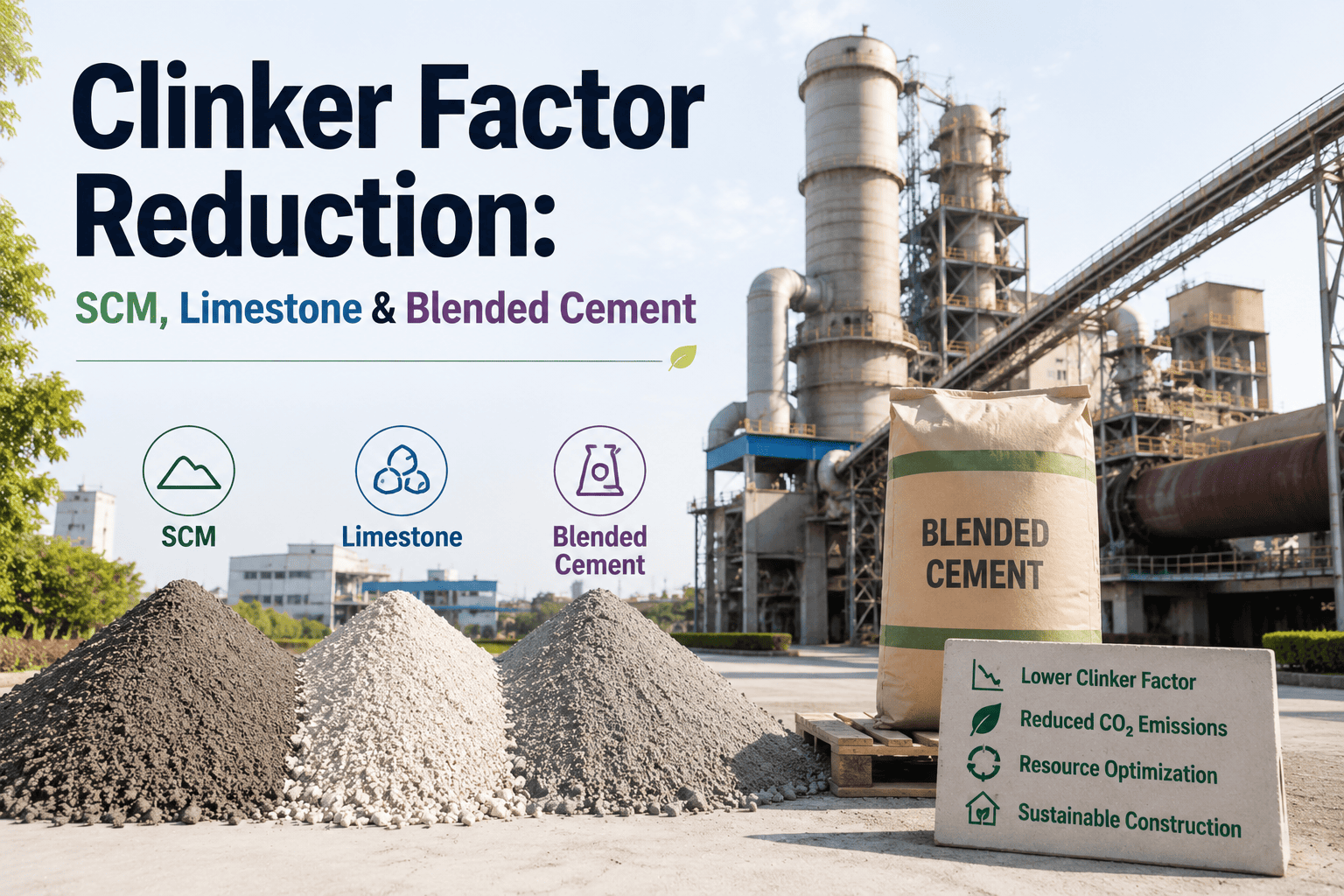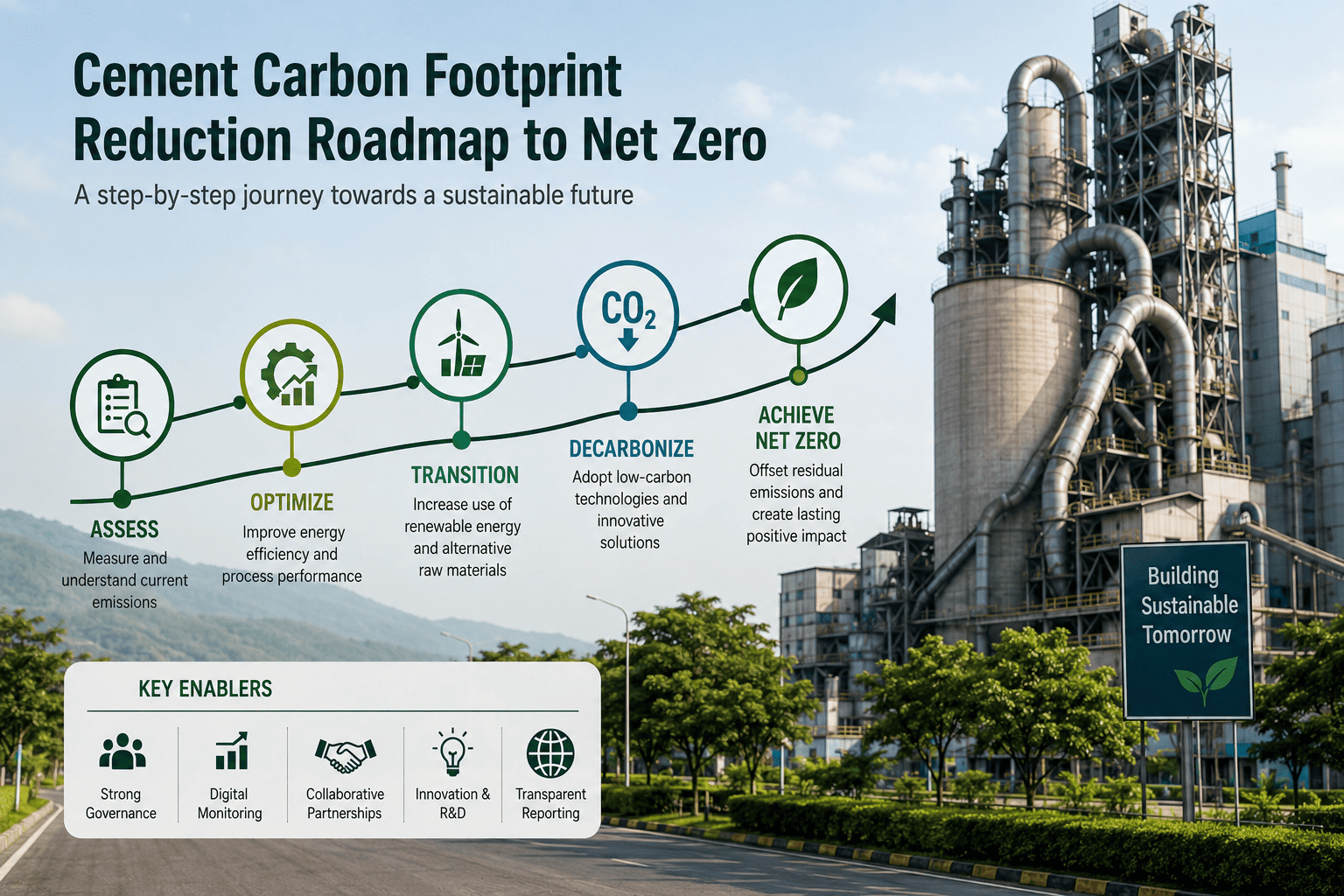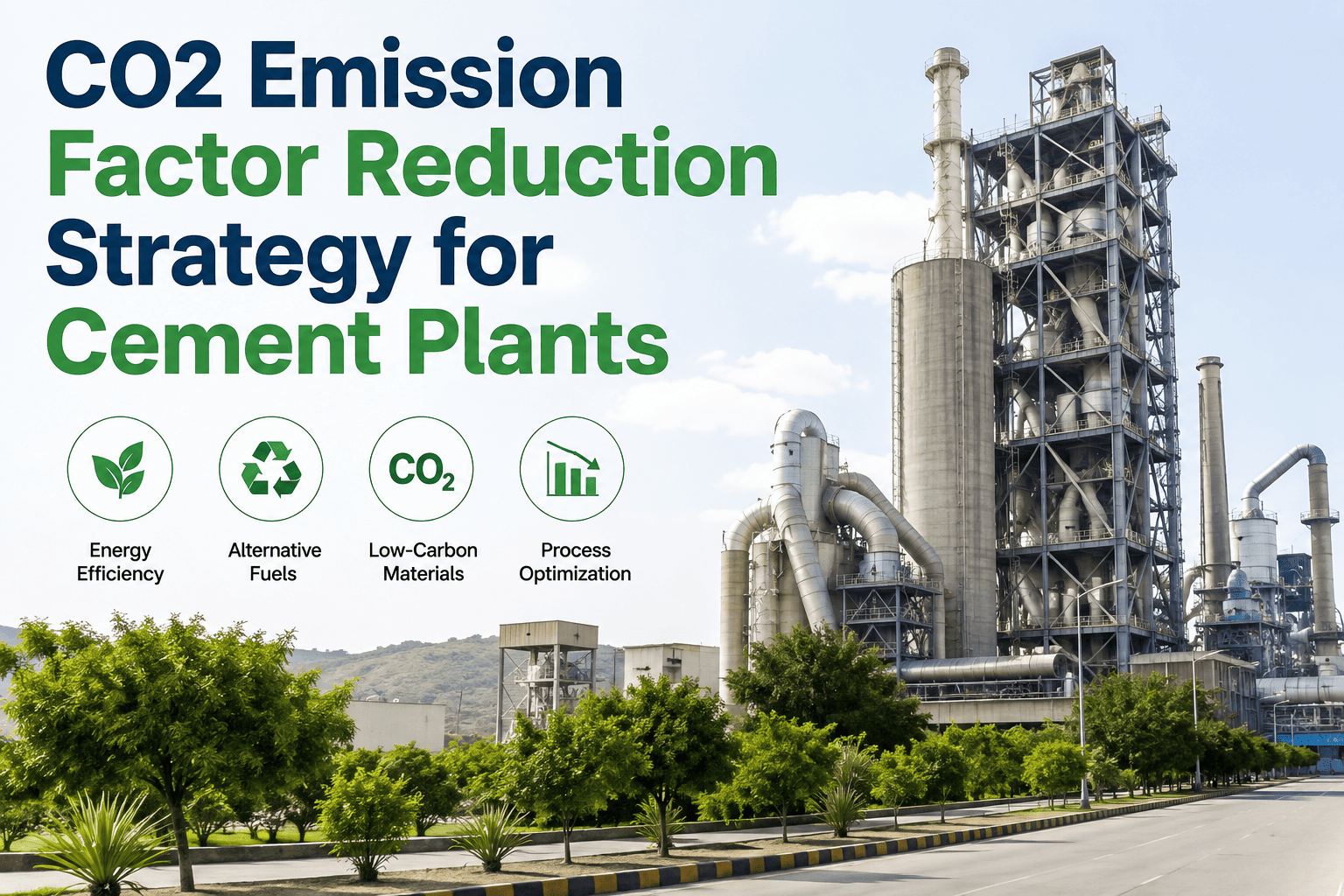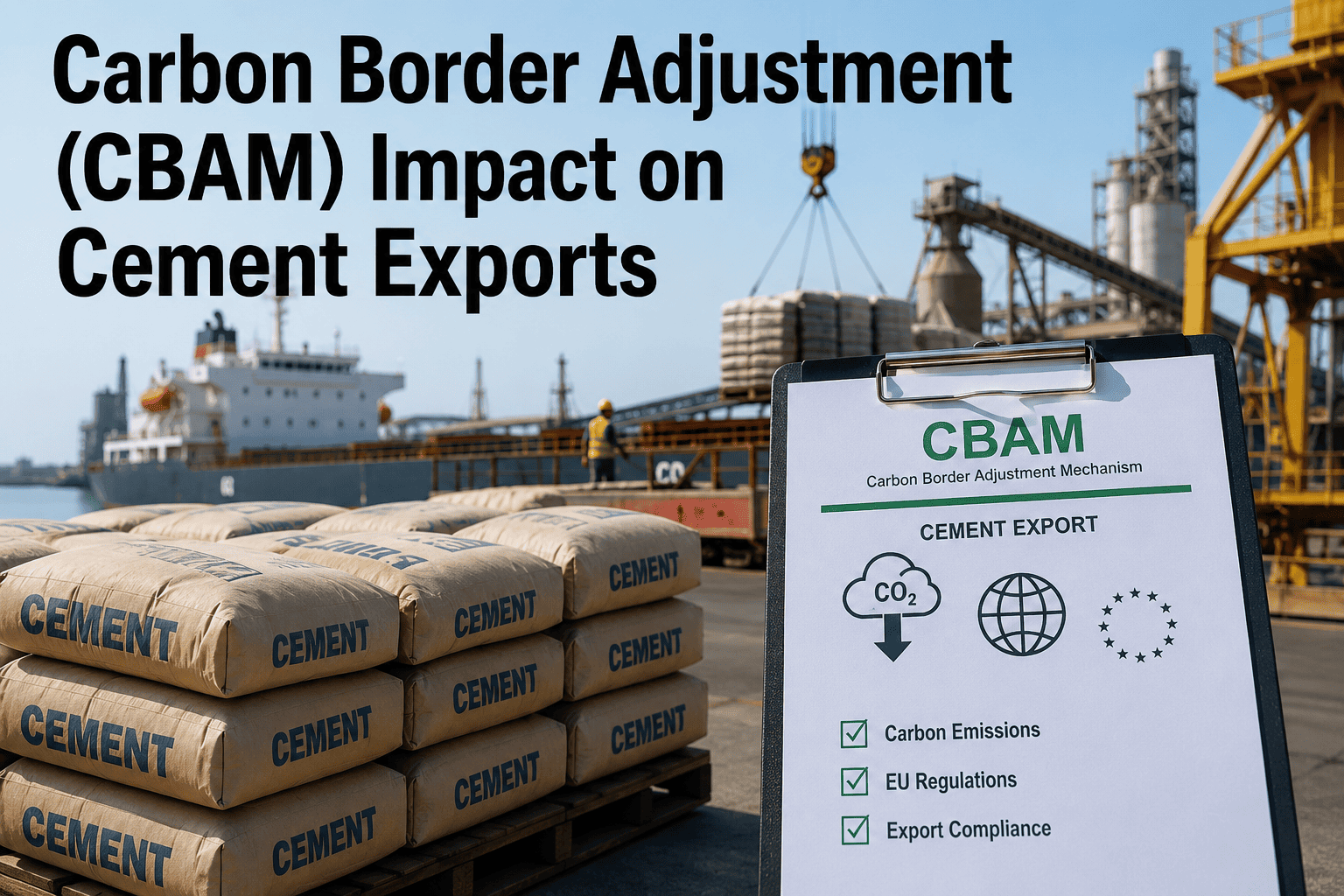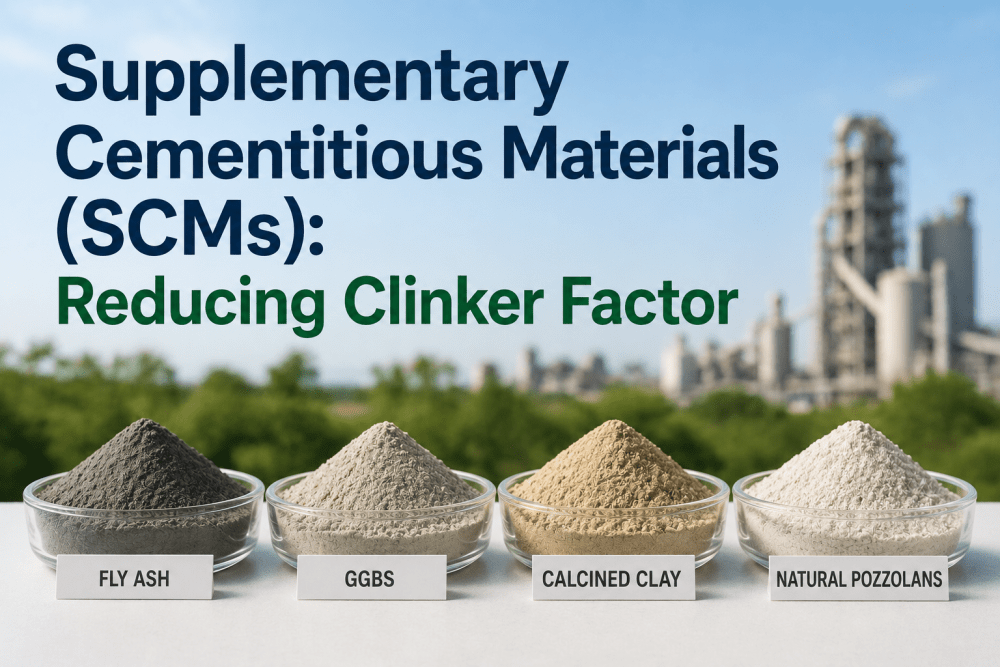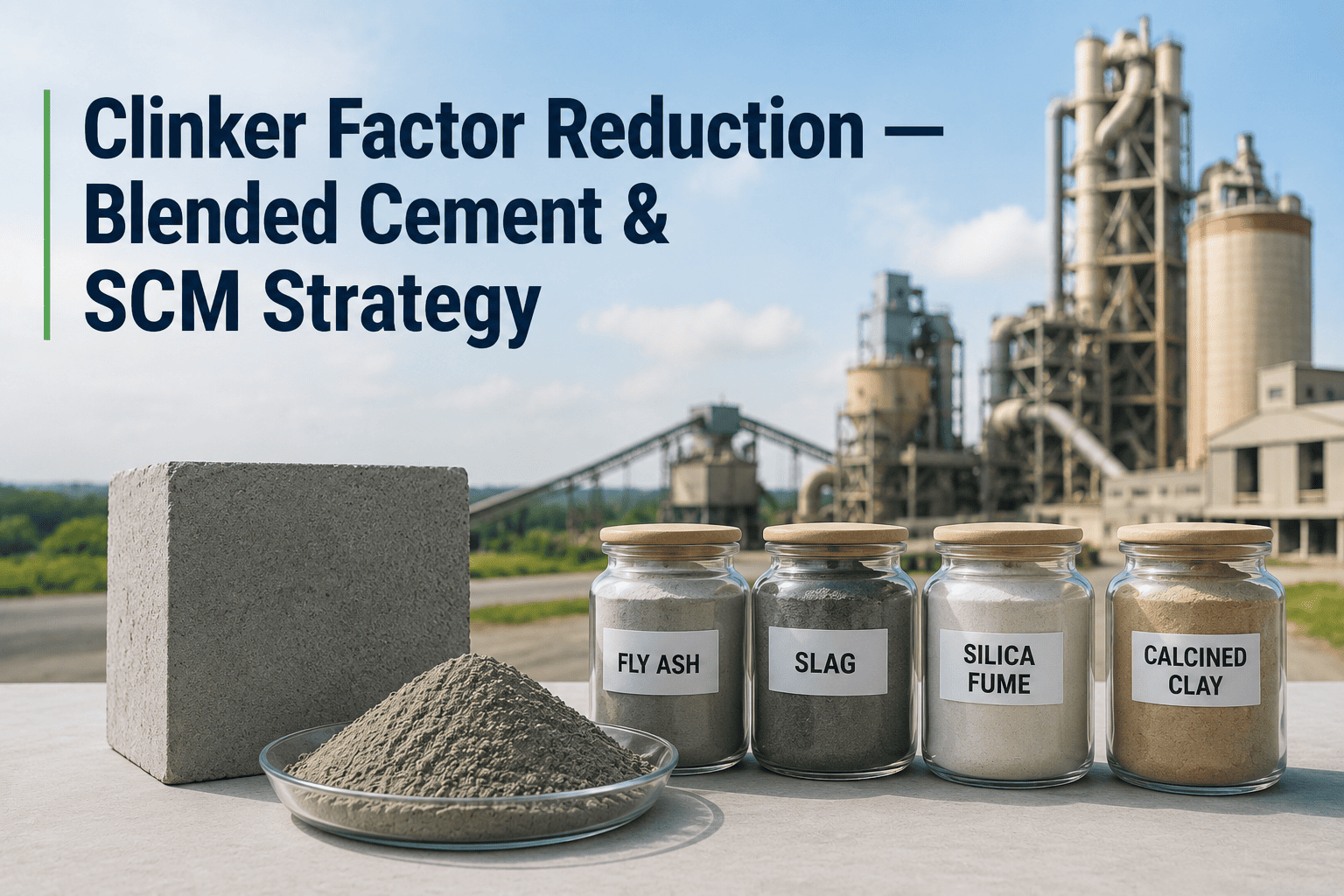
The cement industry stands at a critical inflection point where decarbonization imperatives intersect with operational excellence. Clinker factor—the ratio of clinker to total cement—represents the single most impactful lever for reducing both carbon emissions and production costs. With global cement producers targeting clinker factors as low as 0.65 or even 0.60, the strategic adoption of supplementary cementitious materials (SCMs) such as fly ash, ground granulated blast furnace slag, limestone, and calcined clay has become a technical necessity. This comprehensive guide delivers an enterprise-grade, data-driven framework for optimizing blended cement formulations while maintaining stringent performance standards. Plant managers, CTOs, and sustainability directors will discover actionable methodologies for reducing clinker factor without compromising compressive strength, durability, or workability. Book a Demo to explore how AI-driven predictive analytics can accelerate your SCM optimization journey.
Transform Your Clinker Strategy Today
Achieve sub-0.65 clinker factor with precision-blended formulations. Our experts deliver tailored SCM roadmaps for your plant.
The Strategic Imperative for Clinker Factor Reduction
Clinker production accounts for approximately 90% of cement's carbon footprint, with calcination alone releasing roughly 0.5 tons of CO₂ per ton of clinker. Reducing clinker factor from a baseline of 0.75 to 0.65 directly cuts emissions by 13-15% per ton of cement, while simultaneously lowering energy consumption and raw material costs. For a typical 1 MTPA plant, this translates to annual savings exceeding $2 million and a reduction of 100,000 tons of CO₂. The technical challenge lies in maintaining cement performance—compressive strength at 28 days must remain above 42.5 MPa for OPC equivalents, and sulfate resistance must not degrade. Advanced SCM blending, coupled with real-time quality monitoring, enables producers to push clinker factor boundaries safely. iFactory's AI platform analyzes historical mill data, SCM reactivity indices, and curing profiles to recommend optimal blend ratios that maximize substitution without risk.
Fly Ash Integration
Class F fly ash from coal-fired plants offers pozzolanic reactivity, improving long-term strength and reducing heat of hydration. Optimal substitution rates range from 20-35% depending on ash fineness and loss on ignition.
Slag Cement Blending
Ground granulated blast furnace slag (GGBFS) provides latent hydraulic properties, enabling substitution rates up to 70% in slag cements. Sulfate resistance and chloride penetration are significantly enhanced.
Limestone Filler Optimization
Finely ground limestone (CaCO₃) acts as a nucleation site for hydration, accelerating early strength. Typical addition levels of 5-15% reduce clinker factor without compromising durability when combined with other SCMs.
Calcined Clay Technology
LC3 (Limestone Calcined Clay Cement) blends 30% calcined clay and 15% limestone to achieve clinker factors as low as 0.50. Clay availability and low processing cost make this a disruptive solution for emerging markets.
Step-by-Step SCM Optimization Protocol
Raw Material Characterization
Conduct XRF, XRD, and TGA analysis of available SCMs to determine chemical composition, amorphous content, and reactivity indices. Create a digital library of material properties for AI modeling.
Blend Design Simulation
Use thermodynamic modeling software (e.g., GEMS) to predict phase assemblages and strength development for candidate blends. iFactory's AI engine runs 10,000+ simulations per hour to identify Pareto-optimal formulations.
Laboratory Validation
Produce trial blends in a pilot mill and test compressive strength at 2, 7, 28, and 90 days. Measure setting time, water demand, and sulfate expansion per ASTM C150 or EN 197 standards.
Mill Trial & Process Tuning
Adjust separator speed, grinding aid dosage, and mill temperature to achieve target fineness (Blaine 4000-5000 cm²/g) and particle size distribution. Monitor mill power consumption and throughput.
Full Production & Quality Control
Implement statistical process control (SPC) with real-time XRF analyzers and automated sampling. iFactory's digital twin continuously optimizes blend proportions based on feed variability.
Comparative Performance of SCM Blends
| SCM Blend | Clinker Factor | 28-Day Strength (MPa) | CO₂ Reduction (%) | Cost Index |
|---|---|---|---|---|
| OPC (Reference) | 0.95 | 52.5 | 0 | 100 |
| Fly Ash 25% | 0.70 | 48.0 | 18 | 88 |
| Slag 50% | 0.50 | 50.5 | 35 | 82 |
| Limestone 15% | 0.80 | 44.0 | 10 | 92 |
| LC3 (Clay+LS) | 0.50 | 46.0 | 40 | 78 |
Ready to Optimize Your Blended Cement Line?
Leverage AI-driven predictive models to achieve the lowest clinker factor while maintaining quality. Schedule a personalized demo today.
Overcoming Technical Barriers in High-Substitution Blends
High substitution rates of SCMs beyond 40% often encounter challenges such as delayed early strength development, increased water demand, and carbonation susceptibility. Mitigation strategies include using chemical activators (e.g., sodium sulfate or lime), optimizing particle size distribution through intergrinding, and incorporating nano-silica seeds to accelerate hydration. For fly ash blends, raising the Blaine fineness to 4500 cm²/g improves reactivity, while slag cements benefit from higher curing temperatures in precast applications. iFactory's machine learning models predict strength evolution based on real-time mill data, allowing operators to adjust grinding parameters dynamically. Case studies from Indian and European plants show that with proper SCM selection and process control, clinker factors of 0.55 are achievable for general-purpose cements without sacrificing workability.
Chemical Activation
Addition of 1-3% sodium sulfate or calcium chloride boosts early pozzolanic reaction, increasing 3-day strength by 20% in fly ash blends. Careful dosage control prevents efflorescence.
Intergrinding Strategy
Grinding clinker and SCM together in a ball mill produces a more uniform particle size distribution, improving packing density and reducing water demand by up to 5%.
Nano-Silica Seeding
Adding 0.5-2% colloidal nano-silica provides nucleation sites for C-S-H gel formation, accelerating early hydration without affecting long-term strength or durability.
Thermal Curing
For precast elements, steam curing at 60-80°C for 12 hours increases 1-day strength by 40%, enabling higher SCM substitution without delaying demolding.
Regulatory and Standards Compliance for Blended Cements
Navigating the complex landscape of cement standards is critical for commercial success. ASTM C150 permits up to 5% limestone in Type I cements, while ASTM C595 defines blended hydraulic cements with SCM content up to 70%. EN 197-1 classifies CEM II (6-35% SCM), CEM III (36-95% slag), and CEM V (36-55% composite). Producers targeting low-clinker factors must ensure compliance with national building codes and customer specifications. iFactory's compliance module automatically checks blend formulations against 50+ international standards, flagging deviations and suggesting adjustments. Additionally, environmental product declarations (EPDs) increasingly require verified clinker factor data, making precise tracking essential for green building certifications like LEED and BREEAM.
SCM Availability and Regional Suitability
| Region | Dominant SCM | Typical Quality | Cost per Ton (USD) | Substitution Potential |
|---|---|---|---|---|
| North America | Fly Ash (Class F) | LOI < 3%, Fineness 4000 | 25-40 | 20-35% |
| Europe | GGBFS | CaO > 40%, Glass > 90% | 50-70 | 40-70% |
| India | Fly Ash + Calcined Clay | Reactive silica > 25% | 15-25 | 30-50% |
| Middle East | Limestone | CaCO₃ > 95% | 10-15 | 5-15% |
Economic Analysis of Clinker Factor Reduction
Investing in SCM blending infrastructure—including additional silos, weigh feeders, and grinding aids—requires capital expenditure of $1-3 million for a 1 MTPA plant. However, the payback period is typically under 18 months due to reduced clinker production costs. Each 0.1 reduction in clinker factor saves approximately $5-8 per ton of cement, depending on fuel and raw material prices. For a plant producing 1 million tons annually, moving from 0.75 to 0.65 clinker factor yields $5-8 million in annual savings. iFactory's cost optimization module integrates real-time market prices for SCMs, fuel, and electricity to dynamically recommend the most profitable blend composition. Sensitivity analysis shows that even a 5% improvement in clinker factor can increase EBITDA margins by 2-3 percentage points.
Capital Investment
Silos, weigh feeders, conveyors, and control systems for SCM addition require $1-3M for 1 MTPA capacity. Retrofit of existing mills costs 30-50% less.
Operational Savings
Reduced clinker production lowers fuel, electricity, and maintenance costs by $5-8 per ton per 0.1 clinker factor reduction. Annual savings exceed $5M for large plants.
Carbon Credit Revenue
Each ton of CO₂ avoided generates 1 carbon credit, trading at $50-100 in EU ETS. A 0.1 clinker factor reduction yields 100,000 credits annually for 1 MTPA plant.
Market Premium
Low-carbon cement products command a 10-20% price premium in green building markets, further enhancing profitability and brand differentiation.
Digital Twin Integration for Real-Time Optimization
iFactory's digital twin platform creates a virtual replica of the cement blending process, integrating data from raw material analyzers, mill sensors, and quality lab results. The AI engine continuously adjusts SCM feed rates to maintain target clinker factor while minimizing quality variability. Predictive models forecast strength development based on real-time fineness and chemical composition, enabling proactive adjustments. In a pilot deployment at a European cement plant, the digital twin reduced clinker factor variability by 40% and increased average substitution rate by 5 percentage points. The system also generates automated reports for compliance and sustainability tracking, reducing manual data collection effort by 80%. Operators access dashboards on tablets and mobile devices, receiving alerts when blend deviations exceed thresholds.
Frequently Asked Questions
What is the maximum clinker factor reduction achievable without compromising cement quality?
The maximum reduction depends on SCM quality, cement type, and application. For general-purpose cements (42.5 N), clinker factors as low as 0.50 are achievable using LC3 technology (calcined clay + limestone). For high early strength requirements, factors typically stay above 0.65. Advanced AI optimization from iFactory's support team can push limits while maintaining quality. Rigorous testing per ASTM C150 or EN 197-1 ensures compliance.
How do SCMs affect concrete durability and long-term performance?
SCMs generally improve durability by refining pore structure and reducing permeability. Fly ash and slag enhance sulfate resistance and mitigate alkali-silica reaction. However, high limestone content can increase carbonation risk. Proper blend design, verified through accelerated durability tests (e.g., rapid chloride permeability, freeze-thaw), ensures long-term performance. Book a Demo to see how iFactory's durability models predict service life.
What are the main operational challenges when switching to high-SCM blends?
Key challenges include increased water demand, slower early strength gain, and mill throughput reduction due to higher fineness requirements. Solutions include using grinding aids, chemical activators, and adjusting separator settings. iFactory's real-time monitoring system alerts operators to deviations and recommends corrective actions. Contact support for a customized transition plan.
How does clinker factor reduction impact cement plant profitability?
Each 0.1 reduction in clinker factor saves $5-8 per ton of cement by reducing clinker production costs (fuel, electricity, raw materials). For a 1 MTPA plant, this translates to annual savings of $5-8 million. Additionally, carbon credit revenues at $50-100 per ton of CO₂ avoided add $2.5-5 million annually. Book a Demo to calculate your plant's potential savings.
What regulatory standards must be met for low-clinker blended cements?
Blended cements must comply with ASTM C595 (USA), EN 197-1 (Europe), or IS 1489 (India) depending on the market. These standards specify minimum strength, maximum SCM content, and durability requirements. iFactory's compliance module automatically checks formulations against 50+ standards. Contact support for a compliance checklist tailored to your region.
Achieve Sub-0.60 Clinker Factor with Confidence
Our AI-driven platform delivers precision SCM blending, real-time quality control, and maximum profitability. Partner with iFactory to lead the low-carbon cement revolution.