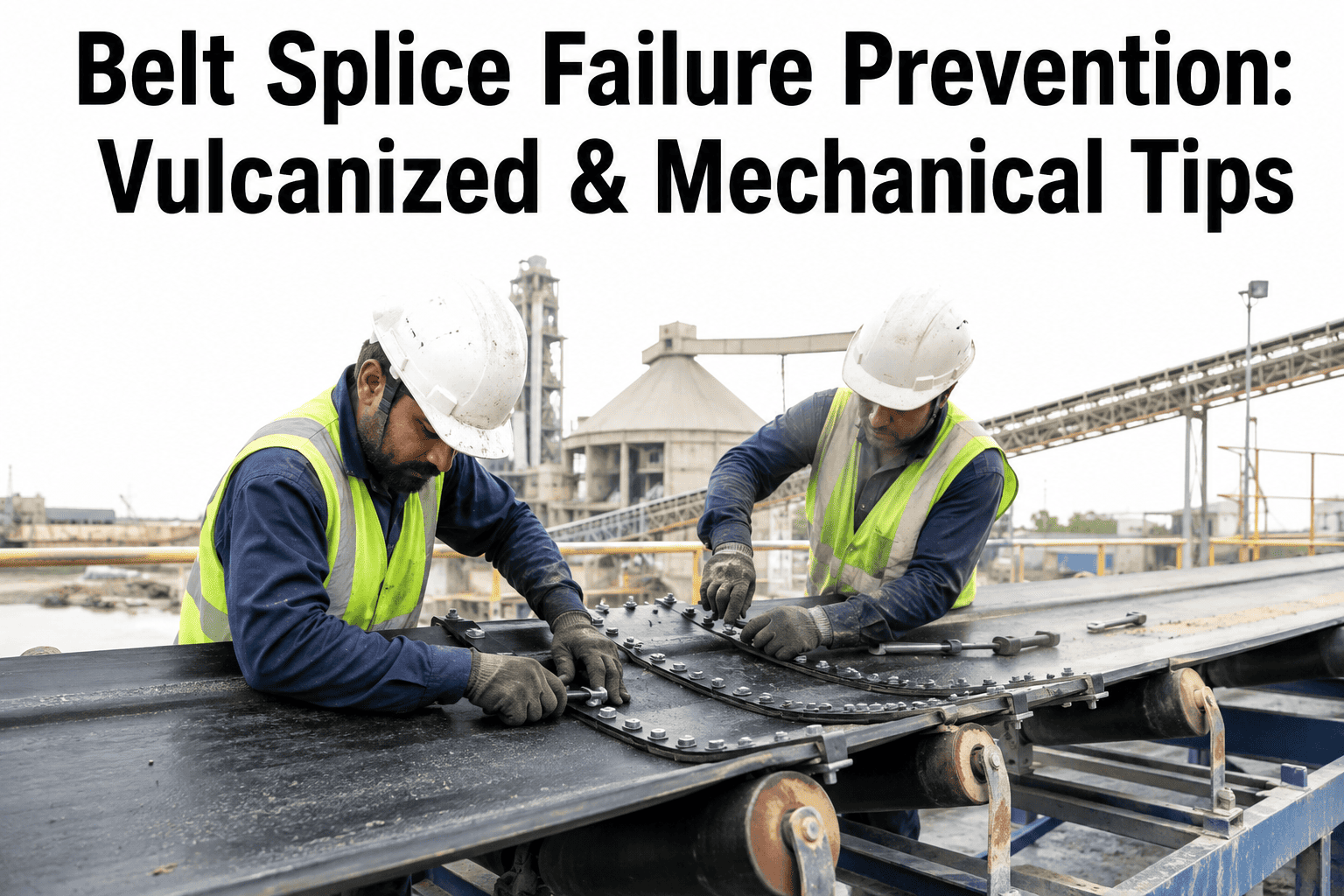
Every conveyor belt in a cement plant is only as strong as its weakest joint, and that joint is almost never the belt material itself — it's the splice. A splice done wrong, or matched to the wrong application, becomes the first place a belt fails: it opens under tension, catches on a scraper, or lets material spill at exactly the point everyone assumed was solid. Picking between mechanical fasteners, cold vulcanizing, and hot vulcanizing is a decision that determines splice life for years, not a formality to rush through. iFactory's conveyor monitoring platform helps plants track splice condition long after installation, not just at the moment it's made.
Conveyor Belt Splicing, Vulcanizing & Repair for Cement Plants
Three Ways to Join a Belt
Which Method Fits Which Situation
There is no universally "best" splice method — each one trades speed against long-term strength, and the right answer depends on how the belt is used, not just how fast the repair needs to happen. The comparison below reflects how these three methods are typically matched to application.
| Factor | Mechanical | Cold Vulcanized | Hot Vulcanized |
|---|---|---|---|
| Splice strength | Lowest of the three | Moderate | Highest — up to 90% of belt strength |
| Downtime to complete | Shortest | Moderate | Longest |
| Best for | Temporary or lightweight belts | Rapid repairs, small damaged areas | Heavy-duty, permanent, high-tension belts |
| Weather resistance | Lower — fasteners can loosen over time | Good | Best — fully sealed against moisture |
| Skill required | Moderate | High | Highest — specialized equipment and training |
One consideration that overrides all others: if a belt cleaning system runs close to the splice, mechanical fasteners can catch on the scraper blade — hot or cold vulcanizing avoids that risk entirely. Talk to our conveyor team about which method fits your belt cleaning setup.
The Hot Vulcanizing Procedure
Splicing Materials: Why Climate Matters
Splicing rubber and adhesive selection isn't one-size-fits-all across a company's global operations. Mining and cement plants at high altitude or in very cold conditions need adhesives formulated to cure properly at lower ambient temperatures, while plants in hot, humid climates need materials that won't degrade prematurely from heat exposure at the splice. Using a generic splicing material without matching it to the site's operating climate is a common, avoidable reason a splice underperforms its rated tensile strength even when the procedure itself was executed correctly.
Signs a Splice Needs Attention Before It Fails
Catching splice degradation early turns a planned repair into a five-minute inspection instead of an unplanned belt-down event. Want to see continuous splice condition monitoring on your own conveyors? Book a 30-minute demo.
Getting Splicing Right the First Time
Splice failures don't just cost the price of a repair — they can injure the crew doing the splicing, damage adjacent equipment when a joint lets go under load, and trigger unplanned downtime that a scheduled repair never would have. Belt manufacturers publish splicing specifications for a reason: matching the wrong splicing material, skipping the stair-step preparation, or under-curing a hot splice all quietly reduce tensile rating even when the finished joint looks fine on the surface. Whenever a vulcanized splice is contracted out, confirming the service provider is certified by the belt manufacturer and follows the manufacturer's documented procedure is the simplest safeguard against a splice that fails well before its expected service life.
Documentation matters here just as much as it does anywhere else in a reliability program. A splice record noting the method used, the materials and batch numbers, the technician, the cure parameters if hot vulcanized, and the date should be attached to the conveyor asset the same way an alignment reading or a bearing replacement would be. When a splice does eventually fail, that record is often the fastest way to tell whether the failure was a materials issue, a procedure issue, or simply the splice reaching the natural end of a long service life — and that distinction determines whether the fix is a training conversation or a supplier conversation.
Storing Belt and Splicing Materials Correctly
A splice can only be as good as the materials that go into it, and splicing rubber, adhesives, and reinforcement fabric all degrade well before their expiration date if stored incorrectly. Splicing rubber should be kept cool and away from direct sunlight, since UV exposure and heat both accelerate premature curing that leaves the material unusable by the time it's needed at the press. Cold vulcanizing adhesives are particularly sensitive to storage temperature — many formulations have a minimum and maximum storage temperature range, and cycling outside that range repeatedly, such as storing containers near a loading dock door that swings between hot days and cold nights, shortens shelf life meaningfully even if the material still looks fine when opened. Belt stock itself should be stored on its original reel or rolled correctly rather than folded, since a sharp fold in stored belting can create a permanent crease that becomes a weak point once the belt is installed and under tension.
Rotating stock on a first-in, first-out basis matters more for splicing materials than most plants realize, since a maintenance storeroom that reaches for whatever's closest rather than the oldest batch first can end up applying expired adhesive to a splice without anyone noticing until it fails prematurely. Labeling received date clearly on splicing kits, and checking shelf life against the manufacturer's stated limit before every splice job — not just when a kit looks obviously old — is a small habit that prevents an otherwise well-executed splice from failing for a completely avoidable reason.