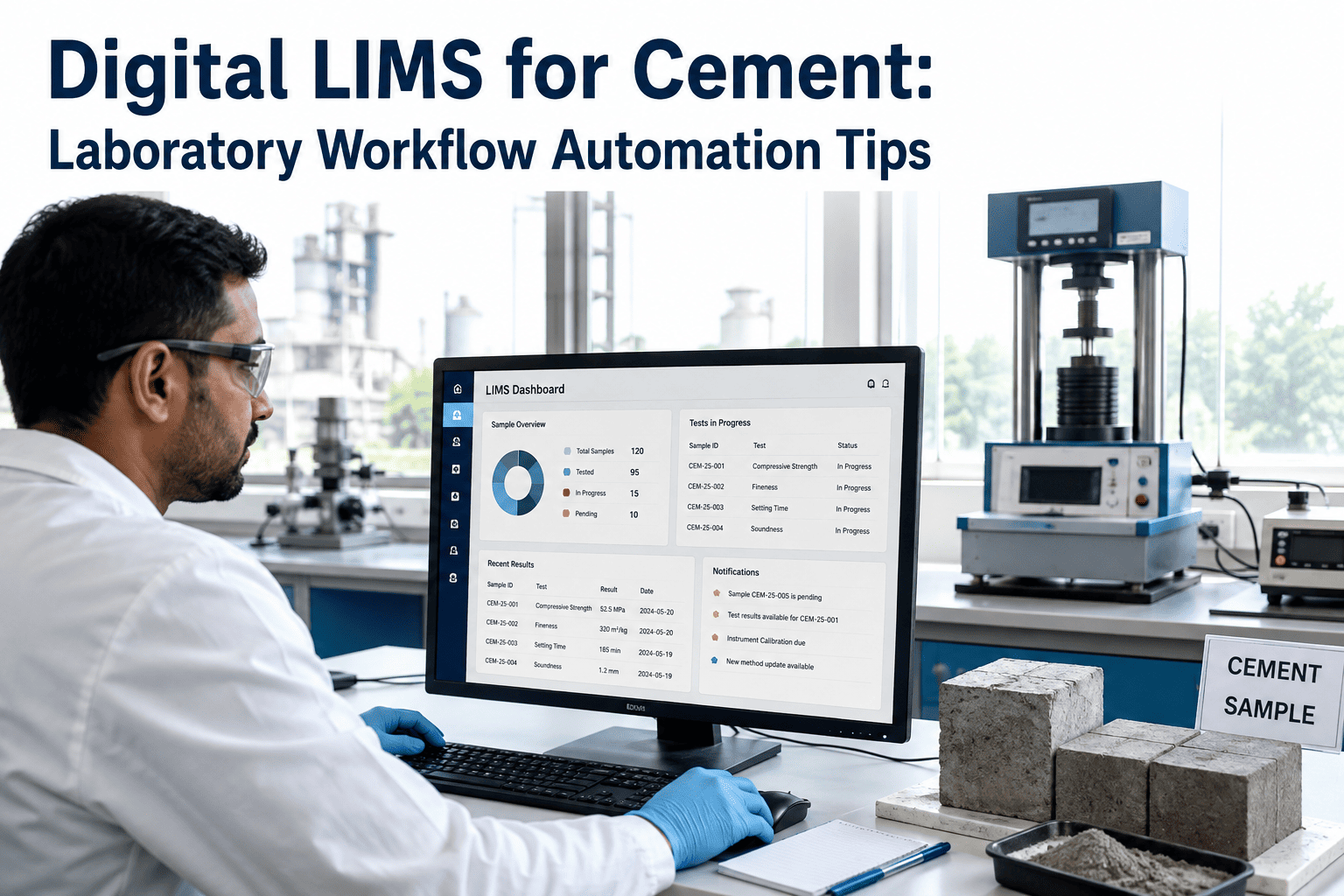
A cement plant's kiln does not wait for a lab technician to finish a titration. Free lime results, fineness checks, and compressive strength projections all move on their own clock, and in most plants that clock still runs on paper logbooks, spreadsheet re-entry, and a technician walking a result sheet from the lab bench to the control room. The gap between "sample collected" and "result actioned" is where clinker quality drifts, where a raw mix correction gets applied an hour later than it should, and where a shift supervisor makes a blend decision on yesterday's numbers because today's have not been transcribed yet. Digital LIMS closes that gap by turning sample registration, test execution, and result routing into a connected workflow instead of a chain of manual handoffs, and plants evaluating what that transition actually involves can Book a Demo to see the workflow mapped against their own lab.
DIGITAL LIMS · CEMENT LABORATORY AUTOMATION · SAMPLE-TO-RESULT WORKFLOW
Digital LIMS for Cement: Laboratory Workflow Automation That Keeps Pace With the Kiln
Sample registration, automated test scheduling, instrument-linked result capture, and direct integration with kiln and mill control — built for the pace cement quality control actually runs at.
70%
Reduction in sample-to-result time
24/7
Continuous test scheduling coverage
Zero
Manual transcription steps between LIMS and DCS
100%
Audit-traceable result chain of custody
The Paper-to-PLC Gap: Why Manual Cement Lab Workflows Cost Production Time
A typical integrated cement plant runs hourly or two-hourly sampling on raw meal, kiln feed, and clinker, alongside shift-based testing on cement fineness, setting time, and periodic compressive strength. In a manual lab, each of those samples generates a paper log entry, a physical test, a handwritten result, a spreadsheet transcription, and — if the result is out of specification — a phone call or a walk to the control room to flag it. Every one of those handoffs is a place where a result sits idle waiting for the next person to act on it, and where the number that eventually reaches the kiln operator has already aged past the point where it reflects current process conditions. None of this is a training or effort problem; it is a structural limit of a paper-based process that no amount of technician diligence can fully compensate for.
The arithmetic compounds across a shift. If a free lime result takes forty minutes from sample collection to being read out to the control room — five minutes to collect, ten to prepare and test, ten to record and verify, fifteen to walk or relay the number — the kiln has already burned through a meaningful tonnage of clinker under whatever mix ratio was set before that result existed. Multiply that lag across every sample in a 24-hour cycle and the plant is effectively running open-loop quality control with a data feed that is perpetually behind the process it is supposed to be correcting. Digital LIMS does not make the chemistry faster, but it collapses every non-chemistry step in that chain — the walking, the re-keying, the verbal relay — down to something closer to instantaneous.
Manual / Paper-Based Lab Workflow
Sample registrationHandwritten log, no timestamp integrity
Result captureManual entry from instrument display
Out-of-spec flaggingDepends on technician noticing and calling
Result-to-control-room delay20–45 minutes typical
Audit trailPaper archives, gaps common
Cross-shift visibilityLimited to handover notes
Digital LIMS Workflow
Sample registrationBarcode/RFID, automatic timestamping
Result captureDirect instrument interface, no re-keying
Out-of-spec flaggingAutomatic alert against spec limits
Result-to-control-room delayNear real-time, system-pushed
Audit trailFull electronic chain of custody
Cross-shift visibilityLive dashboard, all shifts
The plants that get the most value from this shift are not necessarily the ones with the worst paper processes — they are the ones running tight quality windows where every minute of lag has a real cost, whether that cost shows up as clinker reprocessing, cement strength giveaway from over-conservative blending, or kiln instability from a raw mix correction applied too late to matter.
There is also a second, quieter cost that rarely shows up in a single shift's numbers but accumulates over a quarter: variability itself. When results arrive late and inconsistently, operators tend to compensate by running the process more conservatively than the chemistry actually requires — holding a slightly richer fuel mix, targeting a slightly lower free lime than the specification demands, or blending in more safety margin on cement strength than the market needs. That conservatism protects against the risk of acting on stale data, but it also quietly erodes efficiency, since every unit of unnecessary margin is fuel, raw material, or clinker factor spent defending against a data-lag problem rather than a chemistry problem. Closing the lag does not just speed up existing decisions — it changes how tightly a plant is willing to run in the first place.
SAMPLE REGISTRATION · TEST WORKFLOW · RESULT ROUTING
See the Workflow Mapped Against Your Own Lab Floor
iFactory walks through your current sample flow — raw meal, kiln feed, clinker, cement — and shows exactly where a digital LIMS layer removes manual handoffs without changing your test methods.
Inside a Digital LIMS: The Automation Layers That Replace Manual Steps
A digital LIMS is not one feature — it is a stack of connected automation layers, each replacing a specific manual step in the sample-to-result chain. Understanding what each layer actually does is the difference between evaluating a vendor on a feature checklist and understanding what changes on the lab floor the day it goes live. The eight layers below cover the full path a sample takes from arrival at the lab bench to an approved result influencing a production decision.
01
Barcode & RFID Sample Registration
Every sample is labeled at the point of collection and scanned into the system, eliminating handwritten logs and guaranteeing an unbroken timestamp from collection through disposal.
02
Automated Test Scheduling
Time-based, event-based, and quality-triggered test schedules are generated automatically, so a technician works from a live queue rather than a memorized routine or a wall chart.
03
Direct Instrument Interfacing
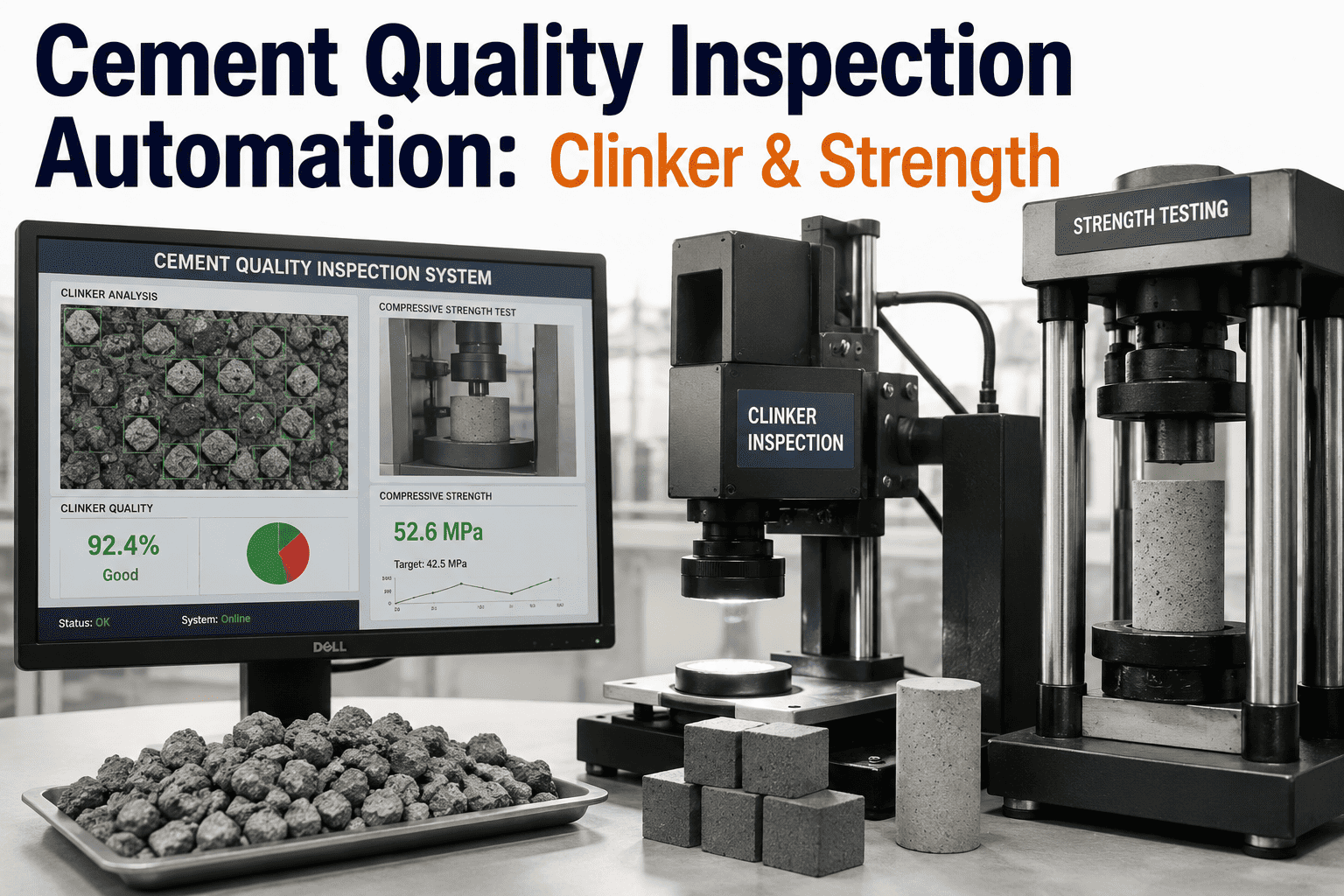
X-ray fluorescence analyzers, Blaine fineness testers, and compressive strength frames feed results directly into the LIMS, removing the manual transcription step that introduces both delay and error.
04
Automated Calculation & Specification Flagging
Free lime, LSF, silica ratio, and alumina ratio are calculated the instant raw results land, with out-of-specification values flagged automatically against configured control limits.
05
Electronic Approval Routing
Results route to the correct approver automatically based on test type and deviation severity, replacing the walk-to-the-office or wait-for-signature step that stalls low-risk results unnecessarily.
06
Result-to-DCS Integration
Approved quality results push directly into the plant's distributed control system, making the number available to the kiln operator's screen without a phone call in between.
07
Electronic Audit Trail
Every entry, edit, and approval is logged with user, timestamp, and reason code, producing the traceability record that quality certification audits and customer complaint investigations both depend on.
08
Cross-Shift Live Dashboard
Incoming shifts see the current quality picture — recent results, open deviations, pending retests — the moment they log in, rather than reconstructing it from a handwritten handover note.
From Result to Setpoint: How LIMS Data Closes the Loop With Kiln and Mill Control
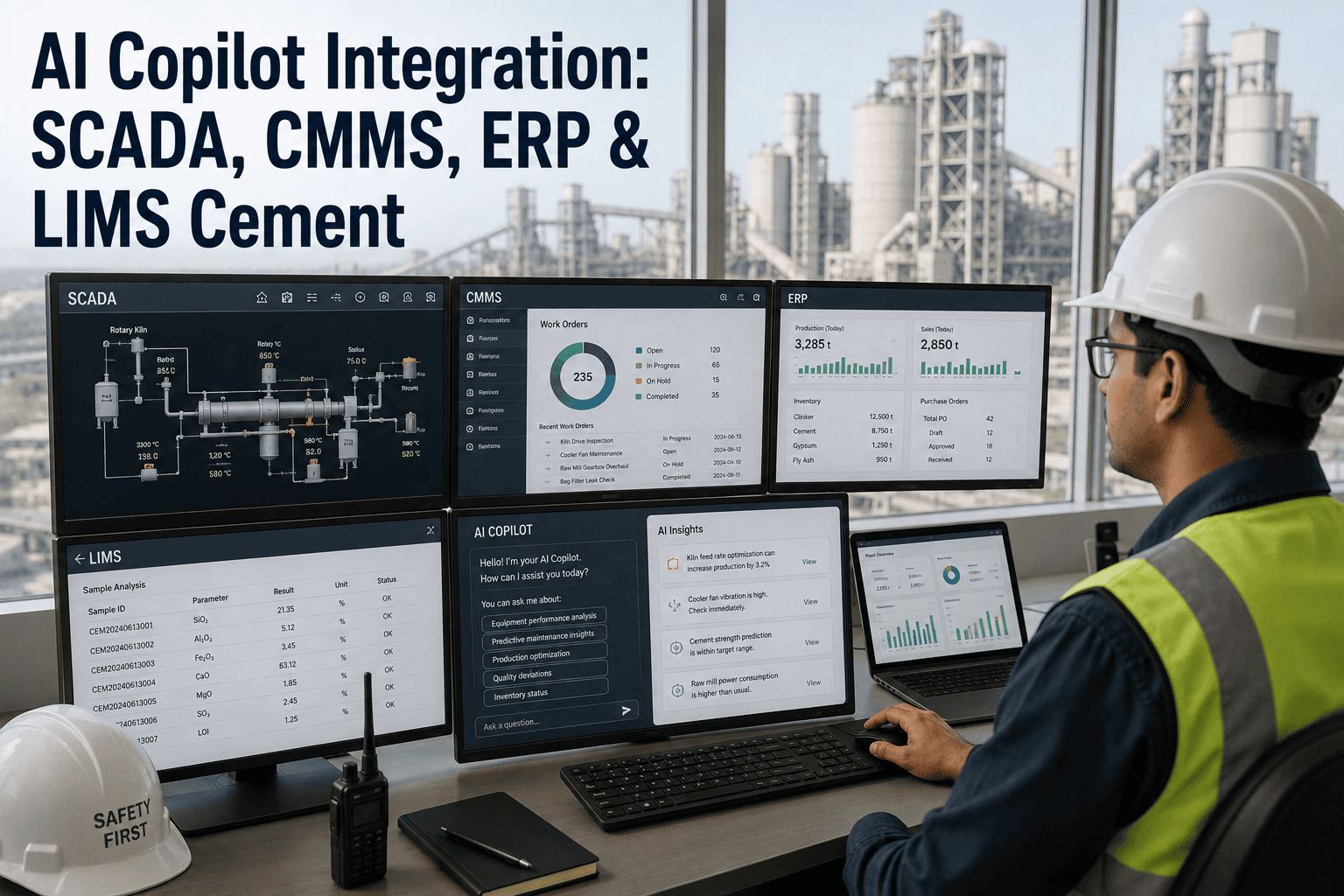
The highest-value integration a digital LIMS offers a cement plant is not inside the lab at all — it is the connection between the lab and the process control system. A free lime result, a fineness reading, or a raw meal chemistry check only creates operational value once it changes something in the kiln or the mill, and in a manual workflow that translation from lab number to process setpoint depends entirely on a human relaying the information accurately and promptly.
When LIMS results push directly into the DCS or a quality-based control layer sitting on top of it, that translation becomes structural rather than dependent on shift diligence. A free lime trend drifting toward the upper control limit can trigger an automatic recommendation — or in more mature deployments, a direct adjustment — to kiln feed rate or fuel split before the value actually breaches specification. A fineness result outside target can flag a mill separator speed adjustment the moment the Blaine test completes, rather than at the next scheduled operator round. This is not about removing operator judgment from the loop; it is about making sure the operator's judgment is applied to a number that is minutes old rather than the better part of an hour old.
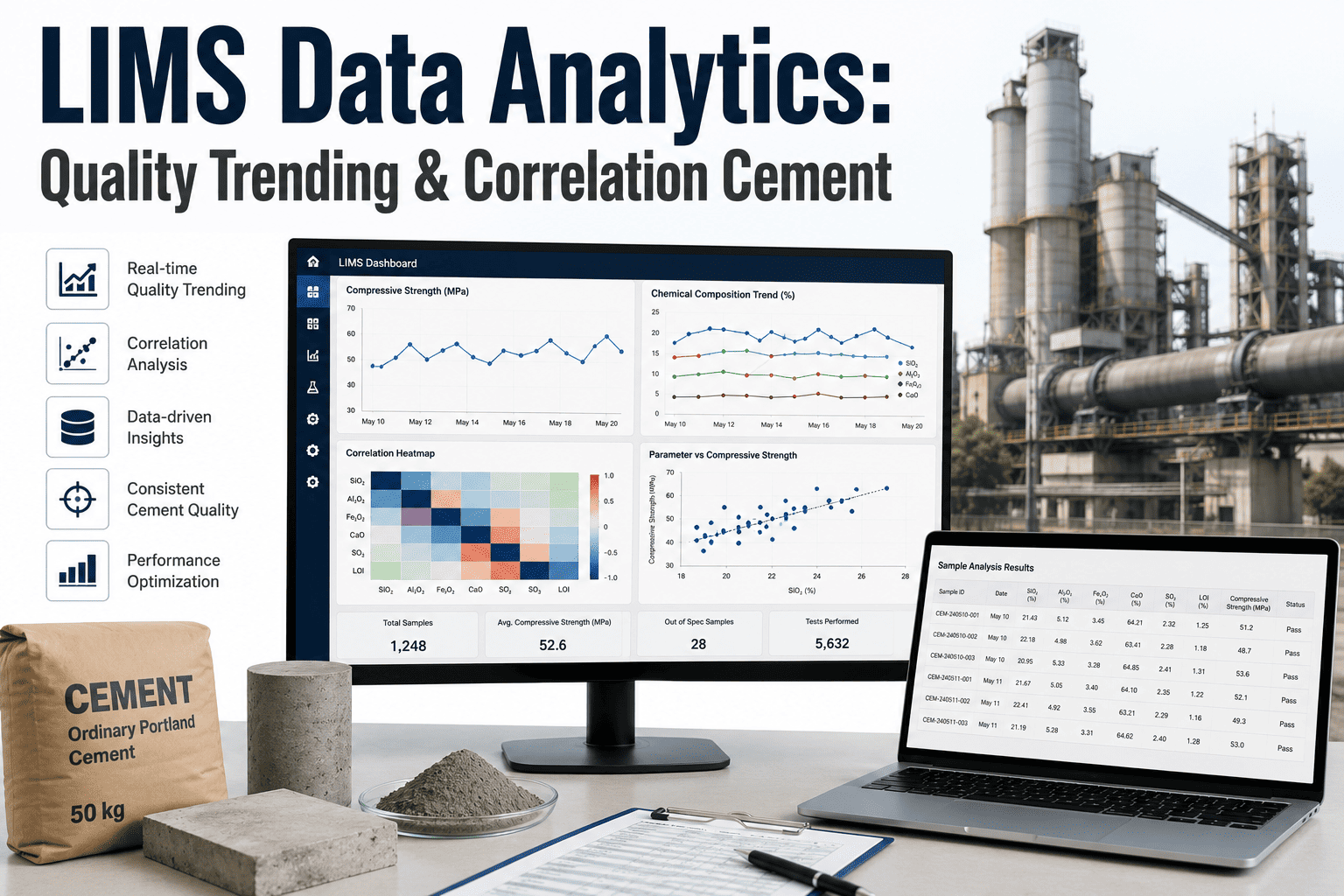
The correlation layer matters as much as the speed layer. A digital LIMS with analytics built on top of it does not just deliver individual results faster — it tracks how raw mix chemistry correlates with clinker free lime over time, how mill fineness trends against cement strength development, and where a recurring pattern in the data points to a root cause that a single out-of-spec result would never reveal on its own. That correlation is where quality teams move from reacting to individual deviations toward preventing the conditions that produce them.
This is also where the quality lab starts to function less like a downstream checkpoint and more like an upstream input to production planning. A raw material supplier whose limestone consistently trends toward the low end of an acceptable CaCO3 range can be flagged from months of correlated LIMS data long before any single delivery triggers an out-of-spec raw mix reading. A mill that shows a slow, steady drift in fineness-to-strength correlation across several weeks can prompt a maintenance inspection before that drift ever produces a customer-facing strength complaint. None of this requires new sensors or new test methods — it requires the lab's existing result stream to be structured and timestamped consistently enough that trend analysis is actually possible, which is precisely what a manual paper log makes difficult at scale.
The Numbers: What Cement Plants Recover After LIMS Automation
70%
Typical reduction in sample-to-result turnaround time
30–40%
Reduction in transcription-related data errors
2–3x
Faster out-of-spec response after automated flagging
Hours
Saved per shift on manual logging and re-entry
Full
Chain-of-custody traceability for certification audits
Fewer
Off-spec clinker and cement batches reaching dispatch
These figures are directional rather than a guarantee for every plant — the actual recovery depends on current lab maturity, sampling frequency, and how tightly quality control is already coupled to process control. But the pattern holds consistently across implementations: the largest gains come not from making any single test faster, but from removing the dead time between steps that a manual process cannot avoid regardless of how skilled the lab team is.
It is worth separating the two categories of return a LIMS rollout typically produces, because they show up on different timelines. The first category — turnaround time, error reduction, and labor hours saved — is visible almost immediately, often within the first month of a phase going live, since it comes directly from removing manual steps that were there before. The second category — fewer off-spec batches, tighter quality margins, and reduced raw material waste from over-conservative blending — accumulates more gradually as the plant's quality team gains confidence in faster, more reliable data and begins running closer to true specification limits instead of defensive ones. Plants that evaluate LIMS purely on the first category tend to underestimate the total return, since the second category is usually the larger number over a full year of operation.
Rolling Out Digital LIMS: A Phased Implementation Path
01
Baseline the Current Workflow
Map every sample type, current test frequency, and every manual handoff from collection to control-room notification, so the rollout plan targets the actual bottlenecks rather than assumed ones.
02
Digitize Sample Registration First
Barcode or RFID registration is the lowest-disruption starting point — it requires no change to test methods and immediately establishes reliable timestamps for every sample entering the lab.
03
Connect High-Volume Instruments
Interface the instruments generating the highest sample volume first — typically XRF and Blaine testers — to capture the largest share of manual transcription eliminated per rollout phase.
04
Enable Automated Flagging and Routing
Configure specification limits and approval routing rules so out-of-spec results reach the right person automatically, closing the largest remaining source of response delay.
05
Integrate With DCS and Build Trend Analytics
Push approved results into the control system and layer trending and correlation analytics on top, moving the lab from a reactive testing function to a proactive quality-control input.
PHASED ROLLOUT · NO CHANGE TO TEST METHODS · LIVE IN WEEKS
Start With the Highest-Impact Phase, Not a Full Lab Overhaul
Most iFactory LIMS rollouts begin with sample registration and high-volume instrument integration alone — delivering measurable turnaround improvement before a single test method changes.
What Digital LIMS Doesn't Replace — And Where Human Judgment Still Matters
01
Test method expertise. LIMS automates workflow and data handling, not the chemistry itself — a trained technician's judgment on sample preparation and test execution remains essential to result quality.
02
Root-cause investigation. Automated flagging tells you a result is out of specification; determining why — raw material variability, equipment drift, process upset — still requires an engineer reviewing the correlated data.
03
Calibration and instrument maintenance. A LIMS interface only reports what the instrument measures accurately — regular calibration discipline remains a physical, human-managed task the software cannot substitute for.
04
Final process decisions near control limits. Automated recommendations for kiln feed or mill adjustment are most valuable as decision support — plants closest to their quality envelope typically keep an operator confirming the final call.
The realistic framing is that digital LIMS removes the parts of the workflow that add delay without adding judgment — logging, transcription, relay, and manual routing — and leaves the parts that genuinely require a trained person exactly where they are. That distinction matters when planning a rollout, because it sets expectations correctly with the lab team from day one: the software is there to remove the parts of the job that were never really about chemistry in the first place, freeing technicians to spend more of a shift on sample preparation quality and test execution rather than paperwork. Plants deciding how to sequence a rollout around their existing team structure can contact iFactory Support to walk through staffing and workflow implications before committing to a phase plan.
Frequently Asked Questions: Digital LIMS for Cement Laboratories
How long does a digital LIMS rollout take for a single cement plant lab?
A phased rollout covering sample registration and the highest-volume instrument integrations typically reaches a working state within a few weeks, since these phases require no change to existing test methods or accreditation. Full deployment including DCS integration, approval routing configuration, and trend analytics generally extends the timeline further, depending on how many instrument types and control-system interfaces are involved. Plants with an existing digital quality system tend to move faster than those digitizing from a fully paper-based process. Teams can
Book a Demo to get a realistic timeline estimate based on their current lab setup.
Does digital LIMS require replacing existing lab instruments?
In most cases, no. Digital LIMS platforms are built to interface with the instrument fleet a plant already operates — XRF analyzers, Blaine fineness testers, compressive strength frames, and moisture analyzers — through standard data output ports or middleware connectors rather than requiring hardware replacement. The exception is genuinely legacy equipment with no digital output at all, where a manual entry bridge may be used until the instrument is naturally replaced. This keeps the capital cost of a LIMS rollout focused on software and integration rather than new lab hardware.
How does automated specification flagging reduce off-spec product reaching dispatch?
Automated flagging compares every incoming result against configured control limits the instant the result lands in the system, rather than depending on a technician noticing a deviation while working through a stack of samples. This closes the window between a result going out of specification and someone acting on it, which is precisely the window during which off-spec clinker or cement can continue moving through production or into dispatch. Combined with electronic approval routing, flagged results reach the responsible engineer automatically instead of waiting for the next scheduled review.
Can LIMS data actually trigger changes to kiln feed rate or mill settings automatically?
Yes, in plants where the LIMS is integrated with the distributed control system or a quality-based control layer sitting above it. Free lime trends, raw mix chemistry, and fineness results can feed directly into control logic that recommends or, in more mature deployments, directly adjusts feed rate, fuel split, or separator speed. Most plants start with the LIMS pushing recommendations to an operator screen for confirmation before moving toward more automated adjustment, particularly for setpoints close to the edge of the acceptable quality envelope.
What happens to the paper and spreadsheet records a plant already has when moving to digital LIMS?
Historical paper logs and spreadsheet archives are typically retained as-is for audit continuity rather than retroactively digitized in full, since the value of digital LIMS comes from how new samples are processed going forward rather than reconstructing historical records. Some plants choose to digitize a defined lookback period — commonly the most recent one to two years — to support trend analytics from day one, while older archives remain accessible in their original format for compliance reference. This staged approach keeps the migration effort proportional to the actual analytical value of the older data rather than treating every historical record as equally worth digitizing. Plants unsure how much historical data migration makes sense for their situation can
contact iFactory Support to scope it correctly before rollout.
DIGITAL LIMS · WORKFLOW AUTOMATION · KILN & MILL INTEGRATION
Move Your Lab From a Paper Trail to a Live Quality Feed
iFactory connects sample registration, instrument data, and specification flagging directly into your process control system — so every result reaches the kiln operator while it still reflects current conditions.