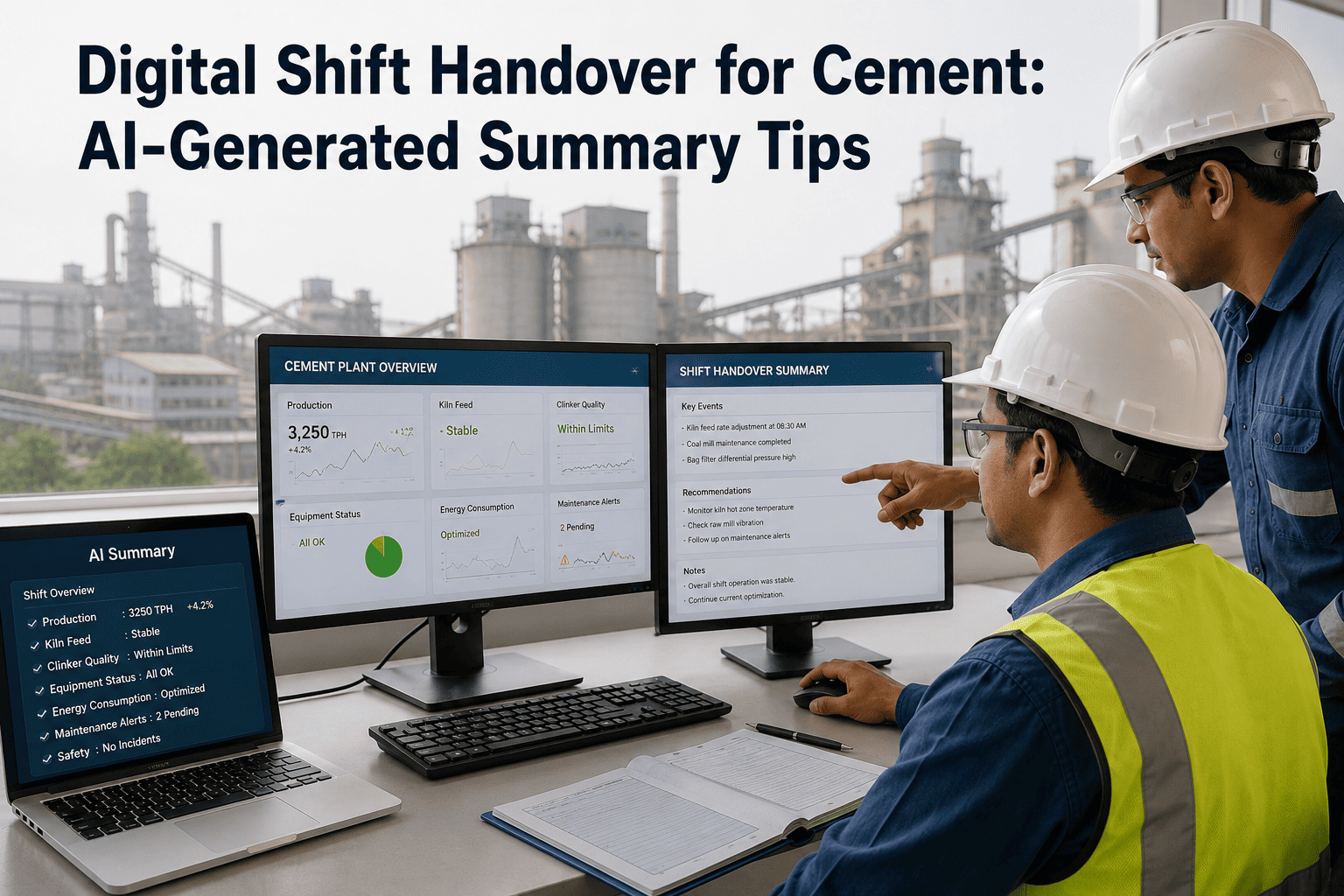
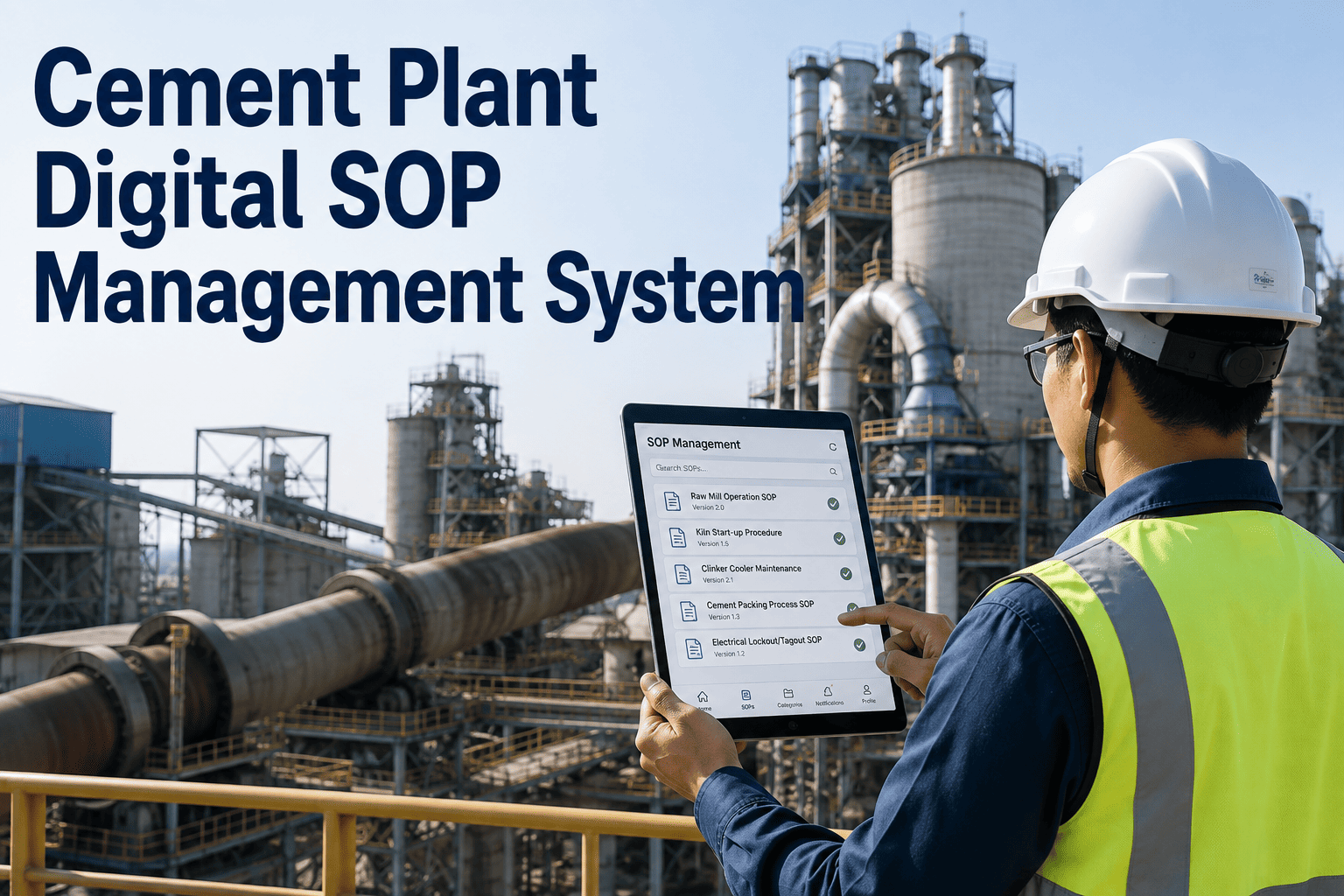
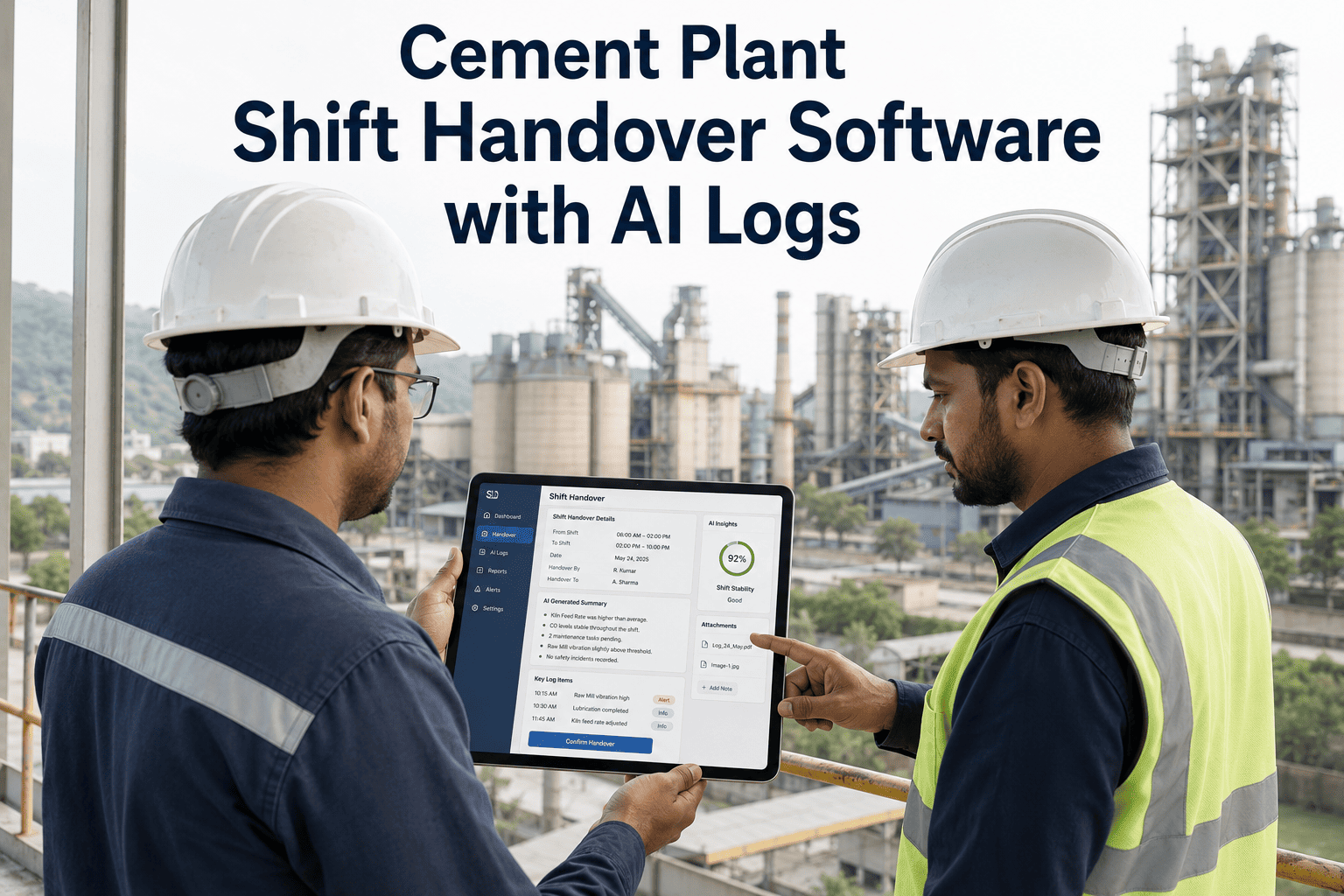
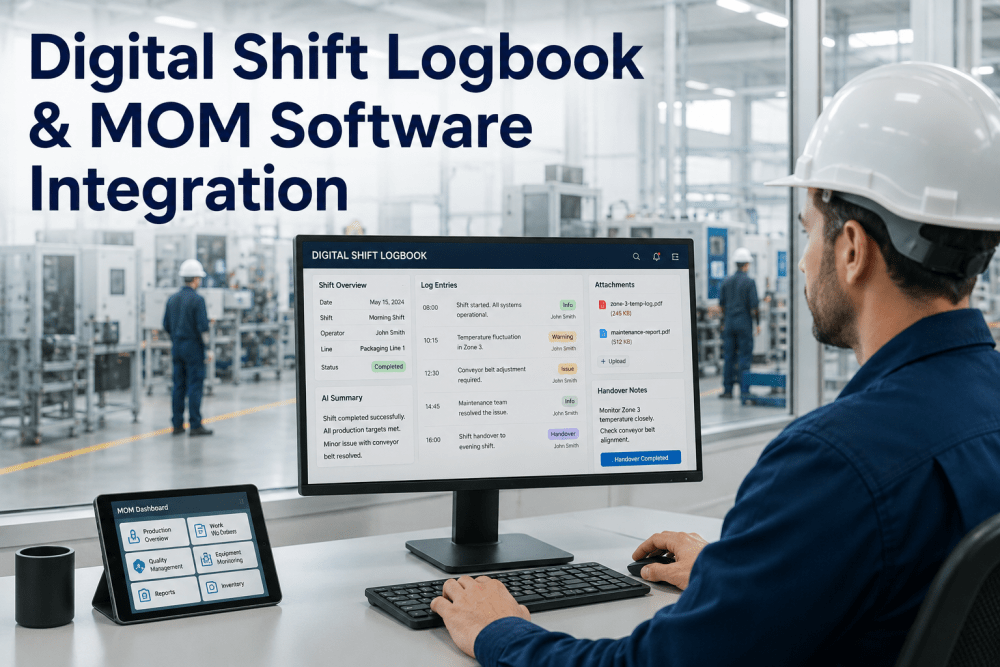
A cement plant never really stops, which means the handover between shifts happens whether anyone is ready for it or not. Too often that handover is a five-minute conversation at the end of a long night, relying on one tired supervisor remembering everything that mattered across twelve hours — a kiln upset at 2 AM, a quality result that came back borderline, a maintenance request that never got logged. Whatever doesn't get said out loud in that five minutes simply doesn't make it to the next shift, and the incoming team starts their day rediscovering problems the outgoing team already knew about. An AI-generated handover summary pulls from the shift's actual logged data instead of memory, so nothing depends on what one person happened to remember to mention on their way out the door.
Digital Transformation · Shift Handover Automation
Digital Shift Handover for Cement Plants: AI-Generated Summaries That Actually Cover the Shift
iFactory turns twelve hours of kiln readings, quality checks, downtime events, and open action items into a structured handover summary the incoming shift can read in minutes — instead of relying on a rushed conversation and whatever the outgoing supervisor happens to remember. Every summary draws from the same data the plant is already generating, so building it takes nothing away from anyone's time on the floor.
24/7
Continuous data capture across every shift
Minutes
To read a full shift summary
0
Reliance on memory at handover
Three Shifts, Three Ways It Breaks
Where Verbal Handover Actually Fails
Day Shift
Too Busy to Document Everything
Day shift runs the most visitors, meetings, and production changes, leaving the least time to write anything down before the handover conversation starts.
Evening Shift
Caught Between Two Incomplete Pictures
The evening team inherits whatever day shift managed to mention, then has to pass along both that and their own events to a night crew that's often short-staffed for a full conversation.
Night Shift
Handover Happens at the Worst Possible Hour
A 6 AM handover after a long night is when memory is least reliable, yet it's often the shift carrying the most unresolved issues from overnight upsets.
The problem isn't any one shift doing a poor job — it's that every shift is asking one exhausted person to reconstruct twelve hours of events from memory, at exactly the point in the day when that's hardest to do well.
What Actually Changes
Verbal Handover vs. AI-Generated Summary
The two approaches aren't just different in format — they change what actually survives the handover, and how much of it is left to chance.
| Aspect | Verbal Handover | AI-Generated Summary |
| Source of information |
Whatever the outgoing supervisor remembers |
Every logged reading, alert, and event from the shift |
| Consistency |
Varies by who's handing over |
Same structure and coverage every time |
| Time required |
A rushed five to ten minute conversation |
A few minutes to read before the shift starts |
| Record kept |
Nothing written down beyond a quick note |
A searchable summary tied to the shift's actual data |
| Open items |
Easy to forget to mention |
Automatically carried forward until resolved |
How It's Built
From Raw Shift Data to a Summary the Next Team Can Actually Use
1
Data Captured Continuously
Kiln readings, quality results, downtime events, and operator notes are logged throughout the shift as they happen, not reconstructed afterward from memory once the shift is already winding down.
2
Anomalies and Alerts Flagged
Quality results outside spec, unplanned downtime, and equipment alarms are automatically marked as items that matter for the next shift to know, rather than blending into the rest of the shift's routine data.
3
Summary Drafted Automatically
The shift's data is condensed into a plain-language summary covering equipment status, quality alerts, and anything still unresolved, without anyone typing a report by hand.
4
Reviewed and Handed to the Next Shift
The outgoing supervisor reviews the draft, adds anything worth flagging in person, and the incoming team starts their shift already caught up.
See a Real Shift Summary
Walk Through an Example Handover Summary Built From Real Shift Data
We'll show you what a full twelve-hour shift looks like once it's condensed into a summary — equipment status, quality alerts, and open items included.
What's Inside
What Every Handover Summary Actually Covers
Equipment Status
A clear read on which kiln, mill, and packer systems ran normally, which needed attention, and what condition they're in going into the next shift, so nobody starts their day assuming a machine is fine when it isn't.
Quality Alerts
Any result that fell outside spec during the shift, with enough context that the next team doesn't have to dig through the lab system to understand why, or whether a retest is already scheduled.
Downtime and Causes
What went down, for how long, and why — recorded when it happened instead of reconstructed from memory during the handover conversation, with enough detail that the next shift understands the full picture, not just the headline.
Open Action Items
Anything still unresolved carries forward automatically, so a maintenance request or a follow-up check doesn't quietly disappear between shifts, even if two or three handovers pass before it's finally closed.
A Composite Scenario
A Night Shift Kiln Upset, Told Twice
Before
A kiln upset at 2 AM was handled and stabilized by the night crew, but by the 6 AM handover the exhausted supervisor only mentioned it briefly. Day shift didn't realize a related quality check was still pending, and the same root cause showed up again two days later because nobody had formally logged the follow-up that was needed. By the time it resurfaced, the context from the original event had mostly faded from memory, so the second team was troubleshooting from scratch.
After
The 2 AM upset was logged the moment it happened, and the AI-generated summary handed to day shift included the event, the corrective action taken, and the still-open quality follow-up as a flagged item. The follow-up was completed within the day instead of resurfacing as a repeat issue, and the original event stayed searchable in case a similar pattern showed up again later.
Before You Start
Getting Ready for Digital Shift Handover
List what a good verbal handover currently covers today, so nothing that already works gets dropped once the digital version takes over
Identify which systems — kiln control, LIMS, maintenance logs — already hold the data a summary would draw from, and where the gaps are
Agree on how open action items get tracked and closed out across shifts
Run the summary alongside the usual verbal handover for a few weeks before relying on it fully
Common Questions
Digital Shift Handover — FAQ
Does an AI summary replace the in-person handover conversation?
No, and it isn't meant to. The summary gives the incoming shift a complete, accurate starting point so the in-person conversation can focus on judgment calls and context rather than trying to remember and repeat every reading from the last twelve hours. Most teams keep a short verbal handover alongside it.
Our team can walk through how the two typically work together.
Where does the data in the summary actually come from?
It's pulled from the same systems already running the plant — kiln and mill readings, LIMS quality results, downtime logs, and any digital forms operators fill out during the shift — rather than from a separate report someone has to write from scratch.
What happens to open items that don't get resolved in one shift?
They carry forward automatically into the next summary until they're marked resolved, so a pending quality follow-up or a maintenance request doesn't quietly fall off the radar just because a few shifts have passed since it was first logged.
Can supervisors edit or add to the summary before sending it on?
Yes. The generated summary is a starting draft that a supervisor reviews and can add context to before the shift change, so the final version reflects both the logged data and anything worth flagging in their own words.
Book a demo to see the review step in an actual walkthrough.
Is the handover history searchable later?
Yes. Past summaries stay accessible, so if a similar issue comes up again, the team can look back at how it was handled last time instead of relying on whoever happens to remember the earlier shift.
Stop Relying on a Five-Minute Conversation
Give Every Shift a Complete, Accurate Starting Point
iFactory turns your shift's kiln readings, quality checks, and downtime events into an AI-generated handover summary the next team can trust, day or night.