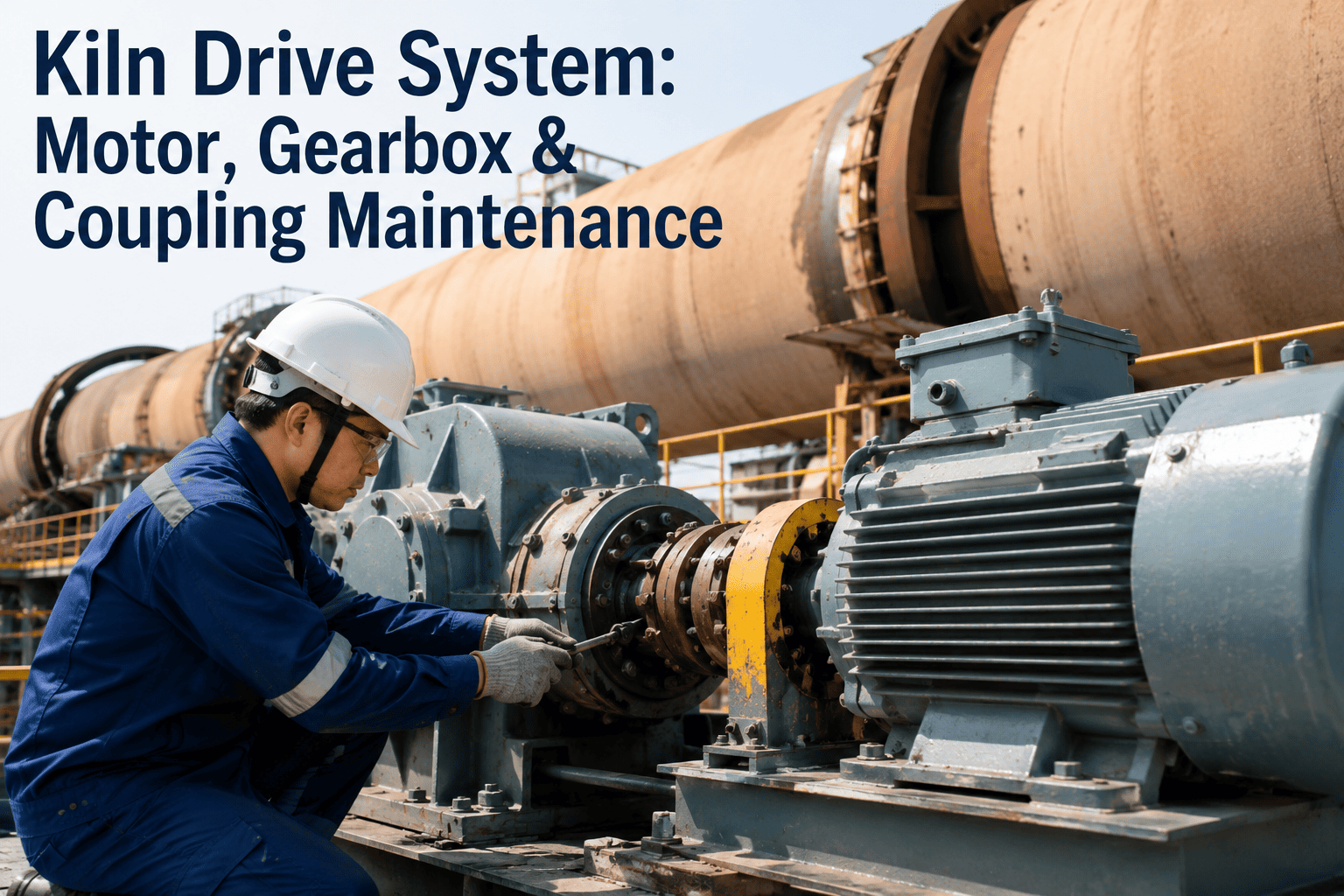
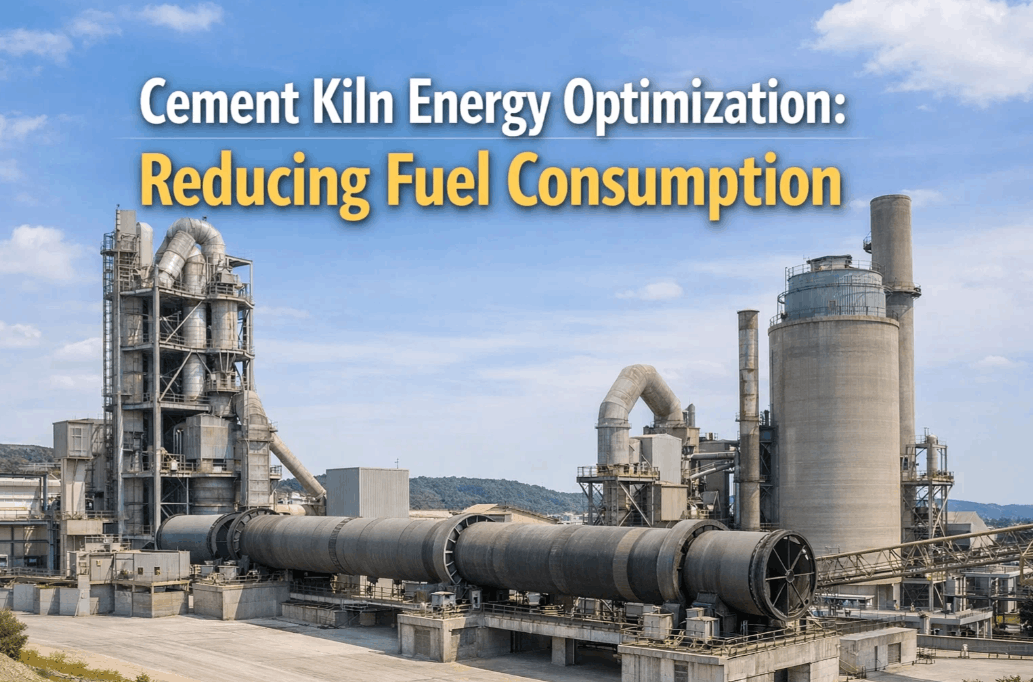
In the demanding environment of cement manufacturing, the kiln drive system stands as a critical nexus between process reliability and operational energy expenditure. The rotary kiln, often exceeding 100 meters in length and rotating at speeds between 0.5 to 5 rpm, relies on a precisely engineered drive assembly comprising high-torque electric motors, heavy-duty gearboxes, and sophisticated variable frequency drives (VFDs). The efficiency of this system directly dictates not only the electrical energy consumed per ton of clinker but also the mechanical longevity of rotating components subjected to immense thermal and mechanical stresses. Modern cement plants are now leveraging Industry 4.0 technologies, including real-time torque monitoring, AI-driven predictive maintenance, and advanced motor management, to achieve unprecedented levels of kiln drive optimization. This comprehensive guide delves into the technical intricacies of optimizing every element of the kiln drive system, from motor sizing and gearbox lubrication to VFD harmonic mitigation and auxiliary drive coordination. For a personalized assessment of your plant's kiln drive efficiency, Book a Demo with our experts today.
Transform Your Kiln Drive into a Profit Center
Unlock 15-25% energy savings and extend equipment life by 40% through precision motor and gearbox optimization. Our data-driven approach delivers measurable ROI in under 6 months.
Motor Sizing: The Foundation of Kiln Drive Efficiency
Proper motor sizing is the cornerstone of an optimized kiln drive. Oversized motors operate at low efficiency and poor power factor, while undersized motors risk overheating and premature failure.
Torque and Speed Requirements
The kiln drive motor must deliver sufficient starting torque to overcome the static friction of the kiln's mass, which can be 3 to 5 times the running torque. Running torque is primarily determined by the kiln's diameter, length, and the material load profile. Advanced motor selection uses dynamic simulation to model torque requirements across all operating phases, including cold start, warm restart, and normal production.
Efficiency Class and Load Profile
Modern IE4 and IE5 synchronous reluctance motors offer efficiency exceeding 96% at full load, but their performance at partial loads must be carefully evaluated. Kiln drives often operate at 60-80% of rated capacity, making partial-load efficiency a critical selection criterion. Pairing high-efficiency motors with VFDs allows the motor to operate at its optimal efficiency point across varying kiln speeds.
Load Analysis
Conduct a comprehensive torque and speed profile analysis using data loggers and power quality analyzers over a full production cycle.
Motor Selection
Choose motor type (induction, synchronous reluctance, or permanent magnet) based on efficiency, torque density, and VFD compatibility.
VFD Integration
Select a VFD with appropriate harmonic filtering, regenerative braking capability, and communication protocols for seamless integration.
Commissioning
Perform no-load and full-load tests, verify alignment, and fine-tune VFD parameters for optimal efficiency and torque control.
Motor Efficiency Comparison Across Technologies
| Motor Type | Efficiency at 100% Load | Efficiency at 75% Load | Efficiency at 50% Load | Power Factor |
|---|---|---|---|---|
| Standard Induction (IE3) | 94.5% | 93.8% | 91.2% | 0.85 |
| Premium Induction (IE4) | 96.0% | 95.5% | 93.8% | 0.88 |
| SynRM (IE5) | 96.8% | 96.5% | 95.2% | 0.95 |
| Permanent Magnet (IE5) | 97.2% | 97.0% | 96.0% | 0.97 |
Gearbox Maintenance: Prolonging Life and Enhancing Efficiency
The gearbox is the mechanical heart of the kiln drive, transferring motor torque to the kiln shell while reducing speed by ratios up to 1000:1. Gearbox failures account for nearly 30% of all kiln drive downtime.
Oil Analysis and Conditioning
Regular oil sampling for viscosity, acid number, water content, and particle count is essential. Implementing online oil condition monitoring sensors provides real-time data, enabling predictive oil changes and early detection of gear wear.
Gear Tooth Profile Optimization
Helical and double-helical gears are standard for kiln drives due to their smooth operation and high load capacity. Advanced profile modifications, such as tip relief and crowning, reduce stress concentrations and noise.
Bearing Health Monitoring
Vibration analysis focused on bearing frequencies (BPFI, BPFO, BSF) can detect spalling or misalignment months before failure. Integrating accelerometers with wireless data transmission enables continuous condition-based maintenance.
VFD Application: Precision Control and Energy Savings
Variable frequency drives enable precise kiln speed control, reduce inrush current, and provide significant energy savings through optimized motor operation.
Harmonic Mitigation
VFDs generate harmonic currents that can distort power quality and cause overheating in motors and transformers. Active front-end (AFE) drives or passive harmonic filters reduce total harmonic distortion (THD) to below 5%, complying with IEEE 519 standards.
Regenerative Braking
During kiln deceleration or when the kiln drives the motor (overhauling condition), regenerative braking can recover energy back to the grid. This is particularly beneficial in plants with multiple kilns or frequent speed changes.
Ready to Optimize Your Kiln Drive System?
Our experts will conduct a comprehensive audit of your motor, gearbox, and VFD setup, delivering a customized roadmap for energy savings and reliability improvement.
Auxiliary Drive Coordination
The auxiliary drive, typically a smaller motor and gearbox, is used for slow rotation during maintenance, startup, and cooldown. Proper management prevents mechanical stress and ensures safety.
Clutch and Decoupling Systems
Automatic clutches that engage the auxiliary drive only when needed reduce unnecessary wear and energy consumption. Advanced control systems synchronize the auxiliary drive speed with the main drive during transfer.
Emergency Backup Protocols
In the event of main drive failure, the auxiliary drive must be capable of rotating the kiln to prevent thermal distortion. Regular testing and automatic transfer switches ensure seamless operation.
Real-Time Monitoring with AI Analytics
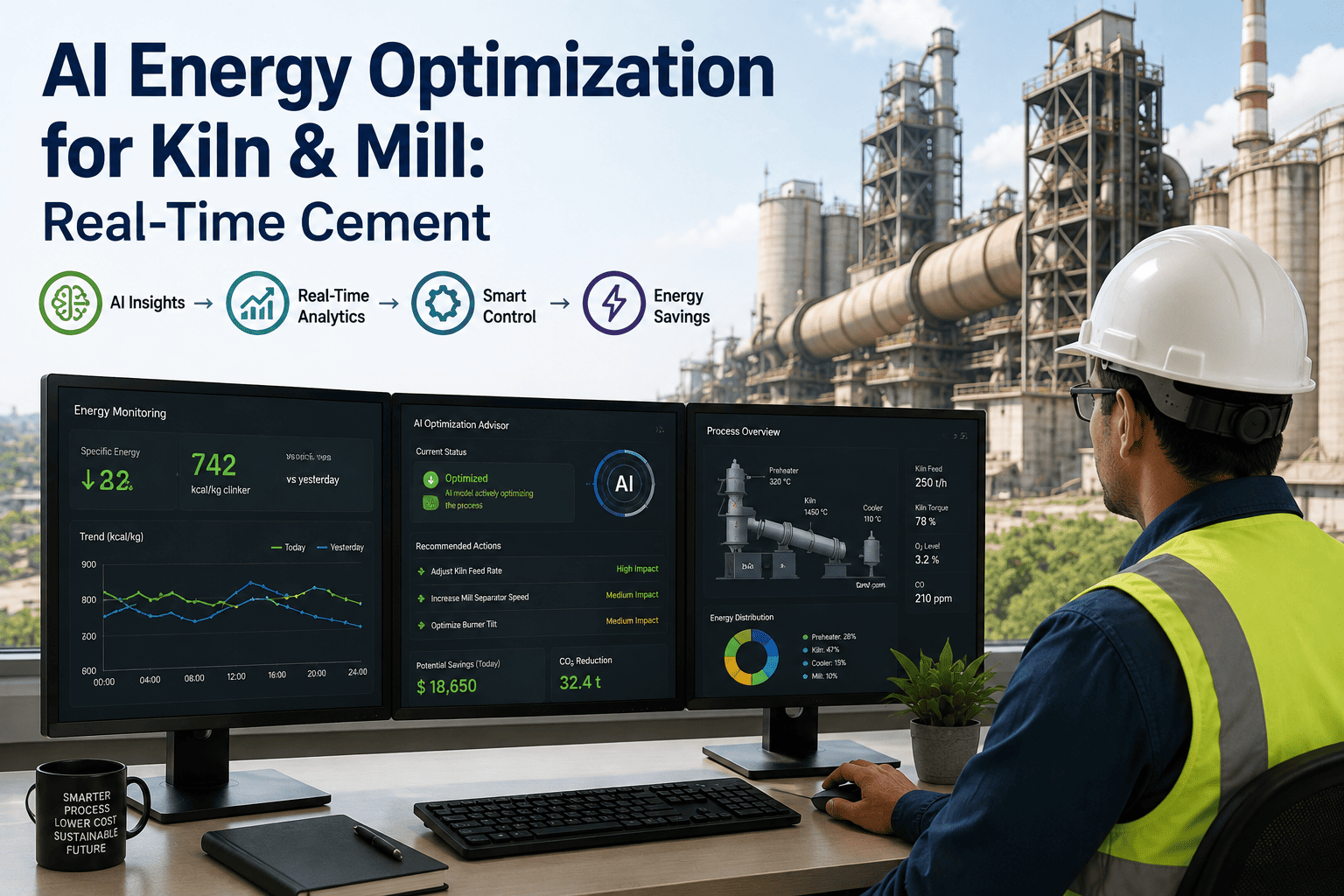
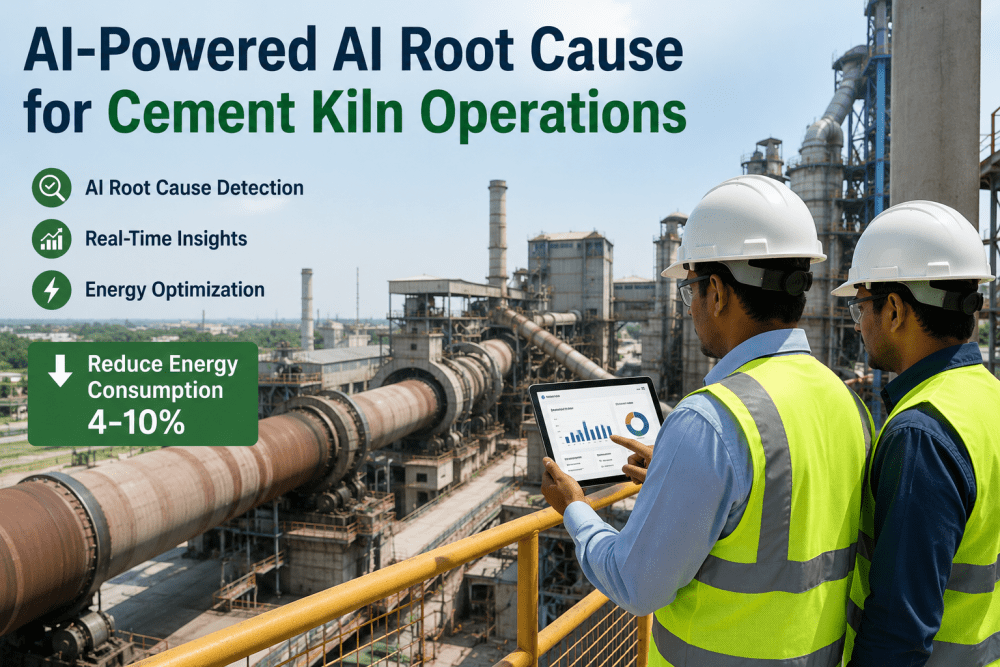
Industry 4.0 technologies enable continuous monitoring of motor current, torque, vibration, temperature, and oil condition. AI algorithms detect anomalies and predict failures before they occur.
Torque Monitoring
Using strain gauges or motor current signature analysis, real-time torque data helps optimize kiln loading and detect mechanical issues like ring gear wear.
Vibration Analysis
Wireless vibration sensors on motor bearings, gearbox input/output shafts, and kiln support rollers provide early warning of imbalance, misalignment, or bearing faults.
Thermal Imaging
Fixed thermal cameras monitor motor winding temperatures, gearbox surface temperatures, and VFD heat sinks, triggering alerts for abnormal thermal rise.
Energy Audit Framework for Kiln Drives
| Audit Step | Key Metrics | Tools Required | Expected Outcome |
|---|---|---|---|
| Baseline Measurement | Power consumption, speed, torque | Power quality analyzer, tachometer | Current energy usage profile |
| Motor Efficiency Test | Efficiency, power factor, load | Motor circuit analyzer | Identify motor loading and efficiency |
| Gearbox Condition Check | Vibration, oil analysis, temperature | Vibration meter, oil test kit | Gearbox health index |
| VFD Performance Analysis | THD, switching frequency, DC bus | Oscilloscope, VFD software | Harmonic compliance and efficiency |
| Recommendation Report | ROI, payback period, savings | Energy management software | Actionable optimization plan |
Case Study: 15% Energy Savings at XYZ Cement
A 5000 TPD cement plant in India implemented a comprehensive kiln drive optimization program, including motor upgrades to IE4, gearbox oil conditioning, and VFD harmonic filtering. The result was a 15% reduction in kiln drive energy consumption, translating to annual savings of $120,000. Additionally, gearbox life was extended by 3 years, and unplanned downtime decreased by 60%.
Predictive Maintenance Strategy
Transitioning from reactive to predictive maintenance reduces costs and maximizes equipment availability. Our approach integrates IoT sensors, cloud analytics, and automated workflows.
Sensor Deployment
Install vibration, temperature, and oil quality sensors on all critical drive components. Wireless sensors with long battery life minimize installation costs and allow easy retrofitting.
AI Model Training
Historical failure data and normal operating data are used to train machine learning models that can predict remaining useful life (RUL) of bearings, gears, and motors. Models are continuously updated with new data.
ROI Calculator for Kiln Drive Optimization
| Investment Area | Typical Cost | Annual Savings | Payback Period |
|---|---|---|---|
| Motor Upgrade (IE4/IE5) | $50,000 | $18,000 | 2.8 years |
| Gearbox Oil Conditioning | $12,000 | $8,000 | 1.5 years |
| VFD Harmonic Filter | $25,000 | $6,000 | 4.2 years |
| Predictive Maintenance System | $35,000 | $22,000 | 1.6 years |
Frequently Asked Questions
What is the optimal motor efficiency class for a cement kiln drive?
The optimal motor efficiency class depends on the kiln's operating profile and local energy costs. For continuous operation at 60-80% load, IE4 (Premium Efficiency) or IE5 (Ultra Premium Efficiency) motors are recommended. IE5 synchronous reluctance motors offer the best partial-load efficiency and power factor, leading to significant energy savings. However, the initial cost premium must be weighed against the payback period, which typically ranges from 2 to 4 years. For plants with high operating hours and expensive electricity, IE5 is the clear choice. For more details on motor selection, Get Support from our experts.
How often should gearbox oil be analyzed for kiln drives?
For cement kiln gearboxes operating under heavy loads and high temperatures, oil analysis should be performed at least every 3 months under normal conditions. If the gearbox is subjected to severe operating conditions, such as high ambient dust or frequent load variations, monthly analysis is recommended. Key parameters to monitor include viscosity, acid number, water content, particle count, and wear metals (iron, copper, tin). Online oil condition sensors can provide continuous data, allowing for predictive oil changes and early detection of gear wear. Implementing a robust oil analysis program can extend gearbox life by up to 40% and reduce unplanned downtime. Learn more about our oil analysis services by Booking a Demo.
What are the benefits of using a VFD with regenerative braking for a kiln drive?
A VFD with regenerative braking can recover energy during kiln deceleration or when the kiln drives the motor (overhauling condition). This recovered energy is fed back to the electrical grid, reducing overall plant energy consumption by 5-10% in applications with frequent speed changes or long deceleration periods. Additionally, regenerative braking reduces mechanical stress on the gearbox and motor, extending component life. The initial cost of a regenerative VFD is higher than a standard VFD, but the payback period is typically 2-3 years due to energy savings. For plants with multiple kilns or variable production rates, regenerative VFDs offer a compelling ROI. For a detailed analysis of your plant's potential savings, Book a Demo.
How does real-time torque monitoring improve kiln drive reliability?
Real-time torque monitoring provides immediate feedback on the mechanical load on the kiln drive, enabling operators to detect issues such as ring gear wear, material buildup, or misalignment early. By analyzing torque signatures, AI algorithms can predict failures weeks in advance, allowing for planned maintenance rather than emergency shutdowns. Torque monitoring also helps optimize kiln feed rate and rotation speed, reducing energy consumption and mechanical stress. Integrating torque data with vibration and temperature data creates a comprehensive health picture of the entire drive train. Our predictive maintenance platform offers seamless torque monitoring integration. For more information, Get Support.
What are the key differences between main drive and auxiliary drive optimization?
The main drive is designed for continuous operation at high power levels, requiring high efficiency and robust construction. Optimization focuses on motor efficiency, gearbox durability, and VFD performance. The auxiliary drive, in contrast, is used intermittently for slow rotation during maintenance, startup, and cooldown. Its optimization emphasizes reliability, ease of engagement, and safety. Key differences include motor sizing (auxiliary drives are typically 10-20% of main drive power), gear ratio (auxiliary drives use a much higher reduction ratio), and control strategy (auxiliary drives require precise speed control for thermal management). Proper coordination between the two drives through automatic clutches and control systems ensures seamless operation and prevents mechanical stress. For a detailed guide on auxiliary drive optimization, Book a Demo.
Take the Next Step Toward Kiln Drive Excellence
Partner with iFactory to implement a data-driven optimization strategy that reduces energy costs, improves reliability, and extends equipment life.