A kiln that stops turning for four hours because a gearbox bearing seized is not a maintenance incident, it is a full production day quietly erased from the schedule. The drive train that turns a rotary kiln, main motor, reduction gearbox, girth gear and pinion, and the coupling connecting them, has no redundancy anywhere in the chain, one failed component and the entire kiln stops regardless of how healthy everything else is. Most plants inspect this chain on a fixed calendar, monthly oil samples, quarterly alignment checks, while the actual degradation between those dates goes completely unwatched. You can see what continuous drive train monitoring looks like on a live kiln by choosing to book a demo with our team.
CEMENT · KILN DOWNTIME · DRIVE TRAIN RELIABILITY
The Kiln Drive Train Has Zero Redundancy, So Every Component Needs Continuous Eyes On It
Main motor, gearbox, and coupling failures account for a disproportionate share of unplanned kiln stoppages because the drive train is monitored on a calendar instead of in real time. iFactory fuses motor electrical signature, gearbox oil condition, and coupling alignment data into one continuous reliability picture.
6-10 hrs
Typical unplanned downtime from a single drive train failure
40%+
Of gearbox failures trace back to lubrication or contamination issues
30 Days
Average gap between calendar-based drive inspections
WHY DRIVE FAILURES ARE SO EXPENSIVE
Three Components, One Chain, No Room for a Blind Spot
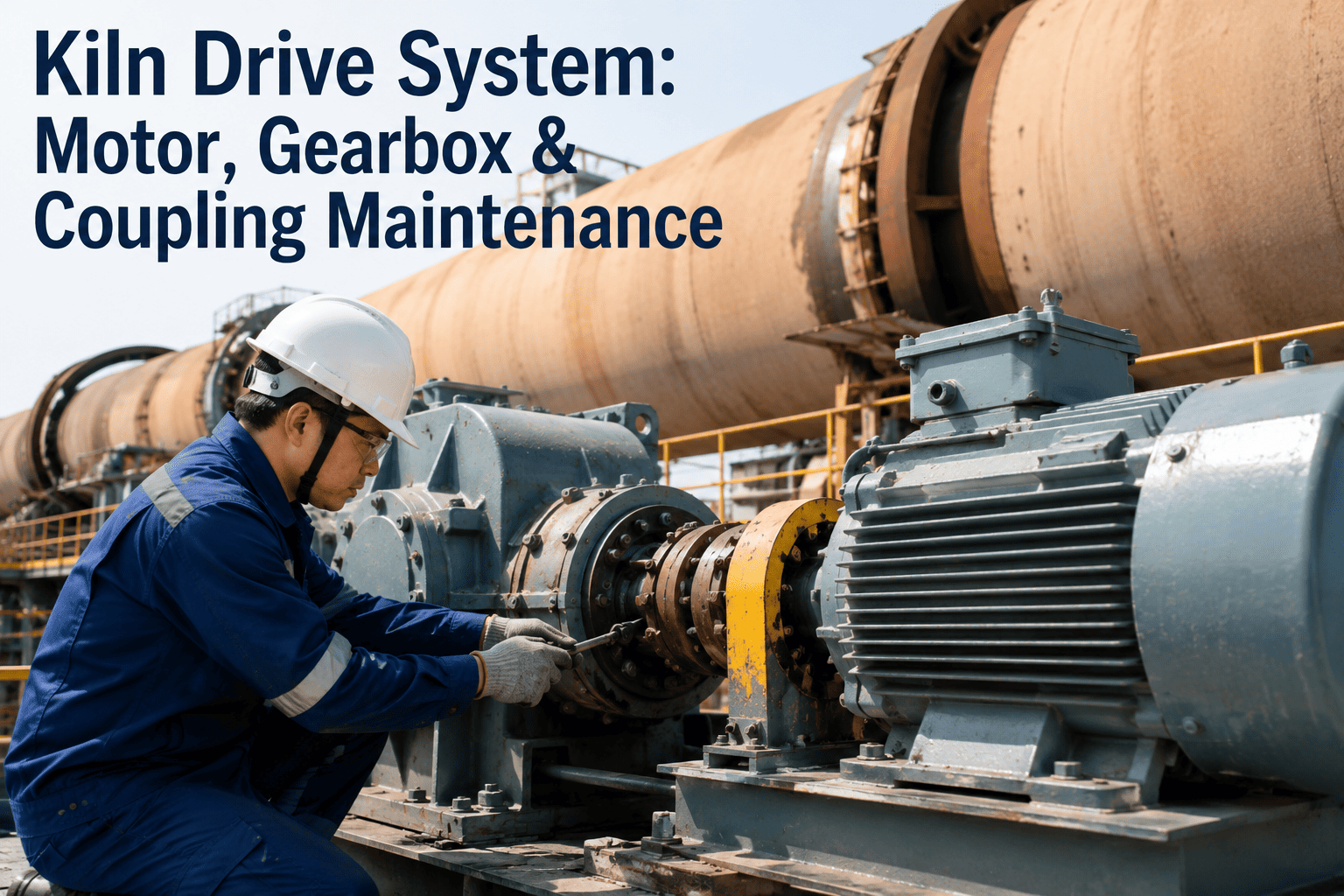
A cement kiln cannot run at partial drive capacity, the motor either turns the girth gear at the correct speed through a healthy gearbox and coupling, or the kiln stops entirely. That all-or-nothing structure is exactly why drive train issues escalate faster than almost any other kiln system, a bearing that shows early heat on Monday can force an emergency stop by Thursday if nobody is watching the trend between scheduled rounds.
The three components fail for different underlying reasons, which is precisely why a single generic inspection checklist rarely catches all of them in time. Main motors degrade electrically before they degrade mechanically, gearboxes degrade through the oil long before metal-on-metal contact produces audible noise, and couplings degrade through gradual misalignment that a monthly laser check simply cannot see accumulating day by day.
55%
Of unplanned kiln drive stoppages could have shown a detectable warning trend at least 72 hours earlier
3x
Higher repair cost when a coupling failure damages the connected gearbox shaft
15-20%
Of gearbox oil samples already show elevated particle counts by the time a fixed quarterly sample is drawn
THE THREE COMPONENTS
What Actually Needs Watching on Each Part of the Drive Train
Each component in the chain gives off a different kind of warning signal long before it fails, and each signal requires a different kind of monitoring to catch. Treating the whole drive train with one inspection method is the single most common reason a failure still arrives as a surprise.
Main Motor
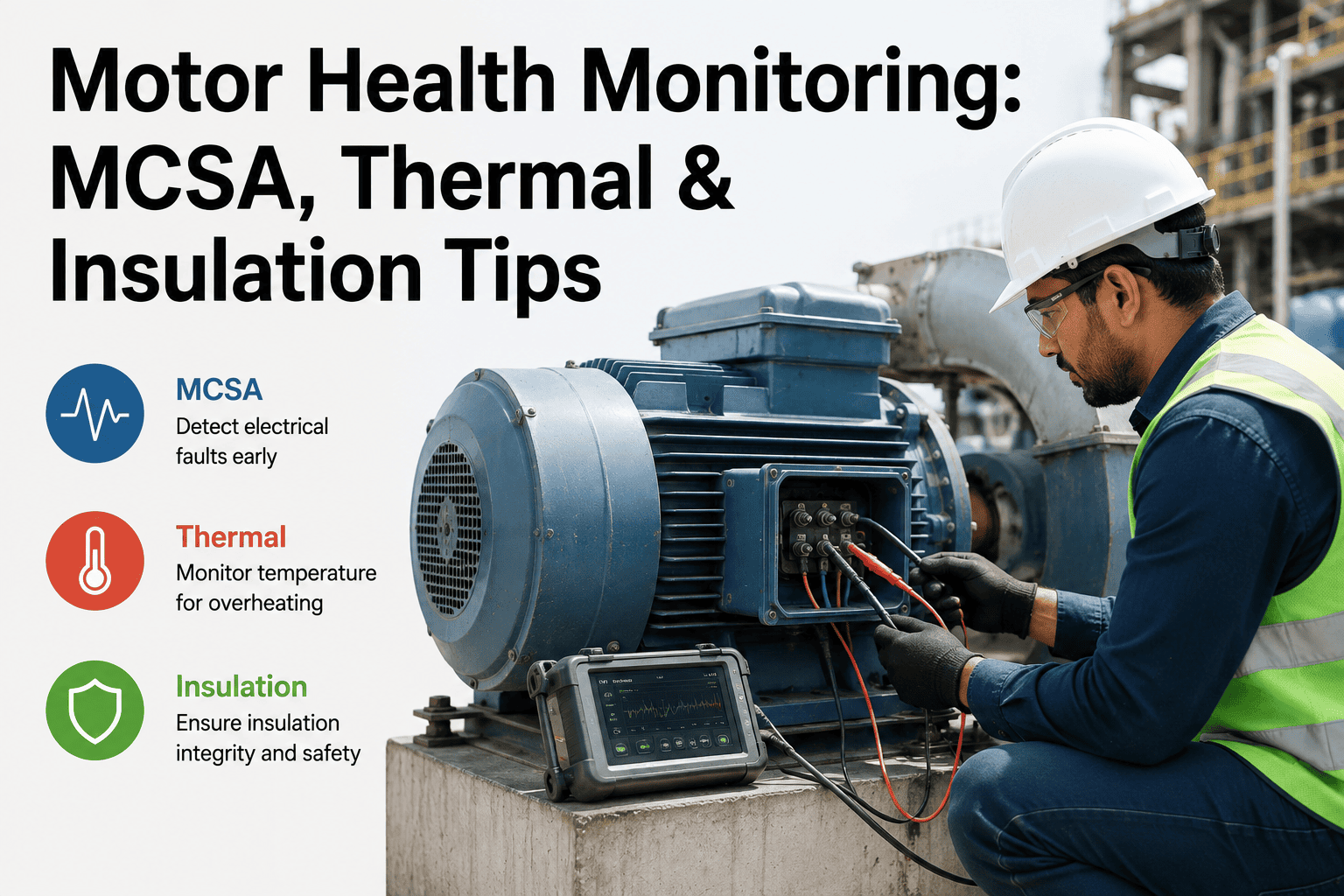
Bearing temperature trending, winding insulation resistance, current signature analysis for rotor bar issues, and vibration at the drive-end and non-drive-end bearings. Electrical degradation almost always precedes a mechanical failure by weeks, which makes current signature the earliest available warning on this component.
Reduction Gearbox
Oil analysis covering viscosity, particle count, water content, and total acid number, combined with gear mesh vibration frequencies and casing temperature. Gearbox failures are rarely sudden, they build through a slow contamination or lubrication breakdown that shows in the oil long before it shows in the gear teeth.
Flexible Coupling
Angular, parallel, and axial alignment relative to design tolerance, along with wear on the flexible element itself. Misalignment rarely appears overnight, it drifts in from thermal growth, foundation settling, and normal wear, and every millimeter of drift accelerates load on both the motor and gearbox bearings it connects.
HOW CONTINUOUS MONITORING WORKS
From Raw Sensor Data to a Drive Train Health Score
Continuous monitoring does not replace the physical inspection, it replaces the guesswork about when that inspection actually needs to happen. The flow below shows how the three data streams come together into one usable signal for the reliability team.
1
Continuous Vibration Collection
Accelerometers on motor bearings, gearbox input and output shafts, and coupling housing stream data around the clock instead of during a monthly walk-around.
2
Oil Condition Sampling
In-line or scheduled sensors track particle count, moisture, and viscosity trends between full laboratory oil analysis cycles.
3
Thermal and Electrical Scan
Motor winding temperature, bearing temperature, and current signature are logged continuously rather than spot-checked with a handheld camera.
4
Alignment Drift Tracking
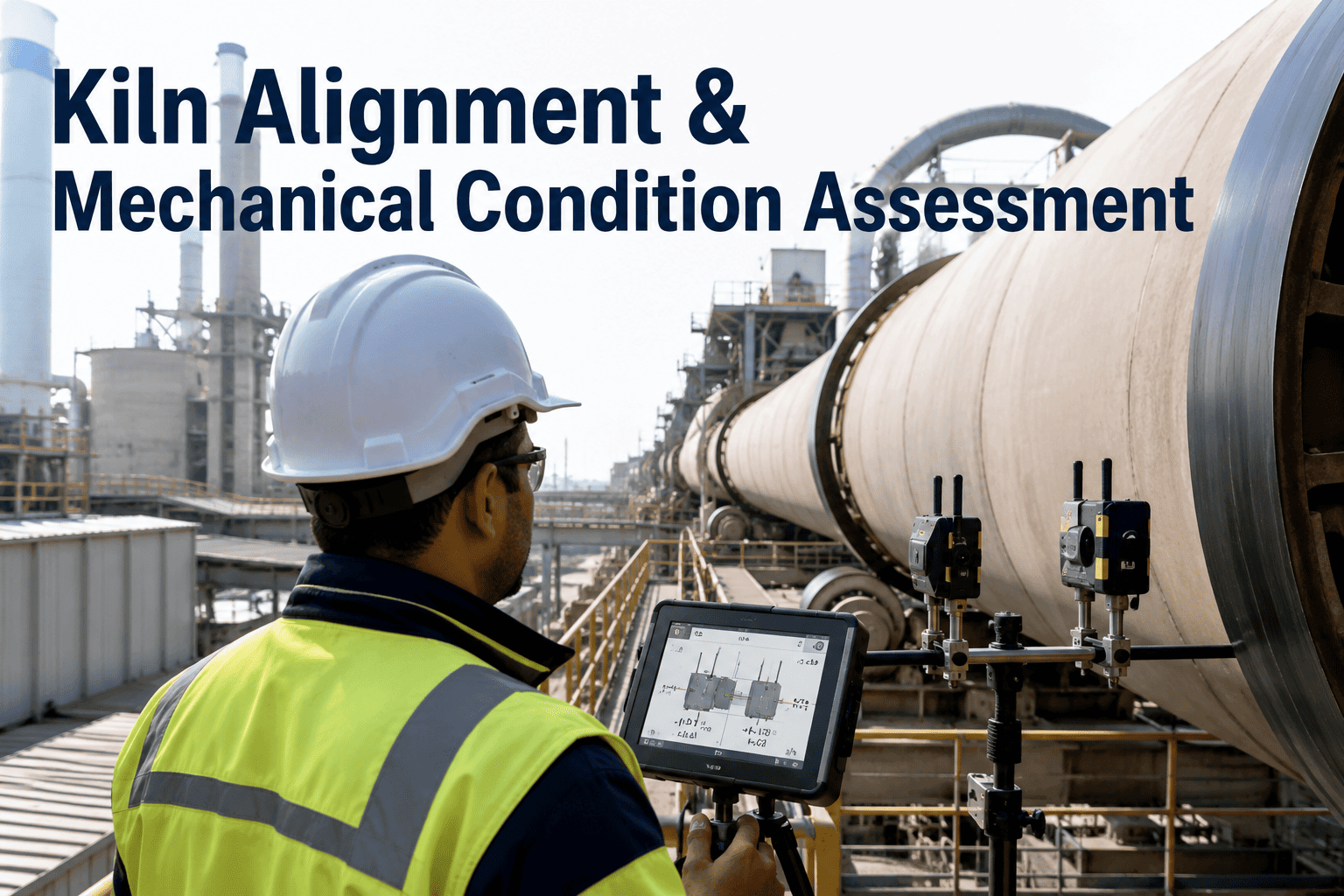
Coupling load signatures and periodic laser data are compared against baseline to flag gradual drift before it reaches a wear-accelerating threshold.
5
Trend, Score, and Alert
All four streams feed one drive train health score, with alerts triggered on trend direction rather than a single threshold breach.
GEARBOX OIL ANALYSIS REFERENCE
What Each Oil Parameter Is Actually Telling You
Oil analysis is the earliest window into gearbox health, but only if the parameters are read correctly and against a trend, not a single sample in isolation.
Put One Health Score Behind Every Drive Train in the Plant
iFactory pulls motor, gearbox, and coupling data into a single continuous view so your reliability team acts on trends instead of waiting for the next scheduled round.
COUPLING ALIGNMENT
Three Kinds of Misalignment, Three Different Wear Patterns
Coupling wear is rarely random, the pattern it leaves behind almost always points back to a specific type of misalignment that a laser check can catch if it happens often enough.
Angular Misalignment
Shafts meet at an angle rather than in a straight line, producing uneven wear across the flexible element and a distinctive once-per-revolution vibration signature at the coupling.
Parallel Offset
Shaft centerlines run parallel but offset from each other, generating a twice-per-revolution vibration pattern and accelerated bearing loading on both connected components.
Axial Misalignment
End float or thrust misalignment along the shaft axis, often the hardest to catch visually and the fastest to damage thrust bearings once it exceeds design tolerance.
CALENDAR CHECKS VS CONTINUOUS MONITORING
What Changes When Monitoring Runs Between Inspection Dates
The physical inspection does not go away under continuous monitoring, what changes is how much degradation is allowed to accumulate silently between one inspection and the next.
ROLLOUT PATH
Four Phases to Full Drive Train Coverage
PHASE 1
Baseline the Fleet
Capture current vibration, thermal, and oil condition baselines across every kiln drive train in the plant before any alerting logic is applied.
PHASE 2
Install and Connect Sensors
Fit vibration and thermal sensors at the motor, gearbox, and coupling, and connect existing oil analysis workflows into the same monitoring stream.
PHASE 3
Tune Alert Thresholds
Calibrate alerting against real operating conditions for each specific drive train rather than a generic industry default.
PHASE 4
Run Full Continuous Coverage
Move the reliability team from calendar-driven rounds to trend-driven work orders across the whole drive train fleet.
COMMON MISTAKES
Where Drive Train Monitoring Programs Usually Go Wrong
Monitoring Only the Motor
Motor vibration sensors alone miss gearbox and coupling degradation entirely, leaving two-thirds of the drive train still on a calendar-only inspection cycle.
Treating Oil Samples as a Snapshot
A single sample within normal range tells you nothing about direction, only a trend across multiple samples reveals whether contamination is accelerating.
Skipping Post-Repair Baselines
After any coupling replacement or gearbox rebuild, failing to reset the baseline means every future trend comparison is measured against the wrong starting point.
Alerting on Threshold Instead of Trend
Fixed threshold alarms fire only after damage has already begun, while a trend-based alert catches the same failure while it is still developing.
FREQUENTLY ASKED QUESTIONS
Questions Reliability Teams Ask About Drive Train Monitoring
Does continuous monitoring replace scheduled oil sampling and laser alignment checks?
No, it changes what happens between those scheduled events rather than replacing them outright. The physical sample and the laser check remain the ground truth measurement, continuous monitoring fills the weeks-long gap between them with a trend line so a developing issue does not go unnoticed until the next date on the calendar. Most plants find the scheduled cadence can eventually be extended once trend data proves the interval is safe.
Book a demo to see how the two approaches work together on a live kiln.
Which drive train component tends to fail with the least warning?
Coupling failures tend to surprise teams the most, because misalignment drifts in gradually through thermal growth and foundation movement rather than announcing itself with an obvious symptom. By the time vibration is audible, the coupling has often already begun transmitting uneven load into both the motor and gearbox bearings. Continuous vibration monitoring at the coupling housing catches this drift long before it becomes audible or visible.
How much sensor investment does a typical kiln drive train need?
A functional monitoring setup typically covers two to four vibration points, a thermal sensor at each major bearing, and integration with existing or new oil condition sampling, which is a modest addition relative to the cost of a single unplanned stoppage. The exact count depends on gearbox stage count and coupling type.
Contact our support team for a sensor plan sized to your specific drive train configuration.
Can this approach work on older drive trains without existing sensors installed?
Yes, retrofitting vibration and thermal sensors onto an existing motor, gearbox, and coupling assembly is a standard part of most rollouts and does not require replacing the drive train itself. Oil analysis workflows already in place can usually be connected into the same monitoring view with minimal disruption to the existing sampling schedule. The baseline phase is where older equipment gets the most benefit, since historical failure patterns often point directly at what to watch first.
What is the fastest way to prove value before committing to a plant-wide rollout?
Most reliability teams start with the single kiln that has the worst recent failure history, since that drive train produces trend data and alerts fastest and gives the clearest before-and-after comparison. A focused pilot over one full oil sampling cycle is usually enough to show whether trend-based alerting would have caught the last unplanned stop earlier.
Book a demo to plan a pilot scoped to your highest-risk drive train first.
Stop Letting Drive Train Failures Arrive as a Surprise
iFactory turns motor, gearbox, and coupling data into one continuous health score so your team sees a failure coming days before it stops the kiln.