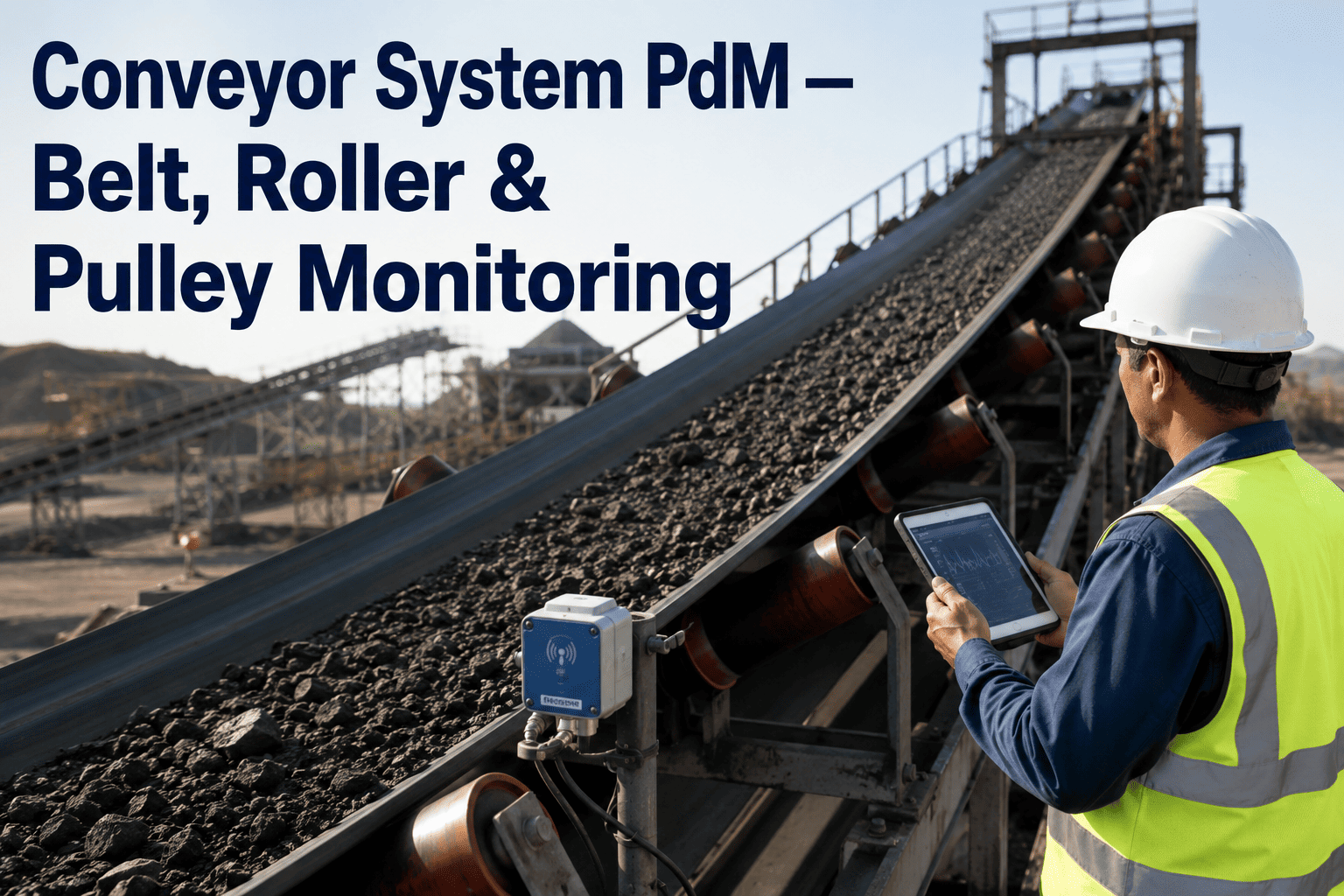
A conveyor belt tear rarely starts with the belt. It starts with a drive component that has been quietly degrading for weeks — a pulley losing its lagging, a motor drawing more current than it should, a gearbox running slightly hotter each shift. By the time the belt itself shows damage, the drive train has usually been sending signals for two weeks or more that nobody was structured to catch. iFactory's conveyor drive monitoring program tracks pulley lagging condition, motor health, and gearbox oil chemistry together, so the failure gets caught at the component that's actually failing, not at the belt that eventually pays for it.
The Drive Train Fails First. The Belt Fails Loudest.
Pulley lagging, motor windings, and gearbox oil each carry their own failure signature. Watching them separately — instead of waiting for a belt tear to prove something went wrong — turns a 48-hour unplanned outage into a scheduled repair.
A Conveyor Drive Is Three Systems Wearing at Different Rates
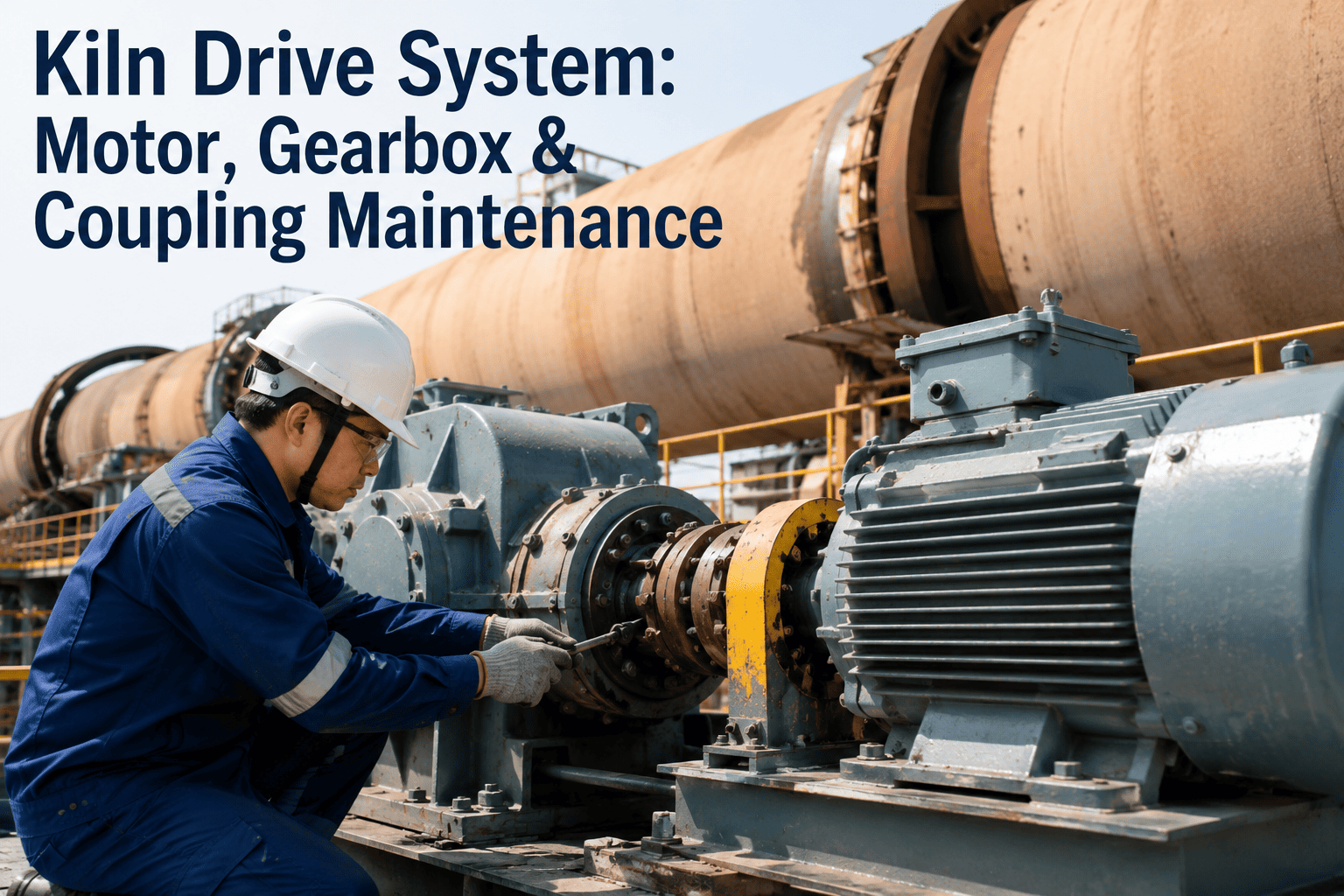
Treating "the conveyor" as one asset hides the fact that its drive train is really three interdependent systems — the pulley and its lagging, the motor, and the gearbox — each with its own failure mode, its own lead time between first symptom and forced stoppage, and its own monitoring requirement. A maintenance plan built around a single walkdown checklist tends to catch whichever of the three happens to look obviously wrong, while the other two continue degrading unnoticed.
| Component | Common Failure Mode | Early Warning Signal | Lead Time Before Failure |
|---|---|---|---|
| Pulley lagging | Rubber wear, delamination, material buildup | Reduced traction, belt slip at start-up | Weeks to months |
| Drive motor | Winding insulation breakdown, bearing wear | Rising current draw, RTD winding temperature drift | 2–3 weeks |
| Gearbox | Oil oxidation, gear tooth spalling, bearing wear | Rising particle count, acid number, vibration at gear-mesh frequency | 4–8 weeks |
| Coupling | Elastomer degradation from misalignment | 2× running-speed vibration peak | Weeks |
Pulley Lagging: The Component Nobody Inspects Until It Slips
Lagging is the rubber or ceramic surface bonded to the drive pulley that provides the friction actually moving the belt. It wears gradually and quietly — material buildup, delamination at the edges, or thinning across the crown — and none of that shows up as an alarm until the pulley loses enough traction that the belt starts slipping under load, at which point heat builds at the slip point fast enough to damage both the lagging and the belt cover in the same event. Continuous monitoring of drive motor current against a known baseline is the earliest practical indicator: a motor working harder to move the same tonnage at the same belt speed is compensating for something, and lagging wear is one of the most common causes.
Motor Health: Current Draw Tells the Story Before Temperature Does
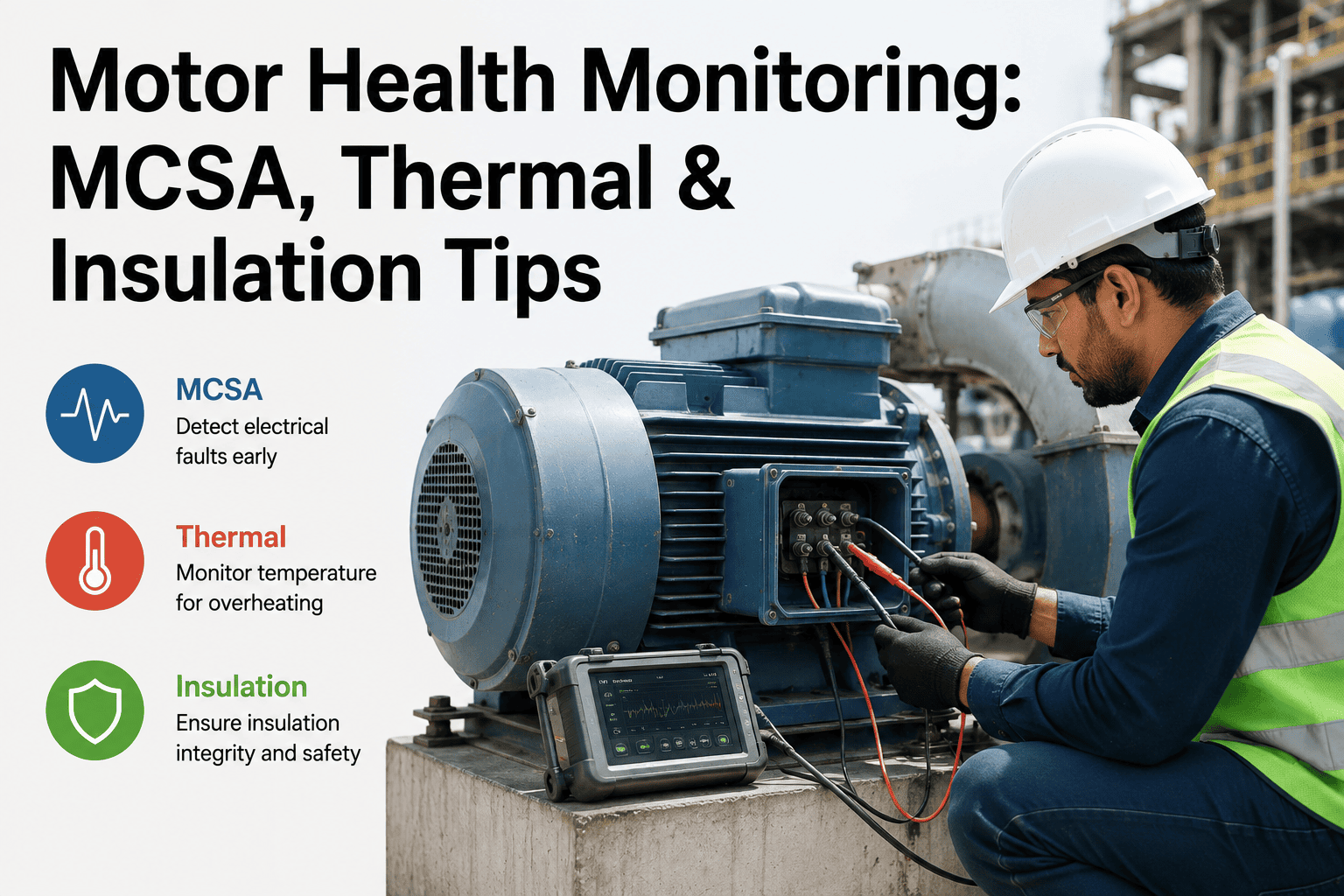
A drive motor drawing more current than its commissioning baseline at the same throughput tonnage indicates mechanical resistance somewhere in the system — idler seizures, belt mistracking friction, gearbox drag, or the pulley lagging wear described above. Logging motor current at every PM interval and trending the deviation from baseline gives an early, non-invasive signal; an alert threshold of roughly 8 percent deviation from baseline at equivalent load is a reasonable starting point for most drives. Winding temperature rising without a corresponding rise in ambient conditions or load points to a different problem — cooling failure, insulation degradation, or bearing friction transferring heat into the motor body — and should be trended against RTD baselines rather than watched for a single threshold breach.
Gearbox Condition: What Oil Analysis Actually Reveals
Gearbox failures develop through three overlapping paths — oil degradation from oxidation and contamination, gear tooth spalling from misalignment or lubrication starvation, and internal bearing wear — and oil analysis catches evidence of all three before any of them produces an audible or visible symptom. Sampling gearbox oil on a fixed run-hour interval and tracking acid number, viscosity, and particle content (iron, copper, silicon) together with temperature trending gives a meaningfully more accurate failure prediction than any single measurement alone; rising temperature combined with rising particle count together indicate accelerating spalling, while temperature alone can simply reflect ambient or load conditions.
Why a Belt Tear Is a Drive Train Problem in Disguise
The Forty-Eight Hour Outage That Started Three Weeks Earlier
A cement plant's main clinker conveyor, running eighteen to twenty hours a day from kiln cooler to storage silo, tore mid-shift and shut the line down for two full days. The post-mortem found the actual cause wasn't the belt at all — a drive-side idler bearing had been showing rising vibration amplitude at drive-shaft frequency for roughly three weeks, well before torque output at the motor ever changed enough for anyone to notice on a manual reading. The bearing eventually seized, the belt tracked off center under the sudden resistance, and the tear that followed cost far more in lost production than the bearing itself would ever have cost to replace on a scheduled Sunday window.
Building the Drive Maintenance Program
Asset Structure First
Map each conveyor as a parent asset with children — belt, drive motor, gearbox, pulleys, idlers, coupling — each tagged with OEM spec, install date, and a criticality rating so monitoring effort matches actual production impact.
Continuous Baselines
Motor current, winding RTD, and vibration all need a commissioning-period baseline recorded under known load — without one, "abnormal" has no reference point to be measured against.
Threshold-Triggered Work Orders
A reading that breaches a defined threshold — current deviation, oil particle count, vibration amplitude — should auto-generate a corrective work order with parts and labor estimated, not wait for the next scheduled inspection round.
Find Out Which Drive Is Already Telling You Something
iFactory logs motor current, winding temperature, and gearbox oil trends against your commissioning baselines and flags deviation before it becomes a stoppage.
The Real Cost Gap Between Planned and Reactive Drive Repair
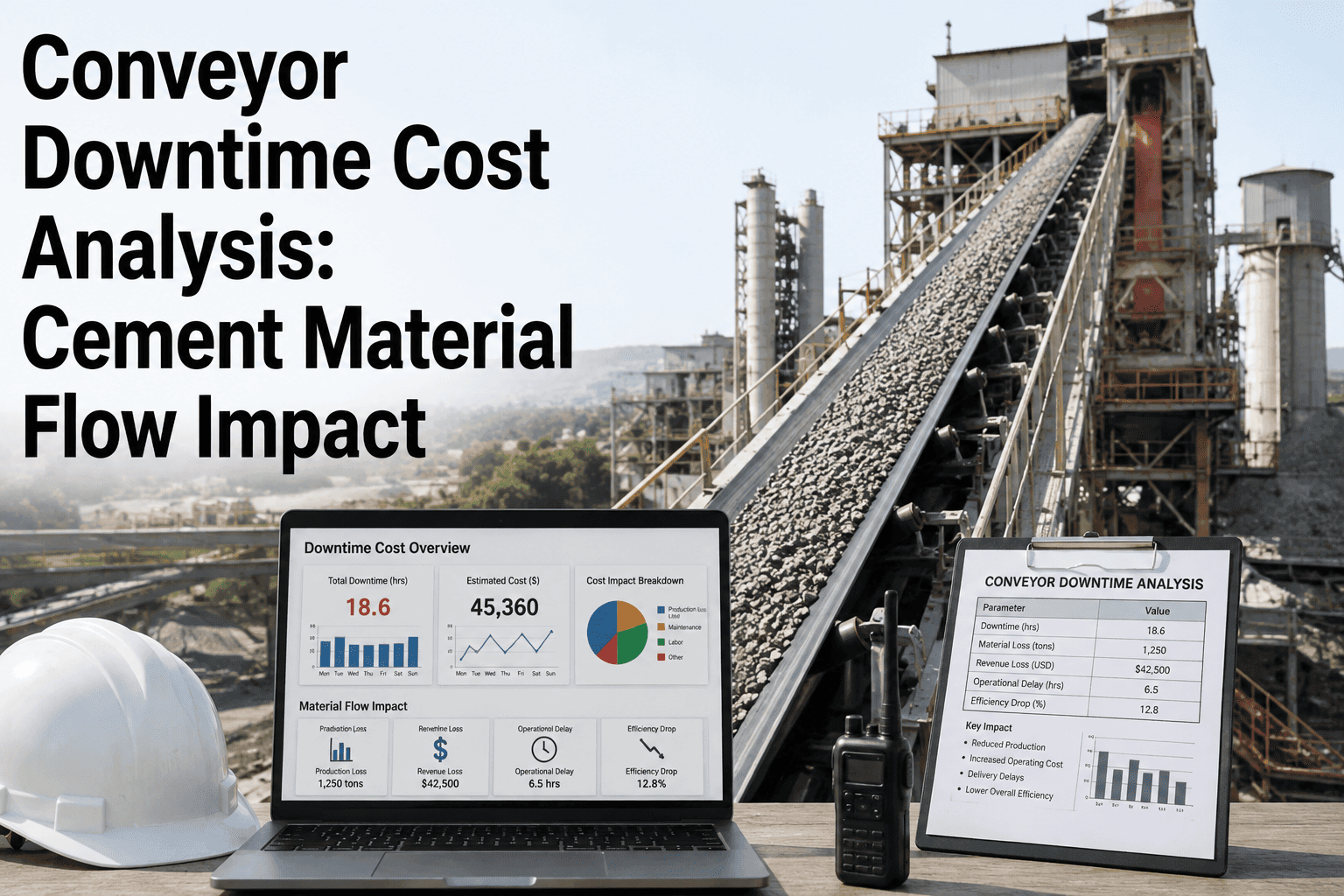
When maintenance teams present a drive component replacement to leadership using only the parts and labor line item, the number rarely justifies the monitoring investment on its own. The case changes entirely once the full cost of an unplanned failure is included — lost production across every downstream process the conveyor feeds, idle labor while the line is down, overtime premiums to expedite the repair, and rush freight on parts that would otherwise ship on standard lead time.
Vibration Frequencies That Point to a Specific Failure
Raw vibration amplitude alone tells you something is different — it doesn't tell you what. Frequency analysis narrows that down to a specific component, which is what actually lets a maintenance team plan the right repair instead of guessing at what to inspect first.
| Frequency Pattern | Likely Cause | Typical Component |
|---|---|---|
| Inner/outer race, ball, cage frequencies | Bearing wear progressing toward failure | Motor, gearbox, or idler bearings |
| Tooth-mesh frequency (tooth count × shaft speed) | Gear tooth damage, eccentricity, lubrication failure | Gearbox |
| Peak at running frequency | Material buildup, missing balance weight, shaft bow | Pulley |
| Strong 2× running-speed peak | Coupling misalignment | Motor-to-gearbox or gearbox-to-pulley coupling |
| Broadband, harmonic pattern | Loose foundation bolts, worn pillow blocks, structural resonance | Drive frame / mounting |
Frequently Asked Questions
How often should gearbox oil be sampled on a main conveyor drive?
A common baseline is every 500 operating hours, though high-duty conveyors running near-continuously benefit from tighter intervals until a stable degradation trend is established. What matters more than the exact interval is consistency — sampling the same point, under similar load conditions, every time — so the trend line for acid number, particle content, and viscosity actually reflects gearbox condition rather than sampling variability. Contact support to set up an oil sampling schedule matched to your conveyor's duty cycle.
What current deviation from baseline should trigger an inspection?
A deviation of roughly 8 percent above the commissioning baseline, measured at equivalent throughput tonnage and belt speed, is a reasonable starting alert threshold for most drive motors, though the right number depends on your specific motor sizing and how tightly your load varies shift to shift. The goal is catching mechanical resistance — lagging wear, gearbox drag, idler seizure — while it is still a minor efficiency loss rather than a developing failure.
Can pulley lagging wear be detected before the belt actually slips?
Yes — a gradual rise in motor current at start-up, before the belt is fully loaded, is one of the earliest indirect signals of declining lagging traction, since the motor has to work harder to overcome the reduced grip. Visual inspection during scheduled shutdowns for delamination, material buildup, or crown thinning remains the direct confirmation, but current trending gives you the lead time to schedule that inspection before slip becomes a heat and belt-cover problem.
Why does coupling alignment matter for gearbox life?
A flexible coupling connecting a gearbox output to a driven pulley is designed to tolerate minor misalignment, but excessive misalignment accelerates elastomer degradation in the coupling itself while also increasing radial loads on the gearbox's own bearing races. That combination shows up as a strong vibration peak at twice running speed well before any bearing damage becomes audible, which is why quarterly coupling alignment checks are worth the time on any drive above 75 kW. Book a demo to see how alignment drift shows up in continuous vibration trending.
Is continuous monitoring worth it on lower-criticality conveyors?
Not always at the same intensity — a conveyor with a redundant parallel line absorbing its load if it stops carries far less risk than a single unduplicated feed line, and monitoring investment should scale with that criticality rating rather than being applied uniformly across every belt in the plant. Lower-criticality conveyors can often run on basic operator-level checks and scheduled oil sampling alone, reserving continuous current and vibration monitoring for drives whose failure would actually stop production.
Stop Finding Out About Drive Failures From the Belt
iFactory turns motor current, winding temperature, and gearbox oil trends into threshold-triggered work orders, so the drive component that's actually failing gets fixed on a scheduled window instead of a forty-eight hour outage.