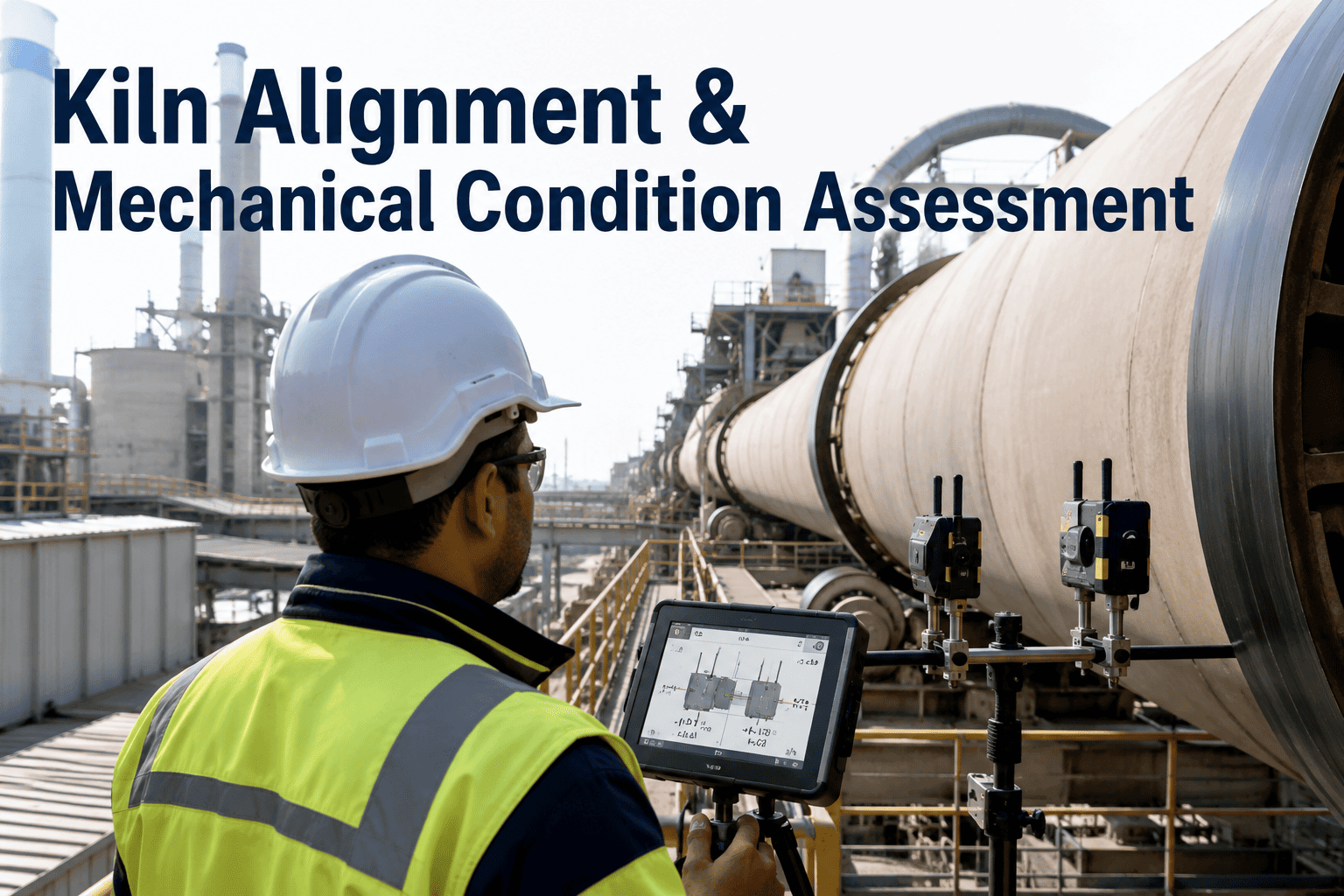
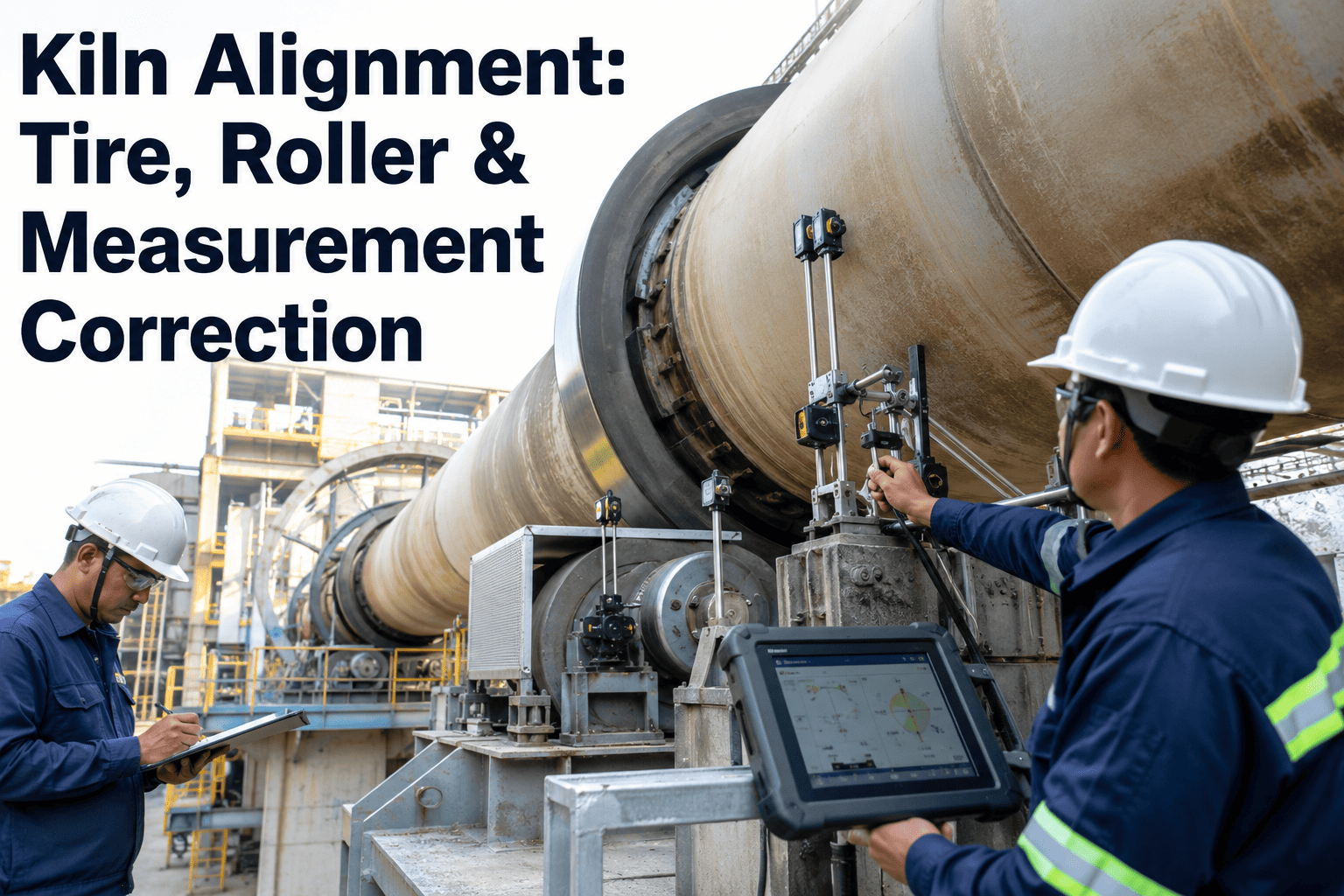
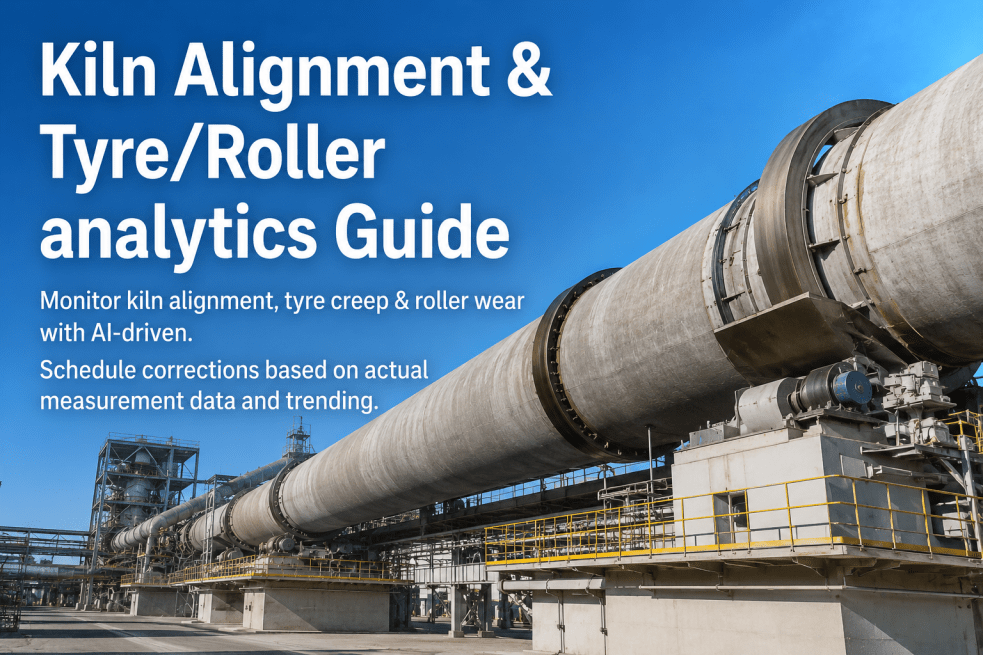
A rotary kiln is a 60 to 100-meter steel tube carrying thousands of tons of refractory and material, supported on just two or three tire-and-roller stations, rotating continuously at high temperature for years between planned stops. When that alignment drifts even a few millimeters out of tolerance, the consequences don't stay small — tire and roller wear accelerates, the shell begins to flex into an oval cross-section that cracks refractory brick, and left uncorrected, the end result is a shell crack or catastrophic structural failure that takes the kiln offline for months rather than days. Most plants still catch this drift with an optical survey every 6 to 18 months, which means continuous mechanical monitoring is often the difference between a scheduled correction and an emergency shutdown.
Kiln Mechanical Integrity
Between Alignment Surveys, Your Kiln Could Be Wearing Itself to Failure
Optical alignment surveys happen once or twice a year. Tire migration, shell ovality, and bearing wear develop continuously. The months in between are where catastrophic failures start and go unnoticed.
Four Conditions, One Structural Chain Reaction
Kiln mechanical failure almost never starts with the shell itself. It starts with a small deviation in one of four supporting conditions, and each of those conditions feeds the next in a chain that gets more expensive and more dangerous to correct at every stage. Understanding where a given kiln sits in that chain is the entire purpose of continuous condition monitoring.
01
Tire & Roller Contact
Uneven contact pressure or insufficient friction between tire and support roller is usually the first deviation to develop, often from pad wear or lubrication issues.
02
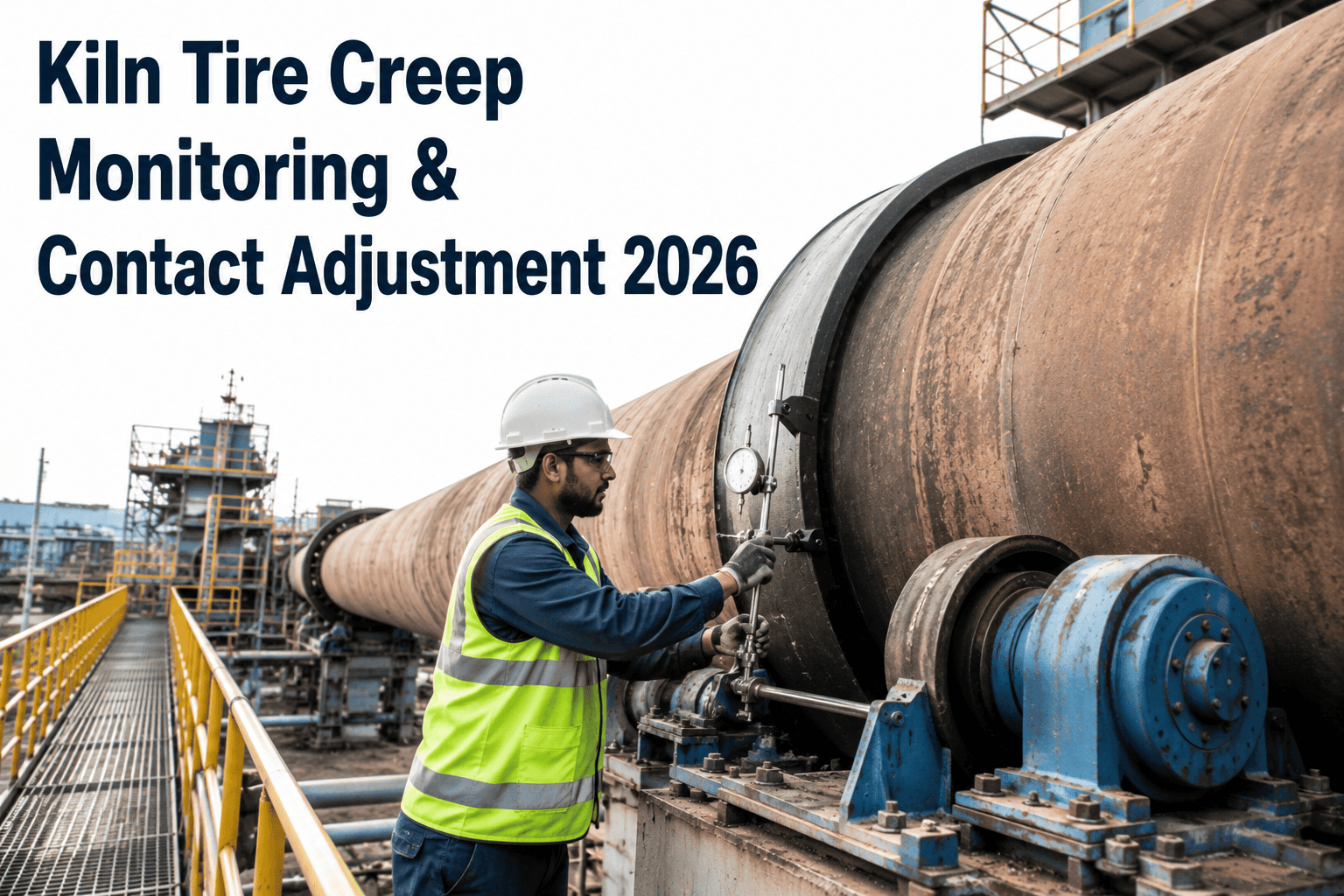
Tire Migration
Once contact friction degrades, the tire begins shifting axially along the shell rather than staying centered, a mechanical symptom that requires physical correction.
03
Shell Ovality
Misaligned support stations cause the shell to flex into a progressively oval cross-section at each rotation, stressing the refractory lining with every pass.
04
Refractory & Shell Damage
Sustained ovality cracks refractory brick and, left uncorrected long enough, fatigues the shell steel itself toward the kind of crack that forces an extended shutdown.
Why a Once-a-Year Survey Isn't Enough
Traditional alignment verification relies on optical surveys performed by specialized contractors at intervals of 6 to 18 months. That approach isn't wrong — it's just incomplete, because it only ever captures a single snapshot in a process that's continuously moving. A kiln can drift from within-tolerance to critical between two scheduled surveys, and the plant has no visibility into that drift until the next optical crew arrives or a bearing fails first.
| Monitoring Approach | Measurement Frequency | Visibility Between Checks | Typical Detection Point |
| Optical alignment survey |
Every 6-18 months |
None |
At next scheduled survey or after failure |
| Manual shell temperature rounds |
Daily to weekly |
Low resolution, operator-dependent |
Often after ovality is already advanced |
| Continuous proximity & vibration sensors |
Every rotation |
Full, trended continuously |
Ovality changes as small as 0.5mm per rotation |
What Continuous Monitoring Actually Tracks
A complete kiln mechanical monitoring program layers several sensor types to capture the full picture — no single measurement tells the whole story, but together they let AI correlate a developing problem with its actual root cause rather than just flagging that something changed.
Proximity & Laser Displacement
Measures shell ovality and tire clearance continuously, detecting structural deformation that indicates support roller misalignment.
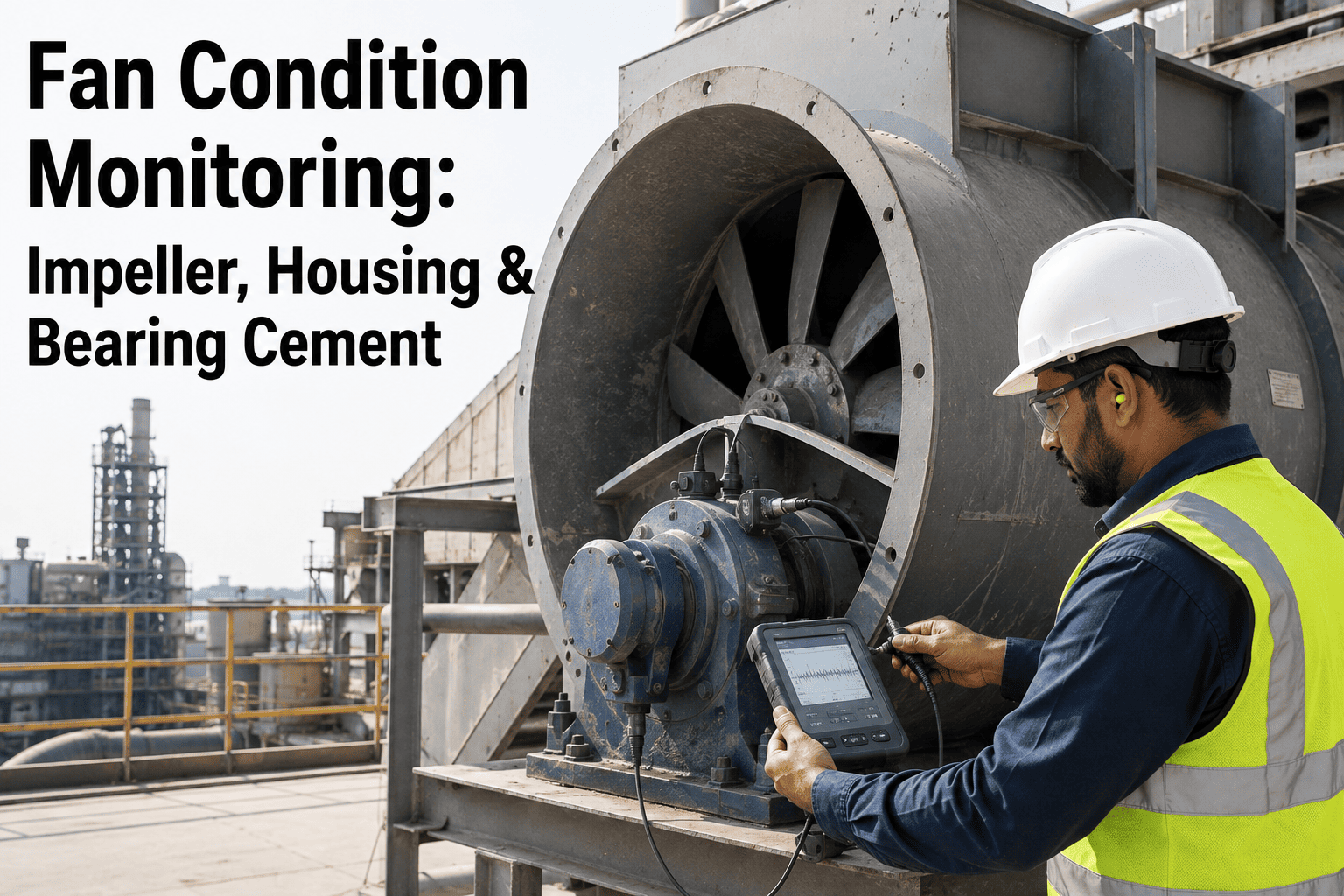
Triaxial Accelerometers
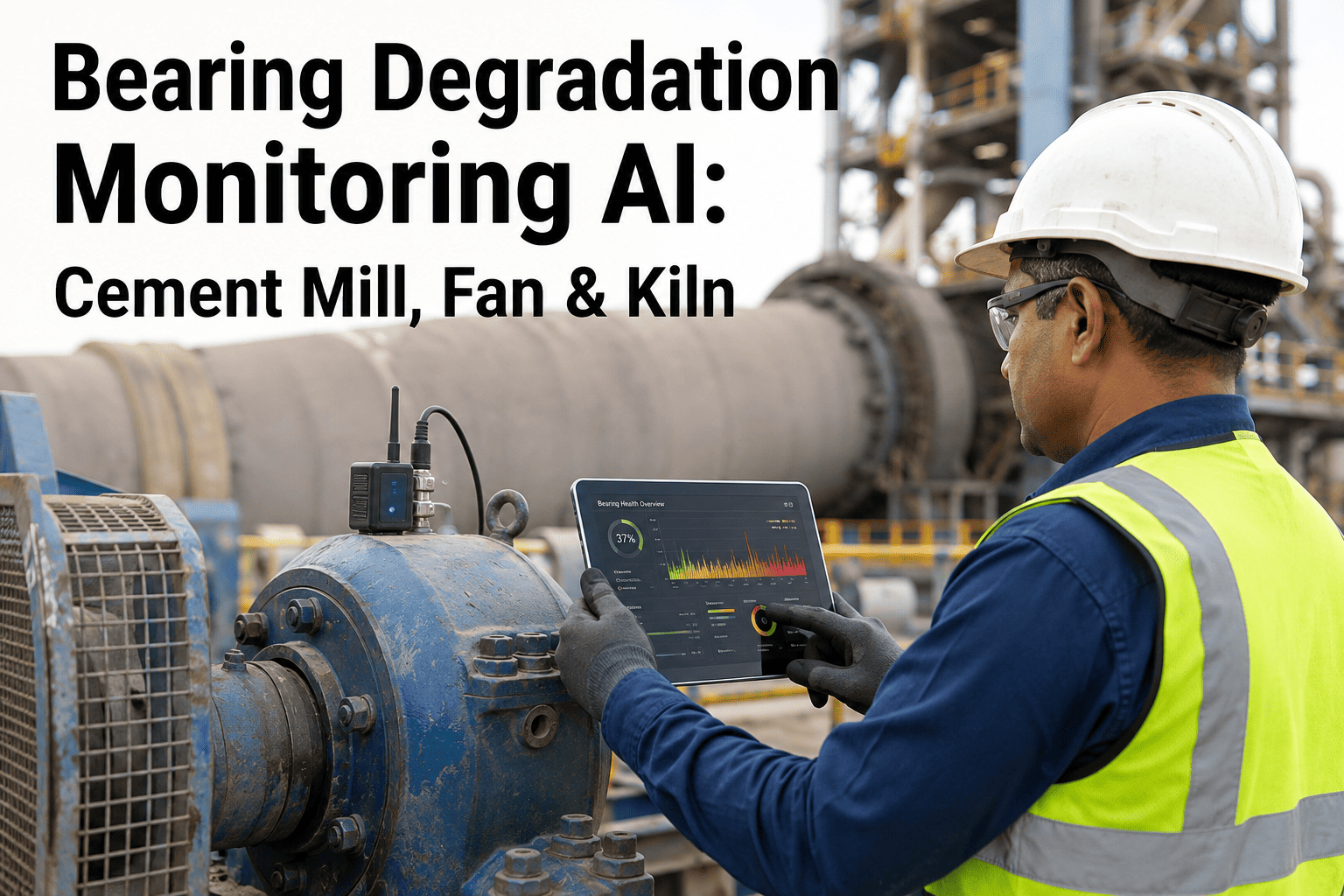
Mounted on support rollers, girth gear, and drive components to detect bearing defects and mechanical wear through frequency analysis.
Axial Displacement Sensors
Tracks kiln axial movement and roller contact position, identifying thrust bearing wear and tire migration before they become structural.
Infrared Shell Scanning
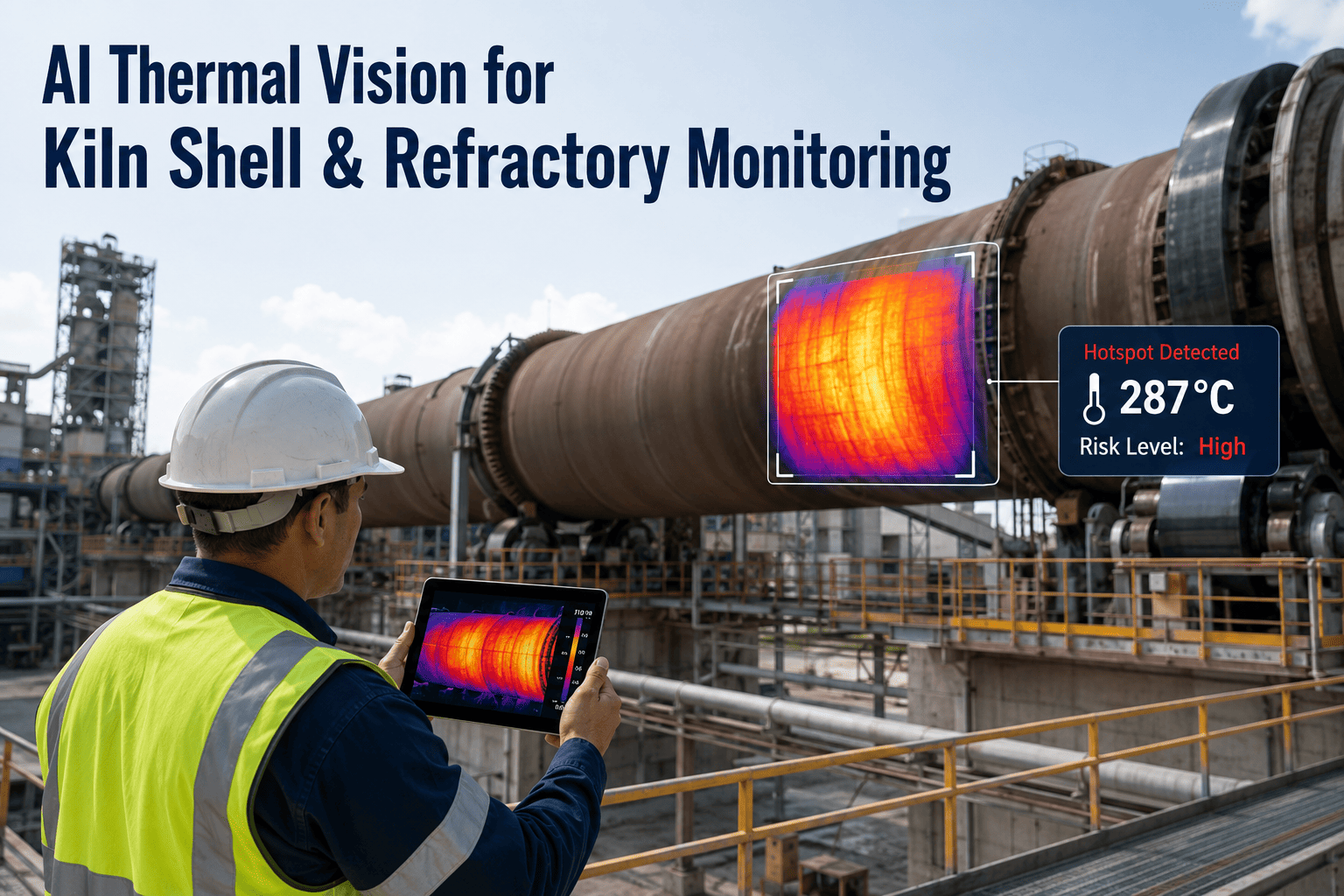
Fixed cameras or scanning pyrometers along the kiln length detect hot spots that often correlate with ovality-driven refractory cracking.
Extending a kiln campaign by even one month through better-timed alignment correction can save $500,000 to $1,000,000 in avoided shutdown costs and lost production. See what your own kiln's mechanical trend data looks like when it's tracked continuously instead of once a year.
Book a 30-minute demo with your last optical survey report.
From Root Cause to Correction: Why Diagnosis Matters
Not every mechanical symptom has the same fix, and treating the wrong root cause produces temporary improvement that leaves the real problem to keep progressing. Replacing worn tire pads when the actual cause is tire migration, for example, or adjusting heat-up rate when the real issue is thrust roller misalignment, both look like action taken but don't stop the underlying drift. AI correlation of tire slip, ovality, shell temperature, and axial movement data together is what identifies which specific condition is actually driving the symptom.
Symptom Detected
Sensors flag an ovality trend, tire slip event, or axial movement outside normal range.
Multi-Signal Correlation
The model cross-references the symptom against thermal data, bearing load trends, and historical patterns for that specific kiln.
Root Cause Identified
The specific mechanical cause — pad wear, roller misalignment, bearing wear, foundation settlement — is isolated rather than guessed at.
Planned Correction
Maintenance schedules the correct fix during the next planned stop instead of reacting to a failure that has already occurred.
Frequently Asked Questions
Does continuous monitoring replace the need for periodic optical alignment surveys?
No — an optical survey remains the definitive method for establishing precise kiln axis position and correcting alignment during a planned stop, and continuous monitoring doesn't replace that capability. What it adds is visibility in the months between surveys, when drift is actually happening but nobody has traditionally been watching. Most plants combine both: the optical survey sets an accurate baseline, and continuous sensor data tracks trend and deviation from that baseline until the next scheduled survey.
Discuss how this fits alongside your existing survey schedule.
What sensors do we need to install, and does it require a kiln stop?
A typical deployment uses proximity sensors at each support station, accelerometers on roller and drive bearings, and infrared shell scanning — all of which can generally be installed during a normal planned maintenance window rather than requiring a dedicated extended stop. Many cement plants already have some of this instrumentation in place through existing infrared shell scanners or vibration monitoring systems; the gap is usually in connecting that data into one continuously analyzed view rather than reviewing each sensor's output separately.
Ask our team to review what you already have installed.
How early can this actually catch a developing problem?
Ovality tracking can detect changes as small as half a millimeter per rotation when trended continuously, which is well before the deviation would be visible to a manual inspection or would show up as an operational symptom like unusual vibration. For refractory-related issues specifically, continuous shell thermal monitoring has been reported to provide seven to twenty-one days of advance warning compared to discovery at an emergency shutdown, giving maintenance planning teams a real window to schedule a fix during planned downtime.
Can this help us avoid a full kiln reline or shell replacement?
Early detection is precisely what creates that option. Shell ovality and refractory damage are progressive conditions — caught early, a correction might mean adjusting roller position or tire clearance during a normal planned stop. Caught late, after the ovality has already cracked significant refractory or fatigued the shell, the correction can escalate to a partial or full reline, which is a materially larger cost and downtime commitment. Continuous trending is what gives maintenance teams the lead time to intervene at the cheaper end of that range.
Walk through your kiln's current condition trend with our team.
How does this integrate with the SCADA and historian systems we already have?
Kiln mechanical monitoring platforms typically connect through standard industrial protocols including OPC-UA, Modbus TCP/IP, and common historian systems, which means the new sensor data can sit alongside your existing kiln speed, motor current, and process temperature feeds rather than living in a separate, disconnected system. That integration is what allows the AI model to correlate mechanical trends against actual operating conditions instead of analyzing sensor data in isolation from the rest of the process.
Don't Wait for the Next Scheduled Survey to Find Out
See Your Kiln's Mechanical Condition Trend, Continuously
Bring your most recent optical alignment survey report. We'll show you what continuous monitoring would have caught in the months since — and what it can catch going forward.