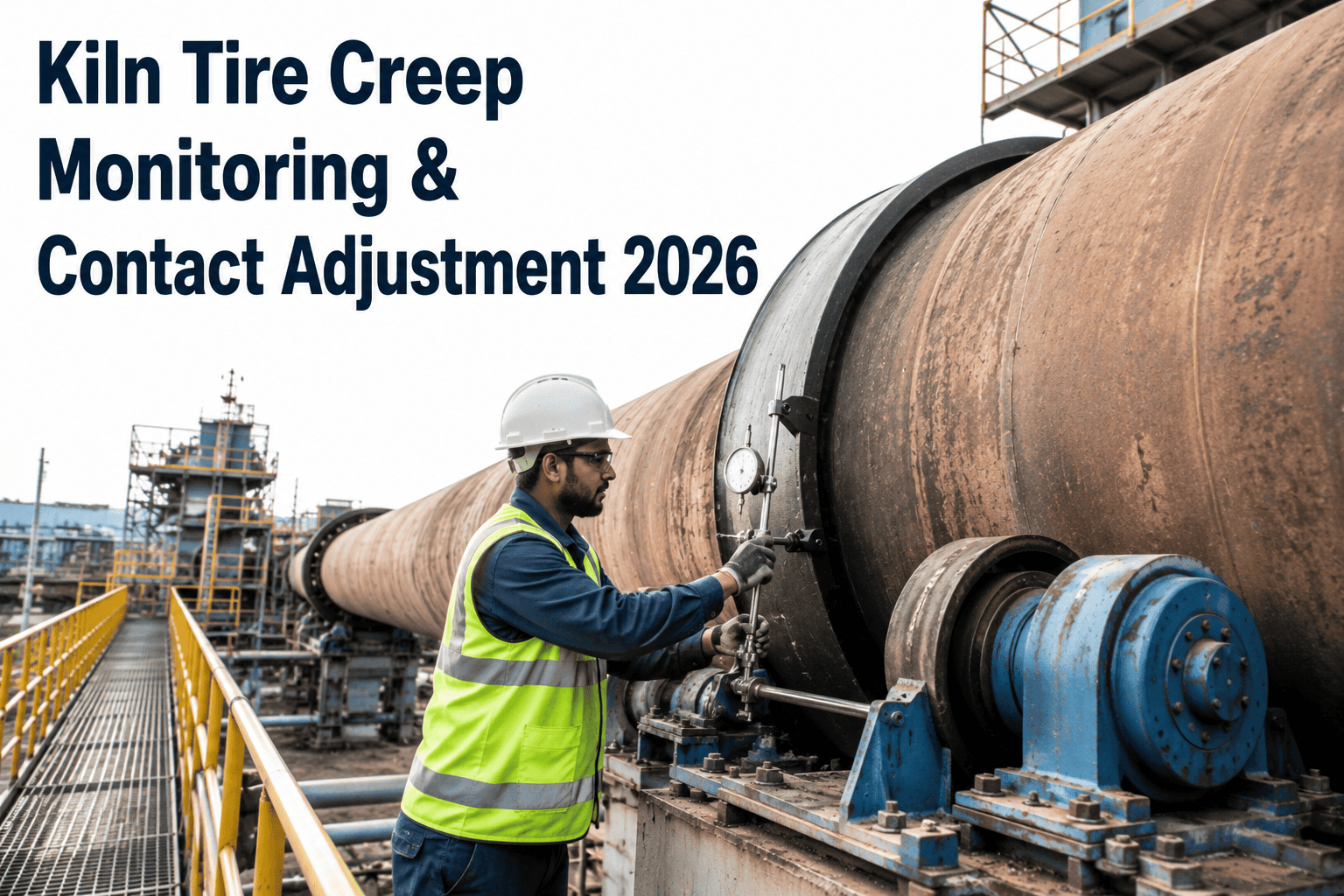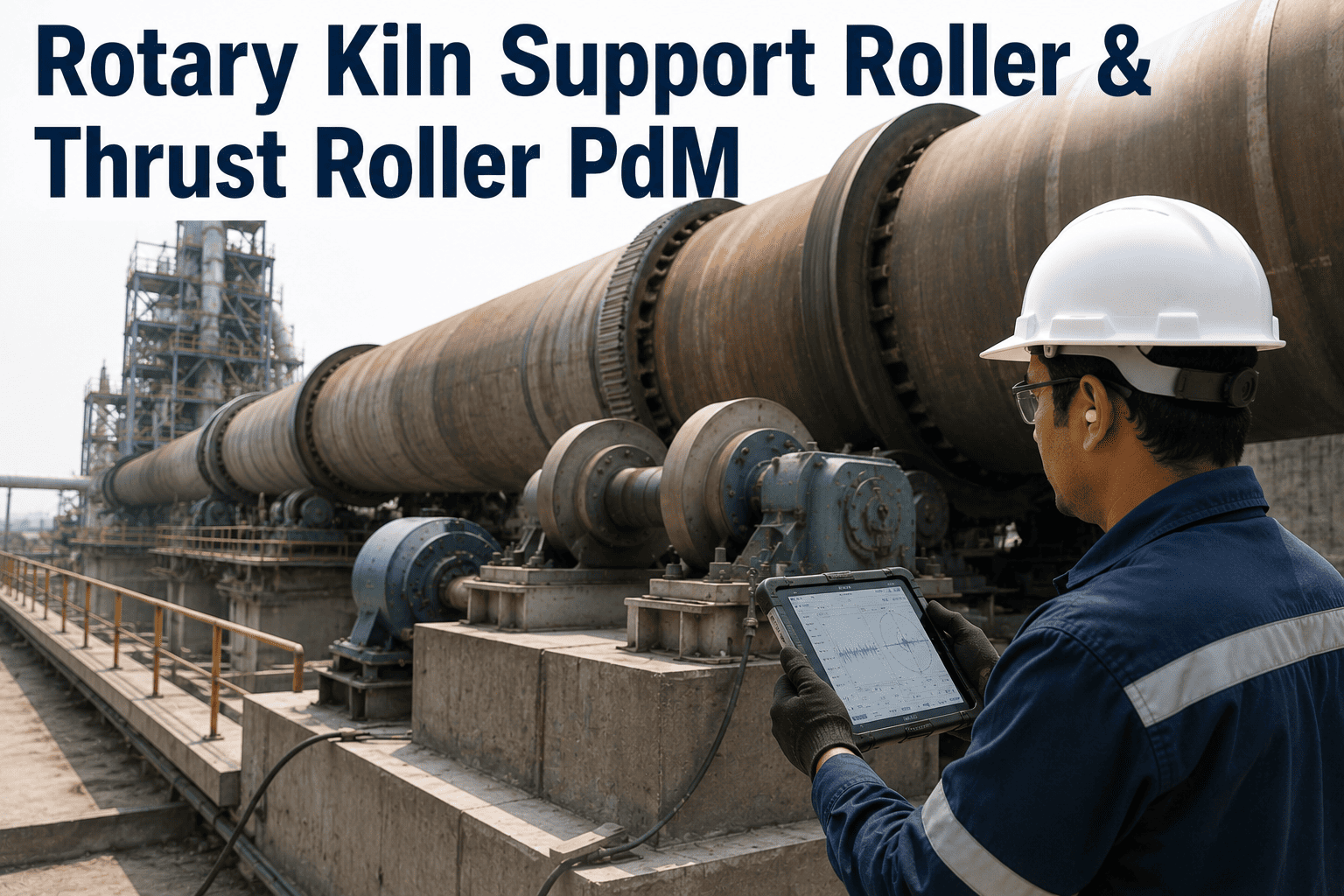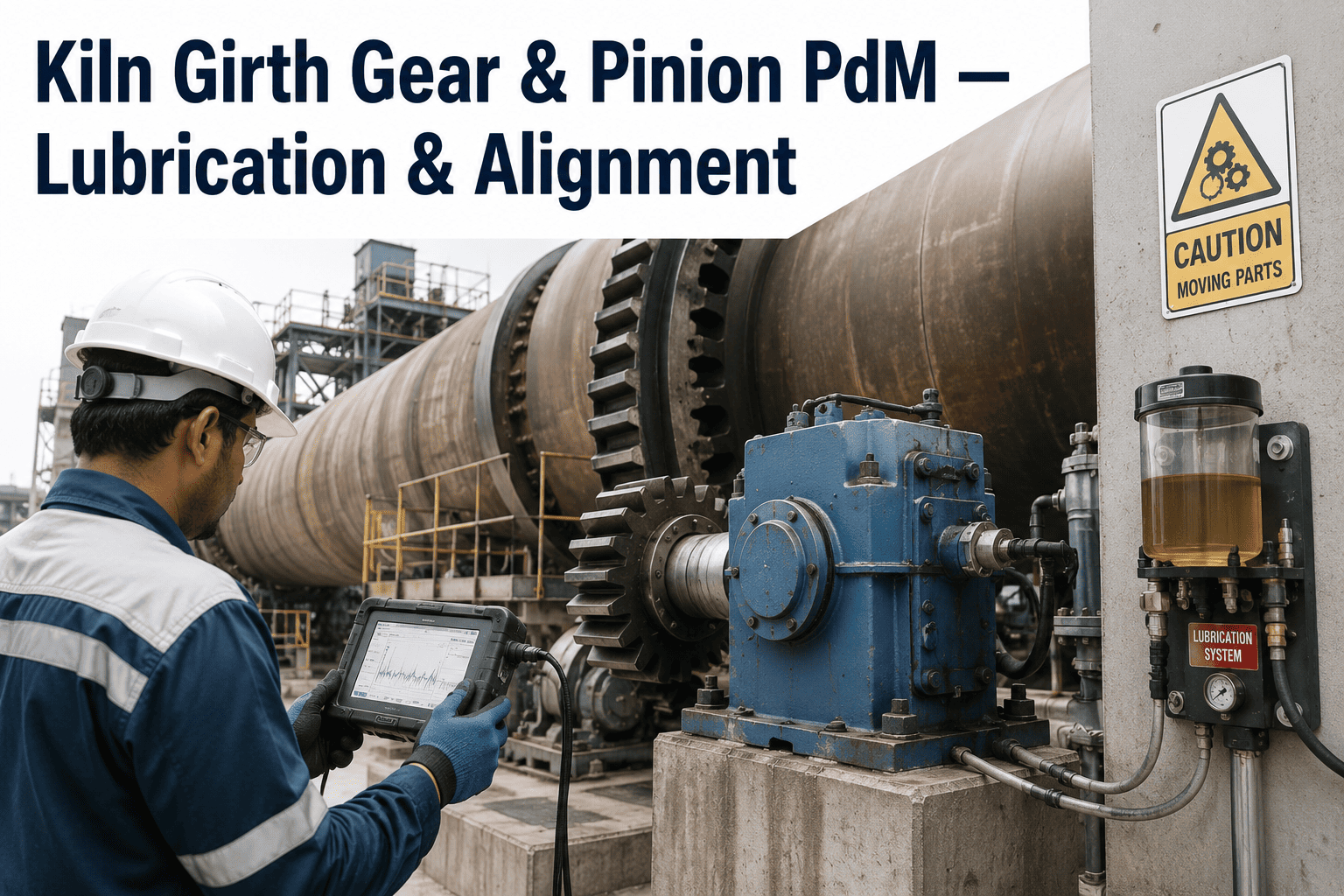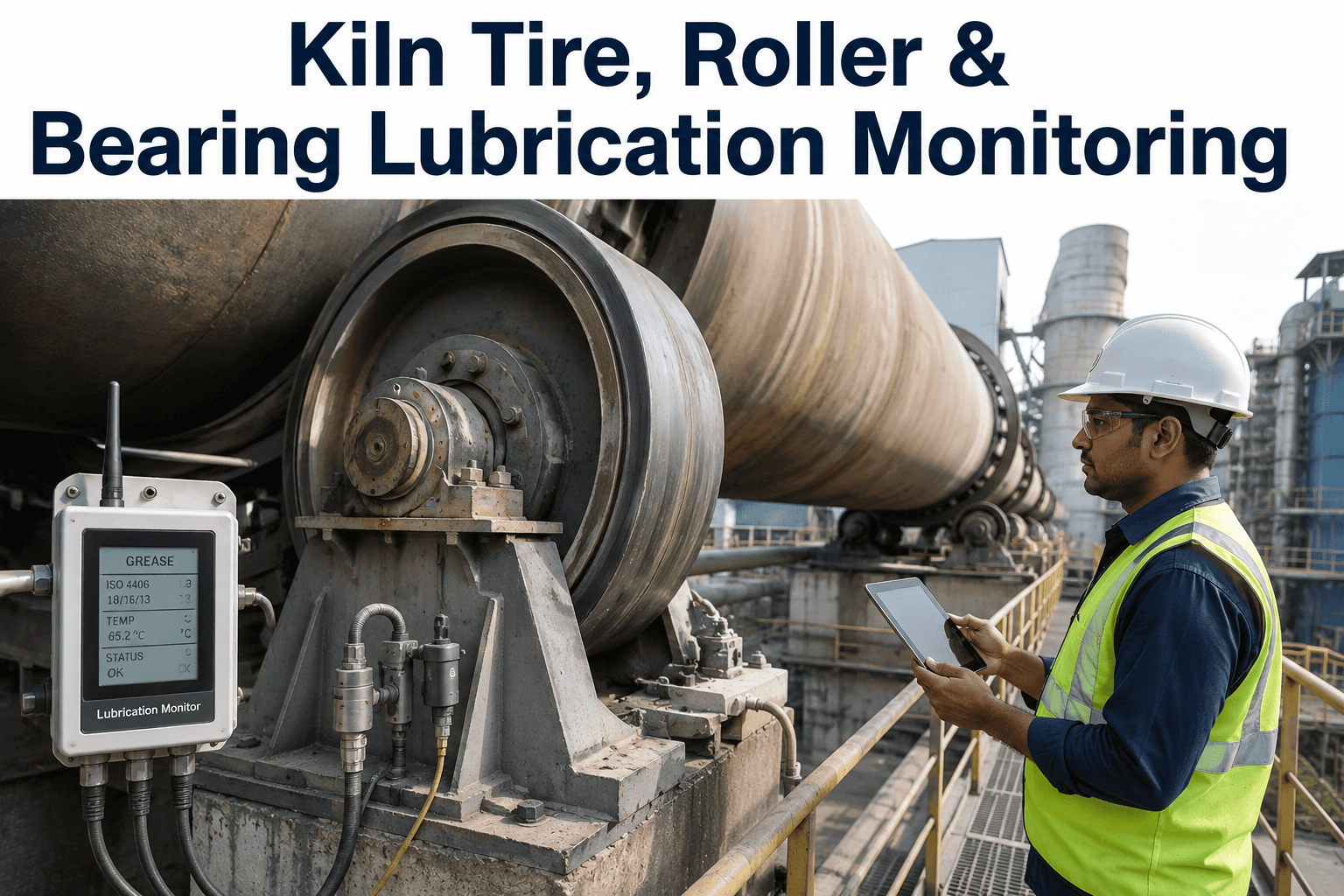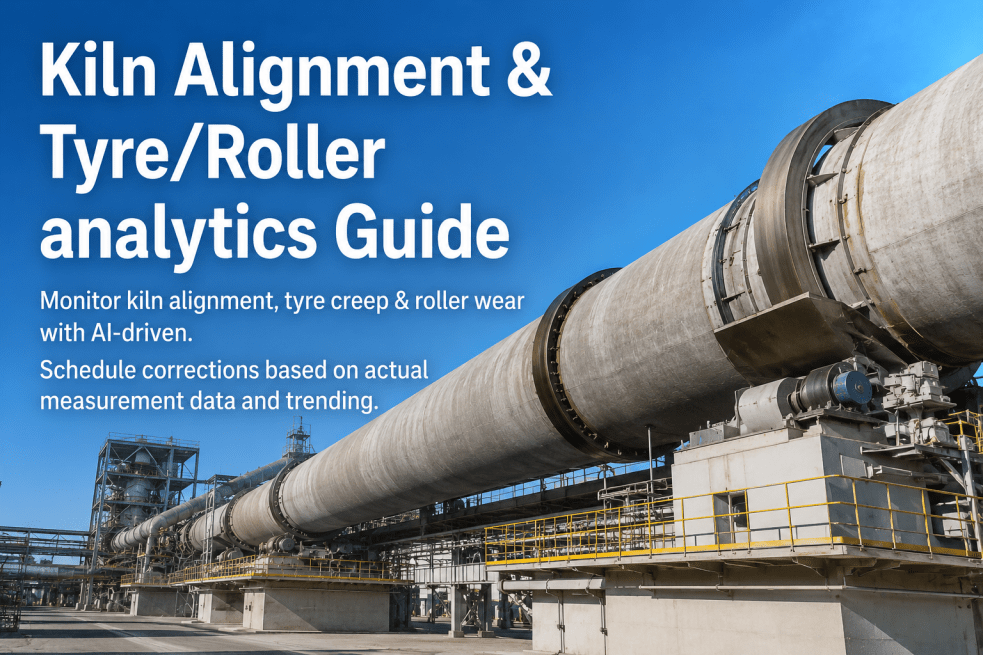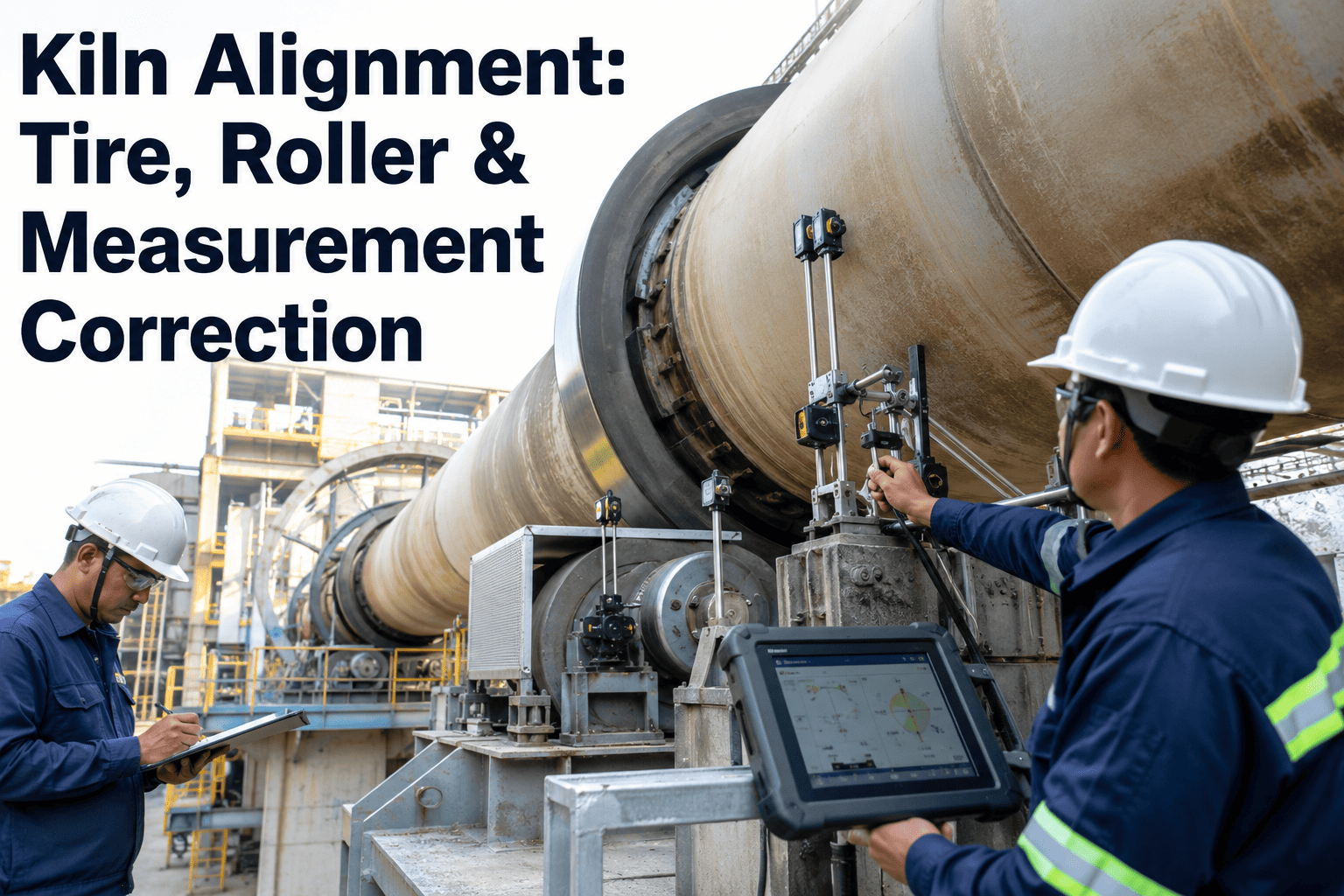
A kiln shell that drifts out of alignment by even a few millimeters rarely announces itself with an alarm. It shows up first as a hot spot on the shell plate, a tire face wearing faster on one edge than the other, a trunnion bearing running a few degrees warmer than it did last quarter, and refractory brick failing months short of its rated campaign life. By the time vibration or an unplanned stop forces attention, the deviation has usually been building for a year or more, quietly overloading the piers, the trunnions, and the girth gear in ways the original design never intended. Tracking tire and roller alignment as a measured, recurring discipline rather than a reactive fix is what separates plants that get a full tire life out of their kiln from plants replacing components early — iFactory's reliability platform is built to make that tracking routine instead of exceptional.
Kiln Alignment Doesn't Fail Suddenly. It Fails One Missed Reading at a Time.
Tire wear, roller skew, and axial thrust don't show up as a single event — they accumulate across months of readings nobody compared side by side. Structured alignment monitoring catches the trend before it becomes a shell crack.
Five Signs Your Kiln Is Already Out of Alignment
Misalignment rarely presents as one obvious symptom. It presents as a cluster of small, individually explainable issues that only look like a pattern once someone lines the readings up. Most plants catch these signs individually and treat each as isolated — a tire regrind here, a bearing replacement there — without ever asking whether the shell axis itself has drifted.
Why Kilns Drift Out of Alignment in the First Place
Alignment deviation is almost never caused by one dramatic event. It accumulates through a chain of ordinary operating conditions that, left unchecked, compound into a shell axis that no longer matches the design line.
Foundation and pier settlement
Concrete piers settle unevenly over years of thermal cycling and vibration, gradually shifting the elevation of one support point relative to the others without any single dramatic movement.
Thermal shell deflection under load
A cold alignment survey cannot see how the shell actually behaves once it's carrying the full thermal load of clinker production — the shape the kiln takes at temperature is often meaningfully different from its shape at rest.
Roller skew drifting off setpoint
Support rollers are deliberately set with a small skew angle to induce controlled axial thrust that keeps the shell floating correctly between its retaining devices. That skew can creep off its original setting through vibration and wear.
Tire and trunnion wear compounding the error
Once contact geometry between tire and roller shifts even slightly, line contact becomes point contact, wear accelerates, and the resulting wear pattern itself becomes a new source of misalignment.
Cold Alignment vs. Hot Kiln Alignment: What Each Method Actually Tells You
Plants frequently rely on a single cold alignment survey performed years apart and treat it as sufficient. The two methods answer fundamentally different questions, and confusing them is one of the more expensive mistakes in kiln reliability planning.
| Factor | Cold Alignment Survey | Hot Kiln Alignment (NKM) |
|---|---|---|
| Kiln state during measurement | Shut down, cooled, static | Running at normal process temperature |
| Captures thermal shell deflection | No | Yes — this is the primary value of the method |
| Captures true load distribution | No | Yes, across all support piers simultaneously |
| Typical readings per pier | Single static reading | Minimum six angular positions per pier |
| Best used for | Baseline documentation, post-repair verification | Ongoing reliability monitoring, correction planning |
Measurement Instruments: Theodolite, Laser Tracking, and Triangulation
The instrument used to take the reading shapes both the accuracy of the survey and how disruptive it is to normal kiln operation. None of the three is universally correct — the right choice depends on whether the kiln can be shut down, how quickly results are needed, and how much precision the correction plan requires.
Optical Theodolite Survey
A theodolite stationed on the kiln axis line sights target prisms centered on the rollers and tires; the resulting angles and distances give elevation and offset. A skilled crew can achieve accuracy in the half-millimeter class, though the process is slower and depends heavily on operator experience.
Laser Tracking Survey
A laser tracker positioned at multiple points along the kiln builds a full three-dimensional coordinate model of tire and trunnion diameters and face profiles, capturing sub-millimeter accuracy and locating tire axis position typically within one millimeter.
Triangulation-Based NKM
Optical or laser targets are placed at each pier position to capture shell center coordinates while the kiln continues rotating, with readings taken at a minimum of six angular positions per pier to build a true operating-geometry picture.
Every Alignment Reading Is Only Useful If It's Compared to the Last One
A single survey is a snapshot. A trend across surveys is what actually predicts tire wear, bearing failure, and shell stress before they become a shutdown. iFactory logs every reading against the asset record so drift is visible the moment it starts.
Alignment Tolerances Worth Tracking on Every Survey
Not every tolerance carries equal weight. These four are the ones most consistently cited as the leading indicators of a kiln heading toward mechanical trouble, and each should be trended over time rather than viewed as a pass or fail check on a single day.
Correcting a Misaligned Kiln: The Standard Sequence
Correction follows survey, and jumping straight to roller adjustment without a complete data set is one of the more common ways a well-intentioned fix makes the underlying problem worse.
Establish the baseline survey
Take a complete set of readings across every pier before touching any roller, so the correction plan is based on the full picture rather than the one pier that happens to be showing symptoms.
Model deviations against the design axis
Plot every pier's measured position against the original design line to identify which piers are truly out of tolerance versus which are compensating for a deviation elsewhere in the system.
Correct roller skew before elevation
Axial thrust problems are typically addressed first, since an uncontrolled thrust condition will continue damaging tires and thrust bearings even after elevation corrections are made.
Adjust pier elevation and roller positioning
Shim or reposition support rollers to bring the shell axis back within tolerance, working pier by pier rather than making sweeping adjustments across the whole kiln at once.
Re-verify under hot running conditions
A correction made cold must be confirmed with a hot survey once the kiln is back at operating temperature, since thermal deflection can reveal residual deviation a cold check would miss entirely.
A Composite Scenario: What an Untracked Skew Actually Costs
A 4,500 TPD Kiln, Eight Months of Small Signals
Consider a mid-size cement line running a 4,500 tonne-per-day kiln with three support piers. Over eight months, the second pier's downstream thrust roller had quietly drifted a few tenths of a degree off its design skew angle — not from a single event, but from the ordinary vibration of daily operation. Individually, nothing looked alarming: the thrust bearing on that pier ran a little warmer than usual, the tire on that pier developed slightly more wear on its downstream edge, and maintenance logged both as routine wear items and moved on.
No one connected the two readings because no one was trending them against each other. By month eight, the shell had migrated close enough to its axial limit that the retaining device engaged harder than its design tolerance intended, and the resulting point-contact wear on the tire accelerated sharply in the following weeks. The eventual fix required an unplanned shutdown, a full hot alignment survey, roller re-skewing, and a tire regrind — work that a routine quarterly trend check would have flagged as a developing pattern five or six months earlier, while the correction was still a scheduled adjustment rather than an emergency one.
The lesson the plant took forward mirrors what most kiln reliability engineers already know but few plants act on consistently: individual readings are diagnostic only when they're compared against their own history, pier by pier, survey by survey — not evaluated in isolation against a generic tolerance sheet.
Metrics That Show an Alignment Program Is Actually Working
Whether replacement intervals for tires and rollers are lengthening as alignment tracking matures, compared to the plant's historical replacement cadence before structured monitoring began.
Whether bearing temperature differentials between opposing rollers on the same pier are narrowing over successive surveys, a direct signal that thrust load is being carried evenly.
Whether refractory zones that historically failed early due to shell hot-spotting are now reaching closer to their rated campaign life as shell geometry stabilizes.
Whether the ratio of scheduled correction work to emergency correction work is shifting toward planned intervention as drift gets caught earlier in its progression.
Frequently Asked Questions
How often should a rotary kiln alignment survey be performed?
Most reliability programs run a full hot kiln alignment survey annually, with lighter interim checks on thrust bearing temperature and roller skew on a quarterly basis. Kilns showing active wear symptoms, recent refractory failures in a repeating zone, or any recent foundation work generally warrant a shorter interval until the trend stabilizes. Visit support for guidance on setting an interval specific to your kiln's age and duty cycle.
Can alignment correction be done without stopping the kiln?
Measurement can be performed while the kiln runs using hot kiln alignment (NKM) methods, which is in fact the only way to capture true thermal shell deflection and operating load distribution. Physical correction work — adjusting roller position, elevation, or skew — does require a shutdown, though the survey that identifies exactly what needs correcting does not.
What's the real difference between cold alignment and hot kiln alignment?
Cold alignment measures the kiln at rest, which is useful for baseline documentation but cannot see how the shell behaves once it's carrying full thermal load. Hot kiln alignment measures the running kiln at operating temperature, capturing the actual load distribution, shell deflection, and pier elevation that matters for predicting wear and planning correction.
How do we know if roller skew is the actual root cause versus a symptom?
Skew set incorrectly, or drifting under load, creates axial thrust that works against the retaining device and shows up as accelerated tire wear on one edge plus elevated thrust bearing temperature on the corresponding pier. If those two signals move together across successive readings, skew is very likely the root cause rather than an unrelated symptom. Trending both against each other, not just each in isolation, is what confirms the diagnosis.
How does iFactory help manage kiln alignment data over time?
iFactory logs every survey reading — pier elevation, tire wear measurement, roller skew angle, and thrust bearing temperature — against the specific kiln's asset record, so deviations are visible as a trend rather than buried in a folder of separate survey reports. Book a demo to see how alignment history is tracked alongside your existing maintenance workflow.
Don't Wait for a Tire Regrind to Find Out Your Kiln Drifted
Alignment deviation is one of the most predictable failure paths in a cement plant — predictable enough that a consistent trend of readings will show it coming months before a shutdown does. iFactory gives your reliability team the structure to catch it early.