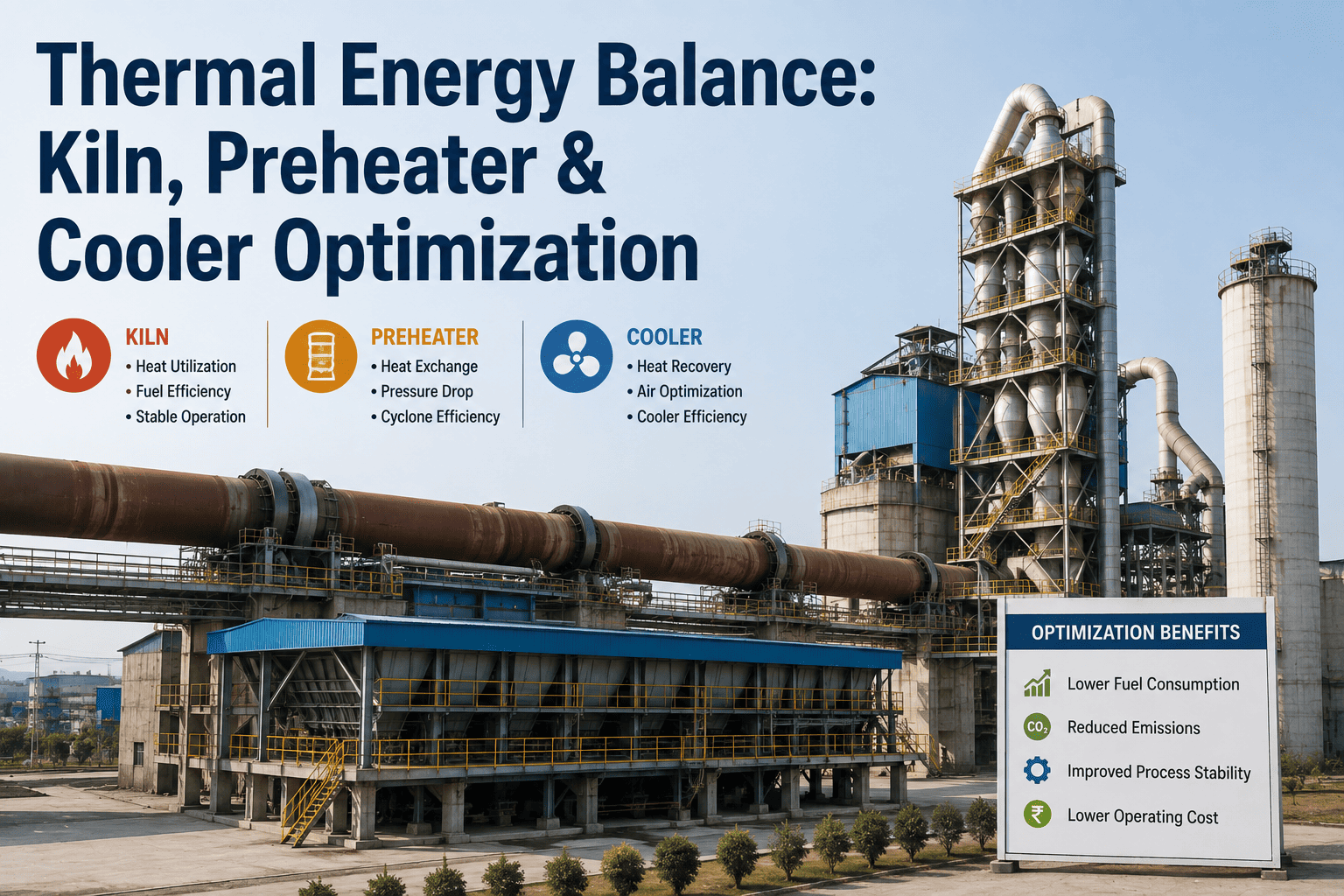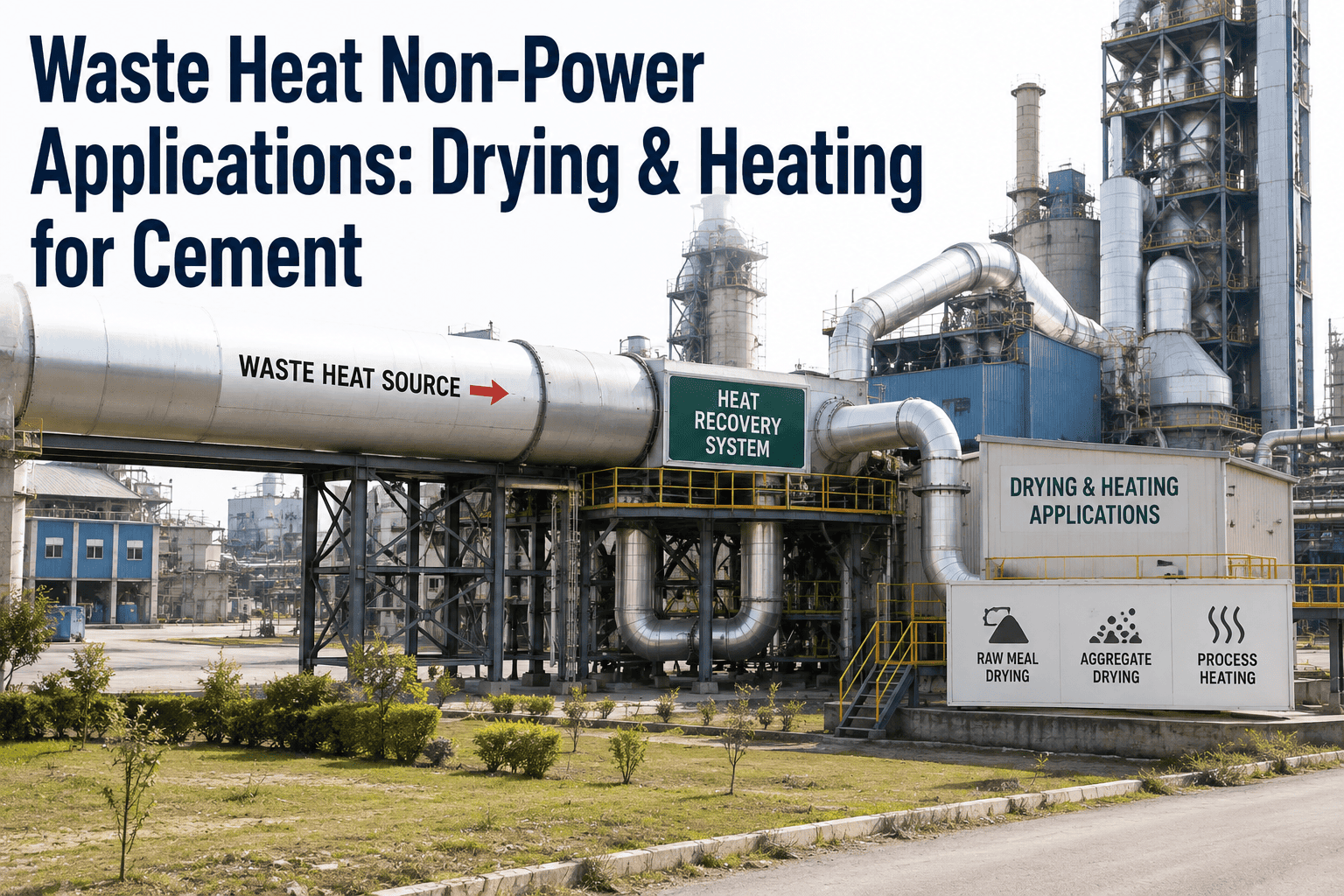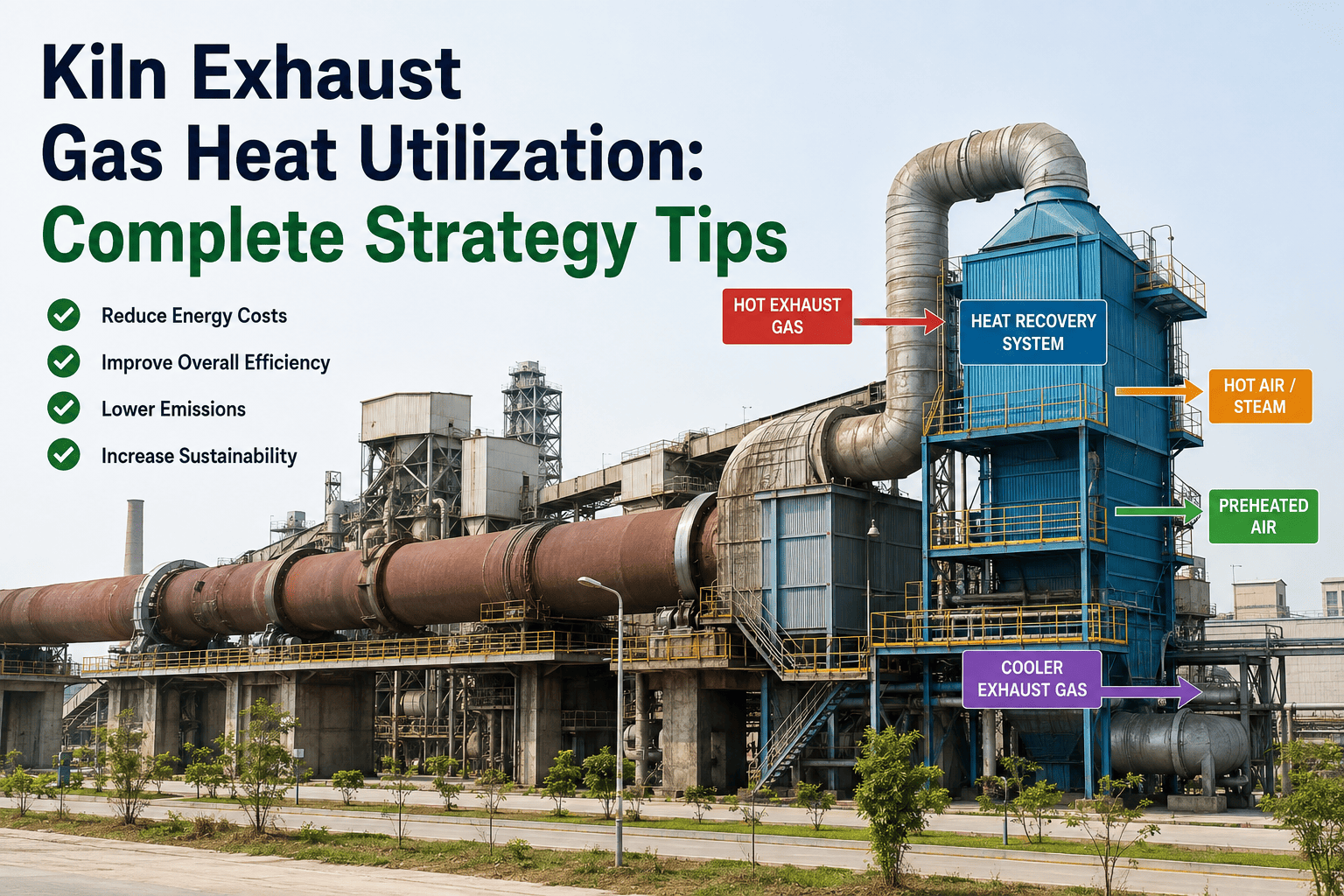
Every kiln in a cement plant is quietly discarding one of its most valuable byproducts: hot exhaust gas leaving the preheater tower at 300°C to 350°C, carrying enough thermal energy to dry raw material, generate electricity, or both. Most plants use some of it, almost by default, because the raw mill has always pulled preheater gas for drying. Far fewer plants have ever sat down and asked whether that gas is actually going to its highest-value destination, or whether a smarter split between drying, waste heat power, and preheating could recover meaningfully more value from the same exhaust stream. Book a demo to see how an AI-driven strategy can rebalance your exhaust gas allocation.
Kiln Preheater Exhaust Gas Heat Utilization Strategy
A complete framework for allocating preheater and cooler exhaust heat across raw mill drying, waste heat recovery power generation, and preheating applications, so no BTU leaves the stack unaccounted for.
Where Preheater Exhaust Heat Actually Goes
Once hot gas leaves the top cyclone stage, it has exactly three productive places to go, and every plant is already sending it to at least one without necessarily optimizing the split.
Raw Mill Drying
The most common destination. Hot exhaust gas dries raw material as it is ground, letting the mill process moist limestone and additives without a separate dedicated dryer, and this pathway is usually prioritized first because the mill cannot run efficiently without it.
Waste Heat Recovery Power Generation
Exhaust gas not needed for drying can be routed through a heat recovery steam generator to drive a turbine, converting thermal energy directly into electricity the plant can use internally or feed back into its own grid.
Preheating & Conditioning Applications
A smaller but still valuable share can preheat combustion air, condition gas temperature ahead of downstream equipment, or supplement drying capacity elsewhere in the plant when raw material moisture spikes seasonally.
Why Drying and Power Generation Compete for the Same Heat
Every unit of exhaust heat sent to raw mill drying is a unit unavailable for waste heat power, and few plants actively model that trade-off against raw material moisture and electricity demand in real time.
Share of available exhaust gas heat that can be diverted to power generation once raw material moisture is low enough to reduce drying demand.
Typical waste heat power output range recoverable from combined preheater and cooler exhaust on a mid-size kiln line.
Common payback period for a waste heat recovery power system once fuel and grid electricity costs are factored in.
How often raw material moisture shifts enough to change the ideal drying-versus-power split, yet allocation is rarely adjusted that often.
What Changes When Allocation Responds to Real Conditions
A fixed split between drying and power generation is simple to operate, but it leaves value on the table whenever conditions move away from the assumptions it was designed around.
| Factor | Fixed Allocation | Dynamic AI-Driven Strategy |
|---|---|---|
| Response to raw material moisture | Static split regardless of moisture | Continuously rebalanced to actual moisture |
| Electricity price sensitivity | Not factored into allocation | Weighted against real-time grid pricing |
| Seasonal adjustment | Manual, infrequent review | Automatic seasonal recalibration |
| WHR turbine utilization | Often under-loaded during dry seasons | Maximized whenever drying demand drops |
| Visibility into lost potential | Rarely quantified | Reported as recoverable MW and dollars |
Stop Leaving Recoverable Power on the Table
iFactory's AI-driven energy platform continuously tracks raw material moisture, exhaust gas temperature, and electricity demand, then recommends the ideal split between drying, waste heat power, and preheating in real time instead of once a year.
Preheater Exhaust and Cooler Air Are Not the Same Resource
Plants running waste heat recovery typically draw from two distinct hot gas streams, and each behaves differently enough that a strategy has to treat them separately.
Preheater Tower Exhaust (AQC Stream)
Gas exiting the top cyclone stage carries the largest share of recoverable heat and is the primary source for both raw mill drying and the boiler feeding a waste heat power turbine.
Clinker Cooler Exhaust (SP Stream)
Excess air leaving the clinker cooler, beyond what the kiln needs as combustion air, runs cooler than preheater exhaust but still carries enough thermal energy to contribute meaningfully to a WHR boiler.
Post-Recovery Exit Temperature
After a well-designed heat exchanger extracts usable energy, gas typically exits around this range, the point at which further recovery becomes impractical relative to the equipment cost involved.
A Practical Path to Optimized Exhaust Gas Utilization
Plants that get the most value out of their exhaust gas treat the allocation as an ongoing optimization problem rather than a one-time engineering decision.
Quantify Total Available Heat
Measure preheater exhaust and cooler excess air temperature and flow rate continuously so the true recoverable thermal energy is known, not estimated from a single commissioning test years ago.
Establish the True Drying Requirement
Track raw material moisture in real time so the mill only draws the exhaust heat it actually needs, instead of a fixed allocation sized for worst-case wet season conditions year-round.
Size Waste Heat Power Around the Remainder
Design or retrofit WHR capacity based on the heat genuinely left over after drying demand is met, rather than assuming a static split that under-loads the turbine during low-moisture periods.
Weight Allocation Against Electricity Value
When grid electricity prices or on-site demand rise, shifting more exhaust heat toward power generation can be worth more than maintaining a conservative drying buffer that isn't currently needed.
Automate the Rebalancing
Let a continuously updated model shift the drying-versus-power split as conditions change throughout the day and across seasons, instead of relying on an annual manual review.
Kiln Exhaust Gas Heat Utilization — Questions Answered
What process and energy engineers ask most often when building a comprehensive exhaust gas heat strategy.
Q: How much of the preheater exhaust gas is actually available for waste heat power once drying needs are met?
It depends heavily on raw material moisture, but in many plants more than half of the exhaust heat theoretically available for power generation is being redirected to drying during wetter periods, and that share drops significantly once moisture is low. This is exactly why a fixed split leaves value on the table for a large part of the year, since the ideal balance shifts with conditions the allocation was never designed to track.
Q: Should we prioritize raw mill drying or waste heat recovery power when the two compete for the same gas?
Drying generally has to come first since an under-dried raw mill directly limits production throughput, but the amount of heat genuinely required for drying is usually smaller than the amount conservatively allocated to it. Once actual moisture-based drying demand is measured accurately, the remaining heat available for power generation is often larger than plants assume. Book a demo to see your plant's actual drying-versus-power balance.
Q: What is a realistic payback period for a waste heat recovery power system?
Payback typically falls in the six to eight year range depending on installed capacity, local electricity pricing, and how much of the theoretically available exhaust heat is actually captured, though plants replacing high-cost grid electricity can see materially faster returns. Systems designed around a dynamically optimized allocation rather than a fixed, conservative split tend to capture more usable heat and shorten that payback window.
Q: Does seasonal humidity meaningfully change the ideal exhaust gas allocation?
Yes, because raw material moisture typically tracks ambient humidity and rainfall patterns, drying demand can shift enough across seasons to justify a materially different exhaust gas split between wet and dry months. Plants that only review this allocation once during commissioning are effectively running a compromise setting for most of the year instead of the setting best suited to current conditions.
Q: How does an AI-driven platform actually improve on a manually engineered exhaust gas strategy?
A manually engineered strategy is set once and reviewed rarely, while an AI-driven platform continuously tracks moisture, temperature, flow, and electricity value to recommend allocation changes as conditions shift throughout the day and across seasons. This turns a static engineering decision into an ongoing optimization loop that captures value a fixed split structurally cannot reach. Our support team can walk through how this model integrates with your existing WHR system.
Turn Exhaust Heat Into a Managed Asset, Not a Fixed Setting
Raw mill drying, waste heat power, and preheating are all competing for the same gas stream. Let iFactory continuously optimize the split based on real moisture, temperature, and electricity conditions, so your plant captures the full value of every degree leaving the preheater tower.