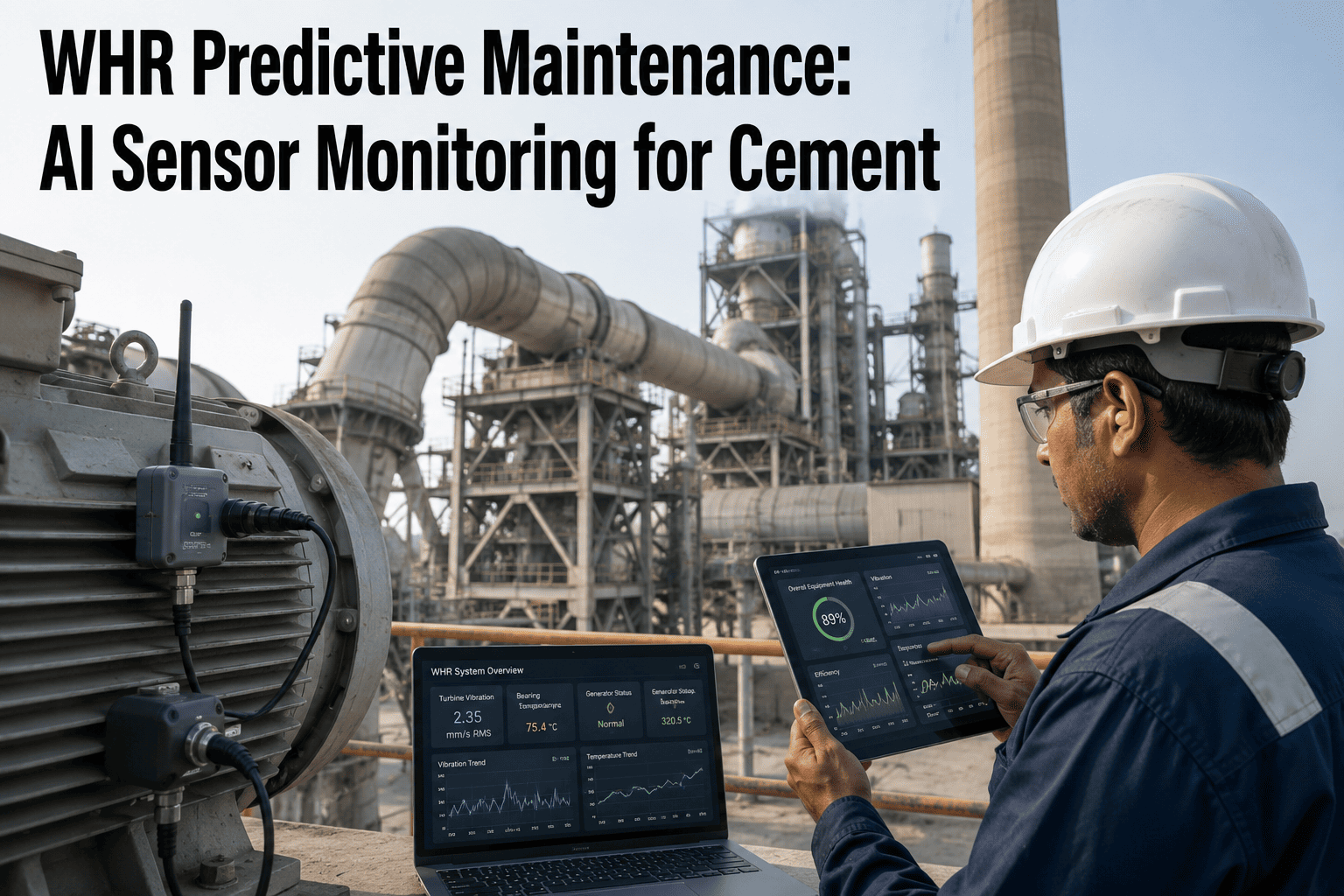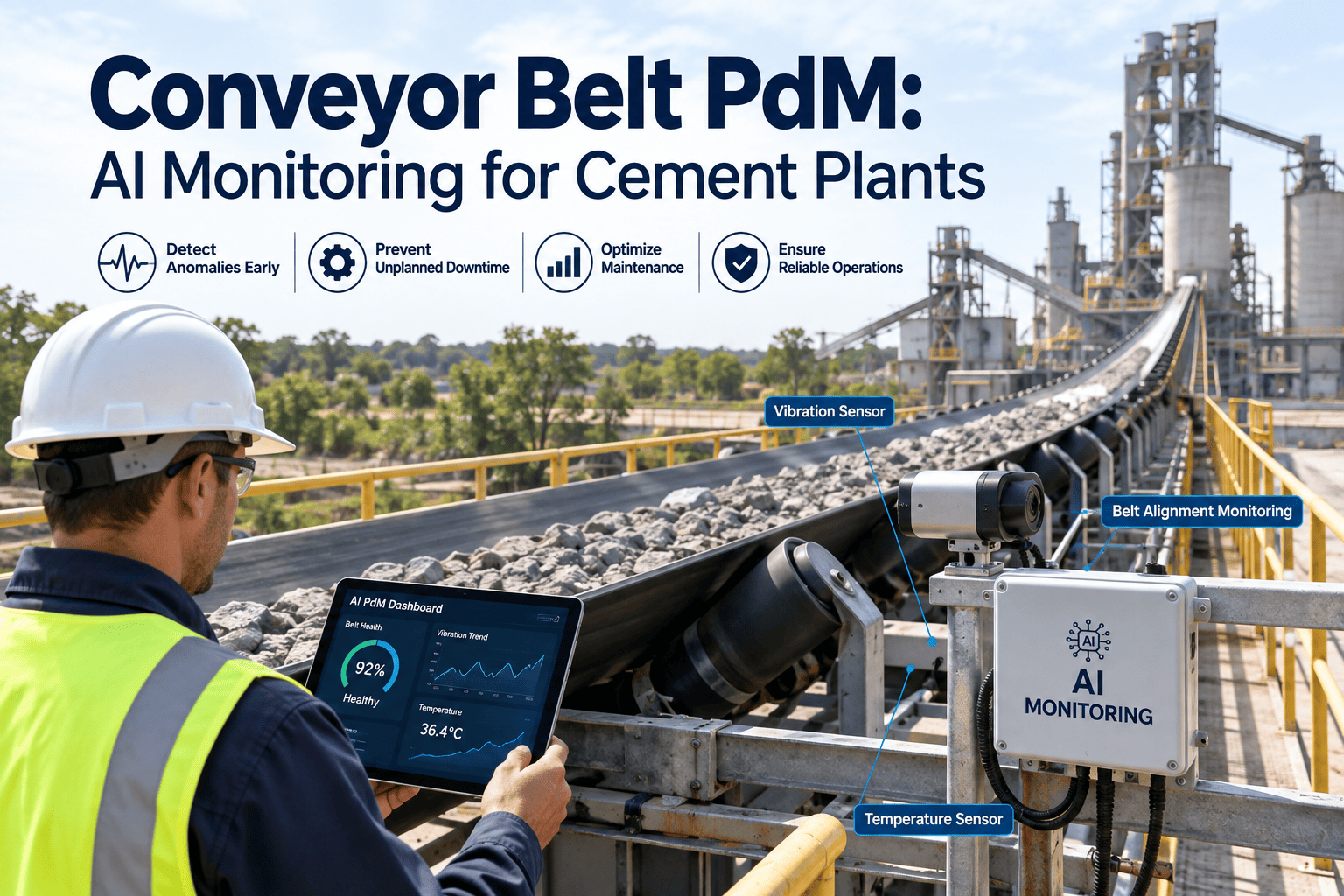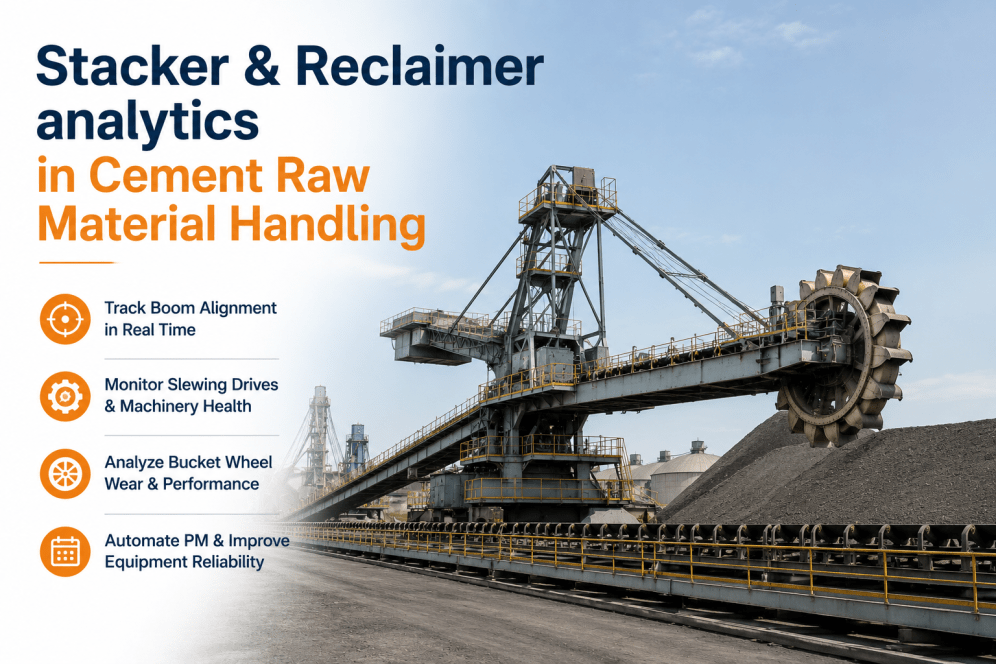
An overhead crane failure at a cement plant rarely announces itself in advance — a wire rope frays until it doesn't, a brake wears until it slips, and by the time anyone notices, the crane is down and so is whatever material flow depended on it. Grab cranes, stackers, and reclaimers carry the same risk, just at a larger scale and a higher cost per hour of downtime. Predictive maintenance turns these inspections from a scheduled walk-around into a continuous, data-backed view of asset health. Book a demo to see how this looks across your material handling fleet.
Material Handling Equipment Fails Quietly, Then Suddenly
Cranes, stackers, and reclaimers are load-bearing, safety-critical, and expensive to replace on short notice. Predictive maintenance catches the wear signals — wire rope degradation, brake wear, structural fatigue — long before they become an unplanned stoppage.
Three Things That Make Cranes Higher Stakes
Material handling equipment combines safety exposure, single points of failure, and long replacement lead times.
What Gets Monitored, and Why
Each asset type in the material handling fleet has a different dominant failure mode worth tracking.
Overhead Cranes
Wire rope condition, hoist brake wear, and bridge and trolley drive vibration are the leading indicators of an approaching failure.
Grab Cranes
Grab cycle count, hydraulic or wire tension patterns, and structural loading on the boom reveal fatigue before cracks appear.
Stackers
Boom conveyor belt condition, slew bearing wear, and travel wheel alignment drive most unplanned stacker downtime.
Reclaimers
Bucket wheel bearing health, drive motor load, and rail alignment are the highest-value monitoring points on a reclaimer.
A Wire Rope Doesn't Fail Without Warning
It thins, frays, and loses tensile strength gradually — the signal is there well before the failure, if something is watching for it continuously instead of once a quarter.
Getting From Scheduled Inspection to Continuous Monitoring
Most plants move through this in phases rather than instrumenting the whole fleet at once.
Rank the Fleet by Criticality
Identify which cranes and material handlers are true single points of failure for production, and prioritize those first.
Instrument Wire Rope and Brakes
Add condition sensing on hoist wire ropes and brake wear on the highest-priority assets before expanding further.
Add Structural and Vibration Monitoring
Extend coverage to slew bearings, drive vibration, and structural strain points on stackers and reclaimers.
Connect Alerts to Work Order Generation
Route condition alerts directly into the maintenance work order system so a flagged issue becomes a scheduled job, not an email that gets missed.
Scheduled Inspection vs Continuous Monitoring
The gap between the two shows up most in how early a developing fault gets caught.
| Capability | Scheduled Inspection | Continuous Monitoring |
|---|---|---|
| Wire rope wear detection | Found at next scheduled walk-around | Flagged as degradation trends upward |
| Brake wear tracking | Visual check only | Continuous wear trend against threshold |
| Structural fatigue | Assessed periodically by inspector | Strain data tracked between inspections |
| Response time | Delayed until next scheduled visit | Alert generated as thresholds are crossed |
A Crane Stoppage Rarely Stays Contained to the Crane
Because material handling equipment sits at chokepoints in the material flow, its downtime cost extends well past the repair bill.
What Actually Gets Installed on the Asset
Monitoring hardware varies by failure mode, and most cranes need a combination rather than a single sensor type.
Load Pin Sensors
Measure actual hoisting load against rated capacity, flagging overload events that accelerate wear on wire rope and structural components.
Vibration Accelerometers
Mounted on drive motors and gearboxes, these detect bearing wear and misalignment developing on bridge, trolley, or slew drives.
Wire Rope Magnetic Sensors
Detect broken wires and cross-sectional area loss inside the rope that a visual inspection alone would miss until much later.
Brake Wear Sensors
Track pad or lining thickness continuously, replacing a manual measurement that typically only happens during scheduled shutdowns.
Crane and Material Handling PdM — Common Questions
What plant reliability teams ask before instrumenting cranes, stackers, and reclaimers.
Q: Does predictive maintenance replace regulatory crane inspections?
No, statutory inspections still need to happen on their required schedule regardless of what continuous monitoring shows, since they cover compliance requirements beyond condition data alone. What predictive maintenance adds is visibility between those scheduled inspections, catching a developing fault long before the next mandated check. Many plants find that continuous data also makes the statutory inspection faster, since inspectors can review trend history beforehand. Our support team can help map monitoring around your existing inspection calendar.
Q: Which asset should a plant start monitoring first?
Start with whichever crane or material handler represents the biggest single point of failure for production, typically the unit with no backup path for the material it moves. A secondary consideration is asset age and maintenance history, since older equipment with a history of unplanned failures benefits most from early warning. Trying to instrument the entire fleet at once usually stalls the project; a phased rollout starting with the highest-risk asset gets value faster.
Q: How is wire rope condition actually monitored without stopping the crane?
Wire rope condition monitoring typically combines periodic non-destructive testing with continuous load and cycle count tracking, which together build a wear trend without requiring the crane to be taken out of service for constant manual inspection. Cycle count and load history are strong proxies for cumulative wear between physical inspections. This approach extends inspection intervals safely rather than shortening them, since the data shows whether wear is progressing faster or slower than expected.
Q: What's the biggest mistake plants make when rolling this out?
Treating alerts as informational rather than actionable is the most common failure point — a condition alert that doesn't automatically generate a work order or notify the right person tends to get read once and then ignored. The value only shows up when monitoring is tied directly into the maintenance workflow, so a flagged issue becomes a scheduled task with an owner and a deadline. Plants that skip this integration step often abandon the monitoring program within a year.
Q: Can this be applied to older cranes without built-in sensors?
Yes, retrofit sensor packages exist for wire rope, brake wear, and vibration monitoring that can be added to existing cranes without replacing the crane itself. Older mechanical or hydraulic systems may need adapter hardware to interface cleanly, but full replacement is rarely required just to add monitoring. Book a demo to see what a retrofit path looks like for your existing fleet.
Watch the Wear Before It Becomes a Failure
Cranes, stackers, and reclaimers give off warning signs well before they fail — wire rope tension, brake wear, structural strain. Continuous monitoring catches those signals early enough to schedule the fix instead of reacting to the stoppage.