
Most cement plants have a maintenance department. Far fewer have a reliability function, and the difference between the two shows up clearly in the data: maintenance departments respond to failures and execute planned work orders, while a reliability function exists specifically to reduce how often those failures happen in the first place. Plants that never separate the two roles tend to stay locked in a reactive cycle indefinitely, because the people responsible for fixing today's breakdown rarely have the time or mandate to also investigate why it happened and prevent the next one. Building a dedicated reliability engineering organization — even a small one — is consistently the highest-leverage structural change a cement plant can make, and iFactory's team has helped plants define exactly what that team should look like.
Reliability Engineering Organization for Cement Plants
Role definitions, FMEA facilitation, and RCA process design for building a reliability function that actually reduces failures.
Maintenance Fixes Failures. Reliability Prevents Them.
The core organizational problem in most cement plants is not a lack of skilled technicians — it is that everyone with maintenance knowledge is fully occupied executing work orders, leaving no dedicated capacity to ask why the same gearbox keeps failing every eighteen months or why the same bearing keeps overheating on the same fan. A reliability engineering function solves this by carving out roles whose entire job is analysis and prevention rather than execution: root cause analysis on repeat failures, FMEA facilitation on new or modified equipment, and reliability improvement projects that address the handful of bad actors responsible for most of a plant's downtime.
This is not about adding headcount for its own sake. A plant with even one or two dedicated reliability engineers, properly positioned with the authority to pull data and drive cross-functional investigations, consistently outperforms a much larger maintenance department that has no one whose job is to look backward at failure patterns and forward at design improvements.
The distinction becomes clearest when you trace where a maintenance department's time actually goes over a typical month. Emergency callouts, planned work order execution, permit-to-work paperwork, and shift handovers consume nearly all available hours for even a well-staffed team, leaving essentially no slack for the kind of multi-day investigation a proper root cause analysis requires. A technician who fixed the same gearbox coupling three times this year knows something is systematically wrong, but without dedicated time and organizational mandate to dig into torque logs, alignment records, and lubrication history across all three events, that knowledge stays as an informal observation rather than becoming a funded corrective action. A reliability function exists precisely to convert that kind of tacit frontline knowledge into a structured investigation with a documented root cause and a tracked fix — work that is valuable to every plant but that virtually never happens without someone whose job explicitly protects the time to do it.
Core Roles in a Reliability Function
Reliability Engineer
Owns failure mode analysis, leads FMEA sessions on critical equipment, and tracks the plant's bad-actor list — the small number of assets responsible for the majority of downtime hours.
RCA Facilitator
Leads structured root cause investigations after significant failures, ensuring the process reaches a true root cause rather than stopping at the first convenient explanation.
Reliability Data Analyst
Maintains the failure and downtime dataset, calculates MTBF and MTTR by asset class, and surfaces the trends that determine where reliability effort should focus next.
Reliability Improvement Project Owner
Converts RCA and FMEA findings into funded improvement projects — design changes, spec upgrades, or monitoring additions — and tracks them through to completion.
The RCA Process Reliability Teams Should Run
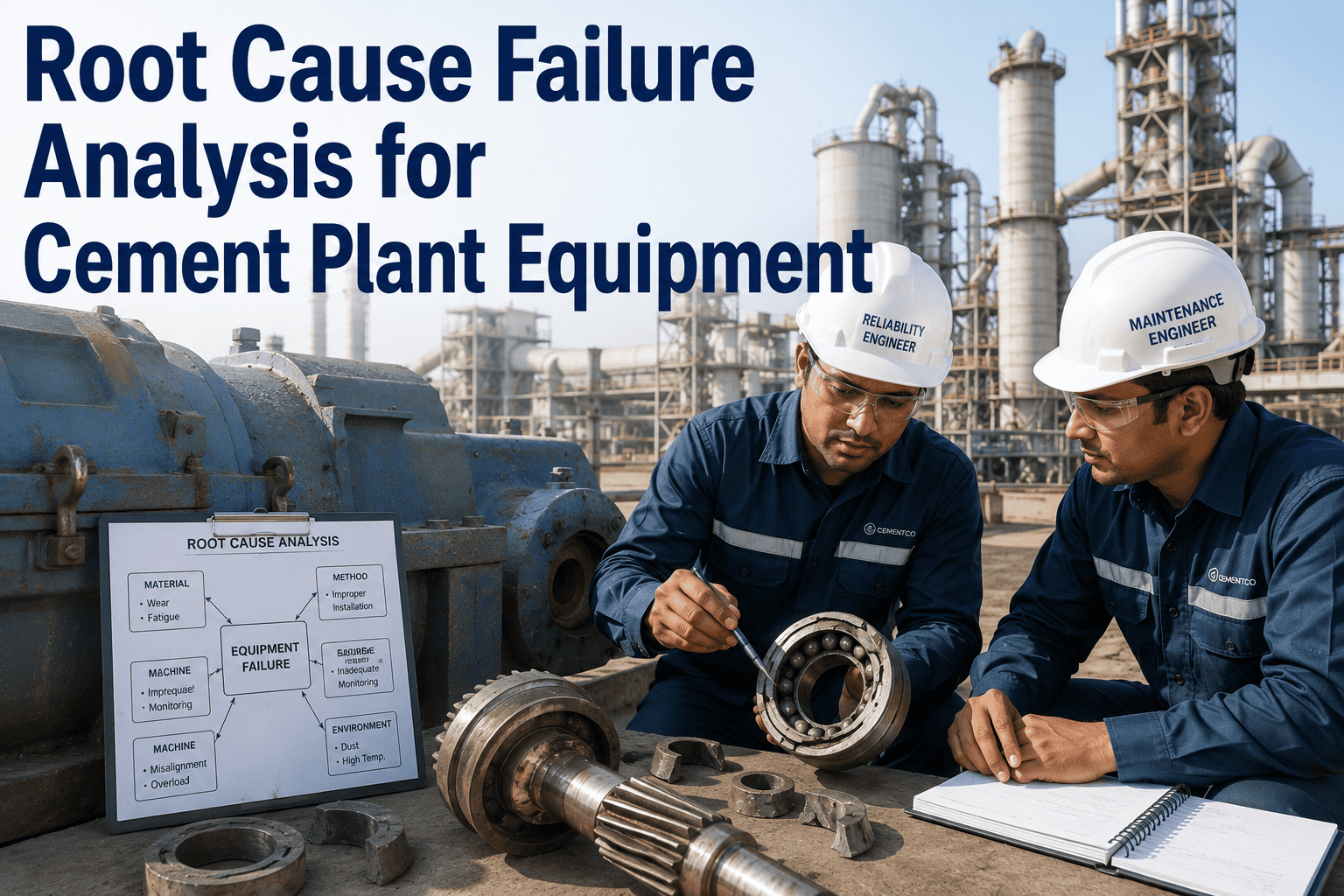
A root cause analysis is only useful if it consistently reaches an actionable root cause rather than stopping at symptoms. The five-stage process below is the standard structure iFactory recommends embedding into a reliability team's RCA workflow, with each stage's output feeding directly into the plant's CMMS or reliability tracking system.
FMEA: Structuring the Failure Mode Review
Failure Mode and Effects Analysis sessions are only as good as their facilitation. A reliability engineer's job in an FMEA session is to keep the cross-functional team — operations, maintenance, and process — disciplined about scoring severity, occurrence, and detection consistently rather than letting the risk priority number drift based on who is most vocal in the room.
| FMEA Element | What It Captures | Who Provides Input |
|---|---|---|
| Failure Mode | The specific way a component or system can fail | Maintenance technicians, reliability engineer |
| Effect of Failure | The downstream production or safety consequence | Operations, process engineer |
| Severity Rating | How serious the consequence is if it occurs | Cross-functional team, scored to a fixed scale |
| Occurrence Rating | How frequently this failure mode has historically occurred | Reliability data analyst, using CMMS history |
| Detection Rating | How likely current controls are to catch it before failure | Reliability engineer, instrumentation team |
Give Your Reliability Team a Single Source of Failure Data
We'll show you how iFactory consolidates MTBF, RCA history, and bad-actor tracking into one dashboard your reliability engineers can actually work from.
Building the Bad-Actor List: A Practical Example
A bad-actor list sounds abstract until you see how it actually gets built from raw CMMS data. Take a coal mill gearbox that has failed four times in three years, each time coded simply as "mechanical failure" with no further detail — on paper this looks like a single line item consuming a modest amount of downtime per event. When a reliability engineer pulls the full work order history, the pattern usually reveals itself: two of the four failures trace to the same bearing position, one followed a lubrication interval that had drifted from the OEM recommendation, and one occurred within weeks of a coupling misalignment repair that was never re-verified. What looked like four unrelated random failures is actually one recurring root cause — a lubrication and alignment verification gap — that a proper RCA would have caught after the second occurrence rather than the fourth.
This is the actual value a dedicated reliability role delivers that a purely execution-focused maintenance team structurally cannot: the time and mandate to pull four work orders together, notice the pattern, and drive a corrective action that prevents a fifth failure rather than simply executing the fifth repair when it comes. Plants that build this discipline into a real, tracked bad-actor list — reviewed monthly, with an owner and a target closure date for each item — consistently see their top five to ten repeat failures drop out of the list within twelve to eighteen months, freeing maintenance capacity that was previously consumed by the same handful of preventable events.
KPIs That Actually Measure Reliability Progress
A reliability function that reports the wrong metrics tends to lose organizational support within a year or two, because it becomes impossible to demonstrate whether the investment is working. Mean Time Between Failures, tracked per asset class rather than as a single plant-wide average, is the single most useful metric because it directly measures whether the failures a reliability team is targeting are actually becoming less frequent — a plant-wide average tends to hide improvement on specific bad actors underneath noise from dozens of unrelated equipment items. Mean Time To Repair, tracked separately, measures a different thing entirely — how efficiently the plant responds once a failure does occur — and improvements here usually come from spares availability and technician skill rather than from the reliability team's RCA and FMEA work, so the two metrics should never be blended into one composite number that obscures which lever actually moved.
Beyond the two classic reliability metrics, a mature reliability function also tracks RCA closure rate — the percentage of completed root cause investigations that resulted in a verified corrective action being implemented and confirmed effective, as opposed to investigations that identified a cause but never saw the recommended fix actually get funded and completed. This metric matters because RCA work that never converts into action is effectively wasted analytical effort, and tracking closure rate keeps pressure on the organization to follow through rather than letting investigation reports accumulate without consequence. A final metric worth tracking is the size and age of the active bad-actor list itself — a shrinking list with items closing faster than new ones are added is direct evidence the reliability function is working, while a list that stays the same size or grows despite active RCA work is a signal that either root causes are being missed or corrective actions are not addressing the actual problem.
Reliability Maturity: Where Does Your Plant Sit?
Most cement plants can place themselves on a four-level reliability maturity scale, and knowing which level you're at determines what the reliability function's first priority should be.
Reactive
No dedicated reliability role. Maintenance responds to breakdowns with no formal RCA process.
Planned
Preventive maintenance schedules exist, but RCA is informal and reliability data is not centrally tracked.
Proactive
Dedicated reliability engineer role exists, running structured RCA and tracking a bad-actor list with real MTBF data.
Predictive
Full reliability function integrated with predictive maintenance data, FMEA-driven design reviews, and funded improvement projects.
Building Skills: Training Path for a Reliability Role
Plants promoting an internal maintenance technician or engineer into a reliability role often underestimate how different the skill set is from execution-focused maintenance work. Root cause analysis facilitation, in particular, is a skill most technical staff have never formally practiced — running a structured investigation that resists the pull toward the first convenient explanation takes deliberate training and, ideally, mentored practice on real plant failures before someone leads an investigation independently. Recognized certification paths such as Certified Maintenance and Reliability Professional (CMRP) and formal RCA methodology training give a structured foundation, but the more valuable development usually comes from pairing a newly appointed reliability engineer with an experienced facilitator for their first several investigations.
FMEA facilitation carries a similar gap — the mechanics of scoring severity, occurrence, and detection are straightforward to teach, but keeping a cross-functional session disciplined and preventing scores from being negotiated based on organizational politics rather than genuine risk takes practiced facilitation skill. Plants building a reliability function from scratch often see faster results by bringing in outside facilitation support for the first two or three FMEA sessions and RCA investigations, using those sessions to train the internal reliability engineer through direct observation, rather than expecting a newly assigned engineer to run a fully independent, high-quality session on day one.
Frequently Asked Questions
Do we need to hire new headcount, or can maintenance staff take on reliability roles part-time?
Many plants start by carving out a partial allocation from an existing senior maintenance engineer's time rather than hiring immediately, which works reasonably well as a proof of concept but tends to break down once RCA and FMEA work compete with urgent breakdown response for the same person's attention. The plants that see the fastest reliability gains are ones that eventually protect at least one role's time entirely for reliability work, even if that role starts as a part-time reassignment before becoming a dedicated position once the value is demonstrated.
How is a reliability engineer's success measured differently from a maintenance manager's?
A maintenance manager is typically measured on work order completion rates, planned maintenance compliance, and overall wrench time, all of which are execution-focused metrics. A reliability engineer should instead be measured on trend metrics that reflect whether failures are actually decreasing — MTBF improvement on tracked bad actors, the number of RCAs that reached a verified root cause with a completed corrective action, and reduction in repeat failures on the same failure mode. Mixing these two measurement systems is a common reason reliability roles quietly drift back into execution work.
What's the minimum data history needed before RCA and bad-actor tracking becomes useful?
Six to twelve months of consistent failure and downtime logging in your CMMS is generally enough to identify the first meaningful bad-actor list, though the quality of that list depends heavily on how consistently failure codes and downtime reasons were recorded during that period. Plants with inconsistent historical data logging often need to spend the first few months of a reliability programme simply tightening up how failures are coded before the resulting bad-actor analysis can be trusted. Our support team can help assess whether your existing CMMS data is ready for this analysis.
How does predictive maintenance data change what a reliability engineer does day to day?
Without predictive maintenance data, a reliability engineer works almost entirely backward from failures that have already happened, using RCA to explain what went wrong after the fact. With continuous condition monitoring feeding into the same reliability dashboard, the role shifts toward validating and acting on early-warning signals before failure occurs, and RCA becomes reserved for the genuine outliers that predictive monitoring didn't catch, which is a much smaller and more informative set of investigations to run.
Should the reliability function report to maintenance or operate independently?
Reliability functions that report directly into the maintenance department's execution hierarchy often struggle to maintain the objectivity needed to investigate maintenance-caused failures honestly, since the person conducting the RCA may be reporting to the person whose team's work is under review. Plants with more mature reliability programmes typically have the function report to a plant engineering or operations excellence role that sits alongside, rather than under, maintenance — preserving the independence needed for RCA findings to be trusted by both maintenance and operations. This reporting structure also makes it easier for reliability findings to be acted on when the root cause points toward operations practices rather than maintenance execution, since an RCA that concludes an operator procedure contributed to a failure needs to be heard and acted on by operations leadership just as readily as one that points at a maintenance gap, and that balance is harder to maintain when the investigating function reports into only one of the two departments being examined.
Give Your Reliability Function the Data It Needs to Work
Book a 30-minute walkthrough of how iFactory centralizes failure history, RCA tracking, and bad-actor analysis for cement plant reliability teams.




.png)
-improvement-in-cement-plants.png)