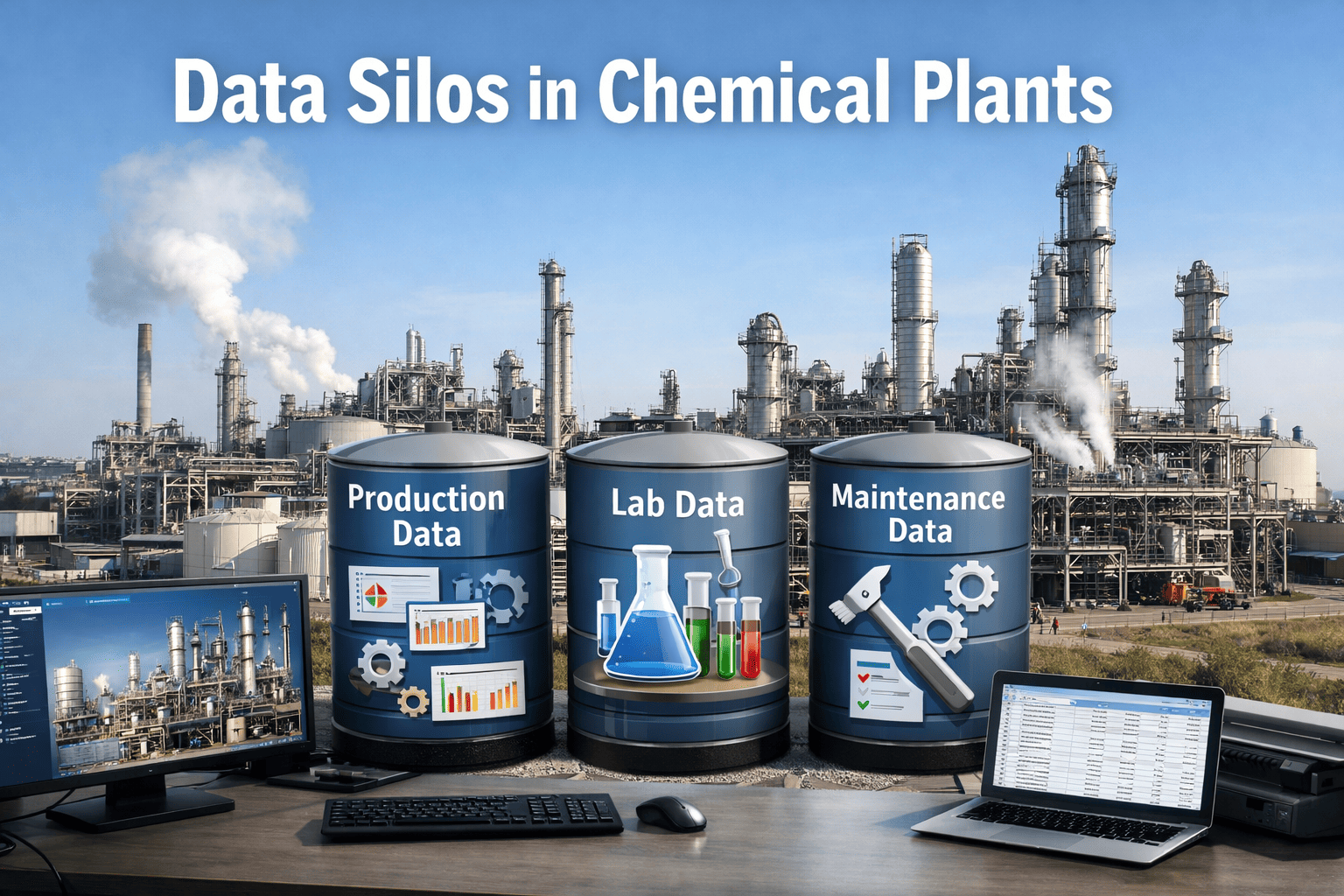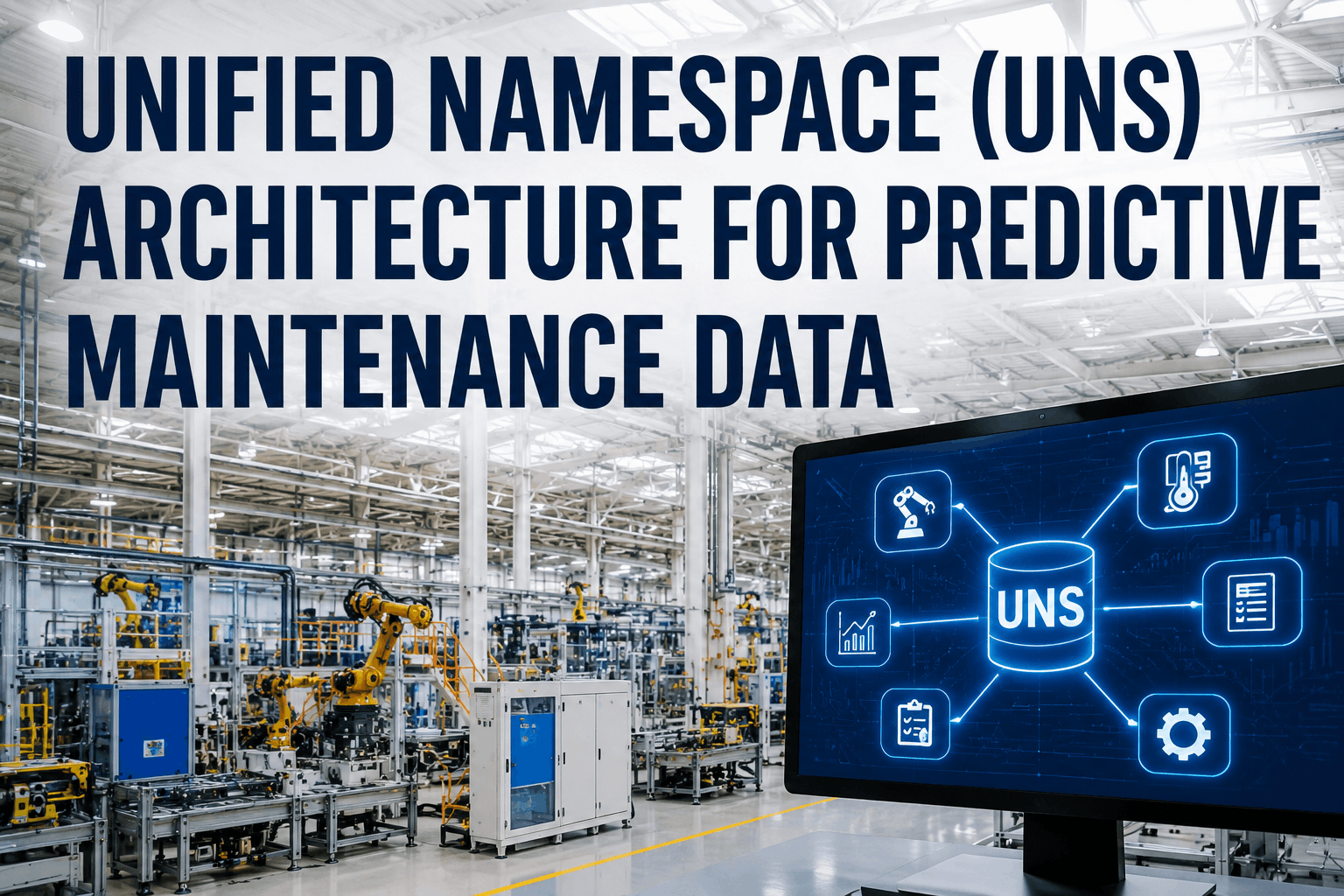
UNS organizes all maintenance data — PLC sensor readings, work orders, and quality records — into a single accessible namespace that AI models query without point-to-point integration overhead. Start Trial Free to see how iFactory implements UNS architecture to give predictive maintenance AI models continuous, context-rich data access across the full operational data landscape.
Give Every AI Model in Your Facility Access to All Maintenance Data — Without Point-to-Point Integration
iFactory builds on UNS architecture to make PLC data, work order records, quality metrics, and historian exports available to predictive maintenance models through a single, consistently structured data namespace.
Why Point-to-Point Integration Fails Predictive Maintenance AI
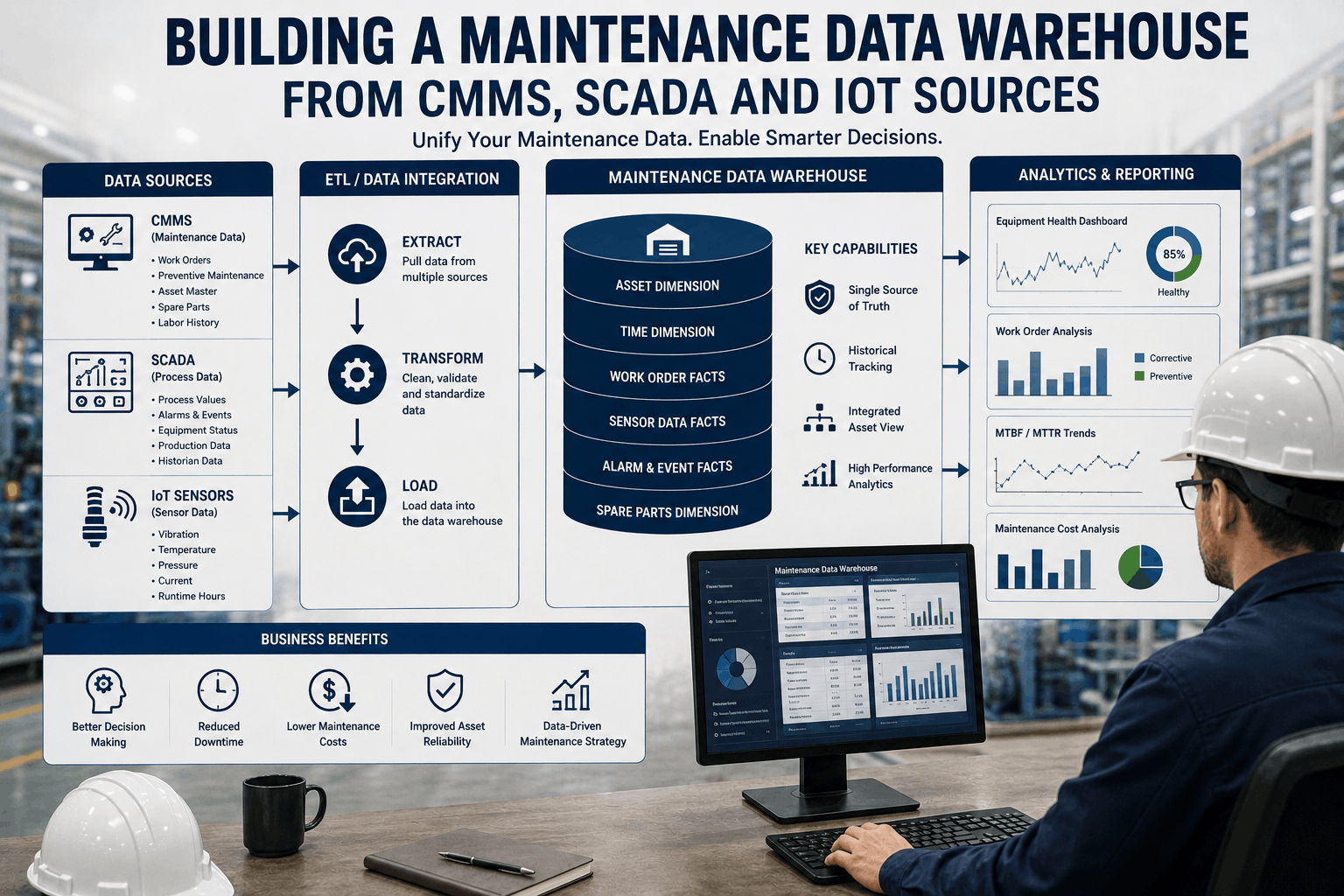
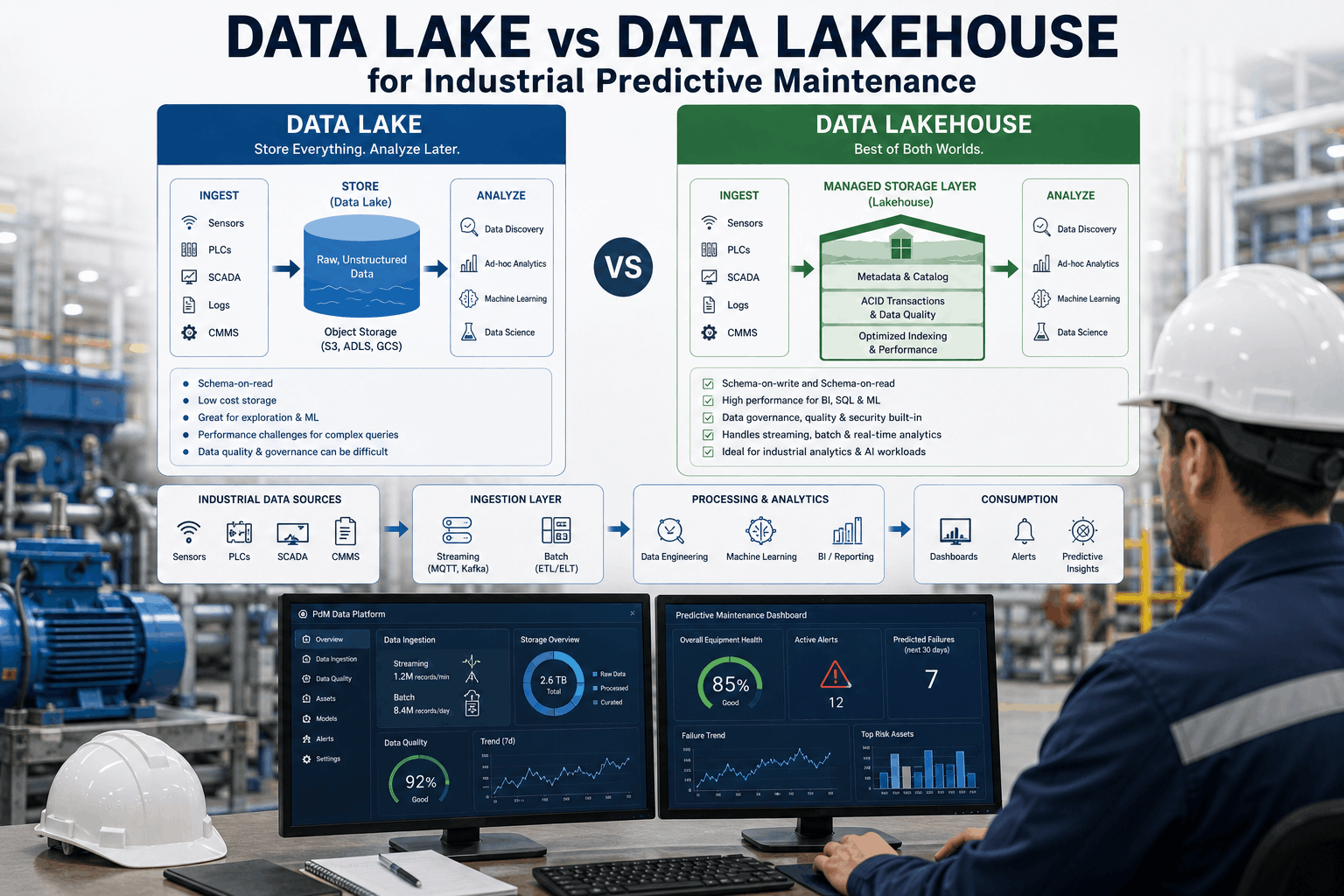
Traditional industrial integration architecture connects systems pairwise — each application builds its own data feed from each source, creating a web of point-to-point connections that multiplies with every new system or data consumer added. Predictive maintenance AI that must pull vibration data from a historian API, work order context from a CMMS export, and quality records from an MES database through three separate integration paths is fragile, expensive to maintain, and delivers data that is rarely in time-sync. UNS collapses this architecture into a single data layer: all sources publish to the namespace, all consumers subscribe from it, and AI models access the same contextually organized data stream without maintaining independent integrations. Maintenance teams that Book a Demo with iFactory see how UNS implementation reduces integration maintenance burden while improving AI model data quality.
-
Single Publisher Architecture
Every data source — PLCs, sensors, CMMS, MES, quality systems — publishes to the UNS once. Any consumer, including AI maintenance models, subscribes to the relevant namespace topic without requiring a separate integration per source.
-
Hierarchical Topic Organization
UNS organizes data by enterprise, site, area, line, and asset — matching the ISA-95 functional hierarchy so AI models can query at the scope they need without receiving irrelevant data from unrelated plant areas.
-
Context-Enriched Data Payloads
UNS payloads carry metadata alongside raw values — timestamp, source system, quality indicator, engineering unit, and asset identifier — giving AI models the context needed to interpret readings without secondary lookup calls.
-
Real-Time and Historical Access
iFactory's UNS implementation provides both live subscription feeds for real-time anomaly detection and historical replay for model training — through the same namespace structure, eliminating separate live and batch data pipelines.
-
Protocol-Agnostic Ingestion
iFactory connects OPC-UA, MQTT, Modbus, REST APIs, and flat file exports to the UNS through protocol adapters — enabling legacy equipment and modern IIoT sensors to publish to the same namespace without firmware changes.
-
AI Model Data Subscription Management
iFactory manages which data topics each AI model subscribes to — ensuring models receive only the namespace paths relevant to their function, reducing processing overhead and preventing context contamination between model scopes.
Core UNS Architecture Components for Maintenance AI
-
MQTT Broker as the UNS Message Backbone
Infrastructure LayerMQTT provides the publish-subscribe messaging fabric that makes UNS scalable across thousands of data sources without the connection overhead of point-to-point REST or database polling architectures. In a maintenance context, each PLC tag, sensor measurement, work order state change, and quality record becomes an MQTT topic payload published to the broker — available immediately to any subscribed consumer without the source system needing to know who is listening. iFactory deploys on top of an MQTT broker infrastructure (compatible with HiveMQ, EMQX, and Mosquitto), enabling facilities to build UNS on the same broker technology used by IIoT World 2025 panel-validated deployments. Teams that Start Trial can connect iFactory to an existing MQTT broker or deploy the recommended broker configuration from the iFactory setup guide.
Protocol
MQTT 5.0 with QoS levels 0, 1, and 2 per data criticality
Broker Compatibility
HiveMQ, EMQX, Mosquitto, AWS IoT Core
iFactory Record
Topic subscription registry with consumer and data scope mapping
-
ISA-95 Hierarchy Topic Structure
Namespace OrganizationUNS topic hierarchy maps directly to the ISA-95 functional hierarchy — Enterprise / Site / Area / Line / Cell / Asset / Tag — so AI models consuming maintenance data can subscribe at the appropriate level of specificity without receiving irrelevant cross-plant data. A predictive maintenance model monitoring pump P-101 in Area 3 of Plant A subscribes to the namespace path that delivers only the sensor data, work order context, and quality records relevant to that asset scope. This hierarchical structure also enables cross-asset comparison queries by subscribing at the Area or Line level — supporting fleet-level anomaly benchmarking without building separate aggregation pipelines. Teams that Book a Demo can review how iFactory maps their existing asset register to the ISA-95 UNS hierarchy.
Hierarchy Standard
ISA-95 levels: Enterprise / Site / Area / Line / Cell / Asset
Subscription Scope
AI models subscribe at asset, line, or area level as required
iFactory Record
Asset-to-namespace path mapping maintained in asset register
-
Unified Data Model and Payload Schema
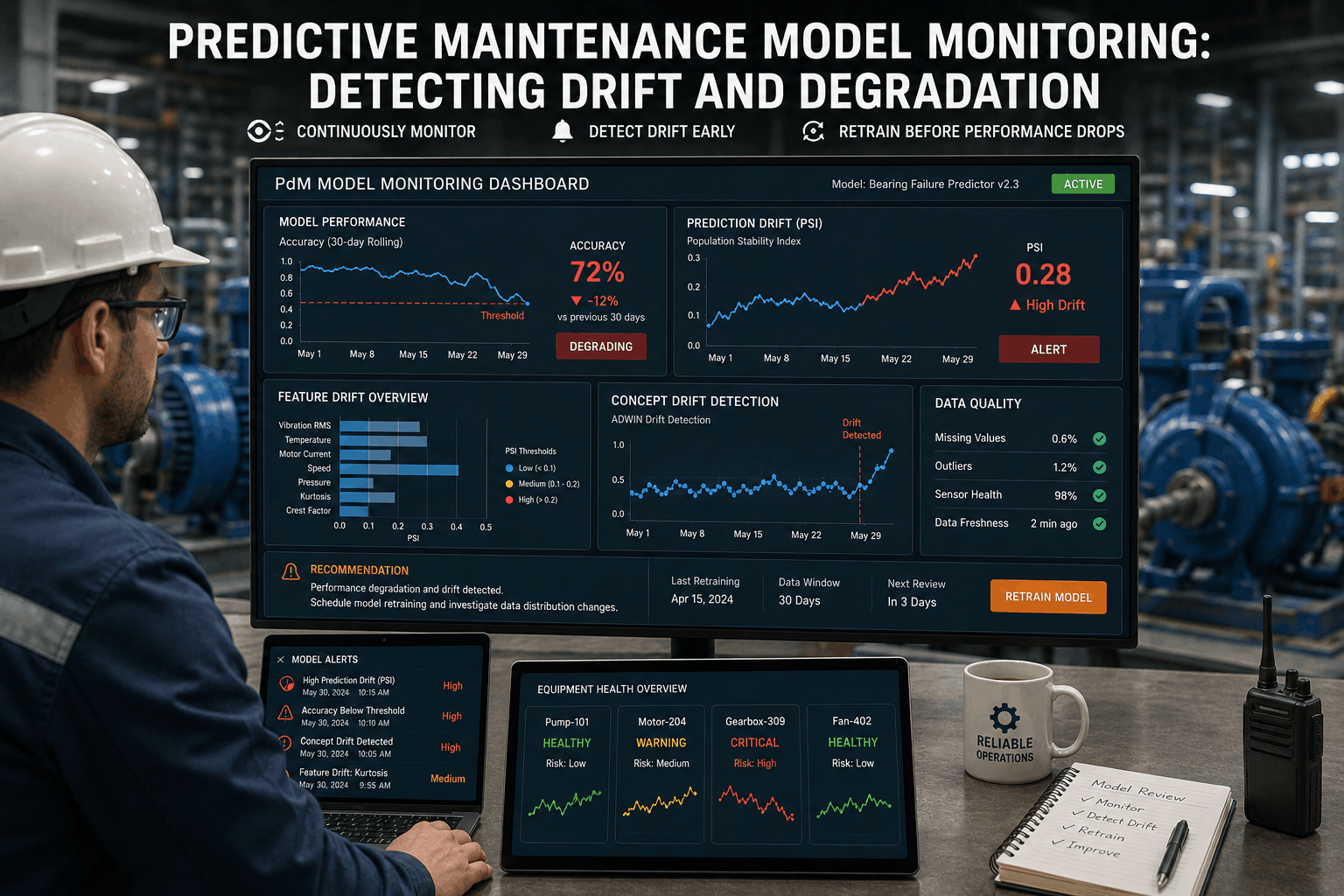
Semantic LayerRaw sensor data without context is a number without meaning — the UNS payload schema is what converts raw values into contextually interpretable maintenance data. iFactory enforces a unified payload schema across all namespace topics: every message carries the raw value, engineering unit, timestamp with timezone, source system identifier, asset reference, and data quality indicator. AI models consuming namespace data receive consistent payload structures regardless of source system — eliminating the schema translation layer that consumes engineering time in point-to-point integration architectures. The unified schema also ensures that AI model training data from historical payloads has the same structure as live inference data — preventing the data drift that degrades model accuracy when training and production data pipelines differ.
Payload Fields
Value, unit, timestamp, source, asset reference, quality flag
Schema Enforcement
Validation at publisher ingestion point before namespace entry
iFactory Record
Schema version tracked per namespace topic
-
OPC-UA Integration Layer for PLC and Controller Data
OT Data BridgeOPC-UA is the dominant standard for operational technology data access — providing structured, typed, browsable data from PLCs, DCS controllers, and SCADA systems without requiring raw register map configuration. iFactory's OPC-UA integration layer bridges OT data into the UNS namespace: OPC-UA node values are mapped to ISA-95 topic paths, payload-enriched with context metadata, and published to the MQTT broker on a configured scan rate or change-of-value trigger. This bridge converts the hierarchical OPC-UA address space into UNS-compatible topic paths that predictive maintenance AI can subscribe to without direct OPC-UA client implementation — isolating OT connectivity complexity at the integration layer.
OPC-UA Support
OPC-UA DA, HA, and Alarms and Events namespaces
Publishing Mode
Scan rate or change-of-value per tag configuration
iFactory Record
OPC-UA node-to-UNS topic mapping maintained per data source
-
Work Order and CMMS Data Integration into UNS
Maintenance Context LayerPredictive maintenance AI that can only see sensor data produces health assessments without maintenance context — it cannot know whether a detected anomaly is occurring on an asset that was just overhauled, is due for PM, or has an open corrective work order. iFactory publishes CMMS data to the UNS — work order state changes, PM completion events, inspection findings, and asset modification records — as timestamped namespace events that AI models can correlate with concurrent sensor data. When the AI model's sensor subscription and the CMMS subscription share the same asset reference in the UNS, the model can contextualize sensor anomalies against maintenance history without a secondary database query. Teams that Start Trial can configure CMMS data publication to the UNS from iFactory's CMMS connector library.
CMMS Events Published
Work order state changes, PM completions, inspection findings
Asset Reference
Shared asset identifier links CMMS and sensor namespace paths
iFactory Record
CMMS event history available in UNS namespace replay
-
Quality and Process Data Namespace Integration
Cross-Domain ContextEquipment condition and product quality are correlated in most manufacturing processes — a pump operating with cavitation produces flow instability that appears in quality measurements before the mechanical damage becomes severe enough to trigger a maintenance alarm. iFactory publishes MES quality records and process parameter data to the UNS alongside sensor and CMMS data — enabling AI models to subscribe to quality metrics as leading indicators of equipment degradation for asset classes where condition-quality correlation has been established. This cross-domain data availability through a single namespace eliminates the custom integration work required to build quality-condition correlation models when data lives in separate systems with incompatible APIs. Teams that Book a Demo can review cross-domain data correlation capabilities in iFactory's UNS implementation.
Quality Data Sources
MES quality records, inline inspection measurements, SPC outputs
Correlation Use Case
Quality deviations as leading indicators of equipment degradation
iFactory Record
Quality-to-asset correlation history tracked in namespace replay
UNS Architecture Deployment Metrics
Integration Point Reduction
UNS reduces integration complexity from N×(N-1) point-to-point connections to 2×N publisher and subscriber connections — an order-of-magnitude reduction at scale.
Data Latency by Architecture
UNS with MQTT delivers data to AI model subscribers in under 500ms versus 15 minutes for batch ETL — enabling real-time anomaly detection rather than retrospective analysis.
Namespace Coverage by Data Domain
A fully deployed iFactory UNS integrates sensor, CMMS, quality, process, and ancillary data domains — providing AI models with cross-domain context in a single subscription interface.
AI Model Data Access Time
% time spent on data retrieval vs. analysis
Engineering time spent retrieving data for AI model inputs declines from 82% to 18% of total analysis time after full UNS deployment — shifting effort from integration to interpretation.
UNS Architecture for Maintenance AI: Reference Specifications
Scroll for more
| Architecture Component | Standard / Protocol | Data Scope | iFactory Integration | Latency |
|---|---|---|---|---|
| Message Broker | MQTT 5.0 | All namespace topics | HiveMQ / EMQX / Mosquitto | <500ms |
| OT Data Bridge | OPC-UA DA / HA | PLC and controller tags | OPC-UA to MQTT adapter | Scan rate or COV |
| Namespace Hierarchy | ISA-95 functional levels | Enterprise to asset tag | Asset register mapping | Structural (static) |
| CMMS Integration | REST API / webhook | Work orders, PM, inspections | CMMS connector library | Event-triggered |
| Quality Data Integration | MES API / flat file | Quality records, SPC | MES namespace publisher | Per record creation |
How iFactory Implements UNS for Predictive Maintenance
Predictive maintenance AI is only as good as the data it can access — and in most industrial facilities that data is fragmented across historians, CMMS databases, MES systems, and PLC tag archives that require separate integration work to reach. iFactory's UNS implementation removes this fragmentation: every data source publishes to a single namespace using a consistent payload schema, every AI model subscribes from that same namespace at the scope it requires, and the result is maintenance intelligence that reflects the full operational picture rather than a subset of data the integration team had time to connect. When iFactory's predictive model sees a vibration anomaly and simultaneously has access to the open work order on that asset, the quality trend from the downstream process, and the PM completion record from last month — all from a single namespace subscription — the health assessment it produces is categorically more reliable than one built on sensor data alone. Facilities can Start Trial and begin UNS namespace configuration for their first priority data sources within the initial deployment session.
Protocol-Agnostic Data Ingestion
iFactory connects OPC-UA, MQTT, Modbus, REST, and flat file sources to the UNS namespace through protocol adapters — enabling legacy and modern systems to publish to the same data layer without per-source custom integration.
ISA-95 Namespace Hierarchy
iFactory maps all data sources to the ISA-95 topic hierarchy — giving AI models a consistently organized data landscape where scope-specific subscriptions deliver only relevant data without cross-plant noise.
Unified Payload Schema Enforcement
iFactory validates all namespace payloads against a shared schema at ingestion — ensuring every message carries engineering unit, timestamp, quality flag, and asset reference regardless of source system format.
Cross-Domain AI Data Subscription
iFactory manages AI model subscriptions across sensor, CMMS, quality, and process namespace paths — delivering cross-domain context to each model without requiring separate integration pipelines per data type.
Deploying UNS Architecture for Maintenance AI: Implementation Steps
01
Deploy the MQTT Broker Infrastructure
Install and configure the MQTT broker as the UNS message backbone — selecting the broker variant (HiveMQ, EMQX, or Mosquitto) appropriate for the facility's scale and availability requirements before connecting any data sources.
02
Map the Asset Register to ISA-95 Namespace Paths
Configure the iFactory asset register with ISA-95 hierarchy levels for each asset — establishing the namespace topic paths that all publisher and subscriber configurations will reference for consistent data organization.
03
Connect OT Data Sources via OPC-UA Bridge
Configure iFactory's OPC-UA adapter to bridge PLC and controller data to the UNS namespace — mapping OPC-UA node addresses to ISA-95 topic paths and setting scan rate or change-of-value publishing triggers per tag.
04
Integrate CMMS and Quality Systems as Publishers
Configure iFactory's CMMS and MES connectors to publish work order events and quality records to the UNS namespace — extending the data landscape available to AI models beyond sensor data into maintenance and process context.
05
Configure AI Model Subscriptions per Use Case
Define the namespace topic subscriptions for each iFactory predictive maintenance model — specifying the ISA-95 scope, data domains, and payload types each model requires without granting broader access than needed.
06
Validate Data Quality and Expand Namespace Coverage
Run data quality validation against the deployed namespace — checking payload schema compliance, timestamp accuracy, and subscription latency before expanding UNS coverage to additional data sources and AI model consumers. Book a Demo to see the full UNS deployment workflow.
Frequently Asked Questions
What is a Unified Namespace in industrial maintenance?
A Unified Namespace is an architecture pattern that organizes all industrial data — sensor readings, work orders, quality records, and process parameters — into a single, hierarchically structured data layer that all applications publish to and subscribe from, eliminating point-to-point integration between individual systems.
How does UNS improve predictive maintenance AI performance?
UNS gives predictive maintenance AI models access to cross-domain data — sensor readings, maintenance history, and quality metrics — through a single subscription interface with consistent payload schema, improving model accuracy by providing context that single-source integrations cannot deliver.
What protocols does iFactory support for UNS data ingestion?
iFactory supports OPC-UA, MQTT, Modbus, REST APIs, and flat file formats for UNS data ingestion — enabling legacy PLC equipment and modern IIoT sensors to publish to the same namespace through protocol adapters without firmware changes.
How long does UNS deployment typically take?
A first-phase UNS deployment covering priority sensor data and CMMS integration can be completed in four to eight weeks. Full multi-domain namespace coverage including quality and process data typically requires three to six months depending on source system complexity and integration scope.
Is UNS architecture compatible with existing SCADA and historian systems?
Yes. iFactory's UNS implementation connects to existing SCADA and historian systems as data publishers — they continue operating as primary data systems while iFactory bridges their outputs into the UNS namespace, making data available to AI models without replacing existing operational infrastructure.
Give Your Maintenance AI Models the Data Landscape They Need — Without Building It Source by Source
iFactory's UNS implementation connects sensor data, CMMS records, quality metrics, and process parameters into a single namespace that every AI model in your facility can subscribe to — eliminating integration complexity and improving predictive maintenance data quality at the same time.