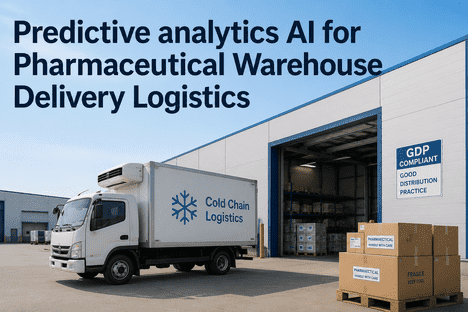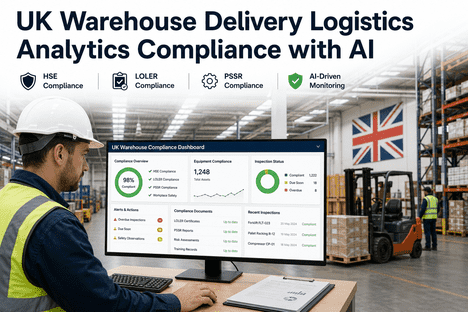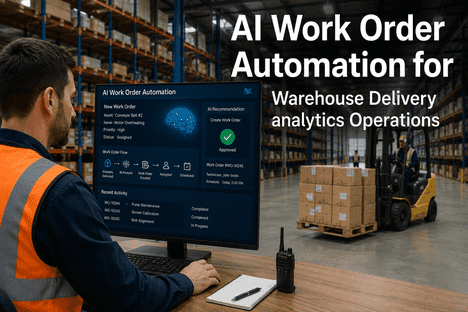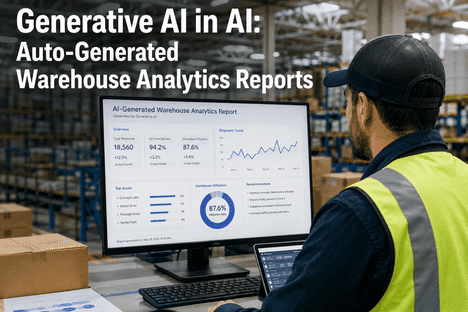
Warehouse delivery operations generate massive volumes of data — sensor telemetry, work order histories, equipment failure logs, shift handoff notes, and inventory movement records. Yet most logistics managers still spend hours manually compiling this data into weekly or monthly analytics reports. The bottleneck is not data availability; it is the manual effort of extracting, interpreting, and formatting operational data into board-ready insights. Generative AI inside iFactory AI changes that entirely. It reads raw warehouse sensor logs, work order histories, and failure events, then produces structured analytics reports in natural language in seconds — eliminating the manual reporting burden that delays critical business decisions.
Auto-Generated Warehouse Analytics Reports Powered by Generative AI
Transform raw sensor logs, work order histories, and failure events into board-ready analytics reports in seconds — no manual data wrangling, no spreadsheets, no delays.
Why Manual Warehouse Analytics Reporting Fails
Warehouse and delivery operations teams spend an estimated 30–40% of their analytical work hours on data preparation and report formatting rather than actual analysis. The table below shows the real cost of manual reporting across a typical mid-size logistics operation.
| Reporting Activity | Hours per Week | Annual Cost (1 FTE) | Business Impact |
|---|---|---|---|
| Data extraction from WMS/telematics | 8–12 hrs | $18,000–$28,000 | Delays in identifying throughput bottlenecks |
| Spreadsheet consolidation | 6–10 hrs | $14,000–$22,000 | Version control errors and data drift |
| Chart and visualization creation | 4–6 hrs | $9,000–$14,000 | Inconsistent formatting across reports |
| Narrative writing and interpretation | 5–8 hrs | $11,000–$18,000 | Key insights buried in dense text |
| Review and revision cycles | 3–5 hrs | $7,000–$12,000 | Stakeholder frustration with delays |
Generative AI Analytics Report Generation — End to End
iFactory AI's Generative AI engine connects directly to your existing warehouse data sources — sensor IoT streams, work order databases, failure event logs, and delivery telemetry — and produces structured analytics reports in plain language without any manual intervention. The process has four steps.
Connect
iFactory AI connects to your WMS, telematics APIs, PLC gateways, and IoT sensor hubs. No manual data export required. The platform ingests data in real time.
Analyze
The generative AI engine processes raw data — equipment uptime, order fulfillment rates, vehicle utilization, failure codes — and identifies trends, anomalies, and correlations.
Generate
The AI produces a structured analytics report in natural language with embedded charts, trend summaries, key metrics, and actionable recommendations tailored to your operational context.
Deliver
Reports are delivered on schedule (daily, weekly, monthly) via email, dashboard, or mobile notification — with no human touch required from data ingestion to final output.
What Generative AI Delivers in Warehouse Analytics
Every report type listed above is generated entirely by iFactory AI's Generative AI engine — no templates, no manual data entry, no formatting work. Operators and managers simply review and act. Book a Demo to see generative analytics in action.
Manual Reporting vs Generative AI Analytics
Manual Reporting
- Data exported from 3–5 different systems
- Hours spent in Excel pivot tables and VLOOKUPs
- Charts built by hand — inconsistent formatting
- Narrative written from scratch each cycle
- 3–5 revision rounds before stakeholder approval
- Reports delivered 5–7 days after period close
- Institutional knowledge lost with staff turnover
Generative AI in iFactory
- One unified data ingestion from all systems
- AI performs automated data processing and analysis
- Charts auto-generated with consistent branding
- AI writes complete narrative with insights
- Zero revision rounds — report is board-ready on generation
- Reports delivered at period close — same day
- All analysis logic retained and reproducible
Measurable Impact of Generative AI Analytics
Why Generative AI Is the Future of Warehouse Analytics
Most warehouse and delivery operations sit on a mountain of data that is systematically underutilized. Sensors, work orders, telematics, and shift logs generate thousands of data points daily. The limiting factor has never been the data — it has been the cost and time required to transform that data into structured, actionable reports. Generative AI changes the economics fundamentally.
When we deploy iFactory AI's generative analytics engine in warehouse environments, the most common reaction from operations managers is surprise at how much insight was hidden in their existing data. The AI identifies patterns — correlation between dock door assignment and turnaround times, relationship between shift start delays and subsequent picking errors, connection between specific failure codes and time-of-day — that human analysts rarely have time to uncover.
The technology does not replace the analyst. It eliminates the data preparation and formatting work so the analyst can focus on what humans do best: interpreting context, making judgment calls, and driving action.
Generative AI Analytics Reports — Common Questions
Turn Warehouse Data into Board-Ready Reports — Automatically
Stop spending hours on manual report creation. iFactory AI's Generative Analytics generates structured, insight-rich reports from your existing warehouse and delivery operations data in seconds.
Stop Reporting. Start Analyzing.
Manual analytics reporting in warehouse and delivery operations consumes thousands of hours annually — hours that should be spent on interpretation, decision-making, and continuous improvement. Generative AI in iFactory AI eliminates the bottleneck at the point of report creation by transforming raw operational data — sensor logs, work order histories, failure events, and telematics streams — into polished, board-ready analytics reports in seconds. Book a demo to see how Generative AI eliminates manual reporting from your warehouse operations.
Ready to Automate Your Warehouse Analytics?
See how iFactory AI's Generative Analytics connects to your existing systems and produces board-ready reports in seconds — with zero manual work.