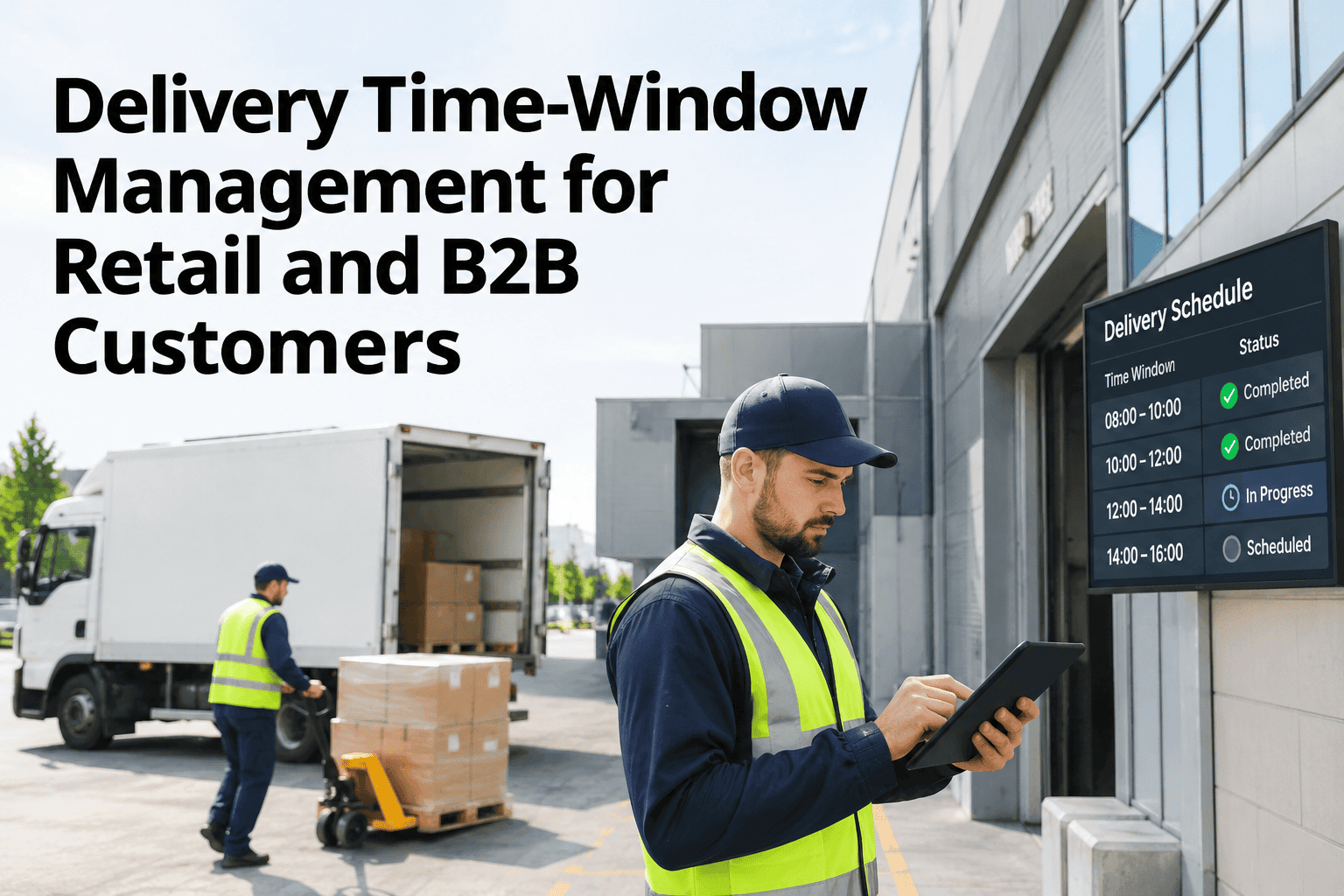
A delivery promise is only as good as the capacity behind it, and most operations learn that the hard way when a popular afternoon slot is oversold against the routes actually available to cover it. Retail customers want a tight, reliable window; B2B customers often need a dock-appointment-style commitment with real consequences for lateness, and treating both with the same slot logic is how an operation ends up either overpromising or leaving capacity on the table. iFactory AI's delivery operations team can model your own time-window capacity against current route data before the next peak period.
A Promised Window Is Only Real If the Capacity Behind It Is
Customer time windows, capacity allocation, slot booking, lateness risk and a clear rescheduling process together keep a delivery promise honest instead of aspirational.
Retail Windows and B2B Appointments Aren't the Same Problem
A retail customer forgives a window that slips by twenty minutes far more easily than a B2B dock that has its own receiving schedule and labor booked around a specific appointment. Running both through identical slot logic means either the B2B side gets treated too loosely, risking real penalty costs, or the retail side gets locked into a precision it doesn't actually need, wasting routing flexibility that could have absorbed more volume.
A reasonable window with proactive updates beats false precision.
A dock slot often carries real financial consequences for lateness.
Every slot offered has to map to actual route and driver capacity.
A missed window should have a clear next step, not an ad hoc phone call.
Allocating Capacity Across Time Windows
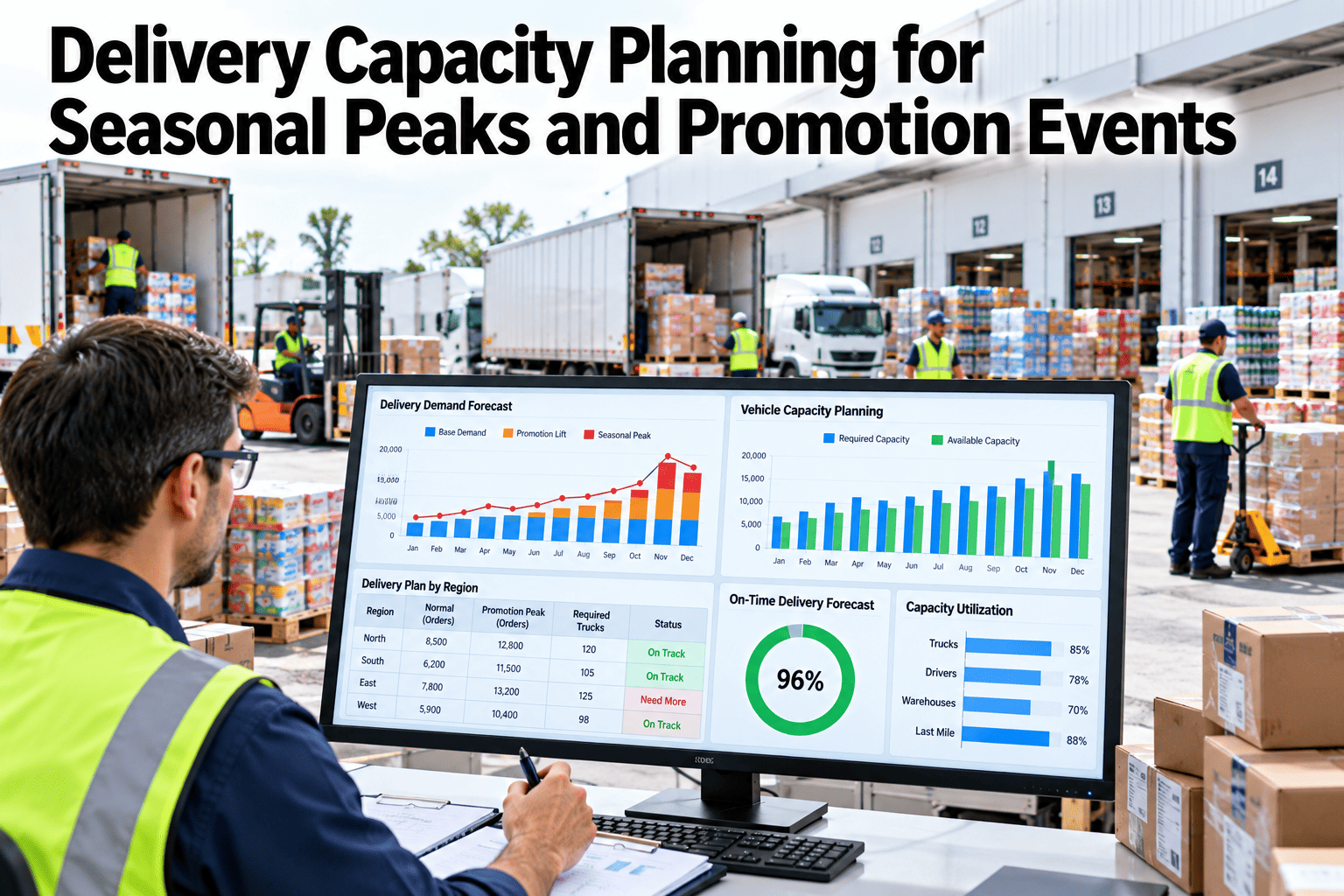
Offering a slot without checking it against real route capacity is how popular afternoon windows get oversold while early-morning slots sit half empty. Our team can walk through capacity allocation logic against your current fleet and route structure.
Each time slot gets a real stop-count ceiling based on driver and route availability.
High-demand windows can carry a fee or be reserved for priority customer tiers.
As bookings come in, remaining capacity updates in real time, not at day's end.
A window trending toward lateness surfaces hours before the stop, not at arrival.
Retail vs B2B: What Changes in the Slot Model
| Dimension | Retail | B2B |
|---|---|---|
| Window tolerance | Moderate, proactive updates accepted | Tight, often contractual |
| Rescheduling | Customer self-service | Coordinated with receiving dock |
| Lateness consequence | Customer dissatisfaction | Possible financial penalty |
| Booking lead time | Often same-day or next-day | Typically days in advance |
See Where Your Slots Are Over- or Under-Booked
Share your current time-window structure and booking data, and see which slots are oversold against real route capacity.
Managing Lateness Risk Before It Becomes a Miss
Route delays flagged against committed windows hours ahead, not at the stop.
A heads-up and a reschedule option beats a missed window with no warning.
A B2B appointment at risk should notify the receiving side directly.
Repeated lateness in one window or zone points to a capacity problem, not a one-off.
A Composite Scenario: The Window Everyone Wanted
Picture a retail delivery operation where the 12–3 PM window consistently sold out within hours of opening bookings each week, while the operation kept adding retail customers into it without checking against actual route capacity.
Mapping real route capacity against booking demand showed the afternoon window had been oversold relative to driver availability for months, which was the direct cause of a rising lateness rate. Adding a route to cover the window, combined with a small incentive to shift some demand to the morning slot, brought on-time performance back in line. The scenario illustrates the method; actual capacity gaps depend on each operation's own route structure.
Where iFactory AI Fits
iFactory AI maps time-window capacity to real route and driver availability, flags at-risk commitments before they become missed windows, and gives B2B appointments the tighter handling they need without forcing retail customers into unnecessary precision.
Slot availability reflects actual route load, updated as bookings come in.
At-risk windows surface hours ahead, giving time to reschedule or reroute.
Retail tolerance and B2B appointment rigor handled as distinct rule sets.
Frequently Asked Questions
Typically several days ahead for B2B receiving docks, since the customer's own labor and dock schedule often needs to be arranged around the appointment, unlike a retail window that can often be booked same-day. Review appointment lead times for your B2B customer base.
Many operations do price or prioritize scarce windows, either with a fee or by reserving them for priority customer tiers, which helps balance demand without simply overselling the slot and risking lateness. Discuss a slot pricing approach for your busiest windows.
Ideally hours before the committed window, once route delay patterns make a miss likely, which gives enough time to notify the customer or dock and offer a reschedule rather than an unexplained late arrival. See how early-warning flagging works.
Retail customers generally benefit from a simple self-service reschedule option, while B2B appointments usually need direct coordination with the receiving dock's own schedule rather than an automated rebooking. Review rescheduling workflows for both customer types.
At least seasonally, and immediately after any significant change to fleet size, route structure or customer mix, since a capacity model built on last year's volume can quietly oversell slots as demand grows. Set a capacity review schedule for your operation.
Make Every Promised Window One You Can Actually Keep
iFactory AI maps time-window capacity to real route availability and flags at-risk commitments before they become missed deliveries.