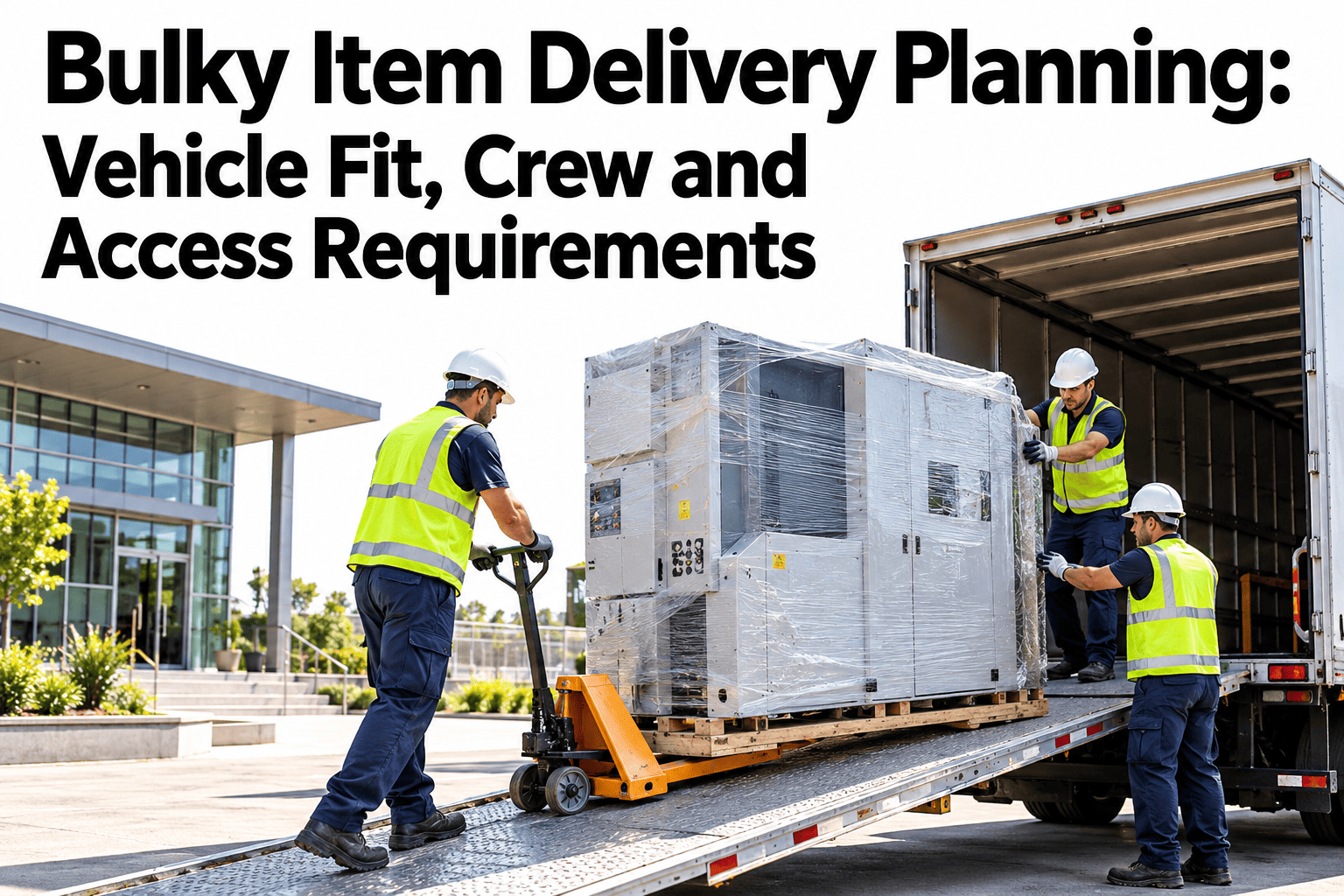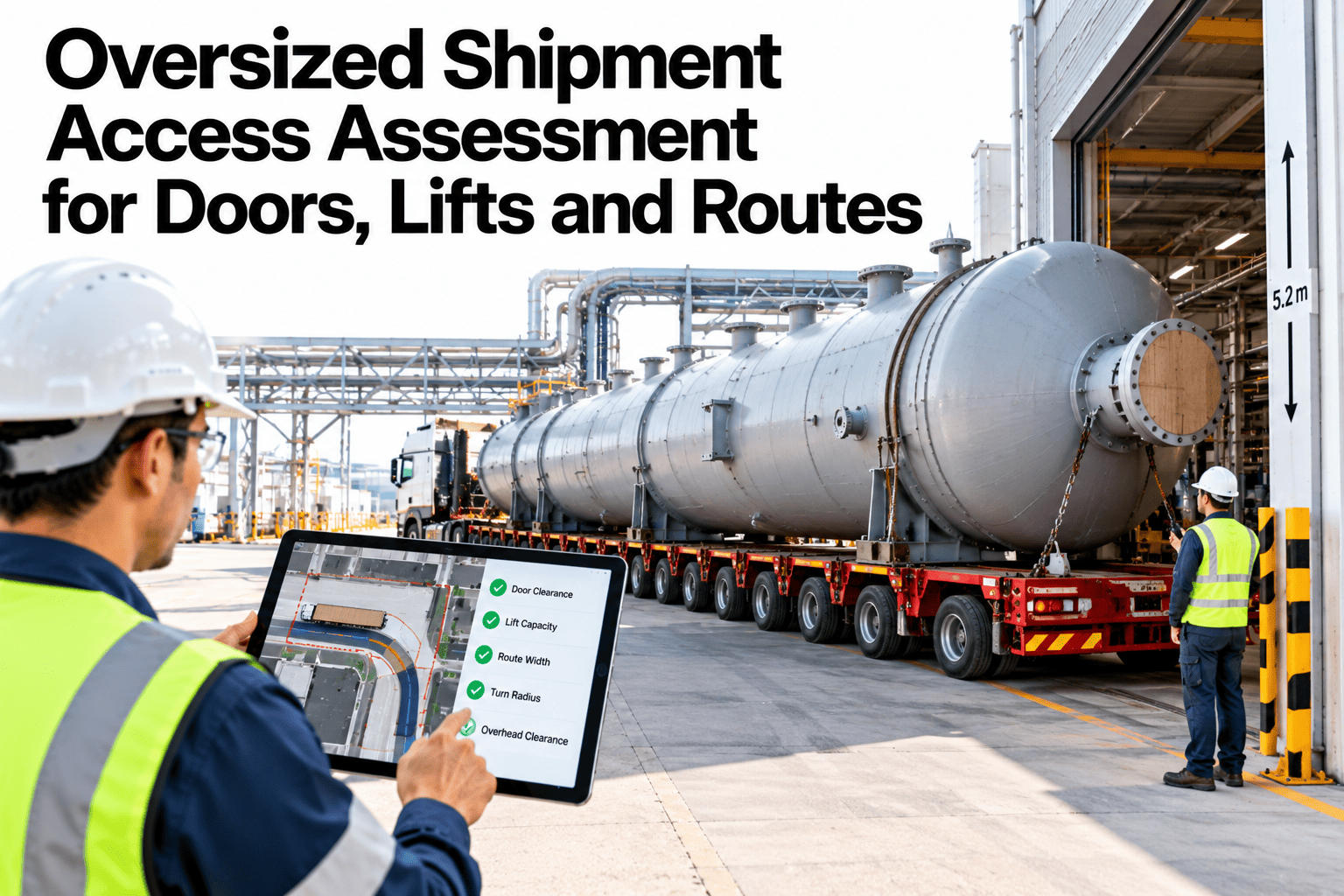
Many failed deliveries of large items are decided before the truck leaves. A sofa, machine crate or pallet that cannot pass a doorway, fit a lift or clear a corner turns into a wasted trip, a damaged item and an unhappy customer. A short, structured assessment catches those problems early, using package dimensions, door and lift measurements, route clearance and photos. Delivery teams who want that routine can ask iFactory AI how access assessments are recorded and tracked.
Check Doors, Lifts and Routes Before an Oversized Shipment Leaves
iFactory AI keeps package dimensions, site measurements, photos and the final decision in one record, so oversized deliveries are planned, not hoped for.
Why Oversized Deliveries Fail
Most failures come from a few avoidable gaps. Naming them shows what the assessment must cover.
Unknown package size
The dimensions on the order differ from the real packed item.
Guessed door and lift sizes
Customers estimate openings, and the estimate is usually generous.
Unseen route obstacles
Tight corners, stairs, steps and narrow halls appear only on arrival.
No decision rule
Crews decide on the doorstep, under pressure, with no agreed options.
Step One: Package Dimensions
Everything depends on knowing the true size and handling limits of the item as packed.
| Record | Why It Matters | Tip |
|---|---|---|
| Length, width and height as packed | Decides whether it fits openings and lifts | Measure packed, not product size |
| Weight and heavy end | Decides crew size and equipment | Note where the weight sits |
| Orientation rules | Some items cannot tilt or lie flat | Record tip and tilt limits |
| Fragile or sensitive points | Guides handling and route choice | Mark on the record and the package |
| Diagonal clearance needed | Shows if tilting through a gap is possible | Calculate from length and thickness |
The Delivery Route From Truck to Final Position
An item has to survive a chain of tight points. Listing them makes the assessment complete.
Step Two: Doorway and Lift Measurements
These measurements decide most outcomes. Ask for clear opening sizes, not the size of the door leaf.
| Measurement | What to Record | Common Mistake |
|---|---|---|
| Doorway clear width | Narrowest clear opening with the door open | Measuring the door leaf, not the opening |
| Doorway clear height | Lowest point including frames | Ignoring thresholds and closers |
| Lift internal size | Width, depth and height inside | Forgetting handrails and panels |
| Lift door opening | Clear width and height at the door | Using the cabin size alone |
| Corner and stair turns | Width, landing size and headroom | Not checking landings |
Stop Discovering Access Problems on the Doorstep
Book a 30-minute session and iFactory AI will review your oversized delivery process and failed-delivery history to show how an assessment record can prevent wasted trips.
Step Three: Route Clearance
A route is only as wide as its narrowest point. The matrix, shown as an illustration, ranks common obstacles by how often they block large items.
| Obstacle | Likelihood of Blocking | Difficulty to Work Around |
|---|---|---|
| Narrow doorways | High | Moderate |
| Tight corners and landings | High | High |
| Stairs without a lift | Moderate | High |
| Low ceilings and overhead fixtures | Moderate | Moderate |
| Parking and kerb restrictions | Moderate | Low |
Step Four: Site Photos That Actually Help
Photos replace long descriptions and give the crew a preview. Ask for specific shots, not general views.
Step Five: The Exception Decision
When the assessment shows a problem, the crew should not have to improvise. A clear ladder gives agreed options in order.
Proceed as planned
All measurements clear with margin.
Proceed with extra crew or equipment
Tight but workable with planning.
Change packaging or handling
Re-pack, split or de-assemble where allowed.
Offer an alternative delivery
Different route, crane, window or hoist.
Decline or return before dispatch
Access cannot be solved safely.
Assessment in Five Steps
The five steps form a routine that any planner can run before dispatch.
Record packed dimensions and handling limits.
Get door, lift and route measurements from the customer.
Check them against the measurements.
Use the ladder to choose and record an option.
Send the record and photos with the job.
What Usually Causes Failed Oversized Deliveries
The chart shows an illustrative ranking of causes. Your own history will differ.
A Composite Scenario: The Wardrobe That Would Not Turn
This is a composite example, not a named customer. It shows how a short assessment saves a trip.
Guesswork or Recorded Assessment
The difference shows up at the doorstep.
What iFactory AI Adds to Delivery Assessment
iFactory AI is smart manufacturing and industrial software that supports operations and delivery workflows. Capabilities described here should be confirmed against your specific setup. Explore delivery assessment in a live product tour on realistic data.
A 30-Day Plan to Start
A month is enough to introduce the assessment for one category of large items.
Review of Oversized Shipment Access Assessment
A practical review of what makes delivery assessments effective, written as editorial guidance rather than a named expert quote.
Measure the packed item
The packed size, not the product size, decides whether it fits.
Ask for evidence
Specific photos and measurements beat descriptions and estimates.
Agree the options early
A decision ladder prevents improvising on the doorstep.
Frequently Asked Questions
What should an oversized delivery assessment include?
Packed dimensions and weight, doorway and lift measurements, route clearance, site photos and a recorded decision. See a complete assessment record in a live demo with a sample delivery. A short standard form keeps it practical.
How do I measure a doorway correctly?
Measure the narrowest clear opening with the door open, and the lowest clear height including frames and closers. The door leaf size alone can mislead. Photos with a tape measure visible help verify the figures.
What if the item cannot pass?
Use the exception ladder: extra crew or equipment, changed packaging or handling, an alternative delivery method, or a decision to decline. Ask support how exception decisions are recorded and reviewed in the workflow. Agreeing options in advance avoids doorstep disputes.
Do customers need to measure anything?
Often yes, with clear instructions and example photos. Specific requests such as tape measure visible in the photo improve accuracy. Keep the list short so customers complete it.
How soon can we introduce this?
Many teams start with one oversized category within a month. Book time to scope an access assessment pilot with your delivery team. Fewer repeat trips usually appear quickly.
Make Every Oversized Delivery a First-Time Success
iFactory AI keeps dimensions, measurements, photos and decisions together so large items arrive without surprises. Book a walkthrough to see it on your own deliveries.