Moving a delivery into the overnight window changes more than the time on the dispatch sheet. A driver who can knock on a door at 2 PM and get an answer may find the same address dark, locked and governed by a noise ordinance at 2 AM. Retail and distribution networks that treat night delivery as "the same route, later" run into access failures, missed recipients and complaints that a daytime operation never sees. A readiness checklist, worked through before the first night route runs, catches most of it. Teams preparing one can see how iFactory AI flags access and safety gaps before a site goes onto the night schedule.
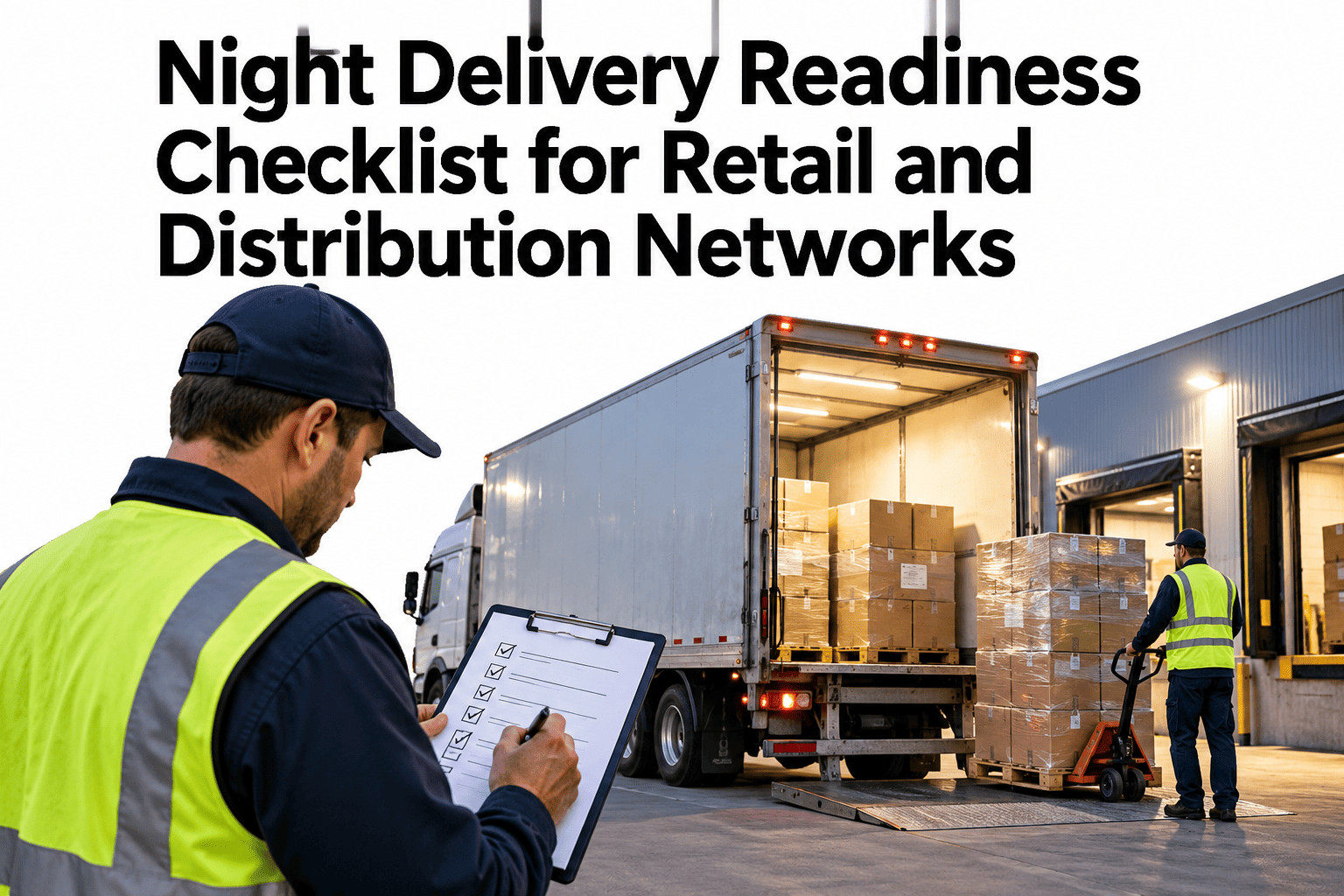
Night Delivery Readiness Checklist for Retail and Distribution Networks
Five checks that stand between a smooth night route and a driver stuck outside a dark, locked site at 3 AM.
Checklist: Noise and Access Rules
Local rules on delivery noise and vehicle access after hours vary by city and site. Confirm the current rules for each location, since they change and penalties for breach can be significant.
Checklist: Recipient Availability
A night delivery only works if someone, or something, is ready to receive it. Verify this per site, not per account.
Check Which Sites Are Actually Night-Ready
Book a 30-minute session and iFactory AI will screen your site list against access, staffing and safety requirements before any route moves overnight.
Checklist: Lighting and Safety
Driver and site safety at night is not the same problem as during the day. Treat it as its own review.
Checklist: Driver Instructions
A night route needs more written detail than a daytime one, because there is no one around to ask.
Checklist: Escalation Contacts
When something goes wrong at 3 AM, the driver needs a real person to call, not a daytime office number.
Readiness Status by Site Type
Not every site type reaches night readiness the same way. The table below is a general starting point.
| Site Type | Common Readiness Gap | Typical Fix |
|---|---|---|
| Retail store, staffed | No agreed after-hours access protocol | Formal access agreement with store management |
| Distribution center | Loading dock lighting and signage | Site safety audit before night routing begins |
| Residential drop point | Noise and curfew restrictions | Exclude from night schedule or confirm local exemption |
| Unattended commercial site | No secure drop location confirmed | Site visit to identify and document a safe drop point |
The checklist above catches most failures, but the single biggest cause of a bad night-delivery launch is skipping site-by-site verification in favour of a blanket rollout. A site that looks fine on paper, an address with a loading dock and a listed phone number, can still fail at 2 AM if the dock is unlit or the number goes to voicemail after 6 PM. Verify readiness site by site before scheduling, run a small pilot group first, and expand only once escalation calls and failed attempts stay low for several weeks.
Where iFactory AI Fits
iFactory AI tracks site readiness status alongside delivery performance, so a night rollout is based on verified conditions rather than assumptions.
Site readiness tracking
Access, staffing and safety status are recorded per site and flagged when incomplete.
Failed-attempt pattern detection
Night-specific failure codes are tracked separately from daytime ones, so causes are not blended together.
Escalation logging
Overnight incidents are logged and linked to the site and driver, building a readiness history over time.
Ask in plain language
Ask which sites are not yet night-ready and receive the list with the specific gap.
Frequently Asked Questions
How do we know if a site is actually ready for night delivery?
Check access rules, recipient availability, lighting and safety, driver instructions and an escalation contact for that specific site, not just the account it belongs to. A site that passes all five is a reasonable candidate for a pilot. You can watch a site readiness check run on sample data in a live session.
What local rules should we check before scheduling night routes?
Noise ordinances, curfew hours and loading-zone rules often differ at night from daytime, and they vary by city and even by neighbourhood. Confirm the current rules for each delivery zone rather than assuming daytime rules carry over. To review this for your network, request a readiness review with the iFactory AI team, or ask support what documentation is typically needed.
What should driver instructions include for night routes?
Exact access instructions per stop, a photo reference for the entrance or drop point, a clear fallback if access fails, and confirmed communication coverage along the route. General area notes that work during the day are often not enough at night. A short product tour of driver instruction setup shows how this is built per stop.
How many sites should a night delivery pilot include?
A small group of verified, high-confidence sites is usually safer than a wide rollout, since it lets escalation and failure patterns surface before they affect a large part of the network. See how a phased pilot is structured in a guided walkthrough.
Who should be the overnight escalation contact?
A live person who is actually reachable during the night window, separate for operational issues and for safety or security incidents, with the chain tested rather than only documented. Schedule a walkthrough of escalation logging to see how incidents are tracked and reviewed.
Don't Learn Your Night Delivery Gaps the Hard Way
iFactory AI checks site readiness before a route ever goes overnight. Book a walkthrough to see it built around your own network.