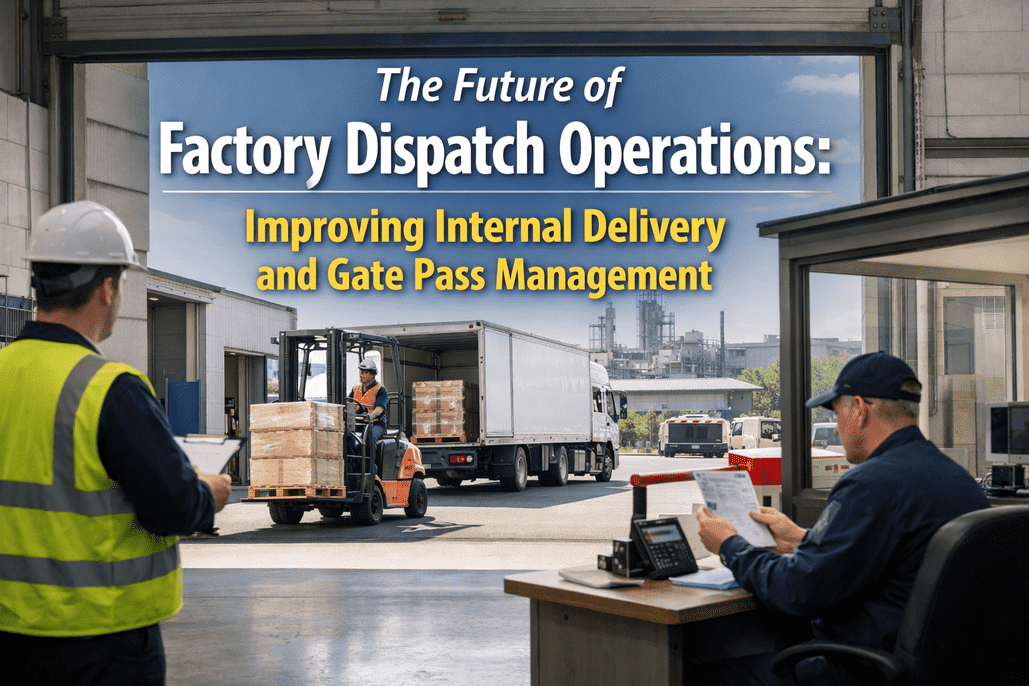
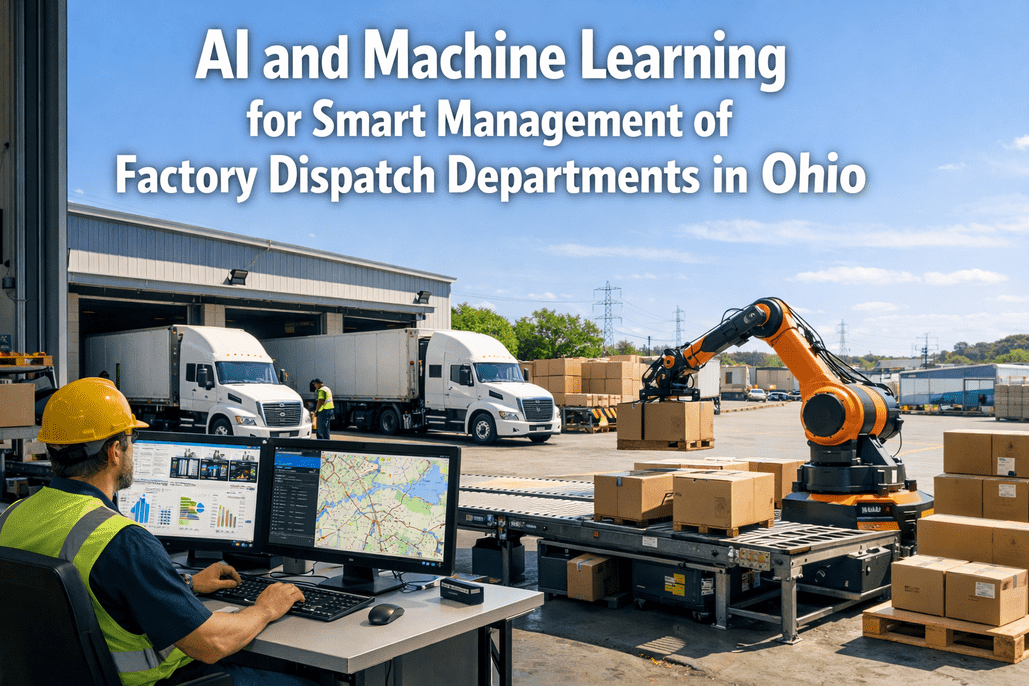
Every factory has a production floor with dashboards, shift logs, and real-time visibility. Almost none have the same level of operational control over what sits just outside the production floor — the delivery department that controls every vehicle, every gate pass, every inbound receipt, every dispatch event, and every material transfer that connects the plant to the outside world. When disruption strikes — a driver no-show, an unauthorized vehicle at the gate, a missing material transfer record, a vendor arriving without documentation — the delivery department absorbs it on paper. Manually. With no audit trail and no early warning system. This is where downtime is born, not on the production floor, but at the gate. A 2023 Zignify study found that disruptions at the logistics interface of manufacturing operations increase operational expenses by 3–5% and cut effective sales by up to 7%. iFactory's factory delivery department module digitizes every touchpoint — gate passes, inbound receipts, vehicle inspections, dispatch events, material transfers, and incident reports — giving operations teams the real-time visibility they need to strengthen dispatch operations before disruptions compound. If you want to see how it works in a live plant environment, talk to our support team directly.
iFactory · Factory Delivery Department Module
Your production floor has dashboards. Your delivery department deserves the same visibility.
iFactory digitizes every gate pass, inbound receipt, material transfer, vehicle inspection, dispatch event, and incident report — giving your operations team real-time visibility into the department that controls everything that enters and exits your plant. Deploy in 7–14 days. No IT project. No hardware procurement. Results visible from day one.
87%
Gate pass time reduction
78%
Faster inbound receiving
100%
Audit trail coverage
The Problem
Why Factory Delivery Departments Are the Weakest Link in Plant Operations
The production floor has MES, SCADA, and real-time OEE dashboards. The delivery department — which controls every input that feeds production — operates on paper, WhatsApp messages, and spreadsheets that nobody updates in real time. When disruptions hit this department, the damage reaches the production floor within hours.
01
No Real-Time Gate Visibility
Security personnel manually log vehicle entries on paper registers. Vehicles wait at the gate for 20–45 minutes for authorization callbacks. Unauthorized vehicles sometimes enter because the verification process depends on phone calls that go unanswered.
02
Inbound Receipts Disconnected from Inventory
Material arriving at the dock is manually recorded on paper delivery challans that take hours to reach the stores team. Production planning uses yesterday's inventory data to make today's decisions — creating a structural lag that causes shortages even when material is physically present at the plant.
03
Dispatch Events Managed on WhatsApp
Dispatch schedules change in WhatsApp group threads. Drivers receive verbal confirmations. When a loading team member is absent, nobody knows what was scheduled or what was dispatched — and the first indication of a problem is a customer call asking where their delivery is.
04
Incident Reports Filed After the Fact
Vehicle damage, cargo discrepancies, gate pass violations, and security incidents are reported verbally and documented in emails hours later — if at all. When audits or insurance claims require documentation, there is no reliable incident record, and the liability falls on the plant.
05
Material Transfers Without Traceability
Material moving from one section to another within the plant — or between the plant and a satellite warehouse — is tracked on handwritten transfer slips that frequently get lost, are never scanned, and leave no digital footprint for audits, reconciliation, or inventory accuracy.
06
Vehicle pre-trip and arrival inspections are either skipped or recorded on checklists that sit in a filing cabinet. Damaged vehicles leave the plant, incidents are denied by drivers, and compliance exposure grows every month that inspection records remain on paper.
Vehicle Inspections on Paper Checklists
Disruption Types
Six Disruption Categories That Hit the Factory Delivery Department — and the Cost of Each
Disruptions in the delivery department are not rare exceptions — they are daily events in most plants. The question is not whether they will occur but whether your team can absorb them without compounding into production stoppages or compliance incidents.
Gate Disruption
20–45 min
Average vehicle wait time when gate pass authorization requires manual callbacks. Multiplied across 30–80 daily vehicle movements, this becomes 600–3,600 minutes of vehicle queue time per day — a direct cost in idle dock labor and delayed material intake.
Dispatch Disruption
3–5%
Operational cost increase from logistics interface disruptions per Zignify research. Dispatch disruptions — unauthorized changes, driver no-shows, loading sequence errors — are the primary trigger for this cost spike in manufacturing environments.
Inventory Lag
Hours
Average delay between material arriving at the dock and inventory records being updated when inbound receipts are manual. Production planning decisions made on lagged data create artificial shortages that halt production lines — even when material is physically present.
Audit Failure
7%
Sales impact from disruptions per Zignify — much of which traces to documentation gaps that create audit failures, rejected goods, and compliance violations. Plants without digital incident and inspection records face elevated audit risk at every government and customer inspection.
iFactory Platform
The Factory Delivery Department Module — Eight Digitized Operations in One Platform
iFactory replaces every paper-based process in the delivery department with a mobile-first digital workflow. Each module feeds a central operations dashboard — giving the plant manager real-time visibility across every delivery department function simultaneously.
Gate Management
Digital Gate Pass System
Pre-authorize vehicles before arrival. Security scans QR codes or enters vehicle numbers — gate pass status resolves in seconds without callbacks. Every vehicle movement is timestamped, logged, and searchable. Unauthorized access attempts trigger instant alerts to the shift manager. Gate queue time drops from 45 minutes to under 90 seconds.
Inbound Operations
Digital Inbound Receipt Management
Receiving teams log material arrivals on mobile devices at the dock. PO matching, quantity confirmation, quality holds, and discrepancy reports are captured in real time. Inventory records update immediately — eliminating the hours-long lag between physical receipt and system update that causes production planning errors.
Dispatch Control
Dispatch Event Digitization
Every dispatch event — vehicle assignment, loading confirmation, departure logging, and route documentation — is captured digitally. Dispatch schedules are visible to all authorized team members. Changes are logged with timestamps and responsible users. No WhatsApp confusion. No verbal authorizations without records.
Vehicle Safety
Digital Vehicle Inspection Forms
Mobile inspection checklists for pre-trip, post-trip, and arrival inspections. Damage capture with photo documentation. Inspection completion is mandatory before dispatch authorization — preventing damaged vehicles from leaving the plant without a documented condition record. Full inspection history per vehicle is exportable for compliance audits.
Material Control
Material Transfer Tracking
Internal material movements — section to section, plant to warehouse, or dock to stores — are logged with origin, destination, quantity, responsible person, and timestamp. Transfer records are digitally signed and immediately searchable. Inventory reconciliation that used to require manual counting now runs from transfer log data automatically.
Incident Management
Real-Time Incident Reporting
Gate pass violations, cargo discrepancies, vehicle damage, security incidents, and delivery deviations are reported on mobile in real time — with photo capture, GPS stamp, and automatic escalation to designated managers. Every incident has a complete digital record from report to resolution, eliminating the liability exposure of undocumented events.
Vendor Coordination
Vendor Arrival Scheduling
Pre-schedule vendor and transporter arrivals with time windows. Vendors receive SMS or app notifications confirming their arrival slot. Dock labor is pre-assigned based on the confirmed schedule. Unannounced arrivals are flagged at the gate — eliminating the dock congestion that occurs when multiple vendors arrive simultaneously without coordination.
Operations Intelligence
Delivery Department Dashboard
A real-time operations view showing gate traffic, active vehicles on site, pending dispatches, open incidents, material in transit, and compliance status — all in one screen. Plant managers see the delivery department the same way they see the production floor: with live data, not lagged paper reports. Shift handovers include complete digital logs rather than verbal summaries.
iFactory · Factory Delivery Department Module
Your production floor has dashboards. Your delivery department deserves the same visibility.
iFactory digitizes every gate pass, inbound receipt, material transfer, vehicle inspection, dispatch event, and incident report — giving your operations team real-time visibility into the department that controls everything that enters and exits your plant. Deploy in 7–14 days. No IT project. No hardware procurement. Results visible from day one.
87%Gate pass time reduction
78%Faster inbound receiving
100%Audit trail coverage
14 DaysFull deployment
Book A Demo
Strengthening Resilience
How iFactory Prepares the Delivery Department for Disruptions — Before They Hit
Resilience is not a reactive posture — it is a set of operational capabilities that exist before a disruption occurs. iFactory builds these capabilities into the delivery department's daily workflow so that when disruptions hit, the response is structured rather than chaotic.
01
Pre-Authorization Eliminates Gate Bottlenecks Under Any Condition
When a vendor arrives and the procurement team is in a meeting, or a shift manager is on the production floor, or the security supervisor is handling an incident elsewhere — the gate authorization process cannot depend on callbacks. iFactory's pre-authorization system means gate pass resolution is instant and requires no human intervention beyond security scanning the vehicle ID. Driver no-shows and route changes are immediately visible on the operations dashboard — enabling rapid reassignment before the dock falls idle.
02
Real-Time Inbound Visibility Prevents Artificial Shortages
The most common cause of production line stoppages in plants with manual receiving processes is not an actual material shortage — it is a documentation lag. Material is physically at the dock but not yet logged in the system, so production planning shows zero inventory and either halts the line or places an emergency re-order. iFactory's digital inbound receipt system updates inventory records the moment material is confirmed at the dock — eliminating this lag completely and preventing the production stoppages it causes.
03
Dispatch Digitization Makes the Team Resilient to Absenteeism
When the dispatch coordinator is absent, operations on a paper-based system effectively stop — because the dispatch schedule exists only in that person's head or in a spreadsheet only they maintain. iFactory's dispatch module maintains every schedule, assignment, route, and loading confirmation in a shared digital environment accessible to every authorized team member. Any deputy can pick up where the absent coordinator left off, without delay, because the information is not siloed in a person — it is in the platform.
04
Incident Records Protect the Plant During and After Disruptions
When a disruption occurs — cargo damage, a gate security breach, a vehicle collision on site, a vendor delivering short — the immediate business risk is not the disruption itself but the lack of documentation. Insurance claims, customer disputes, vendor chargebacks, and regulatory inquiries all require timestamped, photographic evidence that paper processes cannot reliably produce. iFactory's incident reporting module captures every event in real time with mandatory fields, photo upload, GPS stamp, and digital signature — creating an unambiguous record that holds vendors, drivers, and third parties accountable.
05
Dashboard Visibility Compresses Disruption Response Time
In a paper-based delivery department, a manager typically learns about a disruption 30–90 minutes after it occurs — when someone physically walks over to report it or a downstream team notices the gap. iFactory's operations dashboard surfaces active incidents, delayed vehicles, missing inbound receipts, and open gate passes in real time — so the manager sees the anomaly the moment it occurs and can direct a response before the situation compounds. The 80% supply chain leaders who expect ongoing disruptions per Plante Moran research need early warning systems, not late-stage firefighting. This dashboard is that system.
06
Vendor Scheduling Eliminates Dock Congestion as a Disruption Source
One of the most consistent but underappreciated disruption sources in factory delivery departments is dock congestion — multiple vendors arriving simultaneously because there is no arrival scheduling system, creating queue conflicts that back up the gate, delay inbound receiving, block outbound dispatch lanes, and consume security and dock labor resources simultaneously. iFactory's vendor arrival scheduling module pre-assigns time windows, sends automated confirmations, and flags unscheduled arrivals at the gate — converting dock management from reactive chaos to a planned, controllable operation.
Before vs After
Factory Delivery Department: Manual Operations vs. iFactory Digital Platform
Function
Manual / Paper Operations
iFactory Digital Platform
Gate Pass
20–45 min wait per vehicle. Phone-call authorization. Paper register. No audit trail.
90-second QR resolution. Pre-authorized. Timestamped digital log. Instant unauthorized-access alert.
Inbound Receipt
Paper challan. Hours-long lag before inventory update. Artificial shortages on production floor.
Mobile dock logging. Inventory updates at point of receipt. Zero documentation lag.
Dispatch Scheduling
WhatsApp groups. Verbal confirmations. Collapses when coordinator is absent.
Shared digital schedule. Any authorized deputy can manage. Complete change log with responsible users.
Vehicle Inspection
Paper checklist. Often skipped. No photo capture. Filing cabinet history nobody searches.
Mobile inspection with photo upload. Mandatory before dispatch authorization. Exportable compliance history.
Material Transfer
Handwritten slips. Frequently lost. No searchable record. Inventory reconciliation done by manual count.
Digital transfer log. Digitally signed. Instant search. Inventory reconciliation from transfer data.
Incident Reporting
Verbal report. Email after the fact. No photo. No GPS. No audit-ready documentation.
Real-time mobile report. Photo + GPS stamp. Digital signature. Auto-escalation to managers.
Operations Visibility
Manager learns of disruptions 30–90 min after occurrence. Reactive firefighting only.
Live dashboard. Anomalies surface the moment they occur. Structured early response, not firefighting.
Vendor Scheduling
No arrival time windows. Multiple vendors arrive together. Dock congestion. Gate queue backups.
Pre-assigned time slots. SMS confirmations to vendors. Unscheduled arrivals flagged at gate.
Operational Results
What Plants Running iFactory's Delivery Department Module Report
87%
Reduction in Gate Pass Processing Time
Pre-authorization and QR-code resolution replace the callback-dependent manual process — cutting vehicle wait time from 20–45 minutes to under 90 seconds per vehicle across all authorized movements.
90%
Reduction in Dispatch Errors
Replacing WhatsApp and verbal dispatch coordination with a shared digital schedule eliminates the assignment errors, loading sequence mistakes, and unauthorized route changes that generate customer complaints and delivery failures.
78%
Faster Inbound Receiving Process
Digital dock logging versus paper challan processing. Receiving teams complete documentation at the point of receipt rather than returning to the office to process handwritten slips — and inventory records update in real time.
100%
Audit Trail Coverage Across All Delivery Events
Every gate pass, inbound receipt, dispatch event, material transfer, vehicle inspection, and incident report generates a timestamped, signed digital record — creating complete audit trail coverage that paper processes cannot achieve.
Frequently Asked Questions
Factory Delivery Department Digitization — What Plant Managers Ask Most
Questions about implementation, operations, or the gate pass and dispatch modules specifically? Talk to our support team — or book a demo to see iFactory running in a live plant environment.
What exactly does "factory delivery department" mean in the context of iFactory — and how is it different from last-mile delivery software?
iFactory's factory delivery department module is designed specifically for the inbound and outbound logistics operations that occur within and immediately around a manufacturing plant — not for last-mile consumer delivery. The department this module covers is the one responsible for managing gate passes for all vehicles entering and exiting the plant, receiving inbound material from vendors and transporters, logging material transfers between departments or facilities within the plant, dispatching finished goods to distributors or stockpoints, conducting vehicle inspections before goods leave the plant, and documenting incidents that occur at the gate or dock. This is an internal manufacturing operations function — it sits between the production floor and the external supply chain, and it is almost universally managed on paper in plants that have not specifically digitized it. iFactory fills this gap with purpose-built mobile-first workflows that connect directly to the production and inventory data the rest of the plant already uses. If you want to understand how this applies to your specific plant structure,
talk to our support team or
book a demo.
How does the digital gate pass system work — and what happens when a vendor arrives without a pre-authorized pass?
The iFactory gate pass system works through a pre-authorization workflow. Before a vendor or transporter arrives at the plant, procurement or logistics teams create a digital gate pass in the platform — specifying the vehicle number, driver details, expected arrival window, purpose of visit, and materials to be delivered or collected. When the vehicle arrives, security personnel scan the vehicle number or QR code on the pass using a mobile device. The system instantly confirms the authorization and logs the entry with a timestamp and the security officer's digital signature. No callbacks are required. If a vendor arrives without a pre-authorized pass, the system flags the vehicle as unscheduled, generates an alert to the shift manager and security supervisor, and holds the vehicle at the gate until an authorized manager approves or denies entry through the platform. The entire event — the unscheduled arrival, the alert, the approval or denial decision, and the responsible manager — is logged in the audit trail. This creates both a deterrent to unauthorized access attempts and a complete record of every exceptional event at the gate.
Book a demo to see the gate pass workflow in a live demonstration.
How long does it take to deploy iFactory's delivery department module — and what does implementation require from the plant team?
Full deployment of iFactory's delivery department module typically takes 7–14 days from kickoff to live operations. The platform is cloud-based and mobile-first — there is no server installation, no hardware procurement, and no IT infrastructure project required. The implementation process involves three phases. In the first 2–3 days, the iFactory team configures the platform for your plant's specific gate pass categories, vehicle types, material transfer routes, dispatch workflows, and incident classification structure. In days 3–7, the team conducts mobile onboarding sessions for security staff, dock supervisors, dispatch coordinators, and shift managers — typically two to three hours per team. In days 7–14, the platform runs in parallel with existing paper processes until the team is confident in the digital workflow, then paper is retired. The plant does not need dedicated IT resources — operations managers lead the implementation with iFactory support. Most plants report that gate, dock, and dispatch teams are independently operating the digital workflows within the first week of live use. If you want to understand the implementation timeline for your specific plant size and structure,
talk to our support team.
How does iFactory's dispatch module handle disruptions like driver no-shows, route changes, and last-minute loading order changes?
iFactory's dispatch module is designed to maintain operational continuity during exactly these disruption events. When a driver no-show is reported, the dispatch supervisor can reassign the vehicle and load to a replacement driver in the platform — with the updated assignment immediately visible to the loading team, security, and the receiving location. Route changes are logged with the authorizing user, timestamp, and reason — creating a change audit trail that prevents unauthorized route modifications and provides documentation if a dispute arises with the transporter or customer. Last-minute loading order changes are handled through the digital dispatch board, which is accessible to all authorized team members — including shift supervisors who can manage dispatch even when the primary dispatch coordinator is absent. Critically, because the dispatch schedule is not in one person's WhatsApp or spreadsheet, absenteeism does not collapse the dispatch operation. Any authorized deputy can view the complete schedule, pending dispatches, and open assignments and continue operations without disruption. The platform also flags dispatches that are approaching their scheduled departure time without a confirmed loading completion — giving supervisors advance notice to intervene before a delivery misses its window.
Book a demo to see this workflow demonstrated live.
Can iFactory's delivery department module integrate with our existing ERP, inventory, or production planning systems?
iFactory is designed with open API integration capability and has established integration pathways with major ERP platforms including SAP, as well as common inventory management and production planning systems. The most operationally valuable integration for the delivery department module is with the plant's inventory system — so that digital inbound receipts automatically update inventory records without manual data re-entry. When material is confirmed at the dock in iFactory, the quantity and material code can push directly to the inventory system, eliminating the hours-long lag between physical receipt and system update that causes production planning errors. For plants using SAP, iFactory's SAP integration module handles goods receipt confirmation, material document creation, and PO closure automatically from the inbound receipt captured at the dock. For plants on other ERP platforms, the team assesses integration feasibility during the discovery phase of implementation. In cases where direct integration is not immediately available, iFactory provides structured export formats that reduce manual re-entry to a single upload step rather than line-by-line data entry. For a full assessment of integration options for your specific systems,
talk to our support team or
book a demo.
How does the incident reporting module protect the plant legally and operationally — and what types of incidents does it cover?
iFactory's incident reporting module covers every category of event that occurs in the delivery department: gate pass violations and unauthorized access attempts, cargo discrepancies between delivery documentation and actual quantities, vehicle damage discovered at arrival inspection or reported during the visit, security incidents at the gate or dock area, delivery quality issues such as damaged goods, short shipments, or wrong material codes, and operational deviations such as drivers departing without a completed dispatch record or material leaving without a signed transfer slip. Each incident report captures the following minimum fields: incident type, date and time, location within the plant, responsible parties identified, description of the event, and photographic evidence. Reports are GPS-stamped and time-locked — meaning they cannot be backdated or edited without a logged change record. Digital signatures from the reporting officer and the escalated manager are captured at the time of the report. This creates the kind of timestamped, photographic, multi-party-signed documentation that insurance claims, customer disputes, vendor chargebacks, and regulatory inspections require — and that paper processes structurally cannot produce. Plants using iFactory's incident module have documentation available for export in under 60 seconds for any incident, any vehicle, and any date range.
Book a demo to see the incident reporting workflow demonstrated in a live plant scenario.
iFactory · Factory Delivery Department Module
Your production floor has dashboards. Your delivery department deserves the same visibility.
iFactory digitizes every gate pass, inbound receipt, material transfer, vehicle inspection, dispatch event, and incident report — giving your operations team real-time visibility into the department that controls everything that enters and exits your plant. Deploy in 7–14 days. No IT project. No hardware procurement. Results visible from day one.
87%
Gate pass time reduction
78%
Faster inbound receiving
100%
Audit trail coverage
Book A Demo