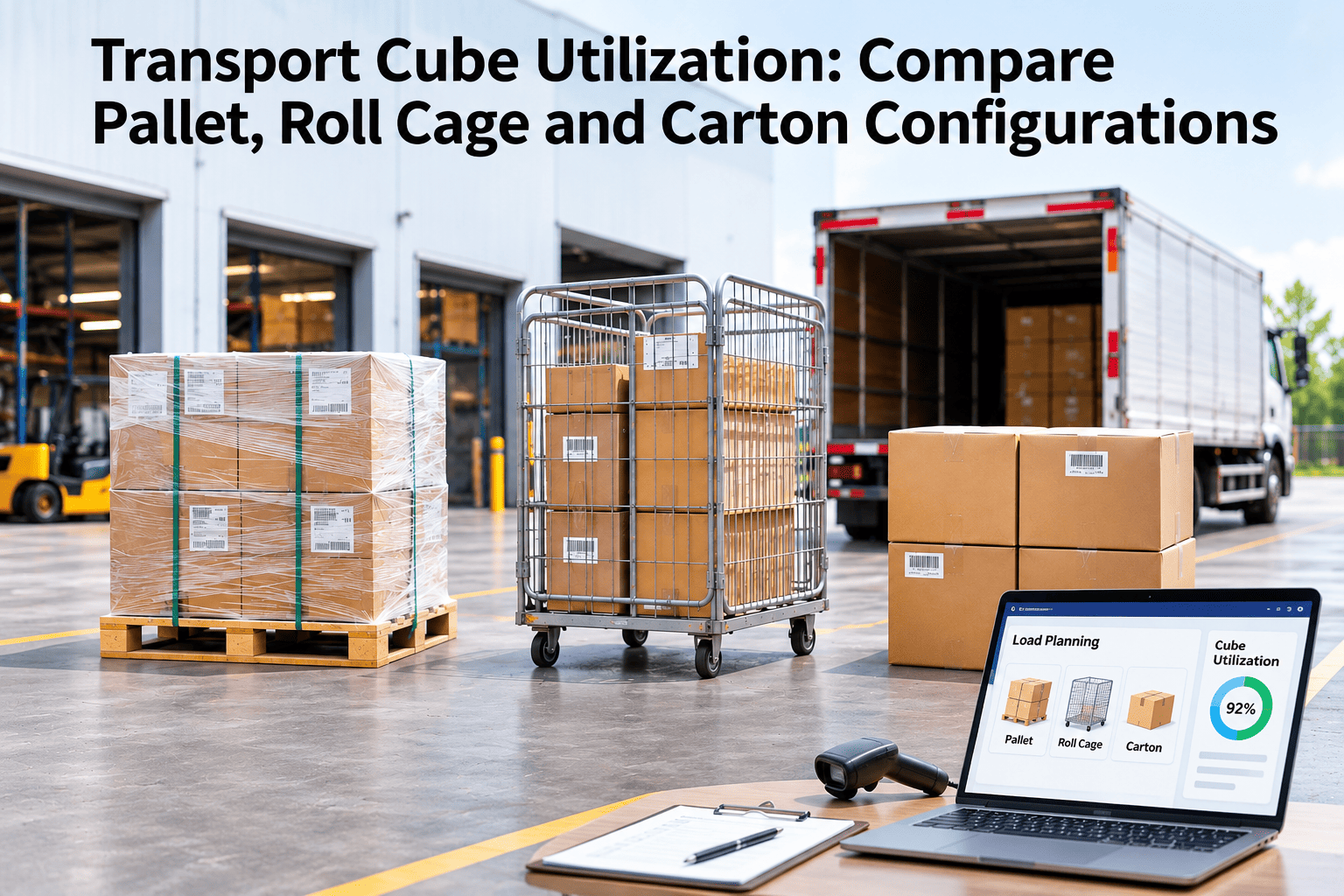
Most freight cubes out before it weighs out, so the trailer runs out of room long before it hits its legal weight limit. That makes load configuration, not load weight, the real lever on cost per shipment. Pallets, roll cages and loose cartons each use trailer cube differently, trading fill rate against damage risk and unload speed. Picking the wrong one for a given product can mean paying for an extra trailer a better configuration would have made unnecessary. Teams that want their own SKU mix run against this comparison can walk through a cube utilization review using their own trailer and product data with the iFactory AI team.
The Trailer Runs Out of Space Before It Runs Out of Weight Capacity
iFactory AI compares pallet, roll cage and carton configurations against your actual trailer and product dimensions, so the fill rate decision is made with numbers instead of habit.
What a Trailer Actually Offers, in Numbers
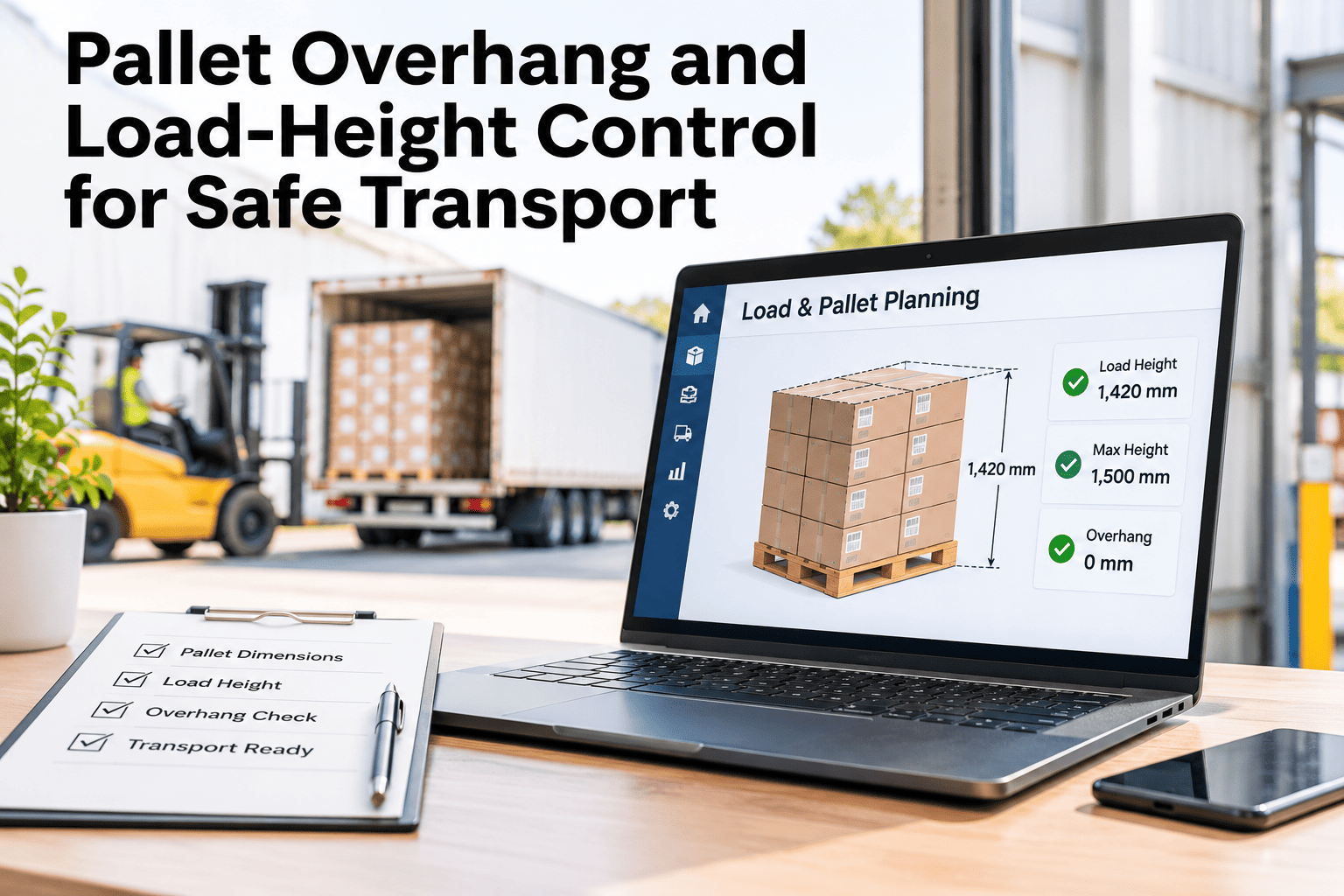
Every cube utilization decision starts from the same fixed box. A 53-foot dry van interior runs roughly 630-636 inches long, 98-100 inches wide, and 108-110 inches tall, for about 3,000-3,400 cubic feet of usable space. A 48-foot van gives up roughly two floor positions of that length.
Run This Comparison Against Your Own Trailer Fleet
Bring your trailer types and typical SKU dimensions to a 30-minute session and see where each configuration actually lands.
Pallets: The Standard, Not Always the Most Cube-Efficient
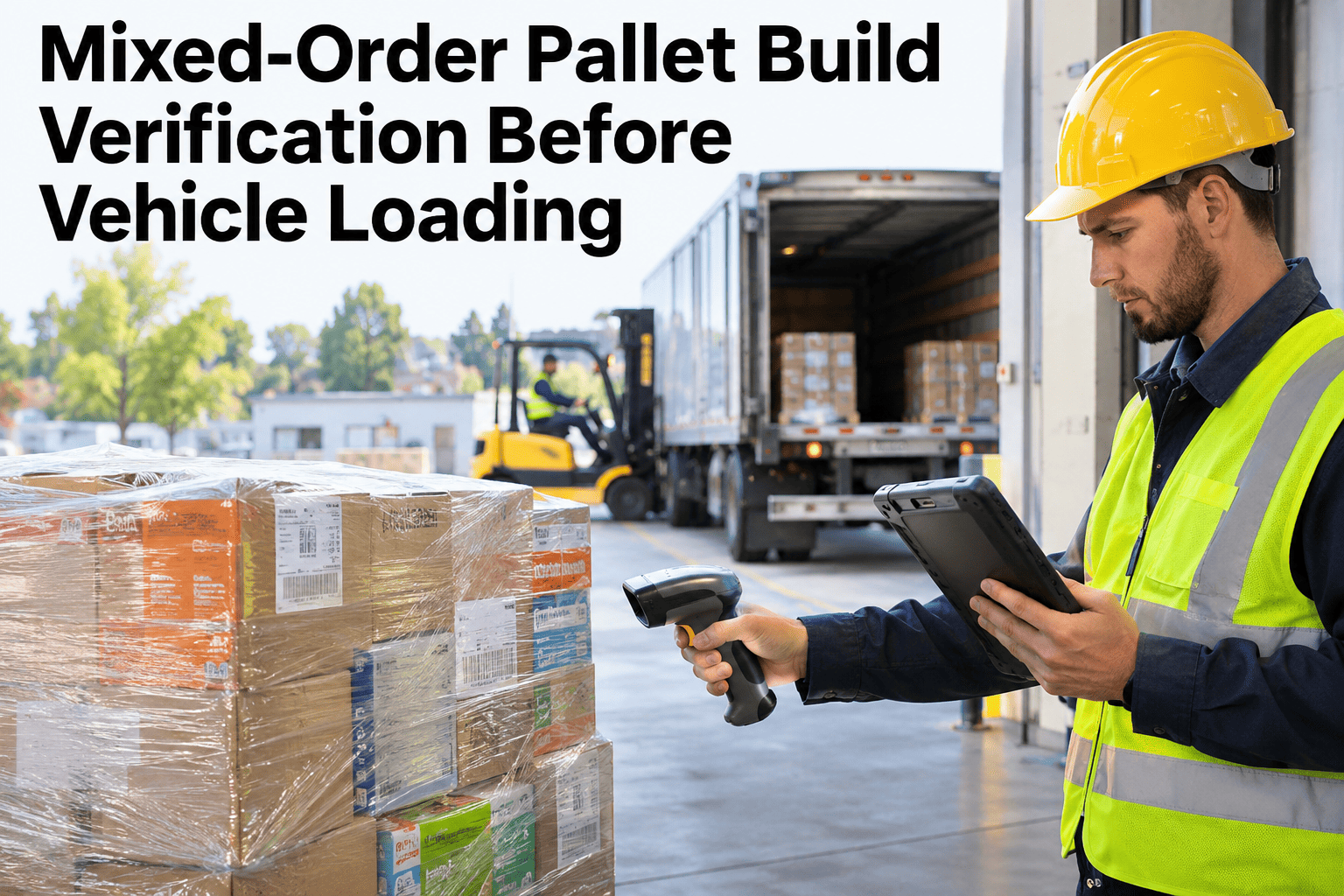
A standard 48x40 pallet fits 26 to 30 to a 53-foot floor in the pinwheel pattern, alternating orientation against the trailer walls. That number is well understood and easy to plan around, which is exactly why pallets are the default even when they are not the tightest-fitting option.
Roll Cages: Built for Access Speed, Not Maximum Density
A roll cage is a wheeled, often nestable frame used heavily in retail replenishment, typically sized around 800 by 700 by 1,800 millimeters with a load capacity near 500 kilograms. Its value is not cube efficiency on its own, it is what happens at the unload end: a cage rolls straight to the shop floor without a forklift or a repack step.
Loose Cartons: The Highest Fill Rate, With a Cost Attached
Loose-loaded cartons placed directly in the trailer, with minimal blocking and bracing, can achieve the highest cube fill of the three because there is no pallet frame or cage structure consuming space. That fill advantage comes with a tradeoff that pallets and cages were built specifically to avoid.
The Arithmetic Behind a Small Cube Gain
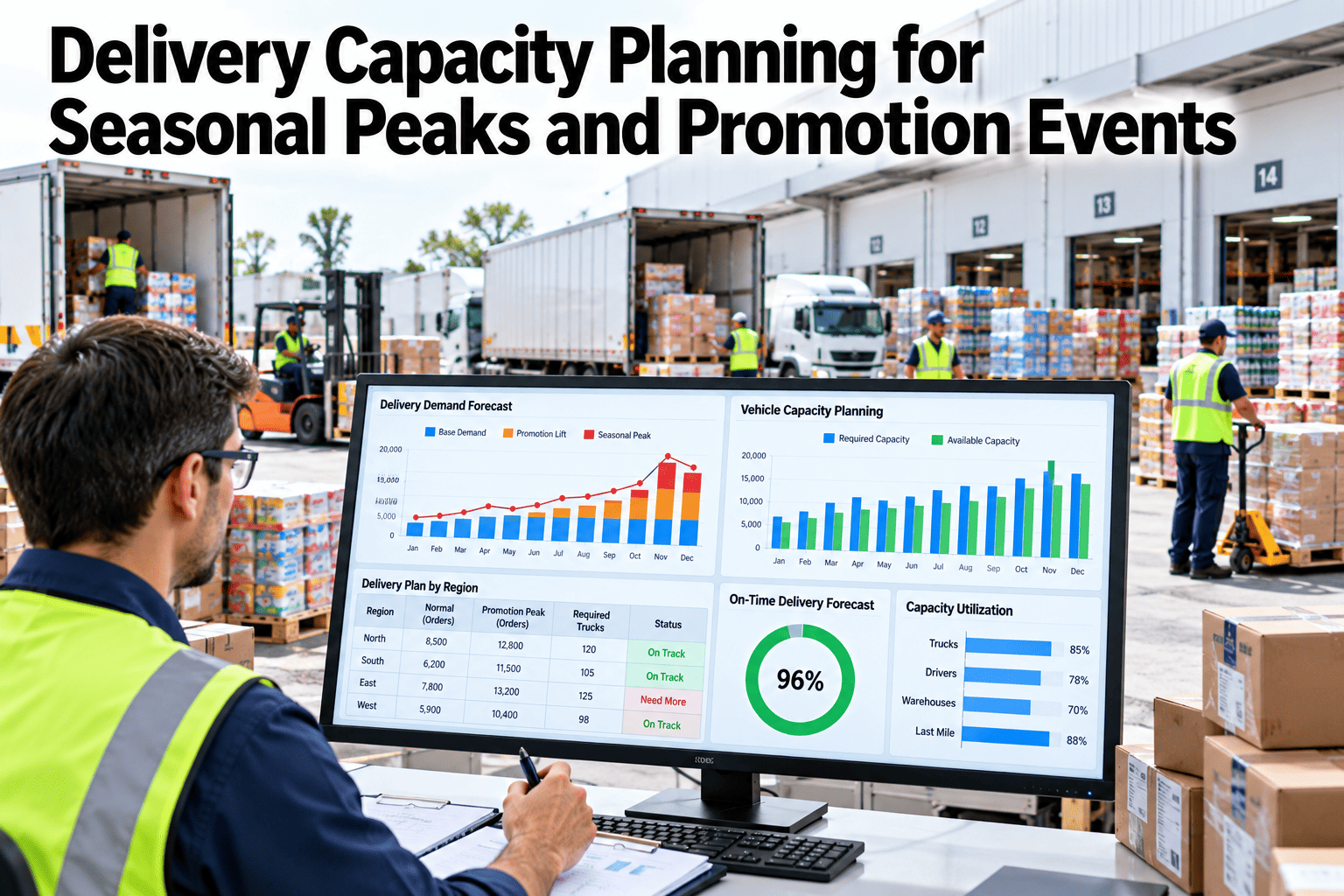
Cube utilization gains compound because trailers, not cases, are the billable unit. An industry example moving from 60 to 75 percent average cube utilization, by shifting to better-unitized loads, cut the trailers required by roughly 20 percent for the same freight volume.
Matching Configuration to Product, Not to Habit
None of the three configurations is correct in general. Each is correct for a specific combination of product fragility, destination handling capability and route frequency, and the decision should be revisited whenever any of those three changes.
A Composite Scenario: The Switch That Was Measured, Not Assumed
A distribution operation shipped a mixed product line on standard pallets by default, regardless of product type, simply because that was the configuration every lane had always used. Cube utilization sat around 60 percent on routes serving smaller stores.
A review of the product mix showed a large share of that volume was crush-resistant and uniform, better suited to a denser loose-loaded or roll-cage configuration on those specific routes. Shifting that volume off pallets raised cube utilization toward 75 percent, cutting the trailers needed by roughly a fifth. The pallet default was never wrong everywhere, only on lanes nobody had re-examined.
Where iFactory AI Fits
Per-SKU Configuration Rules
Each product family carries its own recommended configuration based on fragility, dimensions and destination handling.
Trailer Fit Calculation
Pallet, cage and carton counts are calculated against actual trailer interior dimensions, not a generic floor-position estimate.
Cube Utilization Tracking
Actual fill rate is tracked by lane and configuration, so a default choice can be checked against what it is really achieving.
Configuration-Switch Modeling
A proposed switch from one configuration to another is modeled against trailers-required before it is rolled out fleet-wide.
Frequently Asked Questions
Which configuration gives the best cube utilization overall?
Loose-loaded cartons typically achieve the highest raw cube fill because there is no pallet frame or cage structure consuming space, but that gain comes with higher damage and dispute risk. The better question is which configuration fits a specific product and route, not which one wins in general. See the comparison run on your own SKU mix in a short session.
How many standard pallets actually fit on a 53-foot trailer?
A 53-foot dry van typically holds 26 to 30 standard 48x40 pallets floor-loaded in a single layer, depending on the loading pattern used, with roughly double that if the freight can be safely double-stacked. The exact number depends on verifying real interior dimensions against the pallet's loaded height. Walk through the floor-position math for your specific trailer fleet.
When does a roll cage make more sense than a pallet?
Roll cages make sense when the destination needs fast, repack-free access, such as frequent retail-floor replenishment, and when the route has a working return loop for empty cages. They are a weaker fit when the product is irregular or oversized, since the frame and wheels then consume a larger share of the cage's own cube. Ask support how cage fit is modeled for your product dimensions.
Is a higher cube utilization percentage always worth pursuing?
Not on its own. A configuration that raises cube fill but increases damage, dispute time, or unload labor can cost more overall than a slightly less dense but more reliable configuration. Cube utilization should be weighed against those other costs per lane, not maximized in isolation. See the full cost comparison rather than cube percentage alone.
How do we decide which configuration to use for a new product line?
Start from the product's fragility, its dimensions relative to the trailer and pallet or cage footprint, and the handling equipment available at the typical destination, then model the trailer fit for each configuration before committing. A per-product decision made once at launch is far cheaper than discovering the wrong default after months of shipments. Ask how new-SKU configuration decisions are set up in the system.
Choose the Configuration the Numbers Support, Not the One That's Always Been Used
iFactory AI compares pallet, roll cage and carton configurations against your real trailer dimensions and product mix, so cube utilization decisions are made with data. Book a walkthrough with your own fleet.