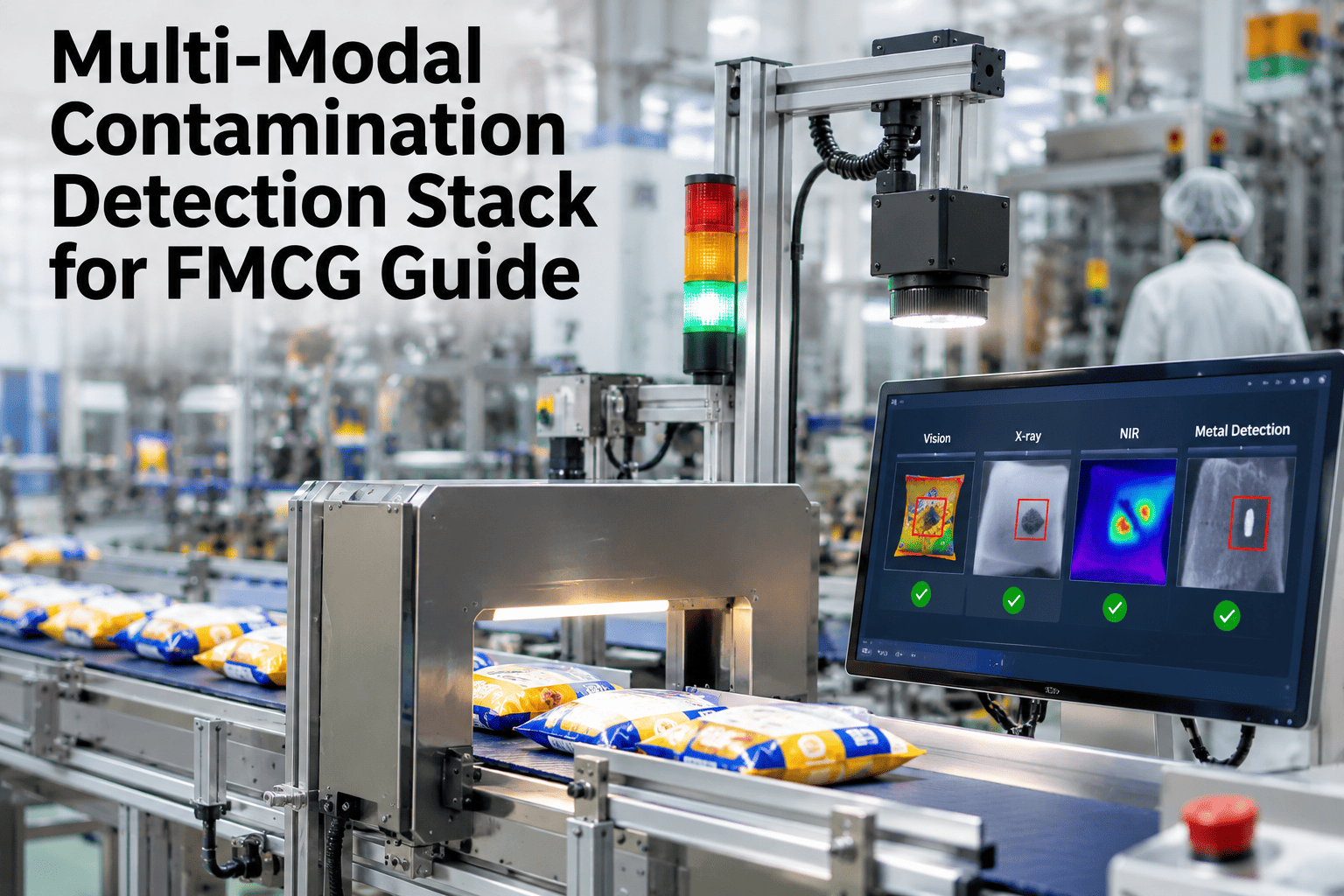
No single inspection technology sees everything that can end up inside a packaged FMCG product. A camera reads the surface but cannot look through packaging, a metal detector only responds to conductive material, and an X-ray system sees density but can miss a thin wire lying parallel to the belt. Each blind spot is exactly where the other system is strong, which is why cross-validating detections across layers catches far more than any one of them running alone. Quality teams weighing a fusion setup for their own line can walk through a detection-envelope review for their product mix with our team.
Catch What One Detection Layer Alone Would Miss
iFactory, an on-premise AI platform for FMCG quality, cross-validates vision, X-ray and metal detection findings so a contamination alert carries agreement from more than one sensor, not a single camera's guess.
Why Does Every Single-Layer System Have a Blind Spot?
Vision, X-ray and metal detection each respond to a different physical property, so each one is strong exactly where the others are weak. A vision camera cannot see inside sealed or opaque packaging at all. A metal detector cannot find glass, stone, bone or dense plastic because none of it conducts. An X-ray system can miss a thin, low-density contaminant that blends into the product's own density range, especially on products with naturally variable fill or moisture. Ask our team which blind spot matters most for your product line before adding another camera. Most plants only discover a gap after an incident shows which layer should have caught it and did not.
Detection Envelope by Technology
| Technology | What it catches | What it typically misses |
|---|---|---|
| AI vision | Surface defects, label and seal faults, pack integrity | Anything inside sealed or opaque packaging |
| X-ray | Dense contaminants — metal, glass, stone, bone | Low-density items close to the product's own density |
| Metal detection | Ferrous, non-ferrous and stainless steel fragments | Glass, stone, bone, plastic, rubber, wood |
See Which Contaminant Classes Your Current Setup Misses
Share your current inspection layers and product mix, and we will show where a second layer closes a real gap.
From Independent Alarms to One Cross-Validated Decision
Fusion is not running two systems side by side and reading two separate screens. It is combining their findings on the same unit before a reject or accept decision is made.
Vision flags a surface or seal anomaly, or X-ray flags a density anomaly.
The same unit's reading from the other layer is pulled for the same position and timestamp.
Agreement between layers raises confidence; disagreement flags the unit for a closer look instead of an automatic reject.
A combined confidence score, not a single sensor's threshold, drives the reject or accept decision.
Confirmed and disputed findings feed back into the model, tightening the next cycle.
Why Lowering False Rejects Matters as Much as Catching Contamination
Raising a single sensor's sensitivity to avoid missing contamination also raises how often good product gets rejected, which is its own cost in waste and rework. Fusion addresses both sides of that trade-off at once, instead of forcing a choice between them.
The Unit That Would Have Been Rejected Twice Over
A sealed snack pouch triggered a mild density anomaly on X-ray near a product clump, the kind of reading that a fixed threshold alone frequently flags. Vision found no surface, seal or weight anomaly on the same unit at the same timestamp.
One Confidence Score Across Every Sensor You Already Run
Multi-Sensor Correlation
Vision, X-ray and metal detection findings are matched to the same unit, position and timestamp.
Combined Confidence Scoring
A reject decision reflects agreement across layers, not a single sensor's threshold alone.
Disputed-Finding Review Queue
Units where layers disagree are routed for a closer look instead of an automatic reject.
Turnkey On-Premise Deployment
Image and sensor data stay on your own server, with no outside cloud dependency.
What FMCG Quality Teams Ask About Vision + X-Ray Fusion
Does fusion replace metal detection, or work alongside it?
Alongside it. Metal detection still catches conductive fragments faster and more cheaply than X-ray alone, so most fused setups keep metal detection as one layer among several rather than removing it. See how metal detection fits a fused setup for your line.
Will adding a second detection layer slow the line down?
Not when the layers run in parallel on the same line speed and the correlation happens after each sensor's own reading, rather than waiting for one system before starting the next. Discuss line-speed requirements for your current throughput.
How does cross-validation reduce false rejects specifically?
When one layer flags a unit but a second layer finds nothing abnormal on the same unit, that disagreement lowers combined confidence instead of triggering an automatic reject, catching exactly the cases a single sensor gets wrong. Ask support how confidence scoring is tuned for your product.
What products benefit most from vision and X-ray fusion?
Products with variable density, such as meat, poultry and seafood, or inconsistent fill like sauces and soups, tend to generate the most false rejects on a single density-based layer, making fusion most valuable there. Review your own product's false-reject pattern with our team.
Can an existing X-ray and metal detector be connected into one fusion system?
Usually yes, as long as both systems can output a timestamped, position-referenced reading that a correlation layer can match unit by unit. Check your current equipment's data output with our team.
Stop Choosing Between Missed Contamination and Wasted Good Product
See how cross-validated vision, X-ray and metal detection findings turn into one confidence score on your own line.