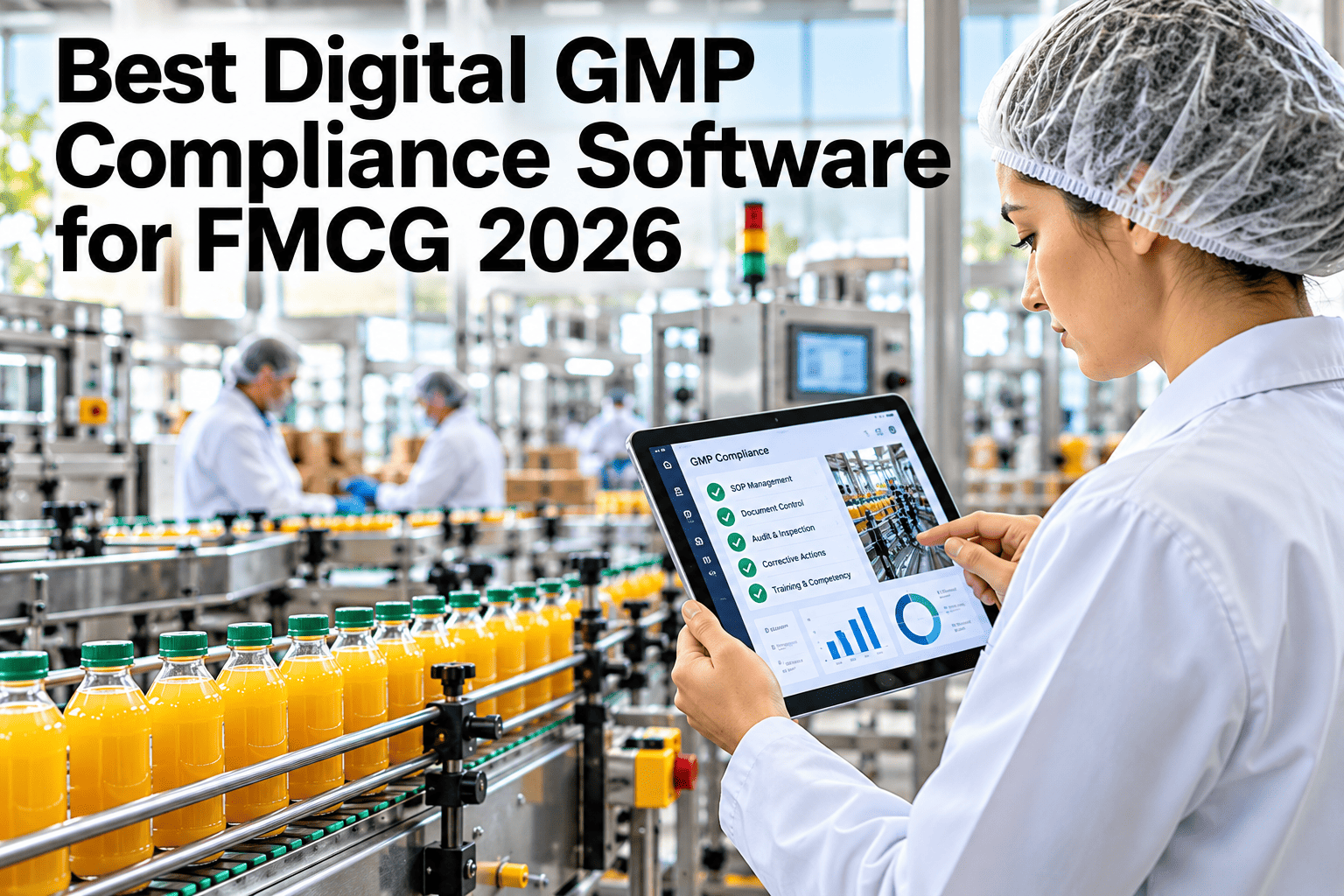
A GMP audit doesn't fail because a plant lacks sanitation procedures or training records, it fails because those records live in three different binders, two spreadsheets, and one supervisor's memory, and nobody can produce a complete, consistent picture fast enough when an auditor asks for it. Digital GMP software exists specifically to close that gap, but the category covers a wide range of actual capability, from a basic document repository to a system that genuinely unifies sanitation, training, and process control records into something audit-ready on demand. Knowing what to evaluate, not just what to buy, is what a real evaluation of digital GMP capability looks like for an FMCG plant.
A Document Repository Isn't the Same as Audit-Ready
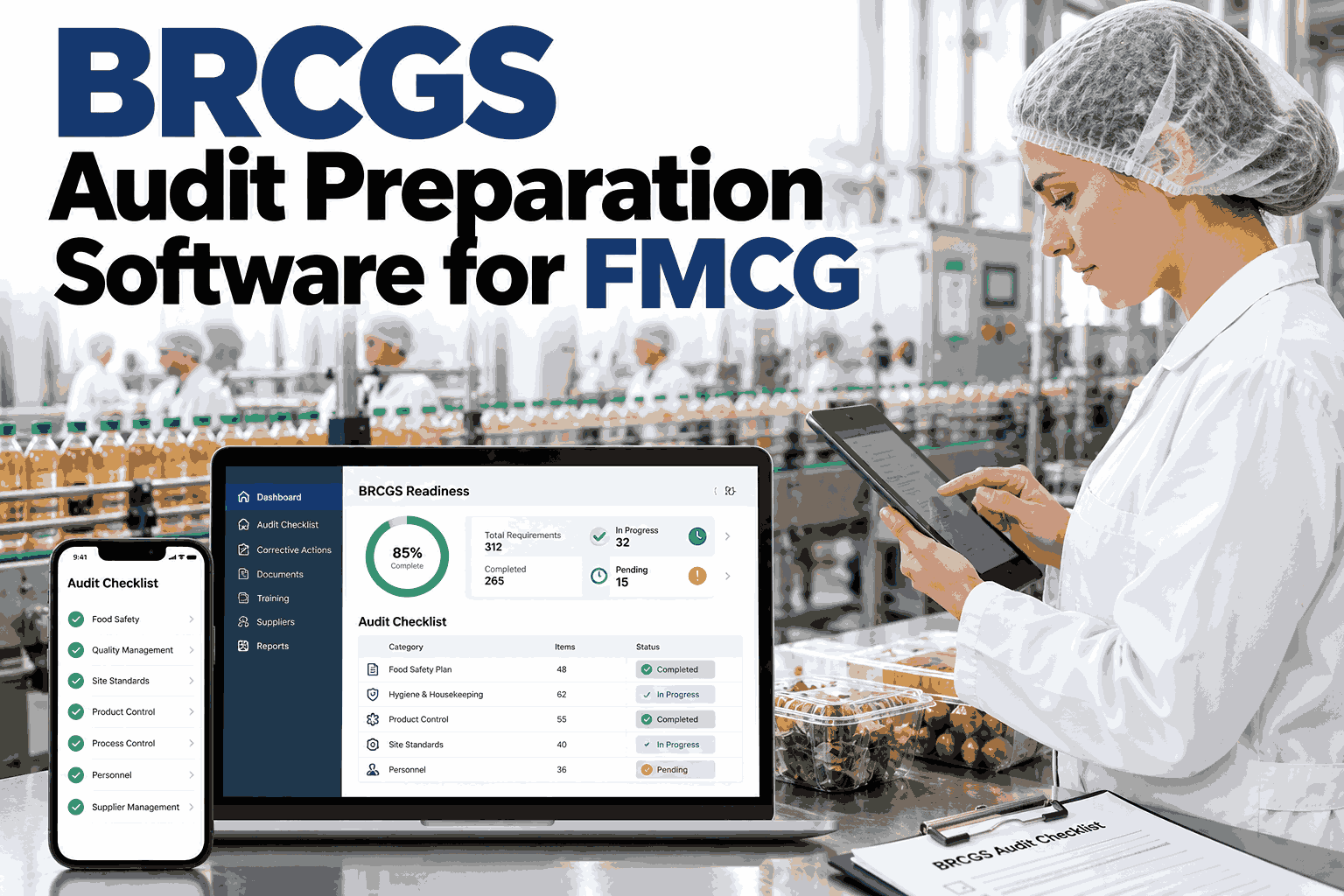
iFactory AI's Digital GMP platform unifies sanitation records, training, and process controls into a single system built to answer an auditor's question on demand.
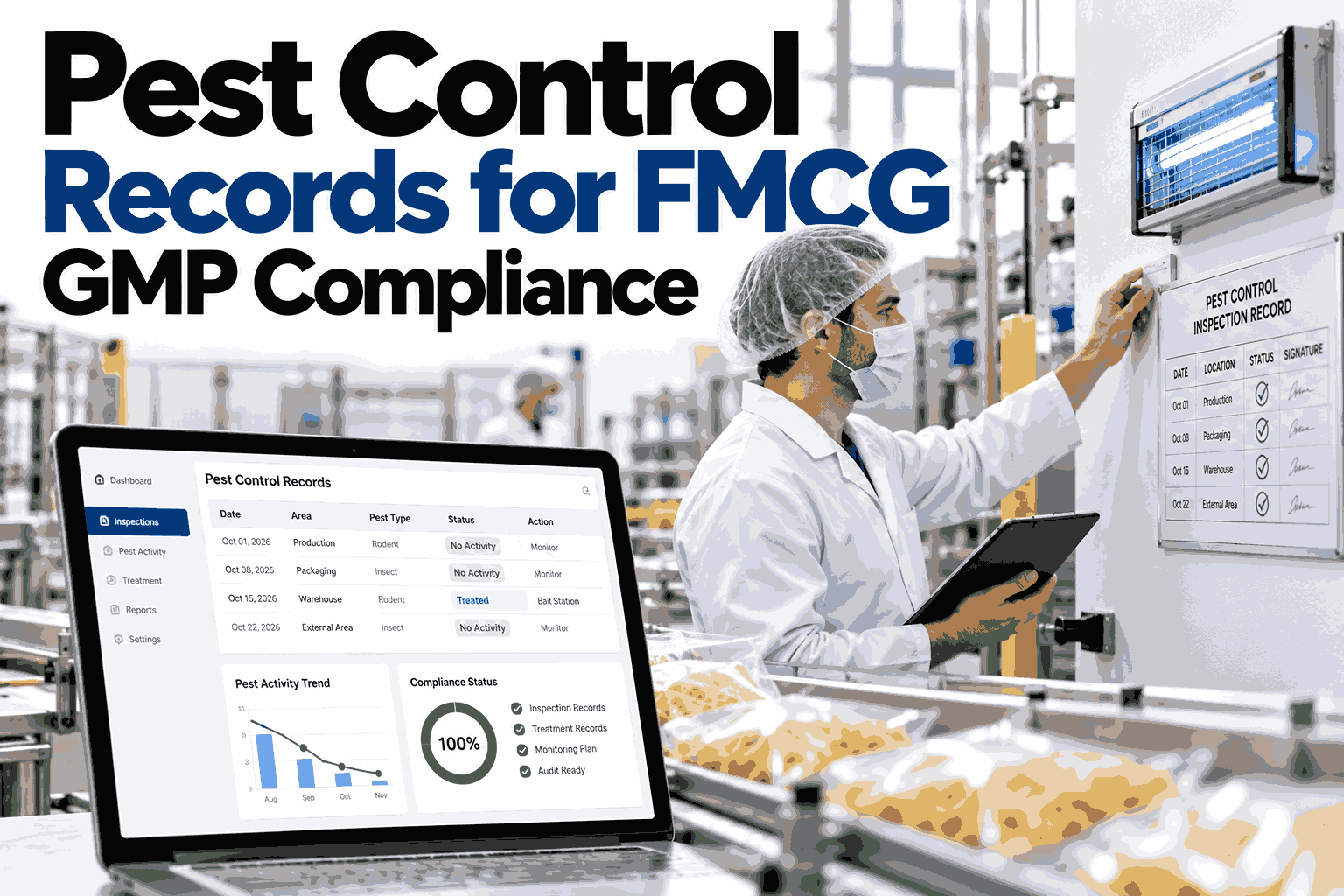
Why Paper and Spreadsheet GMP Records Fail an Audit
The underlying procedures are usually sound. What breaks down is the ability to prove, quickly and completely, that they were actually followed.
Records Live in Disconnected Systems
Sanitation logs, training certificates, and process control records often sit in entirely separate systems, with no shared way to pull a complete picture for a specific date or line.
Gaps Aren't Visible Until an Auditor Finds Them
A missed sanitation log entry or an expired training certificate often goes unnoticed until the exact moment an auditor asks to see it.
Retrieval Takes Hours, Not Minutes
Producing a complete record set for an audit request can mean manually pulling documents across multiple systems, a process that can stretch into days for a complex request.
What to Actually Evaluate in Digital GMP Software
Not every feature matters equally. These are the capabilities that genuinely determine whether a system makes audits easier or just digitizes the same scattered records.
| Criterion | Why It Matters |
|---|---|
| Unified record model | Sanitation, training, and process data linked together, not siloed by module |
| Real-time gap visibility | A missing or expiring record flagged immediately, not discovered during an audit |
| Fast, complete retrieval | A complete record set for any date, line, or product pulled in minutes |
| Audit trail integrity | Every record shows who entered it, when, and whether it was later changed |
A system that excels at one of these but not the others still leaves a real gap, since a unified record model with slow retrieval is nearly as frustrating during an actual audit as no system at all.
Test Retrieval Speed Against a Real Audit Request
Bring a sample audit request to a 30-minute session and see how long a complete record set actually takes to assemble.
What "Audit-Ready" Actually Requires
The phrase gets used loosely in the category. These are the specific capabilities it should actually mean.
Rolling Out Digital GMP Without Disrupting Current Compliance
A transition from paper or spreadsheet records to a unified system needs to maintain compliance throughout, not create a gap during the switch itself.
An Illustrative Comparison: Audit Preparation Time
The figures below are a labeled illustrative composite, not a reported customer result, showing how long it can take to assemble a complete record set for an audit request before and after moving to a unified system.
The plants that struggle most during an audit usually have perfectly good underlying compliance practices, the sanitation gets done, the training happens, the process controls are followed. What's missing is a system that can prove all of it together, quickly, for whatever specific slice of time and production an auditor asks about. That's a records architecture problem, not a compliance culture problem, and it's exactly what a unified digital GMP system is built to solve.
Frequently Asked Questions
Does digital GMP software replace our existing QMS?
It depends on scope, some digital GMP platforms are built to work alongside an existing quality management system, feeding sanitation, training, and process control data into a unified audit-ready layer, while others are designed as a more complete replacement, so the right fit depends on what your current QMS already handles well. Discuss how this fits alongside your current QMS in a short session.
How long does migrating historical records actually take?
Migration timeline depends heavily on how many years of history need to be preserved and how scattered the current records are across systems, but most plants run a defined parallel period to confirm the transition before fully retiring old record-keeping methods. Ask the iFactory AI team for a realistic migration timeline.
Can this handle multiple plants with different regulatory requirements?
Yes, a well-built system should support plant-specific configuration while still rolling up to a consistent enterprise view, since regulatory requirements and even sanitation schedules can genuinely differ between plants even within the same company. Review multi-plant configuration options in a demo.
What happens if a record is entered incorrectly after the fact?
A proper audit trail preserves the original entry alongside any correction, showing who made the change and when, rather than allowing a record to be silently overwritten, which is exactly the kind of integrity an auditor will specifically check for. Review audit trail handling for corrections on a call.
How do operators actually enter data without it becoming extra burden?
The most effective systems capture data close to where the work already happens, such as at the point of a sanitation check or a training session, rather than requiring a separate end-of-shift data entry task that competes with production priorities. Discuss data entry workflow for your floor with the support team.
Turn Compliance Records Into an Answer, Not a Search
iFactory AI's Digital GMP platform unifies sanitation, training, and process records into an audit-ready system. Book a walkthrough built around your own plant.