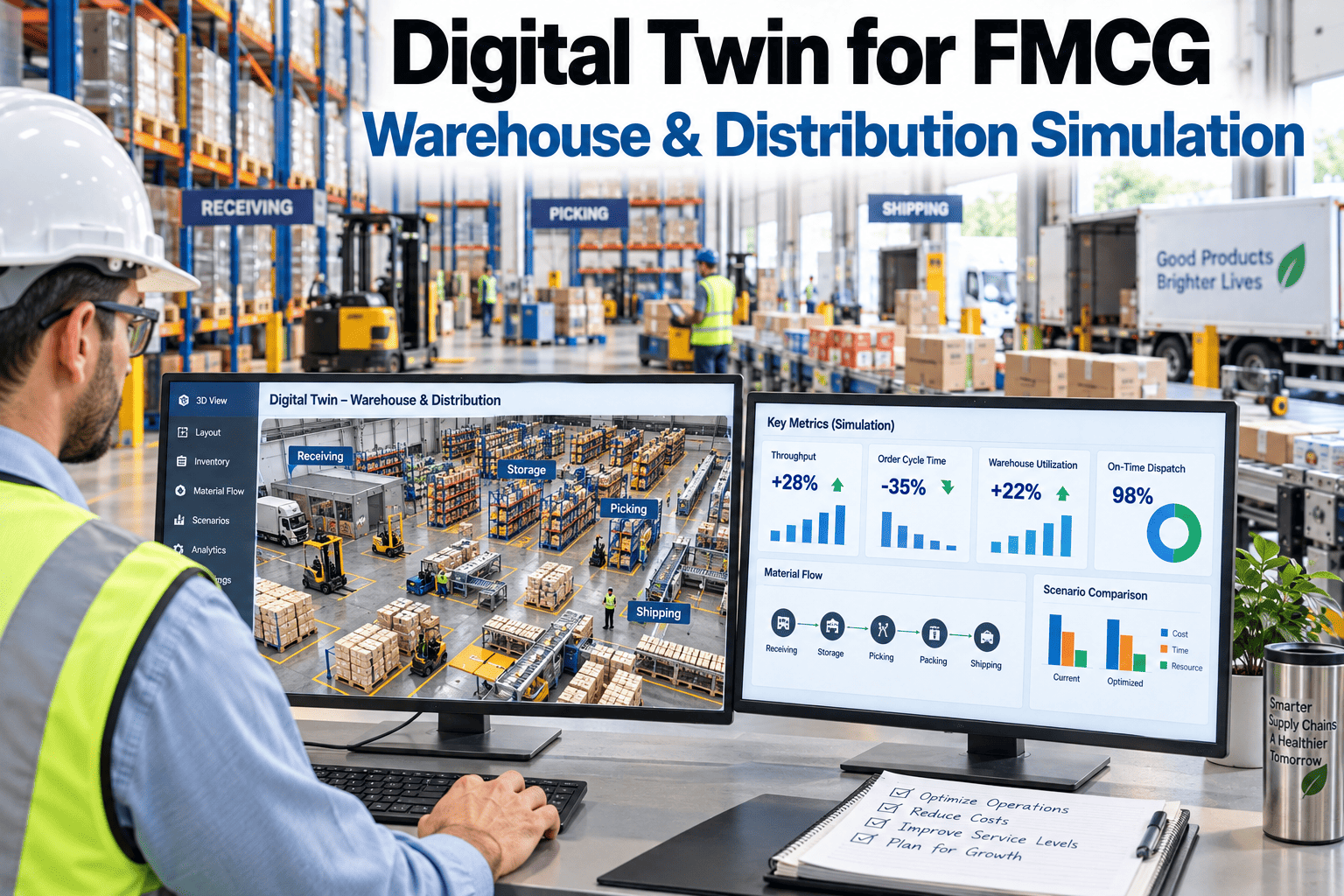
Choosing digital twin simulation software for an FMCG plant is not the same evaluation as choosing an ERP or a warehouse management system — the market is smaller, the tools are more specialized, and the right choice depends heavily on whether you're modeling a discrete packaging line, a continuous process, or a full facility flow. Tecnomatix, Emulate3D, and FlexSim each approach that problem differently, and open-source alternatives exist for teams with strong internal engineering resources. iFactory's own digital twin platform is built specifically for FMCG production and warehouse environments, which is the lens this comparison uses throughout.
SOFTWARE COMPARISON
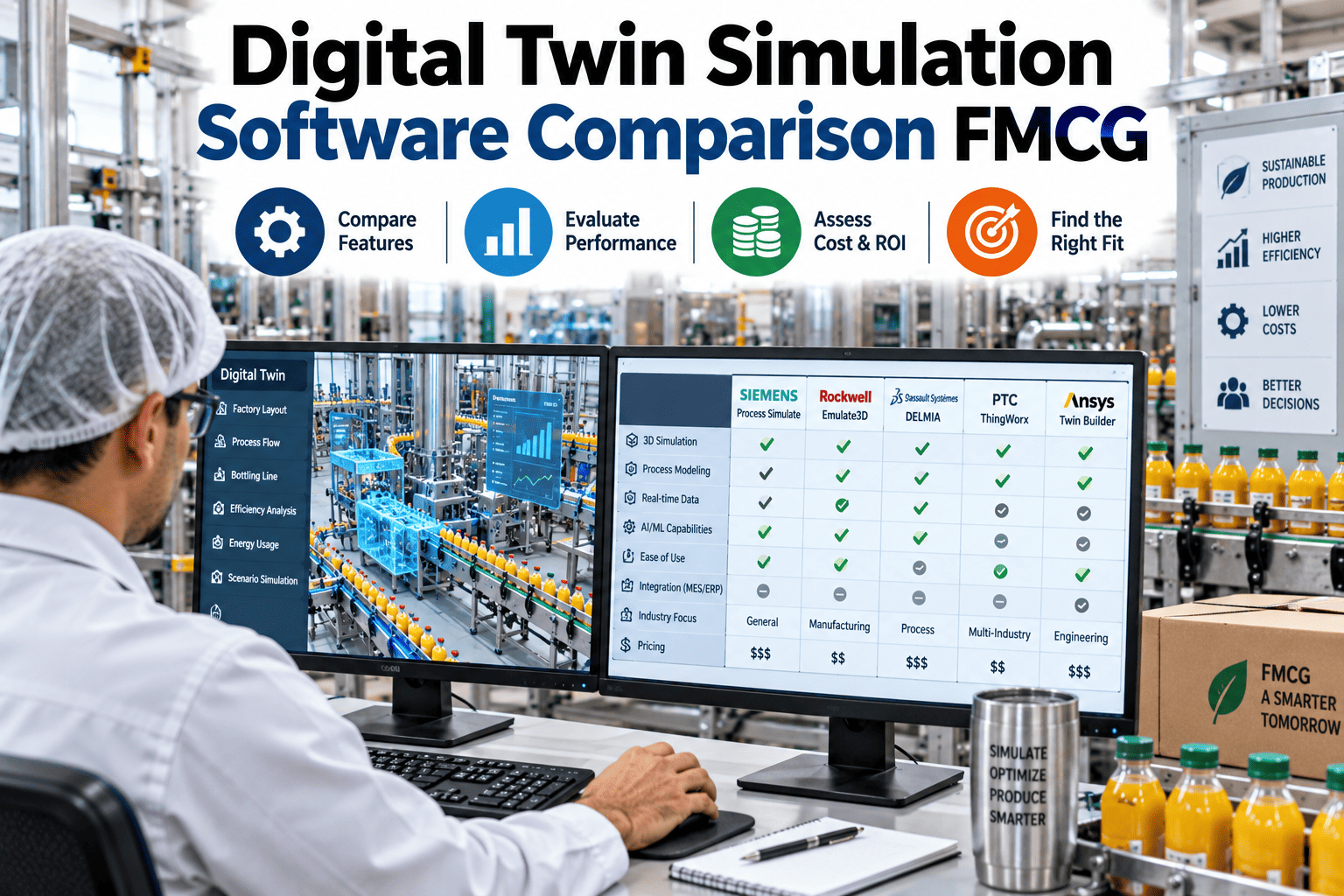
Digital Twin Simulation Software Comparison for FMCG
Tecnomatix, Emulate3D, FlexSim, and open-source alternatives compared against the specific demands of FMCG packaging lines, process manufacturing, and warehouse flow.
Tecnomatix
Emulate3D
FlexSim
Open-Source
What Actually Matters When Evaluating Twin Software for FMCG
General-purpose simulation platforms are built to handle any manufacturing scenario, which means much of their flexibility is unused overhead for an FMCG operator whose needs are more specific: high-speed packaging line changeovers, batch process variability, cold chain constraints, and warehouse flow tied to promotional volume spikes. The right evaluation weighs four factors specifically against that context rather than general simulation capability alone.
FMCG-Specific Fit
How well the platform models high-speed packaging changeovers, batch variability, and promotional demand spikes out of the box.
Implementation Effort
How much specialized simulation engineering expertise is required to build and maintain an accurate model over time.
Real-Time Data Integration
Whether the platform connects to live plant data for continuous model validation, or is limited to offline scenario planning.
Total Cost of Ownership
Licensing, implementation services, and ongoing maintenance cost relative to the value the simulation actually delivers.
Platform Comparison at a Glance
The table below summarizes how each platform generally positions against the four evaluation factors above, based on how these tools are typically used in FMCG manufacturing and warehouse contexts. Specific capability can vary by version and configuration, so this is a starting point for evaluation rather than a final verdict.
| Platform | Best Suited For | Implementation Effort | Notable Gap for FMCG |
|---|
| Tecnomatix (Siemens) | Discrete manufacturing, robotics-heavy lines | High — specialized engineering required | Less native support for continuous/batch process flows |
| Emulate3D (Rockwell) | Material handling and warehouse automation | Moderate to high | Stronger for automation validation than broad plant-wide flow |
| FlexSim | General discrete-event simulation, warehousing | Moderate | Requires custom build-out for FMCG-specific process logic |
| Open-source (SimPy, others) | Teams with strong internal simulation engineering | Very high — built largely from scratch | No vendor support; ongoing maintenance falls entirely internally |
| iFactory Digital Twin | FMCG production lines and warehouse flow specifically | Low to moderate — built for FMCG use cases | Narrower general-purpose scope outside FMCG contexts |
See How an FMCG-Built Twin Platform Compares for Your Use Case
iFactory's digital twin platform is purpose-built for FMCG production and warehouse simulation, with real-time data integration included rather than added as a custom project.
Scoring Each Approach Against FMCG-Specific Needs
Beyond the general comparison above, scoring each platform category specifically against FMCG-relevant capability helps clarify where the meaningful differences actually sit. The bars below represent a general assessment of relative strength across these categories.
General Manufacturing Simulation Platforms
Strong general capability, requires significant customization for FMCG-specific flows
Warehouse Automation-Focused Platforms
Strong for material handling, less complete for production-side process modeling
Open-Source Frameworks
Maximum flexibility, but requires the deepest internal engineering investment
FMCG-Purpose-Built Platforms
Pre-built for packaging changeovers, batch variability, and live data integration
Which Approach Fits Which Situation
There is no universally correct choice among these platforms — the right fit depends on your existing engineering resources, the specific process you are modeling, and how much of the simulation needs to connect to live plant data versus operate as an offline planning tool.
A
You have a dedicated simulation engineering team already
General-purpose platforms like Tecnomatix or FlexSim offer the most flexibility if you have in-house expertise to build FMCG-specific logic on top of a general foundation.
B
Your primary need is warehouse automation validation
Emulate3D's strength in material handling and robotics validation makes it a strong fit if your simulation need is narrowly focused on automated warehouse equipment.
C
You need fast time-to-value on FMCG-specific flows
A platform purpose-built for FMCG, with packaging line and batch process logic already modeled, reduces implementation time significantly compared to a general-purpose starting point.
D
Budget for licensing is the primary constraint
Open-source frameworks eliminate licensing cost but shift the cost entirely into internal engineering time, which is often underestimated during initial planning.
A Manufacturing Engineer on Choosing Between General and Purpose-Built Platforms
"
We evaluated three different general-purpose simulation platforms before deciding none of them were the right fit for what we actually needed, which was modeling packaging line changeovers across a portfolio of dozens of SKUs with very different run rates. Every platform we looked at was technically capable of representing that, but building the specific logic for our changeover matrix and batch sequencing from scratch would have taken a simulation engineer several months, and we did not have that specialized skill set in-house. What changed our approach was finding a platform that already had FMCG packaging logic built in, so what we spent months planning to build from scratch instead took a few weeks of configuration against our actual line data. The general-purpose platforms were not wrong choices in the abstract — they were just built for a broader audience than the specific problem we had, and that gap showed up entirely in implementation time and the specialized skills required to close it.
— Manufacturing Engineering Manager, FMCG Packaged Goods Producer · Evaluated 3 Simulation Platforms
Frequently Asked Questions
Is a general-purpose platform ever a better choice than an FMCG-specific one?
Yes, particularly for organizations with diverse manufacturing operations beyond FMCG, or with an existing dedicated simulation engineering team already proficient in a specific general-purpose tool. General platforms like Tecnomatix and FlexSim offer broader flexibility across manufacturing types, which matters if your simulation needs extend well beyond FMCG-specific production and warehouse flow. The trade-off is typically longer implementation time and higher specialized-skill requirements to build FMCG-specific logic that a purpose-built platform would already include.
How important is real-time data integration versus offline scenario planning?
This depends on your intended use case — offline scenario planning is sufficient for one-time decisions like evaluating a proposed layout change or new equipment purchase, since the model does not need continuous live data once the decision is made. Real-time integration becomes important when the twin is meant to serve as an ongoing operational tool, continuously reflecting current plant conditions to support day-to-day decisions rather than a single planning exercise. Platforms without native real-time integration can sometimes have this added as a custom project, though that adds implementation cost and time.
What does total cost of ownership actually include beyond the software license?
Beyond the base licensing fee, total cost typically includes implementation services to build the initial model, ongoing maintenance as your facility or processes change, and the internal or external engineering time required to keep the model accurate over time. Open-source options eliminate the licensing line item entirely but often carry the highest total cost once specialized internal engineering time is properly accounted for, since there is no vendor support to fall back on when issues arise or the model needs significant updates.
Can we switch platforms later if our initial choice doesn't work out?
Switching is possible but rarely simple, since most of the value built into a digital twin lives in the specific model logic, data connections, and validation work done during implementation — none of which transfers automatically to a different platform. This is a strong argument for spending adequate time on the evaluation phase described in this comparison before committing, since a mismatched initial choice often means rebuilding a meaningful portion of the implementation work rather than a straightforward migration.
How does iFactory's digital twin platform compare directly for our specific use case?
The best way to evaluate fit is against your specific facility, product mix, and simulation goals rather than a generic comparison, since the right answer genuinely varies by situation as outlined above. iFactory's platform is purpose-built for FMCG production and warehouse flow with real-time data integration included, which tends to reduce implementation time relative to general-purpose alternatives for FMCG-specific use cases. To walk through a direct comparison against your specific requirements,
book a demo with our team.
Choose the Right Twin Platform for Your FMCG Operation
General-purpose simulation platforms, warehouse automation tools, and open-source frameworks all have a place — but for FMCG-specific packaging and process flow, a purpose-built platform typically gets you to a validated model faster. See how iFactory's approach compares for your facility.