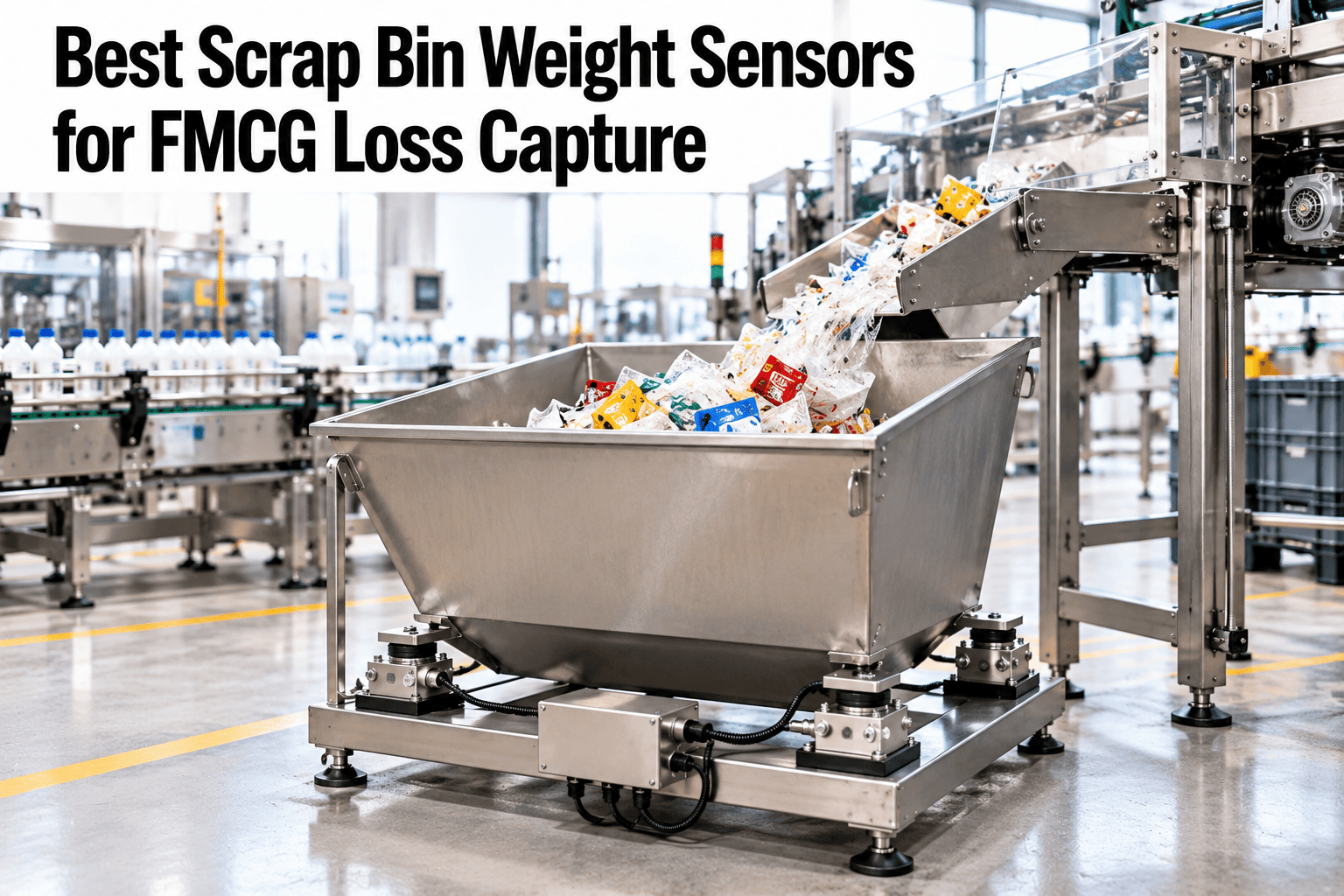
Ask a line supervisor how much product went into the scrap bin on the last shift and you will usually get a confident guess. Ask again tomorrow and the guess will be different, because nothing was weighed and nobody wrote it down at the time. Scrap bin weight sensors replace that guess with a measurement, logging every addition to the bin with a time, a shift and a bin identity. Plants who want to start can ask iFactory AI how scrap bin weights are captured and linked to line events.
Turn Scrap Bin Guesswork Into Hard Measurement With Weight Sensors
iFactory AI reads bin-level weight, timestamps every addition and links it to line, shift and product, so scrap is measured as it happens instead of estimated afterwards.
Why Tribal Estimation Fails
Estimating scrap by eye or memory has predictable flaws. The chart shows an illustrative ranking of where estimates go wrong.
What a Bin Weight Sensor Captures
The sensor does one simple thing, and the value comes from what is attached to each reading.
From Weight Event to Loss Record
A reading becomes useful only after a short chain of steps. This flow shows how it works.
An Example Event Log
This is illustrative data for a single bin on one shift. It shows how weight events tell a story.
| Time | Weight Added | What the Line Was Doing |
|---|---|---|
| 06:42 | 1.8 kg | Startup after cleaning |
| 09:15 | 0.9 kg | Normal running |
| 10:12 | 4.6 kg | Changeover to a new product |
| 13:30 | 2.2 kg | Reel change and splice |
| 14:05 | 5.1 kg | Seal fault and stoppage |
Replace Your Scrap Guess With a Measured Number
Book a 30-minute session and iFactory AI will review your scrap points and line setup to show where bin weighing can capture the most loss.
Where to Put the Sensors
Not every bin needs weighing. Start where scrap is largest and easiest to attribute.
Filler and sealer reject bins
Product and packaging scrap from the busiest stages of a packing line.
Changeover and startup bins
Waste created when a line stops, restarts or changes product.
Rework and returns points
Material returned to the line or held for decision.
Processing and mixing waste
Batch residue, offcuts and trimmings from upstream stages.
Choosing a Sensing Approach
Several approaches exist. The right one depends on bin size, floor conditions and the accuracy needed.
| Approach | Strength | Limit to Know |
|---|---|---|
| Platform scale under the bin | Simple and accurate for standard bins | Needs floor space and a clean footprint |
| Load cells in the bin frame or stand | Fits fixed bin positions | Needs careful calibration and mounting |
| Hanging or hoist scale | Useful for bulk bags | Slower and less suited to constant flow |
| Counting rejects at a checkweigher | Cheap and automatic | Gives counts, not scrap weight of non-rejected waste |
Environmental Factors That Affect Accuracy
FMCG floors are hard on sensors. The matrix, shown as an illustration, ranks typical risks.
| Factor | Risk to Accuracy | Typical Mitigation |
|---|---|---|
| Washdown and moisture | High | Moderate |
| Vibration from machines | High | Moderate |
| Forklift and trolley impacts | High | High |
| Temperature swings | Moderate | Moderate |
| Uneven or soft floors | Moderate | Moderate |
Manual Estimation or Sensor Measurement
The comparison is about trust, not only accuracy.
Installing Bin Sensors in Five Steps
A first installation can run alongside normal production.
Pick the bins where scrap is highest.
Mount and protect the sensors for the floor conditions.
Check weights against known references.
Tie each bin to its line, area and waste type.
Compare readings with a manual weigh-out for a week.
Commissioning and Calibration Checklist
Use this list when installing and every month after. Each box protects the trust in the number.
A Composite Scenario: The Changeover That Cost More Than Anyone Thought
This is a composite example, not a named plant. It shows what measurement reveals.
Mistakes That Undermine Bin Measurement
These habits make the numbers unreliable.
Weighing every bin at once
A large rollout stalls and loses trust.
Skipping calibration checks
Drift quietly destroys confidence.
Mixing waste types in one bin
Causes cannot be separated.
Ignoring bin swaps
Empties look like negative events and confuse totals.
What iFactory AI Adds to Scrap Bin Measurement
iFactory AI is smart manufacturing and industrial software for FMCG and process plants. Capabilities described here should be confirmed against your specific setup. Explore bin measurement in a live product tour on realistic data.
Weight Event Capture
Each addition is detected and stamped with time, shift and bin.
Line Context
Events are linked to line state, product and recorded reasons.
Loss Trends
Scrap per shift, line and product is trended automatically.
Instant Root Cause Hooks
Unusual additions trigger a correlation of line, quality and material data.
A 30-Day Plan to Start
A month is enough to prove bin measurement on one line.
Review of Scrap Bin Weight Sensors
A practical review of what makes bin measurement credible, written as editorial guidance rather than a named expert quote.
Measure the biggest bins first
A few well-chosen sensors beat many poorly maintained ones.
Keep waste types separate
A bin that mixes causes cannot explain any of them.
Calibrate and compare
Regular checks against manual weigh-outs protect trust.
Frequently Asked Questions
How do scrap bin weight sensors work?
They weigh the bin continuously, detect each increase as an addition and stamp it with time, shift and bin identity. See bin weights captured in a live demo with realistic data. The additions are then linked to what the line was doing.
How accurate are bin weight sensors?
Accuracy depends on the sensor, mounting, bin size and floor conditions. Calibrate against reference weights and compare with manual weigh-outs. Even imperfect measurement beats a shift-end guess.
Which bins should we weigh first?
Start with the bins that hold the largest or least understood scrap, such as reject bins at fillers and sealers or changeover bins. Ask support how first bins are chosen from scrap records for your plant. A narrow start builds trust.
Can we measure different waste types?
Yes, by using separate bins for each type and tying each bin to its waste category. Mixed bins cannot be separated later. Clear bin labelling and training help.
How soon can we see results?
Many plants see a clear scrap picture within weeks of installing sensors on one line. Book time to scope a bin measurement pilot with your operations team. A measured changeover loss is often the first surprise.
Know Exactly How Much Scrap Each Shift Really Makes
iFactory AI weighs scrap as it happens and links every addition to line events. Book a walkthrough to see it on your own bins and lines.