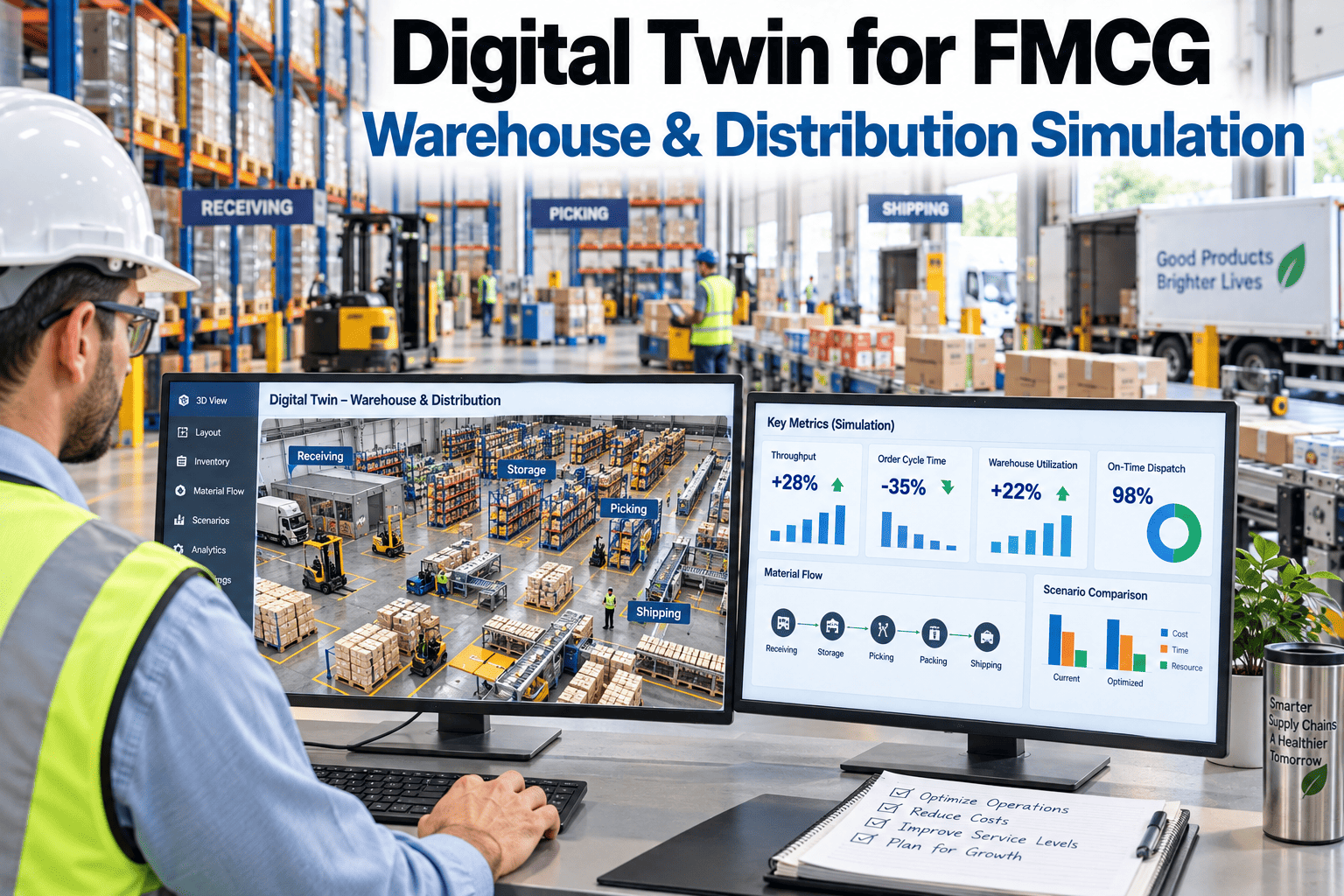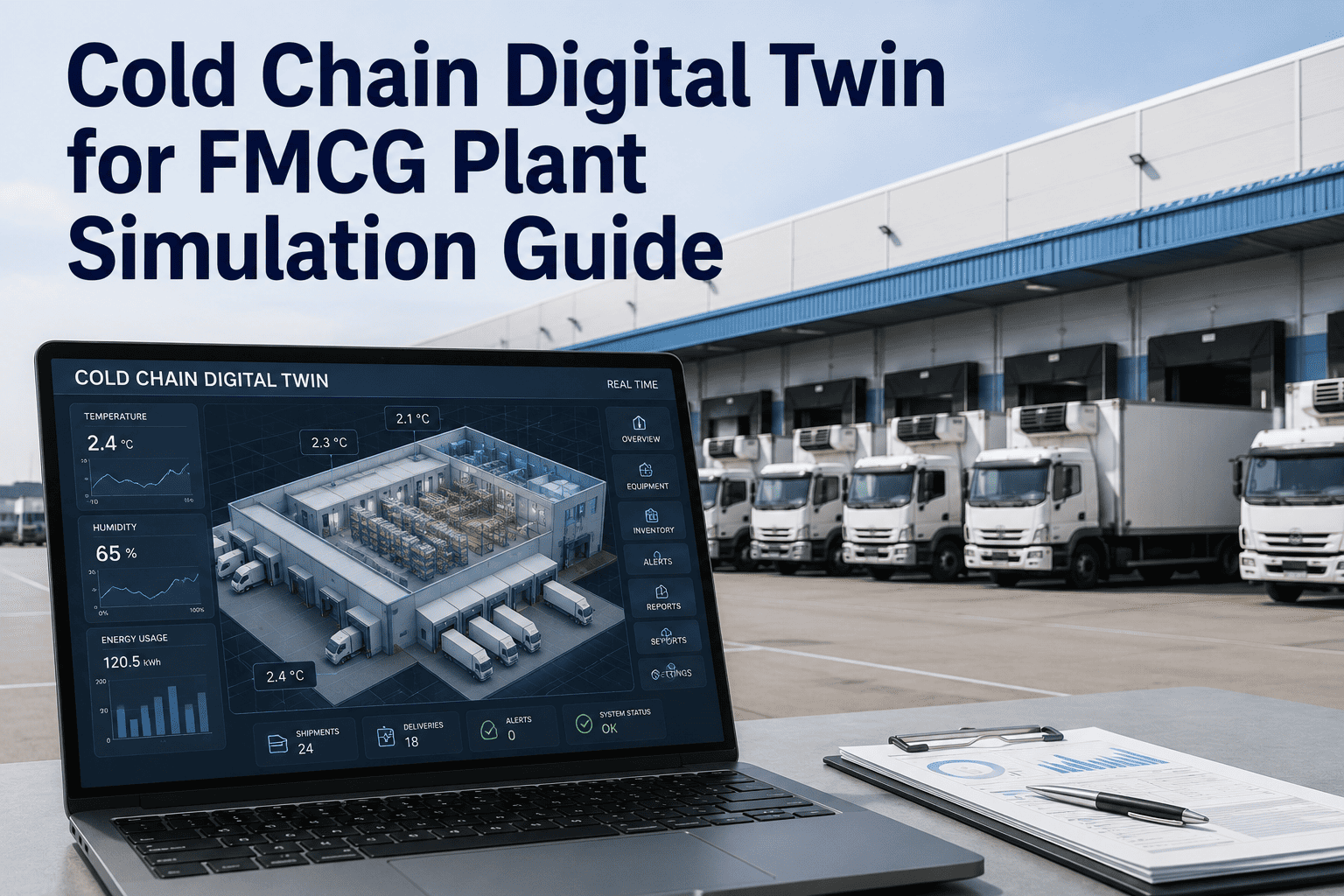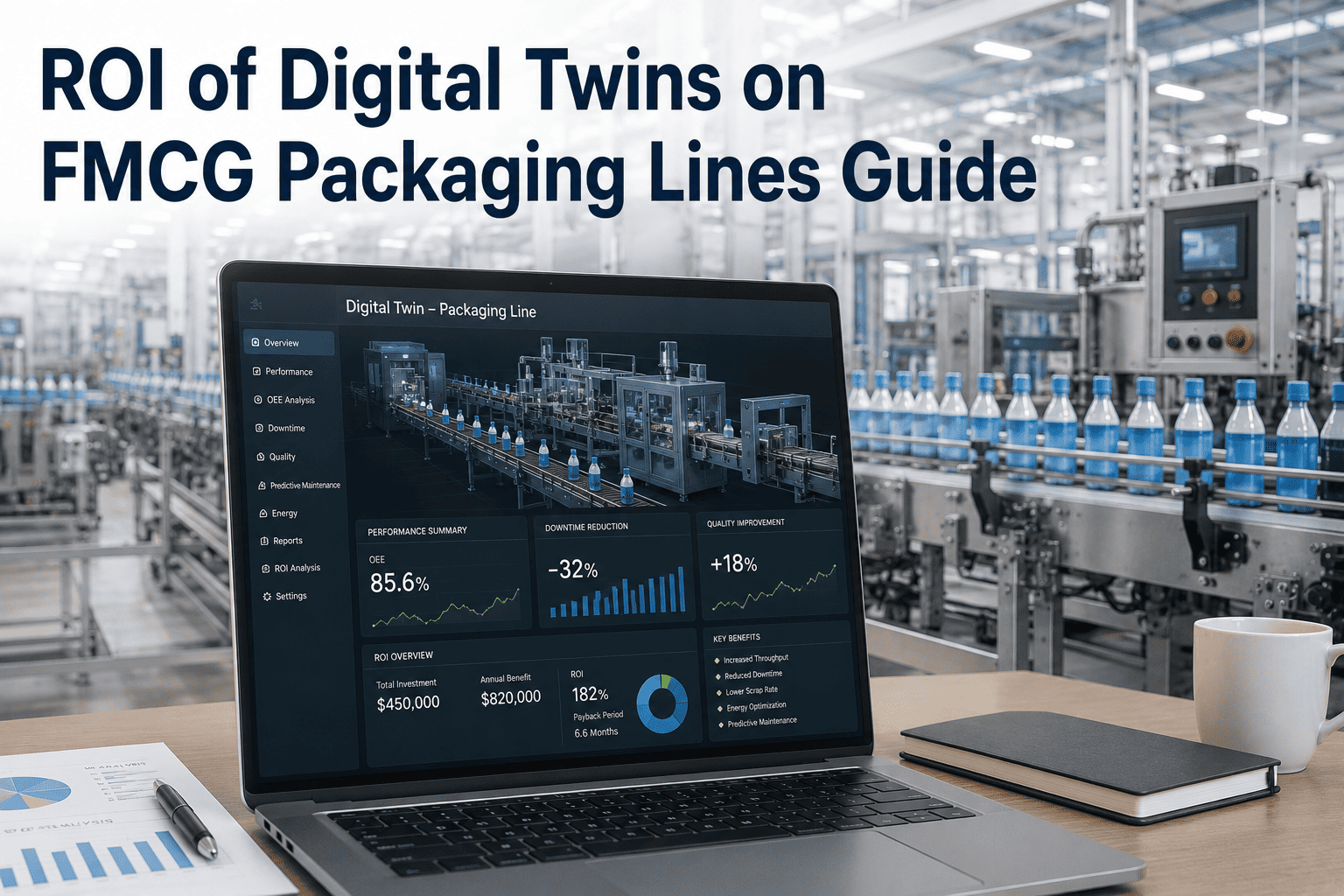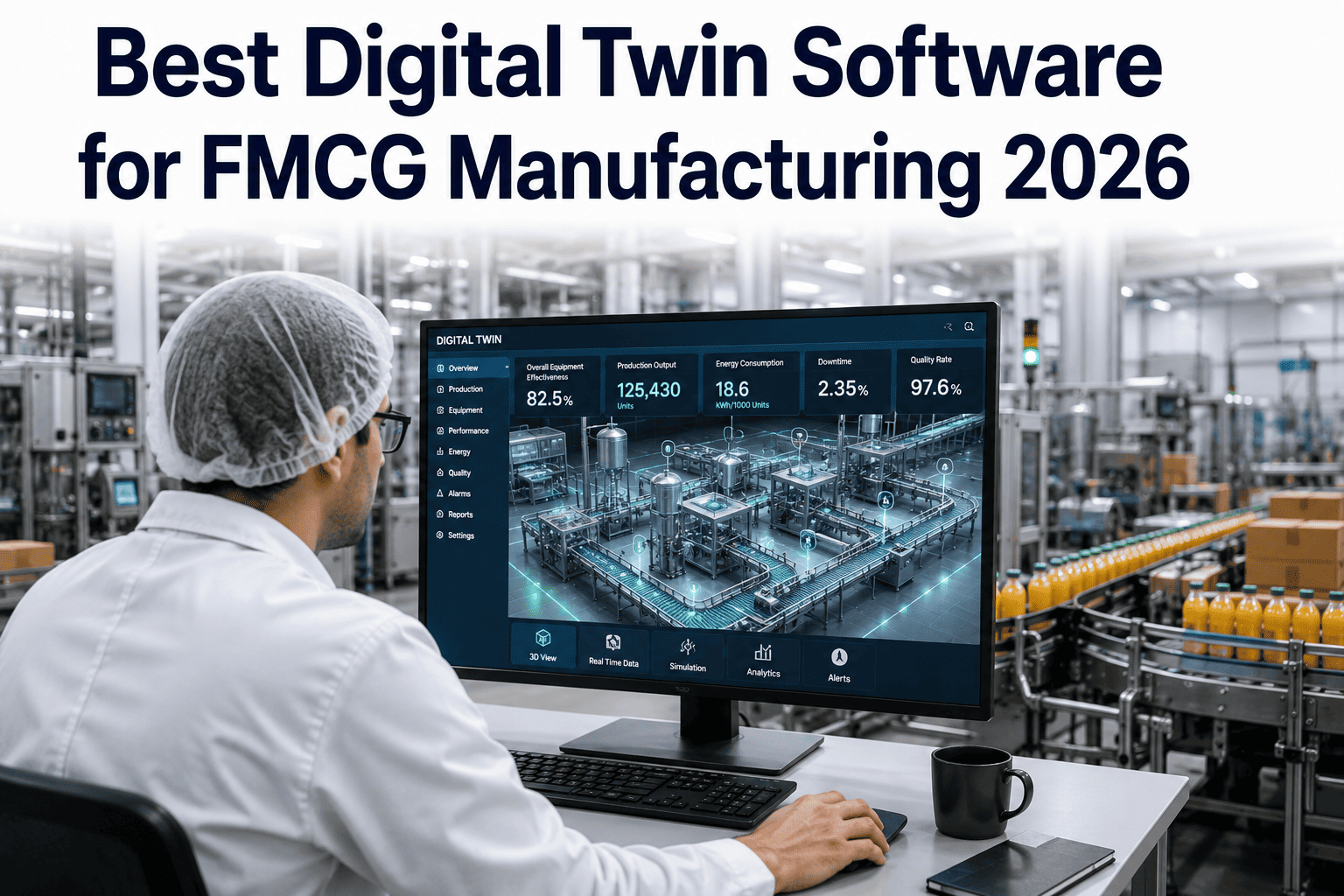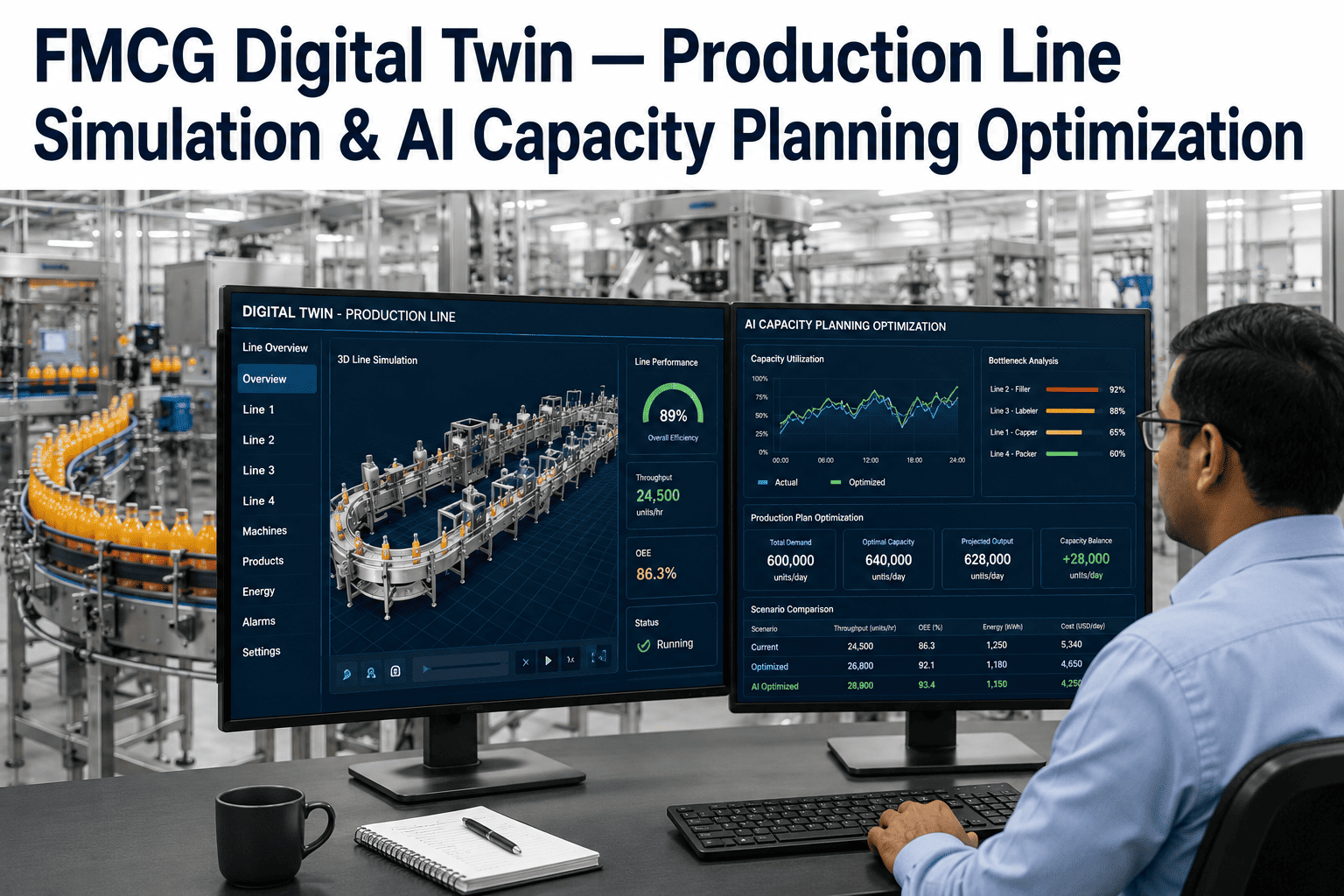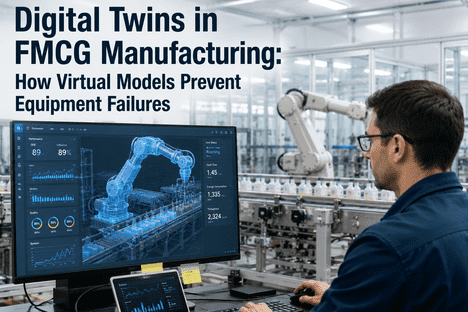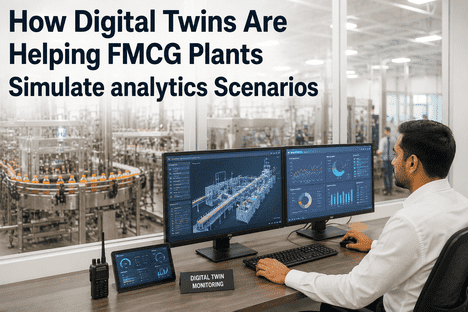
FMCG manufacturers operate in an environment where margins are razor-thin, changeovers are frequent, and production schedules shift daily based on demand volatility. A European personal care manufacturer running eight filling lines across three facilities was losing 14 percentage points of OEE to suboptimal changeover sequencing and hidden bottleneck interactions that traditional scheduling tools could not model. Production planners relied on spreadsheets and tribal knowledge to sequence 40+ daily changeovers across filling, capping, labeling, and cartoning equipment — a combinatorial problem that exceeded human analytical capacity. The manufacturer deployed iFactory's Digital Twin AI platform — combining physics-accurate production line simulation, real-time IoT sensor synchronization, and AI-driven what-if analytics — to simulate every production scenario before execution, reducing changeover downtime by 52% and increasing overall throughput by 18% within four months. Manufacturing leaders evaluating digital twin technology regularly Book a Demo to explore how virtual plant simulation transforms FMCG production optimization.
Why FMCG Plants Need Digital Twin Simulation for analytics Scenarios
Traditional production scheduling in FMCG relies on static models — spreadsheets, ERP schedules, and planner intuition — that cannot capture the dynamic interactions between line changeovers, material availability, shift patterns, and product mix variations. When a planner adjusts one variable, the ripple effects across interconnected lines remain invisible until they manifest as downtime, missed targets, or expedited changeovers. Production managers evaluating digital twin technology Book a Demo to understand how virtual simulation closes these planning gaps.
| Planning Challenge | Impact on FMCG Production | How Digital Twin Simulation Resolves It |
|---|---|---|
| Static Scheduling Models | Spreadsheet-based schedules miss dynamic interactions between line speed changes, material delays, and shift transitions | Real-time digital twin simulates every variable interaction, predicting bottleneck shifts before they cause downtime |
| Hidden Changeover Optimization | Sequencing 40+ daily changeovers manually leads to suboptimal patterns that cost 10-15% of total production time | AI-driven what-if simulation identifies optimal changeover sequences, reducing downtime by 50%+ through data-validated patterns |
| Risk-Averse Decision Making | Planners avoid experimental scenarios because physical trial-and-error risks production loss and missed orders | Virtual commissioning enables zero-risk testing of any production scenario in the digital twin before physical deployment |
| Cross-Line Bottleneck Blindness | Bottlenecks shift between filling, packaging, and labeling lines based on product mix — invisible until WIP builds up | Full production line simulation models every connected asset, predicting bottleneck migration 2-4 hours before it impacts throughput |
Digital Twin Simulation Methodologies for FMCG analytics Planning
Digital twin technology applies three complementary simulation methodologies to enable what-if scenario testing and production optimization in FMCG plants. Operations leaders comparing approaches Book a Demo to determine which methodology best fits their facility's complexity and optimization objectives.
Discrete Event Simulation (DES) models each production step — filling, capping, labeling, cartoning, palletizing — as discrete events with defined durations, resource requirements, and dependencies. The digital twin runs thousands of event sequences to model how changes in product mix, shift patterns, or line speed affect overall throughput. For FMCG plants with high SKU counts and frequent changeovers, DES identifies optimal sequencing that reduces cumulative changeover time by modeling the full combinatorial landscape of production scheduling.
Real-Time Digital Mirror creates a live virtual replica of the production line synchronized with IoT sensor data — conveyor speeds, fill levels, temperature readings, machine states — updating in milliseconds. Unlike static 3D models, this digital mirror reflects the current operating state of every asset, enabling planners to run what-if scenarios against a model that matches today's exact conditions: current machine wear, ambient temperature, material batch properties, and shift staffing levels.
AI What-If Analytics applies machine learning to the digital twin's simulation outputs, identifying patterns and recommending optimal scenarios across thousands of possible combinations. When a planner asks "what if we increase filling line 3 speed by 8% on the night shift with a reduced crew," the AI evaluates historical outcomes of similar parameter changes, simulates the scenario in the digital twin, and returns predicted impact on throughput, quality, energy consumption, and changeover timing — with confidence intervals based on model accuracy.
Traditional Scheduling vs. Digital Twin Simulation Comparison
The table below contrasts traditional production scheduling methods with digital twin simulation across the metrics that matter most to FMCG plant managers responsible for production optimization and throughput improvement.
| Capability | Traditional Scheduling | Digital Twin Simulation |
|---|---|---|
| Scenario Testing | Manual what-if on spreadsheets; limited to 2-3 variable changes | Automated simulation of thousands of scenarios across all production variables simultaneously |
| Changeover Optimization | Planner experience and static sequencing rules | AI-optimized sequencing reducing changeover downtime by 50%+ through combinatorial analysis |
| Bottleneck Prediction | Reactive — identified after WIP buildup or downtime occurs | Predictive — forecasts bottleneck migration 2-4 hours before impact |
| Risk Assessment | No systematic risk modeling; changes tested on live production | Zero-risk virtual commissioning; every scenario validated before execution |
| Data Integration | Isolated spreadsheets and ERP data with manual updates | Real-time IoT, PLC, MES, and CMMS data synchronized continuously |
| Prediction Accuracy | Low — planner intuition and historical averages | 95%+ accuracy through ML models trained on 12-18 months of production data |
Implementation Roadmap for FMCG Digital Twin Deployment
Deploying digital twin simulation for analytics scenario planning across FMCG operations follows a structured five-phase sequence ensuring data integration, model fidelity, and organizational readiness advance with technical implementation.
Expert Perspective — Digital Twin Simulation in FMCG Production
We had been using the same scheduling approach for seven years — spreadsheets with manual updates and a planner who knew every line's quirks. When that planner retired, we lost 12 percentage points of OEE in three months. We deployed iFactory's Digital Twin AI to capture the institutional knowledge that was walking out the door. The twin learned from 18 months of historical production data and started recommending changeover sequences that outperformed our best planner by 15% within two weeks. The real breakthrough came when we started using the what-if simulation to test scenarios we would never have risked on the live floor — new product introductions, shift structure changes, line speed experiments. The digital twin let us fail fast in simulation so we could succeed immediately on the factory floor. For any FMCG plant running more than 20 changeovers per day, digital twin simulation is no longer optional — it is the only way to stay competitive.
— VP of Manufacturing Operations, European Personal Care Manufacturer, Multi-Facility OperationsConclusion
Digital twin technology delivers a transformative improvement in how FMCG plants approach analytics scenario planning and production optimization. Discrete event simulation, real-time digital mirroring, and AI what-if analytics enable changeover downtime reduction of 50%+, throughput improvements of 15-20%, and near-zero-risk scenario testing for every production decision. The five-phase implementation roadmap ensures that data capture, model synchronization, and organizational readiness advance together, delivering measurable production gains within the first quarter of deployment. Plant managers ready to move beyond static scheduling and spreadsheet-based planning Book a Demo to explore how iFactory's Digital Twin AI platform can accelerate their production optimization journey.
Frequently Asked Questions
Digital twin simulation can model product mix changes, shift pattern adjustments, line speed modifications, changeover sequence optimization, new product introductions, material supply disruptions, staffing level variations, preventive maintenance schedule impacts, and seasonal demand fluctuations. The platform supports simultaneous variable changes to model complex operational scenarios that traditional tools cannot evaluate.
Minimum requirements include PLC data streams (conveyor speeds, fill levels, machine states), changeover time records per SKU, shift schedules and staffing data, maintenance history, and material availability data. iFactory's platform integrates with existing OPC-UA and Modbus TCP systems, MES databases, and ERP scheduling modules to capture all necessary data without requiring additional sensor infrastructure.
A full digital twin deployment for a single FMCG production line typically requires 8 to 12 weeks. This includes two to three weeks for line data capture and 3D modeling, two weeks for real-time synchronization and baseline calibration, two weeks for scenario library development, two weeks for pilot operation and accuracy validation, and two to three weeks for full rollout with production planner training.
FMCG facilities deploying digital twin simulation typically achieve throughput improvements of 12-22% within four to six months, changeover downtime reductions of 40-55%, and OEE gains of 8-15 percentage points. The European personal care manufacturer in this case study reduced changeover downtime by 52% and increased overall throughput by 18% across three facilities within four months of deployment.
Yes. iFactory's Digital Twin AI platform connects to existing MES, ERP, and CMMS systems through standard protocols including OPC-UA, Modbus TCP, REST APIs, and direct database connectors. Simulated scenario outputs can be automatically pushed to MES schedules, ERP production plans, and CMMS maintenance calendars. Integration with SAP, Oracle, and major MES platforms is typically completed within two to four weeks.