Frozen Food FMCG analytics Strategies for Ultra-Low Temperature Production & Storage
By Seren on June 13, 2026
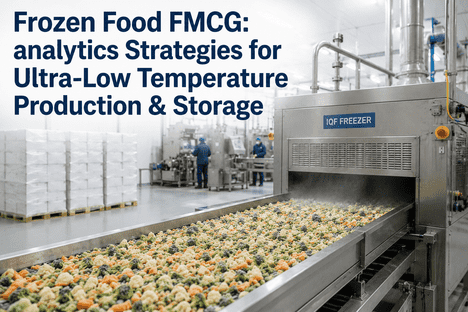
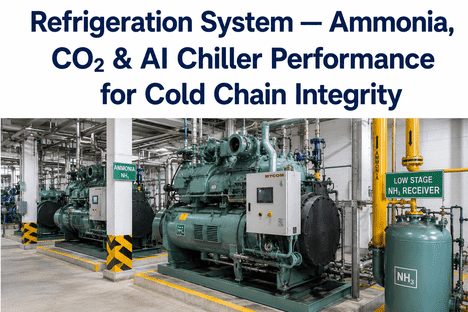
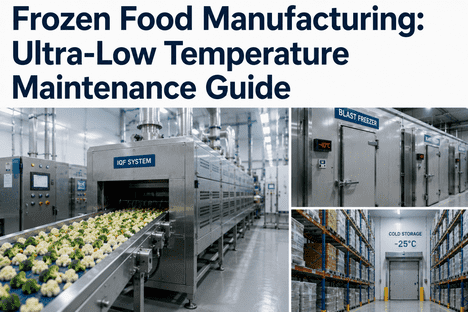
Frozen food is the backbone of the modern FMCG cold chain a $300B+ global market growing at 5.2% CAGR, with frozen fruit and vegetables, ready meals, meat and seafood, and ice cream accounting for over 65% of freezer-to-table volume. Every frozen pea, fish fillet, pizza, and berry travels through a production ecosystem that depends on precisely controlled ultra-low temperature equipment: ammonia and CO2 refrigeration systems compressing thousands of pounds of refrigerant at pressures exceeding 150 psi, IQF tunnels freezing products to -18°C core temperature in 8–15 minutes with air velocities of 8–12 m/s, blast freezers pulling heat from 500+ kg batches at -35°C to -45°C, and cold storage warehouses maintaining -20°C to -25°C across 50,000+ pallet positions with energy costs of $0.5–$1.2 million annually per facility. A single refrigeration compressor failure during peak production can cost a frozen food facility $25,000–$50,000 per day in lost product, rejected loads, and emergency maintenance. Yet 63% of frozen food plants still operate refrigeration maintenance programmes that are reactive responding to high-temperature alarms rather than preventing the conditions that cause them. iFactory AI's Temperature Monitoring and Cold Storage Checklists platform provides frozen food maintenance, quality, and operations teams with continuous temperature analytics, automated defrost cycle optimisation, compressor condition monitoring, and regulatory compliance checklists purpose-built for the ultra-low temperature production and storage environment. Book a Demo to see how your frozen food facility can reduce temperature excursions, prevent refrigeration failures, and optimise cold storage energy consumption.
$300B+
Global frozen food market — fastest-growing FMCG cold chain segment
63%
Of frozen food plants still operate reactive refrigeration maintenance
$25K–$50K
Daily cost of a single refrigeration system failure
71%
Product loss reduction with structured cold storage inspection programmes
01 / The Ultra-Low Temperature Challenge Why Frozen Food Equipment Analytics Is Different
Frozen food production and storage equipment operates under conditions that no other FMCG segment faces: continuous temperatures below -20°C, high-velocity airflow carrying ice crystals, ammonia or CO2 refrigerant cycles operating at extreme pressure differentials, and defrost cycles that thermally cycle evaporator coils from -30°C to +15°C every 6–12 hours. The maintenance challenge is not simply that equipment breaks down it is that the conditions required to freeze and preserve food are exactly the conditions that accelerate mechanical wear, create ice-related blockages, and degrade sensor accuracy. Book a Demo to learn how iFactory's analytics platform addresses these unique challenges.
Ammonia Refrigeration Complexity & PSM Risk
Industrial ammonia systems operate at high pressure with thousands of pounds of anhydrous ammonia — a toxic, flammable refrigerant. OSHA Process Safety Management (PSM) and EPA Risk Management Plan (RMP) compliance require documented mechanical integrity inspections, relief valve testing, leak detection calibration, and operator training. A single PSM citation for mechanical integrity gaps carries penalties of $15K–$160K per violation.
Defrost Cycle Failure — The Hidden Productivity Killer
Evaporator defrost cycles are essential for maintaining heat transfer efficiency, but failed defrost heaters, faulty termination thermostats, or drain line freeze-ups cause ice accumulation that reduces airflow by 15–40% before temperature alarms trigger. Facilities that monitor defrost cycle completion rates identify developing failures 4–8 weeks before they cause product temperature excursions.
Sensor Drift & Temperature Excursions
Temperature sensors in ultra-low temperature environments drift 0.5–2.0°C per year due to thermal cycling, ice contamination, and connector degradation. A drifting sensor can mask a developing refrigeration failure for weeks, allowing product temperatures to rise above regulatory limits (-18°C per FDA Food Code and EU regulation 853/2004) without triggering alarms. Bi-annual calibration is the industry minimum; continuous validation with analytics is the best practice.
Energy Cost Volatility & Efficiency Optimisation
Cold storage facilities consume 15–25 kWh per cubic metre per year — making energy the second-largest operating cost after labour. Compressor efficiency degrades by 2–5% annually due to valve wear, oil degradation, and condenser fouling. Without analytics-driven condenser cleaning scheduling and compressor performance trending, facilities waste $50K–$150K per year in excess energy consumption.
Turn Temperature Data Into Cold Chain Intelligence
iFactory's Temperature Monitoring platform ingests data from your existing cold room sensors, compressor PLCs, and defrost controllers to deliver real-time cold chain visibility, predictive failure alerts, and energy optimisation recommendations — without adding hardware.
The ultra-low temperature analytics platform connects refrigeration system condition monitoring, blast freezer and IQF tunnel performance analytics, cold storage environment tracking, and regulatory compliance management into a unified intelligence layer that continuously monitors every critical thermal zone. Book a Demo to explore the platform architecture for your frozen food facility.
Continuous monitoring of compressor discharge temperature, suction pressure, oil pressure differential, condenser fan current, evaporator superheat, and refrigerant charge level. Predictive models trained on historical failure patterns identify precursor conditions for compressor valve failure, bearing wear, and refrigerant leaks 2–6 weeks before failure. Automated defrost cycle performance tracking with completion rate trending, heater current monitoring, and termination thermostat validation. Energy consumption analytics with compressor-specific kW/TR trending and condenser cleaning optimisation. Integration with OSHA PSM mechanical integrity inspection schedules for pressure vessels, relief valves, and safety devices — with automated work order generation at each inspection interval threshold. Real-time leak detection system integration with automated alert escalation and evacuation zone tracking.
Real-time tracking of blast freezer batch cycles including pull-down rate, final core temperature, air velocity, and evaporator coil condition. IQF tunnel belt speed, product depth, and air temperature uniformity monitoring across all freezing zones. Predictive maintenance for evaporator fan motors, belt drive systems, and defrost heaters based on cumulative operating hours and vibration trending. Product temperature profiling with automated batch release validation against HACCP critical limits. Energy consumption per batch or per tonne analytics for production planning and efficiency optimisation. Automated cleaning and sanitation schedule tracking with CIP cycle parameter validation for evaporator coils and belt washing systems.
Multi-zone temperature and humidity monitoring with automated alarm escalation for product safety excursions. Digital cold storage inspection checklists aligned with FDA, USDA, and EU regulatory standards — completed on mobile devices with photo evidence and electronic signature. Automated defrost drain inspection and cleaning schedules with temperature trend correlation. Door open/close monitoring with strip curtain condition tracking and energy loss analytics. Ammonia leak detection system integration with drill documentation and PSM audit readiness reporting. Temperature sensor calibration scheduling with automated work order generation and calibration certificate storage. Quarterly cold storage performance review reports with trend analysis and corrective action tracking — directly exportable for regulatory inspection and third-party audit documentation.
03 / Measured Impact Documented Results Across Frozen Food Facilities
Frozen food facilities deploying integrated ultra-low temperature analytics have documented consistent improvements in refrigeration reliability, cold storage compliance, and energy efficiency. The results below reflect a 16-week deployment across a frozen vegetable and ready-meal facility with 12 cold storage rooms, 4 blast freezers, 2 IQF tunnels, and an ammonia refrigeration system with 6 compressor sets. Book a Demo to review the full case study for your facility.
71%
Product Loss Reduction
Temperature excursion-related product losses reduced from 1.4% to 0.4% of throughput through earlier detection of developing refrigeration failures and defrost cycle problems.
$34K
Annual Emergency Repair Savings
Emergency refrigeration repair costs reduced through predictive maintenance that identified compressor valve wear, condenser fouling, and refrigerant micro-leaks before they caused system shutdowns.
18%
Cold Storage Energy Reduction
Energy consumption reduced through optimised defrost scheduling, condenser cleaning at peak efficiency intervals, and compressor sequencing based on refrigeration demand rather than fixed rotation.
89%
Compliance Audit Pass Rate
Third-party cold storage and food safety audit pass rate increased from 67% to 89% through documented inspection checklists, automated calibration tracking, and temperature data integrity verification.
4.2 hrs
Average Advanced Warning
Average advance warning of developing refrigeration failures — enabling proactive intervention during planned maintenance windows rather than emergency breakdown response.
$450K
Projected Annual Savings
Combined annual savings from product loss reduction, emergency repair reduction, energy optimisation, and audit efficiency improvement at full production volume.
Calculate Your Cold Chain Risk Reduction ROI
iFactory will analyse your frozen food facility's refrigeration system data, cold storage temperature records, maintenance history, and energy consumption to project the specific savings and risk reduction achievable with integrated ultra-low temperature analytics — at no cost and with no commitment.
"I have managed ammonia refrigeration systems across three frozen food facilities over 19 years. The single biggest change I have seen in the last decade is not in the refrigeration technology itself — screw compressors and evaporator designs have evolved incrementally but in the analytics layer that connects all the data our systems are already generating. Every compressor in our plant has been generating discharge temperature, suction pressure, and oil differential data for years. The PLCs controlling our blast freezers and cold stores have been logging temperature profiles continuously. The defrost controllers have been tracking heater current and termination times. But all that data lived in separate systems, reviewed by separate people, on separate schedules. The breakthrough is bringing it together into a single analytics platform that correlates compressor condition with blast freezer performance with cold storage temperature trends with energy consumption. The first time I saw a predictive alert telling me that compressor #3 had a developing valve issue 3 weeks before we would have discovered it during a high-temperature alarm that was the moment I knew reactive maintenance was obsolete."
M. Torres, Refrigeration & Utilities Manager — Frozen Food Division, 19 Years
Conclusion Ultra-Low Temperature Analytics Transforms Cold Chain Management from Reactive to Predictive
Frozen food production and storage has always been temperature-critical, but the analytics available to most facilities have not kept pace with the complexity of modern refrigeration systems, the scale of cold storage operations, or the stringency of regulatory compliance requirements. Ultra-low temperature analytics changes this by connecting the data already generated by compressor PLCs, blast freezer controllers, cold room temperature sensors, and defrost systems into a unified intelligence platform that predicts failures before they occur, optimises energy consumption without compromising product safety, and automates compliance documentation for regulatory inspection readiness. The 71% reduction in product losses, $34,000 in annual emergency repair savings, and 18% energy reduction documented across frozen food facilities demonstrate that the technology delivers measurable, repeatable, and sustainable operational improvements. The platform operates on the same sensor networks, refrigeration controllers, and building management systems already installed in your facility — no additional instrumentation required. Book a Demo to start the ultra-low temperature analytics assessment for your frozen food facility and discover how much cold chain risk and operating cost predictive analytics can eliminate.
Frequently Asked Questions Ultra-Low Temperature Analytics for Frozen Food
Standard cold storage monitoring tracks temperature and humidity values against fixed limits and alerts when a limit is exceeded. That is necessary but not sufficient for frozen food operations. Ultra-low temperature analytics goes further by analysing the condition of the refrigeration system producing the cold — compressor discharge temperature trends, oil pressure differentials, condenser approach temperatures, evaporator superheat values, defrost cycle completion rates — to predict when the system will fail to maintain setpoint before the temperature actually exceeds limits. The difference is monitoring the health of the cold-producing equipment, not just the temperature of the cold room. This predictive capability provides 2–6 hours to 2–6 weeks of advance warning depending on the failure mode, versus reactive alarms that trigger only after product temperatures are already compromised.
The platform ingests data from four primary sources: refrigeration system PLC data (compressor discharge temperature, suction pressure, oil differential, condenser fan current, evaporator superheat); cold room temperature sensors (product zone, return air, evaporator coil); defrost controllers (heater current, termination temperature, drain temperature); and building management system data (energy consumption, door open/close events, humidity). Most frozen food facilities already capture all four data streams through existing BMS, PLC, and sensor infrastructure. The platform connects through standard protocols — BACnet, Modbus, OPC-UA, or direct sensor API integration. iFactory's deployment team handles all data connectivity and model configuration during the 2–4 week integration phase. Facilities without existing sensor infrastructure can deploy iFactory's wireless temperature sensor network as a turnkey solution.
Predictive model accuracy varies by failure mode based on the strength of precursor signals and the consistency of degradation patterns. Compressor valve wear and leakage — driven by cumulative operating hours and thermal cycling with relatively consistent degradation curves — achieves 82–90% prediction accuracy at 2–4 weeks advance warning. Bearing wear predictions achieve 70–80% accuracy through vibration trending and oil debris analysis correlation. Refrigerant micro-leak detection through charge calculation trending achieves 85–92% accuracy for leaks above 2% of system charge. Condenser fouling detection achieves 88–95% accuracy through approach temperature trending. The platform reports prediction confidence by failure mode and warning horizon, enabling maintenance teams to calibrate their response protocols based on demonstrated model performance for their specific system configuration and refrigerant type.
The platform deployment typically requires 2–4 weeks for data integration and configuration, followed by 4–6 weeks of model training and validation using your facility's historical refrigeration and temperature data. Initial operational improvements — reduced cold storage temperature variance, improved defrost cycle reliability, automated compliance documentation — are visible within the first 4 weeks of live operation. Predictive failure detection capability for compressor and refrigeration system components matures over 8–12 weeks as models train on your facility's specific equipment configuration, operating patterns, and failure history. Full ROI realisation — including energy optimisation, emergency repair reduction, and product loss prevention — typically occurs within 6–12 months of deployment. Book a Demo to receive a deployment timeline specific to your facility's cold storage and refrigeration system configuration.
The platform supports regulatory compliance across three dimensions. Food safety compliance (FDA Food Code, EU 853/2004, FSMA Preventive Controls) through continuous temperature monitoring with automated excursion investigation workflows, batch release validation against critical limits, and temperature data integrity verification per 21 CFR Part 11 requirements. Cold storage operational compliance through digital inspection checklists aligned with USDA, FDA, and third-party audit standards (BRCGS, SQF, FSSC 22000) — completed on mobile devices with photo evidence, electronic signatures, and automated corrective action tracking. Refrigeration system safety compliance (OSHA PSM, EPA RMP) through automated mechanical integrity inspection scheduling for pressure vessels, relief valves, and safety devices; leak detection system integration with drill documentation; and PSM audit readiness reporting with corrective action closure tracking. The platform generates regulatory inspection-ready reports on demand — eliminating 3–5 days of document preparation per audit event.
Predictive Refrigeration Analytics. 71% Product Loss Reduction. Deployed in 12 Weeks.
iFactory gives frozen food plant managers and refrigeration teams predictive analytics that detect developing compressor failures 2–6 weeks in advance, optimise defrost cycles and energy consumption, automate cold storage compliance documentation, and reduce temperature excursion-related product losses by 71% — on the same sensor and BMS infrastructure already installed in your facility.