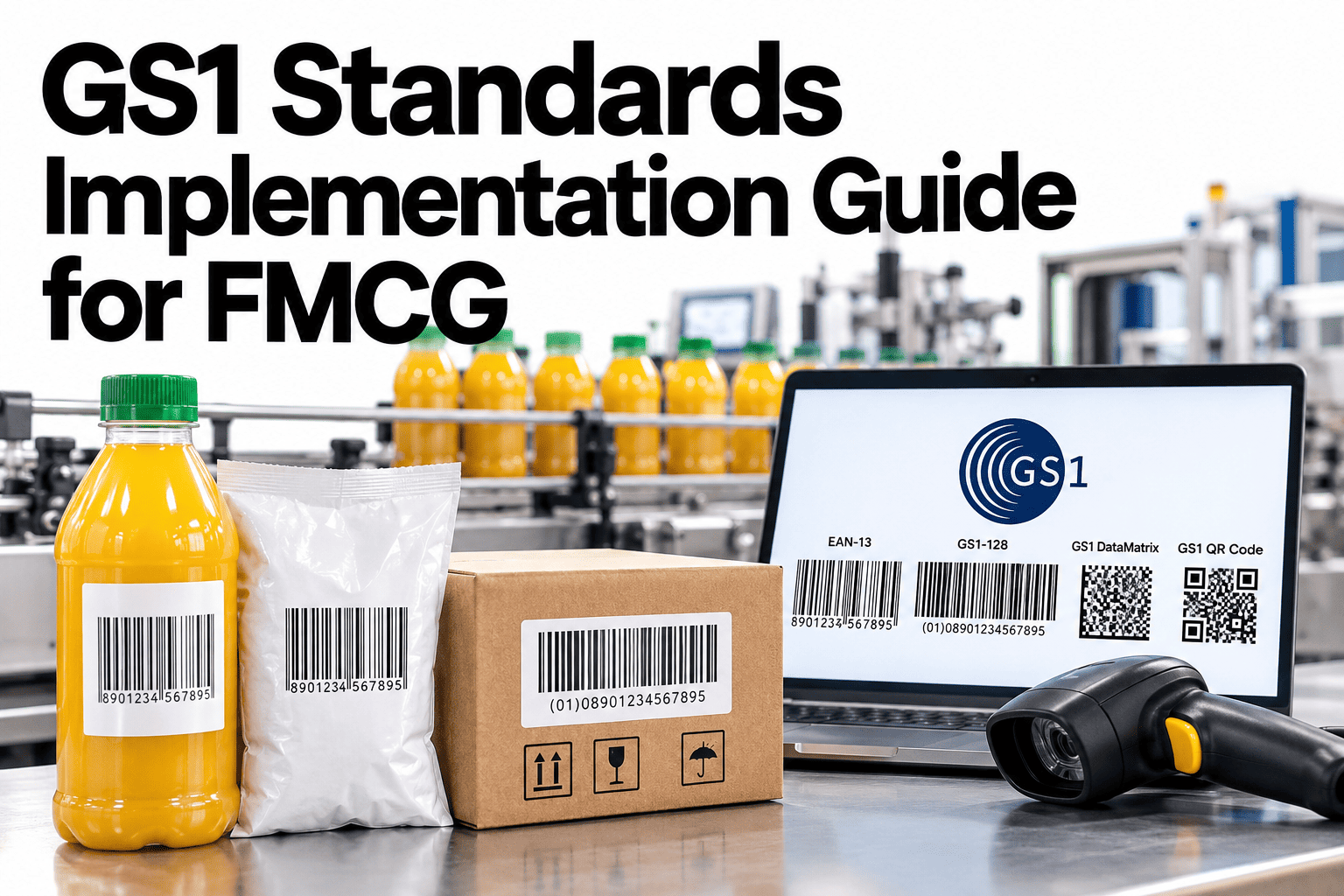
An internal traceability system that works perfectly inside your own plant is still only half the job in FMCG, because the moment a product leaves the dock it enters a world of retailers, distributors and regulators who expect identifiers in a specific, shared format. GS1 standards, GTIN for products, SSCC for shipped units, GLN for locations, and GDSN for sharing product data, exist precisely so that your internal batch record and a retailer's receiving system can actually talk about the same thing. Skipping them, or implementing them inconsistently, is a common reason internal traceability does not survive contact with the outside world. Supply chain and IT teams can see how iFactory AI aligns internal traceability data with GS1 identifier structures before the next retailer onboarding.
GS1 Standards Implementation Guide for FMCG
GTIN, SSCC, GLN and GDSN, mapped against your own traceability data so retailers and regulators see the same picture you do.
Four Standards, Four Different Jobs
Each GS1 identifier answers a different question, and conflating them is a common source of implementation confusion. Confirm current specifications on GS1's own resources before building against them, since standards are maintained and occasionally revised.
Identifies what the product is, at the level of a specific item or pack configuration.
Identifies a specific shipped logistics unit, such as a pallet or case, as a unique instance.
Identifies a specific location, such as a plant, DC or ship-to address, uniquely.
GDSN sits above all three, as the mechanism for sharing product data consistently with trading partners who use these identifiers.
Where Internal Systems and GS1 Diverge
Most plants already have internal part numbers, batch codes and location names. The implementation work is mapping those internal identifiers to GS1 structures consistently.
| Internal Identifier | Maps To | Common Pitfall |
|---|---|---|
| Internal SKU code | GTIN | Pack configuration changes without a corresponding GTIN change |
| Pallet or case ID | SSCC | Reused internal ID numbers instead of truly unique SSCCs |
| Plant or warehouse code | GLN | Internal location codes not registered as GLNs for external use |
Map Your Own Internal Identifiers to GS1 Structures
Book a 30-minute session and iFactory AI will walk through how your internal SKU, pallet and location codes map to GTIN, SSCC and GLN structures.
Internal-Only Versus Retailer-Ready
An internal traceability system that works for your own plant does not automatically work when a retailer or regulator asks for a trace using their own identifiers.
A Practical Rollout Sequence
Implementing all four standards simultaneously across every product and location is rarely realistic. A phased approach gets a working result sooner.
GTIN first
Assign and validate GTINs for every product and pack configuration.
GLN for key locations
Register GLNs for plants and distribution centers involved in shipping.
SSCC at shipping
Apply SSCCs to shipped logistics units as they leave the plant.
GDSN for data sharing
Connect product data sharing with trading partners once the identifiers are stable.
Signs Your Implementation Still Has Gaps
These are the symptoms that usually mean GS1 identifiers exist on paper but are not consistently applied or validated.
Shipments bounced back due to identifier mismatches at receiving.
Staff manually cross-reference internal and external codes for every trace request.
The same identifier accidentally reused across different logistics units.
The plants with a genuinely working GS1 implementation are the ones that validate identifier uniqueness and mapping consistency on an ongoing basis, not just at the initial rollout. A GTIN assignment that was correct at launch can drift out of sync when a pack configuration changes without a corresponding identifier update, and an SSCC generation process that looked sound in testing can start producing duplicates under real shipping volume. Build periodic validation into the process, and treat a retailer rejection as a signal to check the underlying mapping, not just resend the shipment.
Where iFactory AI Fits
iFactory AI maps internal batch and traceability data to GS1 identifier structures, so internal records and external trading partner expectations stay aligned.
Identifier mapping
Internal SKU, pallet and location codes are mapped to GTIN, SSCC and GLN structures consistently.
Uniqueness validation
SSCC and other generated identifiers are checked for duplication before they leave the plant.
Drift detection
Pack configuration or location changes that affect identifier mapping are flagged for review.
Ask in plain language
Ask whether a specific product's GTIN is currently aligned with its pack configuration and receive a direct answer.
Frequently Asked Questions
What is the difference between a GTIN and an SSCC?
A GTIN identifies what a product is, at the level of a specific item or pack configuration, while an SSCC identifies a specific shipped logistics unit, such as one particular pallet, as a unique physical instance. The two serve different purposes and should not be confused with each other in your systems. You can watch GTIN and SSCC mapping demonstrated on sample product data in a live session.
Do we need to implement all four GS1 standards at once?
No, a phased approach starting with GTIN assignment, then GLN registration for key locations, then SSCC at shipping, and GDSN once identifiers are stable, is generally more manageable than attempting everything simultaneously. To plan your own sequence, request a rollout planning session with the iFactory AI team, or ask support what current systems are supported.
Why do retailers sometimes reject shipments over identifier issues?
A mismatch between the GTIN, SSCC or GLN on the shipment and what the retailer's receiving system expects, often caused by a pack configuration change that was not reflected in the identifier, or a duplicated SSCC, is a common cause of these rejections. A short product tour of identifier validation shows how these mismatches are caught before shipping.
How does GDSN fit into the overall picture?
GDSN is the mechanism for sharing consistent product data with trading partners who rely on your GTINs and other identifiers, so it generally comes after your core identifiers are stable and validated, rather than being the first step in an implementation. See how GDSN connects to your existing identifier setup in a guided walkthrough.
How often should GS1 mapping be re-validated?
On an ongoing basis rather than only at initial rollout, since pack configuration changes, new SKUs and shipping volume growth can all introduce drift or duplication that a one-time setup would not catch. Schedule a walkthrough of ongoing validation practices to see how this is maintained.
Make Your Traceability Speak the Same Language as Your Partners
iFactory AI aligns internal traceability data with GS1 identifier structures. Book a walkthrough to see it built around your own product and location data.