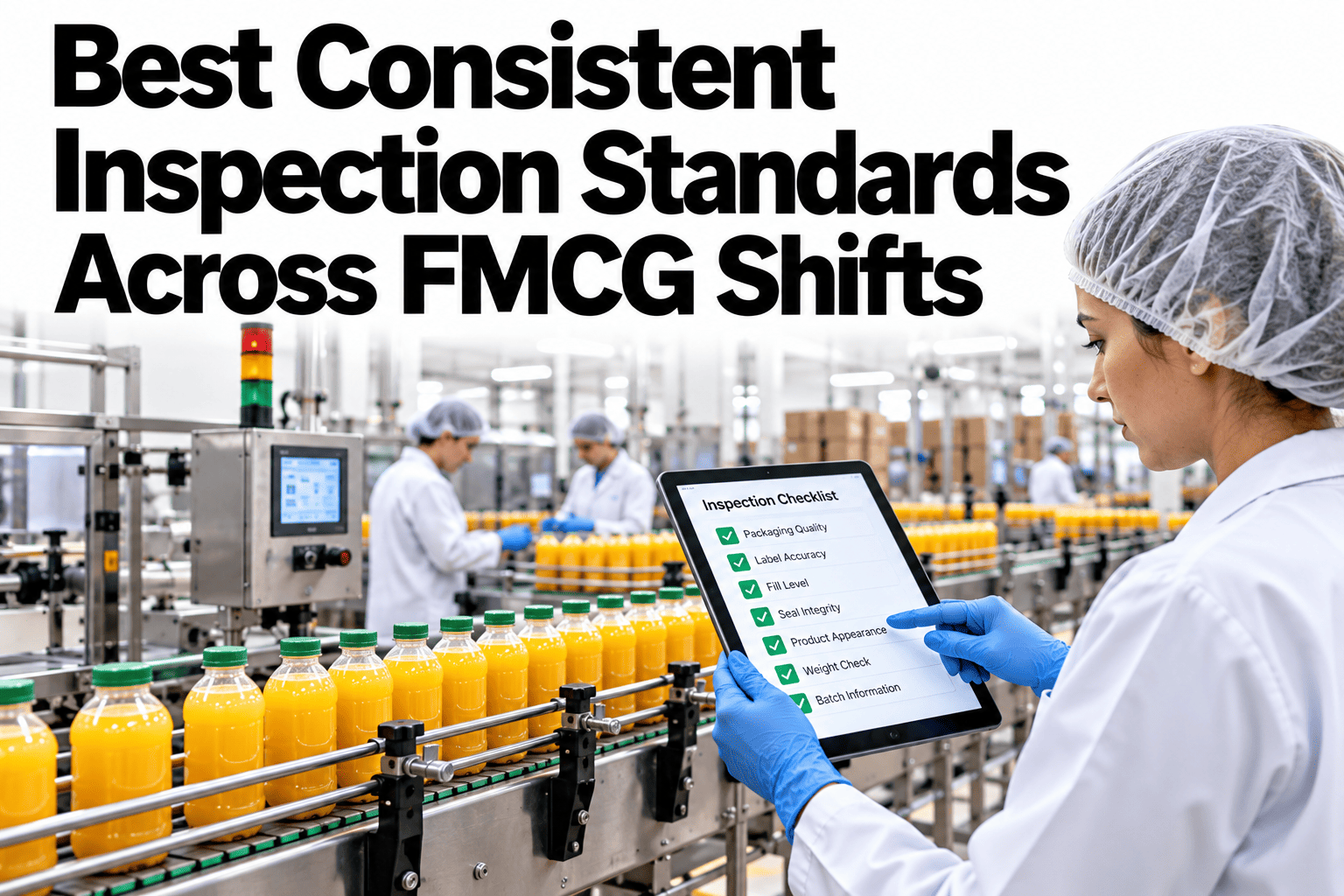
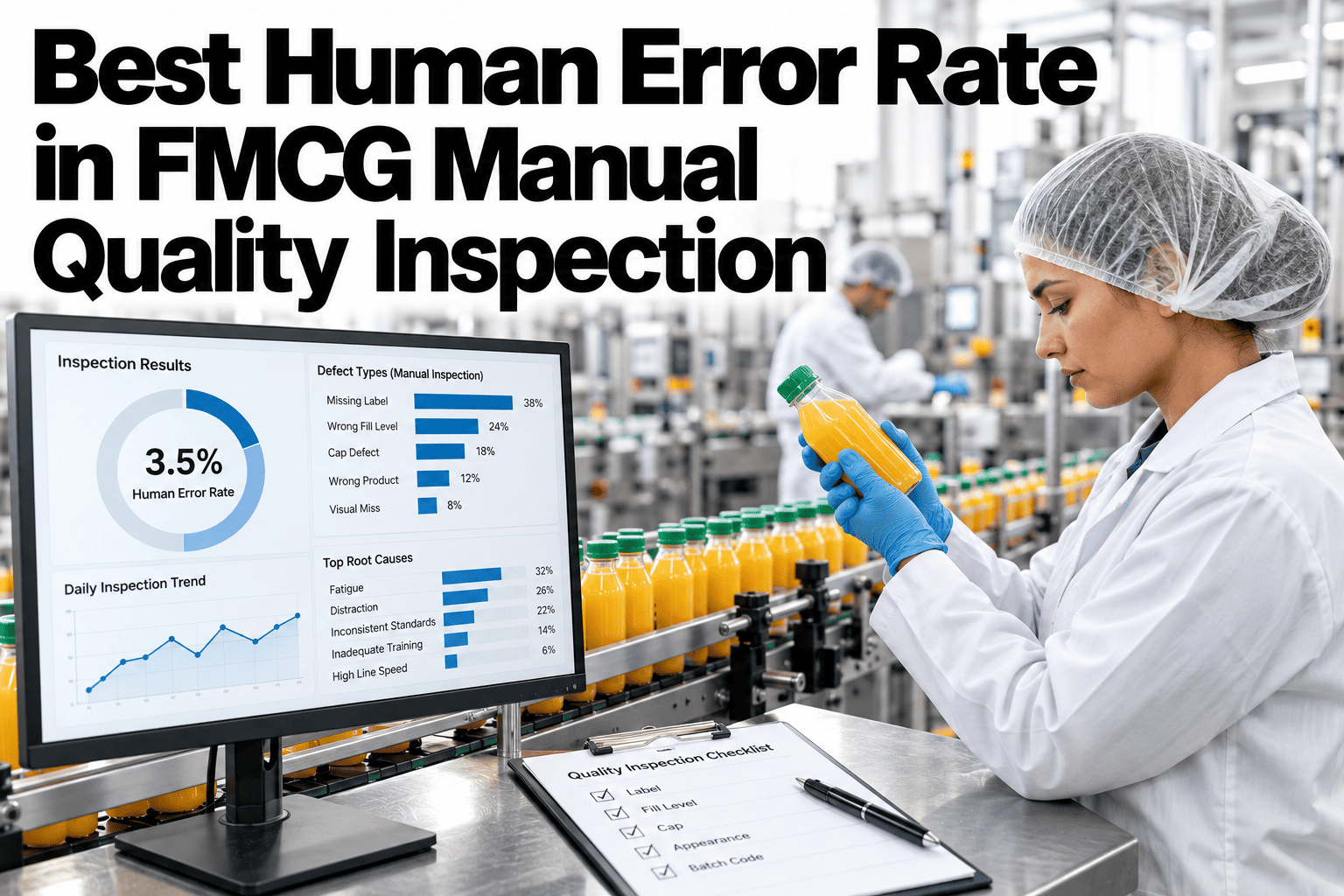
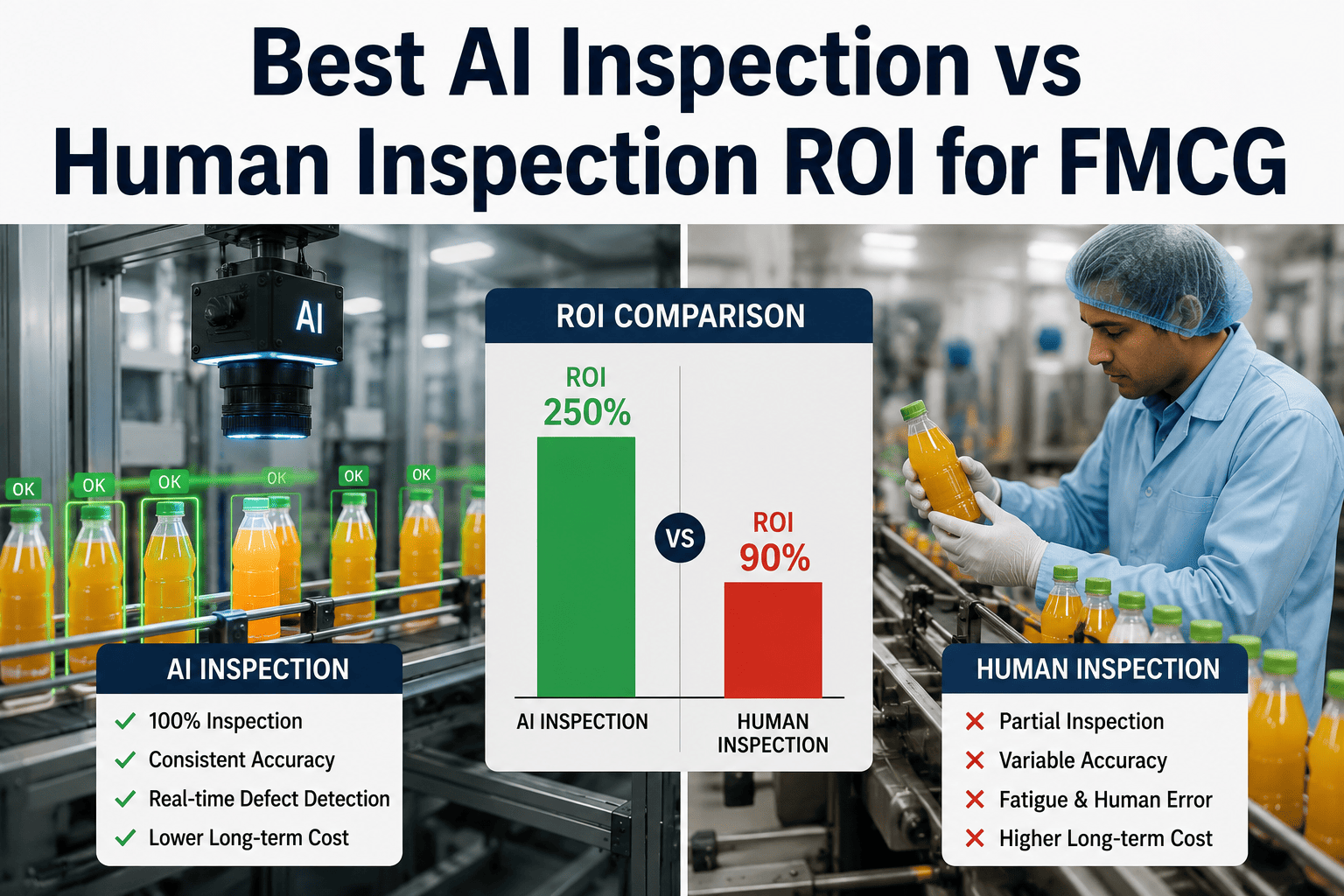
On many FMCG lines, the same pack can be accepted on one shift and rejected on the next, because inspectors hold slightly different ideas of what is acceptable. Consistent inspection standards close that gap with reference samples, regular calibration and a single arbiter that grades every item the same way. AI-arbitrated grading adds the final piece, because the model applies identical limits at every hour. To see how this could work, you can walk through a standards setup with our specialists.
AI quality vision and inspection standards
End the Shift-to-Shift Differences in What Counts as Acceptable
iFactory AI helps FMCG plants build reference libraries, calibrate inspectors and use AI grading so every shift applies the same standard.
Three building blocks of consistency
Reference samplesCalibrationAI arbitration
Shift driftThe Same Pack, Four Different Verdicts
Without a shared reference, standards drift. Each shift adapts to its own pressures and habits.
Day shift
Strict, with supervisors close by
Evening shift
Moderate, with busy handover
Night shift
Variable, with fewer checks
Weekend
Different team, different habits
Customers do not see shifts. They see inconsistent product, and that becomes complaints and audit findings.
Reference samplesA Physical Library Beats a Written Description
Words like slight or minor mean different things to different people. A reference sample removes the argument.
Accept
Clear examples of product that passes.
Borderline
The edge of acceptable, with a ruling attached.
Reject
Clear examples of defects that must be removed.
Photograph every sample and store the images, so shifts and sites can share one library.
Building the libraryFive Steps to a Library People Will Use
1
List the defects
Rank defect types by cost and frequency.
2
Collect samples
Gather real examples at each level, from accept to reject.
3
Agree the rulings
Quality, production and customer reps decide borderline cases.
4
Label and photograph
Record the ruling, date and approver on each sample.
5
Share and train
Place samples at stations and train every shift.
Build a Reference Library Everyone Grades Against
Share your toughest defect types and see how iFactory AI can help build, store and apply a shared reference library.
Calibration cadenceRegular Checks Keep Standards From Drifting
| When | What happens | Owner |
|---|
| Start of each shift | Inspectors review key reference samples | Shift supervisor |
| Weekly | Blind test with seeded samples | Quality technician |
| Monthly | Compare results between shifts and sites | Quality lead |
| After any change | Update samples for new products or materials | Quality and production |
| Yearly | Full library review and sign-off | Quality manager |
Calibration should be quick and routine. A ten-minute check at shift start is more sustainable than a long annual session.
Agreement checksUse Pairs of Inspectors to Find Disagreements
When two inspectors grade the same items, their agreement shows how clear the standard really is.
Two inspectors
B accepts
B rejects
A accepts
Agree: accept
Standard is clear for these items
Disagree
Review the sample and clarify the rule
A rejects
Disagree
Review the sample and clarify the rule
Agree: reject
Standard is clear for these items
Items in the disagreement cells are gold. Each one points to a rule that needs a better reference sample.
AI arbitrationLet One Consistent Grader Settle the Calls
AI grading applies the same limits to every item, so it can act as the neutral arbiter between shifts.
1
Train on the library
The model learns from rulings in the reference set.
2
Grade every item
It scores each item against the same limits.
3
Flag borderline cases
Doubtful items go to a human for a ruling.
4
Update the library
New rulings add to the reference set.
The library and the model improve together. To see arbitration in action, ask our team for an AI grading demonstration.
Tracking driftShow Whether Shifts Are Coming Together
Measure agreement between each shift and the reference ruling. This illustrative view shows the change.
A narrow gap between shifts is the clearest sign that the standard is truly shared.
Who owns whatShare Responsibility for the Standard
Quality manager
I own the library and approve every ruling.
Shift supervisor
I run calibration checks and escalate disputes.
Inspectors
We flag unclear samples and suggest new references.
Customer liaison
I bring customer expectations into the standard.
Defect list ranked by cost
Physical samples with rulings
Photographs stored centrally
Calibration schedule in place
Disagreement log kept
Library review date set
Expert reviewWhat a Quality Assurance Manager Would Check First
Expert review
A standard is only real if people can see it. Physical samples, simple rulings and regular checks beat a thick procedure that nobody reads.
VerdictStrong when samples are shared, rulings are recorded and calibration is routine.
Watch forLibraries that go stale when products or packaging change.
Do nextBuild a library for your three costliest defects and test it across all shifts.
Frequently asked questionsWhat Quality Teams Ask About Consistent Inspection Standards
How many reference samples do we need?
Enough to cover each important defect at accept, borderline and reject levels. Start with your three costliest defects and grow the library as disputes arise. A small, well-chosen library that every shift uses is far more valuable than a large one that nobody can find.
See an example library.
Who decides borderline cases?
A small group from quality and production, often with customer input, should decide each borderline case and record the ruling with the date and approver. This creates one authority for the standard and prevents shifts from making their own interpretations at the line.
Ask about ruling workflows.
How does AI help with consistency?
AI applies the same limits to every item at every hour, so there is no drift between shifts or inspectors. Each decision is logged with an image, which makes disputes easy to review. The model also learns from new rulings, so the standard stays current.
See AI grading in a demo.
What if the AI and an inspector disagree?
Treat the disagreement as useful information. Review the sample, decide on the correct ruling and add it to the library. Either the inspector spots something the model missed, or the model applies the rule more consistently than the person, and both outcomes improve the standard.
Ask about disagreement handling.
How often should the library change?
Review it at least once a year and whenever products, materials, packaging or customer expectations change. Remove outdated samples and add new ones for emerging defects. A short review each quarter keeps the library accurate without becoming a burden.
Plan a library review cycle.
One standard, every shift
Make Every Shift Apply the Same Standard
Book a session with iFactory AI to design your reference library, set a calibration routine and see AI-arbitrated grading on your own samples.